
“Wired camera” is an incomplete specification.
A camera can have a power cable and still send all video over WiFi. Another camera can use Ethernet for data but have a separate power supply. A true PoE camera receives electrical power over the Ethernet cabling used for its network connection.
Before you quote or install an indoor camera, separate three questions:
- How is the camera powered?
- How does video/data reach the network or recorder?
- Does the exact network port support Power over Ethernet?
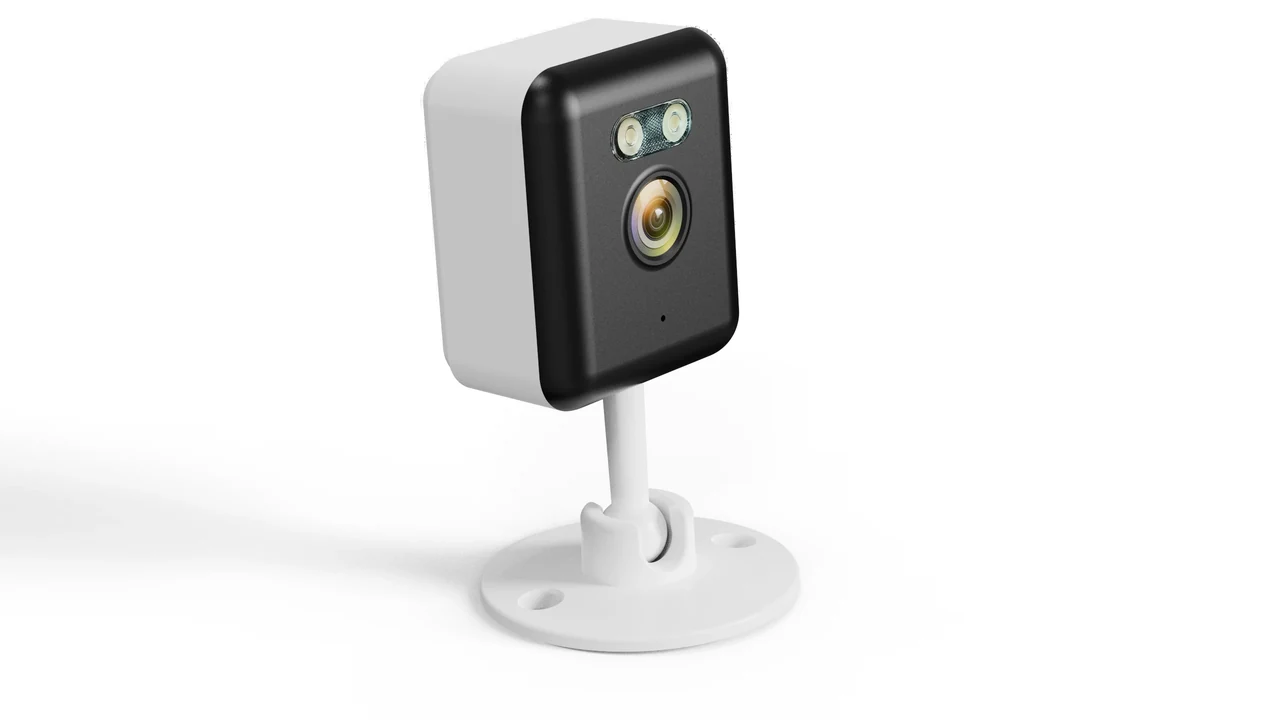
Real QZT C12 scene. The current C12 page lists 5V DC power and WiFi data; it does not list Ethernet or PoE.
A power cable does not make the data connection wired
The most common ambiguity is a camera that stays plugged into power but uses WiFi for its network connection.
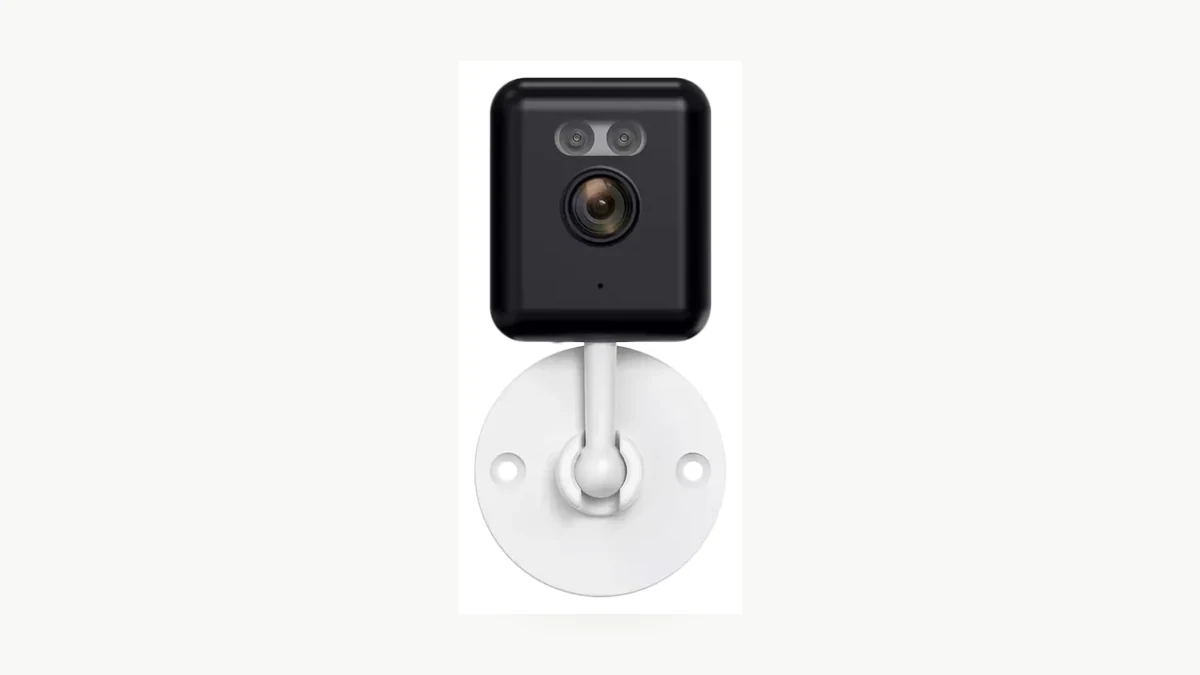
Real QZT C12 hardware detail. The current C12 page lists 5V DC + WiFi and does not list Ethernet/RJ45 or PoE.
For procurement, describe the architecture explicitly:
- DC-powered WiFi camera: power comes from a 5V/12V adapter or USB/DC cable; data uses WiFi. This is not PoE unless a separate PoE interface is explicitly documented.
- DC-powered Ethernet camera: data uses Ethernet, while power comes from a separate DC input. An RJ45 data port alone does not prove PoE.
- PoE network camera: a compatible Ethernet cable carries network data and the documented PoE power feed from suitable power-sourcing equipment.
- Battery WiFi camera: power comes from the battery and data uses WiFi; this is not PoE.
The first row is still “wired” in the sense that the camera is physically connected to power. It is not a wired network camera.
This distinction matters when a project requirement says “no WiFi,” “Ethernet only,” “central UPS power,” or “PoE from the switch.” Those are different requirements.
What PoE actually means
Power over Ethernet is a network-power technology, not a synonym for “camera has a cable.”
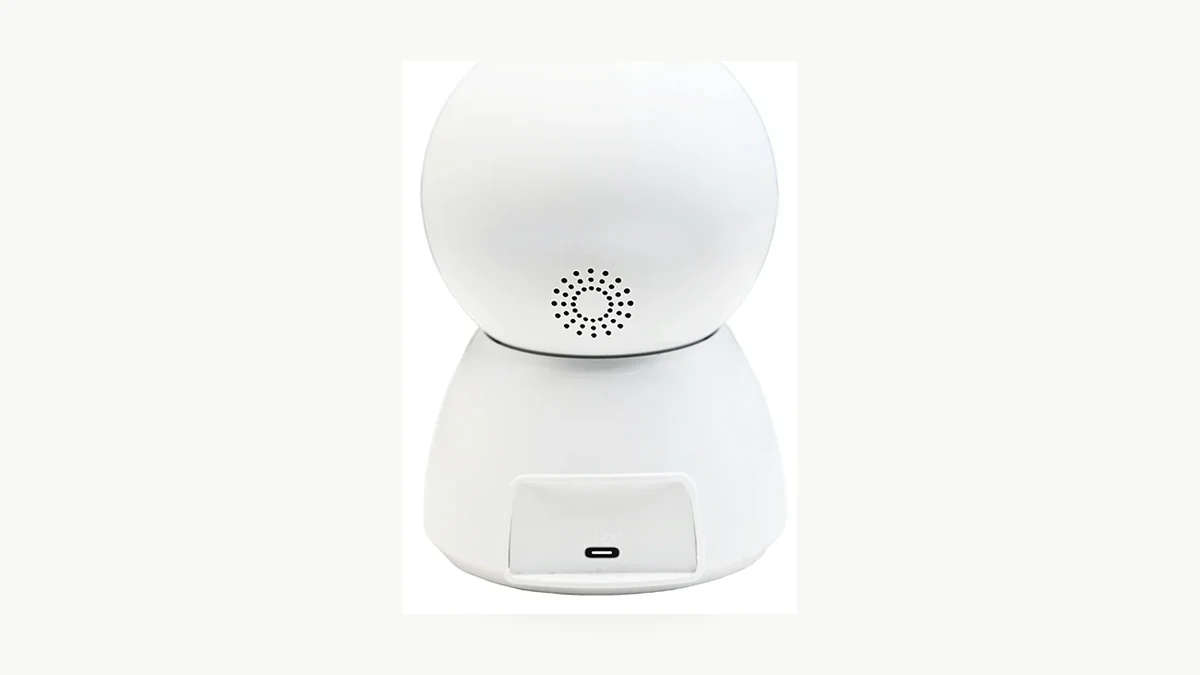
Real QZT C23B hardware detail. Its current page lists 5V DC + WiFi; this is not a PoE product claim.
Cisco's current Power over Ethernet overview defines PoE as delivering DC power over copper Ethernet cabling. Its current PoE configuration guide describes Ethernet carrying both data and electrical power to a powered device.
For a camera project, confirm:
- the camera has a documented Ethernet interface;
- the camera is a supported PoE powered device;
- the PoE standard / power requirement is compatible with the switch or injector;
- the cable category and run are suitable for the network design;
- the switch has enough power budget for all powered devices;
- any separate DC input is understood as a separate or backup power option, not evidence of PoE.
Do not plug an unknown DC-only device into a PoE arrangement through an improvised adapter and assume it is equivalent to native PoE support.
What current QZT indoor camera pages actually list
The current QZT indoor-camera pages are a useful example of why “wired” needs clarification.
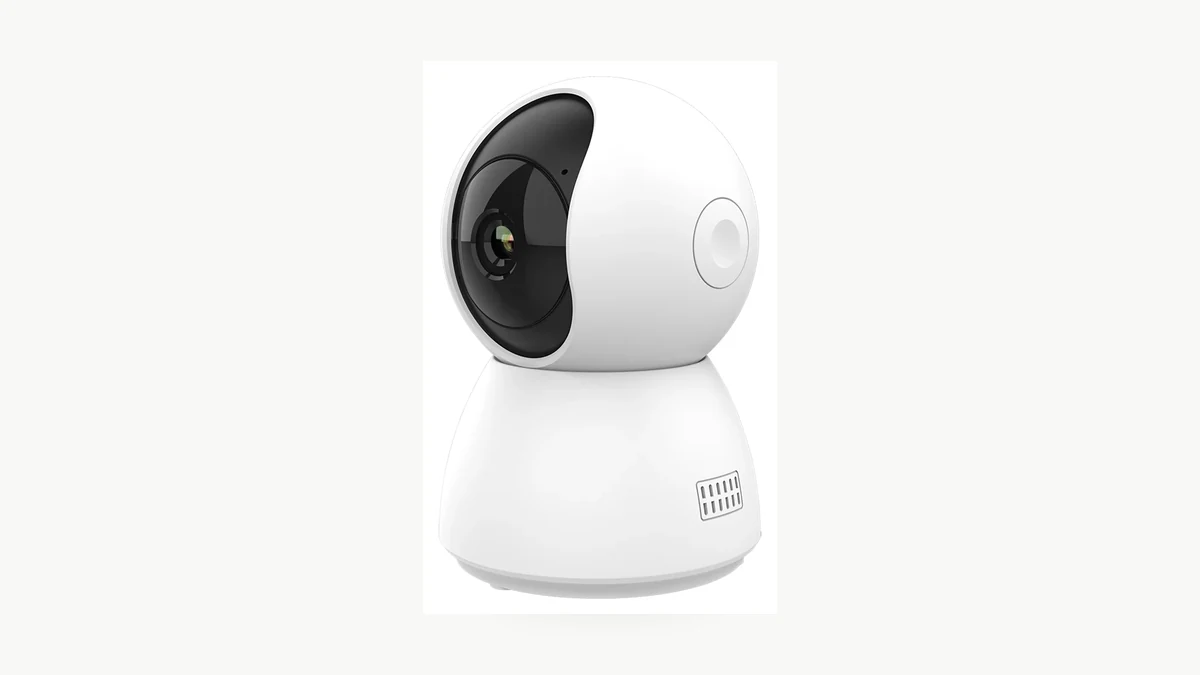
Real QZT C23B photograph. The current page says it needs a wired 5V supply and an indoor WiFi connection.
As of September 19, 2026, the current public pages for these QZT indoor models list 5V DC power and WiFi networking, while no Ethernet/RJ45 or PoE interface is listed on those pages:
The current public listing is the same on this point for the following indoor models: 5V DC power + WiFi networking, with no Ethernet/RJ45 or PoE interface listed.
Several of those pages also list ONVIF. That still does not make them Ethernet or PoE cameras. The physical network interface has to be documented separately.
For example, the current C23B page explicitly says the unit needs a wired 5V supply and an indoor WiFi connection. That is the wording procurement should preserve.
Why Ethernet and PoE can change the installation
A wired data path can reduce dependence on the local WiFi environment, but it adds cabling and switch requirements.
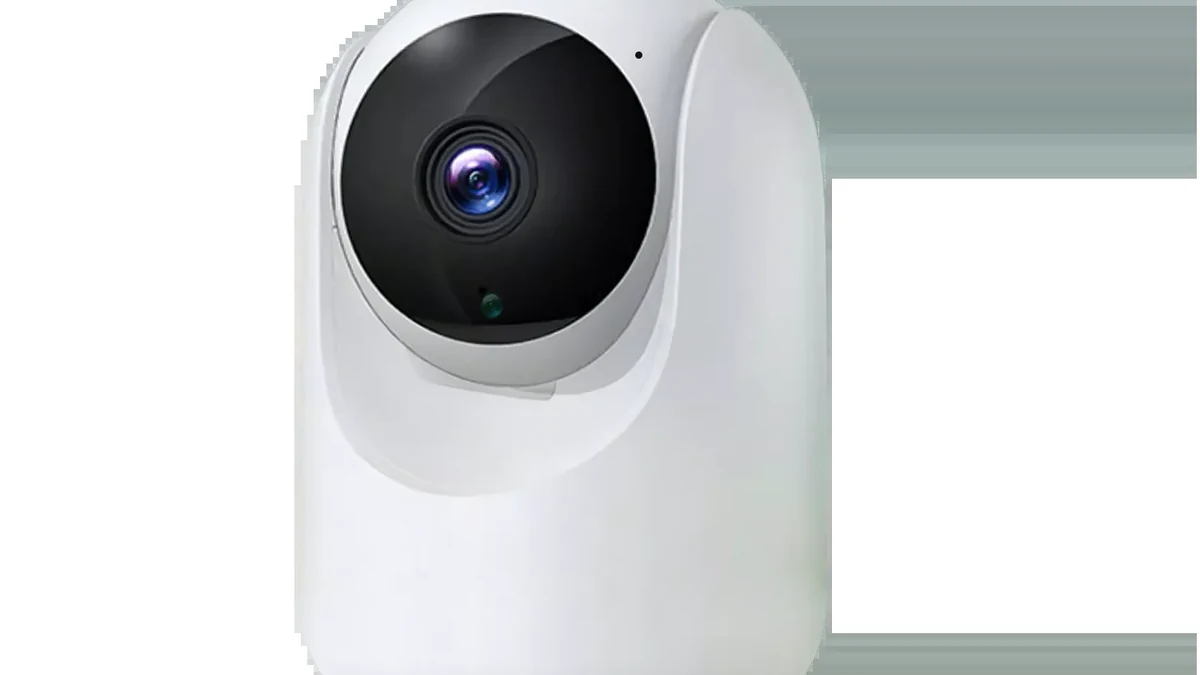
Real QZT C26 application image. It is a 5V DC + WiFi example, not an Ethernet/PoE product claim.
For a true Ethernet/PoE camera, consider:
- cable route and maximum network run;
- switch port availability;
- PoE power budget;
- UPS strategy for the switch;
- VLAN / network design;
- NVR or VMS placement;
- installer access to ceilings, walls and conduits;
- what happens if the central switch fails.
For a DC-powered WiFi camera, the installation questions are different:
- outlet / adapter position;
- WiFi signal and channel conditions;
- router coverage;
- local power resilience;
- whether local recording continues during an internet outage;
- whether the camera reconnects after WiFi returns.
A camera can therefore have very reliable continuous power while still depending on WiFi for remote data.
How to verify the exact camera before installation
Do not approve a “wired” camera from a title alone. Inspect the exact sample and its documentation.
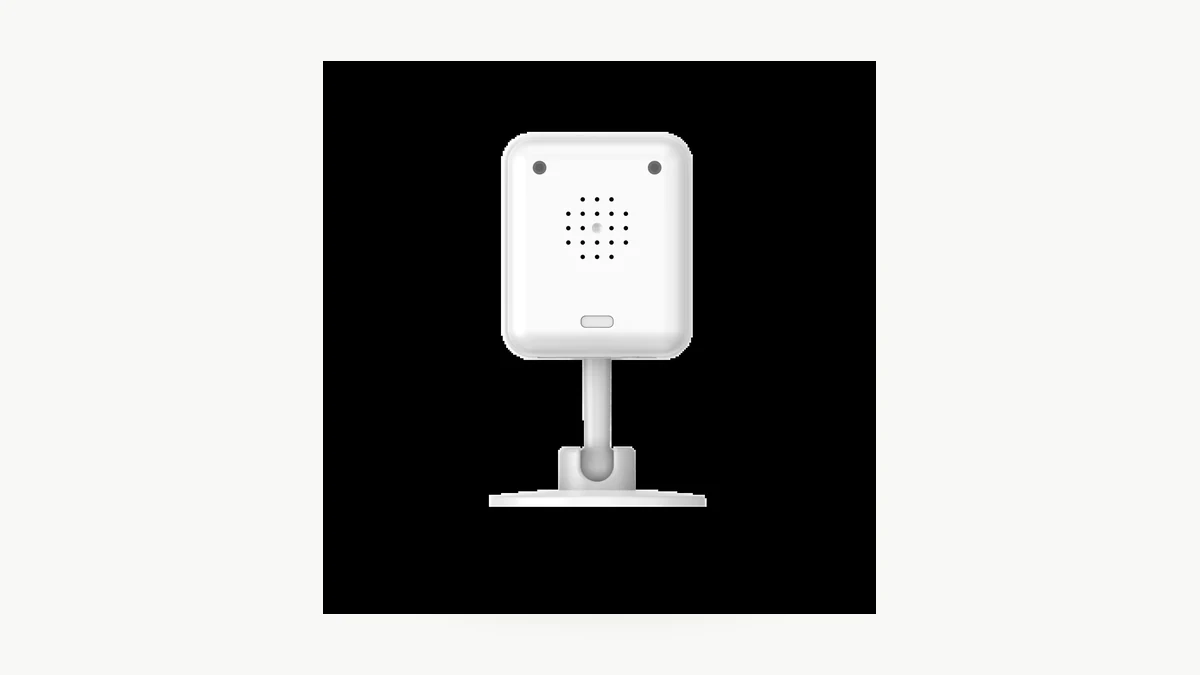
Real QZT C12 product image. Check the real ports, label and manual before describing a camera as Ethernet or PoE.
Use a short acceptance record:
| Field | Record |
|---|---|
| Model / hardware revision | |
| Power input | 5V DC / 12V DC / PoE / other documented value |
| Power connector | USB-C / Micro-USB / barrel / RJ45 PoE / other |
| Network interface | WiFi / Ethernet / both |
| RJ45 port present | Yes / No |
| PoE explicitly documented | Yes / No / Not tested |
| PoE standard / power class | Documented value / Not stated |
| Switch / injector model | |
| Ethernet link established | Pass / Fail / N/A |
| Camera powered from PoE only | Pass / Fail / N/A |
| WiFi disabled during wired-data test | Yes / No / N/A |
| NVR / VMS connection | Pass / Fail / Not tested |
| Reboot / reconnect | Pass / Fail / Not tested |
| Evidence | Photo / manual / switch log / test record |
A separate power lead plus an RJ45 cable is not the same wiring design as one native PoE cable.
What should a quotation say?
Avoid quoting a product simply as “wired indoor camera.”
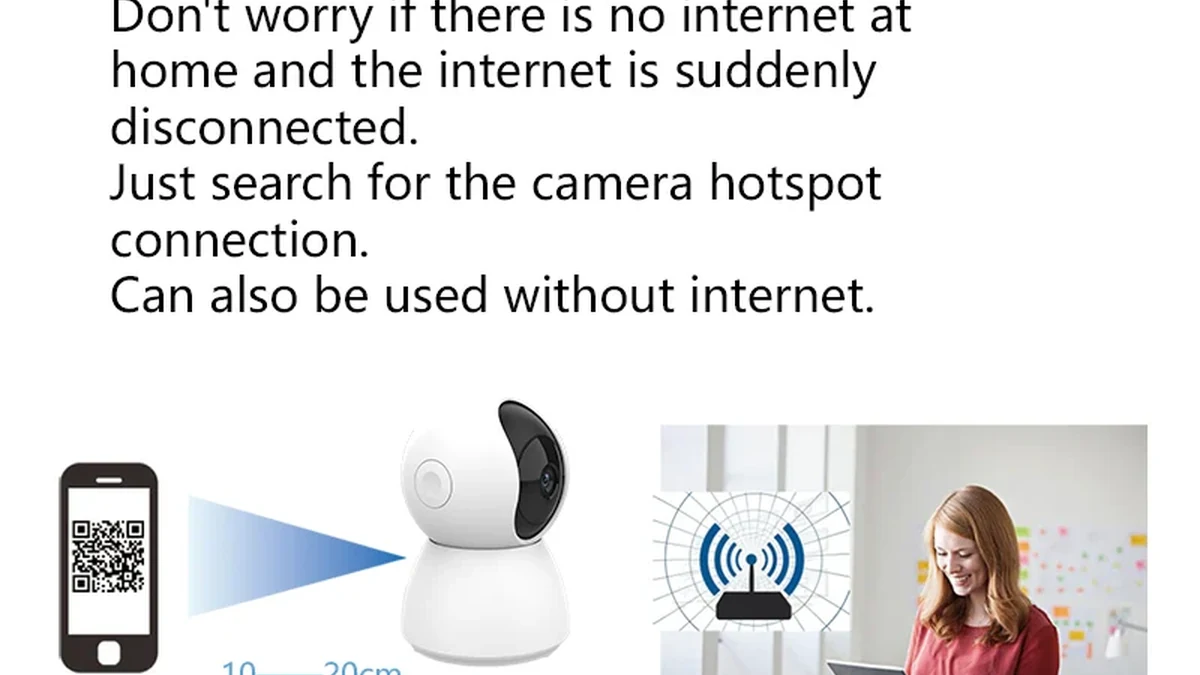
Real QZT C23B package image. Put the power and network interface into the quotation instead of relying on the word “wired.”
Use wording such as:
- 5V DC powered, WiFi data connection
- 12V DC powered, Ethernet data
- PoE network camera, IEEE [documented standard]
- dual network interface: Ethernet + WiFi, if the exact model supports both
For B2B orders, include the plug, adapter, destination market and network interface in the same line item.
If an integrator asks for PoE, request:
Please confirm the exact SKU/hardware version has a native Ethernet interface and documented PoE support. State the PoE standard/power requirement, required switch or injector class, supported network speed, NVR/VMS protocol and whether the camera has any separate DC input. Please provide the matching datasheet/manual and a sample for verification before bulk order.
That prevents a “wired power” product from being delivered into an Ethernet-only project.
Frequently asked questions
Is a plug-in WiFi camera a wired camera?
It is wired for power, but its data path is still wireless. For a specification sheet, write DC powered + WiFi instead of relying on the ambiguous word “wired.”
Does an RJ45 port automatically mean PoE?
No. An Ethernet port can carry data while the camera still needs separate DC power. PoE support must be documented for the exact camera.
Does ONVIF mean a camera has Ethernet or PoE?
No. Current QZT indoor pages demonstrate why those fields should be separate: several list ONVIF while also listing WiFi networking and 5V DC power, with no Ethernet/PoE interface stated.
Can PoE run both power and video data through one cable?
For a supported PoE network camera, yes: compatible Ethernet cabling can carry network data and power from suitable power-sourcing equipment. Verify the exact PoE standard and power budget. See Cisco's PoE overview.
Are C12, C23B or C26 PoE cameras?
Their current QZT public pages list 5V DC power and WiFi networking and do not list Ethernet/RJ45 or PoE. Do not market those current listed configurations as PoE without a different documented hardware version.
Is Ethernet always better than WiFi for an indoor camera?
They solve different deployment needs. Ethernet removes dependence on the WiFi radio path but adds cabling and switch infrastructure. The better architecture depends on the site, resilience requirements and exact camera support.
The practical rule is: write the power path and the data path separately. “Wired” is a description; 5V DC, Ethernet and PoE are specifications.

 English
  Italiano
  Deutsch
  Français
  Español
  Polski