
Yes, hidden camera detectors work when the detection mode matches the target. RF mode can locate an active transmitter, lens-reflection mode can reveal an exposed lens, and magnetic mode can narrow down a magnet-mounted object. No single mode can prove that a room is clear.
– RF mode reacts to radio transmissions. It can help locate an active wireless transmitter, but routers, phones, Bluetooth devices and other normal electronics can create readings too.
– Lens-reflection mode looks for light reflected from an exposed camera lens. It does not need the camera to transmit, but it needs line of sight and the right viewing angle.
– Magnetic mode can help inspect a suspected magnet-mounted object. A magnetic reading does not identify the object as a tracker or camera.
The practical question is which mode matches the thing you are trying to find, and what can still be missed?
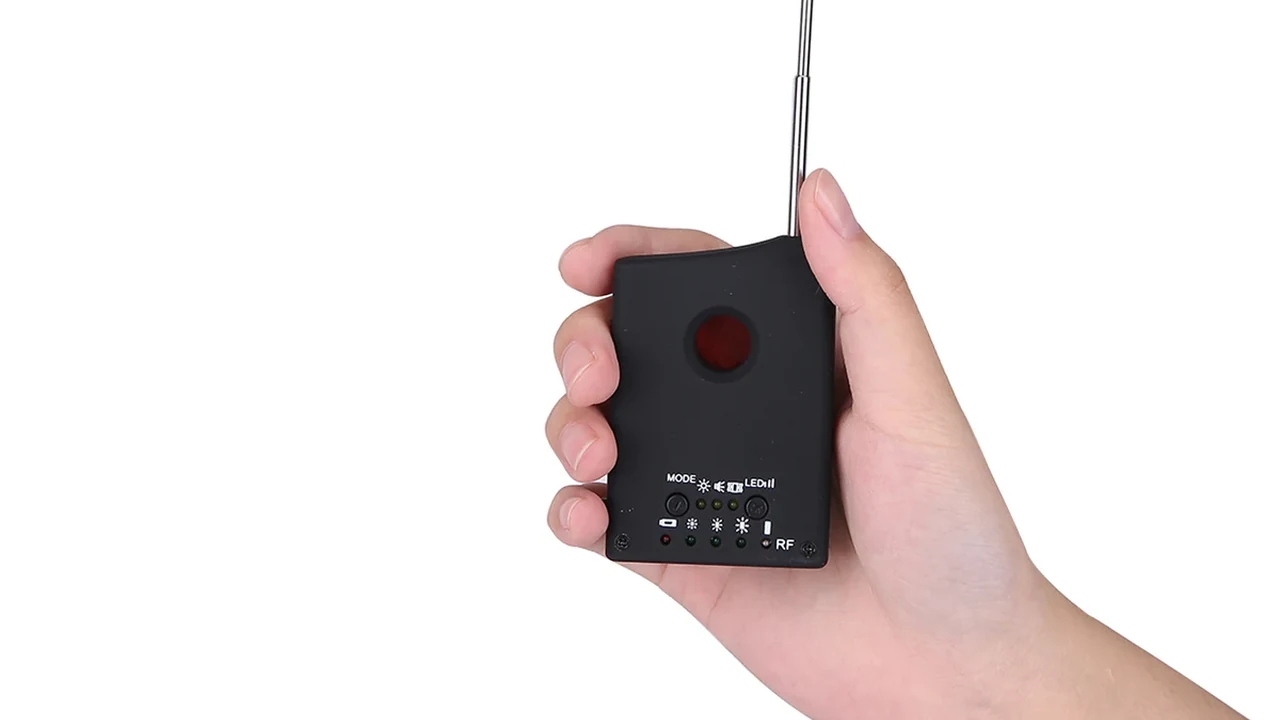
Real QZT DT01 product photograph. DT01 combines an RF signal check with red-light lens viewing; the image itself is not a detection test.
What can RF mode actually find?
RF mode responds to radio-frequency energy. That makes it useful when a hidden camera, microphone, tracker or another device is actively transmitting.
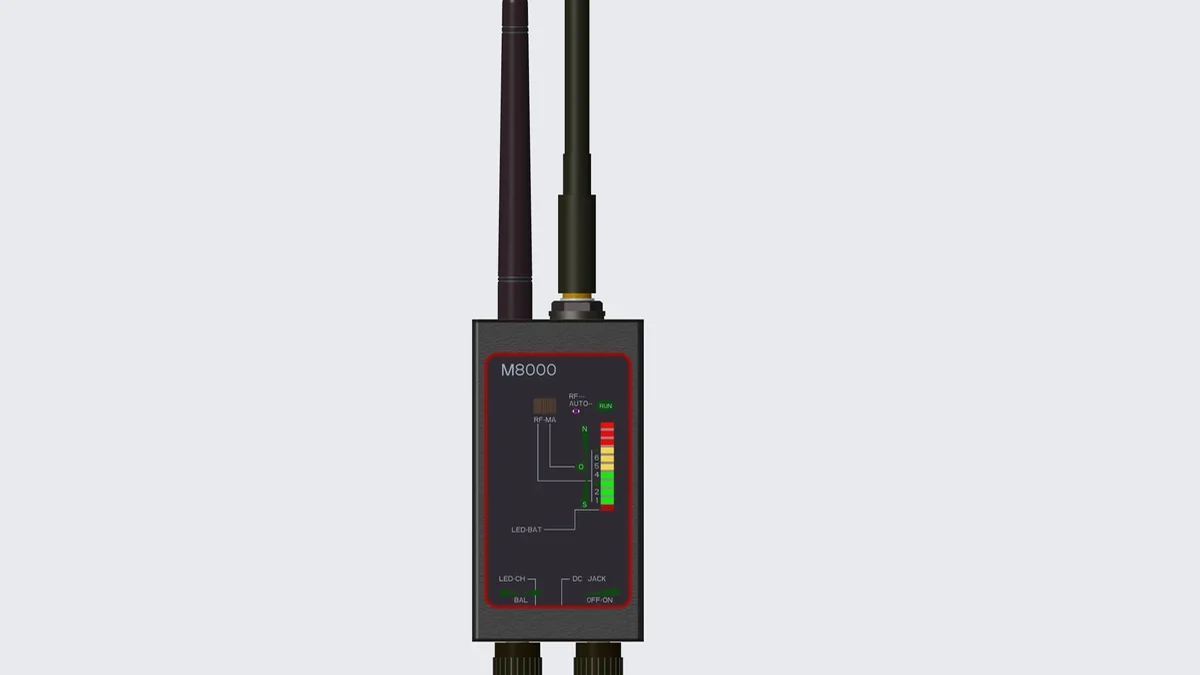
Real QZT M8000 product photograph. An RF reading points to radio activity, not automatically to a hidden camera.
That distinction matters. A detector does not know that a 2.4GHz signal came from a covert camera rather than a router, phone, Bluetooth accessory or smart-home device. The operator has to narrow the source.
A practical sweep usually works like this:
1. establish the normal RF background in the room;
2. move away from or temporarily switch off known transmitters when practical;
3. sweep at a usable sensitivity;
4. lower sensitivity as a reading gets stronger;
5. compare several positions instead of treating the first alert as proof;
6. inspect the suspected object directly.
Current QZT detector pages show why the frequency-range number is only a device specification, not an accuracy score:
– M8000 has a supplier-listed RF range of 1MHz–12GHz.
– P7000 also has a supplier-listed RF range of 1MHz–12GHz.
– Card007 has a supplier-listed RF range of 50MHz–6.5GHz.
– DT01 intentionally does not publish a numerical RF range on its current page because the source material contained a conflicting upper-frequency claim. If a project depends on a specific RF range, request the current tested specification for the supplied batch.
None of those figures tells you the probability of finding every transmitter in a room. Distance, transmit power, antenna orientation, duty cycle, background RF and sensitivity setting all change the reading.
What can lens-reflection mode find?
Lens mode looks for an optical clue instead of a radio signal.
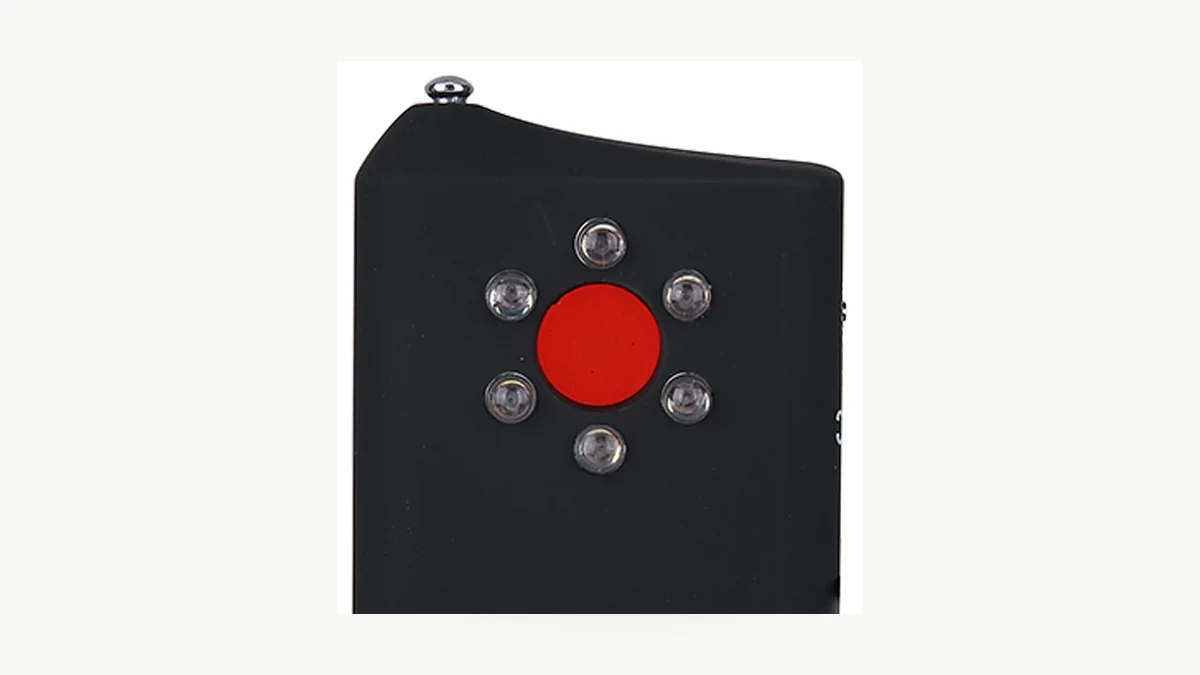
Real QZT DT01 lens-viewing hardware. The operator still needs line of sight and must confirm any reflection by inspecting the object.
DT01 and Card007 use red light and a viewing window to help the operator look for a reflection from an exposed camera lens. Because this method does not depend on a wireless transmission, it can still be useful when a camera records locally or is not sending video at that moment.
But lens reflection has its own limits:
– the lens has to be visible from the search position;
– covers, tinted material, deep recesses or a blocked sightline can hide it;
– the reflection can appear only at a particular angle;
– shiny screws, glass, polished plastic and decorative surfaces can also glint.
That is why a bright reflection is a place to inspect, not proof of a camera.
Move the detector and your viewing angle, then inspect the suspicious opening or object physically. A single sweep from one position is not a complete lens check.
What changes if the device is offline, sleeping or recording locally?
An RF detector needs an RF transmission to react to.
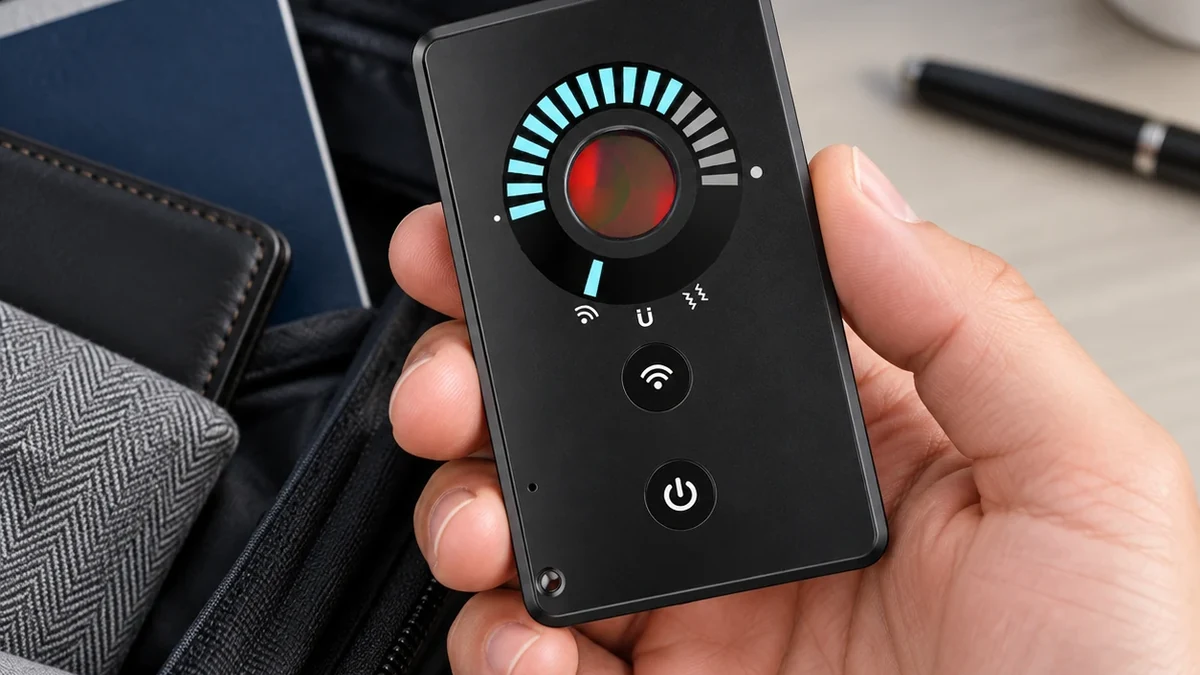
Real QZT Card007 product photograph. Multiple modes are useful because a device that is quiet on RF may still present another physical clue.
A camera that records only to a memory card may produce no useful RF signal during the sweep. A battery camera in a sleep state may also stay quiet until an event wakes it. A powered-off device can be silent on RF entirely.
That does not mean the room is clear.
For a camera with a visible optical path, lens-reflection mode may still help because it is looking for the lens rather than the transmitter. Physical inspection remains important as well.
A small offline voice recorder is a different problem. If it has no active radio transmitter and no camera lens, RF and camera-lens modes are not designed to prove that it is absent. Treat “no RF alert” as exactly that: no RF alert under the conditions of that sweep.
This is also why a detector should not be marketed as a universal “find every recording device” tool.
What can magnetic mode tell you?
Magnetic mode is useful when the object you are looking for may be attached with a magnet, such as some vehicle trackers or temporary mounted devices.
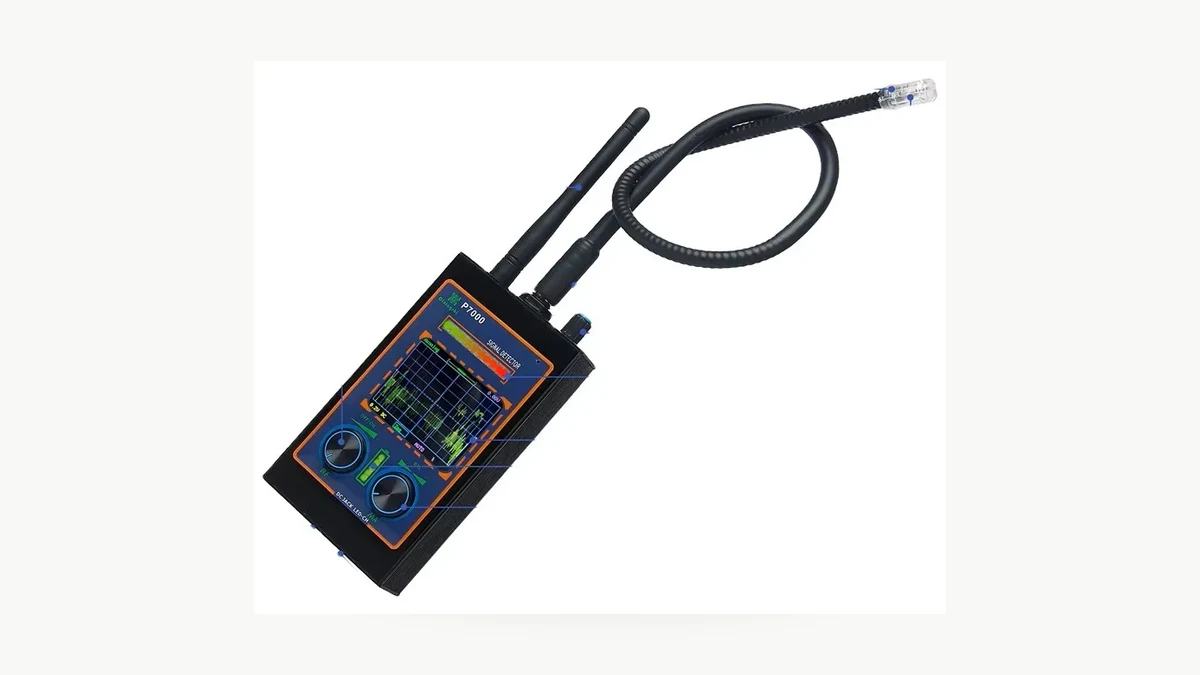
Real QZT P7000 product photograph. Its magnetic probe is a location aid; a magnetic response does not identify the object.
Current QZT products use this mode in different ways:
– M8000 has a separate flexible magnetic-field probe.
– P7000 has a flexible magnetic probe with a tip indicator; its supplier manual lists a response range of up to 150mm under the stated conditions.
– Card007 lists magnetic response within approximately 5cm in the supplier material.
Those are supplier-listed response figures, not universal detection distances and not accuracy percentages.
A magnetic indication does not tell you the brand or purpose of the object. Vehicle hardware, speakers, fasteners, mounts and unrelated magnets can all affect a magnetic search. Use the reading to narrow the inspection point, then confirm what is physically there.
How should you test a detector before you trust it?
The useful sample test is not “turn it on and see whether it beeps.” Use known targets and known decoys under repeatable conditions.
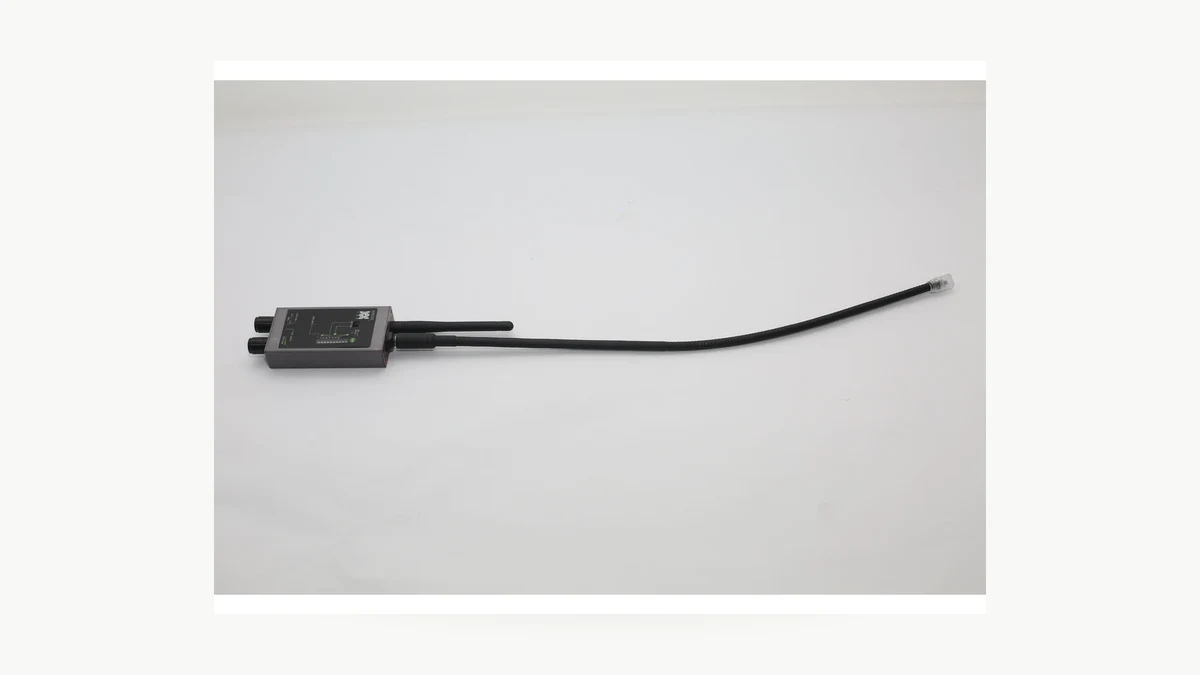
Real QZT M8000 product photograph. A sample test should record conditions, hits, misses and false positives rather than relying on one demonstration.
Build a small test set:
| Test target | RF expected? | Lens expected? | Magnetic expected? | Result |
|---|---|---|---|---|
| Known WiFi camera while actively streaming | Yes | If lens visible | Usually no | Not tested |
| Same camera recording locally with wireless transmission disabled | No useful RF expected | If lens visible | Usually no | Not tested |
| Camera in a sleep state | Depends on activity | If lens visible | Usually no | Not tested |
| Known benign router / phone / Bluetooth device | Yes | No | No | Not tested |
| Shiny screw or polished object | No | Possible false reflection | No | Not tested |
| Known magnet-mounted test object | Depends on transmitter | Depends on optics | Yes | Not tested |
Keep the room, distances and device states written down. Repeat the same sweep at more than one sensitivity.
For RF testing, include normal wireless equipment so you can see how easily the operator can separate known background sources from the target. For lens testing, include shiny decoys so a “glint” is not automatically counted as success. For magnetic testing, compare ordinary vehicle or room hardware with the known magnetic target.
Do not turn a sample demonstration into a percentage such as “90% accurate” unless you have a documented test design, enough trials and the actual hit/miss data to support that number.
What do the current QZT detector modes actually cover?
Different QZT models are built for different inspection clues.
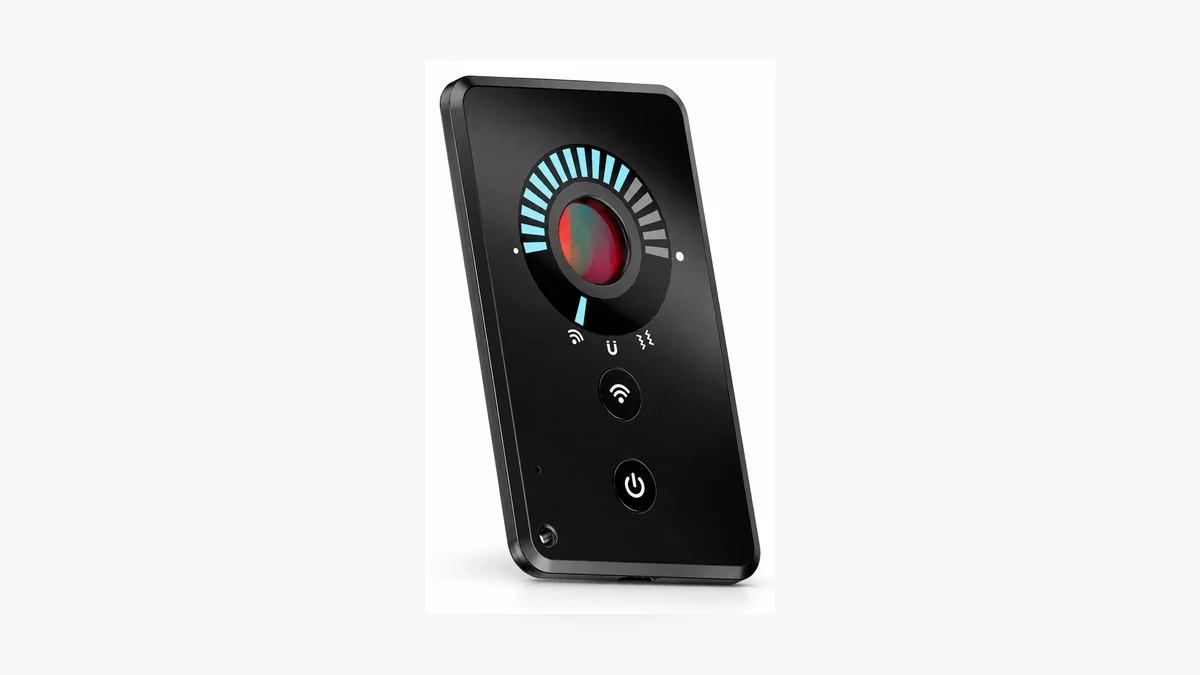
Real QZT Card007 product photograph. The mode matrix below is based on current product specifications, not a ranking of which detector is “best.”
| Model | RF signal | Lens reflection | Magnetic check | Current frequency wording | What the specification does not prove |
|---|---|---|---|---|---|
| DT01 | Yes | Yes | No | Numerical range intentionally omitted pending current tested batch spec | Detection probability, false-positive rate, all-camera coverage |
| M8000 | Yes | No | Yes | Supplier-listed 1MHz–12GHz | Camera-lens detection, device identity, universal range |
| P7000 | Yes | No | Yes | Supplier-listed 1MHz–12GHz | Camera-lens detection, device identity, universal range |
| Card007 | Yes | Yes | Yes | Supplier-listed 50MHz–6.5GHz | Automatic device identification, guaranteed accuracy |
Choose the mode around the inspection task, then test the sample around the environment where it will actually be used.
If you are comparing detector models for resale or procurement, the broader hidden camera detector buying guide can help organize the purchase criteria. This article owns the narrower technical question: what each detection method can and cannot establish.
Frequently asked questions
Can an RF detector find a camera that is turned off?
Not through RF alone. A powered-off camera is not actively transmitting. If the lens remains visible, a separate lens-reflection check may still help. Physical inspection or a different specialized method may be needed for electronics that are not transmitting.
Can an RF detector find an SD-card-only camera?
If the camera is not transmitting wirelessly, RF mode may have nothing relevant to detect. Lens-reflection mode can still be useful if the lens is exposed and visible from the search angle.
Can lens detection find every hidden camera?
No. Lens reflection depends on line of sight, viewing angle and the lens being optically exposed. Covers, dark material, recessed placement and glare can reduce or hide the reflection.
Why does an RF detector react near my router or phone?
Because those devices intentionally transmit radio signals. RF mode reacts to radio energy; it does not automatically know which source is a covert device. Baseline the room, move or disable known sources when practical, and lower sensitivity as you narrow a reading.
Does a wider frequency range mean a detector is more accurate?
No. A listed RF frequency range describes what frequencies the hardware is intended to respond to. It does not by itself establish sensitivity at every frequency, detection distance, false-positive rate or probability of finding a target.
Can a magnetic detector identify a GPS tracker?
A magnetic response can help locate a strong magnetic mounting point. It does not identify the object as a GPS tracker, and many ordinary objects can create a magnetic response. Inspect the location directly.
The practical rule is simple: RF finds transmissions, lens mode looks for an optical reflection, and magnetic mode looks for a magnetic clue. None of them replaces confirmation of the object itself.

 English
  Italiano
  Deutsch
  Français
  Español
  Polski