
What Is a WiFi Exam Camera Module and How Does It Work
An exam camera module is a specialized covert surveillance device designed specifically for examination environments. Unlike a complete surveillance kit that includes its own display, battery, and earpiece receiver, the module component is the core recording and transmission unit — the part that captures video, connects to a wireless network, and sends the live feed to a receiver device worn by the test taker. The module is one piece of a two-part system: the camera unit itself, and the receiver which handles the display and audio feedback. Understanding this distinction matters because sourcing, replacing, and upgrading each component happens independently.
The QZT WiFi Exam Camera Module with Earpiece represents a fully integrated solution — the module handles both recording and WiFi transmission, while the accompanying earpiece provides the audio channel. This article explains how the module works, how it differs from a complete kit, what specifications are relevant in 2026, and how buyers and distributors should evaluate this product category.
Understanding the Module vs. Complete Kit Distinction
Before evaluating specifications, it is important to understand what you are actually purchasing, because the term “exam camera module” can refer to three different product configurations.
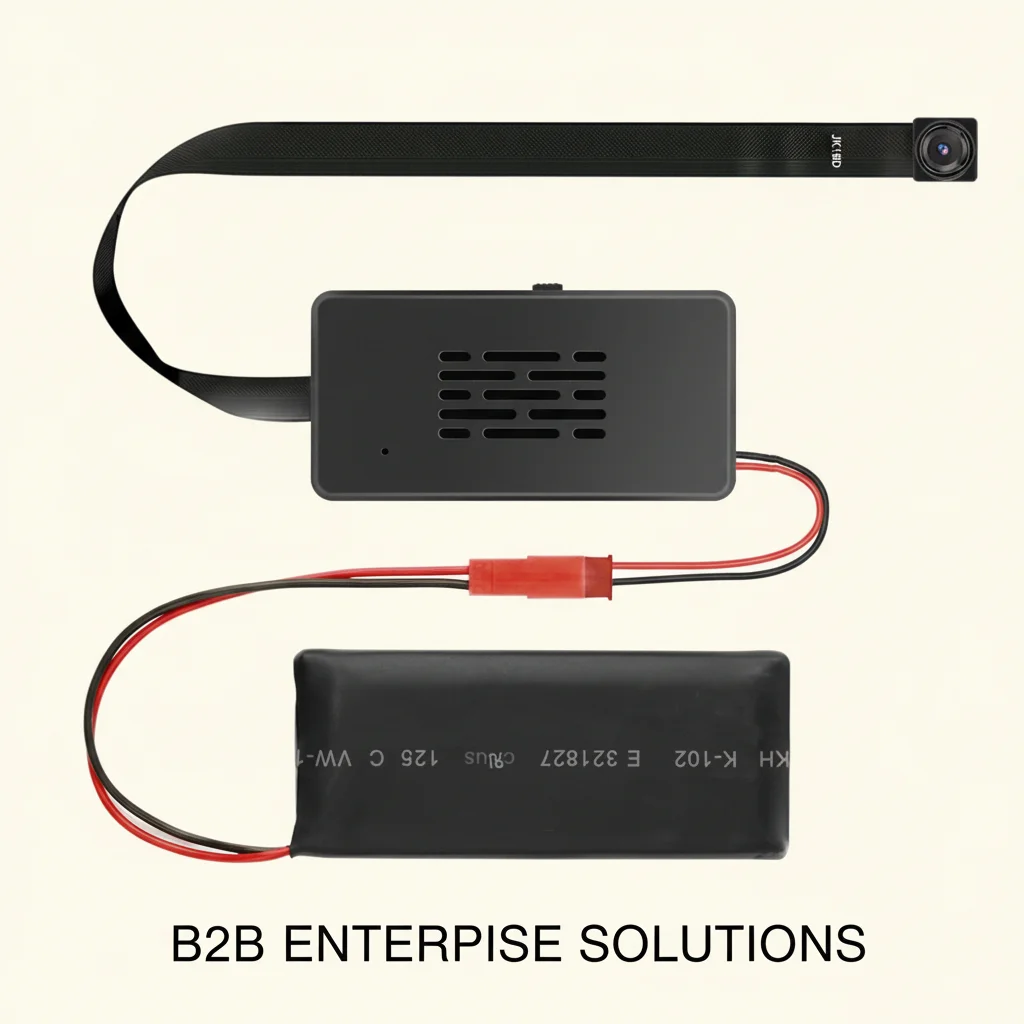
A standalone module is the camera unit alone — a small board with a lens, a wireless transmitter, and a power connector. It requires an external power source, a separate receiver device, and usually custom integration. This is primarily a component for electronics hobbyists, security researchers, or systems integrators building custom surveillance solutions.
A module with earpiece — the configuration of the QZT product — includes the camera unit and a wireless earpiece receiver in a single package. The camera transmits video over WiFi to the earpiece, which provides an audio channel and sometimes a small built-in display or bone-conduction speaker. This is the configuration most commonly sold to end users and what the QZT product delivers.
A complete exam kit adds accessories such as external battery packs, secondary hidden earpieces, carrying cases, and instructional materials. A kit is appropriate when you need extended battery life, multiple earpiece options, or a turnkey deployment without sourcing individual components separately.
The QZT WiFi Exam Camera Module with Earpiece sits in the middle category — ready to use out of the box with the earpiece included, but requiring no additional accessories for basic operation.
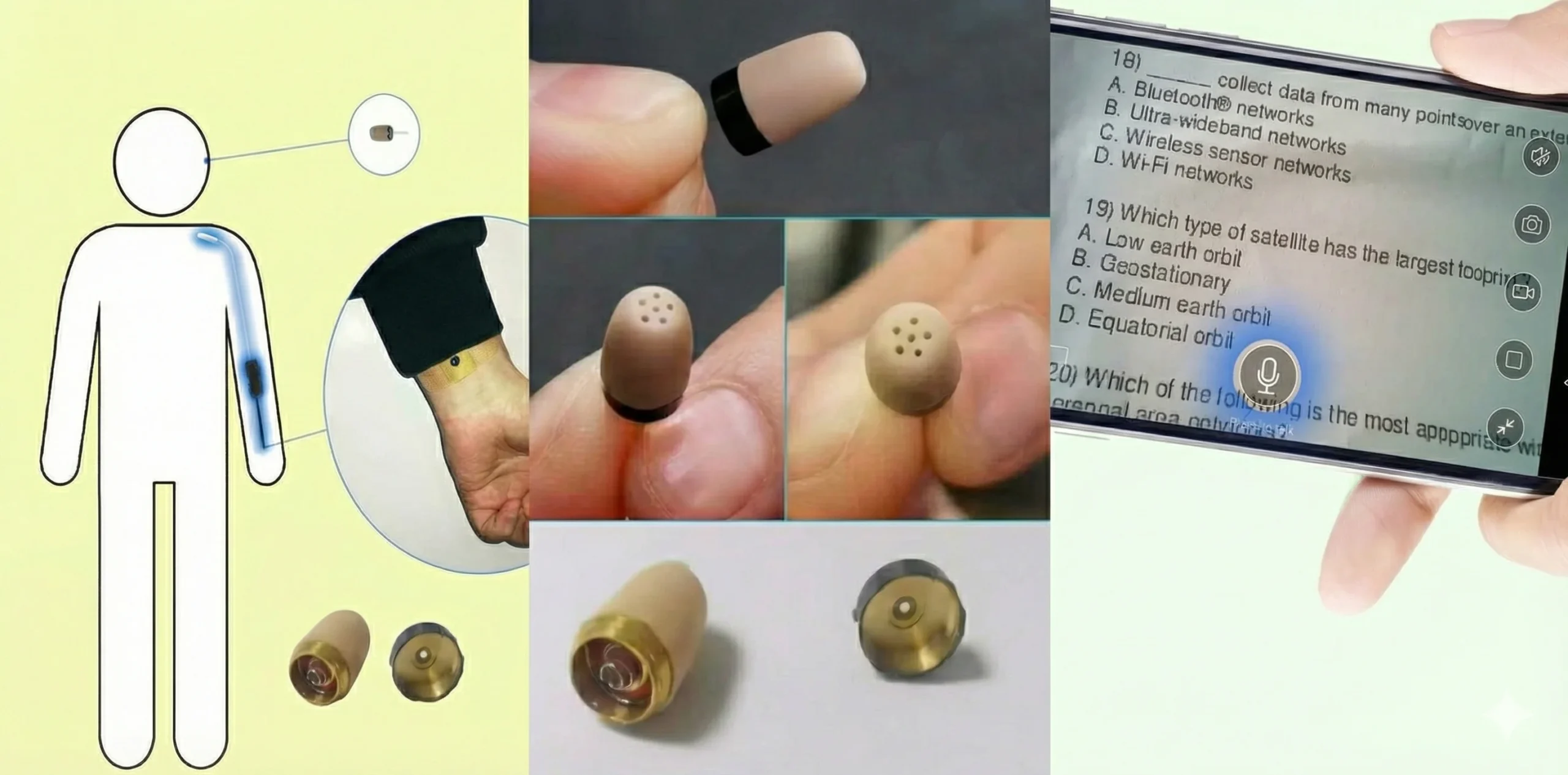
How WiFi Transmission Works in Exam Camera Modules
The defining characteristic of a WiFi exam camera module is that it transmits its live video feed over a wireless network rather than through a proprietary radio frequency. This distinction matters in two practical ways.
Traditional FM or analog exam cameras use a dedicated radio transmitter operating on a specific frequency band — typically 1.2GHz or 2.4GHz analog — which requires a matching FM receiver worn by the user. These systems are reliable within their range but are limited by fixed frequency regulations, potential signal interference from other devices, and the inability to connect to a smartphone or computer for recording or remote viewing.
WiFi exam cameras transmit over standard 802.11 b/g/n networks using the 2.4GHz band. The camera creates a small web server or streams through the Tuya smart home platform, and the receiver — whether an earpiece, a smartphone application, or a dedicated monitor — connects to this stream through the same network. This means you can monitor the exam feed from multiple devices simultaneously, record the stream to a phone or computer, and access it remotely if the network has internet connectivity.
The trade-off is that WiFi exam cameras require a stable WiFi network or a mobile hotspot to operate. In environments without WiFi infrastructure — some examination centers, remote locations, or areas with restricted network access — a traditional FM system may be more reliable because it does not depend on network availability. The QZT WiFi Exam Camera Module can also operate in AP mode, creating its own local WiFi network, which partially addresses this limitation.
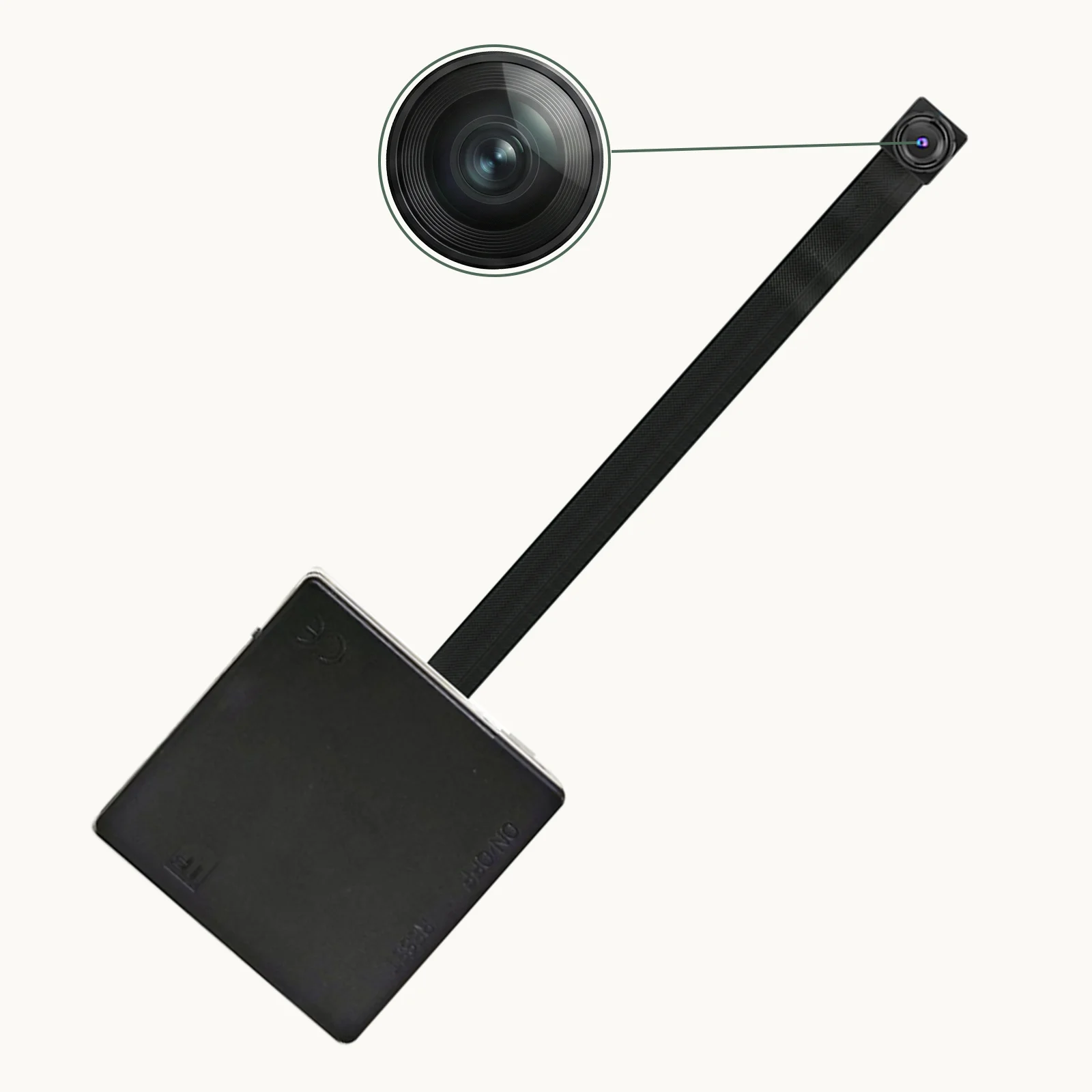
Key Specifications: What Each Number Actually Means
Resolution — The QZT WiFi Exam Camera Module supports 4K recording in some configurations, with 1080p as the standard output for live streaming. In an examination context, resolution matters most for two things: reading handwritten text on the exam paper and identifying faces at a close distance. For text that is 10-15cm from the lens, 1080p is sufficient. 4K becomes relevant when you want the ability to crop and zoom into specific areas of the frame while maintaining readable text.
Lens Angle — A narrower lens angle (60-90 degrees) captures less of the surrounding environment but provides better magnification of close-up text. A wider lens captures more room context but reduces the pixel density on the exam paper itself. For most exam scenarios, a 90-120 degree lens strikes a practical balance.
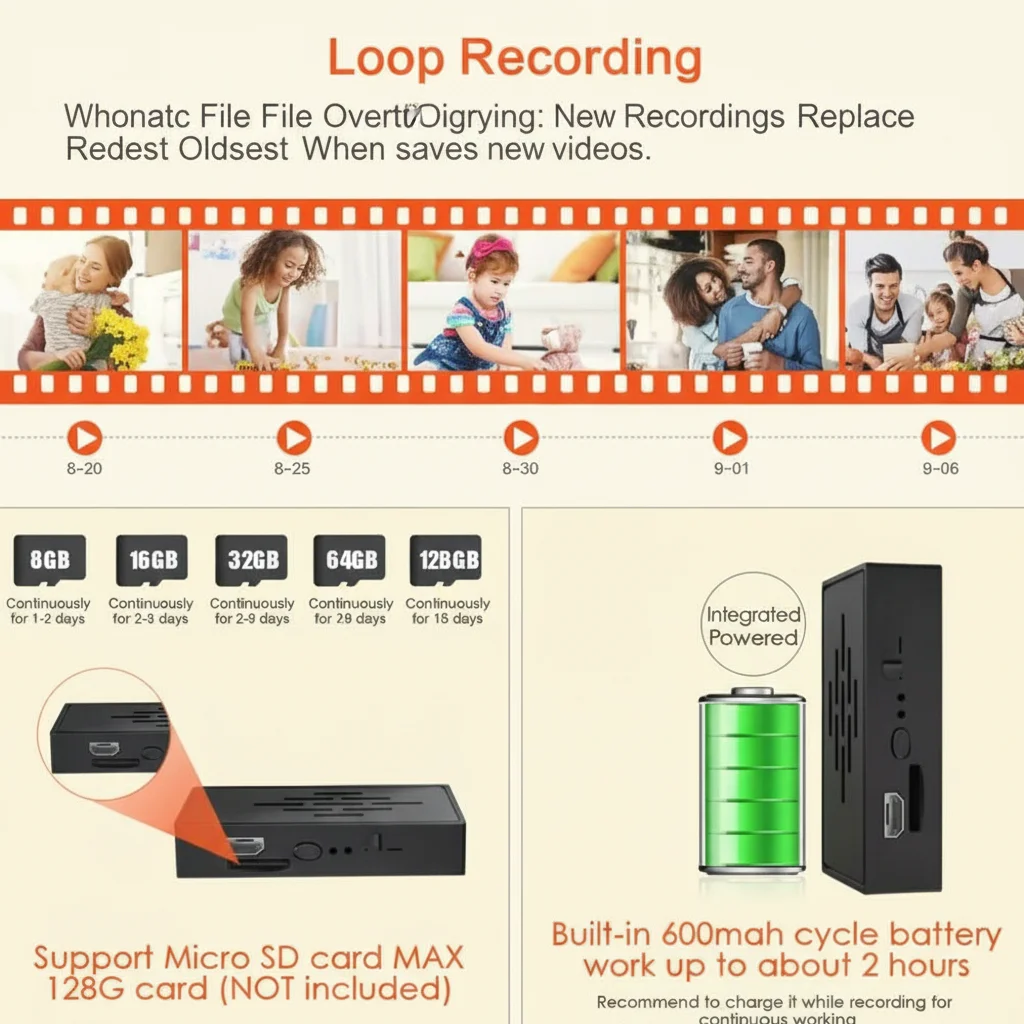
Battery Life — The module’s battery determines how long it can operate without external power. The QZT module specifications indicate up to 12 hours of continuous operation from the internal battery in some configurations, which covers a full examination day. Extended battery packs — available as accessories — can push this to 24+ hours for multi-session or multi-day use.
Storage — Most exam camera modules support micro SD cards up to 128GB for local recording backup. This provides redundancy in case the WiFi transmission fails — footage is captured locally and can be retrieved after the session. Without local storage, a network failure means no recording at all.
Audio Channel — The earpiece receiver provides the audio channel for remote guidance. Audio latency — the delay between what the proctor observes and what the test taker hears — is critical. A latency of more than 1-2 seconds can make real-time assistance impractical. Quality WiFi modules and earpieces maintain latency within acceptable limits, but this is an area where budget alternatives frequently underperform.
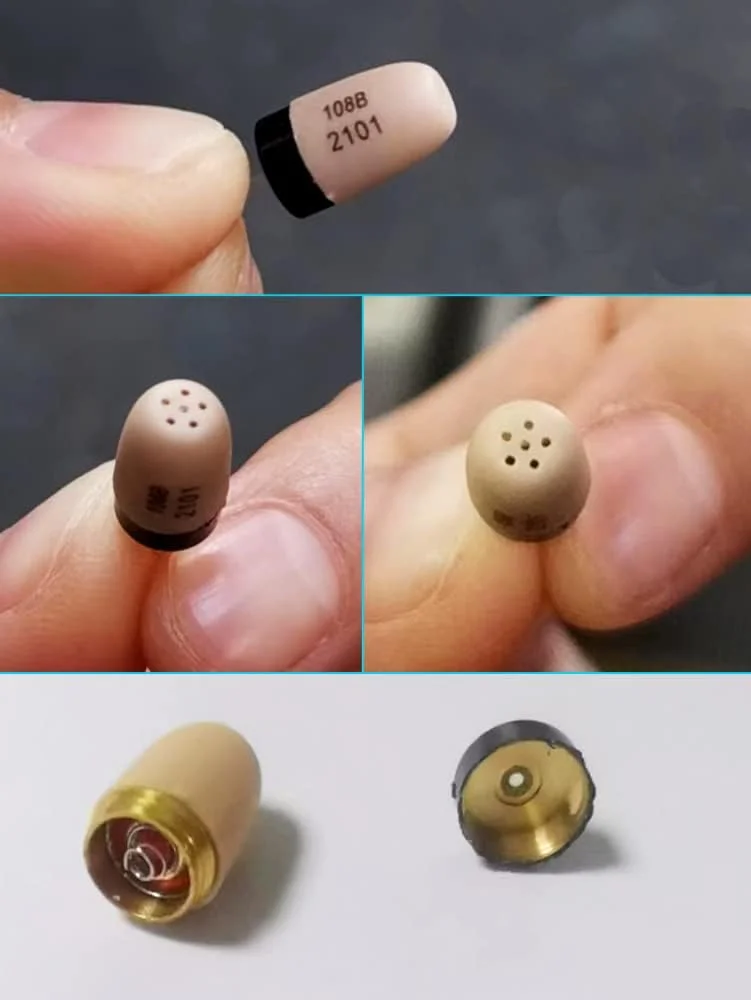
Common Applications for Exam Camera Modules
Exam camera modules serve several distinct use cases that go beyond their surface-level description as “exam tools.” Understanding the full range of applications helps distributors identify buyer segments and match products to customer needs.
Standardized Test Assistance is the most commonly discussed application. In competitive examination environments where test scores have significant consequences, exam camera modules provide a real-time video feed to an external helper who can view questions and relay answers. The earpiece transmits the guidance audio to the test taker. This use case is illegal in most formal examination environments under strict proctoring conditions, and the legal section below addresses this reality directly.
Professional Licensing Exam Support covers a gray area. Some jurisdictions allow examination assistance for individuals with documented disabilities or specific accommodations. In these cases, exam camera modules used under formal accommodation agreements are legally permitted. The distinction between unauthorized assistance and legitimate accommodation is one that distributors should understand and communicate clearly to customers.
Lecture and Presentation Capture represents a legitimate use of the same hardware. The camera module, worn or positioned discreetly, can capture a lecture or presentation from the test taker’s perspective. Combined with the earpiece for audio pickup, this creates a first-person recording of proceedings. The module’s compact size makes it suitable for this application in ways that larger cameras are not.
Security Research and Product Development — Electronics engineers, security researchers, and developers building systems that interact with WiFi cameras use exam camera modules as development platforms. The accessible form factor and standard WiFi interface make the modules useful for testing wireless camera behavior in controlled environments.
How to Set Up the WiFi Exam Camera Module for First Use
Setting up a WiFi exam camera module requires careful attention to detail because a configuration error during a live exam can mean the difference between a working system and a wasted attempt. Follow this setup procedure methodically before any real deployment.
Pre-deployment preparation (the day before): Fully charge the module and the earpiece. Format a micro SD card in the module’s settings menu. Perform a full test recording in the environment where you plan to use the device — not just a test at your desk, but in the actual room type you expect. Note any WiFi dead zones, signal interference from fluorescent lights or electronic equipment, and check that the earpiece audio is clear at your planned wearing position.
Network configuration: Decide whether to use STA mode (connect to a local WiFi network or mobile hotspot) or AP mode (the module creates its own network). STA mode with a mobile hotspot is generally more reliable in examination environments because you control the network and there is no dependency on venue WiFi infrastructure. Set up the mobile hotspot on a dedicated phone with the screen locked to prevent accidental disconnections.
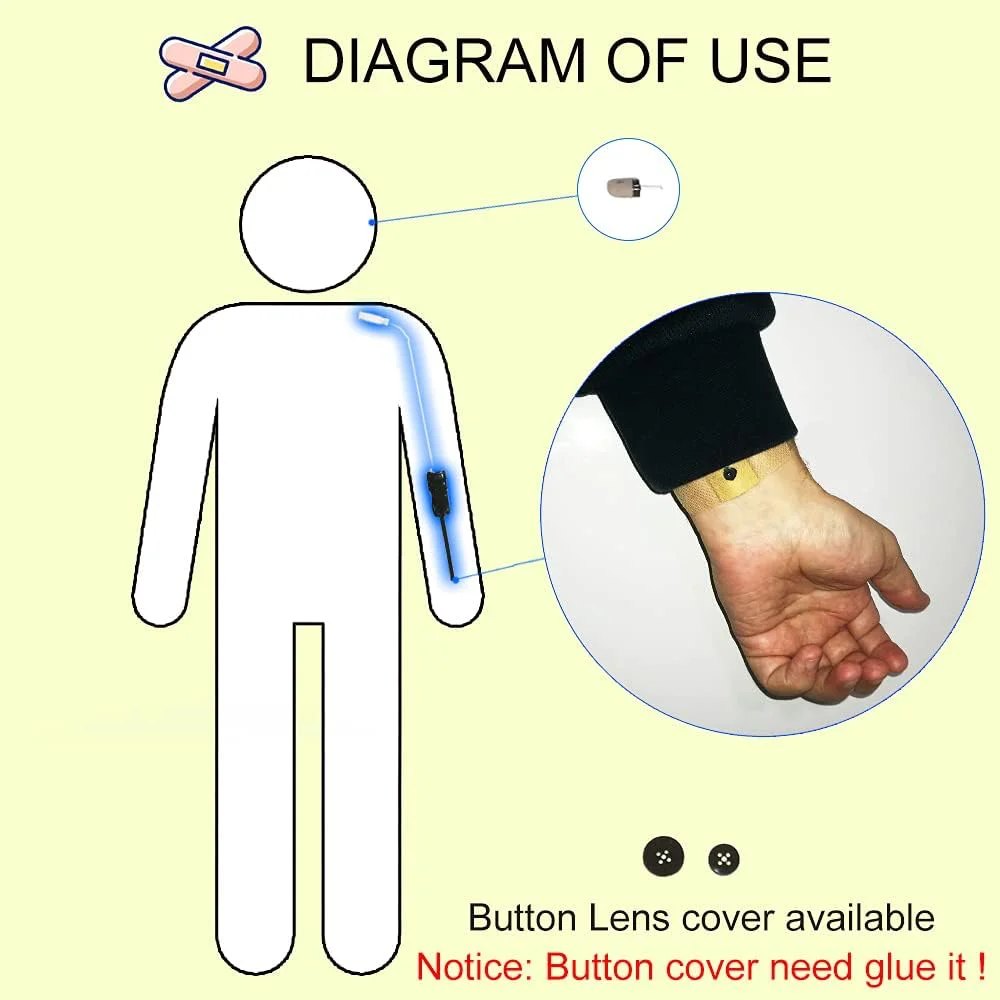
Module positioning: The camera lens must be unobstructed and oriented toward the exam paper or screen you need to capture. Use the earpiece’s audio feedback to confirm the camera angle is correct before you begin. Small adjustments in lens positioning can dramatically change the readability of captured text.
Live verification: Before the exam begins, have your helper confirm they can see the live feed clearly and that audio is working in both directions if applicable. Run this check for at least 5 minutes to catch any intermittent connection issues that a 30-second test would miss.
Legal Compliance and Responsible Use
The legal status of exam camera modules varies significantly across jurisdictions, and the consequences for misuse range from device confiscation and exam disqualification to criminal charges. This section provides a general framework, but distributors and users must consult jurisdiction-specific legal advice before purchasing or deploying these devices.
In the United Kingdom, using an exam camera module to cheat in a formal examination constitutes an offense under the I Ching (Examinations) Act and can result in criminal prosecution, formal exclusion from the qualification, and reporting to professional bodies for licensed professions. The UK GDPR also applies to any personal data captured, which includes footage of examination venues and other candidates.
In Germany, cheating in written examinations is handled under university or examination board disciplinary codes rather than criminal law in most cases, but professional licensing examinations may involve criminal fraud provisions. Recording without consent in examination venues is additionally subject to GDPR compliance requirements. The Garante-style data protection enforcement in Germany has resulted in significant fines for unauthorized surveillance in recent years.
In Italy, examination fraud is governed by university disciplinary codes and, in professional licensing contexts, by specific legislation. The use of covert recording devices without authorization is regulated under the Italian privacy code (Codice in materia di protezione dei dati personali). Consequences include exam disqualification, degree revocation, and professional practice bans.
In France, cheating in national examinations is criminalized under the Code de l’education. The use of exam camera modules or any wireless transmission device constitutes cheating and is punishable by up to three years imprisonment and a fine of €9,000 under Article L311-3.
The QZT WiFi Exam Camera Module with Earpiece is a legitimate product with legitimate applications. Distributors bear a responsibility to include clear compliance guidance with every unit and to decline to market the product for purposes that are illegal in their target markets. Products that facilitate examination fraud undermine the credibility of legitimate users and create legal liability for everyone in the supply chain.
Maintenance and Troubleshooting
Exam camera modules are precision electronic devices that require careful handling to maintain reliable performance. The following maintenance and troubleshooting guidance covers the most common issues.
Module fails to connect to WiFi. Confirm that the network operates on 2.4GHz — most exam camera modules do not support 5GHz networks. Check that the network does not have MAC address filtering or captive portal authentication that would block the module’s connection. Try resetting the module to factory settings and re-entering the network credentials. If using a mobile hotspot, confirm the hotspot is configured to allow device-to-device connections (some carriers block ad-hoc networking).
Earpiece audio is unclear or cuts out. Audio quality depends on the wireless link between the module and the earpiece. Interference from WiFi networks, Bluetooth devices, and cordless phones can degrade the signal. Try switching the module to a different WiFi channel or moving to an area with less RF congestion. Ensure the earpiece is charged and within the specified operating range. Wax or debris in the earpiece speaker can also degrade audio quality — clean the earpiece mesh gently with a dry cotton swab.
Recorded footage is blurry or unreadable. Lens focus is set at the factory for standard reading distance (approximately 20-40cm). If the exam paper is closer or further than this range, the image will be out of focus. Some modules include adjustable lens focus — consult the product manual. Also verify the resolution setting is at maximum and that the SD card write speed is sufficient for 1080p recording (a Class 10 or U1 rated card is required).
Module overheats during extended use. Continuous 4K recording generates significant heat. Allow the module to rest between uses, and avoid placing it in direct sunlight or inside sealed pockets during operation. If overheating causes automatic shutdown, let the device cool for 10-15 minutes before restarting.
Why Choose the WiFi Version Over a Traditional FM Exam Camera
WiFi-based exam camera modules represent the current generation of this product category, and the wireless technology advantages are meaningful in practice.
Network recording is the primary advantage. An FM exam camera records to a local receiver, which means if the receiver is lost, confiscated, or malfunctions, there is no backup. A WiFi module can simultaneously stream to a remote server, record to a local SD card, and transmit to a mobile app — three redundant recording paths instead of one. For any use case where the recording matters, this redundancy is significant.
Multi-device monitoring lets multiple authorized people view the live feed simultaneously from different devices. With an FM system, only the person with the receiver can see what is happening. With a WiFi module, a supervisor, a technical assistant, and the test taker can all monitor the feed on their own devices.
Remote access means the system can be monitored from anywhere with network connectivity. This is valuable for technical support — if the test taker has a problem, an IT support person can log in and diagnose the issue without being physically present in the examination room.
Standard hardware is easier to maintain and support. WiFi modules use standard consumer electronics components that are widely available and inexpensive to replace. FM systems require matched transmitter-receiver pairs and specialized repair expertise. When something fails in a WiFi system, replacement parts and technical support are more accessible.
Conclusion
The WiFi exam camera module is a purpose-built wireless surveillance tool that transmits live video over standard WiFi networks while remaining compact enough to be deployed discretely in examination environments. The QZT WiFi Exam Camera Module with Earpiece combines 4K recording capability, 12+ hour battery life, dual-mode WiFi connectivity, and local SD card storage in a single integrated package.
For distributors evaluating this product category, the key sourcing considerations are: firmware stability and update availability (WiFi devices require ongoing security patches), regulatory compliance documentation for target markets, and clear legal guidance materials to include with every unit. The market for legitimate uses — disability accommodations, professional licensing with formal approval, lecture capture, and security research — is genuine and underserved by vendors who market exclusively for unauthorized examination assistance.
For B2B buyers seeking volume pricing or custom configurations, the full product specifications, available accessories, and customization options for OEM and wholesale orders are listed on the QZT Covert WiFi Exam Camera Module with Earpiece product page.
Frequently Asked Questions
Can the exam camera module record without WiFi connected?
Yes. Most exam camera modules include a micro SD card slot for local recording that works independently of the WiFi connection. The module records to the SD card regardless of network status, providing a backup recording even if the WiFi link fails completely.
How long does the earpiece battery last on a single charge?
The earpiece typically provides 4-6 hours of continuous audio playback on a full charge. Carry a portable power bank as a backup for all-day use, and charge the earpiece during breaks when possible.
What is the maximum WiFi range for the module in AP mode?
In AP mode, the module typically maintains a stable connection within 10-20 meters in open environments. Walls, furniture, and electronic interference reduce this range. For reliable coverage, test the specific environment before deployment.
Can I use a smartphone as the receiver instead of the earpiece?
Yes. The Tuya smart home application allows any smartphone connected to the same network to view the live camera feed. The earpiece remains useful for situations where audio needs to be received discreetly without looking at a phone screen, but the smartphone app provides a more detailed view and allows recording directly to the phone.
Is the exam camera module detectable by standard examination proctoring equipment?
Detection depends on the proctoring technology used. Standard metal detectors do not detect the module because it contains minimal metal components. Some examination centers use WiFi signal detectors or jamming equipment that can identify the presence of an active wireless transmission. RF-scanning wands used in high-security environments may also detect the module. Inform yourself about the specific proctoring technology used in your examination venue.
What SD card speed rating is required?
A Class 10 (10MB/s minimum write speed) or U1-rated micro SD card is required for reliable 1080p recording. For 4K recording, a U3-rated card (30MB/s minimum write speed) is recommended. Using a card with insufficient write speed will result in dropped frames, recording corruption, or the camera failing to start.
Does the QZT exam camera module support both 2.4GHz and 5GHz WiFi?
No. The current generation of QZT exam camera modules operates on 2.4GHz WiFi only. Ensure your mobile hotspot or WiFi network provides a 2.4GHz band for the module to connect to.

 English
  Italiano
  Deutsch
  Français
  Español
  Polski