
The most useful hidden-camera trends in 2026 are not one magic sensor or one “AI” feature. Current products are changing in several practical ways at once: more app ecosystems, more combinations of local and remote storage, more 4K-labeled configurations, more power choices, and more model-specific detection features.
The broader video-surveillance industry is moving in the same direction. Axis Communications’ 2026 technology outlook highlights ecosystem-first decisions, evolving hybrid architectures, stronger edge computing and growing mobile surveillance. But those industry trends should not be copied onto a covert camera specification unless the exact product actually supports the feature.
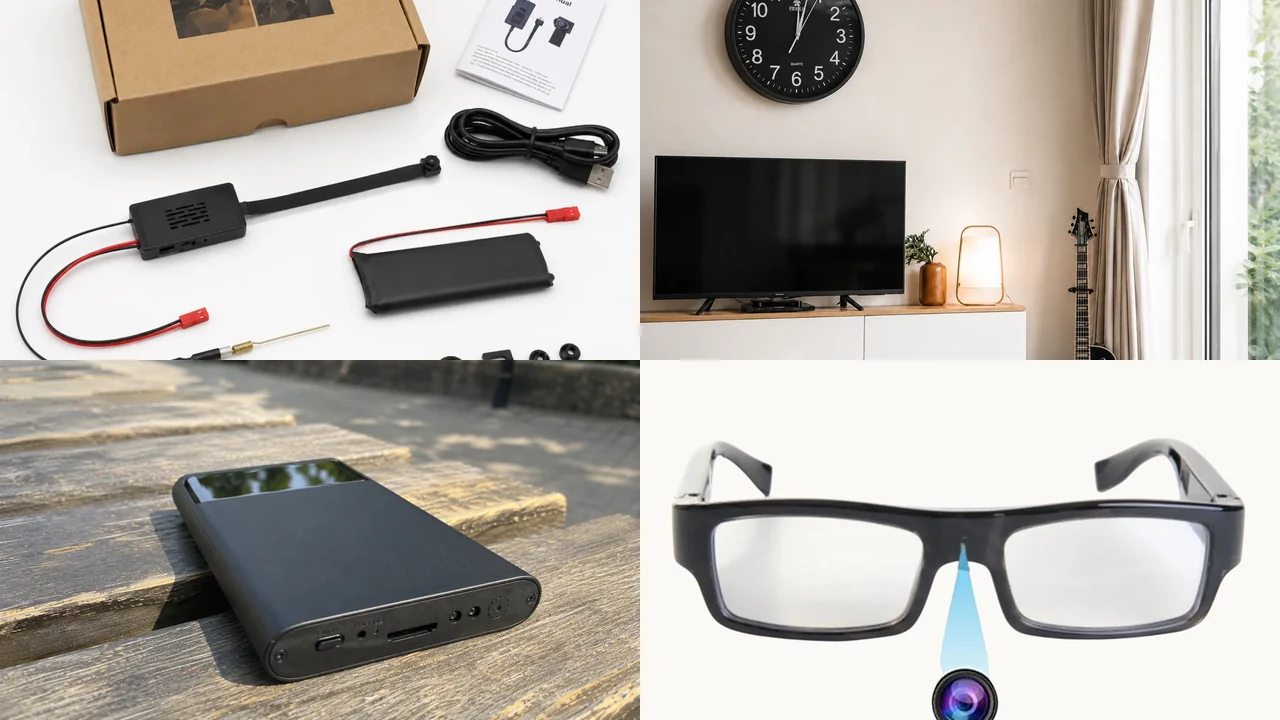
No-text composite of real QZT product-source images. It shows current form factors, not a market-share chart or same-condition performance test.
1. App ecosystem is becoming part of the product decision
A hidden camera is no longer defined only by its lens and recorder. For connected models, the app, account and server path can affect setup, remote viewing and long-term support.
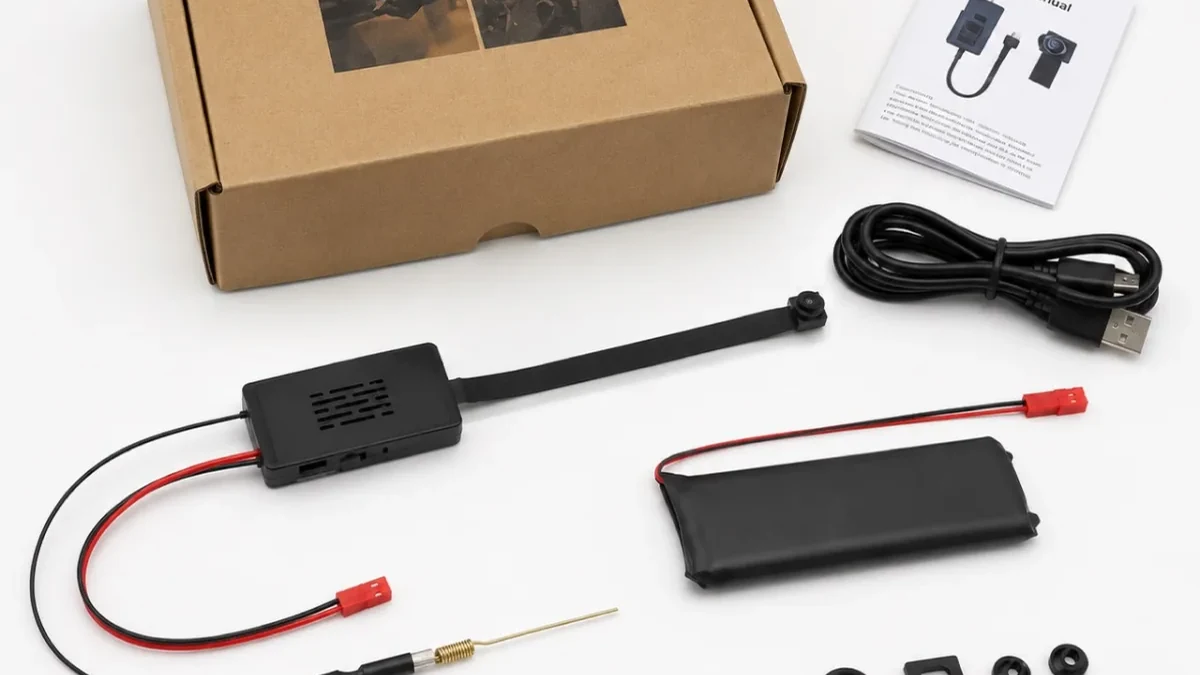
Real QZT C10/Tuya module product image. The exact app, firmware and supported functions still need model-level verification.
QZT’s current DIY Hidden Spy Camera Kit with Tuya WiFi Module is one example. The page lists a Tuya Smart configuration, 2.4GHz WiFi, 1080p and 4K options, motion alerts, battery or USB power and MicroSD storage.
Other current products use different platforms. The Z13 4K WiFi Alarm Clock Camera uses AllCam365 rather than Tuya. That means “WiFi hidden camera” is no longer enough information for a buyer.
Before a sample is approved, record:
– exact app name;
– hardware and firmware version;
– account/region requirements;
– whether the service needs a cloud plan;
– whether local recording keeps working when the remote service is unavailable;
– what happens if the app or server changes later.
Axis calls this broader shift ecosystem-first decision making. In a hidden-camera product, the practical version of that trend is simple: choose the platform and support path with the same care as the camera body.
2. Local storage and remote access increasingly coexist
Connected products do not have to be “cloud only,” and local storage does not automatically mean “offline verified.”

Real QZT wall-clock camera source image. Its product page lists app viewing plus local MicroSD storage; that does not prove every offline scenario.
The current 4K WiFi Wall Clock Spy Camera lists Tuya app viewing and MicroSD storage up to 128GB. Z13 likewise lists AllCam365 remote viewing, local MicroSD recording and optional cloud storage that may require a separate plan.
This is a small-scale version of the hybrid architecture trend described by Axis: different parts of the video workflow can live on the device, in a local system or in cloud resources. For a compact hidden camera, however, do not assume it has the same hybrid architecture as a commercial enterprise camera.
Verify each result separately:
| Function | What to verify |
|---|---|
| Local recording | Does the exact model save the expected file to the card? |
| Remote live view | Does the app show the camera from outside the local network? |
| Internet outage | Does local recording continue after internet loss? |
| Router/WiFi loss | Does the camera keep recording when the local WiFi network disappears? |
| Remote playback | Where is the recording served from? |
| Cloud storage | Is it optional, included or separately billed? |
A MicroSD slot is evidence of storage capability. It is not proof of every offline startup or reconnect behavior.
3. 4K options are more common, but the label is not the whole image-quality story
Current hidden-camera catalogs increasingly include both 1080p and 4K-labeled variants. The useful trend is more resolution choice, not “4K automatically wins.”
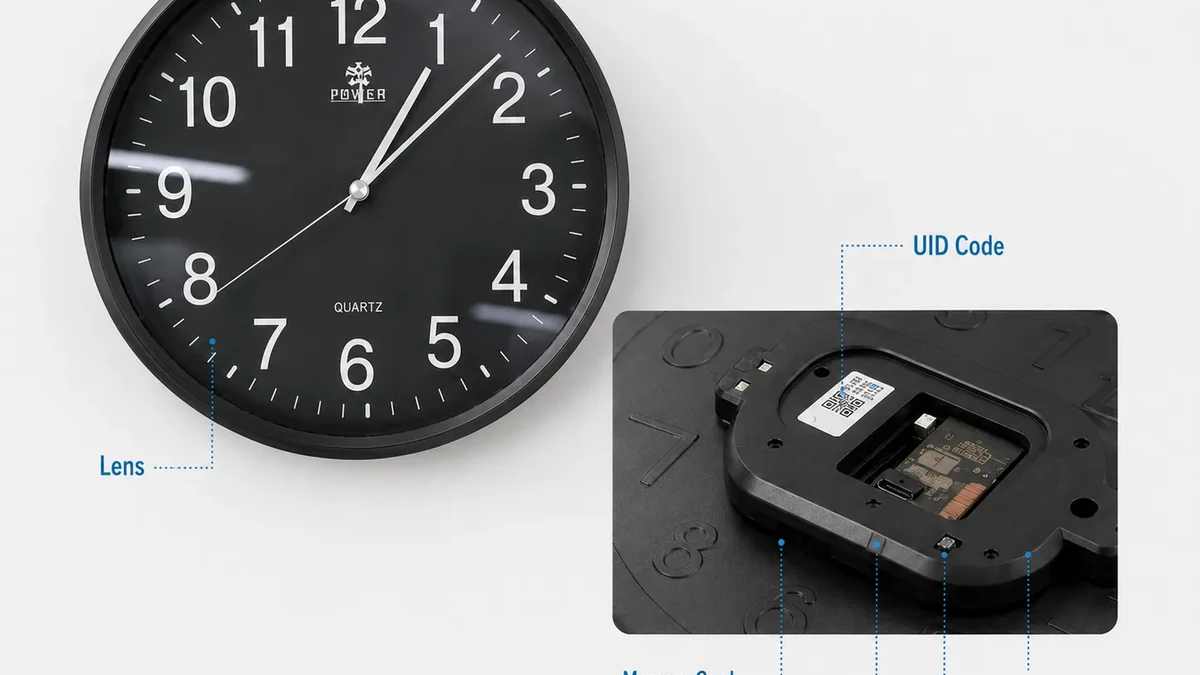
Real QZT wall-clock camera hardware image. Compare the exact sensor, frame rate, codec, bitrate and storage behavior rather than the 4K label alone.
The QZT DIY Tuya kit currently lists 1080p and 4K options. The wall-clock camera lists a 3840 × 2160 4K option alongside a 1080p version. Z13 lists 4K / 1080p modes at 30fps on its current page.
Higher resolution can increase the amount of detail available, but the real result also depends on:
– sensor and lens;
– frame rate;
– codec;
– bitrate;
– low-light processing;
– viewing angle;
– storage capacity;
– network bandwidth for remote viewing.
The Axis Perspectives 2026 report describes a broader industry progression in image processing, megapixel resolution, compression and edge capability. For a compact covert product, use that as background—not as permission to infer enterprise-camera performance from a “4K” sticker.
For sourcing, ask for an original sample file and inspect its resolution, frame rate, codec and bitrate before approving the production version.
4. Power design is diversifying beyond “small battery camera”
Current form factors use very different power strategies: internal batteries, direct USB/Type-C power, AC-powered disguise products and large power-bank bodies.
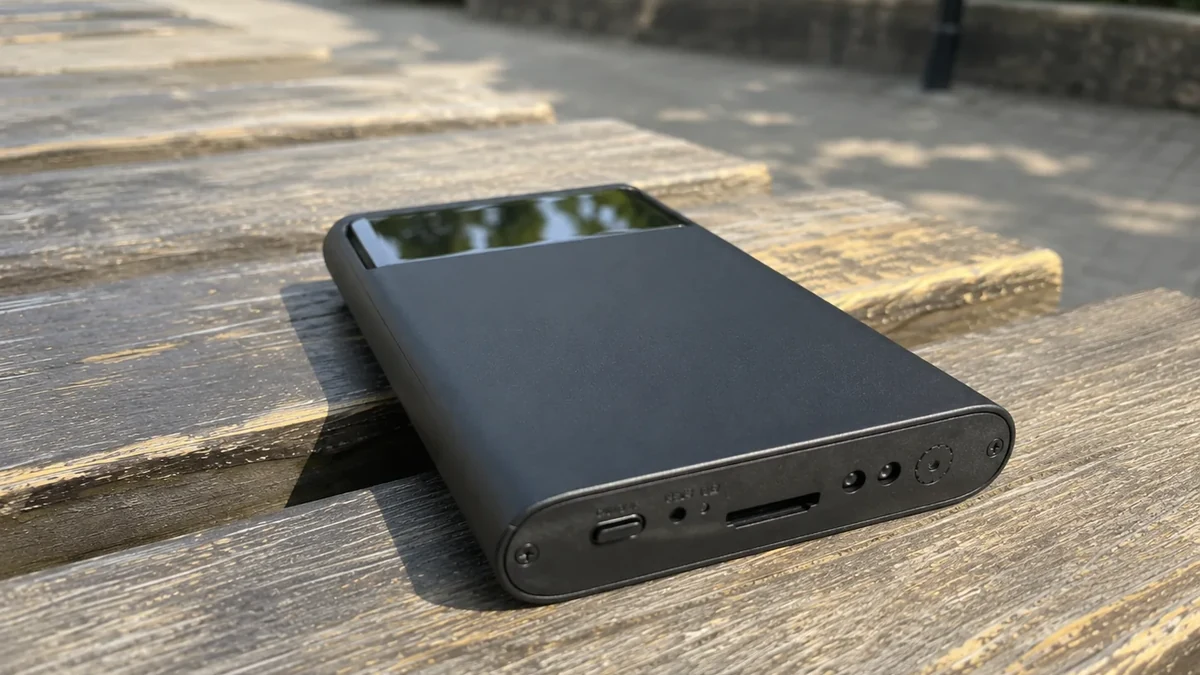
Real QZT H3 power-bank camera scene. A larger battery body can change the runtime envelope, but actual endurance still needs a model-specific test.
The current DIY Tuya kit lists a 2800mAh battery or direct USB power. The wall-clock camera lists AC power plus a 2800mAh battery. Z13 is a plug-in Type-C model. QZT also sells power-bank form factors that use much larger battery bodies.
This trend matters because power architecture changes what the camera can realistically do. A mains-powered charger or clock has a different duty cycle from a thin wearable device.
Do not turn battery capacity into a universal hours-of-recording formula. Runtime changes with recording mode, wireless activity, night lighting, bitrate, temperature, battery age and firmware behavior.
The right comparison is:
1. what power source the form factor allows;
2. whether the camera can record while externally powered;
3. the exact recording mode;
4. a same-condition sample runtime.
5. Detection is getting more sophisticated, but “motion” is not automatically AI
The broader surveillance industry is moving more analytics toward the edge. Axis’ 2026 outlook specifically describes stronger edge processing and AI-enabled analytics in network video.
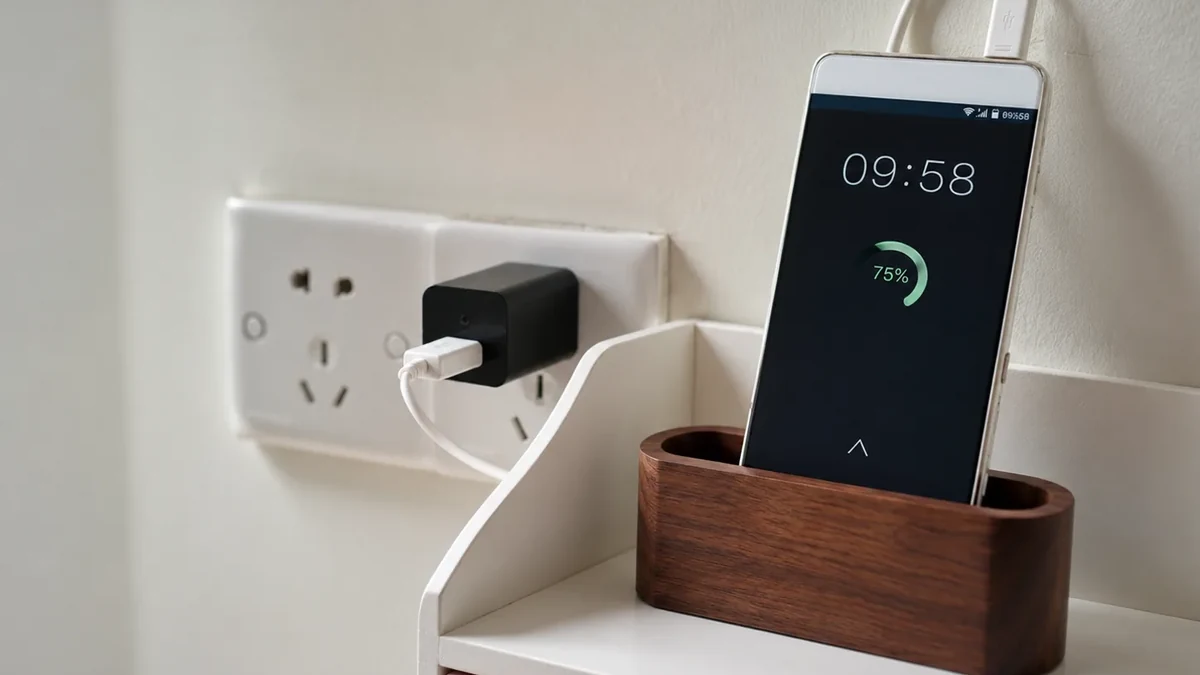
Real QZT USB-charger camera scene. A product may list motion detection without using the same type of edge AI found in enterprise surveillance cameras.
Hidden-camera product pages often list “motion detection,” “human detection” or alert functions, but those terms do not prove a specific AI model, object classifier or edge-analytics architecture.
For example, QZT’s current DIY Tuya module lists motion alerts. Other current QZT camera families list human detection, PIR detection or app-side alerts depending on the exact product.
Keep the vocabulary precise:
– motion detection: the product says it detects motion;
– PIR detection: a passive infrared sensor is involved;
– human detection: the product claims a person-specific detection function;
– AI / edge AI: only use this when the exact hardware/software documentation establishes it.
This distinction matters for expectations, false alerts and battery behavior. The marketing trend may be toward “smarter” cameras, but the buyer should approve the actual detection method rather than the label.
6. Form factors are still multiplying, while verification is getting more important
Wearable and everyday-object cameras remain a major part of the category: glasses, pens, clocks, chargers, keys, power banks and DIY modules all continue to appear in current catalogs.
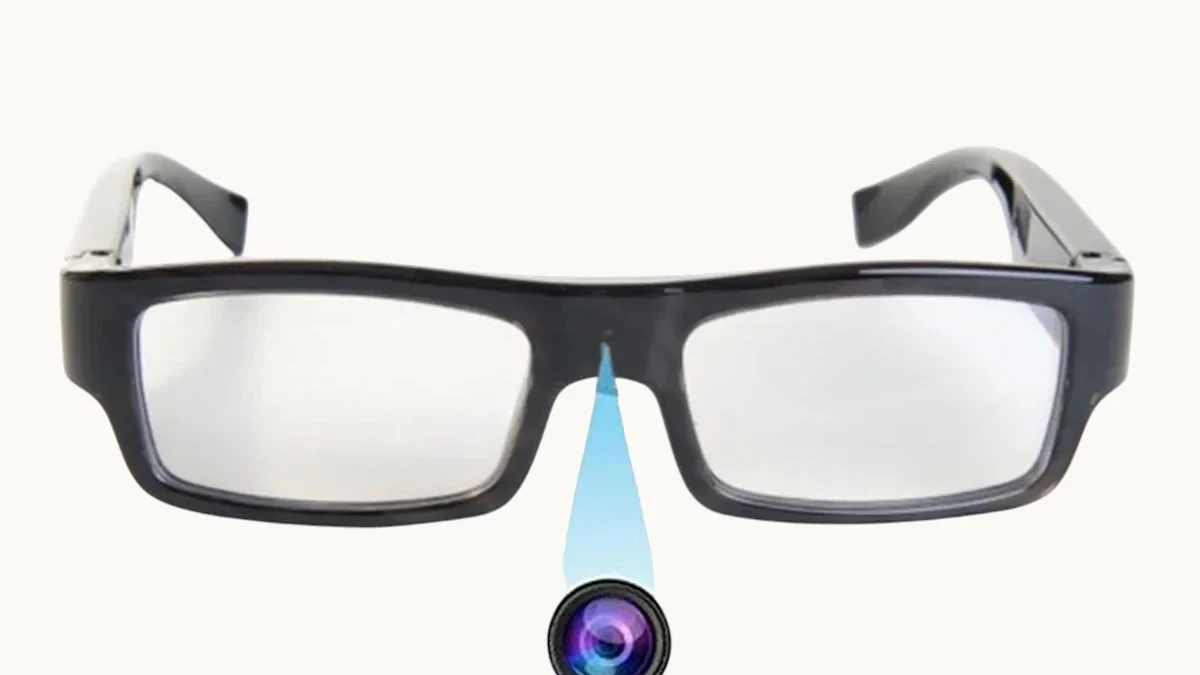
Real QZT spy-glasses product source image. Smaller or more unusual form factors increase the need to verify the exact lens, battery, storage and controls.
Axis’ 2026 trend report describes mobile surveillance as a growing area in the wider security market. In the hidden-camera category, portable and wearable form factors create their own engineering trade-offs:
– smaller battery volume;
– tighter lens placement;
– fewer physical controls;
– different storage access;
– heat and comfort constraints;
– more variation between visually similar OEM housings.
That makes version traceability more important, not less.
For a B2B sample, record the actual:
– model/SKU;
– hardware revision;
– firmware;
– app;
– battery;
– storage;
– lens option;
– video mode;
– accessories;
– packaging and manual.
A familiar housing does not guarantee the same PCB, firmware or recording behavior.
What should buyers treat as a real 2026 trend?
Use a trend only when you can connect it to observable products or documented platform changes.

Real QZT W9 product image. Trend claims still need current model documentation rather than assumptions from the form factor.
| Trend | Evidence you can verify now | What not to assume |
|---|---|---|
| Ecosystem-first purchasing | Current products use different apps/platforms; Axis identifies ecosystem-first decisions | One app means one firmware or feature set |
| Hybrid local + remote paths | Current products combine MicroSD with app/cloud options | Every offline/reconnect case works |
| More 4K-labeled options | Current QZT products list 1080p/4K variants | 4K alone guarantees better evidence |
| More varied power architectures | USB, AC, Type-C, battery and power-bank formats coexist | Battery mAh converts directly to runtime |
| Smarter detection | Motion/human/PIR features appear across product families | Every motion feature is edge AI |
| Mobile/wearable growth | Wearable form factors remain active; broader industry notes mobile surveillance growth | Wearables share one performance envelope |
The practical 2026 shift is therefore not “buy the newest camera.” It is verify the exact ecosystem, recording path, power design and feature implementation behind the form factor.
For current product comparisons, keep the task separate from a trends article. Use Best Hidden Cameras of 2026 for current form-factor comparison, and use this page for the technology changes shaping those products.
Frequently asked questions
Are all new hidden cameras moving to 4K?
No. Current catalogs include both 1080p and 4K configurations. The useful comparison includes sensor, lens, frame rate, codec, bitrate and storage—not resolution alone.
Is cloud storage replacing MicroSD cards?
Not universally. Current products can combine app viewing, local MicroSD storage and optional cloud services. Verify the exact recording and outage behavior rather than assuming one storage model has replaced another.
Does motion detection mean the camera uses AI?
No. “Motion detection,” PIR, human detection and edge AI are different claims. Use the exact product documentation.
Are WiFi hidden cameras becoming easier to integrate with NVR systems?
Not as a universal rule. App ecosystem support does not automatically prove ONVIF or RTSP. For Tuya/NVR verification, use Can a Tuya Camera Connect to an NVR?.
What matters most when sourcing a 2026 hidden camera?
Approve the exact sample version: hardware, firmware, app, power, storage, video mode and accessories. Do not approve a whole OEM family based only on one housing photo or a headline specification.
The trend worth following is better-defined architecture, not bigger marketing numbers.

 English
  Italiano
  Deutsch
  Français
  Español
  Polski