
W8 vs W9 vs W10 Pen Camera: Which Spy Pen Model Should You Stock for Your Market?
A customer from Colombia asked for a W8 pen camera sample. A customer in France ordered forty W8s and received seventy — ten units missing from a split shipment. A customer who ordered a W8 later admitted she actually wanted the WiFi-enabled A57. A Peru-based buyer asked for a pen camera that could pair with a wireless earpiece.
The pen camera — the most inconspicuous form factor in the QZT catalogue — generates more variant-confusion support tickets than any other product line except the C10 module. And the confusion is not about whether a pen camera is useful. It is about which pen camera is the right one.
This guide compares the three QZT pen camera models — W8, W9, and W10 — from the perspective of a distributor deciding which variant to stock for a specific market.
What Sets the Three Pen Camera Models Apart?
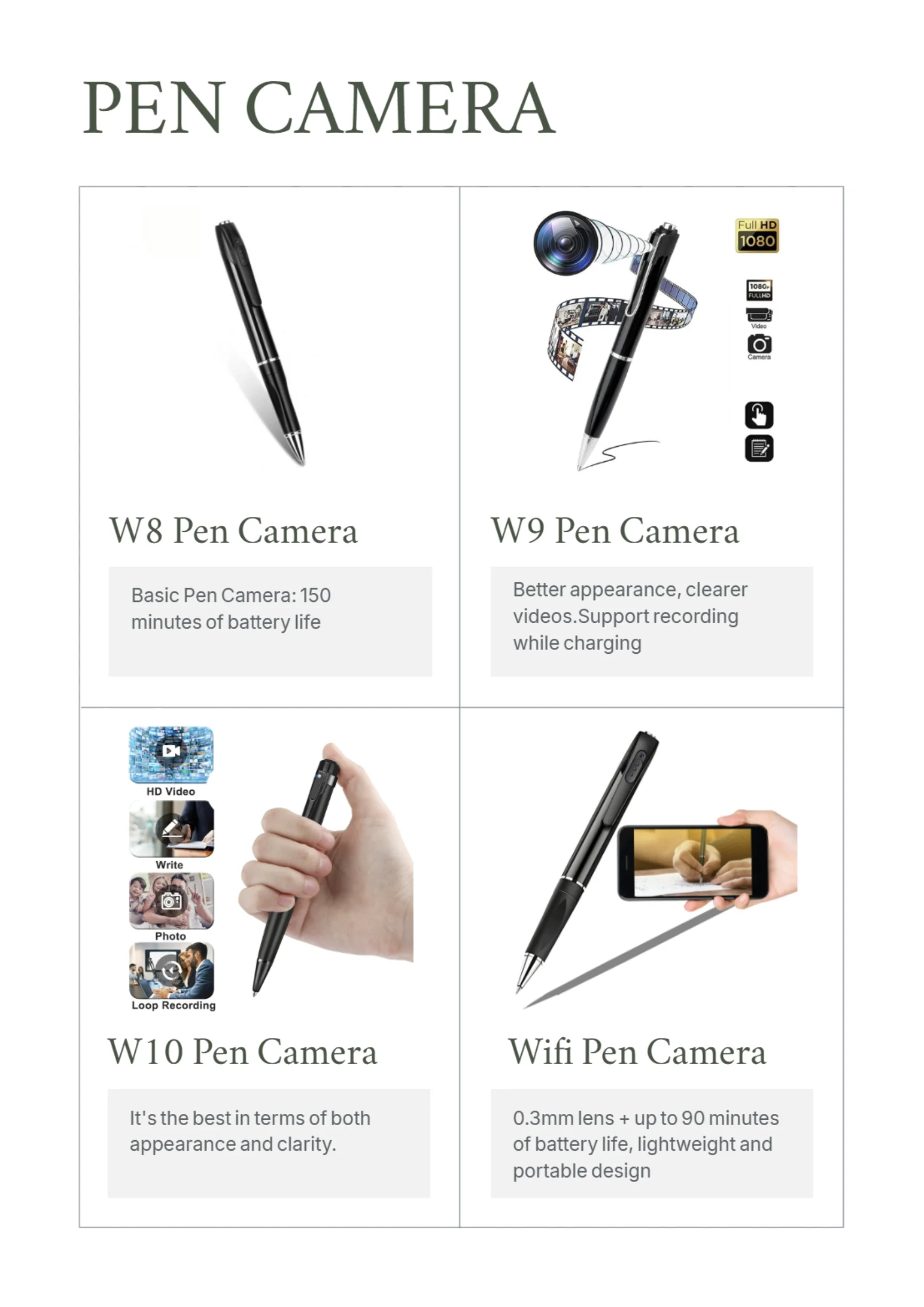
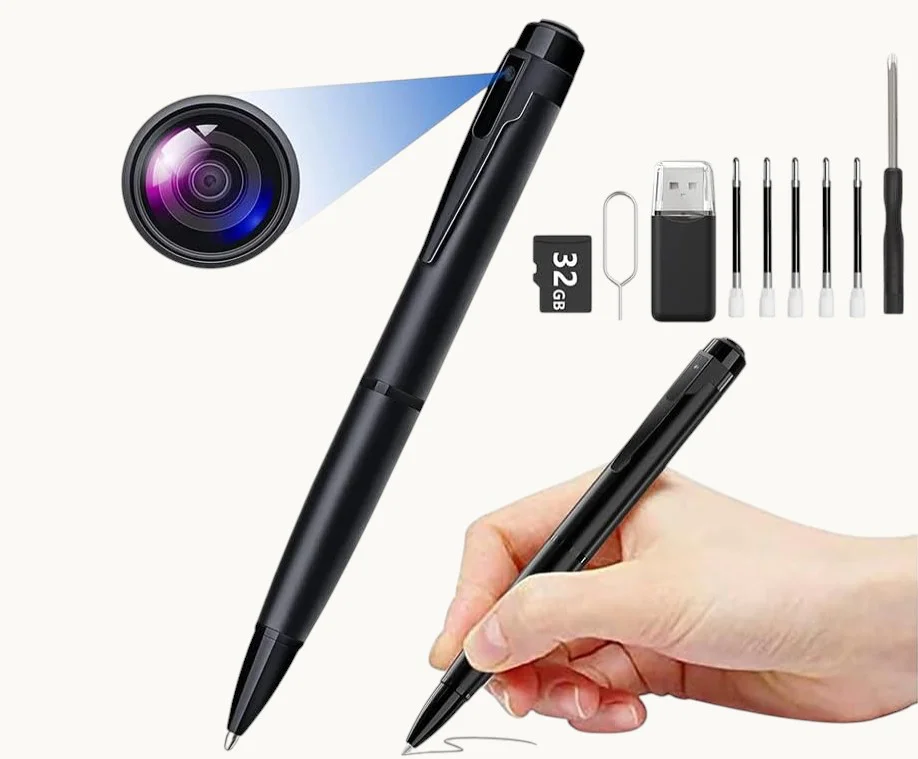
The W8, W9, and W10 all share the same fundamental identity: a functional writing pen with a hidden 1080p camera inside the pen top. They all record video to a microSD card, they all support motion detection recording, and they all run on an internal rechargeable battery that provides 90–120 minutes of continuous operation.
Where they differ matters a great deal for stock planning.
The W8 is positioned as the entry-level business pen camera. It records 1080p video, takes still photos, and writes with a standard ballpoint refill. It does not have WiFi. The lens is integrated discreetly into the pen clip area, making it the least visually detectable of the three models from a straight-on viewing angle.
The W9 adds a higher-resolution photo sensor — 12 megapixels versus the W8’s photo mode — while keeping the same 1080p video resolution. It represents the “professional upgrade” tier. The image sensor captures more detail in well-lit conditions, making it suitable for meeting documentation where reading text from slides or documents on video is important.
The W10 is the flagship. It records 1080p video at a higher bitrate than the W8 and W9, captures 30-megapixel still photos, includes 128GB of internal storage (the largest of any QZT pen camera), and supports longer recording sessions. It is the model that distributors stock when their end customers are lawyers, journalists, or private investigators — anyone who cannot compromise on storage capacity and cannot stop to swap an SD card during a critical recording.
Here is the comparison:
| Feature | W8 | W9 | W10 |
|---|---|---|---|
| Video Resolution | 1080p | 1080p | 1080p (higher bitrate) |
| Photo Resolution | Standard | 12MP | 30MP |
| Storage | microSD up to 64GB | microSD up to 64GB | 128GB internal + microSD slot |
| Continuous Recording | 90–120 minutes | 90–120 minutes | 90–120 minutes |
| WiFi | No | No | No (all 3 are non-WiFi; see A57 for WiFi) |
| Lens Position | Pen clip | Pen clip | Pen clip |
| Best Market Position | Entry-level B2B | Professional meeting documentation | Evidence-grade, legal, journalism |
Why Buyers Confuse the Pen Camera Models — and How to Prevent It
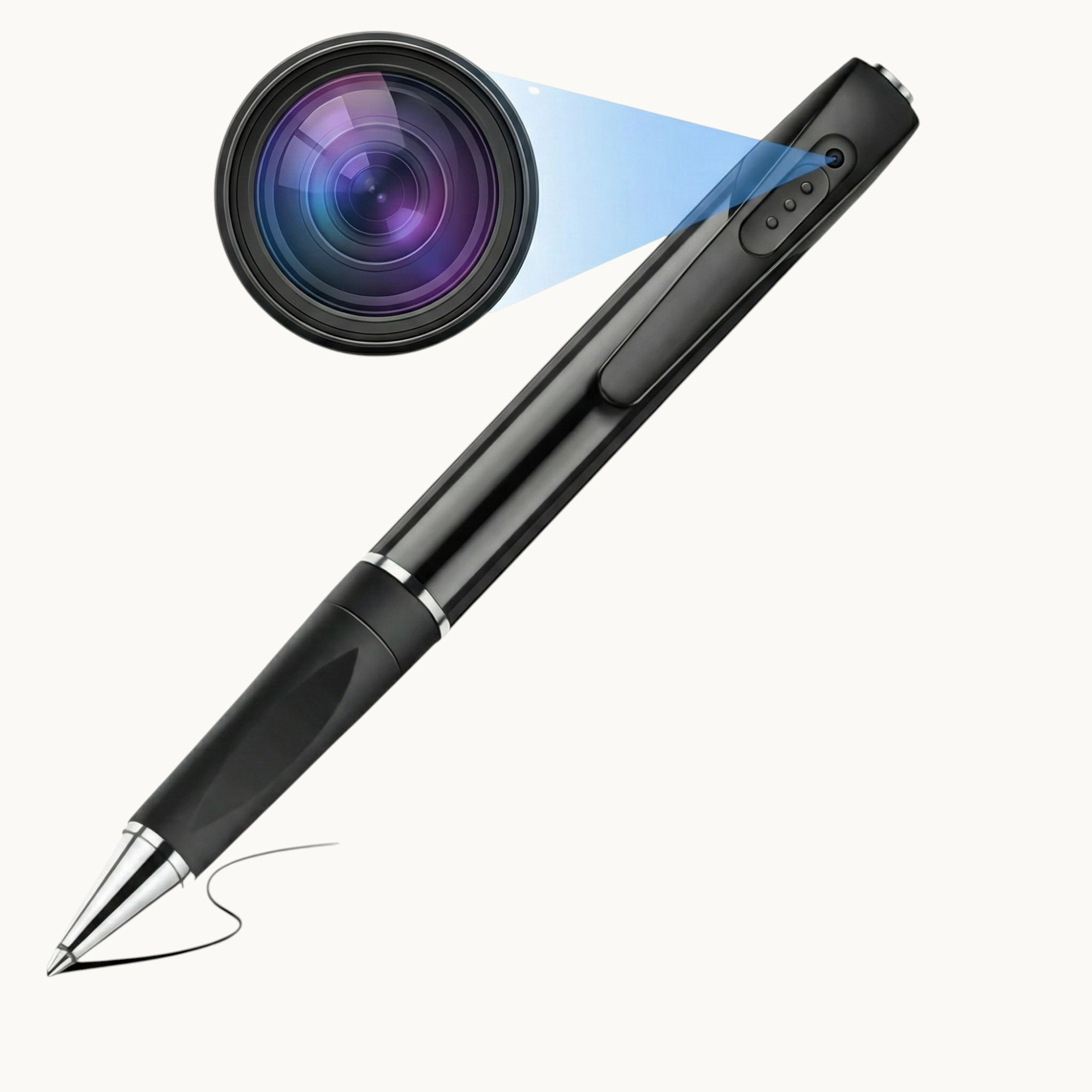
The single most common mistake in pen camera sales — documented across multiple transactions — is that the buyer intends to purchase a WiFi-enabled pen camera but selects a W8, W9, or W10. None of these three models include WiFi. The WiFi pen camera in the QZT range is the A57, which is a separate model with a different form factor (slightly thicker barrel to accommodate the WiFi antenna).
A customer explicitly requested W8 pricing, paid for five W8 units, received them, and then requested a refund because the pens did not offer wireless connectivity. The customer had confused the W8 with the A57, having seen the A57’s WiFi feature on a product listing and assumed it applied to the entire pen camera range.
The preventive step for distributors: every quote for a W8, W9, or W10 must include a one-line note that reads “This model records to SD card only and does not include WiFi. If you need remote smartphone viewing, we recommend the A57 WiFi pen camera.”
This simple clarification in the sales process reduces returns, builds trust, and frequently leads to an upsell.
Market-Specific Pen Camera Preferences
Peruvian buyers, as one documented case shows, frequently ask for pen cameras that can work with wireless earpieces — a combination that does not currently exist in the QZT range. The request makes sense in context: exam preparation markets in South America use camera-earpiece kits for real-time audio transmission, and buyers assume the pen form factor can support that same use case. It cannot. The appropriate upsell in this case is the exam camera kit with wireless earpiece, not any pen camera model.
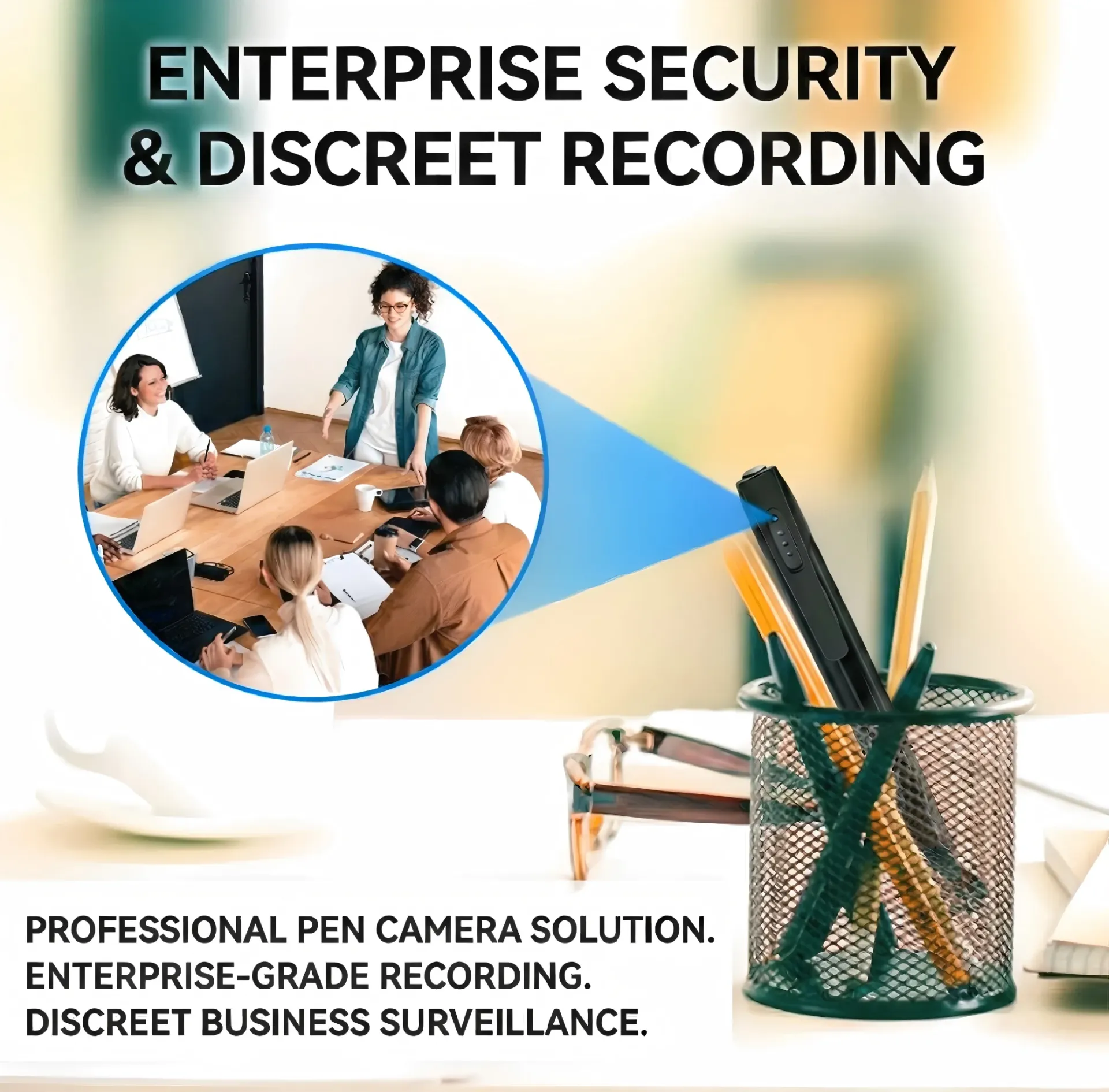
French and European B2B buyers tend to order the W8 in bulk — one customer ordered 80 W8 units split across two shipments — for corporate meeting documentation. The W8’s lower unit price makes it feasible to issue pen cameras to multiple staff members without exceeding departmental procurement limits.
Middle Eastern and Latin American markets show stronger demand for the high-storage W10, where end users frequently deploy the pen camera for evidence collection and cannot afford to run out of storage space mid-session. The 128GB internal storage is the primary selling point in these markets.
For distributors stocking for the European market, the recommended allocation is:
– 60% W8 — entry price point, corporate volume sales
– 25% W10 — high-end segment, legal and investigative buyers
– 15% W9 — professional meeting niche, 12MP photo differentiator
The Pen Camera Quality Checklist: What to Test Before Bulk Orders
Real customer complaints across the pen camera range fall into a pattern that is entirely preventable with pre-shipment testing.
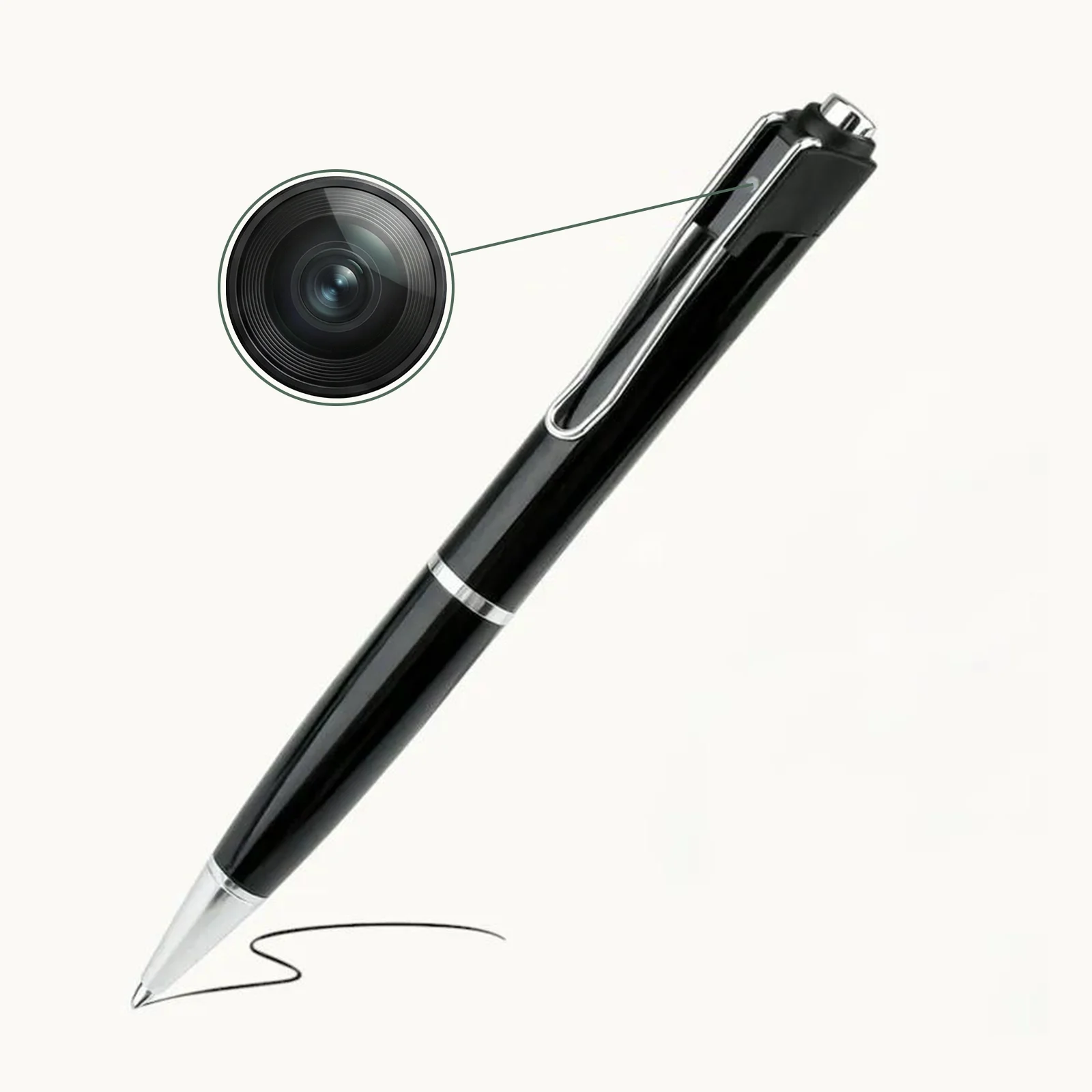
Video focus and lens alignment: The pen camera lens sits behind a tiny aperture in the pen clip. If the lens is not perfectly aligned during assembly, footage will appear slightly off-centre or partially obstructed. Record a test video of a printed document at 1 metre distance and verify that all four corners of the document are visible and readable in the playback.
Audio recording quality: The pen’s microphone is located inside the barrel, near the refill mechanism. Audio quality varies significantly between units from the same production batch depending on how tightly the internal components are fitted. Record a 30-second test clip of a person speaking at normal volume from 1.5 metres away. Verify that speech is clearly intelligible without requiring headphones and maximum volume.
Battery calibration: The pen camera’s internal battery is small — typically 280–350mAh — and battery calibration errors after manufacturing can cause the camera to report “full charge” when it is actually at 60–70% capacity. Charge the pen fully, record a 30-minute test clip, and note the remaining battery percentage. If it drops below 70% after 30 minutes, the battery calibration is likely faulty.
A Polish customer who received multiple products (pens, clocks, modules) with quality issues — dirty packaging, scratched casings, disorganised accessories — triggered a significant customer-relationship crisis that took weeks of negotiation to resolve. For distributors receiving bulk shipments, inspecting a random sample of 5% of units before forwarding to end customers is not excessive — it is the minimum reasonable due diligence.
Key Takeaway: Three Pens, Three Markets, One Prequalification Step
The W8, W9, and W10 are not substitutes for each other. They serve different price points, different use cases, and different markets. The W8 is the volume seller; the W10 is the premium anchor; the W9 fills the professional middle.
But the most impactful single step a distributor can take — more than selecting the right model — is sending the pre-qualification message: “The W8, W9, and W10 record to SD card without WiFi. If you need WiFi for remote smartphone viewing, we recommend the A57.”
That sentence prevents the single most common pen camera return and positions the distributor as a knowledgeable partner rather than a listing-forwarding middleman.
Frequently Asked Questions
Can I write with a W8, W9, or W10 pen camera while recording?
Yes. The writing mechanism and camera are independent systems within the pen body. You can write normally while the camera runs — the refill does not interfere with the camera, and the camera does not affect writing quality.
Why does the W10 have 128GB internal storage instead of an SD card?
The W10 uses soldered internal storage (eMMC) rather than a removable microSD card to maintain a slimmer pen profile while maximising capacity. This means footage cannot be directly swapped between devices on cards, but it guarantees high-speed write performance that supports the higher-bitrate video encoding.
What is the actual difference between 12MP and 30MP photo resolution?
The W9’s 12-megapixel photo captures 4000×3000 pixels. The W10’s 30-megapixel photo captures roughly 6720×4480 pixels — enough to read fine print on a document photographed from across a meeting table. For professional meeting documentation where slides and printed materials need to be legible in the photo, the 30MP sensor is a genuine advantage. For personal note-taking, the 12MP sensor is more than sufficient.
Can the pen camera record while plugged into a power bank?
Yes, and this is a common deployment strategy for extended meetings. A USB-C or micro-USB cable connects the pen to a power bank during recording. The pen remains functional as a pen while charging. This extends the effective recording time beyond the internal battery’s 90–120 minute limit.
How can I tell if a pen camera is recording without looking suspicious?
The pen camera’s recording indicator is typically a small LED that blinks during recording. On the W8 and W9, this LED is positioned near the pen clip and is visible only from the side. On the W10, the LED is located near the USB port and is hidden when the pen is held normally. Some users place a small piece of black electrical tape over the LED for maximum discretion.
Which model has the best audio recording quality?
The W10 records audio at a higher bitrate (192kbps) than the W8 and W9 due to its faster internal storage write speed. For applications where audio clarity is critical — legal depositions, important meetings — the W10 is the recommended choice among the non-WiFi pen cameras.
For volume pricing on W8, W9, and W10 pen cameras or to request test samples before placing a bulk order, contact QZT Security.

 English
  Italiano
  Deutsch
  Français
  Español
  Polski