
How to Choose a Hidden Spy Voice Recorder for Covert Use
You need audio evidence, but traditional recording equipment is too obvious. A hidden spy voice recorder solves this problem by disguising a high-quality microphone inside an everyday object — capturing every word without anyone knowing.
Whether you need to document a business meeting, gather evidence for a legal dispute, or monitor your property while away, the right covert audio recorder makes all the difference. This guide covers everything you need to know about choosing, using, and getting the most from a hidden spy voice recorder in 2026.
What Is a Hidden Spy Voice Recorder?
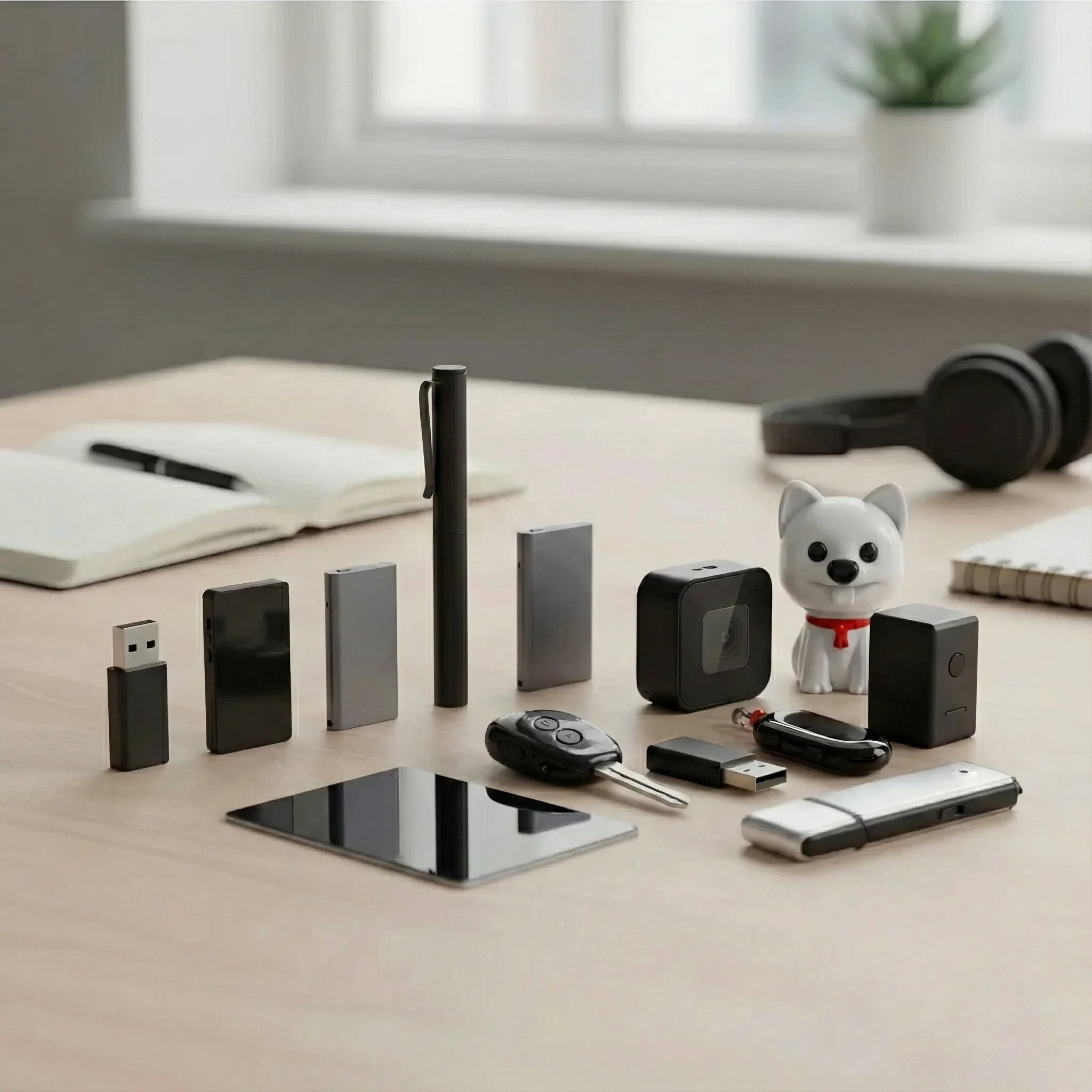
A hidden spy voice recorder is a compact audio recording device designed to operate without drawing attention. Unlike standard dictaphones or phone recording apps, these devices are engineered specifically for covert capture — built into objects like pens, keychains, USB drives, or even magnetic modules that attach to vehicles.
The core technology is straightforward: a high-sensitivity microphone picks up ambient sound, an analog-to-digital converter processes the audio, and a microcontroller writes compressed audio files to internal flash storage or a removable micro SD card. What makes these devices special is their form factor — the electronics are miniaturized and hidden within functional objects, so the recorder can operate in plain sight.
Key Components Inside a Covert Voice Recorder
Every quality hidden spy voice recorder shares a core set of components:
– Microphone array: Usually an omnidirectional electret condenser capsule with noise-filtering circuitry to reduce HVAC hum and background noise
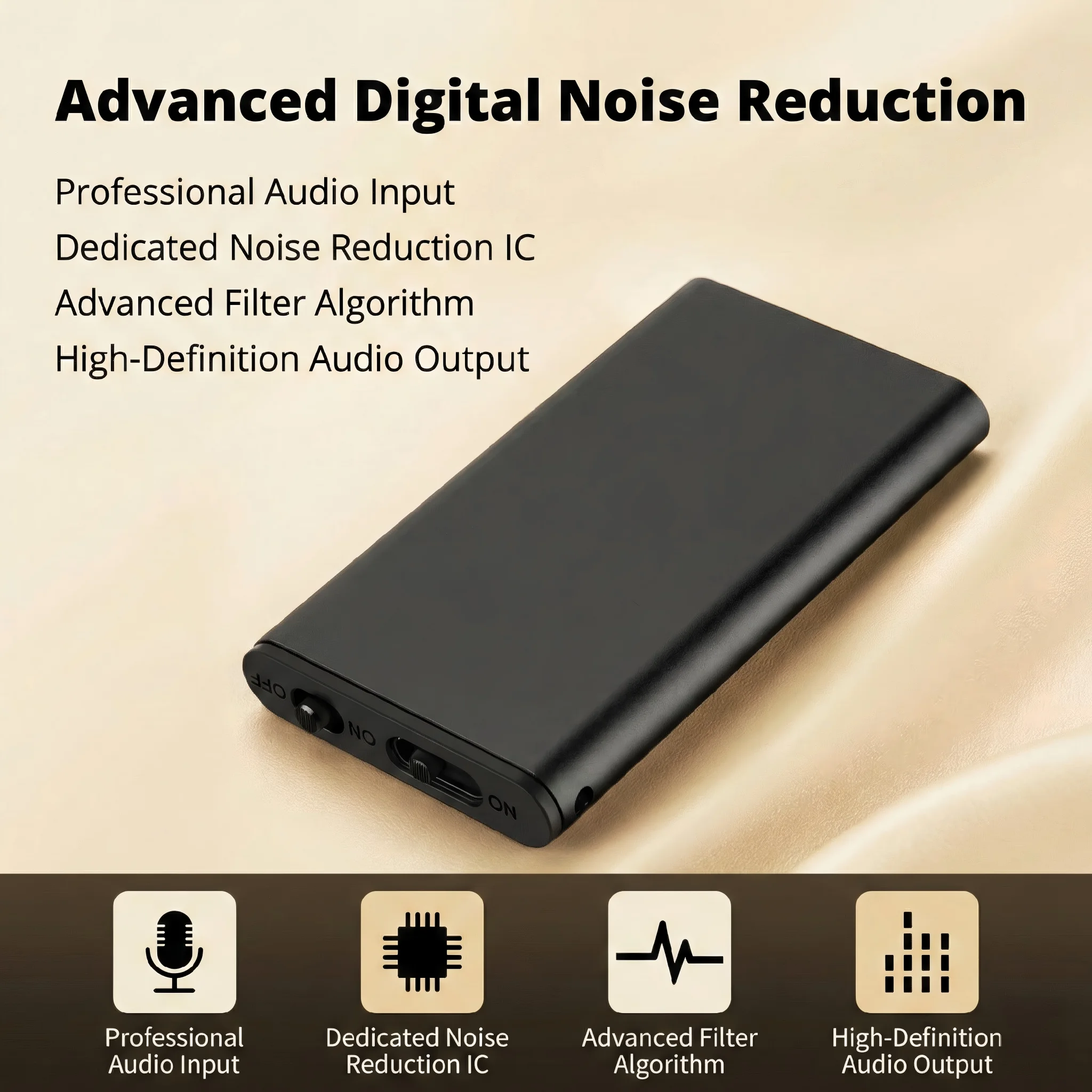
– DSP processor: Digital Signal Processing chip that applies noise reduction, automatic gain control, and voice activity detection
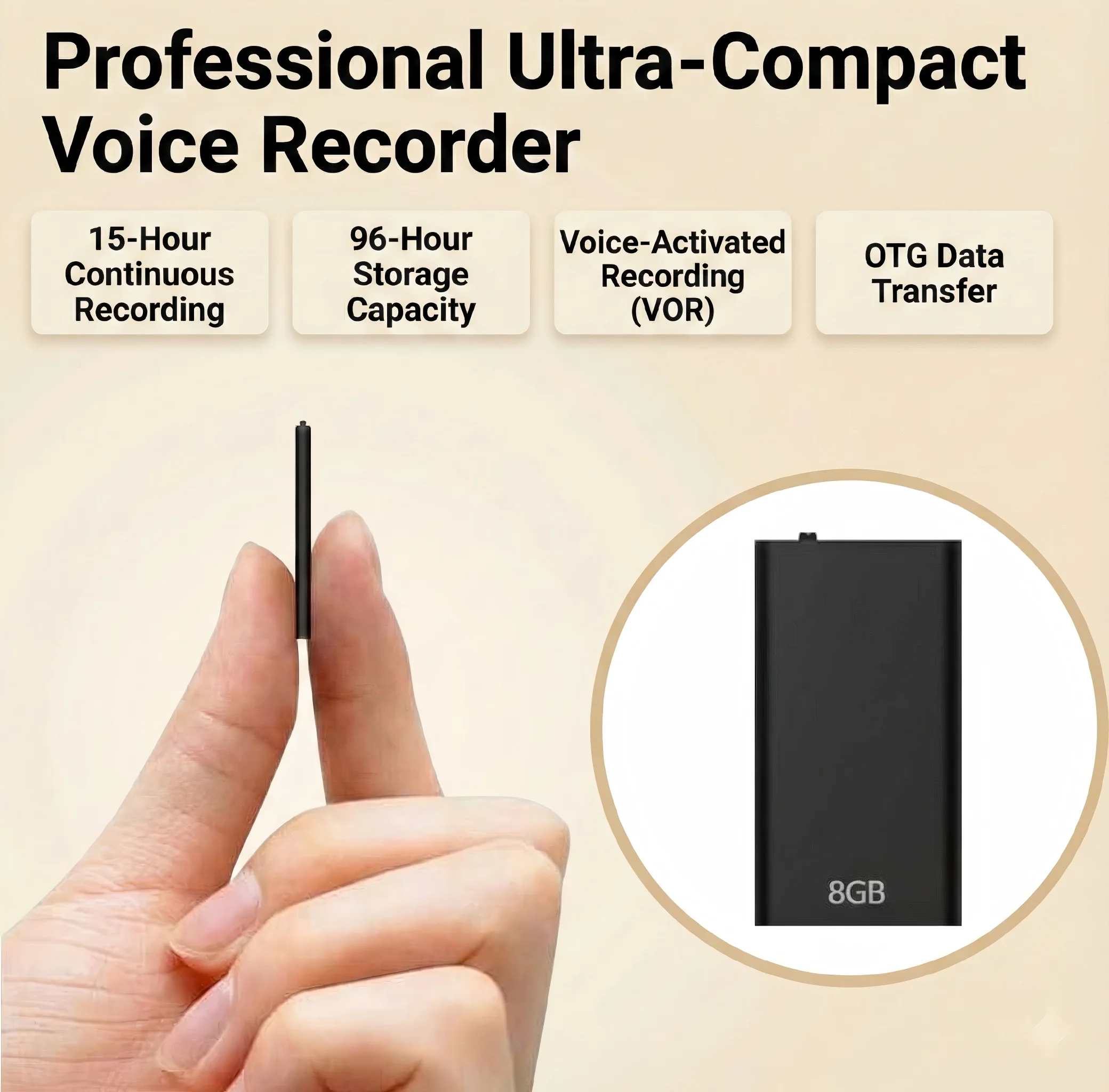
– Storage module: 8GB to 128GB of onboard flash or a micro SD slot for expandable capacity
– Battery: Lithium polymer cell ranging from 100mAh (small form factors) to 2500mAh (magnetic long-life units) providing 6 to 500+ hours of continuous recording
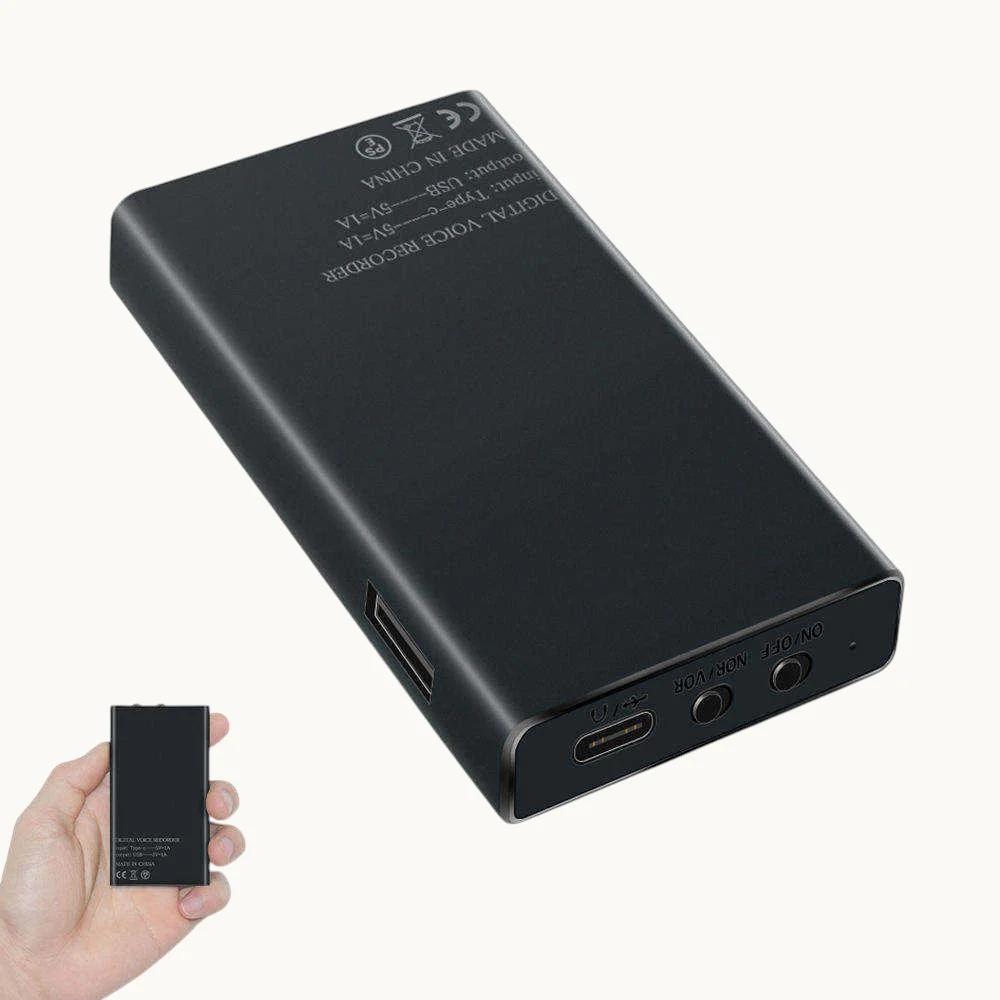
– USB interface: Dual-purpose charging and data transfer via micro-USB, USB-C, or magnetic connector
How Does Voice Activated Recording Work?
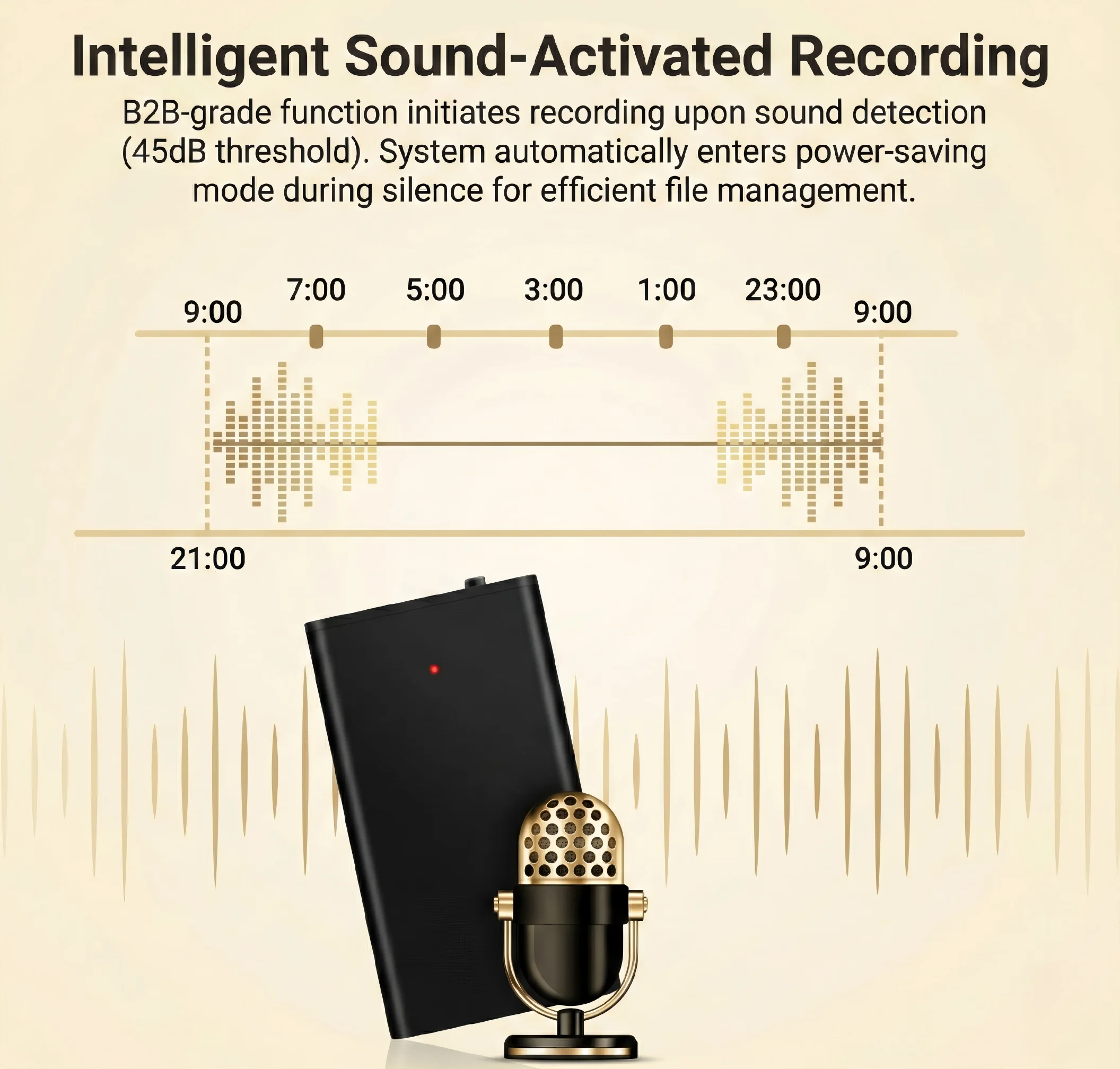
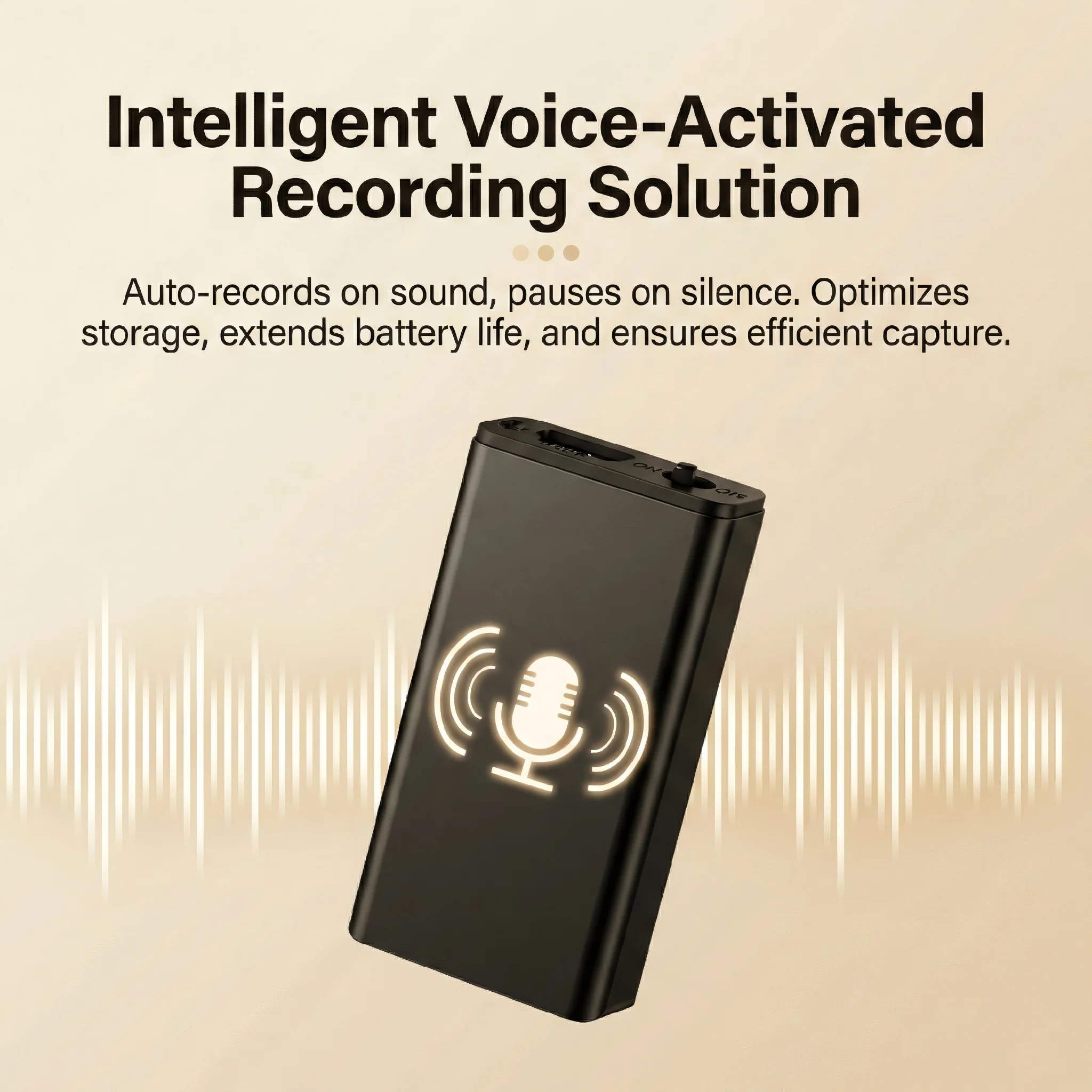
Voice Operated Recording (VOR), also called Voice Activation or Sound Activation, is the feature that separates professional covert recorders from basic devices. Instead of recording continuously — which wastes storage and battery — VOR monitors the ambient audio level and begins recording only when sound exceeds a preset threshold.
The voice activated recorder activates within milliseconds of detecting speech, ensuring no words are missed at the start of a conversation. When silence returns, the device pauses and resumes standby mode. This behavior delivers three major advantages:
1. Extended recording time: A device with 15 hours of continuous battery life may deliver 60 or more hours of actual conversation capture in a typical office environment
2. Reduced file management burden: You receive audio files containing only conversations, not hours of silence
3. Lower heat generation: The processor spends less time actively writing data, reducing temperature and extending component lifespan
The sensitivity threshold should be adjustable. A threshold that is too high will miss whispered conversations. One set too low will trigger on HVAC noise and traffic sounds, defeating the purpose of VOR.
What Audio Quality Should You Expect?
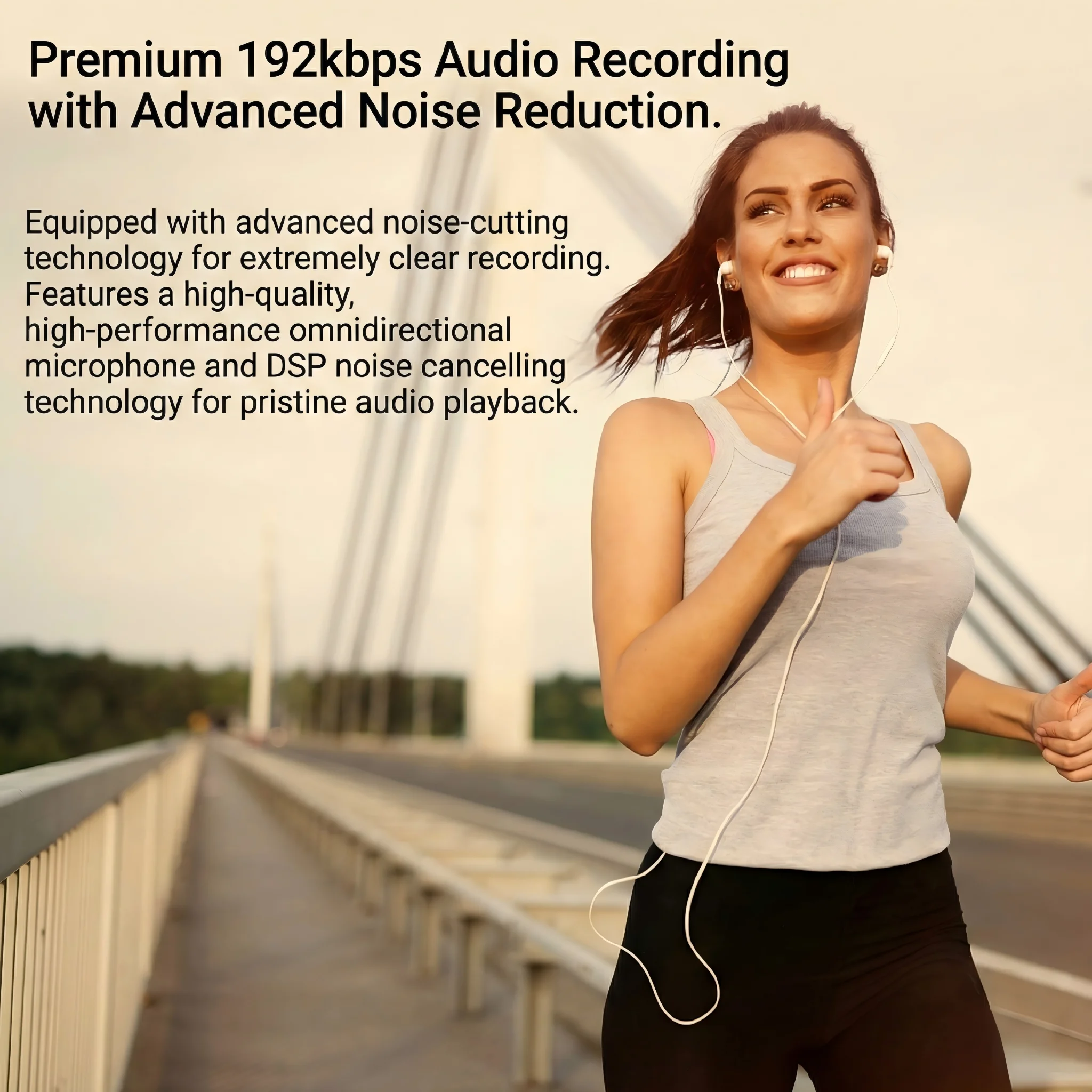
Audio quality in hidden spy voice recorders is measured primarily by bitrate and sampling frequency. The dominant standard for covert recorders is 192kbps at 44.1kHz, which delivers clear, intelligible speech across typical indoor distances of 5 to 10 meters.
Understanding the specifications:
| Specification | Value | Practical Meaning |
|---|---|---|
| Bitrate | 128–320 kbps | Higher = clearer audio, larger files |
| Sampling Rate | 8kHz–44.1kHz | 8kHz = phone quality; 44.1kHz = CD quality |
| Format | MP3, WAV, PCM | WAV/PCM = lossless but large; MP3 = compressed |
| Noise Reduction | DSP chip | Reduces HVAC, traffic, fan noise |
| Sensitivity | -38dB to -42dB | Lower dB = more sensitive microphone |
For legal proceedings, WAV or PCM lossless formats are strongly preferred because they cannot be accused of compression artifacts that might affect intelligibility analysis. For general personal use, 192kbps MP3 provides an ideal balance of quality and storage efficiency.
How to Choose the Right Form Factor
The choice of form factor determines where and how you can deploy your hidden spy voice recorder. Each type has distinct strengths:
Pen-Style Hidden Voice Recorders
Pen recorders are the most versatile form factor. They function as actual writing instruments while recording audio. Place one on your desk during a meeting, carry it in your shirt pocket during a site visit, or use it at a lecture without drawing any attention.
Key advantages: immediate accessibility, functional cover, one-button operation, and easy data transfer via built-in USB plug. Look for units with at least 8GB storage and 8+ hours of battery life.
Magnetic Voice Recorders
The magnetic spy voice recorder 500H represents a different use case entirely: long-term unattended monitoring. A large lithium battery (often 2500–4000mAh) combined with a powerful magnet lets you attach the recorder to the underside of a vehicle, a metal shelf bracket, or an HVAC duct.
With VOR enabled, these units can operate for 500 or more hours on a single charge — more than three weeks of potential conversation capture. This makes them ideal for vehicle tracking companions, property monitoring, and extended surveillance scenarios where regular battery access is impractical.
Keychain and Everyday Object Recorders
Recorders disguised as keychains, USB drives, and similar objects excel at personal carry situations. A keychain recorder sits on your keys and records continuously or on voice activation. A USB stick recorder looks like storage media while capturing audio.
These form factors are inconspicuous in any setting and require minimal explanation if seen.
Tips for Maximizing Recording Quality
The technology inside your hidden spy voice recorder is only as effective as your placement strategy. Follow these field-tested techniques:
Optimal Placement Strategies
Distance matters most: Position the microphone within 2 meters of the target speaker whenever possible. Sound intensity drops with the square of distance — at 4 meters, you capture only 25% of the audio energy compared to 2 meters.
Avoid fabric barriers: Pocket recordings through thick fabric introduce significant muffling. Use a thin fabric pocket or position the device to allow sound to reach the microphone relatively unobstructed.
Hard surfaces amplify: Hard walls, tables, and floors reflect sound and can actually improve pickup. Positioning a recorder on a hard surface rather than a padded seat often improves intelligibility.
Microphone orientation: Most omnidirectional microphones perform best when the microphone port (often a small hole or mesh area) faces the sound source. Review the device specifications to identify microphone port location.
Managing Background Noise
In noisy environments, enable the highest noise reduction setting your device offers. If recording quality is critical, consider using a Q97 professional voice recorder with dedicated DSP noise reduction — these units include multiple microphone arrays that perform directional noise cancellation, significantly outperforming single-microphone budget recorders in challenging acoustic environments.
What Storage and Battery Life Do You Need?
Storage capacity and battery life are interdependent specifications. To choose correctly, start by estimating your recording duration requirements, then select a device that comfortably exceeds that target.
Storage Calculation Guide
At 192kbps MP3 quality, audio requires approximately 1.4MB per minute. A typical storage guide:
– 8GB internal: ~95 hours of continuous recording
– 16GB: ~190 hours
– 32GB: ~380 hours
– 64GB micro SD: ~760 hours
With VOR enabled in a meeting environment (30% active speaking time), storage capacity effectively triples.
Battery Life by Use Case
Select battery life based on your deployment scenario:
| Scenario | Required Battery Life | Recommended Device Type |
|---|---|---|
| Single meeting (2–4 hours) | 8+ hours | Pen recorder |
| Full workday (8–12 hours) | 15+ hours | Mini voice recorder |
| Multi-day deployment | 100+ hours (VOR) | Compact standalone unit |
| Extended surveillance | 500+ hours | Magnetic long-life recorder |
Always test your device’s actual battery life before critical deployments. Manufacturer specifications are typically measured at room temperature with intermittent recording — real-world performance varies.
How to Transfer and Review Your Recordings
Most hidden spy voice recorders appear as standard USB mass storage devices when connected to a computer — no special software required. Files are organized in folders by date on devices with real-time clocks, making it straightforward to locate specific recordings.
File Management Best Practices
Synchronize the clock: Before each deployment, confirm the device clock is set to current local time. Recordings timestamped incorrectly are difficult to organize and may have reduced evidentiary value.
Use lossless format for legal use: If recordings may be used in legal proceedings, configure the device for WAV or PCM format. Compressed formats like MP3 introduce minor audio artifacts that opposing parties may attempt to challenge.
Back up immediately: Transfer recordings to a secure computer and external backup as soon as possible after each session. Leaving critical audio on the recorder risks loss if the device is discovered, damaged, or needs reformatting.
Organize by case: Create a folder structure organized by date and purpose — for example, `2026-04-09_board_meeting/` — and document the recording circumstances in a separate text file in the same folder.
Why Hidden Voice Recorders Outperform Phone Recording Apps
Many people default to phone recording apps for audio capture. While convenient, phone-based recording has significant practical limitations compared to a dedicated hidden spy voice recorder:
Dedicated microphone quality: Phones use microphones optimized for near-mouth speech (calls and voice commands). Purpose-built recorders use high-sensitivity omnidirectional capsules designed for room-level capture.
No interruptions: Calls, notifications, and screen-on events can interrupt phone recordings or alert others to your recording activity. Dedicated recorders have no connectivity and no notification systems.
Battery independence: A phone used for recording depletes your primary communication device. A separate recorder preserves your phone’s charge for its primary functions.
Form factor discretion: A visible phone on a table suggests recording. A pen, USB drive, or keychain attracts no attention.
Reliability: Phone recording apps can crash, be interrupted by OS-level events, or fail silently. Hardware recorders with dedicated firmware are engineered for uninterrupted capture.

Conclusion
A hidden spy voice recorder is one of the most practical tools available for personal documentation, evidence gathering, and covert monitoring. The right choice depends on three factors: your required recording duration, the environment you will be recording in, and the form factor that allows the most natural deployment.
For single-day use cases like meetings and interviews, a pen recorder with 8GB storage and 12+ hours of battery life is ideal. For extended unattended monitoring, the magnetic spy voice recorder 500H provides industry-leading battery performance. For professional audio quality with advanced noise reduction, the Q97 voice recorder delivers superior results in challenging acoustic environments.
Whatever your scenario, prioritize devices with VOR functionality, adjustable sensitivity, and at least 8GB of storage — these three features account for the majority of the practical difference between effective and disappointing covert audio capture.
FAQ
How far away can a hidden voice recorder pick up sound?
Quality hidden recorders with omnidirectional microphones and DSP noise reduction can capture intelligible speech at distances of 5 to 10 meters in quiet environments. In noisy environments, effective range drops to 2 to 3 meters. Closer placement always produces better results.
Is it legal to use a hidden voice recorder?
Laws vary significantly by jurisdiction. Many places allow one-party consent recording (where only one party to a conversation needs to consent — typically you). All-party consent jurisdictions require everyone present to agree. Always consult local legal requirements before deploying a covert recorder.
How do I know if my recorder is actually recording?
Most covert recorders are designed to give no visible or audible indication of recording. To verify operation, test the device in a known environment before deployment. Record a brief test, transfer the file, and confirm audio quality meets your requirements.
Can I use a hidden voice recorder as evidence in court?
This depends entirely on jurisdiction and recording circumstances. Legal advice should be sought before attempting to use covert recordings as evidence. Lossless audio formats (WAV/PCM) are preferable for legal use.
What is the maximum recording time on a single charge?
Battery life varies widely by device. Pen recorders typically offer 8–15 hours. Compact standalone units offer 20–50 hours. Magnetic long-life recorders like the 500H unit offer 300–500+ hours with VOR enabled. Always verify manufacturer claims with independent testing before critical deployments.
Does temperature affect recording quality?
Extreme temperatures affect battery capacity significantly. Cold environments can reduce effective battery life by 30–50%. Audio quality itself is minimally affected by temperature, but device freezing or condensation can cause hardware failures. Operate within the manufacturer’s specified temperature range.

 English
  Italiano
  Deutsch
  Français
  Español
  Polski