
How to Choose a Hidden Camera Alarm Clock: 2026 B2B Buying Guide
A hidden camera alarm clock is a working timepiece with a concealed lens that records or streams video. For B2B buyers in Europe, the category is attractive because every bedroom, hotel room, and rented flat already has a clock on a bedside table — the disguise is native to the environment.
But not every clock camera is worth importing. Some overheat. Others ship with apps that stop working after six months. A few have lenses so poorly hidden that guests spot them in seconds. This guide shows distributors, installers, and online resellers what to look for before placing a bulk order.
What Is a Hidden Camera Alarm Clock?
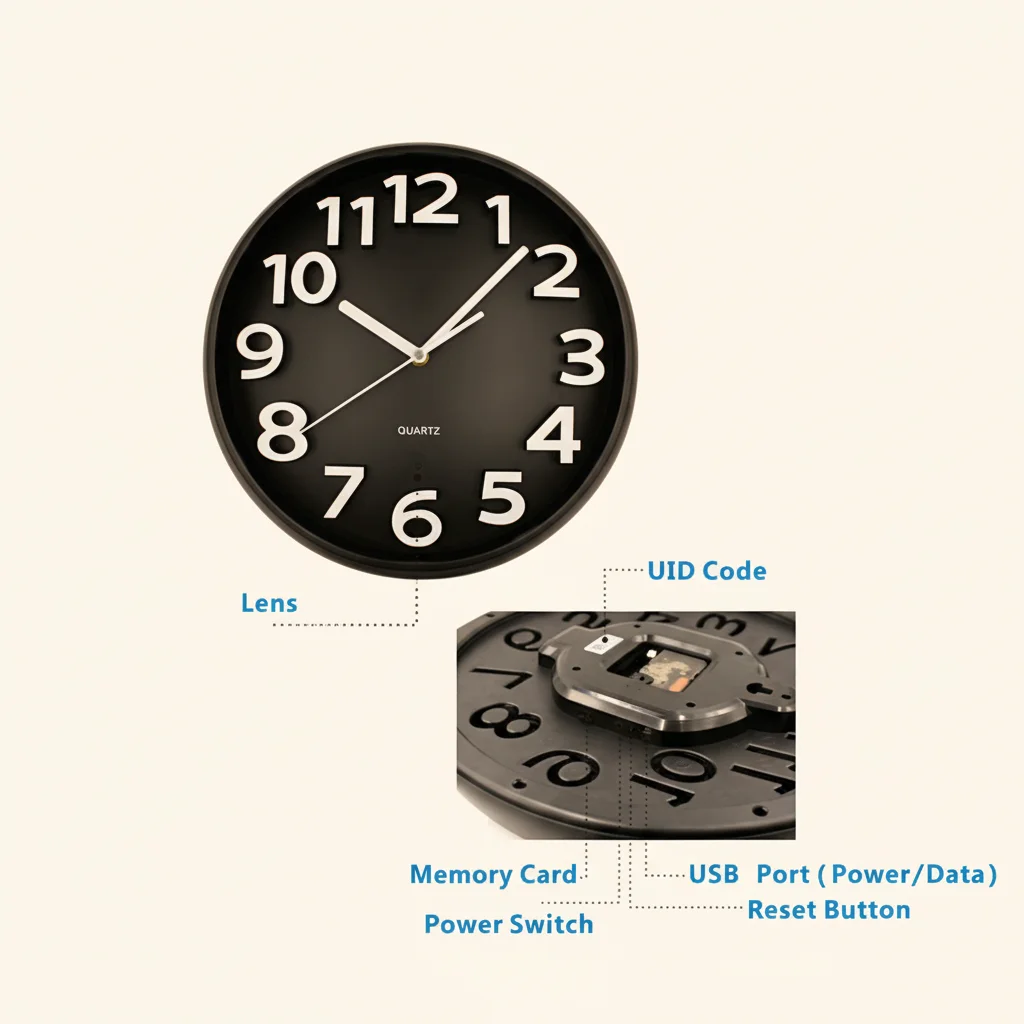
A clock camera looks like an ordinary alarm clock but contains a pinhole lens, image sensor, processor, and storage or Wi-Fi module.
It records video through a tiny aperture in the clock face, display bezel, or speaker grille. Most units also keep accurate time, so the device performs its obvious function while the camera works in the background.
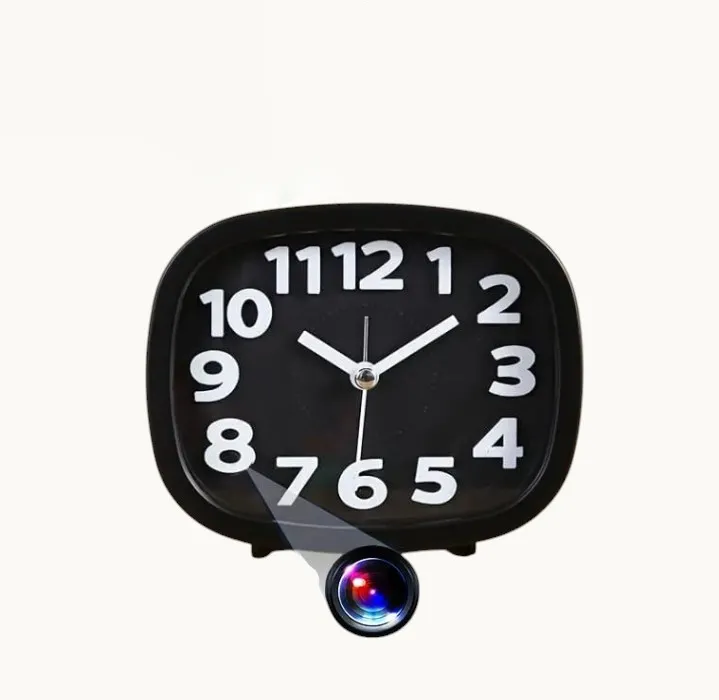
The form factor gives it two advantages over a bare mini camera. First, it has a built-in power supply and a reason to sit on a shelf. Second, it does not look like a security device, so it avoids the deterrent effect of a visible camera. That matters for nanny monitoring, temporary lodging checks, and discreet office surveillance where the goal is observation, not prevention.
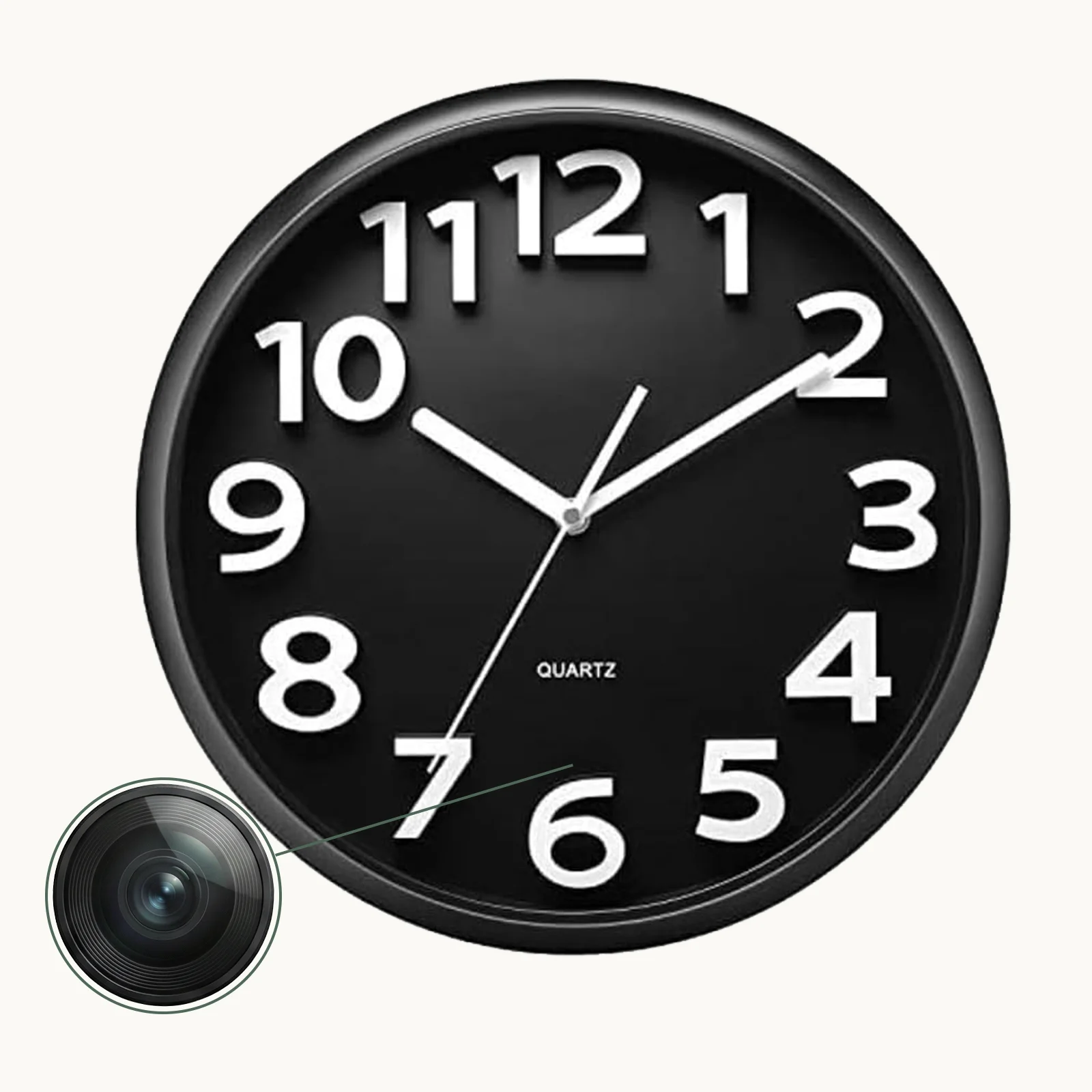
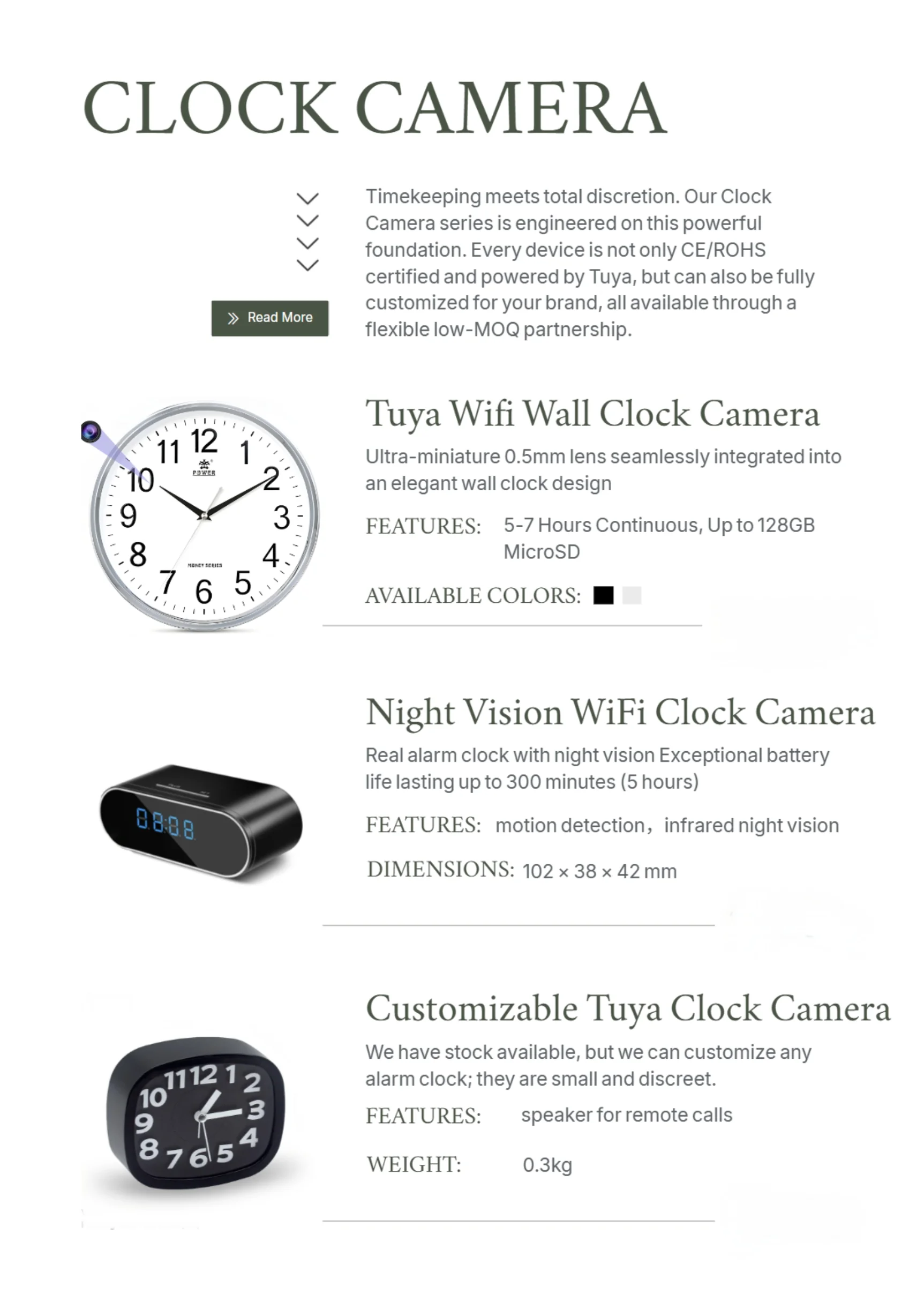
For wholesale buyers, clock cameras fall into three main shapes: digital alarm clocks, analogue wall clocks, and mirror LED clocks. Each shape suits a different room and viewing angle.
| Clock Type | Best Placement | Typical Lens Angle | Power Source |
|---|---|---|---|
| Digital alarm clock | Bedside table, desk | 90–120° | Mains adapter or battery |
| Analogue wall clock | Living room, hallway | 120–150° | Battery pack or wired |
| Mirror LED clock | Dresser, vanity | 90° | Mains adapter |
Key Takeaway: A clock camera is a concealed surveillance device disguised as a common household object.
Why Do Alarm Clock Cameras Sell Better Than Other Disguised Cameras?
Retailers often ask why clock cameras move faster than charger cameras or smoke-detector cameras. The answer is placement logic.
A clock belongs on a bedside table or desk at eye level. That position gives a natural, head-on view of a room. A charger camera must sit near a socket, usually low to the ground. A smoke-detector camera hangs on the ceiling, which captures tops of heads rather than faces.
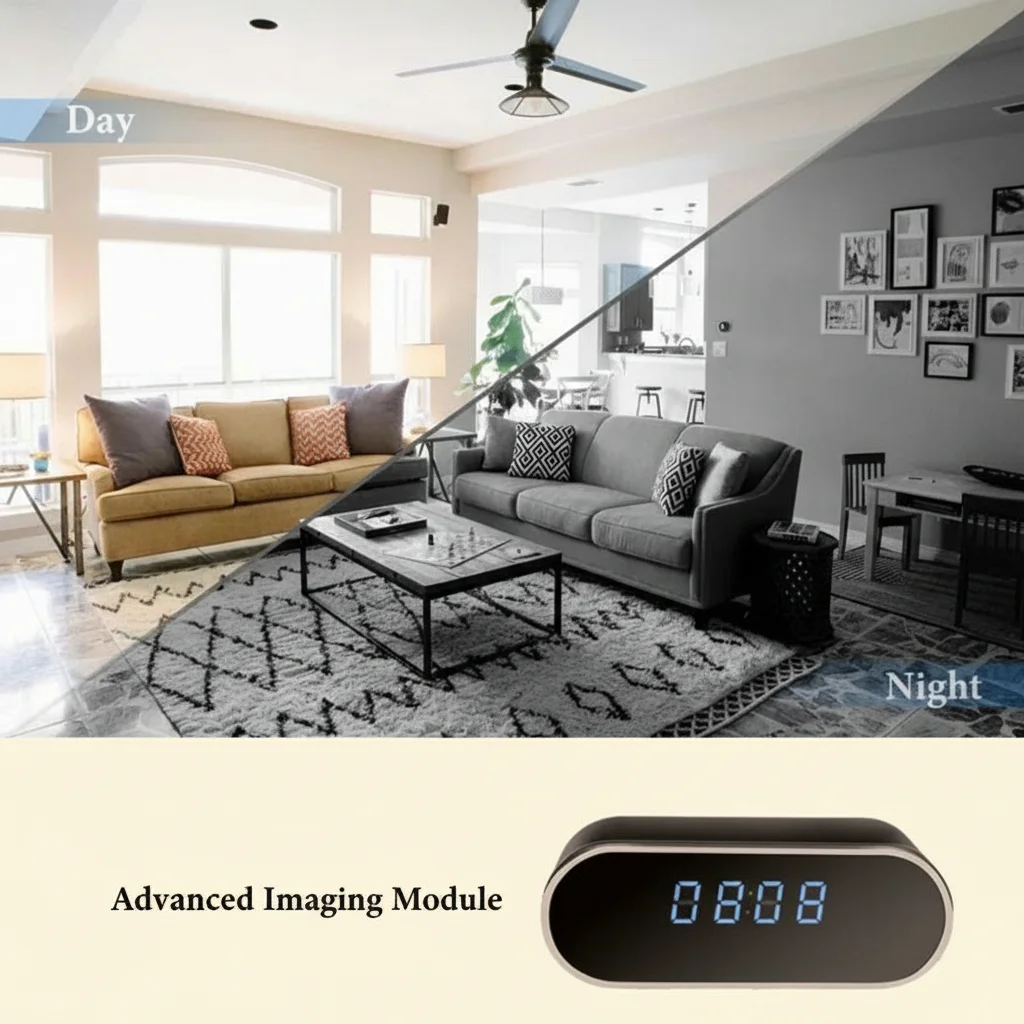
Consumers also understand clocks. They do not raise suspicion when a guest sees one. The same cannot be said of a random USB charger in a bedroom or a new smoke detector that appeared overnight. For resellers, this means fewer customer complaints about the camera being discovered.
From a B2B standpoint, clock cameras also support higher average order values. A buyer who needs one clock camera for a nursery often buys a second for the living room and a wall-clock version for the hallway. The category lends itself to bundles.
| Disguise | Natural Height | Face Capture | Bundle Potential |
|---|---|---|---|
| Alarm clock | Eye level | Excellent | High |
| USB charger | Floor level | Poor | Low |
| Smoke detector | Ceiling | Fair | Medium |
| Picture frame | Variable | Good | Medium |
Key Takeaway: Clock cameras sell well because they sit where faces naturally appear.
Which Resolution Should a B2B Buyer Specify for Clock Cameras?
Resolution determines whether footage can identify a person or merely confirm that someone was in the room.
For B2B buyers, 1080p remains the practical minimum. It produces files that are small enough for cloud or SD storage while still capturing readable faces at 2–3 metres. 2K and 4K clock cameras exist, but they create larger files, demand more bandwidth, and often cost 30–50% more per unit.
The QZT Z13 4K WiFi Alarm Clock Camera is useful for resellers who serve customers who want to crop into licence plates or serial numbers. The QZT WiFi Alarm Clock Hidden Camera for Indoor Rooms covers the mainstream market where storage and price matter more than pixel count.
| Resolution | File Size per Hour | Best For | Price Tier |
|---|---|---|---|
| 1080p | ~4–6 GB | General monitoring, long recording | Entry/mid |
| 2K | ~8–12 GB | Detail without 4K storage cost | Mid |
| 4K | ~16–24 GB | Evidence-grade cropping | Premium |
Key Takeaway: Stock 1080p for volume and 4K for high-end customers.
How Important Is Night Vision in an Alarm Clock Spy Camera?
Night vision is not optional for a device meant to monitor a bedroom or hotel room. Most incidents happen after dark, and a camera that shuts down at night captures only half the story.
Clock cameras use either infrared LEDs or low-light image sensors. Infrared models switch to black-and-white footage when ambient light drops. Low-light sensors keep colour but need some residual light. For hidden use, infrared is more common because it works in total darkness.
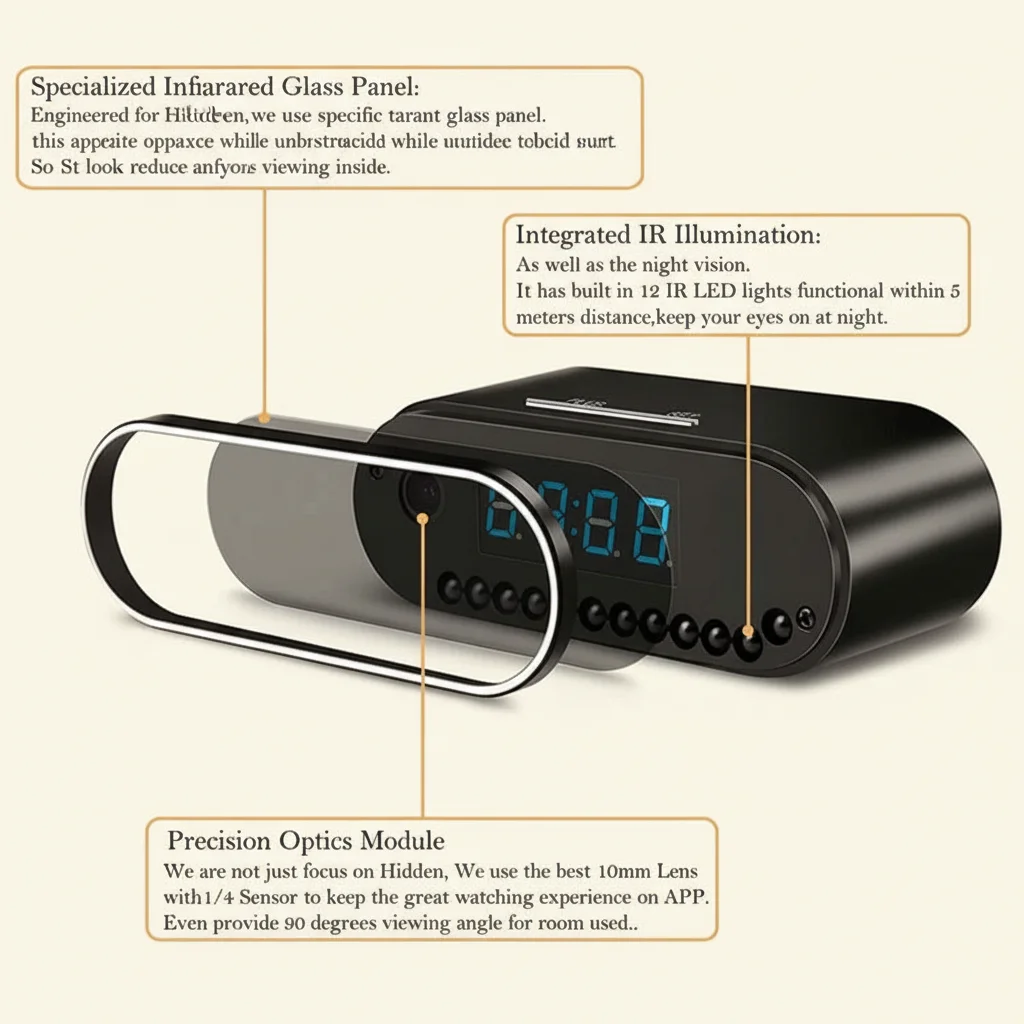
The effective range of consumer clock-camera IR is usually 3–8 metres. Anything beyond that produces grainy, unusable footage. When evaluating samples, ask the factory for night-vision footage shot in a 4×4 metre room — that is the realistic deployment size.
| Night Vision Type | Works In | Colour? | Typical Range |
|---|---|---|---|
| Infrared LEDs | Total darkness | No (mono) | 3–8 m |
| Low-light sensor | Dim light | Yes | 1–3 m |
| Starlight sensor | Near darkness | Yes | 2–5 m |
Key Takeaway: Always specify IR night vision; bedroom use depends on it.
WiFi vs. SD-Only Clock Cameras: Which Sells More?
This is the first fork in the road for most bulk buyers. WiFi models let users view live footage remotely. SD-only models record locally and require physical retrieval.
WiFi cameras dominate the consumer market because buyers want phone alerts. SD-only models appeal to buyers who distrust cloud apps, work in environments with weak internet, or need a simpler product with fewer returns.
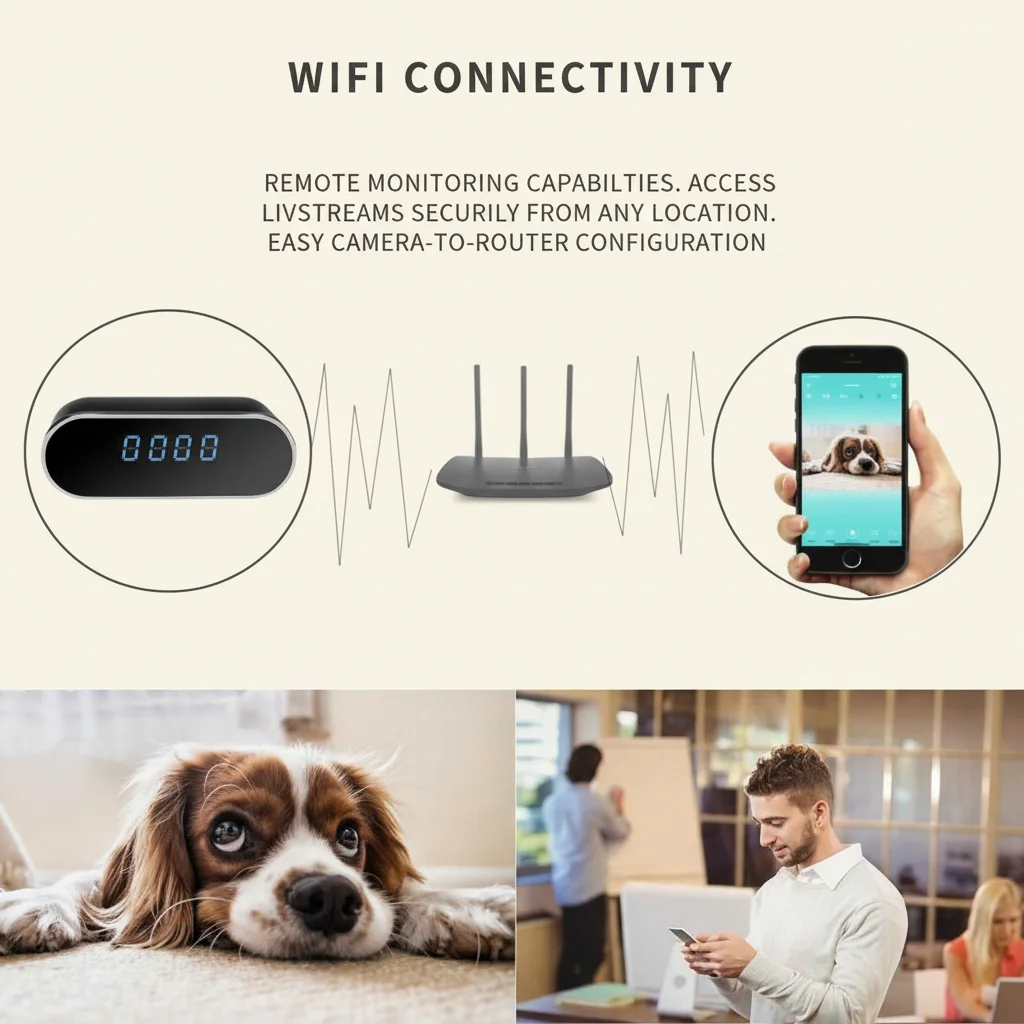
For EU resellers, WiFi models must be chosen carefully. The camera app needs GDPR-aligned data handling, and the manufacturer should support firmware updates. A cheap no-brand WiFi clock camera may work for three months, then lose server access and create warranty headaches.
| Feature | WiFi Clock Camera | SD-Only Clock Camera |
|---|---|---|
| Live view | Yes | No |
| Phone alerts | Yes | No |
| Setup complexity | Higher | Lower |
| Return rate | Higher if app is poor | Lower |
| Best customer | Tech-comfortable buyer | Privacy-focused buyer |
Key Takeaway: WiFi sells more, but SD-only reduces support costs.
What Motion Detection Features Matter for Resellers?
Basic motion detection records whenever pixels change. That sounds fine until a curtain moving in the breeze fills the SD card and drains the battery. Good motion detection uses pixel-change sensitivity thresholds, human-shape detection, or PIR sensors.
PIR-based motion detection is more reliable in clock cameras because it responds to body heat, not just light changes. Human-detection algorithms reduce false alarms further but require a more powerful processor and usually cost more.
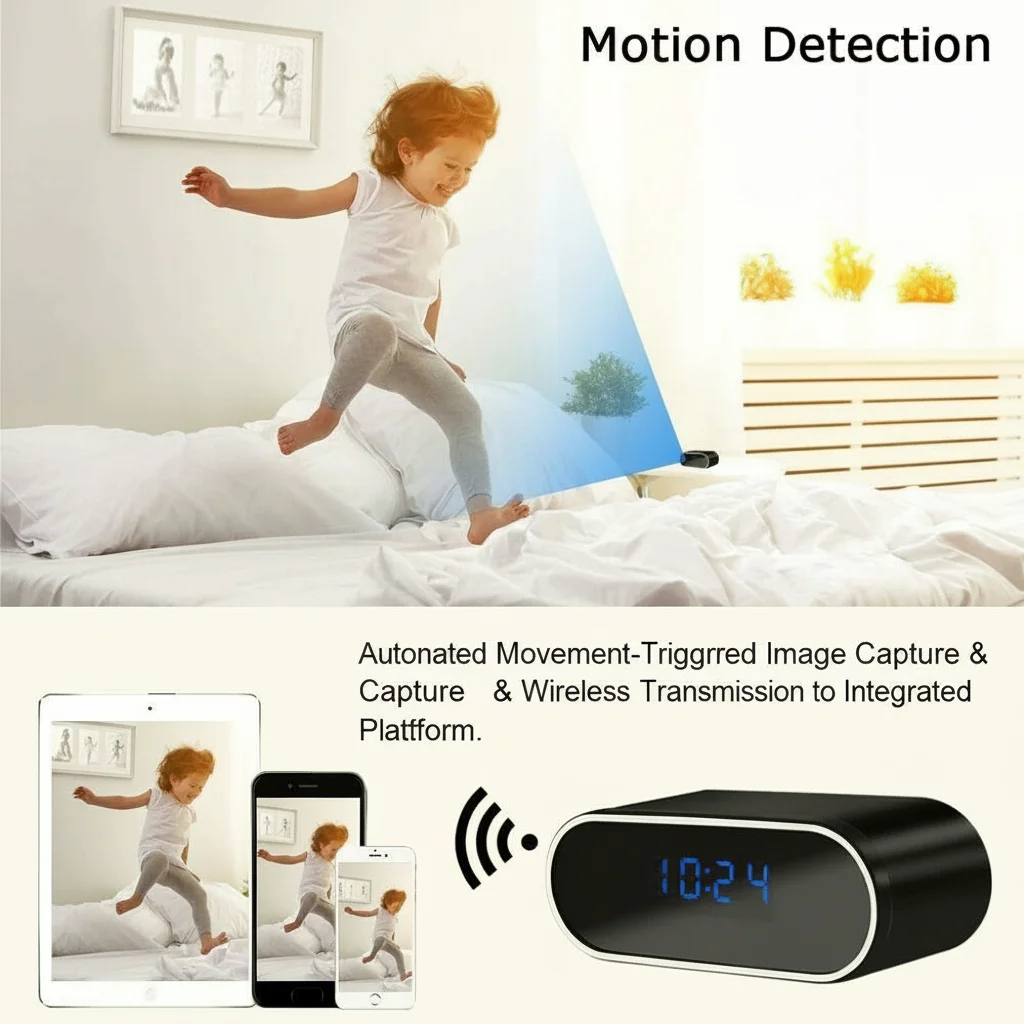
For B2B buyers, the critical spec is whether the camera sends a push alert with a snapshot. Users expect instant notification. If the camera only records to SD without alerting, it is a passive evidence tool, not a real-time monitor.
| Motion Tech | False Alarm Rate | Power Use | Best Use Case |
|---|---|---|---|
| Pixel change | High | Low | Price-sensitive markets |
| PIR sensor | Low | Medium | Bedrooms, hotel rooms |
| Human detection | Lowest | Higher | Premium home security |
Key Takeaway: PIR or human detection is worth the extra cost for most buyers.
How Do Tuya Smart Clock Cameras Fit the EU Market?
Tuya is a popular smart-home platform that lets clock cameras connect to a single app alongside lights, sensors, and locks. For EU customers, Tuya offers a familiar ecosystem and avoids the risk of a manufacturer-specific app being abandoned.
However, Tuya is not automatically GDPR-compliant. The platform processes data through regional servers, but the final responsibility lies with the device importer. Resellers in Germany or France should confirm where video data is stored and whether the product documentation includes a privacy notice.
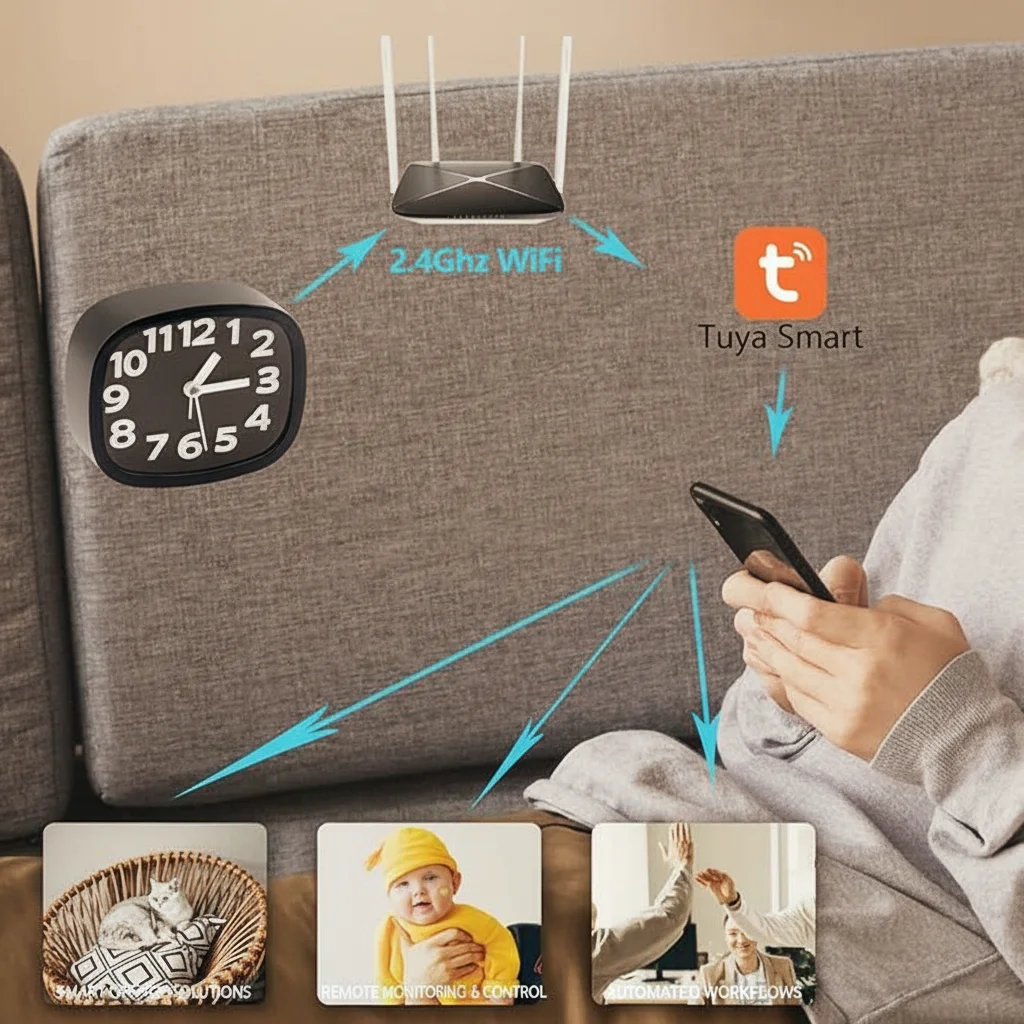
QZT supplies Tuya-powered clock cameras in several form factors. These are particularly useful for installers who already standardise on Tuya for smart-home projects. The same customer who buys a Tuya camera may also add sensors, reducing customer acquisition cost.
| Factor | Tuya Clock Camera | Standalone App Camera |
|---|---|---|
| Ecosystem | Wide smart-home integration | Locked to one brand |
| App longevity | Stronger | Riskier for no-name brands |
| Setup | Standardised | Varies by factory |
| EU compliance | Must still verify | Must still verify |
Key Takeaway: Tuya reduces app-abandonment risk but still needs compliance checks.
What Power and Storage Options Should You Stock?
Clock cameras are usually mains-powered because the clock display and camera both draw current continuously. Battery-powered models exist, but they need regular charging and are better suited to short-term deployment than permanent monitoring.
Storage typically uses a microSD card slot hidden under the battery cover. Capacities range from 32 GB to 256 GB. Some WiFi models also offer cloud storage subscriptions, but EU buyers are increasingly wary of cloud services outside the region.
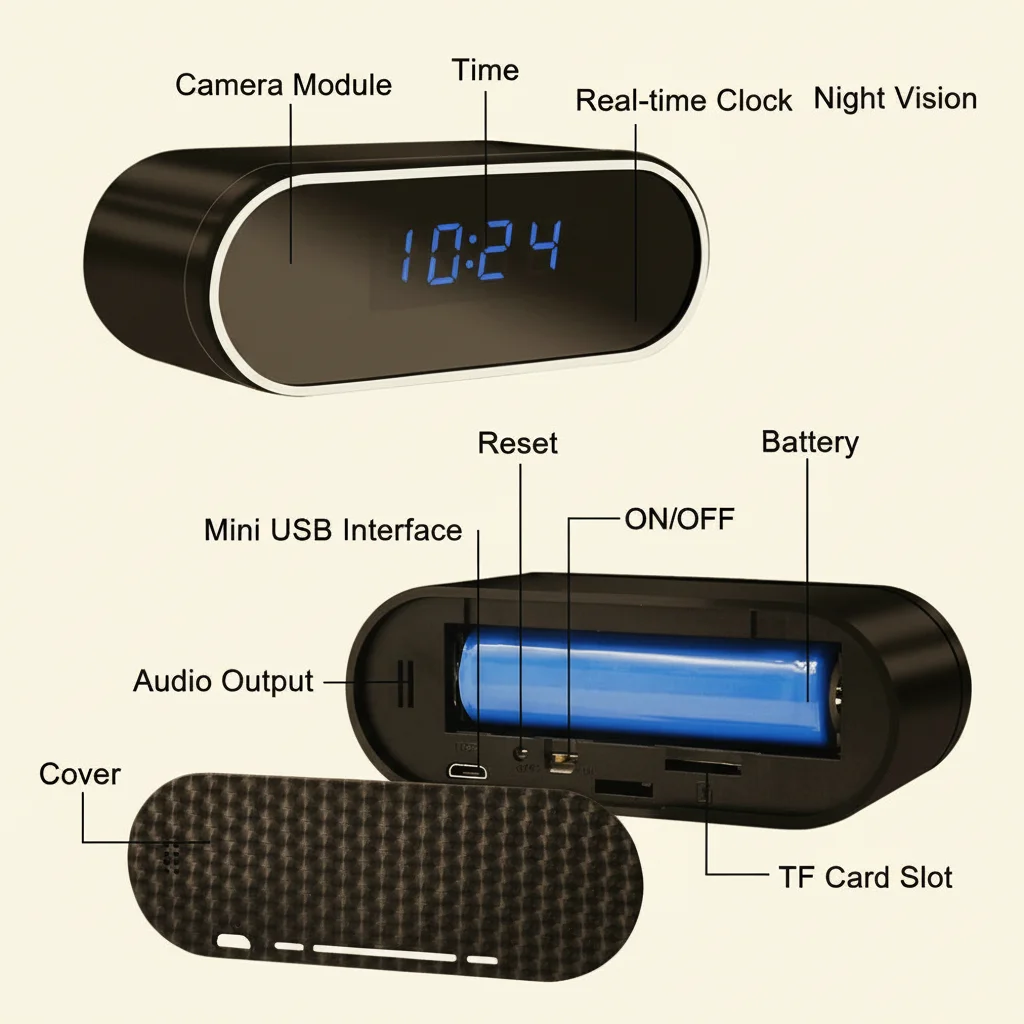
For B2B buyers, the decision is whether to bundle a memory card. Bundling raises the retail price but guarantees compatibility. Some factories pre-load 32 GB cards at low cost, which makes the bundle attractive.
| Power Type | Runtime | Best For | Drawback |
|---|---|---|---|
| Mains powered | Unlimited | Permanent home/office use | Needs socket nearby |
| Battery only | 2–6 hours | Short-term covert use | Frequent charging |
| Battery + mains | Unlimited when plugged | Flexible placement | Higher unit cost |
Key Takeaway: Mains-powered models with SD slots are the safest bulk buy.
Where Can Alarm Clock Cameras Be Legally Deployed?
Legal use depends on location and consent, not on how well the camera is hidden. In the UK and EU, video-only recording in your own property is generally lawful in common areas. Audio recording is more restricted and often requires consent.
Bedrooms and bathrooms are high-risk zones. A clock camera in a guest bedroom can cross into invasion of privacy, even if the property owner placed it there. Hotels and short-term rentals face additional obligations under GDPR and local accommodation laws.
For B2B resellers, the safe position is to sell clock cameras as security devices for the owner’s own spaces and to include clear guidance on lawful use. The Information Commissioner’s Office publishes guidance on domestic CCTV and data protection that applies to many of these use cases.
| Location | Video Recording | Audio Recording |
|---|---|---|
| Own living room/kitchen | Usually lawful | Check local consent law |
| Own bedroom (shared/guest) | High risk | High risk |
| Bathroom/changing area | Illegal | Illegal |
| Workplace common area | Notice usually required | Consent usually required |
Key Takeaway: Sell for lawful owner-monitored spaces; avoid promoting covert bedroom use.
How Do You Spot Low-Quality Clock Camera Suppliers?
The fastest way to lose margin is to import clock cameras that fail after one month. Common factory shortcuts include weak soldering around the USB port, plastic lenses marketed as glass, and apps that cannot be updated.
Request a sample before any bulk order. Test the night vision, motion alerts, and app stability over at least a week. Check whether the clock keeps accurate time when the camera is recording — some low-end units drift by several minutes per day.
Also verify certification. CE marking and RoHS compliance are baseline requirements for the EU market. Without them, customs can block the shipment and resellers can face liability claims. QZT clock cameras ship with CE and RoHS documentation, which is why installers in France and Germany use them for repeat projects.
| Red Flag | What It Means |
|---|---|
| No sample available | Factory may be a trader, not a manufacturer |
| App not on Google Play / App Store | Higher sideload security risk |
| No CE/RoHS paperwork | EU customs and liability risk |
| Lens visible at normal viewing distance | Product will be returned |
| Clock drifts during recording | Cheap oscillator, poor user experience |
Key Takeaway: Always sample, test for one week, and verify certifications.
Frequently Asked Questions
Can a hidden camera alarm clock record audio?
Many models can, but audio recording is legally restricted in many jurisdictions. In the EU and several US states, all-party consent is required for private conversations. Most B2B buyers should stock video-only models or models with a clear microphone mute switch.
Do clock cameras work without WiFi?
Yes. SD-only models record directly to a memory card and do not need any network connection. This makes them popular for users who distrust cloud apps or need to deploy in locations with poor internet.
How long does the battery last on a clock camera?
Mains-powered units run indefinitely. Battery-powered models typically last 2–6 hours of continuous recording, or up to several days in motion-activated standby. For permanent use, mains power is the only practical option.
Can clock cameras be detected by a hidden camera detector?
Yes. The lens reflects light, and WiFi models emit radio signals. A quality detector can locate them. This is not a flaw — it is why resellers should also stock hidden camera detectors as a complementary product line.
Are clock cameras legal to sell in the UK and EU?
The devices themselves are legal to sell. Their use is regulated by privacy, data protection, and surveillance laws. Sellers should provide clear usage guidance and avoid marketing them for covert recording in private spaces.
Conclusion
Hidden camera alarm clocks are one of the most natural concealed surveillance forms for homes, hotels, and offices. The clock is already supposed to be there, which removes the suspicion that a standalone camera creates.
For B2B buyers, success comes down to three choices: pick the right resolution mix, insist on reliable motion detection and night vision, and source from a factory that can prove CE/RoHS compliance and app stability.
QZT supplies clock cameras in 1080p and 4K, including Tuya-integrated models and the Z13 4K WiFi Alarm Clock Camera. If you are building a catalog for the EU market, contact the QZT sourcing team today for bulk pricing, sample units, and custom packaging options.

 English
  Italiano
  Deutsch
  Français
  Español
  Polski