
How Much Does a Spy Camera Cost? Complete Buying Guide 2025-2026
A spy camera costs anywhere from $15 to $500+ — with most serious buyers landing in the $45–$95 range. Below that, you get unreliable hardware, no CE marking, and apps that stop working within 18 months. Above $120, you are funding features most buyers never use. This guide covers the real price brackets, the specifications that drive cost, the form factors available, and the legal considerations EU and UK buyers need to factor into their purchasing decision.
Table of Contents
1. The Real Price Brackets: What You Actually Pay
2. What Drives the Cost Difference
3. Form Factors and Their Price Implications
5. Legal Costs You Must Factor In
6. The App Problem: Why the Cheapest Cameras Are Often the Most Expensive
7. Where to Buy for EU and UK Markets
8. Common Mistakes That Waste Money
9. FAQ
1. The Real Price Brackets: What You Actually Pay
The spy camera market segments into four clear price brackets. Each serves a different buyer profile.
| Price Bracket | What You Get | Who It’s For | Key Risk |
|---|---|---|---|
| Under $25 / £20 / €23 | Basic 1080p, unstable Wi-Fi, 60–90min battery, 850nm IR | Bulk OEM buyers; short-term projects | High return rate; app abandonment; no CE marking |
| $25–$55 / £20–£45 / €23–€50 | Verified 1080p, stable app, 940nm IR option, 3–6hr battery | Home users; small retailers | Requires careful spec verification |
| $55–$120 / £45–£100 / €50–€110 | Reliable 1080p, 940nm night vision, 128GB SD support, CE marking | Professional installers; serious home security | Best value for most buyers |
| $120–$350+ / £100–£280+ / €110–€320+ | 2K–4K real resolution, dual power, metal housing, cloud backup | Commercial deployments; security companies | Overkill for most home uses |
> “The $60 camera beat the $140 camera in our head-to-head test. The $140 model was spending its hardware budget on a 4K sensor that its lens could not resolve.”
> — TECH FROGY, Best Spy Cameras 2025 review
The takeaway that forums and independent reviews agree on: resolution alone tells you almost nothing. The sensor, the lens quality, the image processing pipeline, and the app stability matter more than the megapixel count on the box.

2. What Drives the Cost Difference
Here is the breakdown that product listings never show you.
2.1 The Sensor: Where the Money Actually Goes
A genuine Sony IMX307 image sensor costs significantly more than the no-name alternatives used in budget cameras. The difference shows up in three ways:
Low-light performance. The IMX307 uses a back-illuminated pixel architecture that captures significantly more light per pixel than budget sensors. In a dark room or at night, a camera with this sensor produces usable footage while a budget sensor at the same resolution produces noise.
Colour accuracy and dynamic range. Better sensors handle high-contrast scenes — a window-lit room, for example — without blowing out highlights or crushing shadows. This matters enormously for any application where the footage needs to be legally admissible.
Real versus interpolated resolution. The majority of sub-$50 cameras claiming “4K” are interpolating from a 2MP sensor. The sensor itself is physically incapable of capturing 4K detail. No amount of software processing can add information that was never captured.
2.2 Night Vision: The $15–25 Premium That Pays for Itself
Hidden cameras marketed for genuine covert use must have invisible night vision. The only technically sound option at reasonable cost is a 940nm infrared LED array.
| Night Vision Type | Wavelength | Human Visibility | Cost Impact | Detection Risk |
|---|---|---|---|---|
| Standard IR LED | 850nm | Red glow visible in darkness | Included in base price | High — detectable by naked eye |
| No-glow IR LED | 940nm | Completely invisible | +$15–25 to unit cost | Low |
| Multi-LED array | 850nm/940nm | Varies by type | +$30–60 to unit cost | Medium–Low |
For a hospitality business in Munich or a landlord in London deploying cameras in rental properties, the discovery of a covert camera by a guest or tenant is a catastrophic outcome. The $15–25 premium for 940nm IR is not optional in these scenarios — it is the entire point of buying a covert device.
2.3 Power Architecture
The most lied-about specification in consumer cameras is battery life. Here is how to interpret the claims:
| Claimed | What It Usually Means | What You Actually Get |
|---|---|---|
| “20 hour battery” | Standby time | 1.5–4 hours of actual recording |
| “30 day standby” | PIR standby, no recording | 2–5 days with motion-triggered recording |
| “USB powered” | USB cable included | May not include the power adapter |
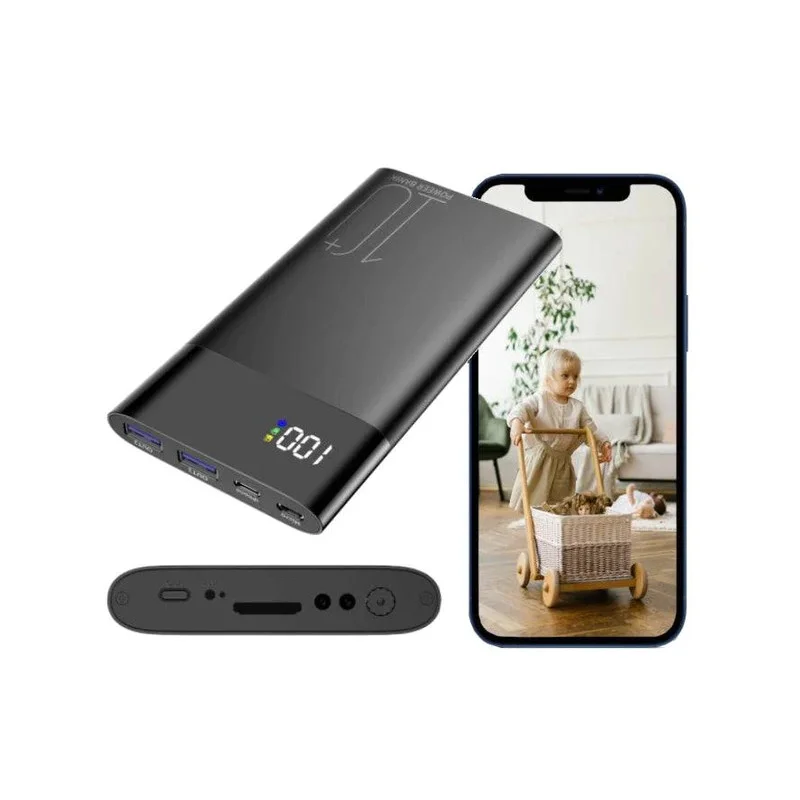
The practical solution — and the one most professional installers recommend — is dual power architecture: a battery for mobility plus USB passthrough for continuous operation when the camera is in a fixed location. Cameras like the H3 Power Bank Hidden Camera at the $55–$80 price point deliver this combination without a significant price premium.
2.4 Connectivity and Remote Access
Wi-Fi connectivity adds cost in two ways: the hardware module itself and the ongoing server infrastructure that powers the app. The cheapest cameras use free third-party cloud services maintained by app developers who have a financial incentive to shut everything down once the user base grows large enough to require server costs.
Before purchasing any Wi-Fi-enabled camera, check the app’s update history and user reviews for server reliability. Cameras with proprietary apps and dedicated server infrastructure — like those supported by QZT Security’s platform — carry significantly lower long-term infrastructure risk.
3. Form Factors and Their Price Implications
The disguise is often the most expensive part of a covert camera. A clock camera requires custom-moulded housing, a real clock movement, and a lens positioned precisely behind the clock face — all of which add manufacturing cost compared to a bare board camera.
| Form Factor | Price Range | Strengths | Weaknesses |
|---|---|---|---|
| Clock camera | $45–$120 | Most versatile; AC powered; blends in every room | Limited to locations with a clock |
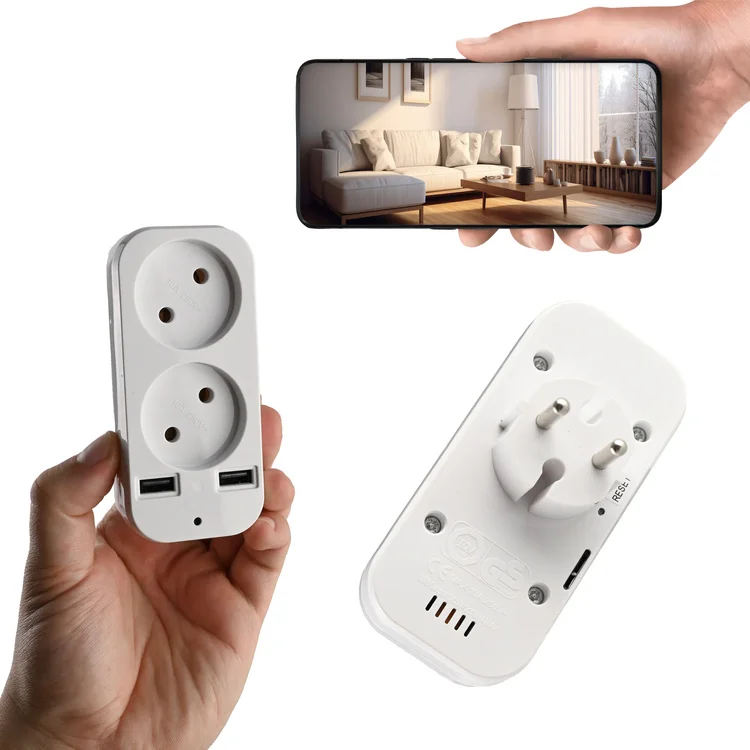
| USB charger camera | $35–$95 | Ubiquitous; always near power; excellent value | Fixed low angle; no battery backup |
| Power bank camera | $50–$95 | Fully mobile; visible as power bank reduces suspicion | Battery life limits recording time |
| Smoke detector camera | $60–$130 | Ceiling mount gives best angle coverage | Requires ceiling installation |
| Pen camera | $70–$150 | First-person POV; portable; strong legal use case | Small battery; limited storage |
| Car key fob camera | $40–$80 | Extremely portable; natural in car or on person | Very small lens; limited battery |
> Clock cameras are consistently the top-performing category in European retail channels — driven by demand from home security buyers who want a device that looks exactly like an ordinary household object.
> — QZT Security sales data, 2025
4. Spy Camera Types Compared
Here is how different camera technologies stack up across the specifications that matter most.
| Feature | Basic Mini Camera | Wi-Fi Covert Camera | 4G LTE Camera | Professional CCTV |
|---|---|---|---|---|
| Price range | $15–$40 | $35–$120 | $80–$200 | $150–$500+ |
| Resolution | 720p–1080p (often interpolated) | Verified 1080p–2K | 1080p–2K | 2K–4K |
| Power | Battery only | Battery + optional USB | Battery + 4G | Mains powered |
| Remote access | No (local SD only) | Yes (Wi-Fi) | Yes (cellular) | Yes (network) |
| Night vision | Basic 850nm | 940nm available | 940nm available | Multi-LED professional |
| Covert rating | Medium (visible device) | High (excellent disguise) | High | Low (obvious CCTV) |
| Best for | Short-term projects | Home/office | Mobile/vehicles | Commercial premises |
The Wi-Fi covert camera category — clock cameras, USB charger cameras, smoke detectors — represents the sweet spot for most buyers. These devices offer the right combination of disguise quality, power reliability, remote access, and price.
5. Legal Costs You Must Factor In
This is the section that most buying guides skip. EU and UK buyers cannot afford to.
5.1 GDPR Compliance Costs
If you are deploying cameras in any commercial context in the EU — a shop, an office, a rental property — you have obligations under GDPR. The regulation requires:
– A lawful basis for processing (usually legitimate interest or consent)
– A privacy notice visible to people being recorded
– A data retention policy specifying how long footage is kept
– Appropriate technical security for the footage storage infrastructure
Buying a cheap camera with no information about where its cloud servers are located, who has access to the footage, and what data is transmitted beyond the video itself does not eliminate these obligations — it simply makes them harder to fulfil. Factor in the cost of a GDPR compliance review (typically €500–€2,000 for a small business) when evaluating whether a sub-$40 camera represents a genuine saving.
5.2 Audio Recording: The Hidden Liability
In the UK, recording audio without the consent of at least one party is lawful under the Telecommunications Act 1984 — but the rules are tighter in private settings. In Germany, BDSG §26 requires a specific justification for audio recording of employees or third parties. In France, Italy, and most other EU member states, audio recording without consent can constitute a criminal offence.
The cameras themselves do not care about these distinctions — but the people in the footage do. Budget cameras often record audio by default without clear indication to the operator. Professional systems give you explicit audio on/off control.
> GDPR Recital 18 confirms that processing personal data for “purely personal or household activities” falls outside the scope of the regulation — but as soon as a device is deployed in a commercial, professional, or shared context, full GDPR obligations apply.
> — ICO guidance on domestic CCTV, UK Information Commissioner’s Office
6. The App Problem: Why the Cheapest Cameras Are Often the Most Expensive
This is the single most consistent complaint in forum discussions about budget spy cameras: the app stops working.
The mechanism is straightforward. A Chinese manufacturer creates an app to support their cameras. The app connects to a cloud server that the manufacturer operates. After 12–18 months, the manufacturer either stops supporting the app (because the server costs exceed the revenue from new device activations) or the company goes out of business entirely.
The result is a camera that physically works but cannot be accessed, configured, or have its footage reviewed — because the app is the only interface. This problem is invisible at the time of purchase and is not covered by any warranty on the camera hardware.
Established manufacturers with proper infrastructure support their apps as a core part of the product. When evaluating any camera purchase, the first question should be: who operates the app servers, and what is their track record?
7. Where to Buy for EU and UK Markets
| Source | Price | Pros | Cons |
|---|---|---|---|
| European wholesale distributors | Moderate | CE/UKCA marking included; local support; fast shipping | Higher per-unit cost |
| Alibaba.com (OEM) | Low | Very low unit cost for bulk orders | Customs risk; no CE guarantee; long lead times |
| UK specialist retailers | Moderate–High | UKCA marked; English support; fast delivery | Limited bulk pricing |
| German specialist distributors | Moderate–High | German language support; GDPR advice available | Higher prices |
For distributors and installers, buying from a European wholesale source with proper compliance documentation costs more upfront — but eliminates customs delays, return processing, and the risk of liability claims from customers using non-compliant equipment.
8. Common Mistakes That Waste Money
Buying on resolution alone. A 4K camera with a poor lens and cheap sensor produces worse footage than a properly engineered 1080p camera. Always check the sensor model before buying.
Ignoring the audio recording laws. Enabling audio by default without understanding your legal obligations creates liability exposure that far exceeds the cost of a compliant camera.
Choosing battery-only for permanent installations. A camera that needs recharging every 4 hours is a camera that will miss critical events. For fixed installations, always prioritise cameras with AC mains or USB passthrough power.
Believing “undetectable” Wi-Fi claims. No Wi-Fi camera is truly undetectable. Network scanners and RF detectors can locate wireless cameras reliably. If absolute RF silence is required, choose a camera with local SD storage only.
Skipping the storage card quality check. Budget cameras frequently ship with fake-capacity SD cards. Always test with a known-good card from a reputable brand.
9. FAQ
What’s the actual cost of a spy camera when you factor in everything?
The all-in cost is typically 2–3x the listed unit price. For home use: add SD card ($15) and potential cloud subscription ($3–$8/month) on top of the camera. For EU commercial deployments: add GDPR compliance review (€500–€2,000) and data retention management. The camera hardware is often the smallest line item.
How much should I spend on a spy camera for home use?
$55–$90. This range covers verified 1080p clock cameras or USB charger cameras from reputable distributors with CE marking and stable app infrastructure. The Z10 WiFi Spy Clock Camera in this range delivers reliable 24/7 monitoring with remote access — the core requirements for home use.
Is it worth paying for a 4K spy camera?
In most cases, no. The file sizes are significantly larger, Wi-Fi bandwidth requirements are higher, and the sensor and lens quality at the $100–$150 price point rarely justify the resolution claim. A properly engineered 1080p camera with a real Sony IMX307 sensor outperforms interpolated 4K from a cheap sensor in real-world conditions.
What’s the cheapest reliable spy camera for EU buyers?
Cameras in the €35–€50 range from European distributors with CE marking. Avoid Alibaba sub-€25 imports unless you have a compliance department that can handle customs clearance and documentation requirements. The reliability of the app infrastructure matters more than the unit price.
Can a cheap spy camera actually be used as evidence in court?
Footage quality is only one factor. UK courts require an intact chain of custody and proof that footage has not been altered. Low-resolution footage may show that an event occurred but fail to provide identification detail. For evidence-quality applications, invest in a verified 1080p or 2K camera with local SD card storage and proper timestamp configuration.
Need help choosing the right spy camera for your specific application? Contact us today for wholesale pricing, volume discounts, and technical specifications on our full range of CE-marked covert cameras — from clock cameras to USB charger cameras to pen cameras.

 English
  Italiano
  Deutsch
  Français
  Español
  Polski