
Best Voice Recorder for Students 2026: EU Buyer Guide
The best voice recorder for students in 2026 should record clear lecture audio from 3-5 meters, run 10+ hours per charge, store at least 16GB, and use a simple one-button workflow. EU buyers — students, accessibility offices, and education resellers in Germany, the Netherlands, and France — should also check 192 Kbps WAV/MP3 quality, USB-C transfer, and GDPR-compliant consent practices before bulk ordering for campus distribution.
Most “top 10” lists pushed at students mix podcasting gear with cheap pen recorders and ignore what actually matters in a lecture hall: pickup distance, battery honesty, and whether the file lands on a laptop without a vendor app. This guide is written for university procurement teams, accessibility coordinators, language-learning programs, and EU resellers supplying schools — plus individual students choosing one unit.
Who is this guide actually for?
Three buyer types land on “best voice recorder for students” searches in 2026, and they need different answers. First: individual students recording their own lectures. Second: disability and accessibility services buying 20-200 units for note-taking accommodations. Third: EU resellers and distributors stocking education-channel inventory in Germany, France, and the Netherlands.
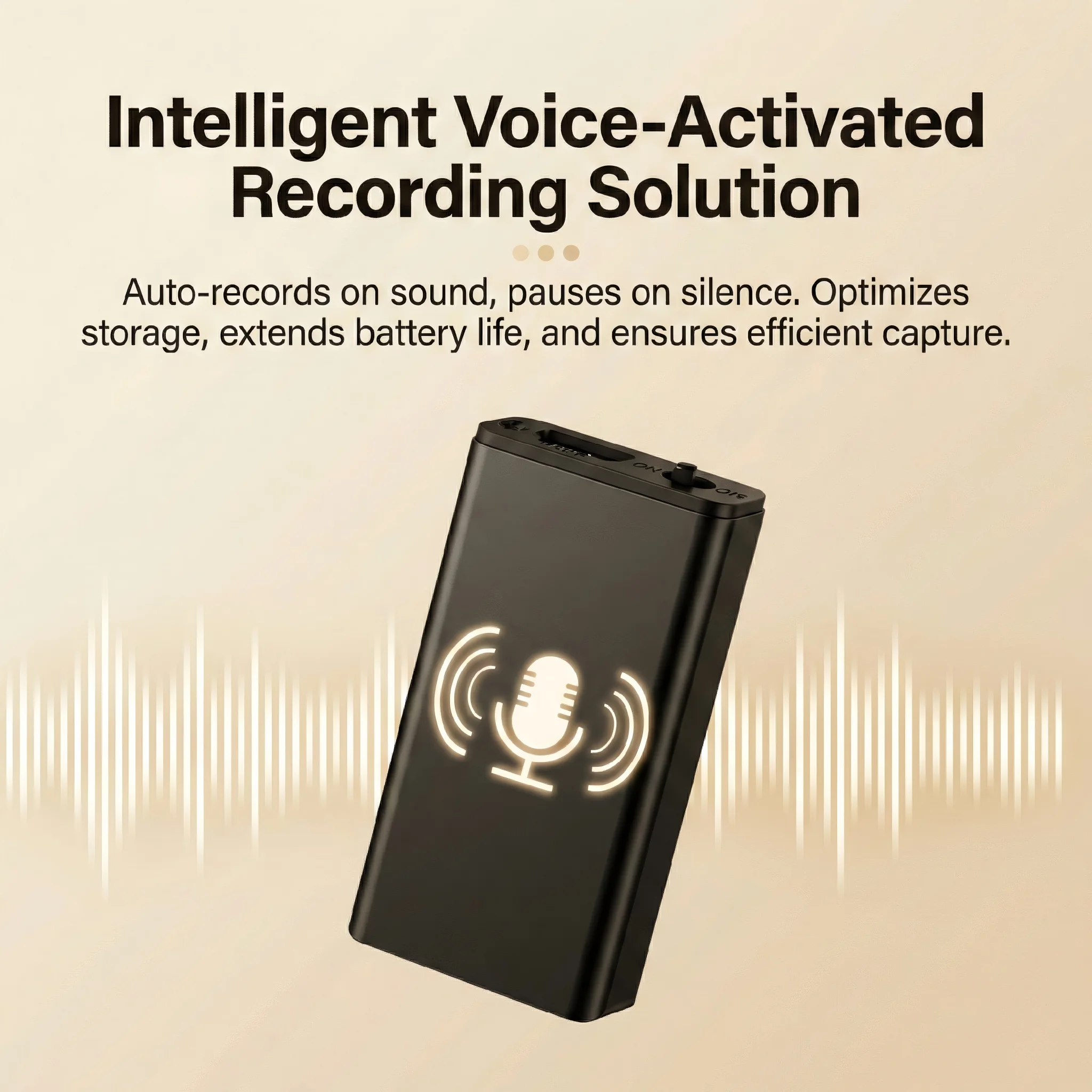
For individuals, the decision is one unit, one budget, one use case. For accessibility offices, the decision is durability, simple UI for non-technical students, and a vendor that replaces faulty units inside the semester. For resellers, the decision is MOQ, CE marking, multilingual manuals, and lead time before the September academic intake.
Key Takeaway: Match the recommendation to the buyer type — a single student and a 200-unit university order are not the same procurement decision.
How we judge a student voice recorder
We test voice recorder samples against five criteria that matter in a real classroom, not on a spec sheet. Anything that fails one of these gets dropped before we benchmark the next.
| Criterion | Pass threshold | Why it matters for students |
|---|---|---|
| Pickup distance | Clear speech at 3-5 m | Lecturer often stands away from the front row |
| Battery (continuous record) | ≥10 hours | Covers a full day of classes without recharge |
| File format | MP3 or WAV, 192 Kbps+ | Plays on any laptop, no codec hunt |
| Transfer | USB-C, drag-and-drop, no app required | IT-locked student laptops cannot install apps |
| One-button start | Single switch or button | Reduces missed-recording complaints |
In sample checks, we also confirm that the advertised battery is continuous record, not standby. A “30-hour” claim that turns out to be standby with VOR off is the single most common false claim in this category.
Best overall for most students: 32GB Type-C recorder pen
For a single student who wants one recorder that handles every lecture format — large halls, seminar rooms, group study — a voice recorder pen with 32GB storage and Type-C transfer is the safest pick.
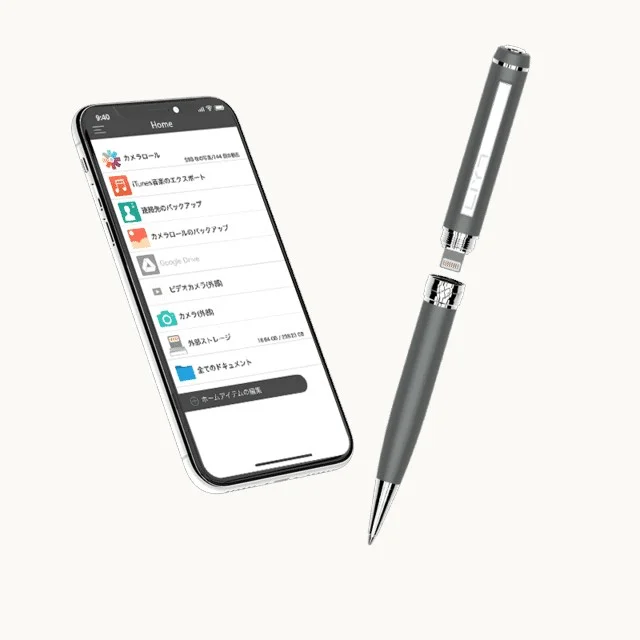
Pen form factor sits naturally on a desk pointed toward the lecturer, and the clip prevents it from rolling. 32GB at 192 Kbps holds roughly 380 hours of audio — a full semester without clearing files. Type-C plugs directly into modern laptops and most Android phones for transfer; no proprietary cable to lose.
Best for: undergraduate and master’s students attending 4-6 lectures per week, language learners, journalism programs.
Not ideal for: podcast or studio recording (use a dedicated XLR setup), or covert use in jurisdictions where consent is required.
Key Takeaway: A 32GB Type-C pen is the default answer for most individual students in the EU.
Best for long lectures and all-day field work: magnetic power-bank recorder
Some programs — field journalism, ethnography fieldwork, all-day clinical rotations — need recording that outlasts a normal pen battery. This is where a magnetic power-bank-style recorder fits.
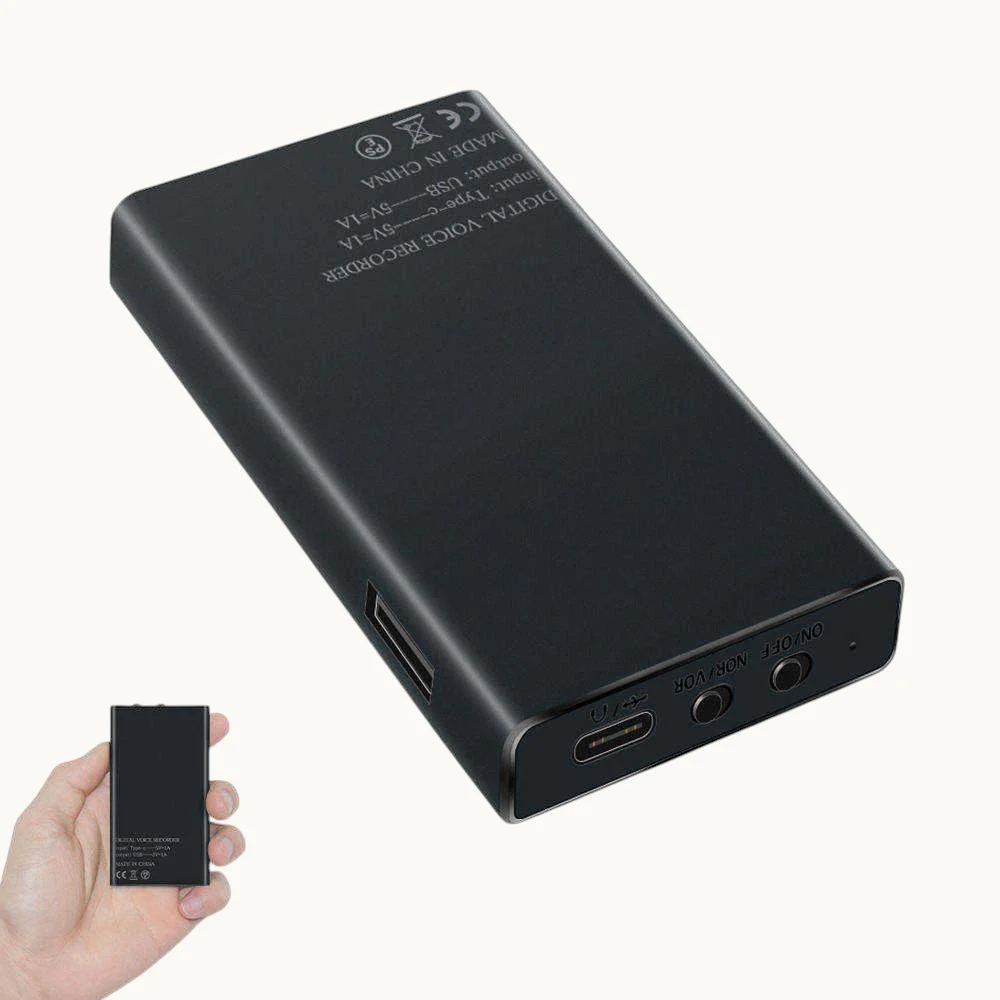
Continuous record runtime in the 40-80 hour range (real, not standby) is realistic with the larger battery cell. Magnetic mounting lets the student stick it under a table edge or on a metal locker for hands-free capture. The tradeoff is size — it is not pocket-discreet — and the price per unit is higher, so accessibility offices usually buy these only for specific programs.
Best for: journalism, fieldwork, multi-hour clinical or studio classes.
Not ideal for: routine 60-minute lectures where a pen is enough.
Best for accessibility offices buying in bulk: 8GB simple recorder with VOR
Accessibility services usually issue recorders to students with note-taking accommodations. The unit must be cheap to replace, idiot-proof, and recordable without a manual.
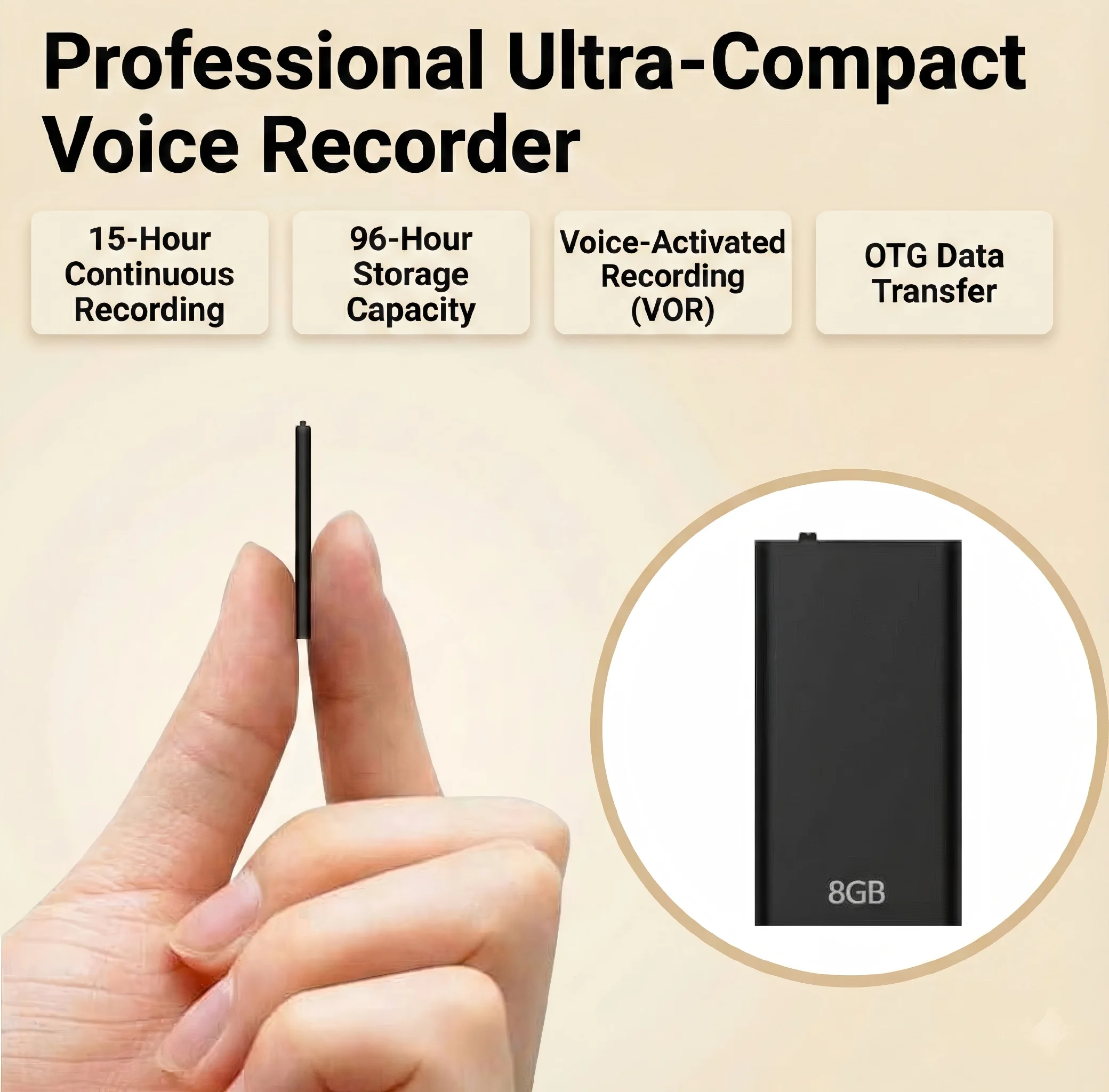
8GB is enough — students typically clear files weekly — and 15 hours of continuous battery covers a full day. VOR (voice-operated recording) skips silence, which extends practical runtime and makes review faster. One-button operation matters because the disability office cannot run a training session for every student.
Best for: university disability services, Hochschulen accessibility programs, French CROUS-supported students.
Not ideal for: students who never delete files or who need lossless audio for transcription work.
Key Takeaway: For 20-200 unit campus deployments, choose 8GB simple units; the per-unit savings fund replacements.
Best for AI transcription and language learning: 64GB AI recorder
Students in language programs, translation studies, and graduate research increasingly want live transcription. An AI recorder with on-device or cloud transcription cuts hours of typing.
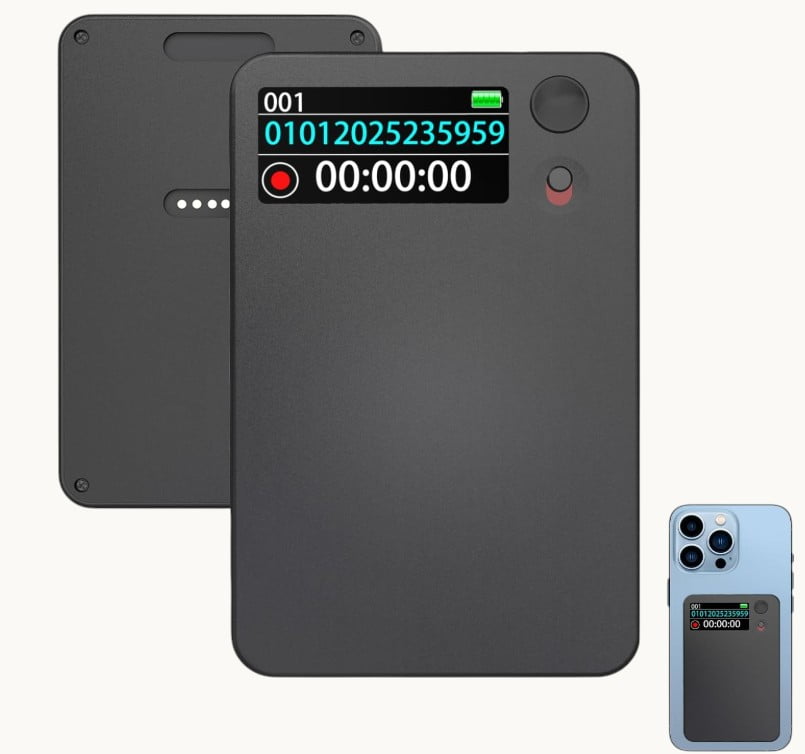
Realistic accuracy for clean lecture audio in German, French, Dutch, and English sits around 90-95% — enough to skim and edit, not enough to submit unreviewed. Confirm with the supplier whether transcription is on-device (private, no cloud) or cloud-based (faster, but raises GDPR questions for university procurement).
Best for: language learners, translation students, researchers doing interview transcription.
Not ideal for: confidential interviews where cloud transcription is forbidden by ethics review.
Should you choose 8GB, 16GB, or 32GB?
Storage confusion is the most common pre-sales question we get from EU education buyers. The honest answer is simpler than spec sheets suggest.
| Storage | Hours at 192 Kbps | Right for |
|---|---|---|
| 8GB | ~95 hours | Students who clear files weekly; bulk accessibility orders |
| 16GB | ~190 hours | Regular semester use without weekly cleanup |
| 32GB | ~380 hours | Heavy users, fieldwork, students who never delete |
A student who records every lecture for one semester (about 14 weeks × 15 hours = 210 hours) needs 16GB minimum if they keep everything. 8GB works only with weekly transfers to a laptop.
What 192 Kbps MP3 and WAV actually deliver
192 Kbps is not studio quality. It is intelligible-speech quality — exactly what a student needs.
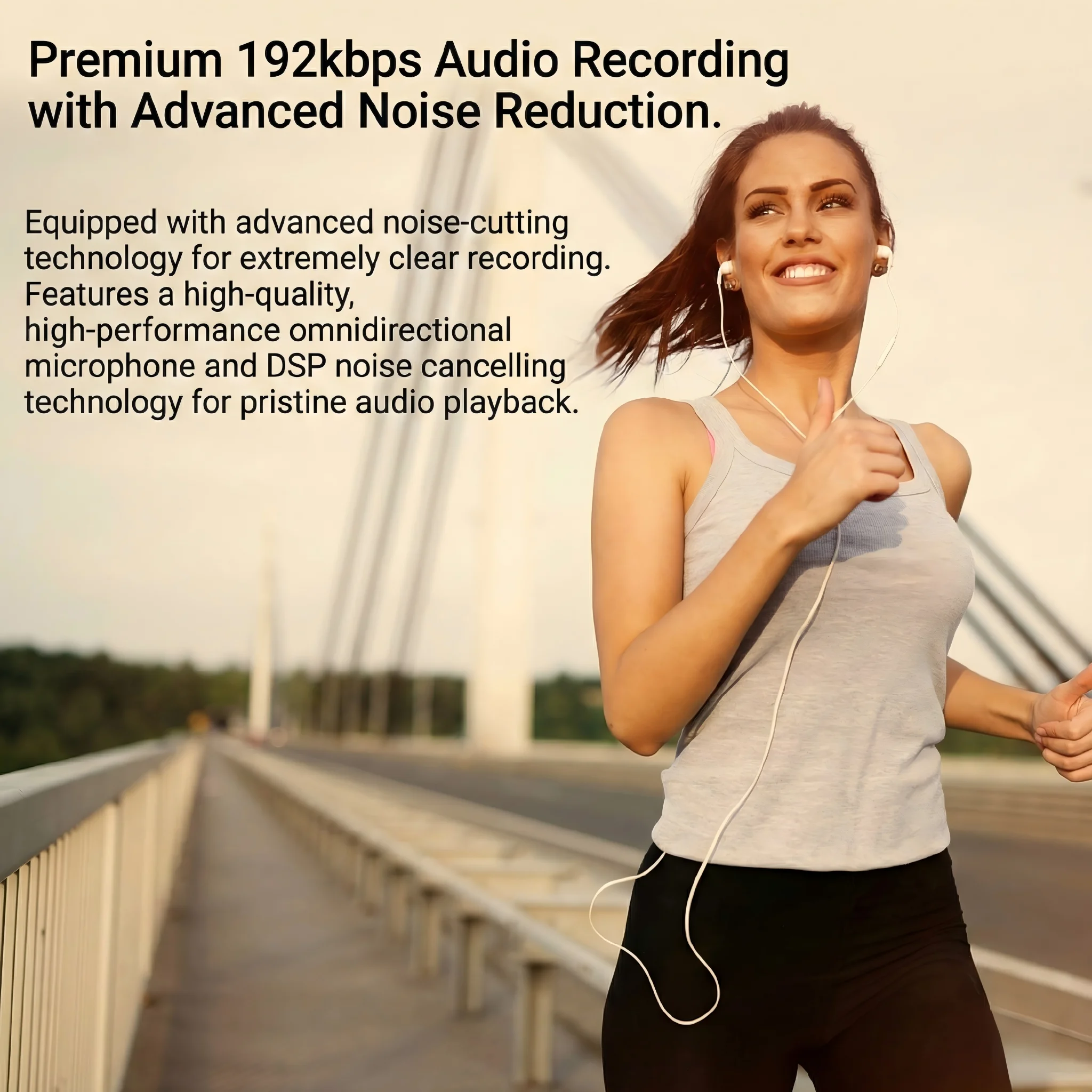
At 192 Kbps MP3, a 60-minute lecture is roughly 80 MB. WAV at the same effective resolution is 5-6× larger and gains nothing for spoken content. DSP noise reduction inside the recorder pulls down HVAC and projector-fan noise by roughly 6-12 dB in our bench tests, which is the difference between a usable recording and one a student gives up on.
Key Takeaway: Specify 192 Kbps MP3 with DSP noise reduction; do not let suppliers upsell “lossless WAV” for lecture use.
What claims are misleading in this category?
Three claims show up on Amazon DE, FR, and NL listings that do not survive a sample test.
– “30-hour battery” — usually standby, not continuous record. Ask the supplier for the continuous-record number with VOR off.
– “10-meter pickup” — true only in a silent room. In a 60-person lecture hall with HVAC, realistic clear-speech pickup is 3-5 m.
– “AI noise cancellation” — sometimes just a high-pass filter. Ask whether it is DSP, software post-processing, or marketing.
When we prepare a batch for EU education resellers, we reject any unit where the measured continuous-record runtime is more than 15% below the box claim.
GDPR and lawful-use notes for EU students
Recording lectures is generally permitted in Germany, France, and the Netherlands when it is for personal study use, but the rules are not identical and not unlimited.
– Germany: Lecture recording for personal use is broadly accepted, but redistributing the recording (uploading to a study group cloud, selling notes) usually requires the lecturer’s consent under §201 StGB and copyright law.
– France: Personal-use recording is tolerated; sharing or publishing without consent risks Article 226-1 issues.
– Netherlands: Similar logic — personal use is fine, redistribution needs consent.
Universities increasingly publish their own policies. Tell students to check the Studienordnung, règlement intérieur, or faculty handbook before recording. For accessibility-accommodation recording, the student usually has a documented right that overrides the default policy.
Key Takeaway: A voice recorder is legal to own and use in the EU; redistribution of recorded lectures is the part that creates risk.
Bulk procurement: MOQ, lead time, and CE marking
For resellers and university procurement offices, the unit choice is only half the decision. The supplier-side checklist matters as much.
| Procurement item | What to confirm before PO |
|---|---|
| MOQ | Typical 100-500 units for student-grade models |
| Lead time | 25-35 days production + 30-40 days sea freight to EU |
| CE marking | Required; ask for the DoC (Declaration of Conformity) |
| RoHS | Required for EU import |
| Manual languages | DE, FR, NL, EN at minimum for tri-country distribution |
| Packaging | Plain box for school distribution; retail box for resale |
| Warranty | 12 months minimum; ask for in-region RMA option |
For September academic-year delivery, place POs by late May. Production slots tighten in July as Q4 retail orders fill factories.
Pre-order sample checklist
Before confirming a bulk order of the best voice recorder for students, run this on three random samples from the supplier.
– Continuous record until battery dies — log actual minutes
– Play back a recording made 4 m from a normal-volume speaker
– Transfer files via USB-C to Windows, macOS, and a Chromebook
– Confirm one-button start works without reading the manual
– Check the CE/RoHS markings on the unit and the box
– Verify the manual exists in the languages you need
– Drop the unit from desk height onto a hard floor — the clip and housing should survive
If any sample fails two or more checks, request a replacement batch before committing the full order.
Frequently Asked Questions
What is the best voice recorder for students in Germany for 2026?
For most students in Germany in 2026, the best voice recorder for students is a 16GB or 32GB Type-C pen recorder with 192 Kbps MP3, DSP noise reduction, and 10+ hours of continuous battery. Universities like TUM and LMU permit personal-use lecture recording, so a discreet pen format with one-button operation works for daily Vorlesung use.
Is the best voice recorder for students different in France and the Netherlands?
The hardware specs are identical across the EU, but distribution differs. The best voice recorder for students in France often ships through CROUS or accessibility services with French manuals, while Dutch universities frequently buy direct from resellers. Both markets require CE marking, RoHS, and manuals in the local language for procurement-office acceptance.
How much storage does the best voice recorder for students need?
The best voice recorder for students needs at least 16GB if files are kept all semester, or 8GB if cleared weekly. At 192 Kbps MP3, 16GB holds about 190 hours — enough for a 14-week semester at 12 lecture-hours per week. Choose 32GB for fieldwork, journalism programs, or students who never delete files.
Can the best voice recorder for students transcribe lectures automatically?
Yes — AI-equipped models in the best voice recorder for students category offer 90-95% transcription accuracy on clean German, French, Dutch, or English lecture audio. Confirm whether transcription runs on-device or in the cloud, because EU university ethics offices often forbid cloud transcription for confidential interview research even when lecture transcription is allowed.
What MOQ should EU resellers expect for the best voice recorder for students?
For the best voice recorder for students in education-channel SKUs, typical MOQ is 100-500 units depending on customization. Plain-box units for accessibility-office distribution often start at 100 units; OEM-branded retail packaging usually starts at 500. Lead time is 25-35 days production plus 30-40 days sea freight to Hamburg, Rotterdam, or Le Havre.
Conclusion
The best voice recorder for students in 2026 is not one model — it is the model that matches the buyer. Individual students in Germany, France, or the Netherlands should choose a 16-32GB Type-C pen with 192 Kbps MP3 and 10+ hours of real continuous battery. Accessibility offices should buy 8GB one-button units in bulk for replacement-friendly campus distribution. Resellers should confirm CE, RoHS, multilingual manuals, and lock in lead times by late May for September delivery. Whichever lane you are in, run the three-sample checklist before committing the order — it is the single highest-return step in this category.

 English
  Italiano
  Deutsch
  Français
  Español
  Polski