
Mini Voice Recorder: What Actually Works for Meetings?
A phone can record a quiet meeting, but it is not always the easiest recorder to start quickly or leave running for several hours. A mini voice recorder makes more sense when you want one-button recording, predictable battery time, simple WAV files, and a small device that can sit on a desk without calls or notifications interrupting it.
The most important choice is not the smallest body or the biggest storage number. Decide where the recorder will sit, how long the session lasts, and whether speech matters more than background sound. For a medical appointment or work meeting, placing the recorder in the open usually produces cleaner audio than hiding it inside clothing.
Should you use a phone or a mini voice recorder?
Use a phone when the session is short, the phone can stay on the table, and you are comfortable managing airplane mode, storage, and battery. Use a mini voice recorder when you want a separate device that starts quickly and does not depend on an app.
The recorder is not automatically better. A recent phone can capture very good speech in a quiet room. The practical advantage of a dedicated recorder is that it has one job. You can charge it before the appointment, test it once, press record, and leave your phone available for calls, notes, maps, or medical information.
| Situation | Phone | Mini voice recorder |
|---|---|---|
| Occasional 20-minute meeting | Usually enough | Useful but not necessary |
| Several-hour appointment or training session | Battery and interruptions need checking | Easier to dedicate to the full session |
| One-button start without opening an app | Less convenient | Better fit |
| File needed on a computer afterward | May require app or cloud transfer | Usually connects by USB |
| Recorder must stay in a pocket | Clothing noise can be a problem | Same problem unless positioned correctly |
How do you stop clothing from ruining the recording?
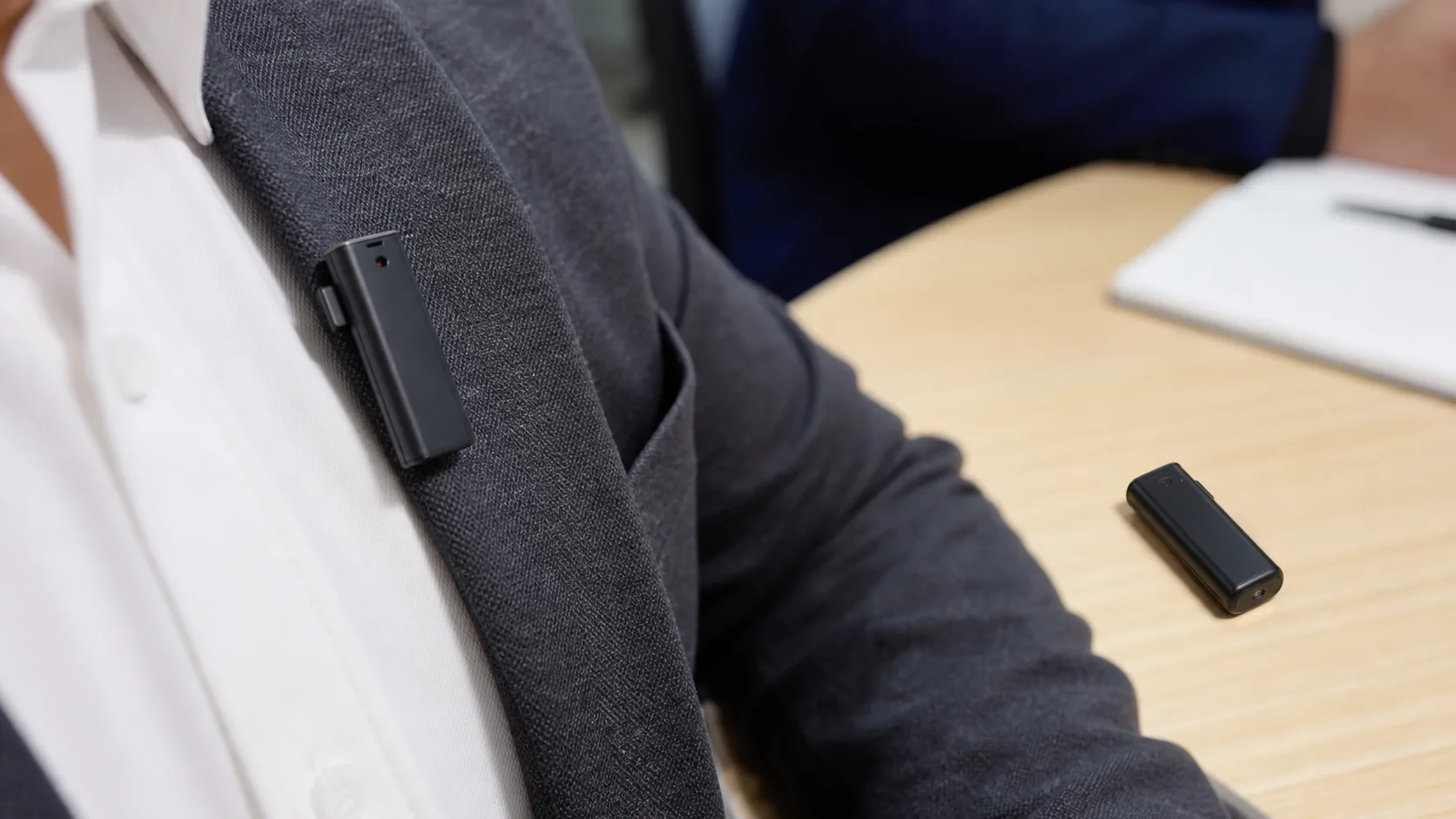
Do not leave the microphone rubbing against fabric. Shirt pockets, jacket pockets, loose bags, and lanyards can produce scraping noise every time you move. That noise can be louder than the person speaking.
For the cleanest result, place the recorder on a desk or table with the microphone opening facing the speakers. If you need to wear it, clip or secure it on the outside of a lapel and keep the microphone away from fabric edges. Test the exact jacket or shirt before the real session. Walking, sitting down, and crossing your arms are the movements most likely to cause noise.
How many recording hours do you really need?
Choose battery time from the longest session you expect to record, then leave a margin. A recorder listed for 15-18 hours is enough for a normal working day, several appointments, or a long class. It is not the right model for several days of continuous recording.
Do not confuse battery time with storage time. A recorder may hold many hours of WAV files but still stop when its battery is empty. A standby-time claim is also different from continuous recording time. Product pages should state these figures separately.
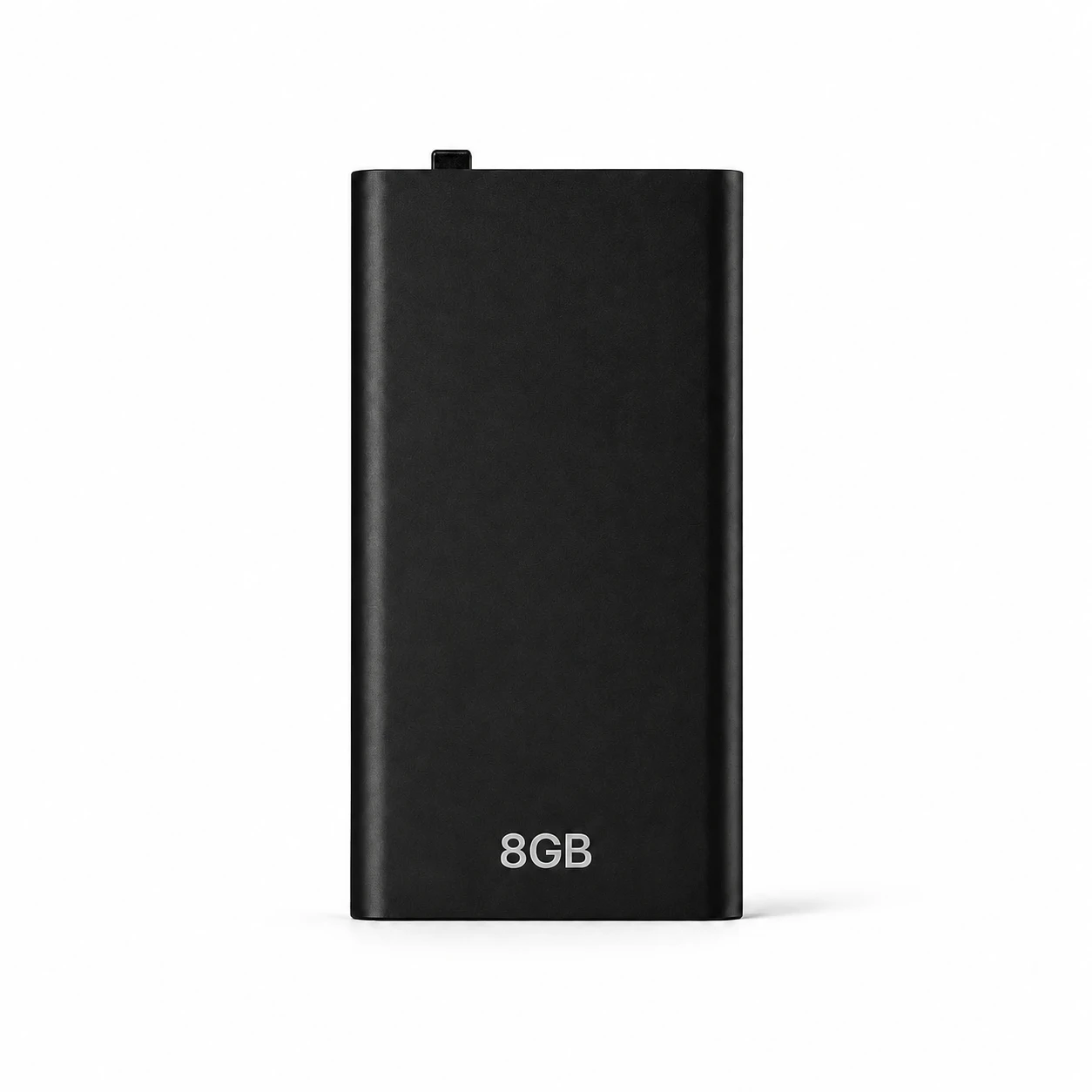
QZT’s Q1 Mini Voice Recorder is listed for 15-18 hours of recording. The current product page lists WAV recording at 192 kbps, an 8GB configuration, and a body measuring about 4.4 x 2.2 x 0.4 cm.
The ZD46 Voice Activated Recorder is the longer-running option. Its current page lists 50 hours of recording, 32GB storage, WAV files at 192 kbps, OTG playback, and a body measuring about 4 x 3.5 x 1 cm.
Is Q1 small enough for everyday use?
Q1 is the better fit when small size and simple operation come first. The body is thin enough for a small pouch, notebook pocket, bag compartment, or meeting kit. Its 15-18 hour recording time covers most daily sessions without moving into a much thicker long-battery design.
The tradeoff is physical. A thin recorder has less space for a battery, controls, screen, and speaker. Q1 does not replace a larger interview recorder when you need manual gain controls, an external microphone, or clear pickup across a large noisy room.
Q1 is best considered for:
– medical appointments where the recorder can sit on the desk;
– personal voice notes;
– classes and small meetings;
– interview backup in a quiet room;
– people who want a separate recorder without a phone app.
When is ZD46 the better choice?
Choose ZD46 when the session may exceed one working day, or when recharging after every few meetings is inconvenient. Its listed 50-hour recording time gives more margin for training sessions, conferences, field notes, and repeated appointments.
ZD46 is thicker than Q1, so it is not the first choice when the smallest possible body is the main requirement. The 32GB storage and OTG playback are more useful when you expect longer sessions or want to review files through a compatible phone connection.
| Model | Listed recording time | Storage shown on current page | Body size | Better for |
|---|---|---|---|---|
| Q1 | 15-18 hours | 8GB configuration | About 4.4 x 2.2 x 0.4 cm | Small daily recorder |
| ZD46 | 50 hours | 32GB | About 4 x 3.5 x 1 cm | Longer sessions and fewer charging breaks |
Does voice activation work in a real meeting?
Voice activation can reduce silent sections, but it is not always safer than continuous recording. The recorder waits for sound to cross a threshold. Soft speech at the beginning of a sentence may be missed, while air conditioning, traffic, or people moving chairs may trigger unwanted files.
Use continuous recording when the conversation is important and you cannot repeat it. Voice activation is more useful for occasional speech in a quiet room, such as personal notes or a workspace that stays silent for long periods.
Before relying on voice activation:
1. Test soft speech from the expected distance.
2. Test the room’s air conditioning and background noise.
3. Check whether the first word of each sentence is captured.
4. Confirm how files are saved when sound stops and starts.
Where should you place a recorder during a medical appointment?
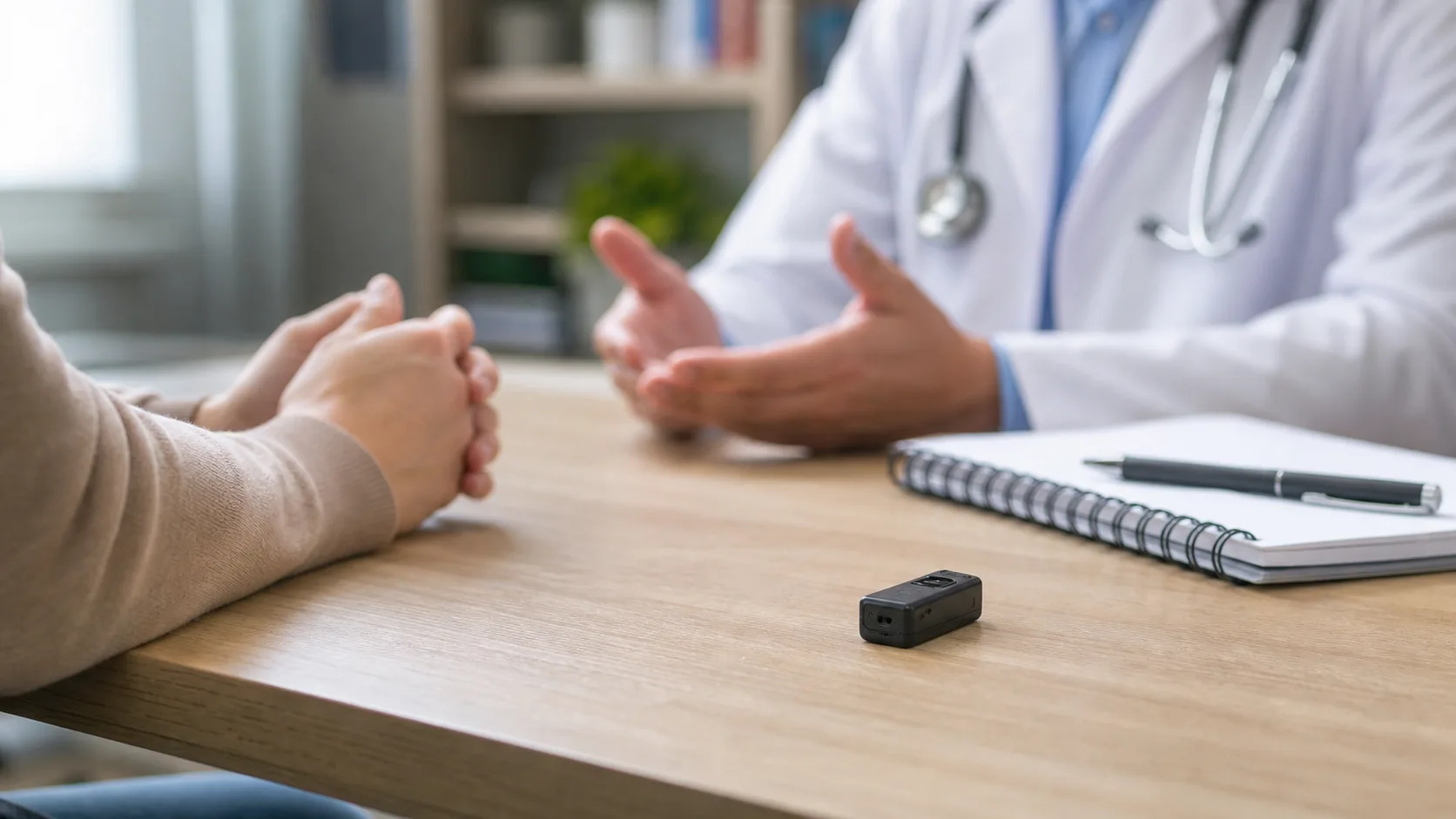
Ask first, then place the recorder where everyone can see it. A desk or consultation table usually gives cleaner audio than a pocket. Keep it away from paperwork, tapping fingers, keyboards, and bags that may cover the microphone.
Put the recorder closer to the quieter speaker if one person speaks softly. Start it before the conversation becomes detailed, confirm that the recording indicator is working, and leave it still. After the appointment, rename the file while the date and subject are fresh.
Is it legal to record a conversation?
Recording law depends on the country, the people involved, the location, and the purpose. The safest approach for an appointment, workplace meeting, interview, or private conversation is to tell the other people and ask for permission before recording.
The Reddit discussion supplied for this article involved Ontario, Canada. Canada’s Criminal Code section 184 includes an exception where one participant to a private communication consents to its interception. That does not remove workplace rules, professional policies, privacy duties, or restrictions on sharing the recording. Check the current law and the organisation’s policy before relying on a recording.
Official reference: Criminal Code, section 184, Government of Canada.
How do you get recordings onto a computer or phone?
For Q1, connect the recorder to a computer after the session and copy the WAV file into a dated folder. Open the copied file before deleting anything from the recorder. Keep the original file unchanged if the recording may be needed for medical notes, workplace records, or a formal complaint.
ZD46 adds OTG playback, but phone compatibility still needs checking. Confirm the connector, phone model, file browser, and playback app before buying the recorder for that purpose. OTG support is useful only when the phone can recognise the recorder consistently.
A simple file routine works well:
“`text
2026-06-22_doctor-appointment_topic.wav
2026-06-22_work-meeting_project-name.wav
“`
How much does a mini voice recorder cost?
The current QZT product pages list wholesale reference prices in USD, EXW Italy. These are not final retail prices or landed costs.
| Model | 1-4 units | 5-19 units | 20-49 units | 50+ units |
|---|---|---|---|---|
| Q1 | $20 | $17 | $16 | $14 |
| ZD46 | $34 | $29 | $26 | $23 |
For one personal recorder, compare the delivered retail price, return policy, cable, storage configuration, and local support. For reseller orders, confirm packaging, manual language, memory option, warranty handling, shipping, and certification documents before payment.
What should you test on the first day?
Do one realistic test instead of recording yourself from ten centimetres away. Put the recorder where it will sit during the real appointment or meeting, speak from the expected distance, and let the test run for at least 20 minutes.
Check:
– whether one-button recording is easy to confirm;
– speech from each seat;
– clothing or handling noise;
– background fans and traffic;
– the first words after silence in voice-activation mode;
– battery change after the test;
– file transfer and playback;
– date and file naming.
If the audio is poor, move the recorder before buying another model. Placement fixes more recordings than an impressive product title.
Which mini voice recorder should you choose?
Choose Q1 if you want the smaller body, simple WAV recording, and enough battery for a normal day. Choose ZD46 if you need substantially longer recording time, 32GB storage, and OTG playback.
Use a phone if you only record occasionally and can keep it visible on the table. Use a dedicated recorder when quick start, predictable battery, and separate file storage matter more. Whatever you choose, test it in the real room and ask permission before recording another person.
FAQ
Can the QZT Q1 Mini Voice Recorder record a full working day?
The QZT Q1 Mini Voice Recorder is listed for 15-18 hours of recording, which is enough for a normal working day when the battery is fully charged. The QZT Q1 Mini Voice Recorder should still be tested with the intended recording mode because voice activation, continuous recording, and repeated file checks can affect practical use.
Is the QZT ZD46 Voice Activated Recorder better for long sessions?
The QZT ZD46 Voice Activated Recorder is listed for 50 hours of recording with 32GB storage and WAV files at 192 kbps. The QZT ZD46 Voice Activated Recorder is a better choice than Q1 when longer sessions and fewer charging breaks matter more than having the thinnest possible recorder.
Can a mini voice recorder record clearly from inside a pocket?
A mini voice recorder can capture speech from a pocket, but fabric rubbing and body movement may cover the conversation with scraping noise. A mini voice recorder normally records more clearly when it rests on a table or is secured outside clothing with the microphone opening clear.
Should I use voice activation for an important appointment?
A voice activated mini recorder may miss soft speech when the sound level does not cross its trigger threshold. For an important appointment, continuous recording is usually safer. Test voice activation in the same room first, including quiet speech, air conditioning, chair movement, and the beginning of sentences.

 English
  Italiano
  Deutsch
  Français
  Español
  Polski