
Best Hidden Pen Cameras for Journalists and Whistleblowers in 2026: A Professional’s Guide
You are working on a story. The source says something critical — something that could change everything — and then goes quiet. The room feels heavy. You need documentation, but pulling out a phone feels like waving a red flag. That is exactly where a hidden pen camera becomes not a luxury, but a necessity.
In 2026, investigative journalists, whistleblower attorneys, and independent reporters face a compressed window for gathering testimony. Sources increasingly fear retaliation. Employers coach employees on what they can and cannot say. In that environment, having a device that looks like a pen but records like a production-grade surveillance tool is a genuine competitive advantage.
This guide walks through the legitimate, professional applications of hidden pen cameras — and what separates a useful tool from a liability.
Why Traditional Recording Methods Fall Short in Investigative Work
Most journalists rely on smartphones. Here is the problem: smartphones are obvious. The moment you pull out your phone, frame it, and hit record, every person in the room recalibrates. Conversations shift. Sources self-censor. The dynamic changes in ways that contaminate the very evidence you were trying to capture.
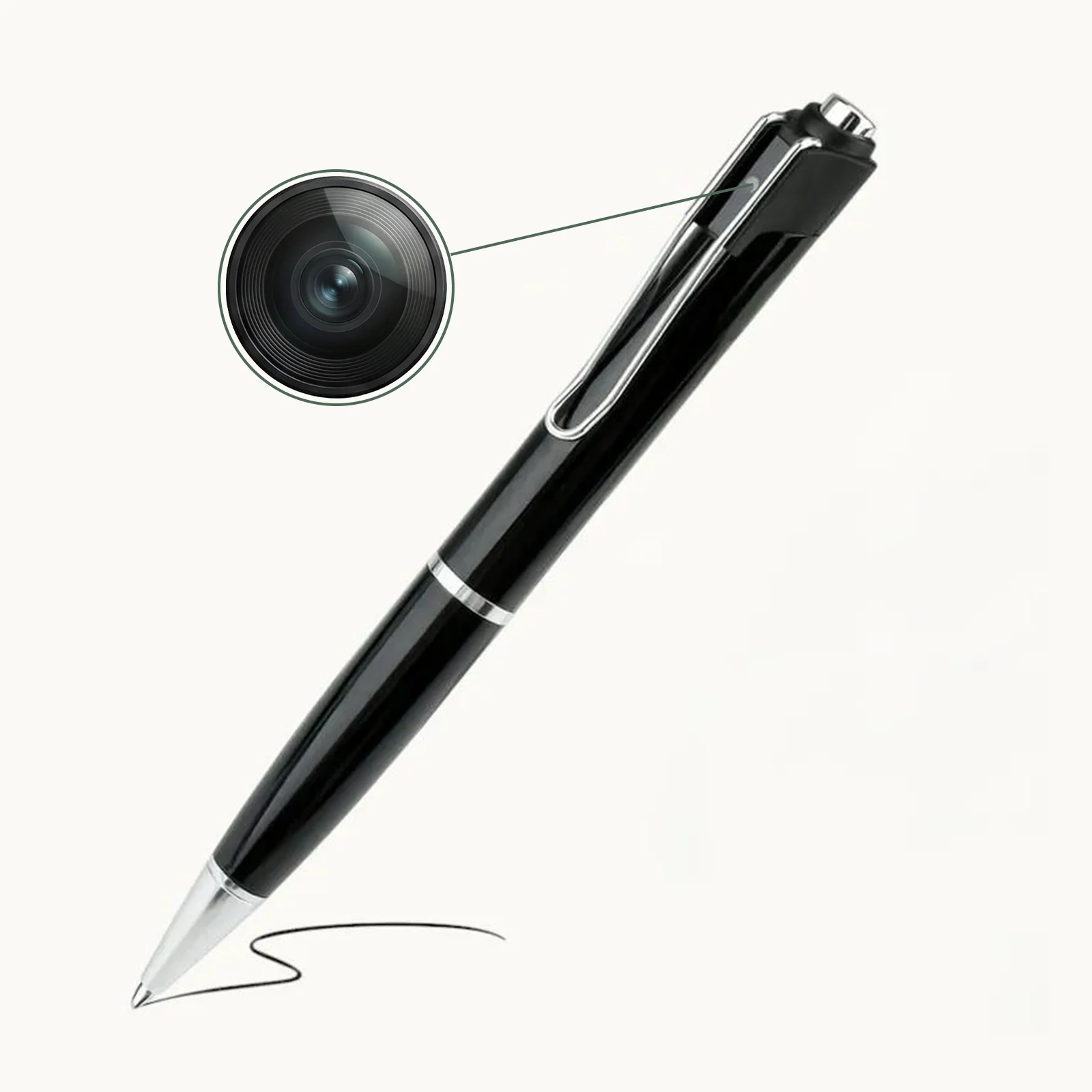
A pen camera solves this structurally. It does not require you to change your behavior. You take notes with it, you click it open, you leave it on the table — and it records. Nobody adjusts their posture because nobody registers that recording is happening.
The other limitation of smartphones is battery anxiety. Journalists working long stakeouts, traveling between interviews, or operating in areas with limited power access cannot afford a device that dies at the wrong moment. Most pen cameras run 2-4 hours on a single charge, which covers the majority of interview sessions. The W9 pen camera from QZT Security offers up to 3 hours of continuous 1080P recording with a 12-megapixel still photo capability — enough for both video and frame captures when lighting is unpredictable.
What Professional-Grade Pen Cameras Actually Deliver in 2026
Here is what most product descriptions do not tell you: the real differentiator between a toy and a tool is not resolution alone. It is the combination of audio capture quality, storage reliability, and the ability to operate without drawing attention.
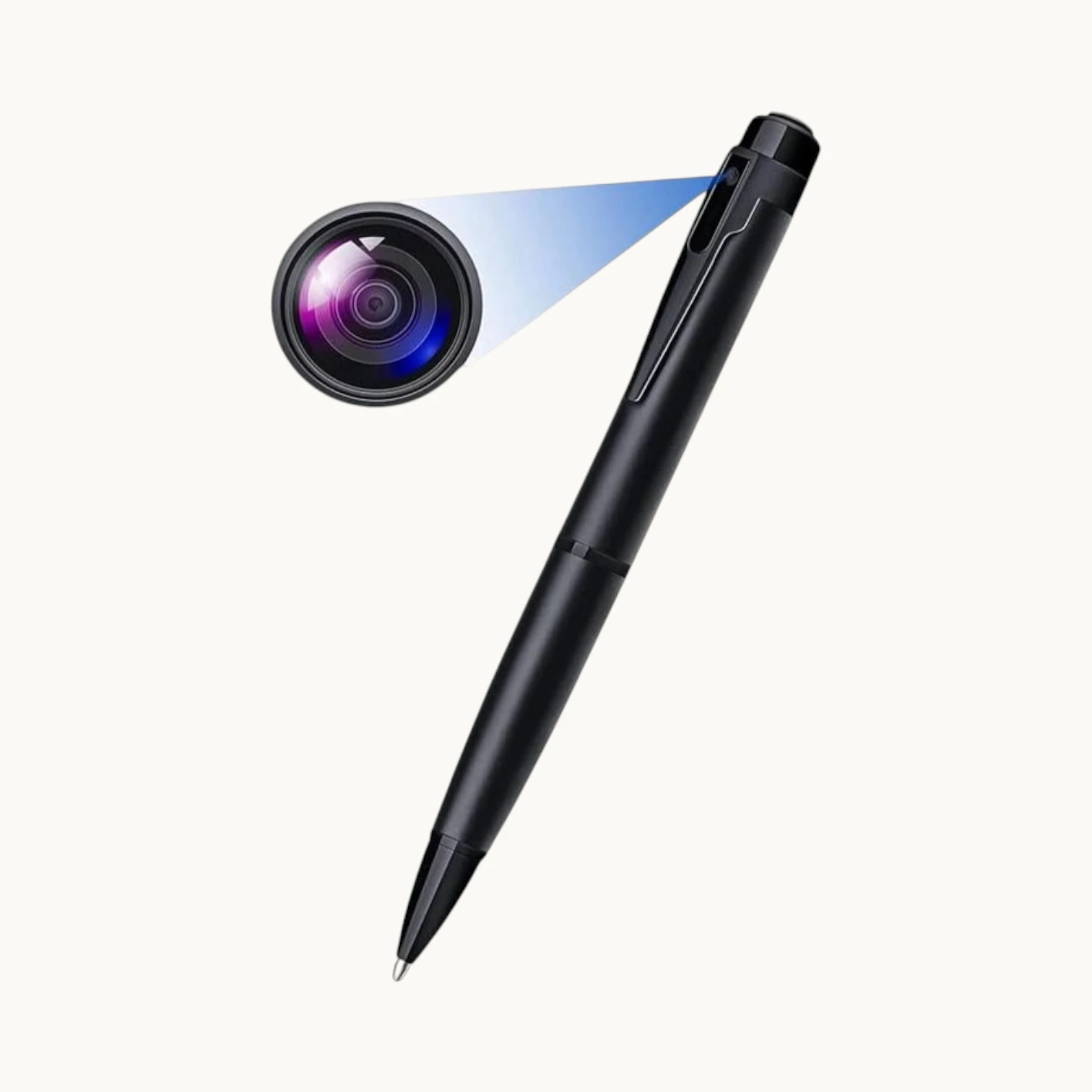
Audio Recording Standards
For investigative work, audio is often more valuable than video. A sharp visual frame means nothing if you cannot hear what was said. Look for pen cameras that record at 192kbps or higher — that is the threshold at which voices remain intelligible even when recorded through jacket pockets or across a conference table.
The W10 pen camera pushes further with 30-megapixel photo resolution and 128GB maximum storage. In practical terms, that is roughly 16-20 hours of 1080P video before you need to offload. For extended surveillance or multi-day reporting trips, that capacity eliminates the anxiety of running out of space mid-assignment.
The One-Button Principle
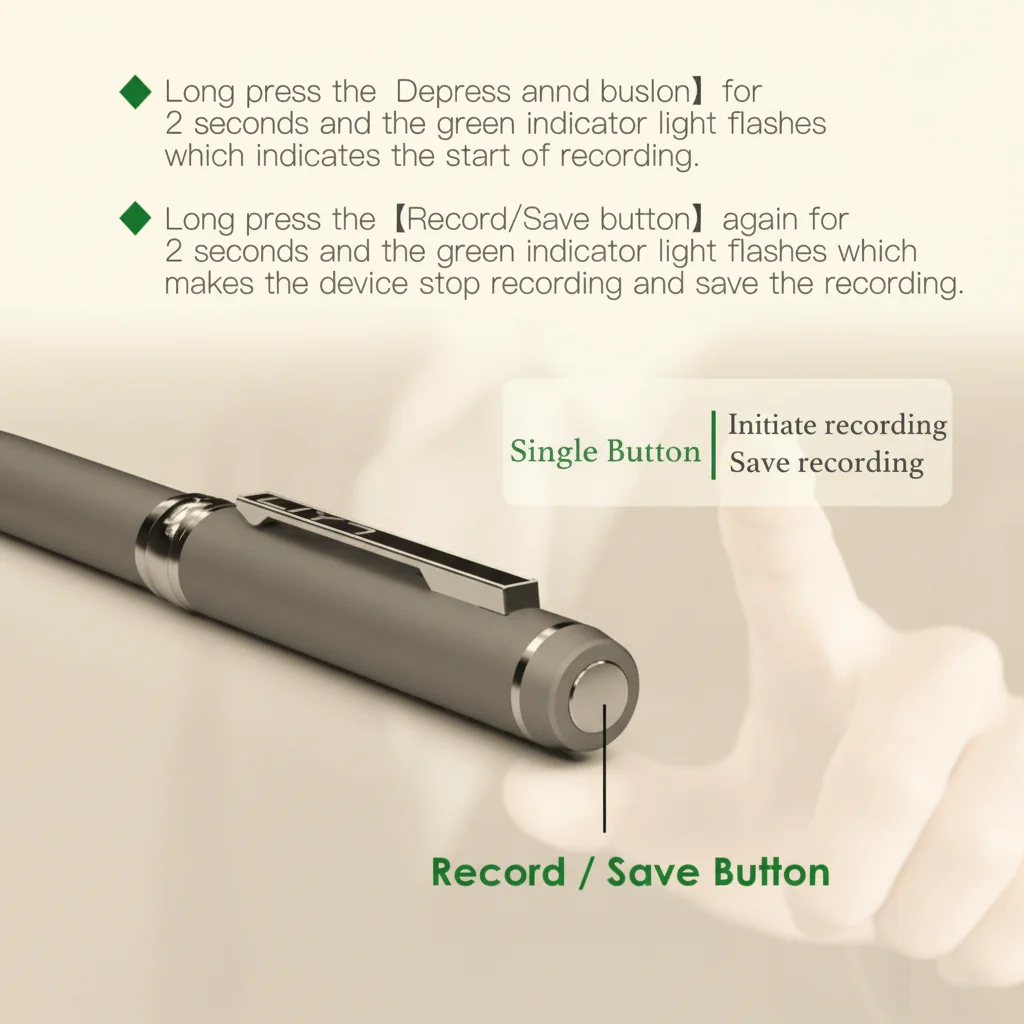
Every second you spend fumbling with settings is a second your source notices something is different. Professional-grade covert pens operate on a single button. One press to start, one press to stop. No lights, no beeps, no visible indication of recording status. The entire interaction should feel identical to picking up and putting down a pen.
Connectivity Considerations
Some pen cameras now offer WiFi connectivity for live streaming to a paired device. This is useful in scenarios where a journalist wants a colleague to monitor remotely, but it introduces a trade-off: active WiFi can produce a faint radio frequency signature that sophisticated counter-surveillance equipment might detect. For high-risk source meetings, a recording-only model with no wireless transmission is the safer choice.
Whistleblower Scenarios: When Is a Pen Camera the Right Tool?
Not every situation justifies covert recording. Here is how to think about when a pen camera genuinely serves the whistleblower or their legal representative.
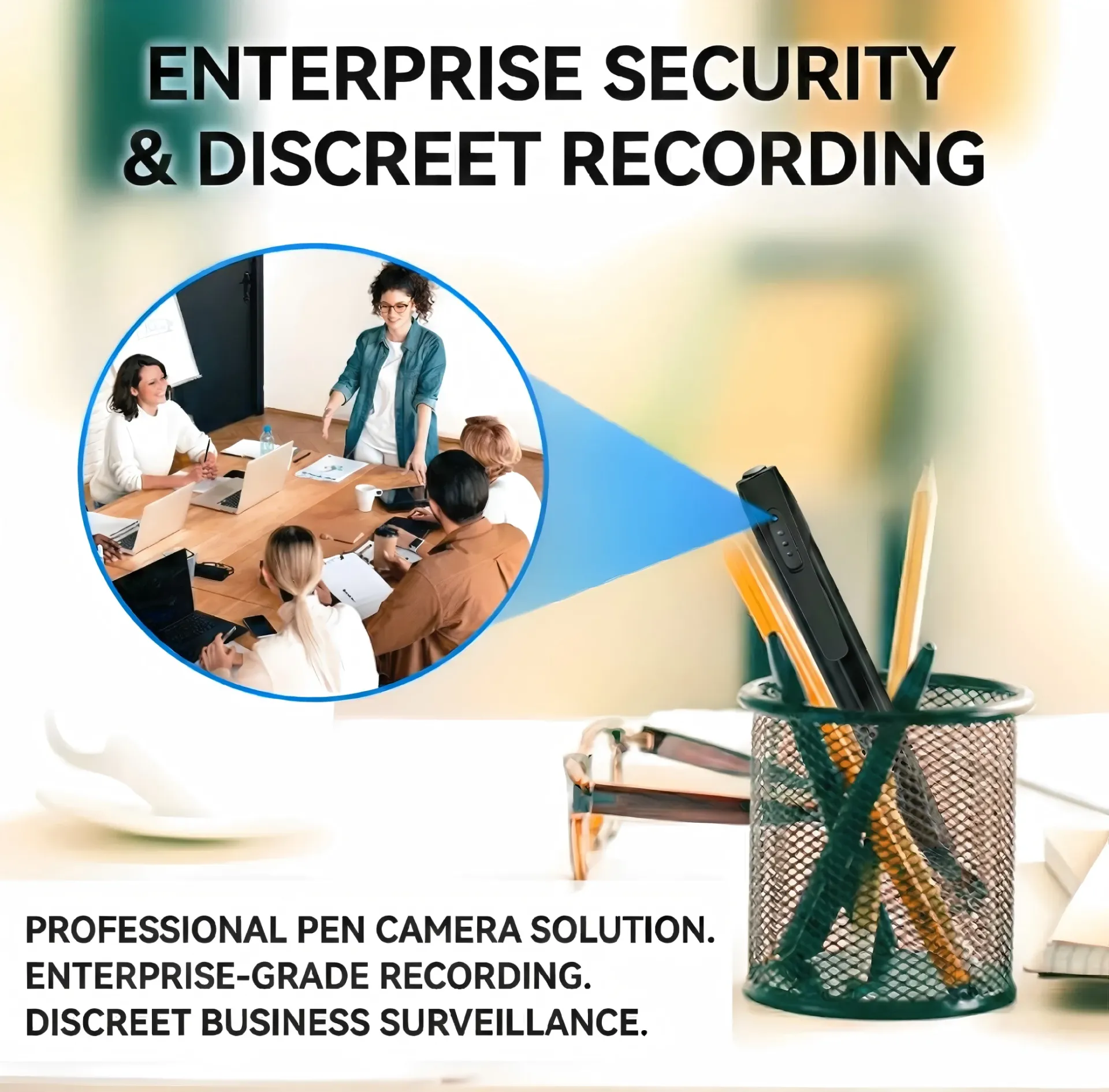
Employment Disputes and HR Conversations
Employees documenting discriminatory conduct, hostile work environments, or harassment often have limited legal options if they cannot prove what was said. In the UK, the Acas Early Conciliation process and Employment Tribunal proceedings both benefit from contemporaneous records. A pen camera that captures a discriminatory comment made by a manager — recorded lawfully under one-party consent rules — can be submitted as evidence in tribunal proceedings.
The key phrase is “lawfully.” Recording a conversation you are party to, in a workplace setting where there is limited expectation of complete privacy, is lawful in the majority of EU member states and in approximately 40 US states.
Legal Consultation Documentation
Whistleblowers working with attorneys often face the challenge of communicating complex sequences of events. A pen camera recording of a follow-up meeting with a problematic supervisor — conducted openly after legal consultation — creates a reliable reference document that helps attorneys prepare claims accurately. It also protects the whistleblower against future accusations that they misrepresented what was said.
Protecting Sources in Dangerous Jurisdictions
Reporters operating in countries where press freedom is constrained face genuine physical risk. A pen camera that looks like a writing instrument is among the least provocative recording options available. It can be carried into government buildings, legal offices, and private residences without triggering the suspicion that a body camera or phone would.
Navigating the Legal Landscape: One-Party vs. Two-Party Consent
This is the section that matters most, and it is where many journalists and their sources make costly assumptions.
United States Framework
The United States does not have a uniform federal wiretapping law that applies to all situations. Instead, it operates on a state-by-state framework with two broad categories:
One-party consent states (majority): You may record a conversation if you are a participant in that conversation, without informing the other parties. You do not need consent from anyone else in the room. States include New York, Texas, Florida, Ohio, and most others.
Two-party (all-party) consent states: Every person in a conversation must consent to being recorded. Recording without full disclosure is a criminal offense in these jurisdictions. California is the most prominent example, along with Illinois, Maryland, Montana, Nevada, New Hampshire, Pennsylvania, and Washington.
In California specifically, Penal Code Section 632 makes it a misdemeanor to intentionally and without consent record a confidential communication. “Confidential” has been interpreted broadly by California courts — it covers any communication conducted under circumstances that suggest the parties expect privacy, which could include many professional meetings.
European Union Framework
The EU does not have a single recording consent standard. Instead, GDPR Article 6 provides the lawful basis framework, with Article 6(1)(f) — legitimate interests — being the most commonly cited basis for workplace monitoring. However, national implementations vary significantly.
Germany is notably strict: it maintains a broad prohibition on secret audio recordings, rooted in personality rights (Allgemeines Persönlichkeitsrecht, APR). Even one-party recordings in workplace settings have been challenged in German courts.
France, the Netherlands, and Belgium are more permissive for recordings made by a participant, though employers face stricter requirements when recording employees.
The UK, post-Brexit, operates under the Investigatory Powers Act 2016 and the Data Protection Act 2018. The Information Commissioner’s Office (ICO) has taken the position that covert recording by employees in the workplace is generally lawful where there is a genuine belief that unlawful activity is occurring, though employers should seek legal advice before implementing systematic covert recording.
For journalists specifically, most EU countries recognize a qualified journalistic exemption under GDPR Article 85 that permits recording without consent where it serves a legitimate public interest.
Chain of Custody: How to Preserve Recordings for Legal Proceedings
Recording the conversation is only half the battle. If your footage ever needs to be used in a tribunal, arbitration, or criminal proceeding, you will need to demonstrate that it has not been altered.
Step 1: Do Not Touch the Original File
After recording, transfer a copy to a secure location — do not edit the original. Any modification to the source file, including trimming dead space, raises questions about authenticity.
Step 2: Document the Circumstances
Create a written record immediately after the recording: date, time, location, participants (or description of participants if identities are unknown), and purpose of the recording. This contemporaneous documentation carries significant evidentiary weight.
Step 3: Secure Storage
Upload the original file to a cloud service that maintains version history and access logs. Services that use WORM (Write Once, Read Many) storage are ideal because they prevent accidental or intentional modification.
Step 4: Note Any Gaps
If the recording was interrupted, was affected by a dead battery, or has any other irregularity, document this. Attempting to conceal a gap looks far worse than explaining one upfront.
How QZT Security Supports Professional Investigative Buyers
QZT Security supplies covert recording equipment to journalists, legal professionals, and investigators across the EU and UK. Our pen camera range includes models with and without WiFi connectivity, storage from 32GB to 128GB, and audio capture quality rated for legally admissible recording.
For journalists and whistleblowers working in higher-risk environments, we offer bulk procurement options and can provide technical documentation suitable for legal proceedings. Browse our pen camera range to find the right model for your use case.
Frequently Asked Questions
Can I use a hidden pen camera to record my boss in the UK?
Yes, in most circumstances. Under the Data Protection Act 2018 and ICO guidance, employees may covertly record workplace conversations where they have a genuine concern about unlawful conduct, including harassment, discrimination, or safety violations. You should document your reasons for recording and seek legal advice before using the footage in tribunal proceedings.
What happens if I record in a two-party consent state by accident?
In most cases, the footage will not be admissible as evidence in criminal or civil proceedings, and you may face criminal charges depending on the circumstances. If you realize you have recorded illegally, stop immediately and consult an attorney. Do not share or publish the recording without legal guidance.
How do I know if my pen camera is recording legally in another country?
Research the specific country’s wiretapping or privacy laws before international travel with recording equipment. The EU framework under GDPR varies by national implementation. The US operates on state-level consent rules. In all cases, if you are a participant in the conversation, you have stronger legal standing than if you are an outside observer.
Can a pen camera recording be used in an Employment Tribunal?
Yes, under the right conditions. UK Employment Tribunals have admitted covert workplace recordings where they are relevant to the dispute and where the claimant had legitimate reason to record. The tribunal will weigh the recording’s probative value against any privacy concerns on a case-by-case basis.
What audio quality do I need for a recording to be legally admissible?
There is no mandated minimum quality standard, but recordings must be intelligible — a judge or tribunal panel must be able to understand what was said. As a practical benchmark, 192kbps bitrate at 48kHz sample rate is widely accepted as sufficient for legal proceedings. Lower quality recordings may be admitted but face greater scrutiny.
Final Thoughts
A hidden pen camera is a precision instrument. It serves the journalist who uses it with intention, preparation, and legal awareness — and it exposes the user who grabs it casually without understanding the jurisdiction they are operating in.
If you are an investigative journalist, whistleblower advocate, or legal professional, the pen camera is worth mastering. The difference between a tool that protects you and one that creates liability often comes down to knowing which model to choose, how to operate it, and what the law requires before you press record.

 English
  Italiano
  Deutsch
  Français
  Español
  Polski