
What Is a Nanny Cam and Is It Legal in the UK and EU?
A nanny cam is legal in the UK and EU — in most circumstances, and without any requirement to disclose it.
That’s the short answer. But because this question carries real legal weight — and because getting it wrong could cause genuine harm to the families asking it — the longer answer is worth reading carefully.
This guide covers what a nanny cam actually is, where the law stands across the UK and EU member states, which specific scenarios are clearly legal, and what the one grey area looks like so you can avoid it entirely.

What Is a Nanny Cam?
A nanny cam is a hidden recording device — usually a camera — installed in a home to monitor the activity of a babysitter, nanny, au pair, or other caregiver, typically while children or vulnerable adults are in their care.
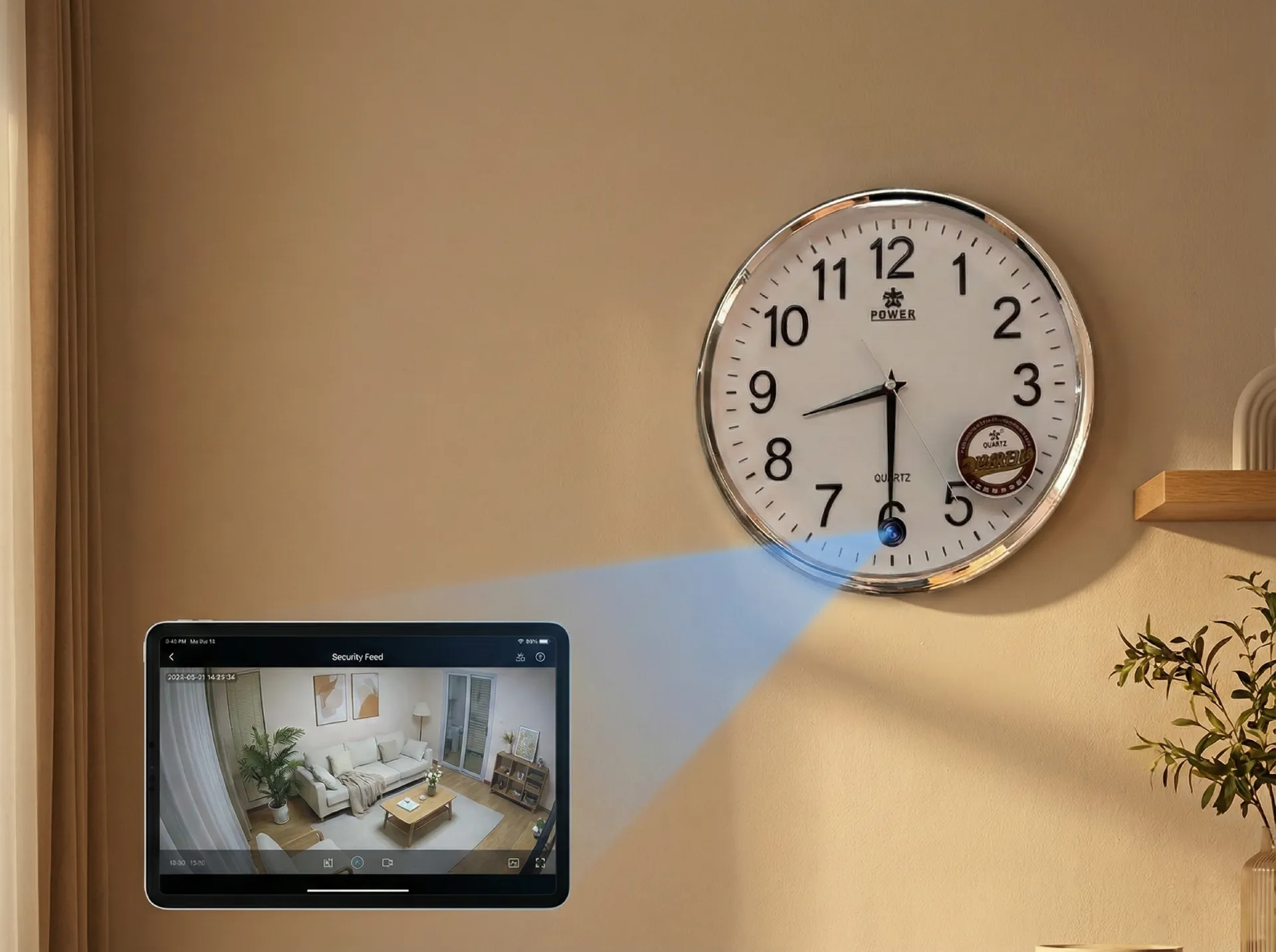
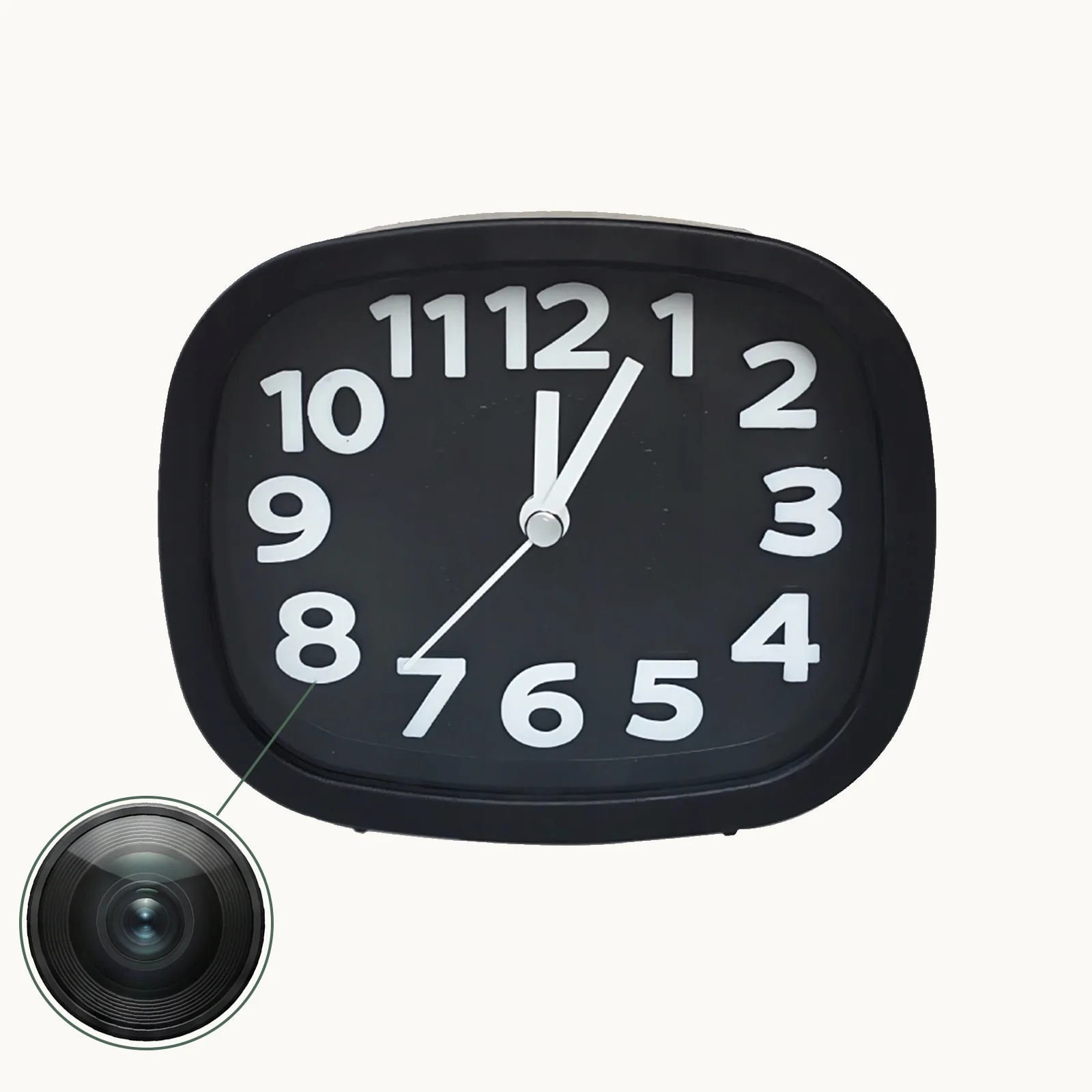
The term is informal and covers a range of hardware: clock cameras, plug socket cameras, USB charger cameras, air freshener cameras, and tissue box cameras. What they share is low visual profile — they are designed to be indistinguishable from ordinary household objects. A quality nanny cam runs for hours on continuous power, records to an SD card or cloud, and in many cases streams live to a smartphone.
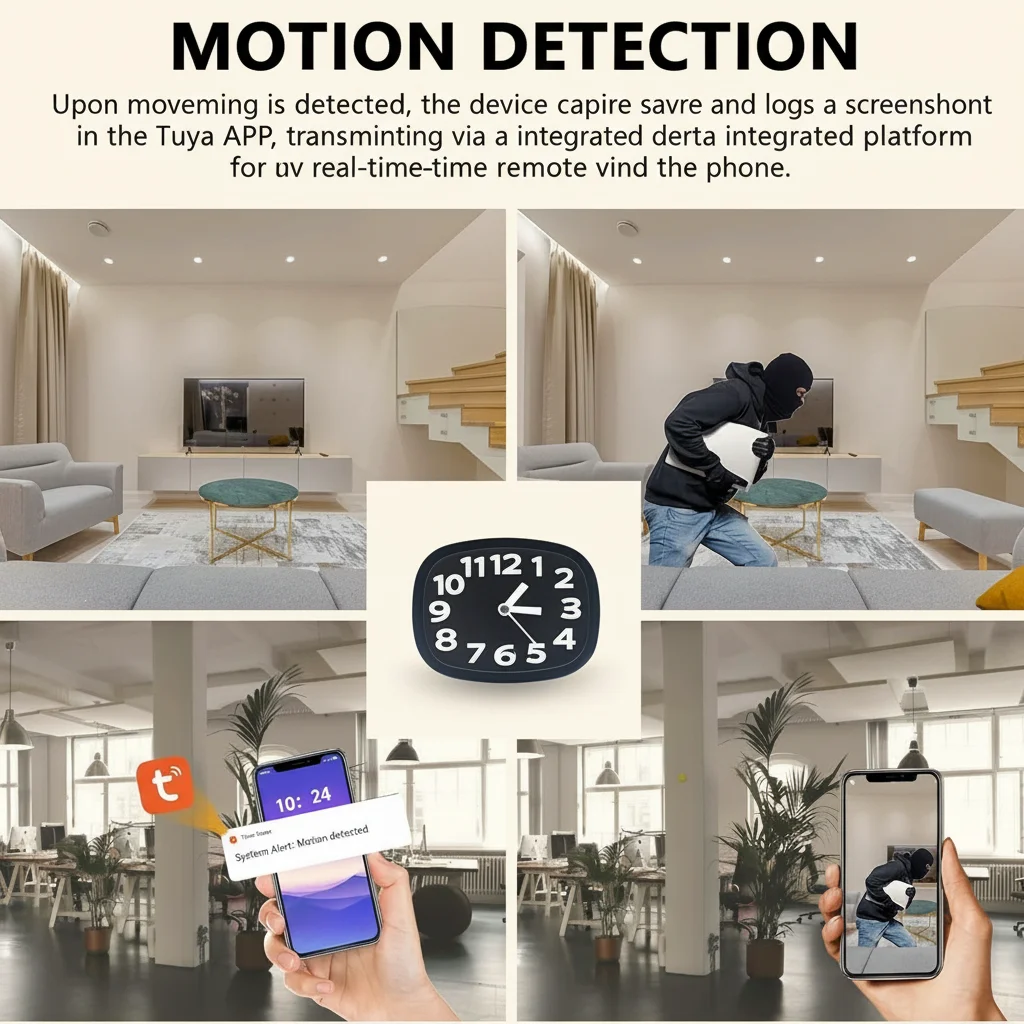
The device category has evolved significantly. Modern units like the QZT WiFi wall clock hidden camera operate over 2.4GHz WiFi, integrate with the Tuya smart home app, support motion-triggered recording, and push instant alerts to your phone when movement is detected — all while looking exactly like an ordinary alarm clock on a bedside table.
| Nanny Cam Type | Disguise | Power Source | Best For |
|---|---|---|---|
| Clock camera | Wall clock / alarm clock | Mains (no battery limit) | Living room, bedroom |
| Socket camera | EU/UK wall socket | Mains (permanent) | Any room with a socket |
| USB charger camera | Phone charger | Mains (permanent) | Kitchen, hallway |
| Air freshener camera | Plug-in air freshener | Mains (permanent) | Bathroom-adjacent areas |
| Power bank camera | Portable power bank | Internal battery (6-10h) | Temporary deployment |
Is a Nanny Cam Legal Under UK GDPR?
Yes. In the UK, using a hidden camera to monitor a caregiver in your own home is legal under the household exemption in UK GDPR.
The Information Commissioner’s Office published clear guidance on this point. Domestic CCTV systems — including hidden cameras — used “for personal, family or household purposes” fall outside the scope of UK data protection law entirely. The legal basis for this exemption is Article 2(2)(c) of the UK GDPR, which mirrors the original EU GDPR Recital 18 provision.
What this means practically is that a family in Manchester, Edinburgh, or Bristol who installs a hidden socket camera to monitor a babysitter is not a “data controller” under UK GDPR and has no compliance obligations whatsoever. No privacy notice. No data retention policy. No formal legal basis required. The regulation simply does not apply.
Here’s what most people get wrong: they assume that because GDPR covers cameras in workplaces and shops, it must cover cameras everywhere. It doesn’t. The household exemption was a deliberate policy choice — the regulation’s authors recognised that applying commercial data protection rules to private family security would be both unworkable and disproportionate.
Is a Nanny Cam Legal Under EU GDPR in Germany, France, and Poland?
Yes, for the same reason and with the same scope.
Every EU member state implements the same GDPR Recital 18 household exemption. The processing of personal data “in the course of a purely personal or household activity” is excluded from the regulation’s scope across all 27 member states. In Germany, the BDSG (Federal Data Protection Act) explicitly preserves this exemption. In France, the CNIL (Commission Nationale de l’Informatique et des Libertés) applies the same principle. In Poland, the UODO (Personal Data Protection Office) follows the same framework.
A family in Hamburg, Lyon, or Warsaw using a clock camera to check on their nanny is in exactly the same legal position as a family in London: the household exemption applies, and GDPR is irrelevant.
For European distributors stocking nanny cam products — particularly those supplying the German, French, and Polish markets — this has a direct commercial implication. The legal barrier that some customers perceive does not exist for home use. Customers who believe they cannot legally use a covert home camera are operating on a misunderstanding of the regulation, not on an accurate reading of it.
| Country | Implementing Law | Nanny Cam Legal? | Disclosure Required? |
|---|---|---|---|
| United Kingdom | UK GDPR / DPA 2018 | Yes | No |
| Germany | GDPR / BDSG | Yes | No |
| France | GDPR / Loi Informatique et Libertés | Yes | No |
| Poland | GDPR / UODO | Yes | No |
| Italy | GDPR / Codice Privacy | Yes | No |
| Spain | GDPR / LOPDGDD | Yes | No |
| Netherlands | GDPR / UAVG | Yes | No |
When Does a Nanny Cam Become Legally Complex?
The household exemption has one boundary condition that matters in nanny cam scenarios: formal employment status.
If you hire a nanny as an employee — meaning you issue a contract of employment, pay national insurance or social contributions, and act as their legal employer — then the relationship shifts from “family using home security” to “employer monitoring a worker.” At that point, employment law in most EU countries and the UK recommends that employees are informed that monitoring may take place, even if the specific locations and methods are not disclosed.
But here’s the thing: the vast majority of families using nanny cams are not formal employers. They hire a babysitter for evenings and weekends, pay cash or a bank transfer, and have no employment contract. In that situation — which describes most nanny cam use cases — the household exemption applies fully and no notification is required.
Even in formal employment cases, the legal requirement is typically to inform the nanny that monitoring may occur in the workplace (your home), not to tell them where every camera is. This is a meaningful but manageable disclosure, not a prohibition on covert monitoring.
What Are the Best Nanny Cam Features for Home Use?
Knowing the law is one thing — choosing the right device is another. Here’s what actually matters when selecting a nanny cam for family use.
Continuous mains power. Battery-powered cameras are unreliable for long shifts. A nanny cam in a living room or kitchen should draw power from the mains permanently. The QZT WiFi EU socket camera plugs directly into a standard European wall socket and runs indefinitely without battery changes — this alone makes it the most practical choice for regular childcare monitoring.
Motion detection with push alerts. You don’t want to review hours of empty room footage. A camera with motion-triggered recording and smartphone notifications lets you check in only when something happens. Tuya-integrated devices allow you to set sensitivity zones, so you can filter out the family dog walking past and focus on actual activity.
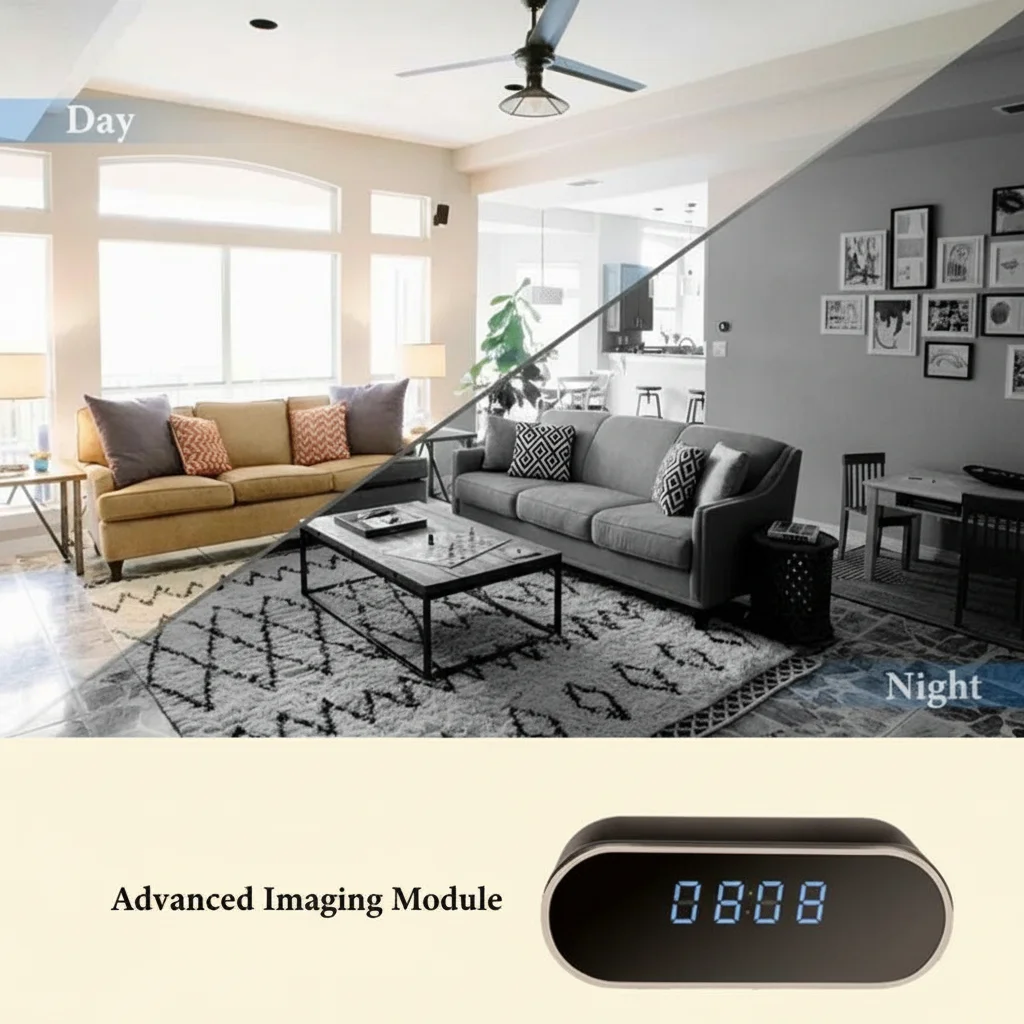
Night vision. Babysitters and nannies often put children to bed in darkened rooms. Infrared night vision on a hidden clock camera means you can monitor without visible light that would reveal the camera’s presence.
Local storage as primary, cloud as backup. SD card recording means your footage stays in your home even if WiFi drops. A 32GB card on loop recording provides several days of motion-triggered clips. Cloud backup via the Tuya app adds a second layer if the device is tampered with.
How to Position a Nanny Cam for Best Coverage
Placement determines everything. A camera that doesn’t capture the relevant area is useless, and one that’s poorly positioned is easily spotted.
Living rooms and playrooms work best with a camera at eye level or slightly above — typically on a shelf, bookcase, or side table. This gives a natural downward angle toward seating areas and play spaces without ceiling-mounted awkwardness. A clock camera placed on a mantelpiece or bookshelf at 1.2–1.5m height, with a 110° wide-angle lens, covers the majority of a standard-size living room.
Kitchens require a different approach because the activity is more varied and people move more. A USB charger camera near a socket at counter height offers a low angle that captures faces clearly and can cover the central working area. Avoid pointing toward windows if you want usable footage — backlighting blows out detail in all but the highest-end cameras.
Avoid bathrooms entirely. Regardless of the legal position, placing a camera in any area where a person would have a reasonable expectation of bodily privacy — including changing areas — is both legally and ethically off limits.
What if You Find Evidence of Abuse on Your Nanny Cam?
This is a difficult situation, and the legal guidance is consistent: footage from a home security camera is admissible as evidence in civil and criminal proceedings across the EU and UK.
Footage from a camera operating under the household exemption has been accepted in UK courts as evidence in child safeguarding cases. German courts have similarly accepted home surveillance footage as evidence where the recording was made for legitimate personal security purposes. The key factor is that the recording was made in your own home for genuine safety reasons — not fabricated, not edited, and stored in its original form.
If you capture footage that concerns you, the recommended course is to save the original files without editing, make a copy on a separate device, and report to the relevant authority — in the UK, this would be the police or the local authority children’s services; in Germany, the Jugendamt; in France, the CRIP (Cellule de Recueil des Informations Préoccupantes).
The footage you captured legally is evidence you are entitled to use.
How Do European Distributors Sell Nanny Cams Compliantly?
For retailers and distributors — particularly those operating showrooms or selling online to European customers — the position is clear.
Selling nanny cam hardware is fully legal throughout the EU and UK. There is no restriction on the manufacture, import, export, or retail sale of hidden camera devices. CE and RoHS certification is required for EU market sales (which all QZT products carry), and products must comply with relevant electronics regulations. Data protection law does not apply to the sale of hardware — it applies to the use of that hardware to record identifiable individuals.
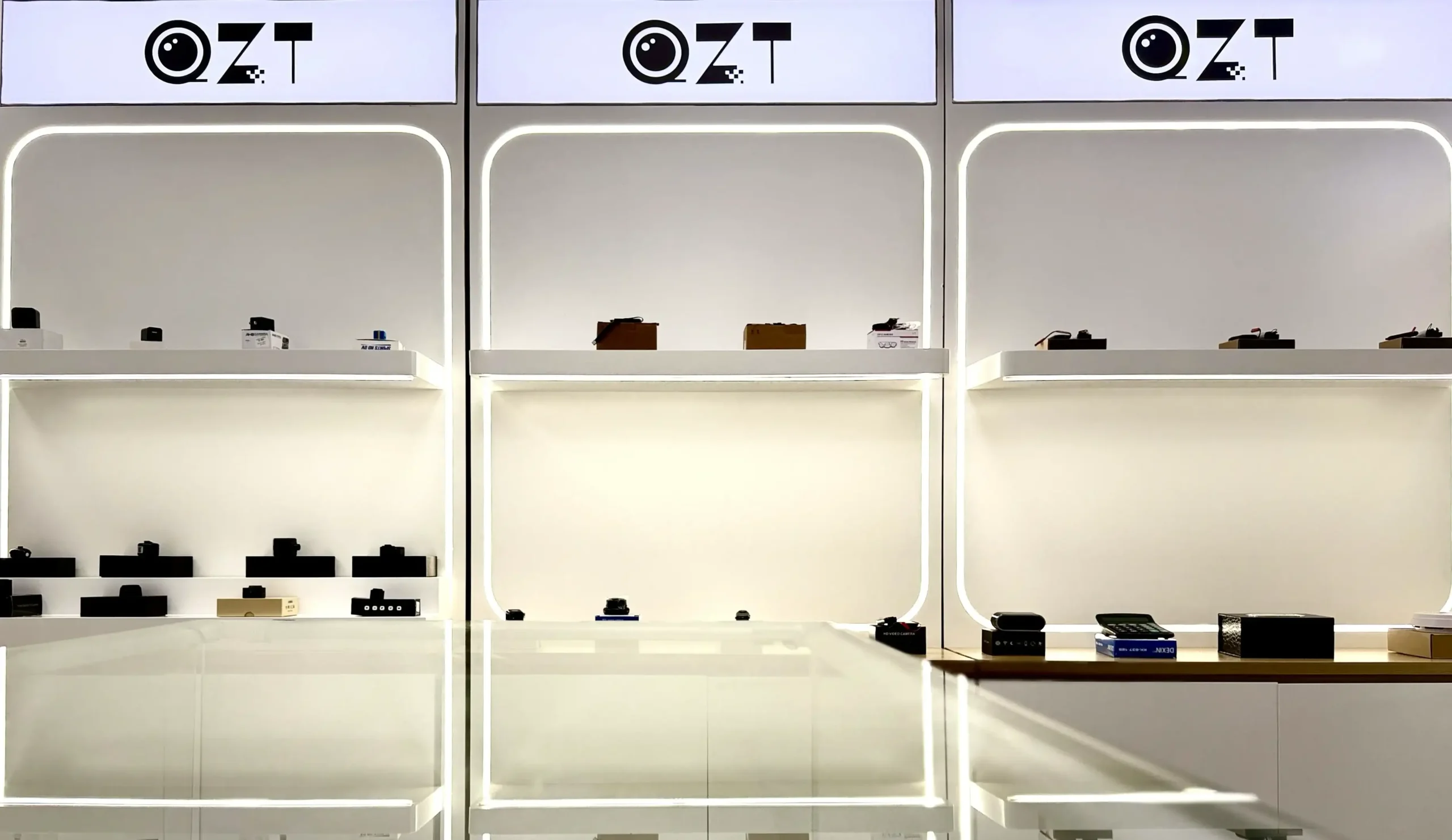
QZT’s European distribution network includes partners in Germany, France, the UK, Poland, and Italy who have been selling covert security products without regulatory challenge throughout the GDPR era. The company’s Italian warehouse enables EU-compliant shipping with no customs duties for EU buyers, and products are available with low MOQ for new distributors entering the market.
What’s the Difference Between a Legal and Illegal Hidden Camera Use?
| Permitted | Not Permitted |
|---|---|
| Monitoring a babysitter in your home | Recording in bathrooms or bedrooms without consent |
| Checking on an elderly parent’s carer | Filming a lodger in their private room |
| Home security camera inside your property | Covert cameras in holiday lets or Airbnbs |
| Caregiver monitoring with child safety concern | Workplace surveillance without employee notification |
| Personal security in your own residence | Filming neighbours’ property |
Conclusion: Nanny Cams Are Legal — Use Them With Confidence
A nanny cam is legal throughout the UK and EU when used for genuine home security and childcare monitoring purposes. The GDPR household exemption is clear, the ICO guidance is explicit, and the legal frameworks across Germany, France, Poland, Italy, and Spain all confirm the same position.
If you’re a family using a hidden clock camera to watch over your children, or a distributor stocking covert security devices for retail customers, the law supports you.
For product enquiries, wholesale pricing, or guidance on EU compliance documentation, contact the QZT team today — we’ve been supplying European families and distributors with CE-certified security equipment since 2015.
FAQ
Q1: Can I use a hidden camera to monitor my nanny without telling her in the UK?
Yes, in most cases. If you’re not her formal employer and the camera is inside your own home for family security purposes, the UK GDPR household exemption applies and no disclosure is required. If you have a formal employment contract with her, notifying her that monitoring may take place is recommended, though not legally mandatory under GDPR.
Q2: What’s the best nanny cam for a family in Germany or France?
A WiFi-enabled clock camera with mains power, motion detection, and Tuya app integration covers the main requirements for EU home monitoring. QZT’s WiFi wall clock hidden camera is specifically designed for European sockets and ships from an Italian warehouse, meaning fast delivery across the EU without import duties.
Q3: Can a nanny cam be used as evidence in a UK or EU court?
Yes. Footage recorded legally in your own home for personal security purposes is admissible as evidence in civil and criminal proceedings across the UK and EU, provided it is stored in unedited form. Always make a copy before taking action.
Q4: How do I know if I’m a “formal employer” of my nanny for GDPR purposes?
If you issue an employment contract, deduct tax or social security contributions, or treat the arrangement as an ongoing employment relationship rather than an ad hoc service, you are likely a formal employer. Most families using occasional babysitters or casual nannies are not formal employers and benefit from the full household exemption.
Q5: Is it legal to sell nanny cams in European countries with GDPR?
Yes, fully. GDPR governs the use of personal data, not the sale of hardware. There is no restriction on selling, distributing, or importing nanny cam devices across the EU and UK. All QZT products carry CE and RoHS certification for EU market compliance.

 English
  Italiano
  Deutsch
  Français
  Español
  Polski