
Qu'est-ce qu'une caméra cachée et est-elle légale au Royaume-Uni et dans l'UE ?
Une caméra cachée est légale au Royaume-Uni et dans l'UE — dans la plupart des cas, et sans aucune obligation de la divulguer.
That’s the short answer. But because this question carries real legal weight — and because getting it wrong could cause genuine harm to the families asking it — the longer answer is worth reading carefully.
Ce guide explique ce qu'est réellement une caméra cachée, où en est la loi au Royaume-Uni et dans les États membres de l'UE, quels scénarios spécifiques sont clairement légaux, et à quoi ressemble la seule zone grise afin que vous puissiez l'éviter complètement.

Qu'est-ce qu'une caméra cachée ?
Une caméra cachée est un enregistreur dissimulé — généralement une caméra — installé dans un logement pour surveiller l'activité d'une baby-sitter, d'une nounou, d'une au pair ou d'un autre aidant, généralement pendant que des enfants ou des adultes vulnérables sont sous leur garde.
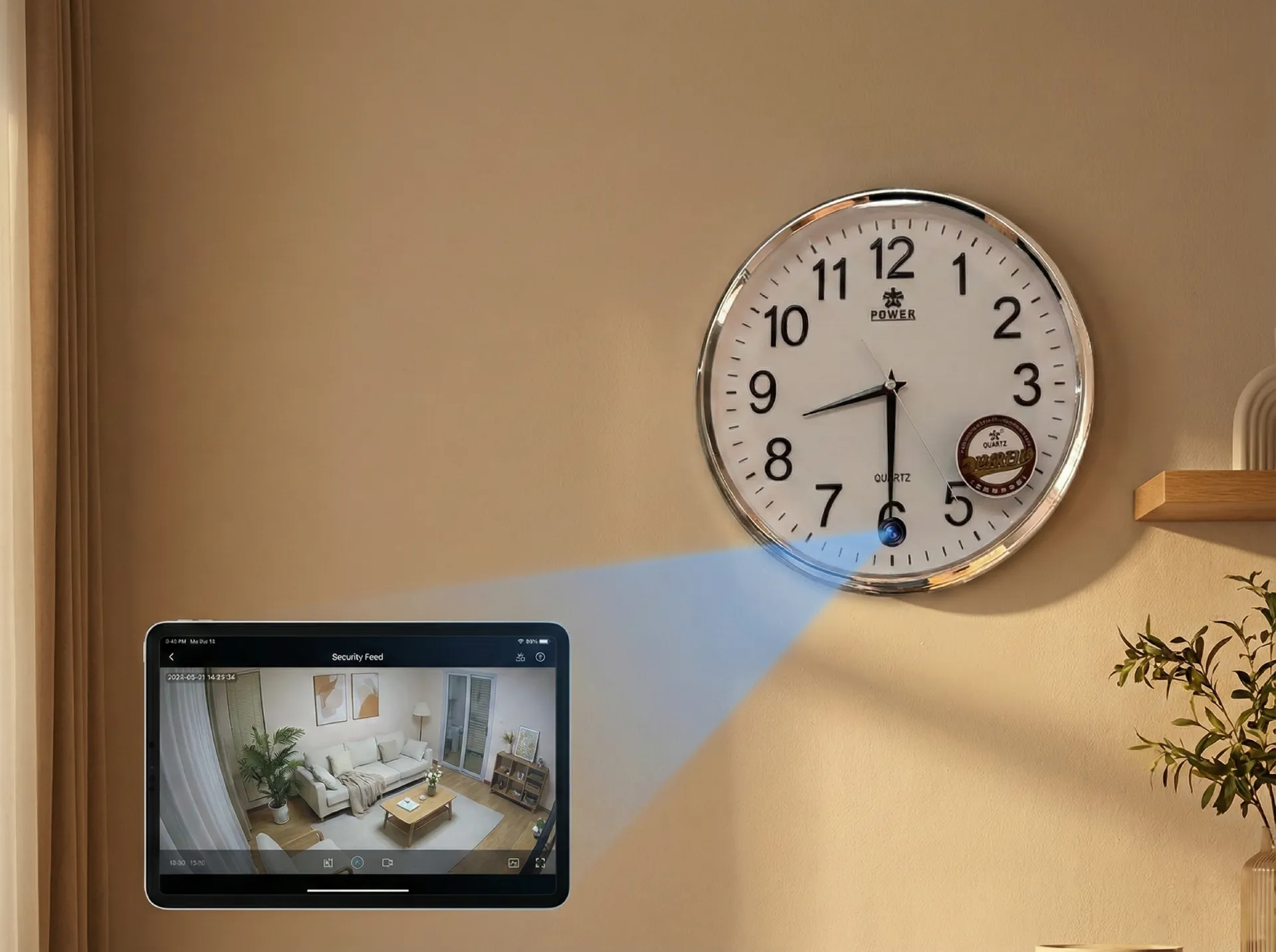
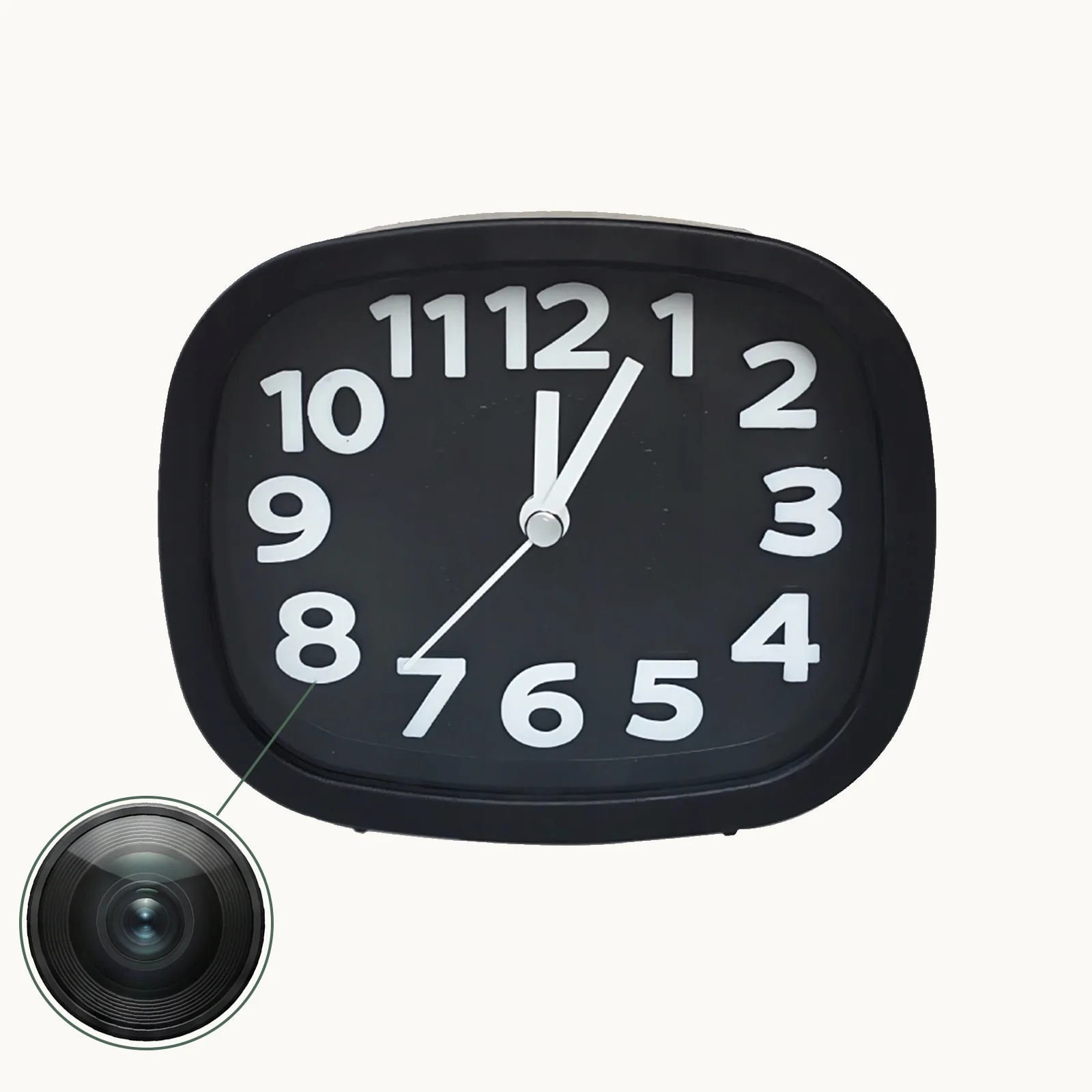
Le terme est informel et couvre une gamme de matériels : horloges avec caméra cachée, caméras cachées dans une prise, chargeurs USB avec caméra cachée, caméras cachées dans un désodorisant et caméras cachées dans une boîte de mouchoirs. Leur point commun est leur faible profil visuel — ils sont conçus pour être indiscernables d'objets ménagers ordinaires. Une caméra cachée de qualité fonctionne pendant des heures sur alimentation continue, enregistre sur une carte SD ou dans le cloud et, dans de nombreux cas, diffuse en direct vers un smartphone.
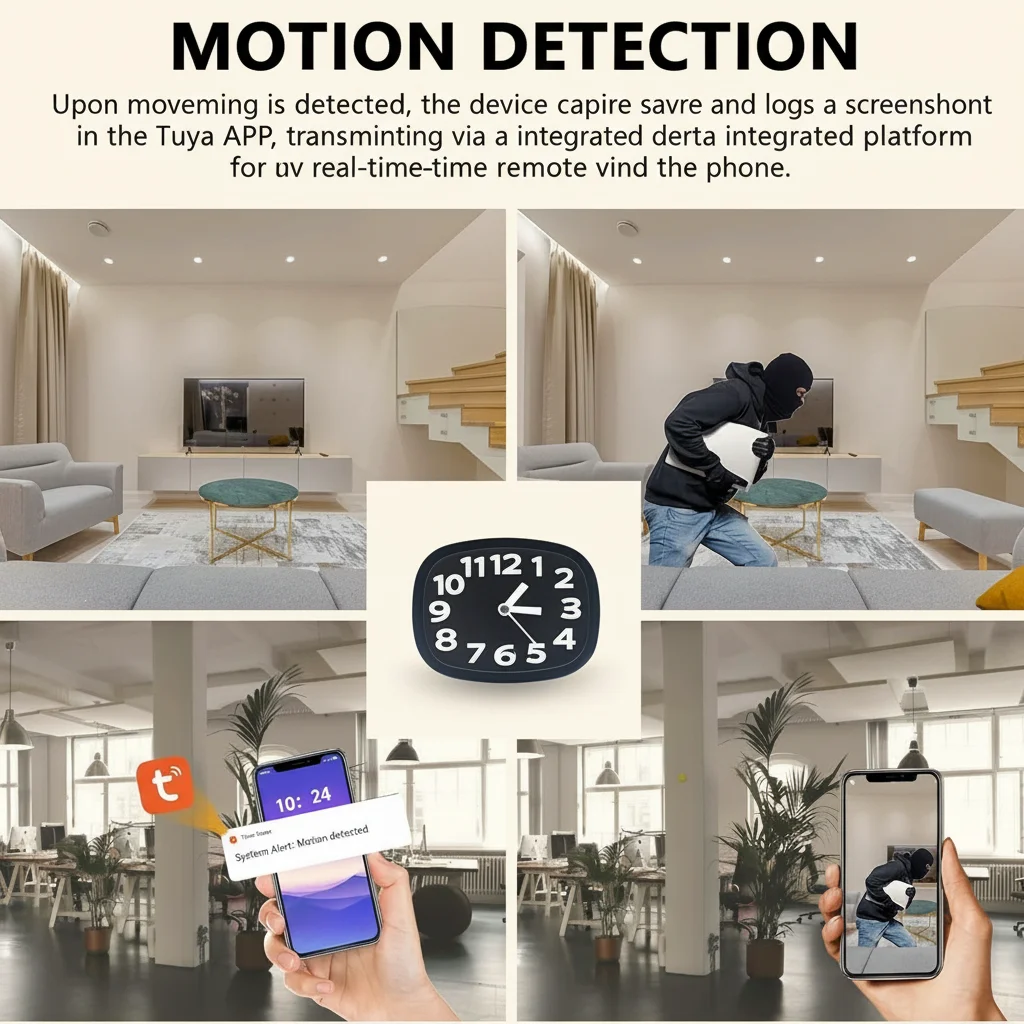
The device category has evolved significantly. Modern units like the QZT WiFi wall clock hidden camera operate over 2.4GHz WiFi, integrate with the Tuya smart home app, support motion-triggered recording, and push instant alerts to your phone when movement is detected — all while looking exactly like an ordinary alarm clock on a bedside table.
| Type de caméra cachée | Déguisement | Source d'alimentation | Idéal pour |
|---|---|---|---|
| Caméra horloge | Wall clock / alarm clock | Mains (no battery limit) | Living room, bedroom |
| Caméra prise | EU/UK wall socket | Mains (permanent) | Any room with a socket |
| chargeur USB avec caméra cachée | Phone charger | Mains (permanent) | Kitchen, hallway |
| Air freshener camera | Plug-in air freshener | Mains (permanent) | Bathroom-adjacent areas |
| Caméra batterie externe | Portable power bank | Internal battery (6-10h) | Temporary deployment |
Une caméra cachée est-elle légale en vertu du RGPD britannique ?
Yes. In the UK, using a hidden camera to monitor a caregiver in your own home is legal under the household exemption in UK GDPR.
The Information Commissioner’s Office published clear guidance on this point. systèmes de vidéosurveillance domestiques — including hidden cameras — used “for personal, family or household purposes” fall outside the scope of UK data protection law entirely. The legal basis for this exemption is Article 2(2)(c) of the UK GDPR, which mirrors the original EU GDPR Recital 18 provision.
What this means practically is that a family in Manchester, Edinburgh, or Bristol who installs a hidden socket camera to monitor a babysitter is not a “data controller” under UK GDPR and has no compliance obligations whatsoever. No privacy notice. No data retention policy. No formal legal basis required. The regulation simply does not apply.
Here’s what most people get wrong: they assume that because GDPR covers cameras in workplaces and shops, it must cover cameras everywhere. It doesn’t. The household exemption was a deliberate policy choice — the regulation’s authors recognised that applying commercial data protection rules to private family security would be both unworkable and disproportionate.
Une caméra cachée est-elle légale en vertu du RGPD de l'UE en Allemagne, en France et en Pologne ?
Yes, for the same reason and with the same scope.
Every EU member state implements the same GDPR Recital 18 household exemption. Enregistrement dans les salles de bain ou les chambres sans consentement.
A family in Hamburg, Lyon, or Warsaw using a clock camera to check on their nanny is in exactly the same legal position as a family in London: the household exemption applies, and GDPR is irrelevant.
Pour les distributeurs européens qui stockent des produits de type caméra cachée — en particulier ceux qui approvisionnent les marchés allemand, français et polonais — cela a une implication commerciale directe. La barrière juridique que certains clients perçoivent n'existe pas pour un usage domestique. Les clients qui pensent ne pas pouvoir utiliser légalement une caméra cachée à domicile se fondent sur une méconnaissance de la réglementation, et non sur une lecture exacte de celle-ci.
| Pays | Implementing Law | Caméra cachée : est-ce légal ? | Divulgation obligatoire ? |
|---|---|---|---|
| Royaume-Uni | UK GDPR / DPA 2018 | Oui | Non |
| Allemagne | GDPR / BDSG | Oui | Non |
| France | GDPR / Loi Informatique et Libertés | Oui | Non |
| Pologne | GDPR / UODO | Oui | Non |
| Italie | GDPR / Codice Privacy | Oui | Non |
| Espagne | GDPR / LOPDGDD | Oui | Non |
| Pays-Bas | GDPR / UAVG | Oui | Non |
Quand une caméra cachée devient-elle juridiquement complexe ?
L'exemption domestique comporte une condition limitative qui compte dans les scénarios de caméra cachée : le statut d'emploi formel.
If you hire a nanny as an employee — meaning you issue a contract of employment, pay national insurance or social contributions, and act as their legal employer — then the relationship shifts from “family using home security” to “employer monitoring a worker.” At that point, employment law in most EU countries and the UK recommends that employees are informed that monitoring may take place, even if the specific locations and methods are not disclosed.
Mais voici l'essentiel : la grande majorité des familles qui utilisent une caméra cachée ne sont pas des employeurs formels. Elles engagent une baby-sitter pour les soirées et les week-ends, paient en espèces ou par virement bancaire, et n'ont aucun contrat de travail. Dans cette situation — qui décrit la plupart des cas d'usage de caméra cachée — l'exemption domestique s'applique pleinement et aucune notification n'est requise.
Even in formal employment cases, the legal requirement is typically to inform the nanny that monitoring may occur in the workplace (your home), not to tell them where every camera is. This is a meaningful but manageable disclosure, not a prohibition on covert monitoring.
Quelles sont les meilleures fonctionnalités d'une caméra cachée pour un usage domestique ?
Connaître la loi est une chose — choisir le bon appareil en est une autre. Voici ce qui compte vraiment lors de la sélection d'une caméra cachée pour un usage familial.
Continuous mains power. Les caméras sur batterie ne sont pas fiables pour de longues périodes de surveillance. Une caméra cachée dans un salon ou une cuisine doit être alimentée en permanence sur secteur. La QZT WiFi Prise EU Caméra plugs directly into a standard European wall socket and runs indefinitely without battery changes — this alone makes it the most practical choice for regular childcare monitoring.
Motion detection with push alerts. You don’t want to review hours of empty room footage. A camera with motion-triggered recording and smartphone notifications lets you check in only when something happens. Tuya-integrated devices allow you to set sensitivity zones, so you can filter out the family dog walking past and focus on actual activity.
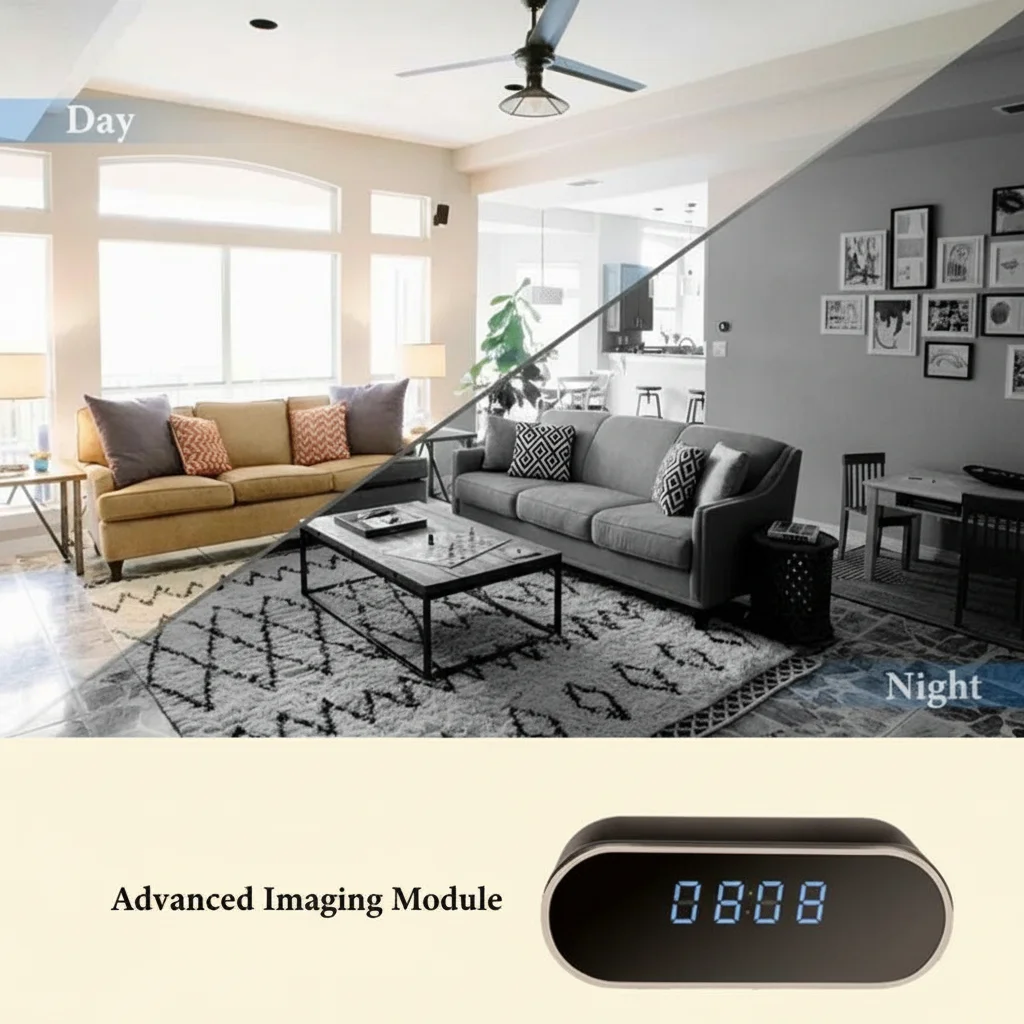
Vision nocturne. Babysitters and nannies often put children to bed in darkened rooms. Infrared night vision on a hidden clock camera means you can monitor without visible light that would reveal the camera’s presence.
Local storage as primary, cloud as backup. SD card recording means your footage stays in your home even if WiFi drops. A 32GB card on loop recording provides several days of motion-triggered clips. Cloud backup via the Tuya app adds a second layer if the device is tampered with.
Comment positionner une caméra cachée pour une couverture optimale
Placement determines everything. A camera that doesn’t capture the relevant area is useless, and one that’s poorly positioned is easily spotted.
Living rooms and playrooms work best with a camera at eye level or slightly above — typically on a shelf, bookcase, or side table. This gives a natural downward angle toward seating areas and play spaces without ceiling-mounted awkwardness. A caméra horloge placed on a mantelpiece or bookshelf at 1.2–1.5m height, with a 110° wide-angle lens, covers the majority of a standard-size living room.
Kitchens require a different approach because the activity is more varied and people move more. A chargeur USB avec caméra cachée near a socket at counter height offers a low angle that captures faces clearly and can cover the central working area. Avoid pointing toward windows if you want usable footage — backlighting blows out detail in all but the highest-end cameras.
Avoid bathrooms entirely. Regardless of the legal position, placing a camera in any area where a person would have a reasonable expectation of bodily privacy — including changing areas — is both legally and ethically off limits.
Que faire si vous découvrez des preuves de maltraitance sur votre caméra cachée ?
C'est une situation difficile, et les recommandations juridiques sont constantes : les images d'une caméra de surveillance domestique sont recevables comme preuves dans les procédures civiles et pénales dans toute l'UE et au Royaume-Uni.
Footage from a camera operating under the household exemption has been accepted in UK courts as evidence in child safeguarding cases. German courts have similarly accepted home surveillance footage as evidence where the recording was made for legitimate personal security purposes. The key factor is that the recording was made in your own home for genuine safety reasons — not fabricated, not edited, and stored in its original form.
If you capture footage that concerns you, the recommended course is to save the original files without editing, make a copy on a separate device, and report to the relevant authority — in the UK, this would be the police or the local authority children’s services; in Germany, the Jugendamt; in France, the CRIP (Cellule de Recueil des Informations Préoccupantes).
The footage you captured legally is evidence you are entitled to use.
How Do European Distributors Sell Nanny Cams Compliantly?
For retailers and distributors — particularly those operating showrooms or selling online to European customers — the position is clear.
La vente de matériel de caméra cachée est totalement légale dans toute l'UE et au Royaume-Uni. Il n'existe aucune restriction sur la fabrication, l'importation, l'exportation ou la vente au détail de dispositifs de caméra cachée. La certification CE et RoHS est requise pour les ventes sur le marché de l'UE (tous les produits QZT en sont dotés), et les produits doivent être conformes aux réglementations électroniques en vigueur. La loi sur la protection des données ne s'applique pas à la vente de matériel — elle s'applique à l'utilisation de ce matériel pour enregistrer des personnes identifiables.
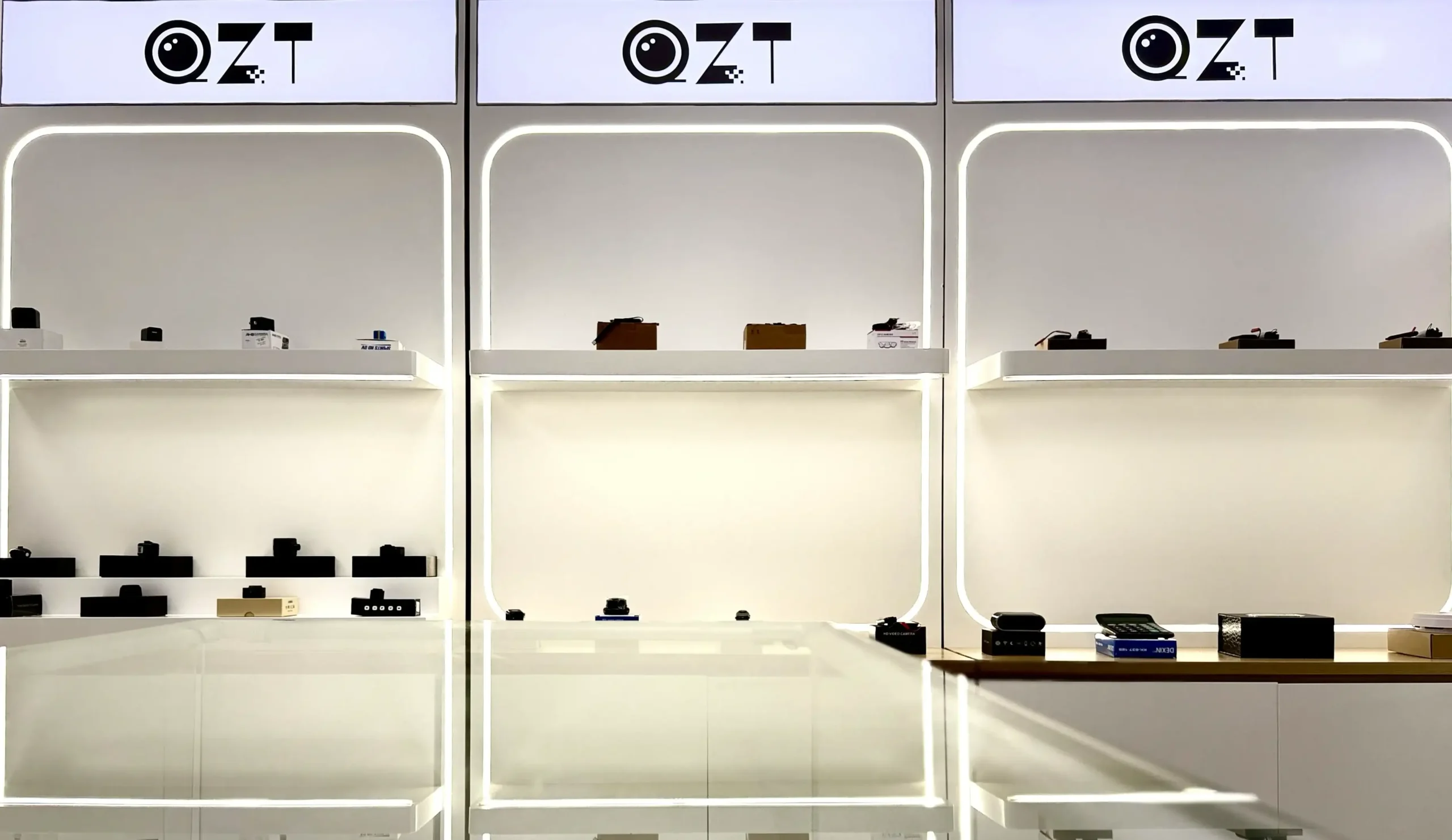
QZT’s European distribution network includes partners in Germany, France, the UK, Poland, and Italy who have been selling covert security products without regulatory challenge throughout the GDPR era. The company’s Italian warehouse enables EU-compliant shipping with no customs duties for EU buyers, and products are available with low MOQ for new distributors entering the market.
What’s the Difference Between a Legal and Illegal Hidden Camera Use?
| Autorisé | Not Permitted |
|---|---|
| Monitoring a babysitter in your home | Recording in bathrooms or bedrooms without consent |
| qu'est-ce qu'une caméra de nounou et est-elle légale au Royaume-Uni et en Europe | Filming a lodger in their private room |
| Caméra de surveillance à l'intérieur de votre propriété | Covert cameras in holiday lets or Airbnbs |
| Caregiver monitoring with child safety concern | Workplace surveillance without employee notification |
| Personal security in your own residence | Filming neighbours’ property |
Conclusion: Nanny Cams Are Legal — Use Them With Confidence
Une caméra cachée est légale dans tout le Royaume-Uni et l'UE lorsqu'elle est utilisée à des fins véritables de sécurité domestique et de surveillance de la garde d'enfants. L'exemption domestique du RGPD est claire, les directives de l'ICO sont explicites, et les cadres juridiques en Allemagne, France, Pologne, Italie et Espagne confirment tous la même position.
If you’re a family using a hidden clock camera to watch over your children, or a distributor stocking covert security devices for retail customers, the law supports you.
Pour toute demande de produit, tarification en gros ou conseils sur les documents de conformité UE, contact the QZT team today — we’ve been supplying European families and distributors with CE-certified security equipment since 2015.
FAQ
Q1: Can I use a hidden camera to monitor my nanny without telling her in the UK?
Yes, in most cases. If you’re not her formal employer and the camera is inside your own home for family security purposes, the UK GDPR household exemption applies and no disclosure is required. If you have a formal employment contract with her, notifying her that monitoring may take place is recommended, though not legally mandatory under GDPR.
Q2 : Quelle est la meilleure caméra cachée pour une famille en Allemagne ou en France ?
A WiFi-enabled clock camera with mains power, motion detection, and Tuya app integration covers the main requirements for EU home monitoring. QZT’s Caméra cachée horloge murale WiFi is specifically designed for European sockets and ships from an Italian warehouse, meaning fast delivery across the EU without import duties.
Q3 : Une caméra cachée peut-elle être utilisée comme preuve devant un tribunal britannique ou européen ?
Yes. Footage recorded legally in your own home for personal security purposes is admissible as evidence in civil and criminal proceedings across the UK and EU, provided it is stored in unedited form. Always make a copy before taking action.
Q4: How do I know if I’m a “formal employer” of my nanny for GDPR purposes?
If you issue an employment contract, deduct tax or social security contributions, or treat the arrangement as an ongoing employment relationship rather than an ad hoc service, you are likely a formal employer. Most families using occasional babysitters or casual nannies are not formal employers and benefit from the full household exemption.
Q5: Is it legal to sell nanny cams in European countries with GDPR?
Oui, tout à fait. Le RGPD régit l'utilisation des données personnelles, et non la vente de matériel. Il n'existe aucune restriction sur la vente, la distribution ou l'importation de caméras cachées dans l'UE et au Royaume-Uni. Tous les produits QZT sont certifiés CE et RoHS pour la conformité au marché de l'UE.

 English
  Italiano
  Deutsch
  Français
  Español
  Polski