
¿Qué es una Cámara de Niñera y es Legal en Reino Unido y la UE?
Una cámara de niñera es legal en el Reino Unido y la UE — en la mayoría de las circunstancias, y sin ningún requisito de divulgarla.
Esa es la respuesta breve. Pero debido a que esta pregunta tiene un peso legal real —y porque equivocarse podría causar un daño genuino a las familias que la plantean— vale la pena leer la respuesta más extensa con atención.
Esta guía cubre qué es realmente una cámara de niñera, cuál es la posición legal en el Reino Unido y los estados miembros de la UE, qué escenarios específicos son claramente legales y cómo es el área gris para que puedas evitarla por completo.

¿Qué es una cámara de niñera?
Una cámara niñera es un dispositivo de grabación oculto —generalmente una cámara— instalado en un hogar para monitorear la actividad de una niñera, au pair u otro cuidador, típicamente mientras niños o adultos vulnerables están bajo su cuidado.
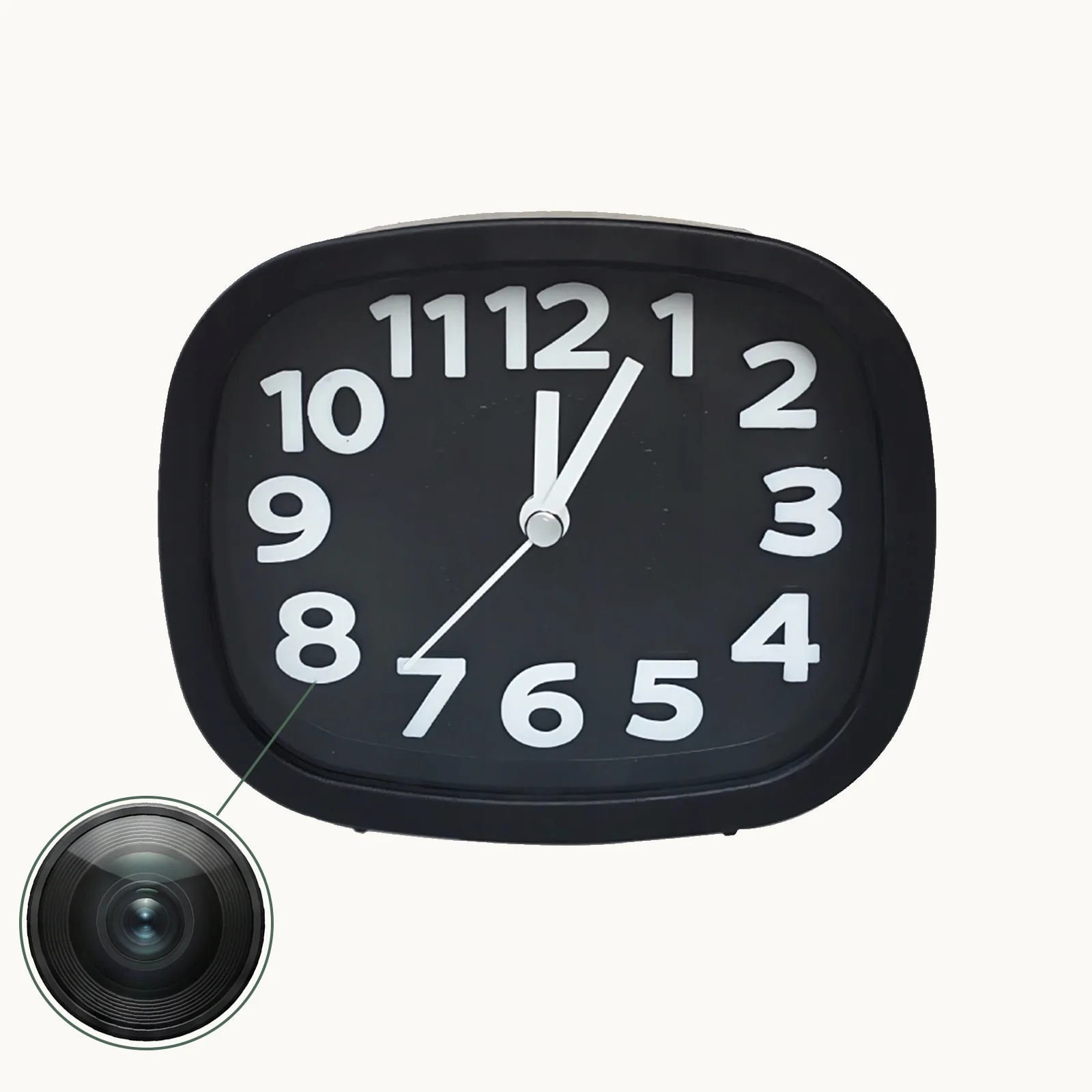
El término es informal y cubre una variedad de hardware: cámaras en relojes, cámaras en enchufes, cámaras en cargadores USB, cámaras en ambientadores y cámaras en cajas de pañuelos. Lo que comparten es un perfil visual discreto —están diseñadas para ser indistinguibles de objetos domésticos comunes. Una cámara de niñera de calidad funciona durante horas con alimentación continua, graba en una tarjeta SD o en la nube y, en muchos casos, transmite en vivo a un smartphone.
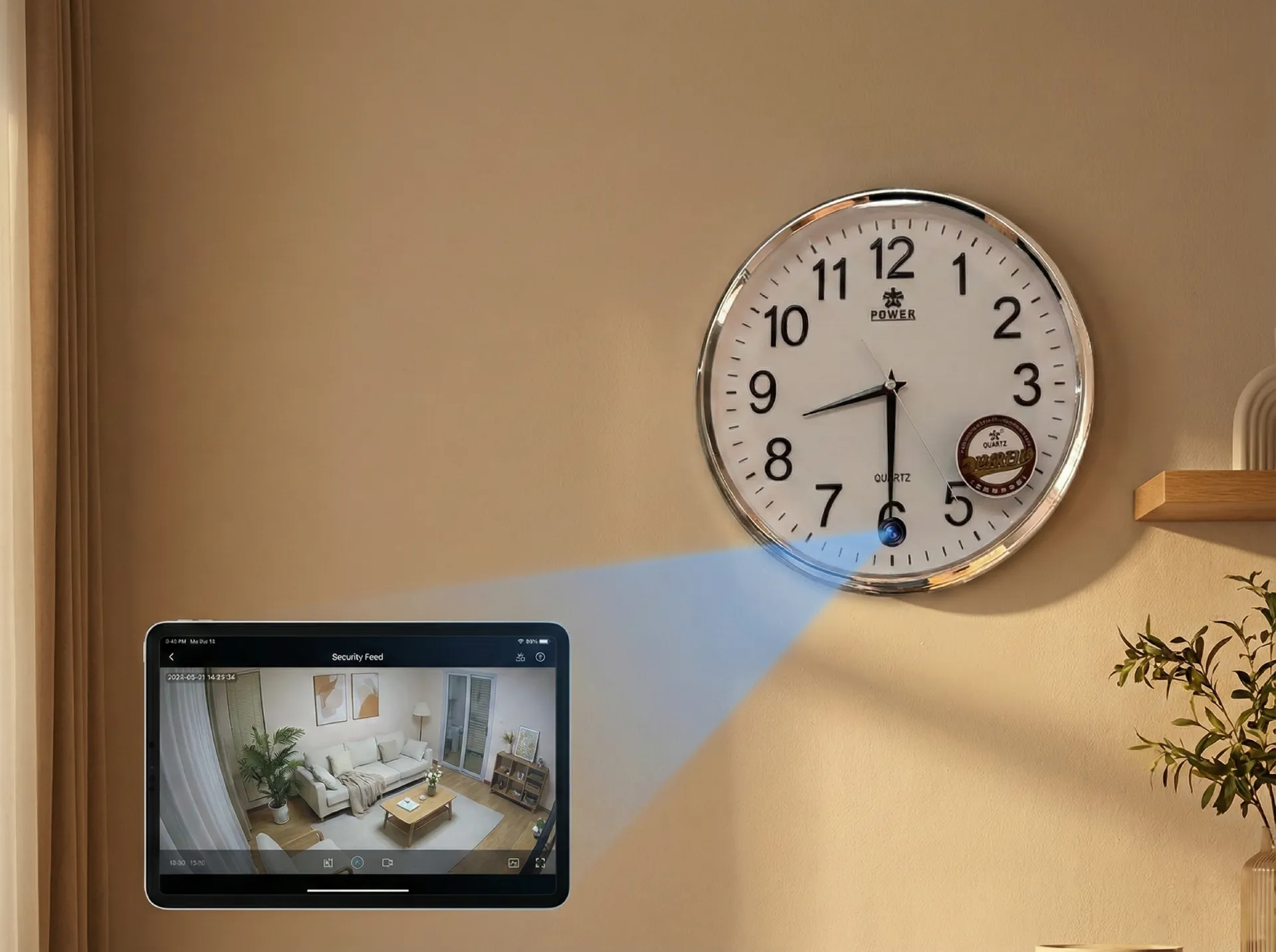
La categoría de dispositivos ha evolucionado significativamente. Las unidades modernas como la Cámara oculta en reloj de pared WiFi QZT opera a través de WiFi de 2.4GHz, se integra con la aplicación Tuya smart home, admite grabación activada por movimiento y envía alertas instantáneas a tu teléfono cuando se detecta movimiento, todo mientras se ve exactamente como un despertador común en una mesa de noche.
| Tipo de cámara de niñera | Disfrazar | Fuente de alimentación | Ideal para |
|---|---|---|---|
| Cámara reloj | Reloj de pared / despertador | Red eléctrica (sin límite de batería) | Sala de estar, dormitorio |
| Cámara de enchufe | Enchufe de pared UE/Reino Unido | Red eléctrica (permanente) | Cualquier habitación con un enchufe |
| enchufe espía con cámara | Cargador de teléfono | Red eléctrica (permanente) | Cocina, pasillo |
| Cámara ambientador | Ambientador enchufable | Red eléctrica (permanente) | Áreas adyacentes al baño |
| Cámara con batería externa | Batería portátil | Batería interna (6-10h) | Despliegue temporal |
¿Es legal una cámara de niñera según el GDPR del Reino Unido?
Sí. En el Reino Unido, usar una cámara oculta para monitorear a un cuidador en tu propio hogar es legal bajo la exención doméstica en el RGPD del Reino Unido.
La Oficina del Comisionado de Información publicó una guía clara sobre este punto. Sistemas de CCTV domésticos — incluidas las cámaras ocultas — utilizadas “para fines personales, familiares o domésticos” quedan completamente fuera del ámbito de la ley de protección de datos del Reino Unido. La base legal para esta exención es el Artículo 2(2)(c) del RGPD del Reino Unido, que refleja la disposición original del Considerando 18 del RGPD de la UE.
Lo que esto significa en la práctica es que una familia en Manchester, Edimburgo o Bristol que instala una cámara oculta en enchufe para monitorear a una niñera no es un “responsable del tratamiento” según el GDPR del Reino Unido y no tiene obligaciones de cumplimiento alguna. Sin aviso de privacidad. Sin política de retención de datos. No se requiere una base legal formal. El reglamento simplemente no se aplica.
Esto es en lo que la mayoría se equivoca: asumen que, dado que el GDPR cubre cámaras en lugares de trabajo y tiendas, debe cubrir cámaras en todas partes. No es así. La exención doméstica fue una decisión política deliberada —los autores del reglamento reconocieron que aplicar normas comerciales de protección de datos a la seguridad familiar privada sería inviable y desproporcionado.
¿Es legal una cámara de niñera según el GDPR de la UE en Alemania, Francia y Polonia?
Sí, por la misma razón y con el mismo alcance.
Cada estado miembro de la UE implementa el mismo RGPD Considerando 18 exención doméstica. El tratamiento de datos personales “en el curso de una actividad puramente personal o doméstica” está excluido del ámbito de aplicación del reglamento en los 27 estados miembros. En Alemania, la BDSG (Ley Federal de Protección de Datos) preserva explícitamente esta exención. En Francia, la CNIL (Comisión Nacional de Informática y Libertades) aplica el mismo principio. En Polonia, la UODO (Oficina de Protección de Datos Personales) sigue el mismo marco.
Una familia en Hamburgo, Lyon o Varsovia que usa una cámara reloj para vigilar a su niñera está exactamente en la misma posición legal que una familia en Londres: se aplica la exención doméstica y el RGPD es irrelevante.
Para los distribuidores europeos que almacenan productos de cámaras niñera —particularmente aquellos que abastecen los mercados alemán, francés y polaco— esto tiene una implicación comercial directa. La barrera legal que algunos clientes perciben no existe para uso doméstico. Los clientes que creen que no pueden usar legalmente una cámara doméstica oculta operan bajo un malentendido de la regulación, no bajo una lectura precisa de la misma.
| País | Ley de Implementación | ¿Es legal la cámara de niñera? | ¿Se requiere divulgación? |
|---|---|---|---|
| Reino Unido | RGPD del Reino Unido / Ley de Protección de Datos 2018 | Sí | No |
| Alemania | RGPD / BDSG | Sí | No |
| Francia | GDPR / Ley de Informática y Libertades | Sí | No |
| Polonia | RGPD / UODO | Sí | No |
| Italia | RGPD / Codice Privacy | Sí | No |
| España | RGPD / LOPDGDD | Sí | No |
| Países Bajos | GDPR / UAVG | Sí | No |
When Does a Nanny Cam Become Legally Complex?
The household exemption has one boundary condition that matters in nanny cam scenarios: formal employment status.
If you hire a nanny as an employee — meaning you issue a contract of employment, pay national insurance or social contributions, and act as their legal employer — then the relationship shifts from “family using home security” to “employer monitoring a worker.” At that point, employment law in most EU countries and the UK recommends that employees are informed that monitoring may take place, even if the specific locations and methods are not disclosed.
But here’s the thing: the vast majority of families using nanny cams are not formal employers. They hire a babysitter for evenings and weekends, pay cash or a bank transfer, and have no employment contract. In that situation — which describes most nanny cam use cases — the household exemption applies fully and no notification is required.
Even in formal employment cases, the legal requirement is typically to inform the nanny that monitoring may occur in the workplace (your home), not to tell them where every camera is. This is a meaningful but manageable disclosure, not a prohibition on covert monitoring.
What Are the Best Nanny Cam Features for Home Use?
Knowing the law is one thing — choosing the right device is another. Here’s what actually matters when selecting a nanny cam for family use.
Continuous mains power. Battery-powered cameras are unreliable for long shifts. A nanny cam in a living room or kitchen should draw power from the mains permanently. The QZT WiFi EU socket camera plugs directly into a standard European wall socket and runs indefinitely without battery changes — this alone makes it the most practical choice for regular childcare monitoring.
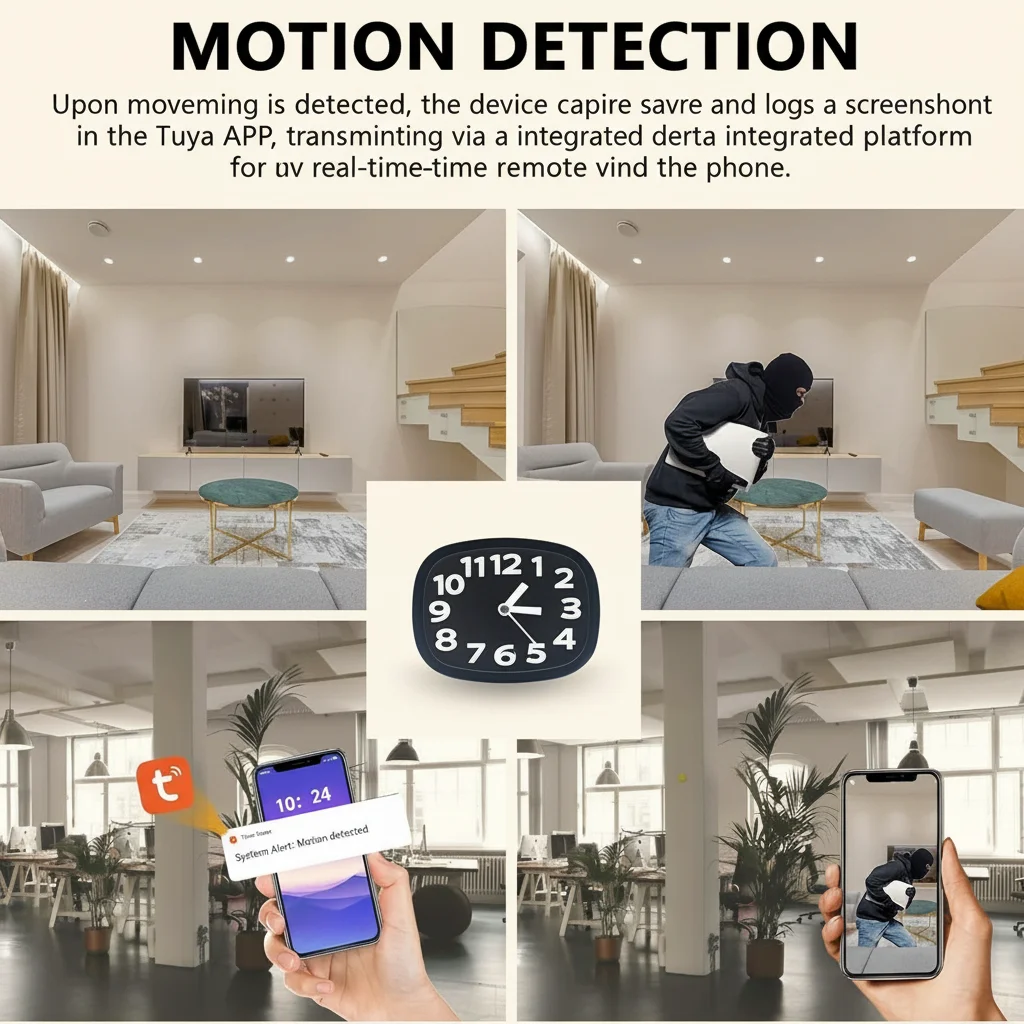
Motion detection with push alerts. You don’t want to review hours of empty room footage. A camera with motion-triggered recording and smartphone notifications lets you check in only when something happens. Tuya-integrated devices allow you to set sensitivity zones, so you can filter out the family dog walking past and focus on actual activity.
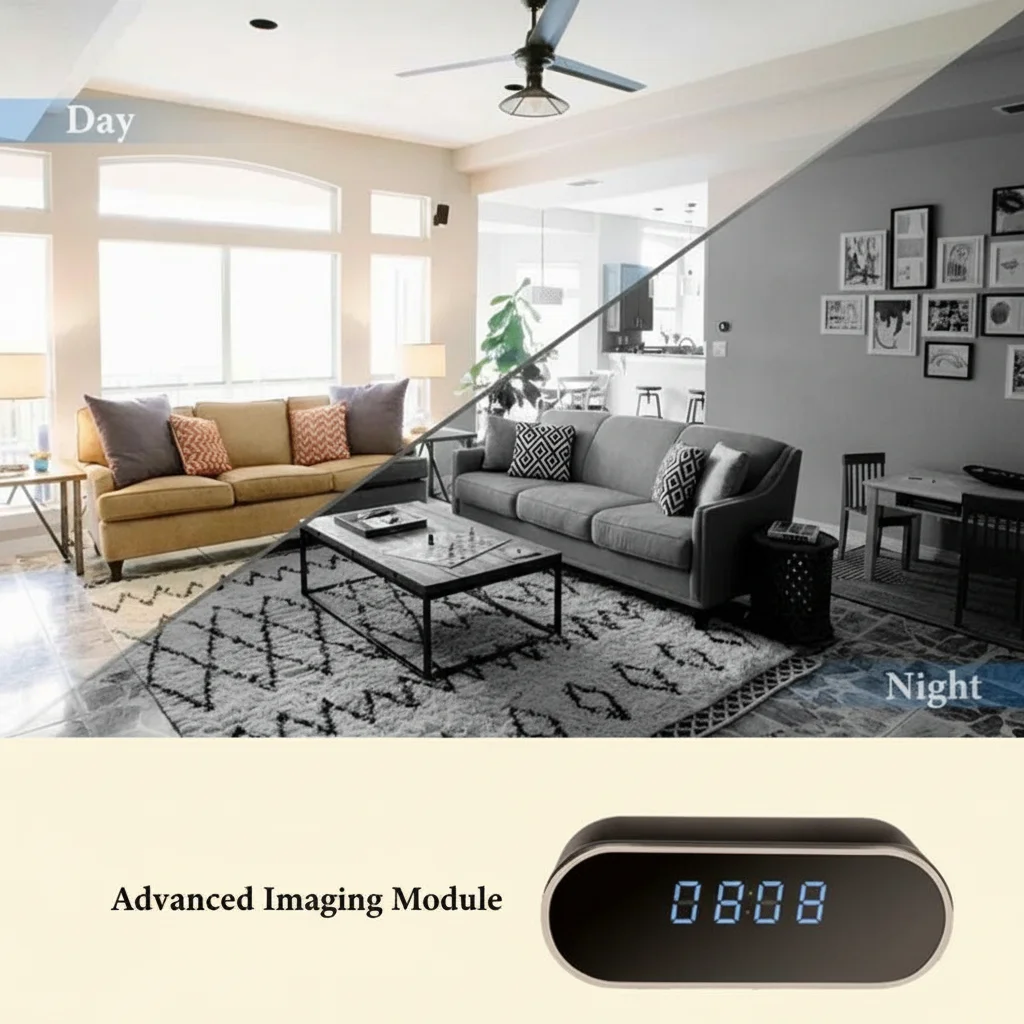
Visión nocturna. Babysitters and nannies often put children to bed in darkened rooms. Infrared night vision on a cámara de reloj oculta means you can monitor without visible light that would reveal the camera’s presence.
Local storage as primary, cloud as backup. SD card recording means your footage stays in your home even if WiFi drops. A 32GB card on loop recording provides several days of motion-triggered clips. Cloud backup via the Tuya app adds a second layer if the device is tampered with.
How to Position a Nanny Cam for Best Coverage
Placement determines everything. A camera that doesn’t capture the relevant area is useless, and one that’s poorly positioned is easily spotted.
Living rooms and playrooms work best with a camera at eye level or slightly above — typically on a shelf, bookcase, or side table. This gives a natural downward angle toward seating areas and play spaces without ceiling-mounted awkwardness. A cámara de reloj placed on a mantelpiece or bookshelf at 1.2–1.5m height, with a 110° wide-angle lens, covers the majority of a standard-size living room.
Kitchens require a different approach because the activity is more varied and people move more. A enchufe espía con cámara near a socket at counter height offers a low angle that captures faces clearly and can cover the central working area. Avoid pointing toward windows if you want usable footage — backlighting blows out detail in all but the highest-end cameras.
Avoid bathrooms entirely. Regardless of the legal position, placing a camera in any area where a person would have a reasonable expectation of bodily privacy — including changing areas — is both legally and ethically off limits.
What if You Find Evidence of Abuse on Your Nanny Cam?
This is a difficult situation, and the legal guidance is consistent: footage from a home security camera is admissible as evidence in civil and criminal proceedings across the EU and UK.
Footage from a camera operating under the household exemption has been accepted in UK courts as evidence in child safeguarding cases. German courts have similarly accepted home surveillance footage as evidence where the recording was made for legitimate personal security purposes. The key factor is that the recording was made in your own home for genuine safety reasons — not fabricated, not edited, and stored in its original form.
If you capture footage that concerns you, the recommended course is to save the original files without editing, make a copy on a separate device, and report to the relevant authority — in the UK, this would be the police or the local authority children’s services; in Germany, the Jugendamt; in France, the CRIP (Cellule de Recueil des Informations Préoccupantes).
The footage you captured legally is evidence you are entitled to use.
How Do European Distributors Sell Nanny Cams Compliantly?
For retailers and distributors — particularly those operating showrooms or selling online to European customers — the position is clear.
Selling nanny cam hardware is fully legal throughout the EU and UK. There is no restriction on the manufacture, import, export, or retail sale of hidden camera devices. CE and RoHS certification is required for EU market sales (which all QZT products carry), and products must comply with relevant electronics regulations. Data protection law does not apply to the sale of hardware — it applies to the use of that hardware to record identifiable individuals.
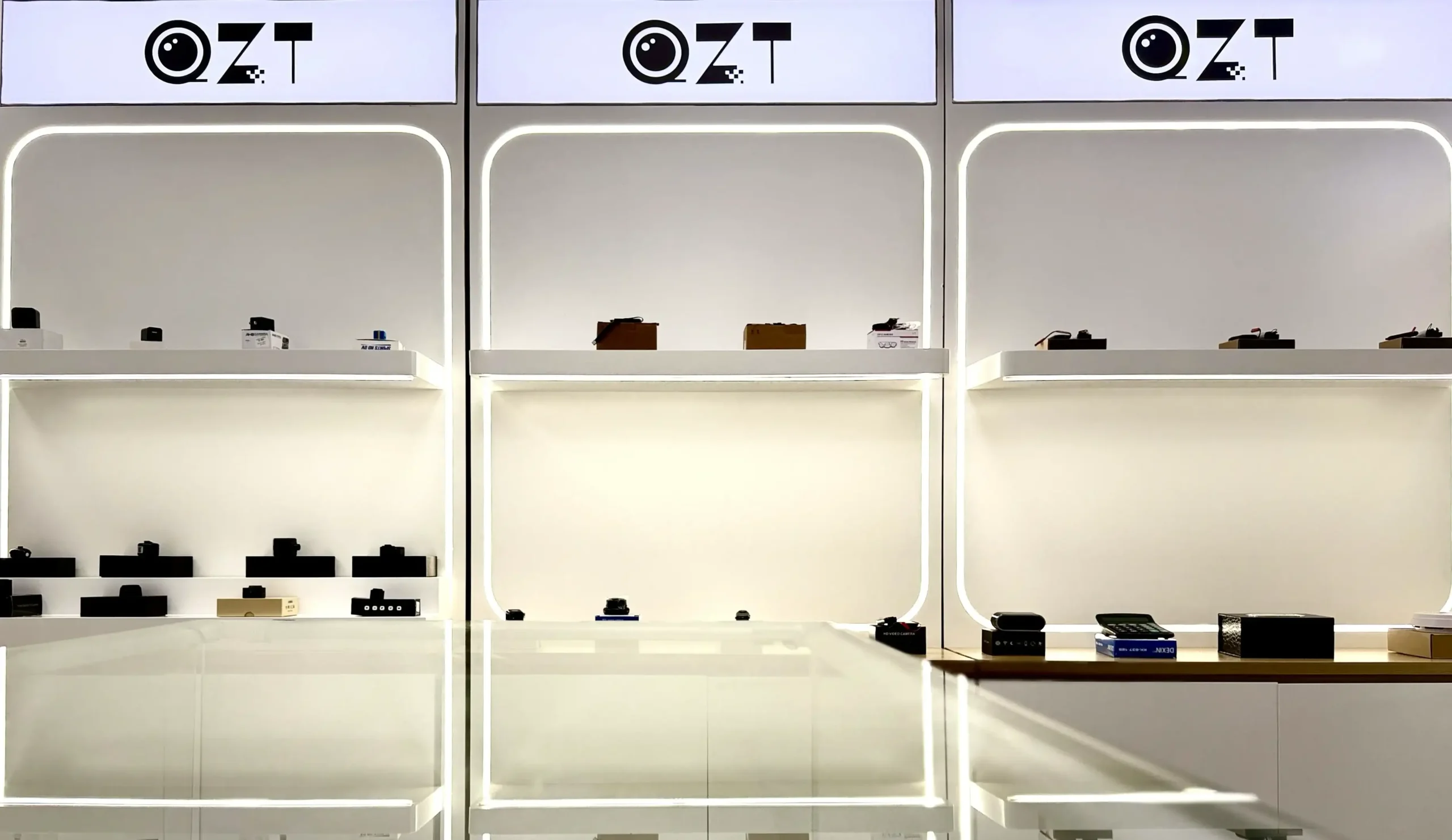
QZT’s European distribution network includes partners in Germany, France, the UK, Poland, and Italy who have been selling covert security products without regulatory challenge throughout the GDPR era. The company’s Italian warehouse enables EU-compliant shipping with no customs duties for EU buyers, and products are available with low MOQ for new distributors entering the market.
What’s the Difference Between a Legal and Illegal Hidden Camera Use?
| Permitido | Not Permitted |
|---|---|
| Monitoring a babysitter in your home | Recording in bathrooms or bedrooms without consent |
| Checking on an elderly parent’s carer | Filming a lodger in their private room |
| Home security camera inside your property | Covert cameras in holiday lets or Airbnbs |
| Caregiver monitoring with child safety concern | Workplace surveillance without employee notification |
| Personal security in your own residence | Grabación de la propiedad de los vecinos |
Conclusión: Las cámaras de niñera son legales — úsalas con confianza
Una cámara de niñera es legal en todo el Reino Unido y la UE cuando se utiliza con fines genuinos de seguridad doméstica y supervisión del cuidado infantil. La exención doméstica del RGPD es clara, la guía de la ICO es explícita y los marcos legales en Alemania, Francia, Polonia, Italia y España confirman la misma posición.
Si su familia utiliza un cámara de reloj oculta para vigilar a sus hijos, o un distribuidor que abastece dispositivos de seguridad ocultos para clientes minoristas, la ley lo respalda.
Para consultas sobre productos, precios mayoristas o orientación sobre la documentación de cumplimiento de la UE, contacte hoy al equipo de QZT — hemos estado suministrando equipos de seguridad certificados CE a familias y distribuidores europeos desde 2015.
Preguntas frecuentes
P1: ¿Puedo usar una cámara oculta para vigilar a mi niñera sin decírselo en el Reino Unido?
Sí, en la mayoría de los casos. Si no es su empleador formal y la cámara está dentro de su propio hogar con fines de seguridad familiar, se aplica la exención doméstica del RGPD del Reino Unido y no se requiere divulgación. Si tiene un contrato de trabajo formal con ella, se recomienda notificarle que puede haber supervisión, aunque no es legalmente obligatorio según el RGPD.
P2: ¿Cuál es la mejor cámara de niñera para una familia en Alemania o Francia?
Una cámara de reloj con WiFi, alimentación por red eléctrica, detección de movimiento e integración con la aplicación Tuya cubre los principales requisitos para la vigilancia doméstica en la UE. La de QZT Cámara oculta de reloj de pared WiFi está específicamente diseñado para enchufes europeos y se envía desde un almacén italiano, lo que significa entrega rápida en toda la UE sin aranceles de importación.
P3: ¿Se puede usar una cámara de niñera como prueba en un tribunal del Reino Unido o de la UE?
Sí. Las grabaciones realizadas legalmente en su propio hogar con fines de seguridad personal son admisibles como prueba en procedimientos civiles y penales en todo el Reino Unido y la UE, siempre que se almacenen sin editar. Siempre haga una copia antes de tomar medidas.
P4: ¿Cómo sé si soy un “empleador formal” de mi niñera a efectos del RGPD?
Si emite un contrato de trabajo, deduce impuestos o contribuciones a la seguridad social, o trata el acuerdo como una relación laboral continua en lugar de un servicio ocasional, es probable que sea un empleador formal. La mayoría de las familias que utilizan canguros ocasionales o niñeras informales no son empleadores formales y se benefician de la exención doméstica completa.
P5: ¿Es legal vender cámaras niñera en países europeos con el RGPD?
Sí, completamente. El RGPD regula el uso de datos personales, no la venta de hardware. No hay restricciones para vender, distribuir o importar dispositivos de cámara de niñera en la UE y el Reino Unido. Todos los productos QZT cuentan con certificación CE y RoHS para cumplir con el mercado de la UE.

 English
  Italiano
  Deutsch
  Français
  Español
  Polski