
Sourcing directly from an OEM/ODM spy camera factory allows B2B importers, security distributors, and e-commerce brand owners to secure competitive unit pricing, private-label packaging, and custom IoT app integration. However, the covert surveillance market contains significant quality variations between trading vendors and true original manufacturers equipped with SMT assembly lines and optical calibration laboratories.
This procurement guide explains how to evaluate a spy camera manufacturer, conduct rigorous sample testing before volume ordering, negotiate factory MOQ tiers, and verify CE, RoHS, and FCC compliance for international import.
What capabilities define a professional OEM spy camera factory?
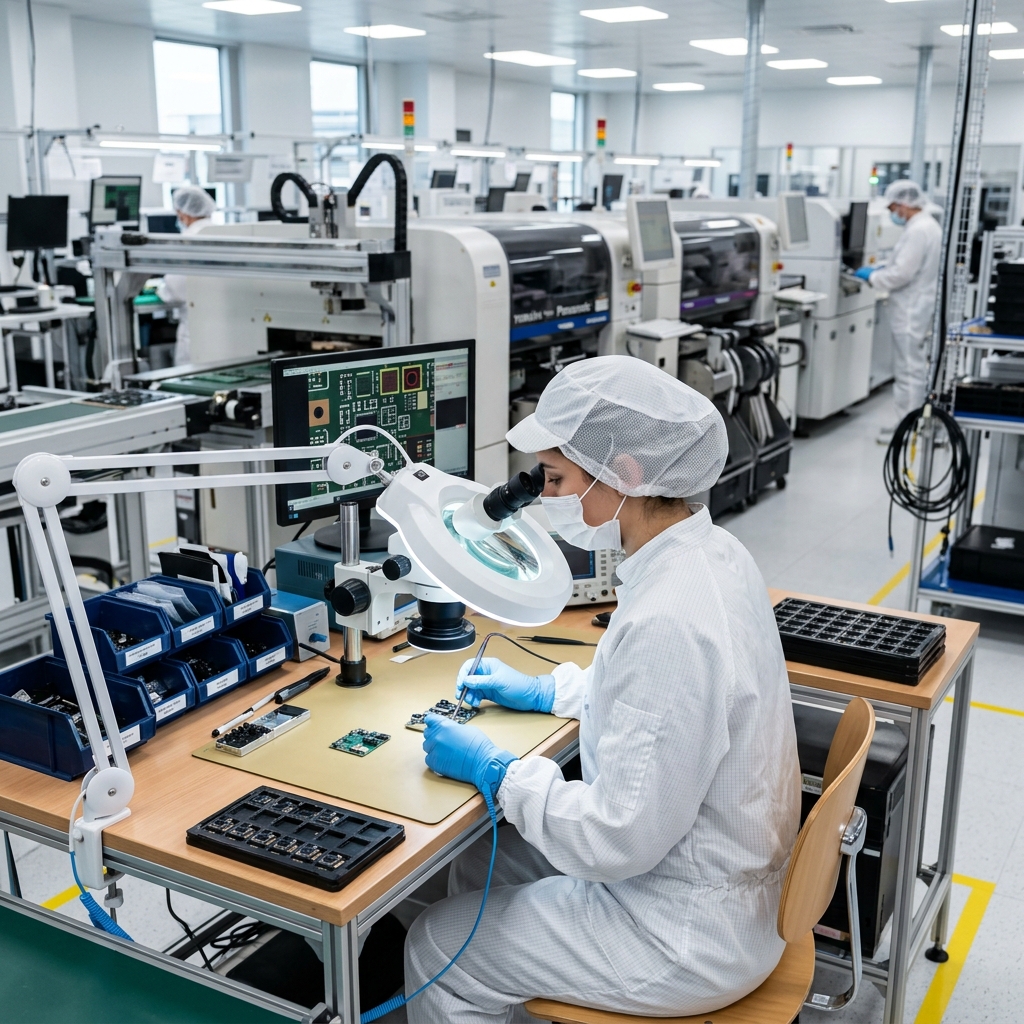
A true original equipment manufacturer (OEM) for hidden surveillance hardware operates distinct production stages that trading agents cannot provide. According to physical security manufacturing benchmarks compiled by IFSEC Global, authentic electronics factories maintain strict environmental controls and specialized assembly infrastructure:
- Surface Mount Technology (SMT) Lines: High-speed SMT placement machines mount micro-processors, Wi-Fi chips, and power management ICs onto compact camera circuit boards with high precision.
- Cleanroom Optical Lens Alignment: Installing pinhole optics onto CMOS image sensors requires dust-free cleanroom environments. Even a single micro-dust particle on the sensor surface causes permanent dark spots in recorded video.
- Custom Tooling & Housing Injection: Direct factories own plastic injection molds for functional disguised form factors—including digital clock cameras, wall outlet cameras, and Tuya DIY camera kits.
- IoT Firmware & App Integration: Established manufacturers maintain in-house software engineers to flash custom Tuya, Smart Life, or proprietary P2P firmware, ensuring long-term server maintenance and app stability.
How to test sample units before placing a wholesale factory order
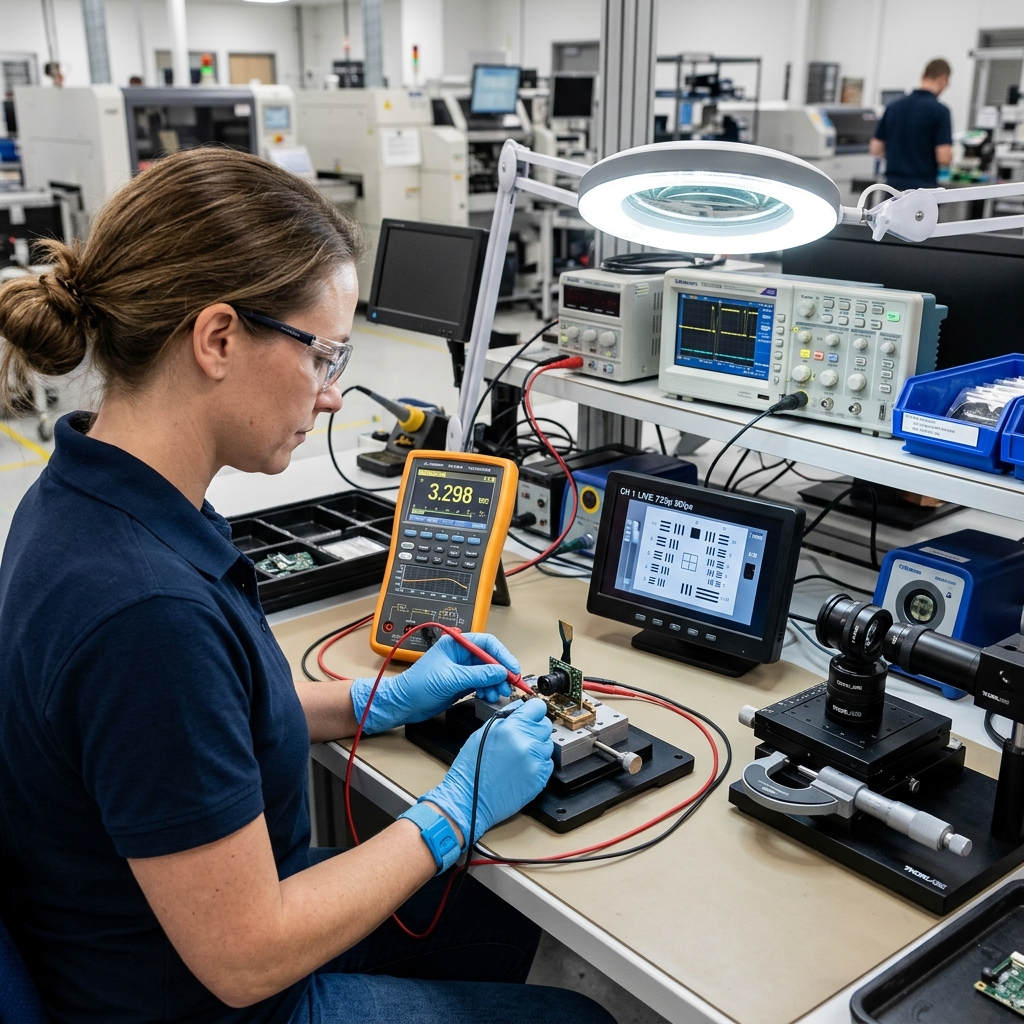
Never place a volume container order based solely on product catalog specifications. Request 2 to 5 production-grade sample units and conduct a standardized 5-point laboratory inspection on your test bench:
| Test Item | Inspection Method | Factory Pass Standard |
|---|---|---|
| IR LED Heat & Aging Test | Run 940nm night vision continuously for 8 hours in an enclosed thermal chamber | No thermal shutdown; housing surface temperature remains below 45°C |
| Microphone Pickup Distance | Record human speech at 1m, 3m, and 5m in a quiet 40dB environment | Clear speech intelligibility at minimum 3-meter radius without excessive background hiss |
| MicroSD Card File System | Test 32GB, 64GB, and 128GB MicroSD cards formatted in FAT32 | Seamless loop recording without file corruption or dropped frame gaps |
| Wi-Fi Connection Recovery | Disconnect router power for 5 minutes during live app video streaming | Camera automatically reconnects to 2.4GHz Wi-Fi within 60 seconds of network restoration |
| Battery vs Standby Capacity | Measure continuous recording time vs PIR motion standby power draw | Actual continuous recording meets minimum 90 minutes on 1000mAh battery mode |
For technical surveillance engineering standards and video surveillance testing procedures, refer to guidance published by SecurityInfoWatch.
OEM & ODM customization: packaging, branding, and app firmware options
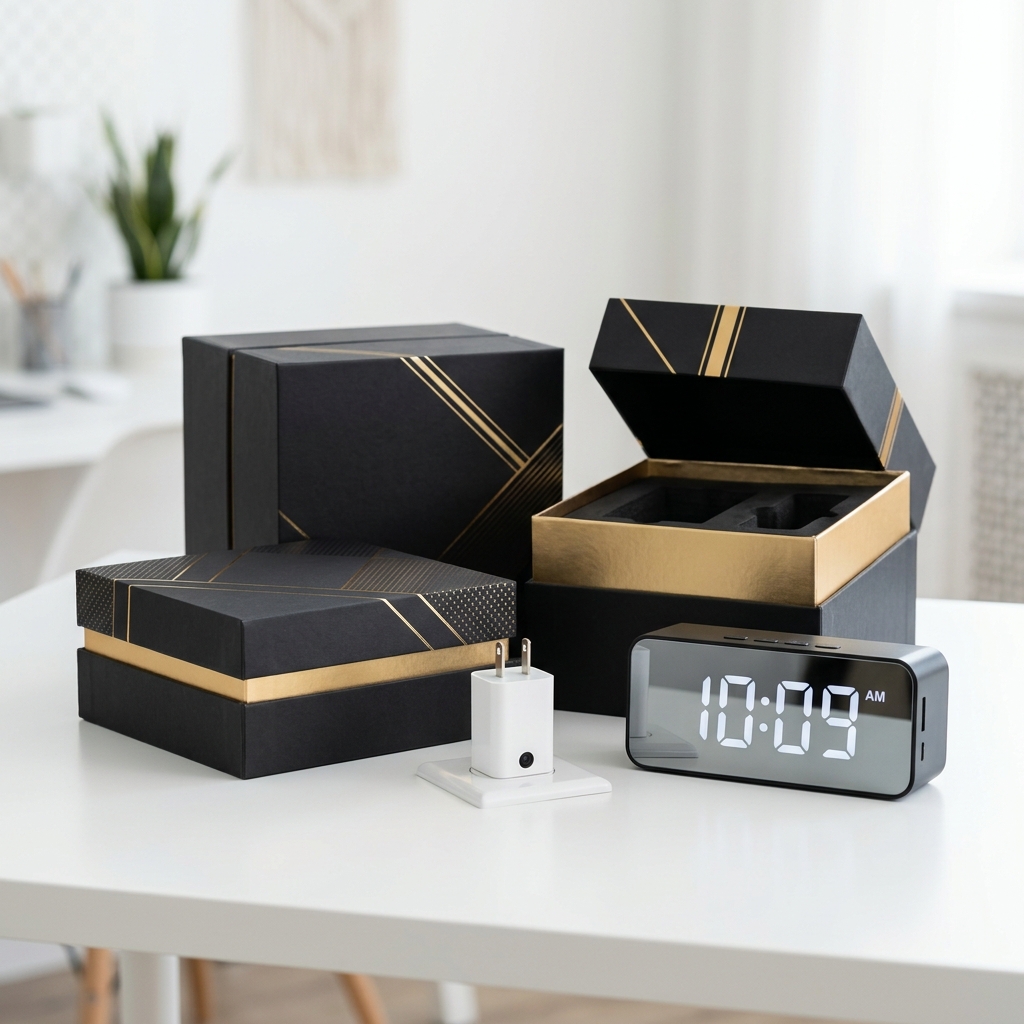
Working directly with a manufacturing factory unlocks flexible branding options to establish private-label market differentiation:
- Custom Retail Box & Gift Packaging: Full-color custom artwork, barcode printing, and localized user manual printing in English, German, French, or Spanish.
- Silkscreen Logo & Casing Customization: Custom housing color finishes, matte black non-reflective coatings, or logo printing on non-covert areas.
- Tuya Smart App Branding (OEM App): For high-volume buyers (MOQ 1,000+ pcs), factories can publish a customized smartphone app on Apple App Store and Google Play with your company brand logo and splash screen.
- Custom Hardware Housing (ODM): Modifying plastic injection molds to embed camera lenses into proprietary client products or unique interior decor items.
Factory MOQ tiers, lead times, and EXW/FOB pricing structures

Understanding factory minimum order quantity (MOQ) structures ensures accurate unit cost calculations and margin forecasting:
| Order Tier | MOQ Volume | Customization Level | Typical Production Lead Time | Pricing Basis |
|---|---|---|---|---|
| Sample Test Order | 1 to 10 pcs | Standard factory neutral packaging | 1 to 3 business days | Sample Unit Price (EXW) |
| Trial Small Order | 50 to 200 pcs | Custom logo sticker + neutral box | 5 to 7 business days | Standard Wholesale (EXW) |
| Standard OEM Order | 500 to 1,000 pcs | Full custom retail box & localized manual | 12 to 15 business days | Volume OEM Discount (FOB Shenzhen/HK) |
| Full ODM Customization | 2,000+ pcs | Custom injection housing + OEM app branding | 25 to 35 business days | Direct Tier-1 Factory FOB Contract |
For buyers managing European or North American distribution, working with suppliers offering EU local warehouse stock allows rapid 3-to-5 day dispatch for urgent sample restocking before committing to bulk ocean freight container shipments.
CE, RoHS, FCC certifications and legal compliance for imported spy cameras
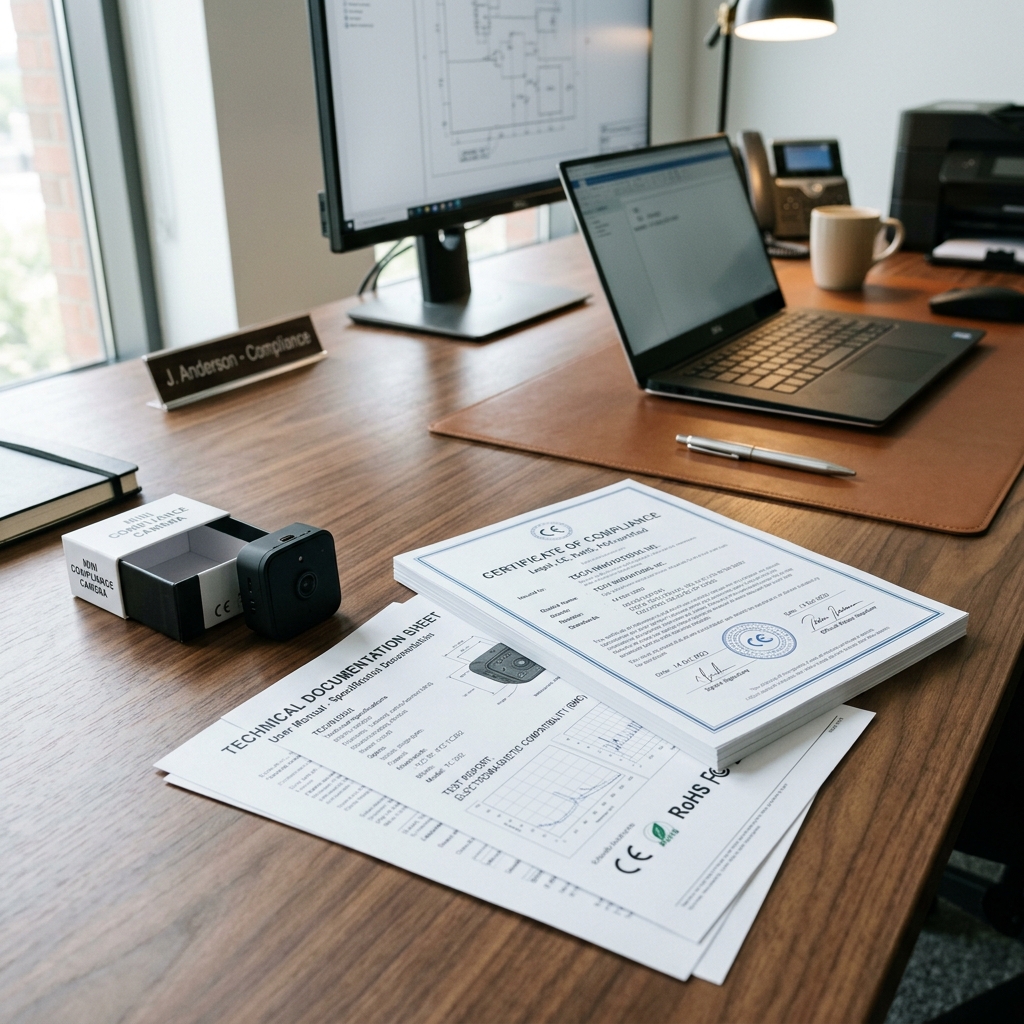
Customs authorities in North America and the European Union strictly enforce electronic safety and electromagnetic compatibility compliance. Importers must verify that the factory holds valid certificate documentation matching the exact SKU being shipped:
- CE-EMC & CE-LVD (European Union): Mandatory for selling in EU member states. Proves the camera does not cause radio interference and meets low-voltage electrical safety standards.
- RoHS Directive (2011/65/EU): Restricts hazardous substances (lead, mercury, cadmium) in electronic circuitry and solder.
- FCC Part 15 Class B (United States): Required for all intentional and unintentional radiators operating on 2.4GHz Wi-Fi frequencies in the US market.
- Battery Safety (UN38.3 & MSDS): Required by air freight and sea shipping lines for all hidden cameras containing rechargeable lithium batteries.
FAQ
How do I verify if a supplier is a real factory or a trading company?
Request a live video walkthrough of the SMT assembly line and cleanroom optical workshop, or ask for an official ISO 9001 quality management audit report. True spy camera factories can provide raw PCB engineering schematics, custom mold documentation, and CE/FCC test reports issued directly under their manufacturing entity name.
What is the standard warranty and RMA policy from a spy camera factory?
QZT Security provides a standard 12-month manufacturer warranty on all wholesale spy camera orders. Defective units identified during client quality control are replaced either via immediate spare parts inclusion (1% to 2% free spare units with bulk shipments) or advance replacement on subsequent production orders.
Can a spy camera factory customize the Tuya app for my brand?
Yes. QZT Security integrates certified Tuya IoT modules across hidden clock cameras, socket cameras, and DIY modules. For OEM orders meeting the 1,000-piece threshold, we offer full Tuya OEM app customization, replacing standard app icons, brand names, and cloud login pages with your registered company brand.
What is the typical production lead time for a 1,000-piece OEM order?
Standard lead time for a 1,000-piece OEM spy camera order with custom retail packaging and localized user manuals is 12 to 15 business days following sample approval and deposit confirmation. Neutral sample orders ship within 24 to 48 hours from stock.
Do you support sample orders before placing a bulk wholesale order?
Yes. We encourage distributors and e-commerce buyers to order 2 to 5 evaluation samples to test image quality, 940nm night vision performance, microphone pickup, and Wi-Fi app connectivity prior to signing a bulk manufacturing contract.
For direct factory wholesale inquiries, custom OEM/ODM manufacturing, or sample evaluation orders, visit the QZT Security product catalog or contact our OEM engineering team.

 English
  Italiano
  Deutsch
  Français
  Español
  Polski