
C10 vs C10 TUYA vs C10 HD: Którą wariant modułu kamery WiFi powinieneś mieć na stanie?
A distributor in Spain ordered C10 modules — the 90-degree and 120-degree versions — to test for his market. When the package arrived, one unit did not work at all. He emailed the supplier. While waiting for a replacement, he also realised the app his customers needed was missing from the Google Play Store.
This is not an isolated story. It is one of the recurring patterns in B2B sales of C10 WiFi camera modules across Europe, the Middle East, and Africa.
The C10 hidden camera module is one of the most popular products in the QZT catalogue. It also comes in four distinct variants — C10 standard, C10 TUYA, C10 HD, and differing lens angles (90° and 120°) — and the differences between them have caused enough real-world confusion to fill a spreadsheet of post-sales case notes.
This article explains exactly what each C10 variant offers, which markets each one serves best, and how to avoid the version-confusion problems that have cost other distributors time and money.
What Are the C10 Variants and What Is Each One Actually For?
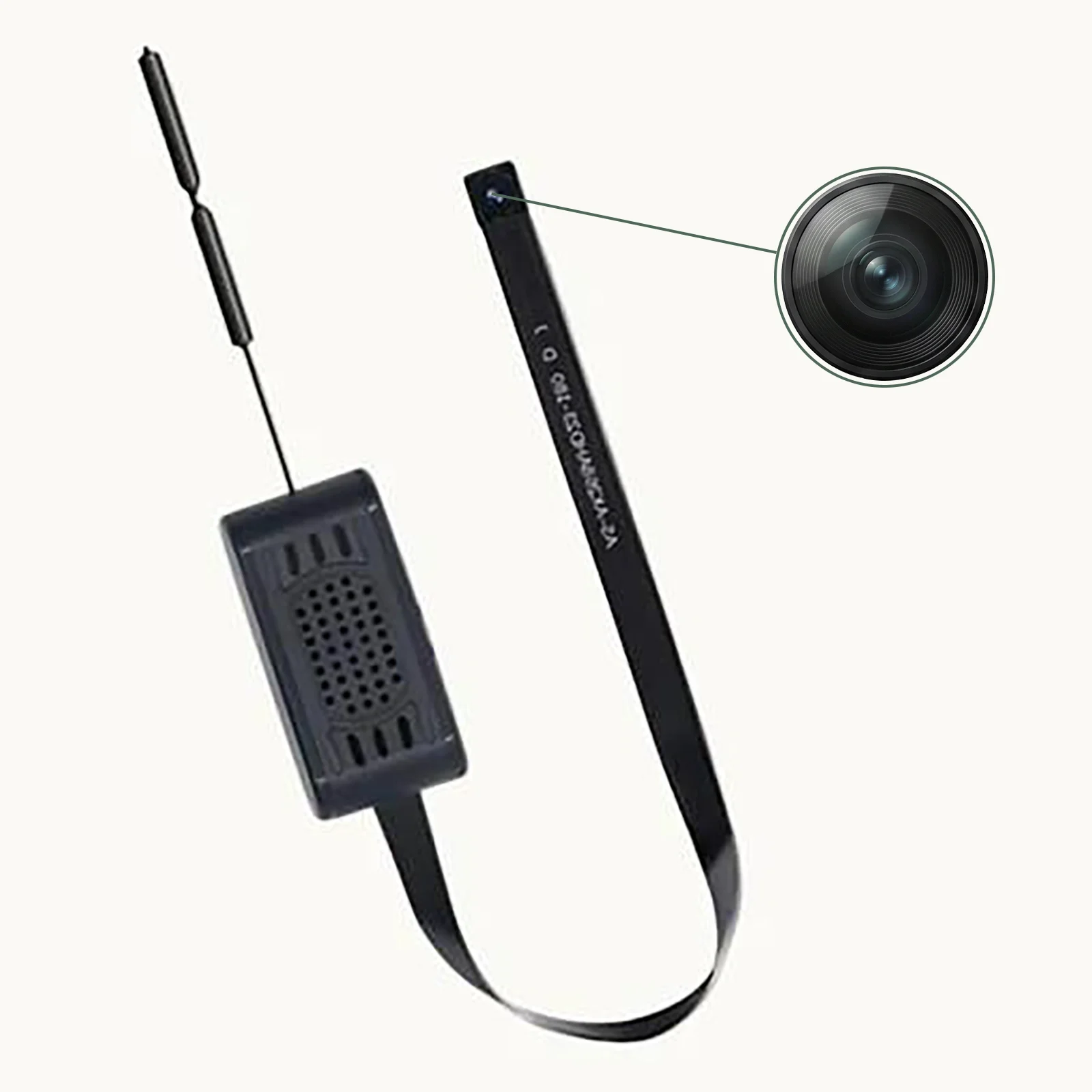
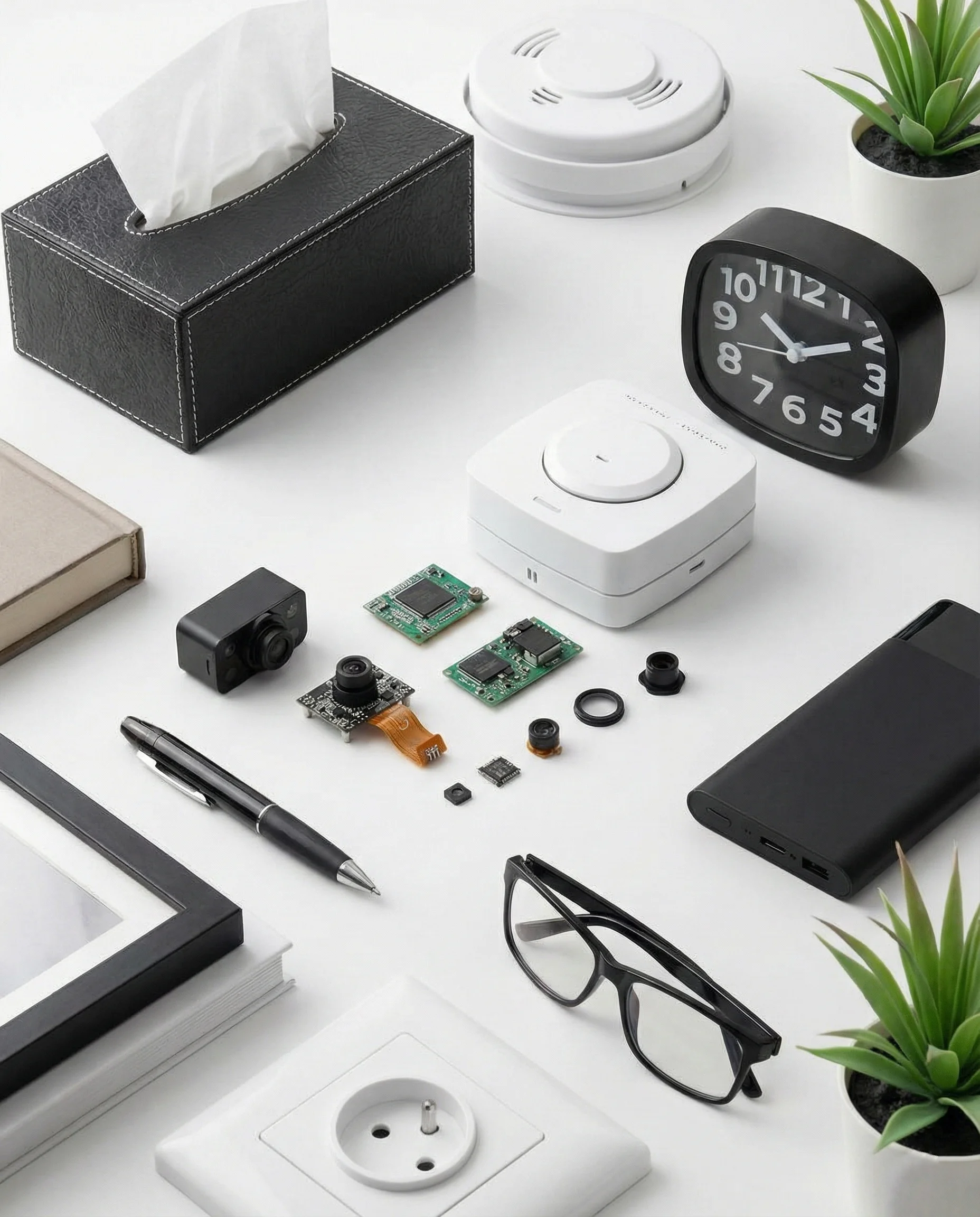
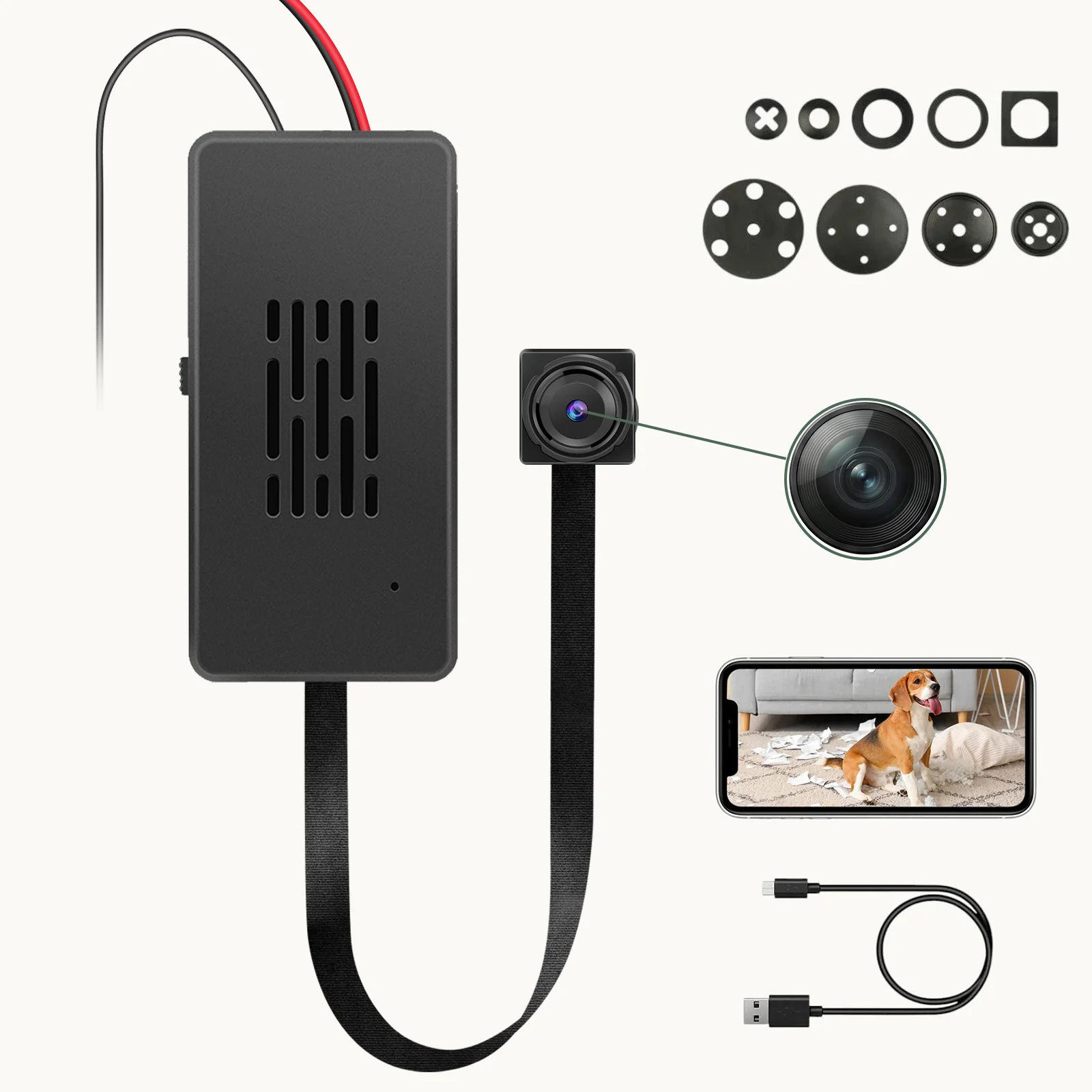
The C10 is a miniature WiFi camera module designed for integration into custom enclosures — everyday objects like tissue boxes, alarm clocks, air fresheners, or bespoke housings that distributors build themselves. It is the foundational module in QZT’s DIY camera product line.
The current C10 line splits into three functional variants, plus a lens-angle choice within each:
| Variant | Platforma aplikacji | Główne cechy | Najlepsze dla |
|---|---|---|---|
| C10 Standard | V380 / proprietary app | Basic WiFi module, motion detection, loop recording | Budget-conscious markets, basic surveillance |
| C10 TUYA | Tuya Smart / Smart Life | Tuya ecosystem, wider device compatibility, OTA updates | EU markets requiring GDPR-compliant infrastructure |
| C10 HD | HD app (Android/iOS) | Improved sensor quality, higher bitrate encoding | Distributors prioritising image quality over app flexibility |
| C10 with Night Vision | Tuya or HD app | IR LEDs for low-light recording | Security applications, 24/7 monitoring |
Plus the lens-angle split: 90° (narrower but flatter lens, easier to hide) versus 120° (wider field of view, better for room coverage).
Here is what trips up most first-time buyers: assigning the incorrect app platform to a market where that specific app is either unavailable or unreliable. An Israeli customer requested C10 modules with RTSP protocol support — a network streaming standard used by professional security integrators — on top of the CE certification he needed for import. C10 TUYA does not currently support RTSP, which created a sourcing gap. The customer stayed in the pipeline only because QZT committed to releasing a future RTSP-compatible version.
Which Markets Prefer Which C10 Variant — From Real Sales Data
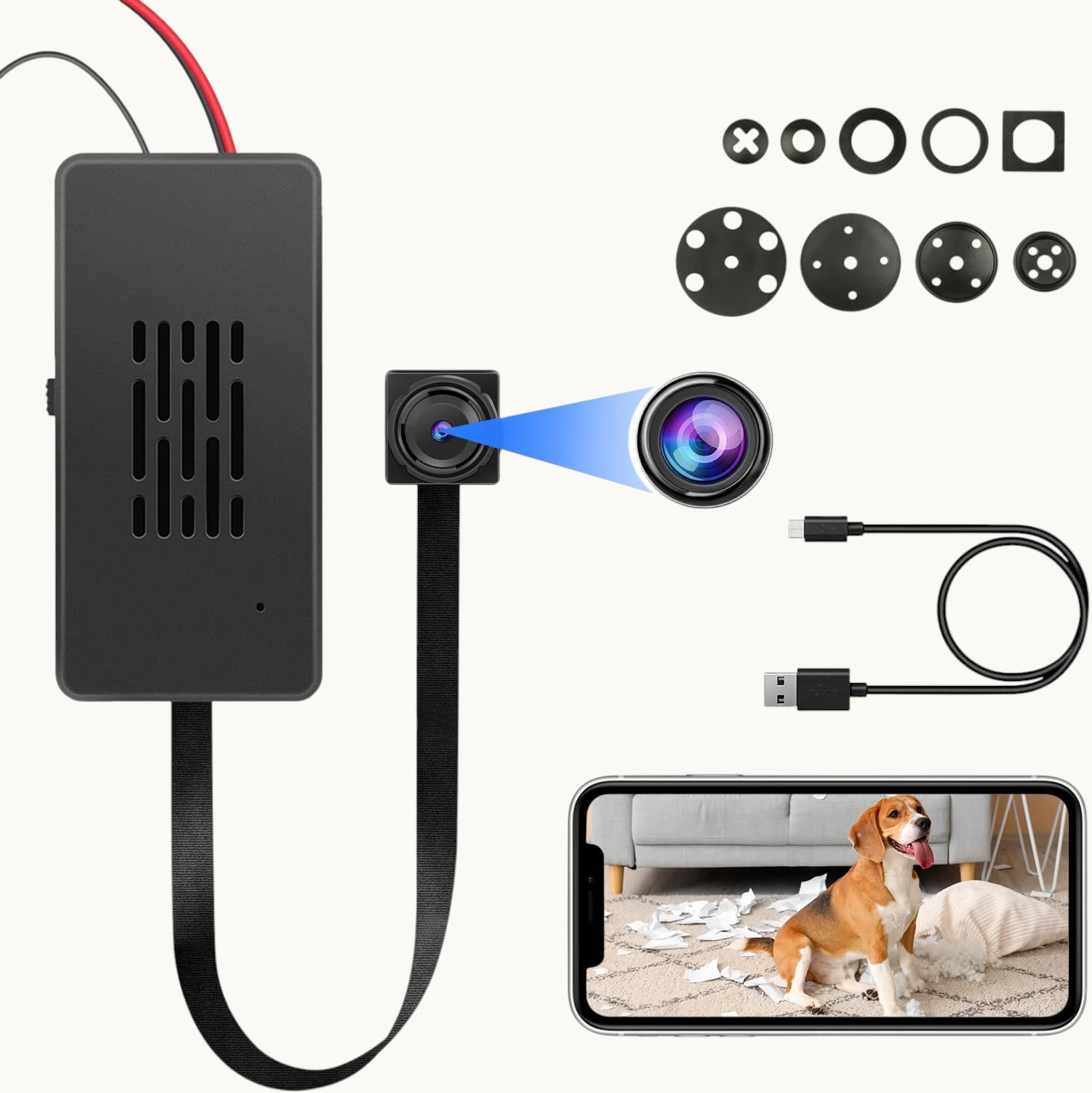
This is not theory. The following market preferences are based on actual customer behaviour recorded across 99 B2B transactions.
Italy and Western Europe consistently request the C10 TUYA variant. The Tuya platform offers GDPR-compliant data handling infrastructure — servers in the EU — which is a genuine selling point for distributors whose end customers are concerned about data sovereignty. An Italian buyer who received a C10 HD model complained that the app was not findable in the Google Play Store, forcing the supplier to ship a QR-code printed instruction sheet separately.
Spain and Southern Europe gravitate toward C10 with the standard app or TUYA, depending on the distributor’s existing device ecosystem. A Spanish customer who received both 90° and 120° C10s reported that one was a dead-on-arrival unit, which — while resolved through replacement — underscored the need for testing every unit before dispatch.
The Middle East (Israel, UAE, Saudi Arabia) tends to request HD variants with lens-angle flexibility. The higher bitrate sensor matters more in these markets than the app platform, partly because end users in these regions often deploy modules through professional security integrators rather than consumer apps.
Eastern Europe — Lithuania, Romania, Poland — shows demand for the standard C10 at 90° with no infrared night LEDs. A Lithuanian customer specifically requested a swap from the night-vision version because the IR LEDs (which glow faintly red in darkness) were not discreet enough for his market’s preference. This is a real product differentiation that most product pages omit.
For distributors building a multi-country European catalogue, the safe stock allocation is:
– 70% C10 TUYA 120° — covers the core EU market
– 20% C10 HD 90° — covers Middle East and professional-security channels
– 10% C10 non-IR 90° — covers Lithuania-style privacy-sensitive segments
Lens Angle: When 90° Beats 120° and When It Does Not
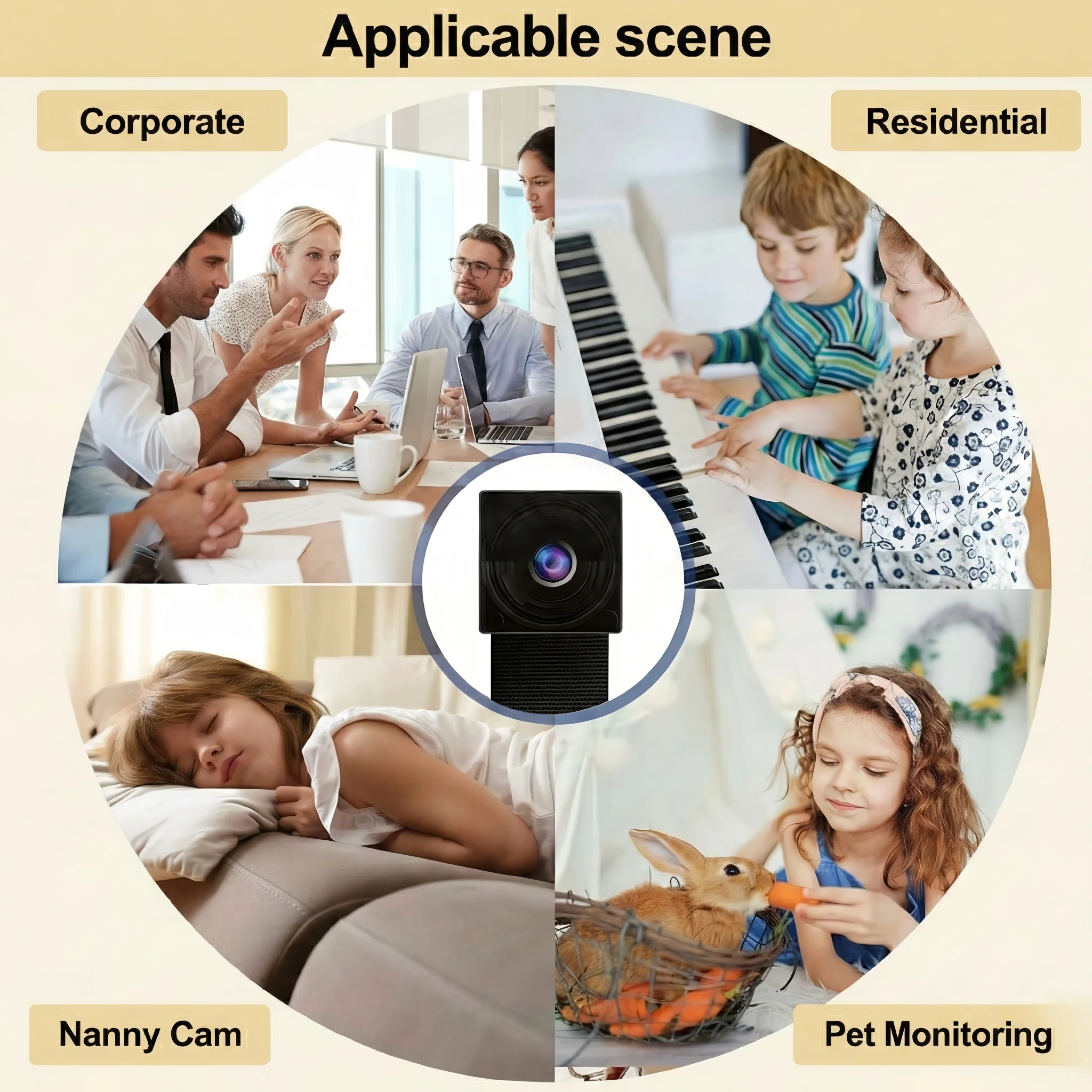
Here is the practical trade-off that matters more than the specification numbers imply.
A Soczewka 120° covers a wider scene — a living room, an office floor, a retail checkout area. But the wider angle creates more noticeable barrel distortion at the edges and requires the lens to protrude slightly further from the enclosure. If you are building a custom hidden installation inside a tissue box or an alarm clock with a tight front face, the extra lens depth can make the module visible from certain angles.
A Soczewka 90° has a flatter profile and less distortion. It is the correct choice for enclosures where the lens must sit nearly flush against a flat surface. The trade-off is a narrower field of view — roughly 84° effective after accounting for the camera’s enclosure bezel.
In practice, the guidance for distributors is straightforward: if the enclosure is a clock, speaker, or smoke detector with a broad face, choose 120°. If the enclosure is a tissue box, pen holder, or compact object with a narrow face, choose 90°.
The TUYA Advantage: Why It Matters for European Distribution
The Tuya Smart platform is the most widely adopted IoT infrastructure in Europe for a reason that is more structural than technical: Tuya operates GDPR-compliant data centres within the EU.
For distributors selling into Germany, France, and Italy — where data protection authorities actively fine businesses that process personal data on non-EU servers — the Tuya app integration is not just a convenience feature. It is a compliance selling point.
The practical differences for B2B buyers:
– Aplikacja Tuya offers multi-language support (30+ languages), which is not trivial for a distributor whose end customers in Poland, Italy, and Romania all need the app to work in their native language.
– OTA firmware updates through the Tuya platform allow distributors to push bug fixes remotely. The standard C10 app may require manual firmware updates via SD card.
– Device grouping in the Tuya app allows one end customer to view multiple cameras across different locations simultaneously, which is useful for small business monitoring setups.
An Italian customer with a C10 TUYA module that had stopped displaying a video feed was able to receive remote diagnostics through the Tuya platform’s device logs, which identified a network connectivity issue rather than a hardware fault. With a non-Tuya module, the same problem would have required physical return of the unit for inspection — a difference in after-sales efficiency that affects long-term customer satisfaction directly.
A Direct Comparison: C10 Standard vs TUYA vs HD
| Cecha | C10 Standard | C10 TUYA | C10 HD |
|---|---|---|---|
| Platforma aplikacji | V380 / proprietary | Tuya Smart / Smart Life | HD app |
| EU GDPR Data Handling | Server location varies by manufacturer | EU-based Tuya servers available | Check variant specification |
| OTA Firmware Updates | Manual (SD card) | Automatic through Tuya platform | Manual (SD card) |
| Multi-Language App | Limited (English/Chinese) | 30+ languages including Italian, German, French, Polish | English, Spanish, some EU languages |
| Sensor Quality | Standard 1080p | Standard 1080p | Higher bitrate / improved low-light |
| Device Grouping | NIE | Yes, multi-device dashboard | NIE |
| Best Market Fit | Budget/basic surveillance, DIY hobbyists | EU distributors, GDPR-conscious buyers | Middle East, professional security |
| Night Vision IR Option | Yes, available | Yes, available | Yes, available |
| RTSP Support | Not currently available | Planned for future release | Not currently available |
This table illustrates why the safe default for European distribution is the C10 TUYA module. The compliance advantages and multi-language support create genuine differentiation that a distributor can sell to end customers.
Key Takeaway: Match the Module to the Market, Not Just the Spec Sheet
The most expensive mistake a distributor can make with C10 modules is treating them as interchangeable. They are not. The app platform, the lens angle, and the IR/night vision option each determine whether the module will be usable — not just functional — in a given market.
The practical habit that successful distributors develop: test one unit of each C10 variant in the target country, with the target app, before placing a bulk order. The most common returns — app not in Play Store, IR LEDs visible in darkness, lens too wide for enclosure, HD quality expectation mismatch — are all detectable in a single test unit.
For the Linia modułów QZT C10, strony produktów jasno wymieniają specyfikacje. Decyzja między C10 Standard, TUYA i HD sprowadza się do trzech pytań:
1. Czy Twój rynek wymaga zgodnej z RODO infrastruktury chmurowej? → 1. TUYA 2. Czy Twoi klienci końcowi instalują je przez profesjonalnych integratorów bezpieczeństwa (nie konsumentów)? → HD 3. Czy obudowa ma ciasny projekt z ograniczonym miejscem na obiektyw? → 90° (w przeciwnym razie, 120° jest lepszym domyślnym wyborem)
Dystrybutorzy, którzy za pierwszym zamówieniem zrobią to dobrze, budują długoterminowe relacje z klientami. Dystrybutorzy, którzy wyślą niewłaściwą wersję do Izraela, Włoch lub Litwy, spędzają miesiące na ściganiu się e-mailami w celu uzyskania zamienników i zwrotów pieniędzy.
Często zadawane pytania
Czy mogę zamówić moduły C10 z różnymi kątami obiektywu w jednej przesyłce?
Tak. QZT może przygotować zamówienie z dowolną mieszanką wariantów 90° i 120°. Dla podejścia testowania rynku, podział 80% 120° i 20% 90° jest rozsądny.
Czy aplikacja C10 TUYA jest w pełni przetłumaczona na włoski, niemiecki i francuski?
Tak. Aplikacje Tuya Smart i Smart Life są dostępne po włosku, niemiecku, francusku, hiszpańsku, polsku i w ponad 20 innych językach europejskich i globalnych. Aplikacja HD ma bardziej ograniczony zakres językowy.
Czy mogę później zmodernizować standardowy C10 do TUYA?
Nie. Oprogramowanie układowe modułu i układ Wi-Fi są specyficzne dla platformy. Nie można przekonwertować C10 Standard na C10 TUYA poprzez aktualizację oprogramowania. Wariant musi być wybrany w momencie zamawiania.
Co się stanie, jeśli aplikacja C10 HD zostanie usunięta ze sklepu z aplikacjami?
To jedno z najczęściej zadawanych pytań od europejskich dystrybutorów i zdarzało się to wcześniej. Jeśli aplikacja HD zostanie tymczasowo usunięta, końcowi klienci mogą ją zainstalować, skanując kod QR dostarczony przez QZT. Aplikacja TUYA nie ma tego problemu, ponieważ jest bezpośrednio utrzymywana przez Tuya Inc., spółkę notowaną na giełdzie, z trwałą obecnością w sklepie z aplikacjami.
Który wariant C10 ma najmniej problemów posprzedażowych?
Wariant C10 TUYA generuje mniej zgłoszeń serwisowych według wewnętrznych danych sprzedaży — głównie dlatego, że aktualizacje oprogramowania OTA naprawiają błędy zdalnie, a wielojęzyczna aplikacja zmniejsza błędy użytkowników. Wariant C10 HD generuje więcej zapytań dotyczących porównania jakości obrazu, które wymagają dostarczenia przykładowego wideo przed sprzedażą.
Czy C10 nadaje się do zastosowań zewnętrznych?
Nie. Moduł C10 nie ma uszczelnienia przeciw warunkom atmosferycznym i jest przeznaczony wyłącznie do integracji wewnętrznej. Do zastosowań zewnętrznych rozważ inny produkt QZT lub obudowę wodoszczelną z odpowiednim stopniem ochrony IP.
Aby uzyskać ceny hurtowe na moduły C10 i pomoc w wyborze właściwej wersji dla Twojego rynku docelowego, skontaktuj się z QZT Security. Próbki jednostek są dostępne dla dystrybutorów, którzy muszą przetestować kompatybilność aplikacji i opcje obiektywów przed złożeniem zamówień hurtowych.

 English
  Italiano
  Deutsch
  Français
  Español
  Polski