
C10 vs C10 TUYA vs C10 HD: Welche WiFi-Kamera-Modul-Variante sollten Sie lagern?
A distributor in Spain ordered C10 modules — the 90-degree and 120-degree versions — to test for his market. When the package arrived, one unit did not work at all. He emailed the supplier. While waiting for a replacement, he also realised the app his customers needed was missing from the Google Play Store.
This is not an isolated story. It is one of the recurring patterns in B2B sales of C10 WiFi camera modules across Europe, the Middle East, and Africa.
The C10 hidden camera module is one of the most popular products in the QZT catalogue. It also comes in four distinct variants — C10 standard, C10 TUYA, C10 HD, and differing lens angles (90° and 120°) — and the differences between them have caused enough real-world confusion to fill a spreadsheet of post-sales case notes.
This article explains exactly what each C10 variant offers, which markets each one serves best, and how to avoid the version-confusion problems that have cost other distributors time and money.
What Are the C10 Variants and What Is Each One Actually For?
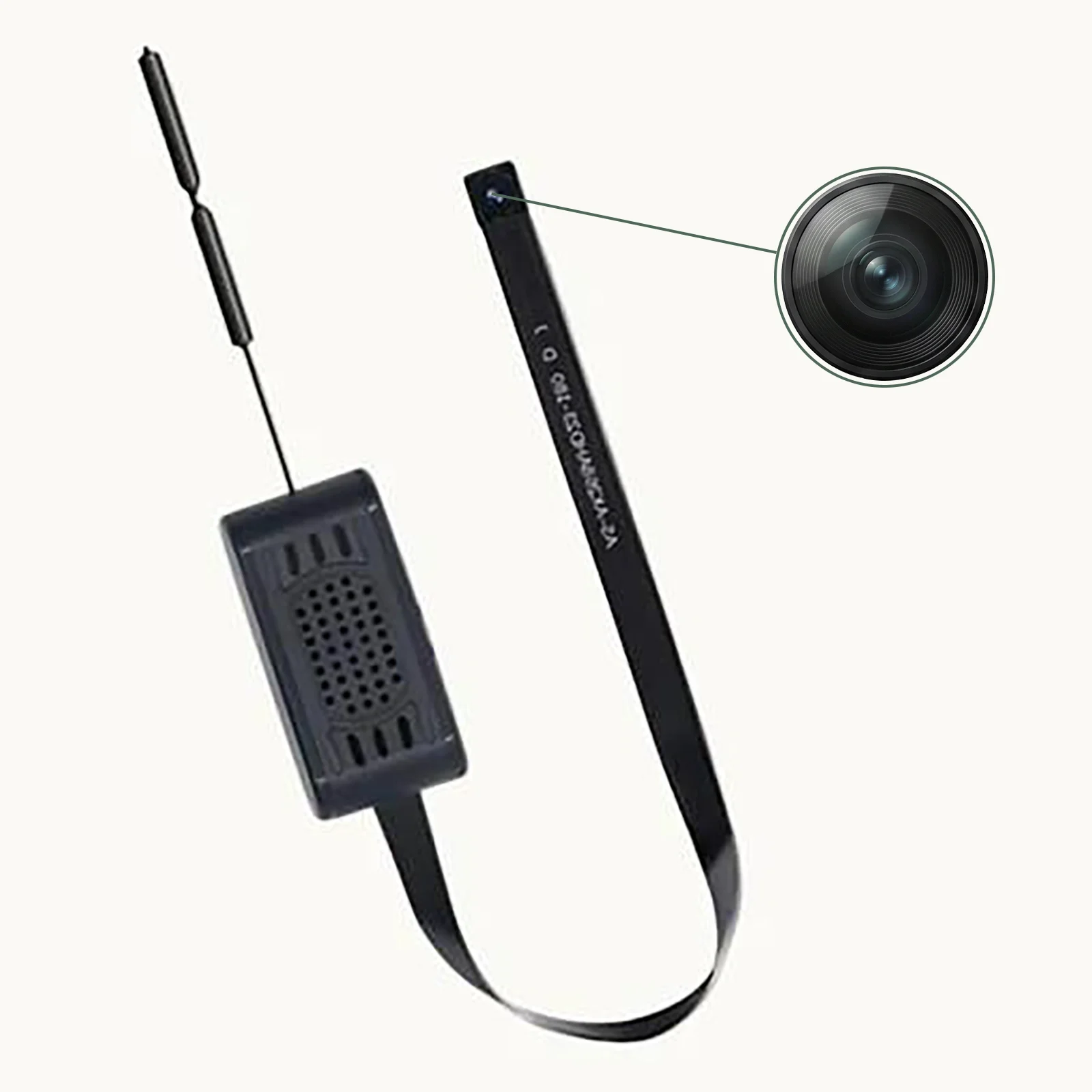
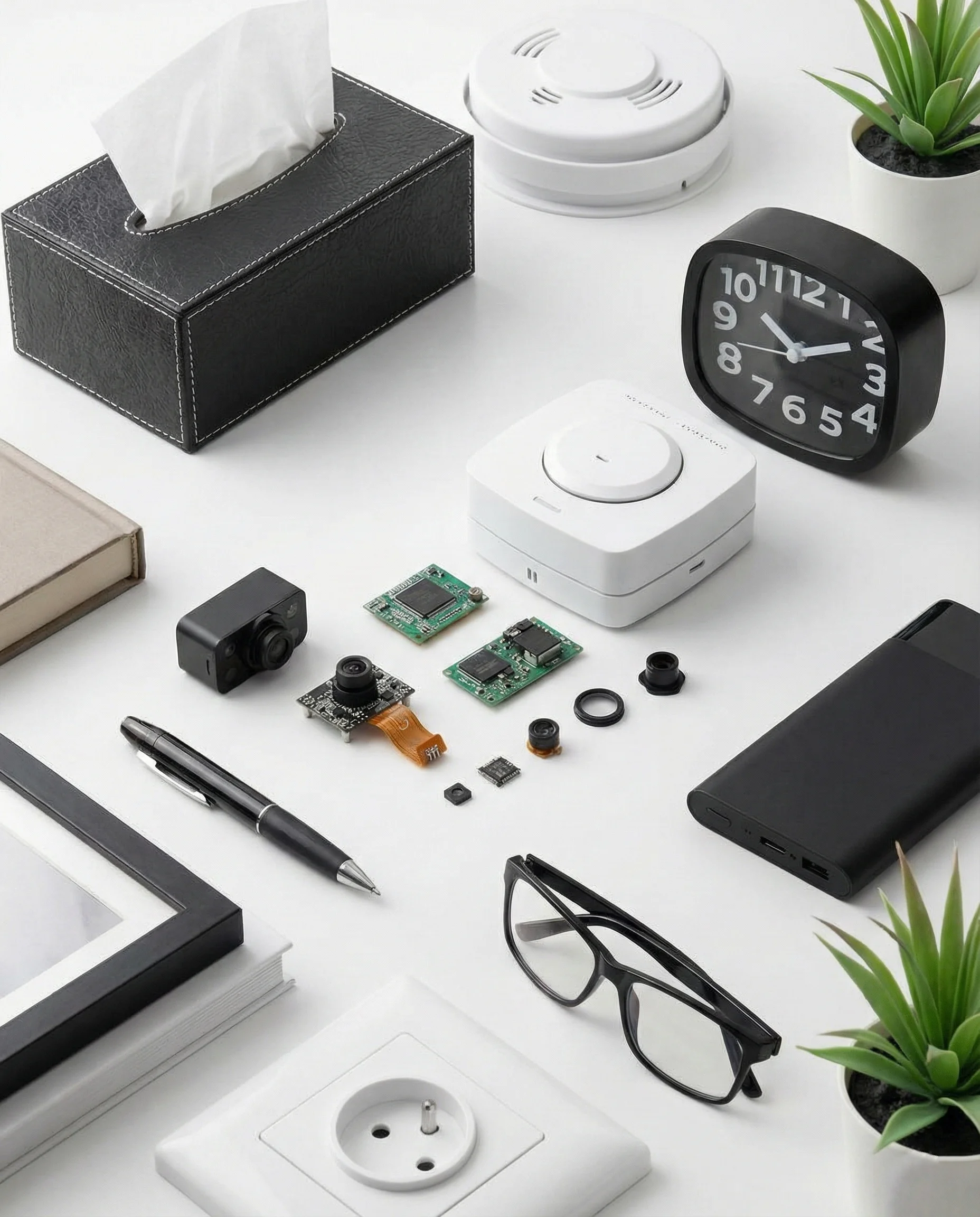
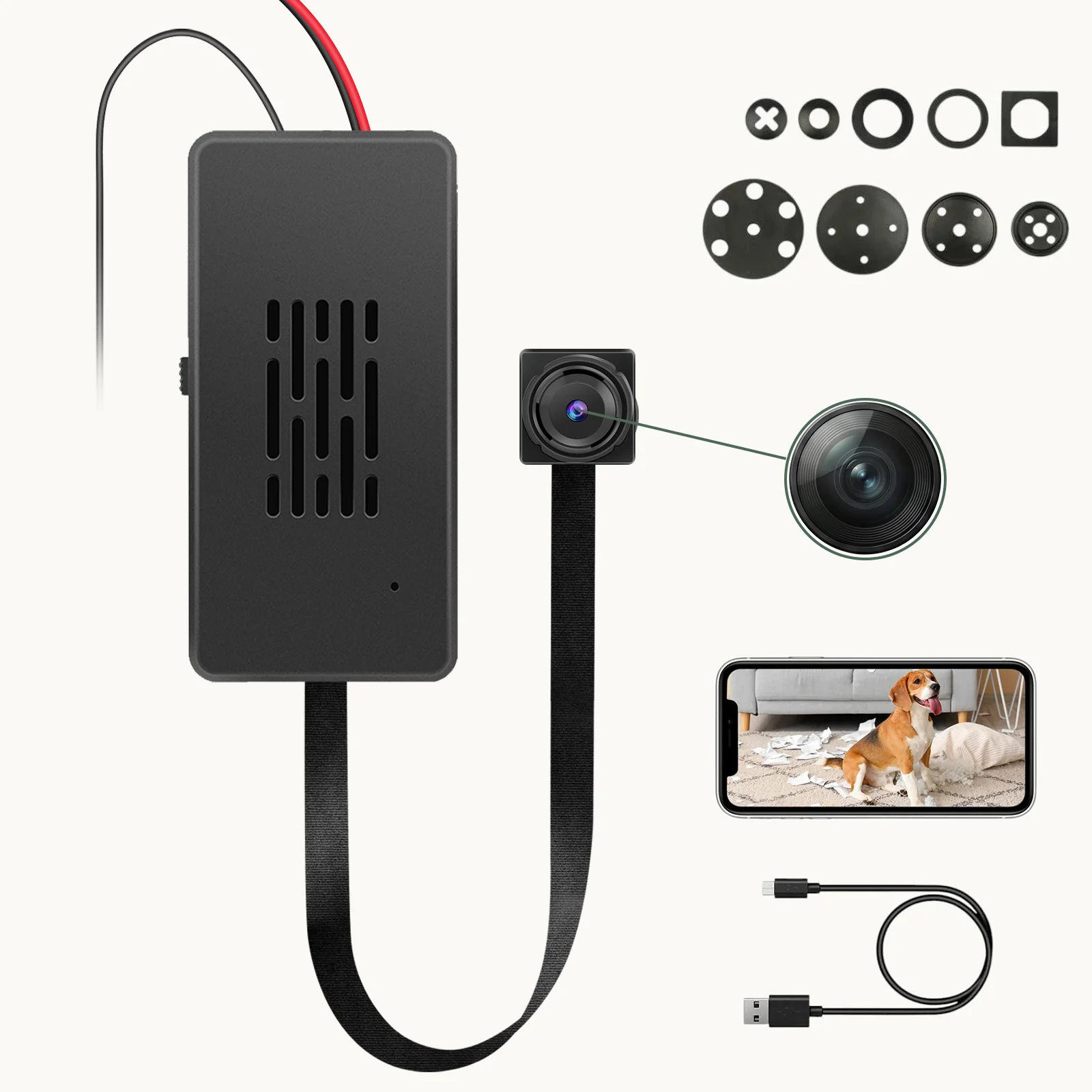
The C10 is a miniature WiFi camera module designed for integration into custom enclosures — everyday objects like tissue boxes, alarm clocks, air fresheners, or bespoke housings that distributors build themselves. It is the foundational module in QZT’s DIY camera product line.
The current C10 line splits into three functional variants, plus a lens-angle choice within each:
| Variant | App-Plattform | Hauptmerkmale | Am besten geeignet für |
|---|---|---|---|
| C10 Standard | V380 / proprietary app | Basic WiFi module, motion detection, loop recording | Budget-conscious markets, basic surveillance |
| C10 TUYA | Tuya Smart / Smart Life | Tuya ecosystem, wider device compatibility, OTA updates | EU markets requiring GDPR-compliant infrastructure |
| C10 HD | HD app (Android/iOS) | Improved sensor quality, higher bitrate encoding | Distributors prioritising image quality over app flexibility |
| C10 with Night Vision | Tuya or HD app | IR LEDs for low-light recording | Security applications, 24/7 monitoring |
Plus the lens-angle split: 90° (narrower but flatter lens, easier to hide) versus 120° (wider field of view, better for room coverage).
Here is what trips up most first-time buyers: assigning the incorrect app platform to a market where that specific app is either unavailable or unreliable. An Israeli customer requested C10 modules with RTSP protocol support — a network streaming standard used by professional security integrators — on top of the CE certification he needed for import. C10 TUYA does not currently support RTSP, which created a sourcing gap. The customer stayed in the pipeline only because QZT committed to releasing a future RTSP-compatible version.
Which Markets Prefer Which C10 Variant — From Real Sales Data
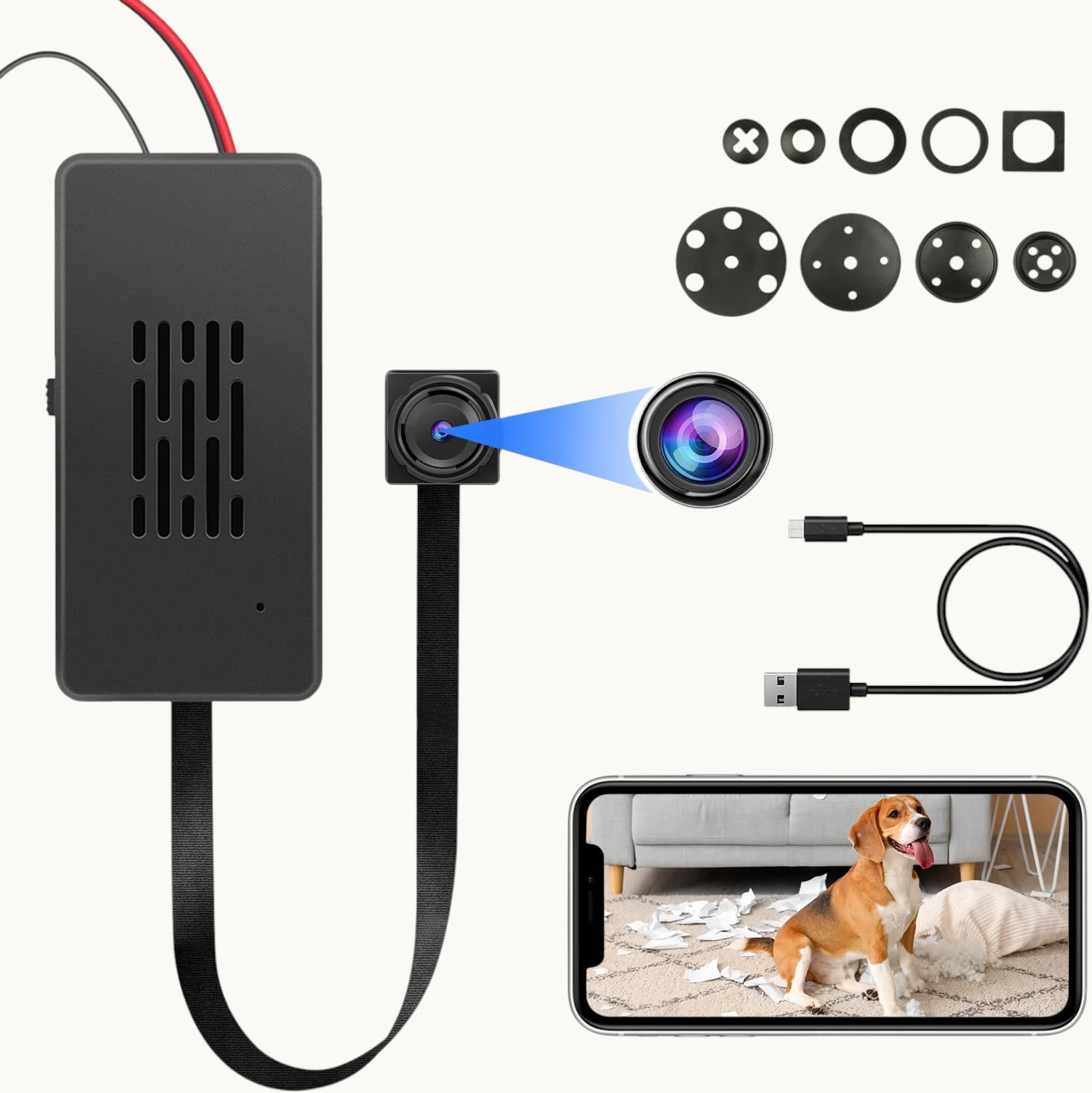
This is not theory. The following market preferences are based on actual customer behaviour recorded across 99 B2B transactions.
Italy and Western Europe consistently request the C10 TUYA variant. The Tuya platform offers GDPR-compliant data handling infrastructure — servers in the EU — which is a genuine selling point for distributors whose end customers are concerned about data sovereignty. An Italian buyer who received a C10 HD model complained that the app was not findable in the Google Play Store, forcing the supplier to ship a QR-code printed instruction sheet separately.
Spain and Southern Europe gravitate toward C10 with the standard app or TUYA, depending on the distributor’s existing device ecosystem. A Spanish customer who received both 90° and 120° C10s reported that one was a dead-on-arrival unit, which — while resolved through replacement — underscored the need for testing every unit before dispatch.
The Middle East (Israel, UAE, Saudi Arabia) tends to request HD variants with lens-angle flexibility. The higher bitrate sensor matters more in these markets than the app platform, partly because end users in these regions often deploy modules through professional security integrators rather than consumer apps.
Eastern Europe — Lithuania, Romania, Poland — shows demand for the standard C10 at 90° with no infrared night LEDs. A Lithuanian customer specifically requested a swap from the night-vision version because the IR LEDs (which glow faintly red in darkness) were not discreet enough for his market’s preference. This is a real product differentiation that most product pages omit.
For distributors building a multi-country European catalogue, the safe stock allocation is:
– 70% C10 TUYA 120° — covers the core EU market
– 20% C10 HD 90° — covers Middle East and professional-security channels
– 10% C10 non-IR 90° — covers Lithuania-style privacy-sensitive segments
Lens Angle: When 90° Beats 120° and When It Does Not
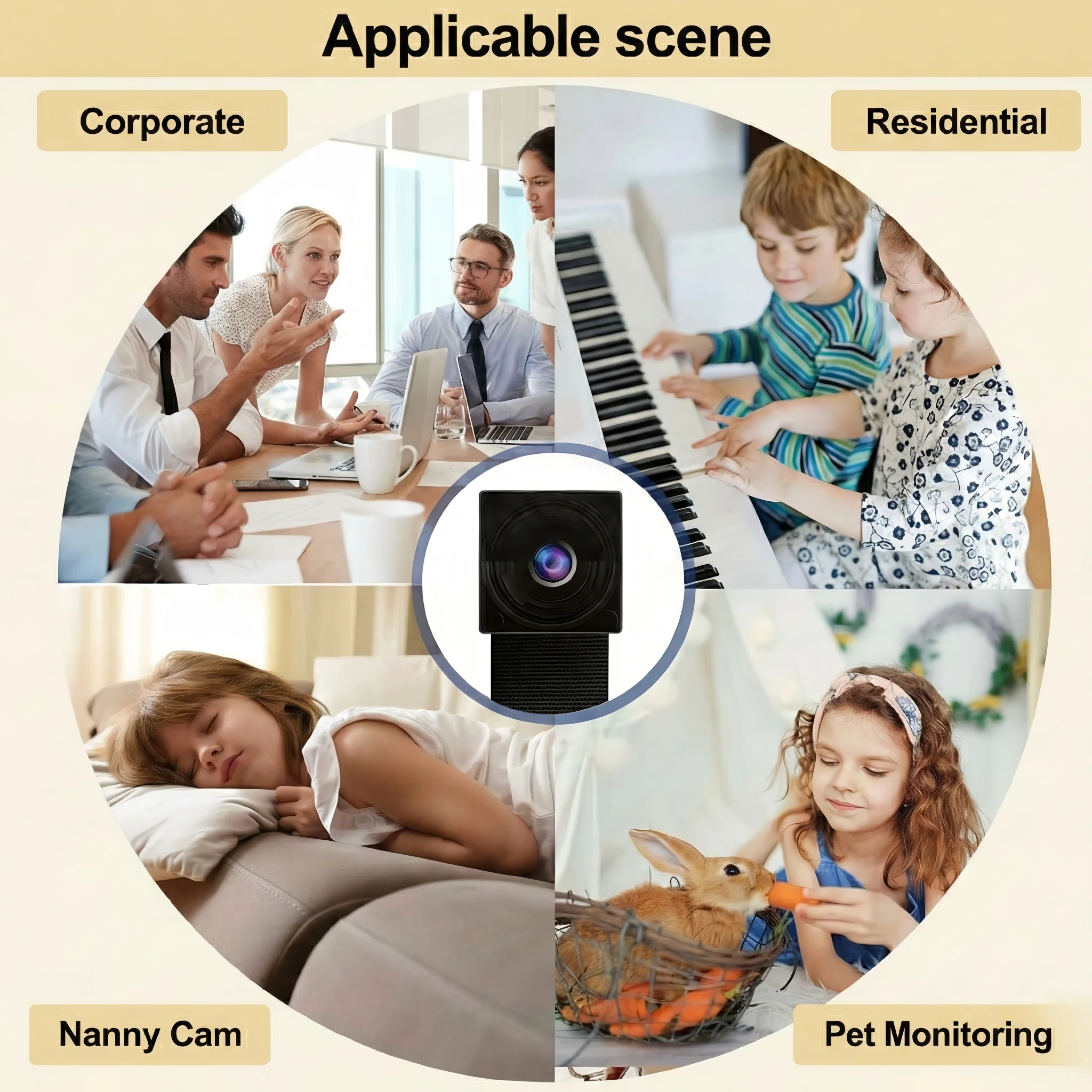
Here is the practical trade-off that matters more than the specification numbers imply.
A 120°-Objektiv covers a wider scene — a living room, an office floor, a retail checkout area. But the wider angle creates more noticeable barrel distortion at the edges and requires the lens to protrude slightly further from the enclosure. If you are building a custom hidden installation inside a tissue box or an alarm clock with a tight front face, the extra lens depth can make the module visible from certain angles.
A 90°-Linse has a flatter profile and less distortion. It is the correct choice for enclosures where the lens must sit nearly flush against a flat surface. The trade-off is a narrower field of view — roughly 84° effective after accounting for the camera’s enclosure bezel.
In practice, the guidance for distributors is straightforward: if the enclosure is a clock, speaker, or smoke detector with a broad face, choose 120°. If the enclosure is a tissue box, pen holder, or compact object with a narrow face, choose 90°.
Der TUYA-Vorteil: Warum er für den europäischen Vertrieb wichtig ist
Die Tuya Smart-Plattform ist die am weitesten verbreitete IoT-Infrastruktur in Europa aus einem strukturellen mehr als technischen Grund: Tuya betreibt DSGVO-konforme Rechenzentren innerhalb der EU.
Für Händler, die nach Deutschland, Frankreich und Italien verkaufen – wo Datenschutzbehörden Unternehmen aktiv bestrafen, die personenbezogene Daten auf Nicht-EU-Servern verarbeiten – ist die Tuya-App-Integration nicht nur ein Komfortmerkmal. Es ist ein Compliance-Verkaufsargument.
Die praktischen Unterschiede für B2B-Käufer:
– Tuya-App bietet mehrsprachige Unterstützung (30+ Sprachen), was für einen Händler nicht trivial ist, dessen Endkunden in Polen, Italien und Rumänien alle benötigen, dass die App in ihrer Muttersprache funktioniert.
– OTA-Firmware-Updates über die Tuya-Plattform können Händler Fehlerbehebungen remote durchführen. Die Standard-C10-App erfordert möglicherweise manuelle Firmware-Updates über SD-Karte.
– Gerätegruppierung in der Tuya-App ermöglicht es einem Endkunden, mehrere Kameras an verschiedenen Standorten gleichzeitig zu betrachten, was für Überwachungseinrichtungen kleiner Unternehmen nützlich ist.
Ein italienischer Kunde mit einem C10-TUYA-Modul, das die Videoübertragung eingestellt hatte, konnte durch die Geräteprotokolle der Tuya-Plattform eine Fernanalyse erhalten, die ein Netzwerkverbindungsproblem anstelle eines Hardwarefehlers identifizierte. Bei einem Nicht-Tuya-Modul hätte das gleiche Problem die physische Rückgabe des Geräts zur Untersuchung erfordert – ein Unterschied in der After-Sales-Effizienz, der die langfristige Kundenzufriedenheit direkt beeinflusst.
Ein direkter Vergleich: C10 Standard vs TUYA vs HD
| Merkmal | C10 Standard | C10 TUYA | C10 HD |
|---|---|---|---|
| App-Plattform | V380 / proprietär | Tuya Smart / Smart Life | HD-App |
| EU-DSGVO-Datenverarbeitung | Serverstandort variiert je nach Hersteller | Tuya-Server in der EU verfügbar | Variantenspezifikation prüfen |
| OTA-Firmware-Updates | Manuell (SD-Karte) | Automatisch über die Tuya-Plattform | Manuell (SD-Karte) |
| Mehrsprachige App | Begrenzt (Englisch/Chinesisch) | 30+ Sprachen inklusive Italienisch, Deutsch, Französisch, Polnisch | Englisch, Spanisch, einige EU-Sprachen |
| Sensorqualität | Standard 1080p | Standard 1080p | Höhere Bitrate / verbesserte Schwachlichtleistung |
| Gerätegruppierung | Nein | Ja, Multi-Geräte-Dashboard | Nein |
| Beste Markteignung | Budget-/Basis-Überwachung, DIY-Enthusiasten | EU-Händler, GDPR-bewusste Käufer | Naher Osten, professionelle Sicherheit |
| Nachtsehen IR-Option | Ja, verfügbar | Ja, verfügbar | Ja, verfügbar |
| RTSP-Unterstützung | Derzeit nicht verfügbar | Für zukünftige Veröffentlichung geplant | Derzeit nicht verfügbar |
Diese Tabelle verdeutlicht, warum die sichere Standardeinstellung für den europäischen Vertrieb das C10-TUYA-Modul. Die Compliance-Vorteile und die mehrsprachige Unterstützung schaffen eine echte Differenzierung, die ein Händler an Endkunden verkaufen kann.
Wichtigste Erkenntnis: Passen Sie das Modul an den Markt an, nicht nur an das Datenblatt
Der teuerste Fehler, den ein Händler mit C10-Modulen machen kann, ist, sie als austauschbar zu behandeln. Das sind sie nicht. Die App-Plattform, der Blickwinkel der Linse und die IR/Nachtsicht-Option bestimmen jeweils, ob das Modul nutzbar — nicht nur funktional — in einem bestimmten Markt.
Die praktische Gewohnheit, die erfolgreiche Händler entwickeln: Testen Sie eine Einheit jeder C10-Variante im Zielland, mit der Ziel-App, bevor Sie eine Großbestellung aufgeben. Die häufigsten Rückgaben – App nicht im Play Store, IR-LEDs im Dunkeln sichtbar, Linse zu breit für das Gehäuse, HD-Qualitätserwartung nicht erfüllt – sind alle mit einer einzigen Testeinheit erkennbar.
For the QZT C10 Modul-Linie, Die Produktseiten listen die Spezifikationen klar auf. Die Entscheidung zwischen C10 Standard, TUYA und HD kommt auf drei Fragen hinaus:
1. Benötigt Ihr Markt eine DSGVO-konforme Cloud-Infrastruktur? → 1. TUYA 2. Installieren Ihre Endkunden diese über professionelle Sicherheitsintegratoren (nicht Verbraucher)? → HD 3. Ist das Gehäuse ein eng anliegendes Design mit begrenztem Objektivabstand? → 90° (ansonsten ist 120° die bessere Standardeinstellung)
Die Händler, die dies bei ihrer ersten Bestellung richtig machen, bauen langfristige Kundenbeziehungen auf. Die Händler, die die falsche Variante nach Israel, Italien oder Litauen versenden, verbringen Monate damit, per E-Mail Ersatz und Rückerstattungen zu verfolgen.
Häufig gestellte Fragen
Kann ich C10-Module mit gemischten Objektivwinkeln in einer Lieferung bestellen?
Ja. QZT kann eine Bestellung mit beliebiger Mischung aus 90°- und 120°-Varianten vorbereiten. Für einen Markttestansatz ist 80% 120° und 20% 90° eine sinnvolle Aufteilung.
Ist die C10 TUYA-App vollständig für Italien, Deutschland und Frankreich übersetzt?
Ja. Die Tuya Smart- und Smart Life-Apps sind auf Italienisch, Deutsch, Französisch, Spanisch, Polnisch und über 20 weitere europäische und globale Sprachen verfügbar. Die HD-App hat eine eingeschränktere Sprachabdeckung.
Kann ich ein Standard-C10 später auf TUYA aufrüsten?
Nein. Die Firmware und der WLAN-Chip des Moduls sind plattformspezifisch. Sie können ein C10 Standard nicht per Software-Update in ein C10 TUYA umwandeln. Die Variante muss zum Zeitpunkt der Bestellung ausgewählt werden.
Was passiert, wenn die C10 HD-App aus dem App Store entfernt wird?
Dies ist eine der am häufigsten gestellten Fragen europäischer Händler, und es ist bereits vorgekommen. Wenn die HD-App vorübergehend entfernt wird, können Endkunden sie durch Scannen eines von QZT bereitgestellten QR-Codes installieren. Die TUYA-App hat dieses Problem nicht, da sie direkt von Tuya Inc. gewartet wird, einem börsennotierten Unternehmen mit dauerhafter Präsenz im App Store.
Welche C10-Variante hat die wenigsten After-Sales-Probleme?
Die C10 TUYA-Variante generiert laut internen Verkaufsdaten weniger Support-Tickets – hauptsächlich, weil die OTA-Firmware-Updates Fehler aus der Ferne beheben und die mehrsprachige App Benutzerfehler reduziert. Die C10 HD-Variante führt zu mehr Nachfragen nach Bildqualitätsvergleichen, die die Bereitstellung von Beispielvideos vor dem Verkauf erfordern.
Ist das C10 für den Außeneinsatz geeignet?
Nein. Das C10-Modul ist nicht wetterfest und nur für den Innenbereich konzipiert. Für Außenanwendungen sollten Sie ein anderes QZT-Produkt oder ein wetterfestes Gehäuse mit entsprechender IP-Schutzart in Betracht ziehen.
Für Mengenpreise bei C10-Modulen und Hilfe bei der Auswahl der richtigen Variante für Ihren Zielmarkt, Kontaktieren Sie QZT Security. Muster einheiten sind für Distributoren verfügbar, die vor Volumenbestellungen App-Kompatibilität und Objektivoptionen testen müssen.

 English
  Italiano
  Deutsch
  Français
  Español
  Polski