
Qual è la migliore telecamera per babysitter per la sicurezza domestica nel 2026
The decision to install a nanny cam in your home is not an easy one. It implies a question you would rather not ask: what might be happening in my home when I am not there? But the documented cases of caregiver abuse, unauthorized access, and property damage in private residences make this question necessary. In the United Kingdom, over 100,000 incidents of elder abuse are reported to social services annually — the majority occurring in private homes. In the United States, theny cam phenomenon has driven the market for covert home monitoring devices from a niche product category to a mainstream home security category.
The challenge is not finding a camera. The challenge is finding the right camera for your specific situation: your home layout, your threat model, your technical comfort level, and your legal obligations to the people being monitored. This guide covers all of those dimensions, with specific product recommendations and a practical framework for evaluating any nanny cam — whether you are buying one for the first time or upgrading an existing system.
Why Nanny Cams Have Become a Core Part of Home Security
The term “nanny cam” originated from the early use case of monitoring childcare providers — a parent wanting to observe how a hired caregiver treated their children when no adult was present in the home. This use case remains the most common, but the category has expanded to cover elderly care monitoring, pet behavior observation, home office security while traveling, and general perimeter monitoring of private spaces.
The market has shifted from dedicated hardware (a single-purpose device designed to look like a household object) to IP-based networked cameras that integrate with smart home ecosystems. This shift has improved quality and reduced cost dramatically, but it has also created new privacy and security vulnerabilities that buyers need to understand before purchasing.
A Wi-Fi camera that streams footage to a cloud server accessible via a mobile app is more convenient than a local SD-card-only device, but it also means that footage of your home — your children, your family routines, your private moments — is stored on a third-party server. The camera is only as secure as the company’s cloud infrastructure, its encryption practices, and its data retention policy. This guide covers both local and cloud-based solutions with full context on the trade-offs.
The Five Core Categories of Nanny Cams
Before evaluating specific products, understand the five distinct form factors and their trade-offs. Each category serves a specific monitoring scenario better than the others.
Category 1: Standalone Wi-Fi cameras. The most common type. These are small, plug-in devices that connect to your home Wi-Fi and stream to a cloud account or local storage. They are easy to set up and relatively inexpensive ($30–$150), but they require a visible placement location — a shelf, a table, or a wall mount — which limits how covertly they can be positioned. The Power Bank WiFi 1080P con Telecamera Nascosta e Visione Notturna belongs to this category and adds a built-in battery that can power the device for 6–10 hours without a power outlet, making it suitable for temporary placements without requiring a power cable run.
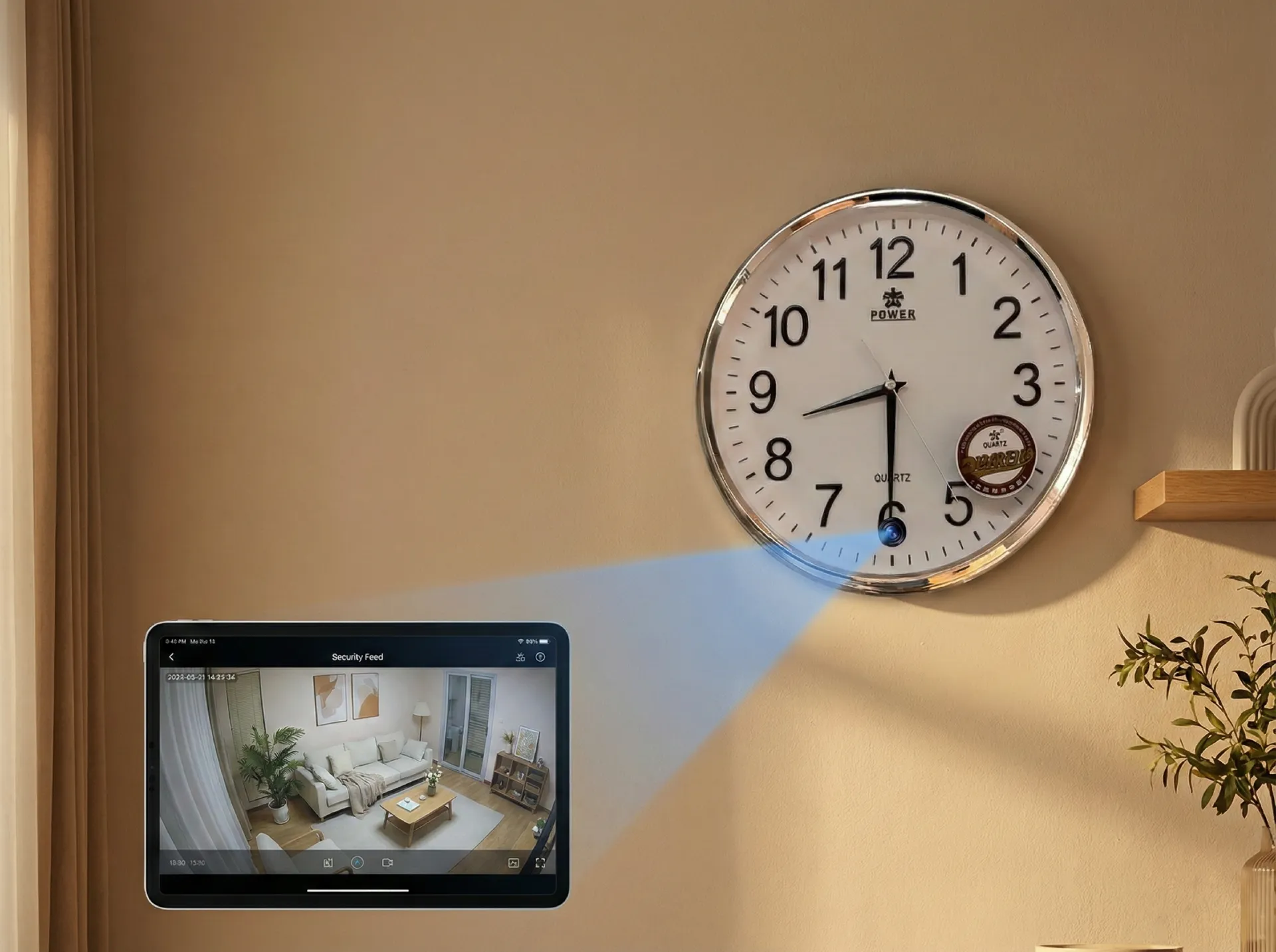
Category 2: Covert household objects. These devices look like everyday objects — clocks, smoke detectors, USB chargers, Bluetooth speakers, tissue boxes — and contain a fully functional camera inside. The advantage is placement flexibility: you can position a clock camera on a nightstand or mantle without it appearing to be surveillance equipment. A digital clock camera with night vision capability (infrared LEDs visible as a faint red glow in complete darkness) gives 24-hour coverage without a visible light source. The digital clock camera infrared night vision model is representative of this category.
Category 3: Power bank cameras. A battery-powered camera inside a power bank form factor. The device charges via USB and provides 6–24 hours of recording depending on the battery capacity. Because power banks sit on surfaces naturally — nightstands, desks, countertops — these cameras are exceptionally difficult to identify as surveillance equipment. The Power Bank Telecamera Nascosta 1080P model illustrates this category: it functions as a legitimate 5,000 mAh power bank while simultaneously recording 1080p video with motion activation.
Category 4: System-integrated cameras (Ring, Nest, Arlo). Part of a broader smart home security ecosystem. These cameras cost more ($100–$300 per unit) and require a subscription for cloud storage, but they integrate with doorbell cameras, alarm systems, and smart locks to provide a comprehensive home security platform. They are not covert — their presence is visible and deliberate — but they offer superior reliability, cloud storage, and smart detection (person vs. pet vs. vehicle) that standalone cameras cannot match.
Category 5: DIY modules and developer boards. For buyers with technical knowledge, a Wi-Fi camera module (like the Modulo Telecamera Spia WiFi Nascosta Fai-da-te) can be integrated into a custom housing. This approach allows placement flexibility that commercial products cannot match — the module can be installed inside any object, behind any surface, or in a location where no commercial product fits. The trade-off is technical complexity: you are building the system yourself.
How to Choose: The Evaluation Framework
Do not buy a nanny cam based on the first product you see on Amazon. Evaluate it against these five criteria in order of importance.
Criterion 1: Placement location. Where will the camera sit? On a high shelf in a living room? On a nightstand in a nursery? Inside a decorative object on a mantle? The placement location determines which form factor is physically possible and which angle of view is required.
For bedroom monitoring: a wall-mounted smoke detector camera or a high shelf clock camera covers the room from the optimal angle (downward from the ceiling or elevated from a corner). A power bank camera on a nightstand covers the immediate area around the bed but misses the rest of the room.
For nursery and childcare: a wide-angle camera (130°–160° field of view) mounted at ceiling height or in a high corner covers the maximum area. A camera with two-way audio lets you hear and speak through the device — useful for calming a child without entering the room.
For living rooms and common areas: any category works, but the covert clock or speaker form factor is preferred because it does not look like surveillance equipment to visitors or household staff.
Criterion 2: Recording mode. Does the camera record continuously, on motion only, or on schedule? Each mode has implications for storage, power consumption, and evidence completeness.
Continuous recording (24/7) captures everything — including incidents that happen when no motion is occurring — but consumes the most storage and power. A 128 GB SD card holds approximately 72 hours of 1080p continuous recording before loop-overwrite kicks in. Cloud storage for continuous recording requires a substantial monthly subscription.
Motion-activated recording is the standard for most domestic surveillance use cases. The camera records only when movement is detected, conserving storage and making review more efficient. The trade-off is that very slow movements (a child getting out of bed and walking slowly) or gradual scene changes (curtains moving in afternoon light) can trigger excessive recording or miss genuine motion events.
Schedule-based recording is useful for monitoring a specific time window — for example, the period between when a childcare provider arrives at 8am and when the parents return at 6pm. This gives a clean recording window without capturing off-hours footage.
For childcare monitoring, a motion-activated camera with a pre-roll buffer (recording 5–10 seconds before the motion trigger) is the best configuration — it captures the beginning of an incident rather than starting recording mid-event.
Criterion 3: Night vision capability. Any camera placed in a bedroom, nursery, or room without constant lighting needs infrared night vision. IR LEDs illuminate the scene with light invisible to the human eye but captured by the camera sensor.
Evaluate night vision by three metrics: IR LED count (more LEDs = longer illumination range), IR wavelength (850 nm is standard; 940 nm is completely invisible to the human eye, which is better for covert placement), and sensor quality at low light (a larger sensor aperture captures more IR light and produces a brighter, clearer image).
A Telecamera Nascosta in Rilevatore di Fumo WiFi placed on a nursery ceiling with 940 nm IR night vision covers the entire room in darkness, including the cot area, the changing station, and the door — the three most security-relevant areas in a childcare environment.
Criterion 4: Storage and access architecture. This is the privacy and security decision. Two options exist:
Local SD card storage: footage is stored on a memory card inside the device. You physically retrieve the card to review footage. No footage is transmitted to any server. The security profile is high — the only way to access footage is physical access to the device. The limitation is that you cannot review footage remotely and the device cannot send alerts when you are away from home.
Cloud storage: footage is uploaded to a manufacturer’s server and accessible via a mobile app from anywhere. The convenience is high, and you receive instant alerts with footage clips when motion is detected. The privacy concern is that the footage is on a third-party server — and unless the manufacturer explicitly states end-to-end encryption, the footage may be accessible to company employees, law enforcement with a subpoena, or hackers who compromise the account.
For childcare monitoring, the ideal configuration is local SD card storage for continuous recording (providing a complete record) combined with a cloud alert system that sends a push notification with a 30-second clip when motion is detected. This gives you the full recording for review and the immediate alert for time-sensitive situations.
Criterion 5: Wi-Fi stability and remote access. A camera that loses Wi-Fi connection at critical moments is worse than no camera. Evaluate the device’s Wi-Fi stability by checking its maximum supported distance from the router, its ability to reconnect automatically after a power outage, and its performance on 2.4 GHz versus 5 GHz bands.
Most nanny cam devices operate on 2.4 GHz Wi-Fi — this band provides better range through walls than 5 GHz but has more interference from neighboring networks and household appliances (microwave ovens, cordless phones). A camera placed in a basement, a room with thick concrete walls, or a building with significant RF interference from neighboring apartments will suffer connectivity issues on 2.4 GHz.
IL Modulo Telecamera Spia WiFi Nascosta Fai-da-te supports both 2.4 GHz and 5 GHz bands and includes an external antenna connector — a significant advantage for challenging installation environments where standard consumer cameras would have connectivity problems.
Legal Considerations: Know Your Jurisdiction
The legal status of nanny cam footage varies significantly by jurisdiction, and ignorance is not a defense.
In the United Kingdom: You may record video and audio in your own home for security purposes. You may not record audio of a private conversation without the consent of at least one party (the one-party consent rule). A camera that records audio of a nanny or caregiver in your home may be illegal unless you have informed the caregiver that audio recording is in operation. Informing staff that monitoring devices are present is both a legal requirement in many contexts and good practice — documented notification protects you in the event of a legal dispute.
In the United States: One-party consent applies in most states — you may record a conversation if you are a participant. Recording audio in your home with a camera is generally legal. Recording in areas where there is a reasonable expectation of privacy (bathrooms, changing rooms) is illegal in all states regardless of property ownership.
In the European Union (GDPR): Installing cameras in areas where employees work — including domestic workers, nannies, and cleaners — requires notification to the employee. The Information Commissioner’s Office (ICO) in the UK specifies that employers must inform staff about the existence of CCTV in clear, visible signage. This applies to private homes where staff are employed. Failure to notify can result in a GDPR complaint and fine.
For B2B buyers: If you are a property manager, real estate agent, or hospitality operator considering camera installation in rental properties or staff housing, the legal requirements are substantially more complex. The difference between a private homeowner monitoring their own property and a business entity operating a monitoring system is significant under data protection law.
Top Configuration Recommendations by Use Case
For childcare and nanny monitoring (primary use case):
– Form factor: clock camera on nursery nightstand OR smoke detector camera on nursery wall
– Recording: motion-activated with 10-second pre-roll buffer
– Night vision: 940 nm IR (invisible to children and adults in darkness)
– Storage: SD card for continuous loop recording + cloud motion alerts
– Alerts: push notification with 30-second clip to parents’ phones
– Audio: two-way audio for parent-to-child communication
IL Sicurezza domestica telecamera nascosta babysitter product range covers both the clock and smoke detector form factors with these specifications.
For elderly care monitoring:
– Similar configuration to childcare but with fall detection integration
– A camera with person detection (distinguishing a person from a pet or object) reduces false alerts from shadows, curtains, and pets
– Privacy consideration: elderly individuals in care have a right to dignity — inform them of the monitoring and position cameras only in common areas, not in private spaces like bathrooms
For pet behavior monitoring:
– Lower priority on covert appearance — the presence of a camera in a living room where a pet spends time is acceptable
– Focus on wide field of view (160°+) to cover the full room from corner placement
– Motion alerts for when the pet is active: useful for tracking behavior patterns and identifying triggers for anxiety or destructive behavior
– Pet-specific cameras (Furbo, Pawscams) add treat dispensing and barking alerts but are not designed for covert placement
For home office and property monitoring while traveling:
– Plug-in cameras with local SD card recording for continuous coverage
– Cloud connectivity for remote monitoring
– Person detection to filter out false alerts from wildlife, moving trees, or rain
– Il advanced motion detection security alert system models offer push notification to mobile devices with remote access through a proprietary app — suitable for monitoring a property remotely without relying on third-party cloud services
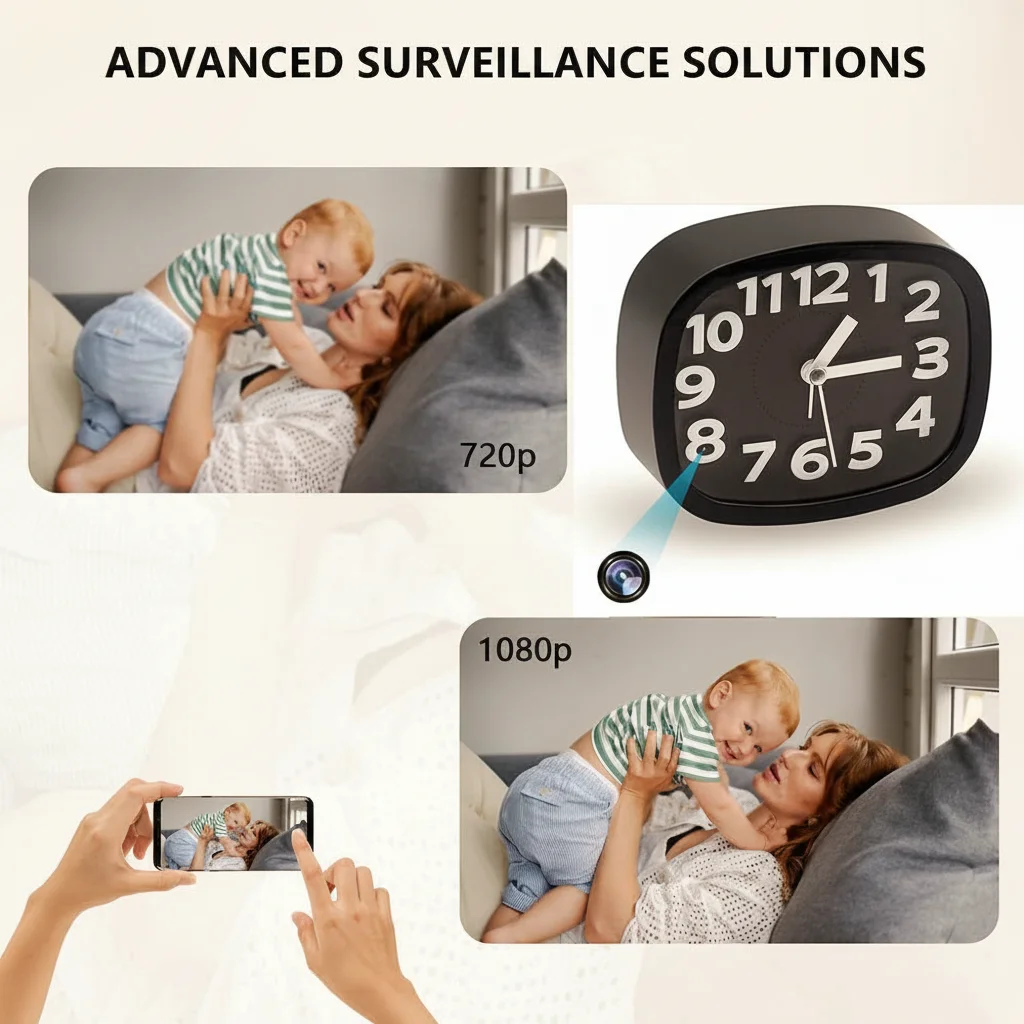
How to Review Footage Without Missing Critical Moments
A camera that records 24 hours of footage per day produces more content than any parent or property manager can realistically review. The practical approach is a tiered review system:
Tier 1: Motion alerts (review daily). Every motion alert notification sent to your phone includes a 15–30 second clip. Review these as they arrive. A clip that shows a caregiver in an unexpected location, in an unexpected posture, or interacting with a child in an unusual way warrants a closer review of the full recording.
Tier 2: Key time windows (review weekly). For childcare monitoring, review the 30-minute window around naptime and the 30-minute window around pickup and drop-off times — these are the periods where supervision is most critical and incidents most likely to occur. Set your camera’s schedule recording to capture these windows at full quality.
Tier 3: Full review (monthly). Once per month, download and review the full SD card recording for the most critical week. Look for patterns — is the caregiver spending time in rooms where there is no legitimate reason to be? Is there audio that suggests a conversation being had that you are not aware of? This monthly deep review catches slow-developing situations that motion alerts do not flag.
Setup Checklist: What to Do Before the First Recording
Before relying on any nanny cam for home security, complete these steps:
1. Test the camera in daylight and complete darkness before permanent placement. Verify the field of view covers the target area, the night vision is sufficient for your room’s lighting conditions, and the Wi-Fi signal is stable at the intended location.
2. Format the SD card in the camera, not on a computer. Camera-specific formatting ensures the card uses the correct file system (FAT32 or exFAT) and allocation unit size for the device’s recording requirements.
3. Set motion detection zones. Most cameras allow you to define a specific area of the frame as the motion detection region, ignoring motion outside it. For a bedroom camera, define the detection zone to cover the bed and the door — not the window or the door frame where passing traffic will trigger constant false alerts.
4. Enable push notifications and test their delivery. Verifica di ricevere avvisi entro 10 secondi dal verificarsi del movimento. Controlla che le impostazioni di Non Disturbare o notifiche del tuo telefono non stiano sopprimendo gli avvisi della telecamera.
5. Documenta l'installazione della telecamera. Fai uno screenshot della visuale della telecamera. Prendi nota della data di installazione, della posizione e del numero di modello. Conserva questo registro — è utile per le richieste di garanzia e se mai dovessi fornire prove.
6. Informa tutti i membri della famiglia e gli assistenti. Il requisito legale ed etico. Dichiarare chiaramente: “Ci sono telecamere in casa per scopi di sicurezza.” Non è necessario specificare l'esatta posizione o il modello di ogni telecamera.
Domande frequenti
D: Un assistente può disabilitare o coprire una telecamera senza che io lo sappia?
R: Sì — una telecamera fisicamente accessibile può essere scollegata, bloccata o riposizionata da chiunque abbia accesso alla stanza. Mitigazione: posiziona le telecamere all'altezza del soffitto o dietro i mobili dove non sono facilmente raggiungibili senza arrampicarsi. Usa telecamere con avvisi di manomissione — una notifica inviata al tuo telefono se il campo visivo della telecamera cambia o il dispositivo perde alimentazione inaspettatamente. Una telecamera a rilevatore di fumo montata sul soffitto è sostanzialmente più difficile da disabilitare rispetto a una telecamera a orologio da tavolo.
D: La registrazione audio da una telecamera per babysitter è legale senza il consenso dell'assistente?
A: Nel Regno Unito, il GDPR e le linee guida dell'ICO richiedono che i dipendenti siano informati delle registrazioni CCTV nelle aree in cui lavorano. Negli Stati Uniti, nella maggior parte degli stati si applica il consenso di una parte — puoi registrare l'audio se sei parte della conversazione. Tuttavia, le regole specifiche variano a seconda dello stato e del contesto della registrazione. Consulta un avvocato locale prima di registrare l'audio senza informare la parte monitorata. La pratica più sicura e professionale è posizionare un avviso visibile (cartelli) che indichi che è in funzione la registrazione audio.
D: Devo informare la babysitter o l'assistente della presenza delle telecamere?
R: Sì — nella maggior parte delle giurisdizioni, la divulgazione dei dispositivi di monitoraggio è legalmente richiesta ed è anche la pratica eticamente corretta. Ti protegge legalmente in caso di controversia, stabilisce aspettative chiare per tutti i membri della famiglia e funge da deterrente generale contro comportamenti inappropriati. La divulgazione non deve specificare le posizioni delle telecamere — una dichiarazione generale che “ci sono telecamere di sicurezza in casa” è sufficiente.
D: Come posso impedire agli hacker di accedere alle riprese della mia telecamera domestica?
R: La vulnerabilità principale è l'infrastruttura cloud del produttore della telecamera, non la telecamera stessa. Misure di mitigazione: utilizza una telecamera che supporta l'archiviazione locale su SD senza opzione cloud (elimina completamente la superficie di attacco cloud), cambia la password predefinita della telecamera immediatamente dopo l'installazione, utilizza una password forte e unica per l'account cloud della tua telecamera, assicurati che la tua rete Wi-Fi domestica utilizzi la crittografia WPA3 e non accedere alle riprese della telecamera tramite Wi-Fi pubblico. Le telecamere di marchi affermati (Ring, Nest, Arlo) investono sostanzialmente in sicurezza, ma sono anche obiettivi di alto valore a causa della loro base utenti. Marchi sconosciuti con prezzi bassi potrebbero avere investimenti minimi in sicurezza.
D: Qual è la differenza tra una “telecamera per babysitter” e una “telecamera di sicurezza domestica”?
R: La terminologia si è convergente. Storicamente, “telecamera per babysitter” implicava un dispositivo nascosto (nascosto all'interno di un oggetto domestico) mentre “telecamera di sicurezza domestica” implicava un dispositivo di sorveglianza visibile e dedicato. Nel 2026, i prodotti sono sostanzialmente lo stesso hardware con marketing e branding diversi. La distinzione funzionale è: un dispositivo che posizioni per monitorare un assistente a sua insaputa è una telecamera per babysitter per utilizzo. Un dispositivo che posizioni visibilmente per monitorare il perimetro della tua casa è una telecamera di sicurezza per utilizzo. Entrambe le categorie utilizzano la stessa tecnologia.
Conclusione
Scegliere la migliore telecamera per babysitter per la sicurezza domestica è una questione di adattare il dispositivo all'ambiente specifico e al modello di minaccia, non di trovare il prodotto più costoso o ricco di funzioni sul mercato. Per la maggior parte dei genitori, la configurazione ottimale è un fattore di forma nascosto (telecamera a orologio o rilevatore di fumo) posizionata all'altezza del soffitto o di uno scaffale alto, che registra filmati attivati dal movimento con pre-roll di 10 secondi su scheda SD locale mentre invia notifiche push con clip a un'app mobile. La visione notturna, l'audio bidirezionale e il backup cloud crittografato sono le aggiunte di funzionalità che giustificano il loro costo.
Il requisito di divulgazione legale non è negoziabile — informa ogni membro della famiglia e assistente che i dispositivi di monitoraggio sono in funzione. La revisione mensile completa della scheda è l'abitudine che coglie situazioni a lento sviluppo che le notifiche di movimento in tempo reale non segnalano.
Per gli acquirenti B2B che valutano telecamere per la distribuzione in più proprietà (strutture di assistenza all'infanzia gestite, operazioni di assistenza residenziale o società di gestione immobiliare), la cronologia degli aggiornamenti di sicurezza del fornitore e la documentazione di conformità al GDPR contano tanto quanto le specifiche tecniche. Un fornitore che fornisce aggiornamenti firmware regolari e politiche chiare di conservazione dei dati è il partner a lungo termine più sicuro rispetto a uno che offre un costo unitario inferiore senza impegno di aggiornamento.

 English
  Italiano
  Deutsch
  Français
  Español
  Polski