
Qual è il miglior registratore vocale digitale da acquistare nel 2026
If you’ve ever sat in a four-hour board meeting only to discover your phone recording cut out after forty minutes, you know exactly why dedicated digital voice recorders still exist — and sell well. Smartphones are convenient but compromised: background app noise, compressed audio codecs, limited battery standby, and the constant risk of an incoming call interrupting your recording. A standalone voice recorder eliminates every one of those problems. The question isn’t whether you need one. The question is which specification tier matches your actual use case, and whether you’re buying for personal use, a fleet deployment across a corporate team, or a wholesale resale operation.
This guide cuts through the noise — literally and figuratively — to explain what separates a genuinely useful recorder from a cheap gadget that fails when it matters most. We cover the core technical parameters, the four major use-case categories, our recommended models for each, and the commercial sourcing landscape for B2B buyers.

What Makes a Voice Recorder “Good”: The Core Technical Parameters
Before comparing models, you need a working understanding of the technical specs that actually affect audio quality and usability. Most product listings bury the numbers that matter and highlight the ones that don’t.
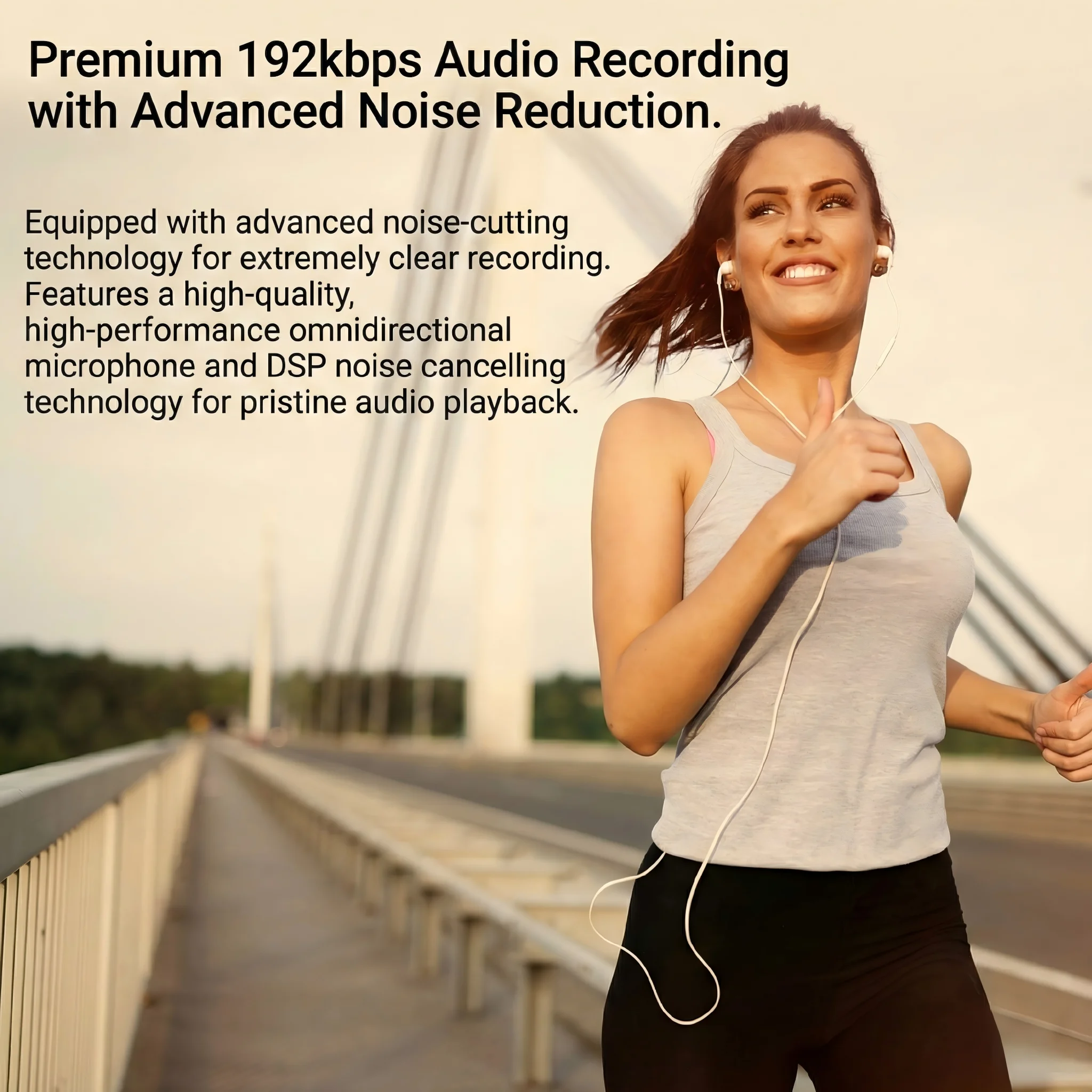
Bit Rate and Sample Rate are the two dimensions of audio fidelity. Sample rate (measured in kHz) determines the frequency range captured — 44.1 kHz covers the full range of human hearing. Bit rate (measured in kbps in lossy formats, or bit depth in lossless) determines the dynamic range and noise floor. A recorder advertising “HD Audio” but recording at 64 kbps MP3 is producing phone-call quality audio. The baseline for clear speech recording in reverberant environments (conference rooms, lecture halls) is 192 kbps MP3 or 16-bit/44.1 kHz PCM WAV. Anything less introduces compression artifacts audible when you slow down playback for transcription.
Microphone configuration separates professional recorders from consumer gadgets. Omnidirectional mics pick up 360° sound and work well in small group settings where all speakers are nearby. Directional or cardioid configurations capture a forward cone and reject ambient noise from behind and sides — critical for one-on-one interviews in noisy environments. Stereo dual-mic setups (common in lecture and conference recorders) capture spatial separation between speakers, making it dramatically easier for transcription software to distinguish multiple voices. When evaluating a recorder, ask whether the mic positions are fixed or adjustable, and whether each mic element has a sensitivity rating (measured in dBV/Pa or dBFS).
Riduzione del rumore DSP — digital signal processing — is not a marketing term for “magic”. It refers to real-time algorithmic filtering that suppresses steady-state background noise: HVAC systems, projector fans, office background chatter. The quality of DSP implementation varies enormously across price tiers. Entry-level recorders run simple high-pass filters that cut below 300 Hz. Mid-range professional units run adaptive noise floor estimation that adjusts in real time. The practical test is whether speech intelligibility holds up when you play back a recording made in an open-plan office or a moving vehicle.
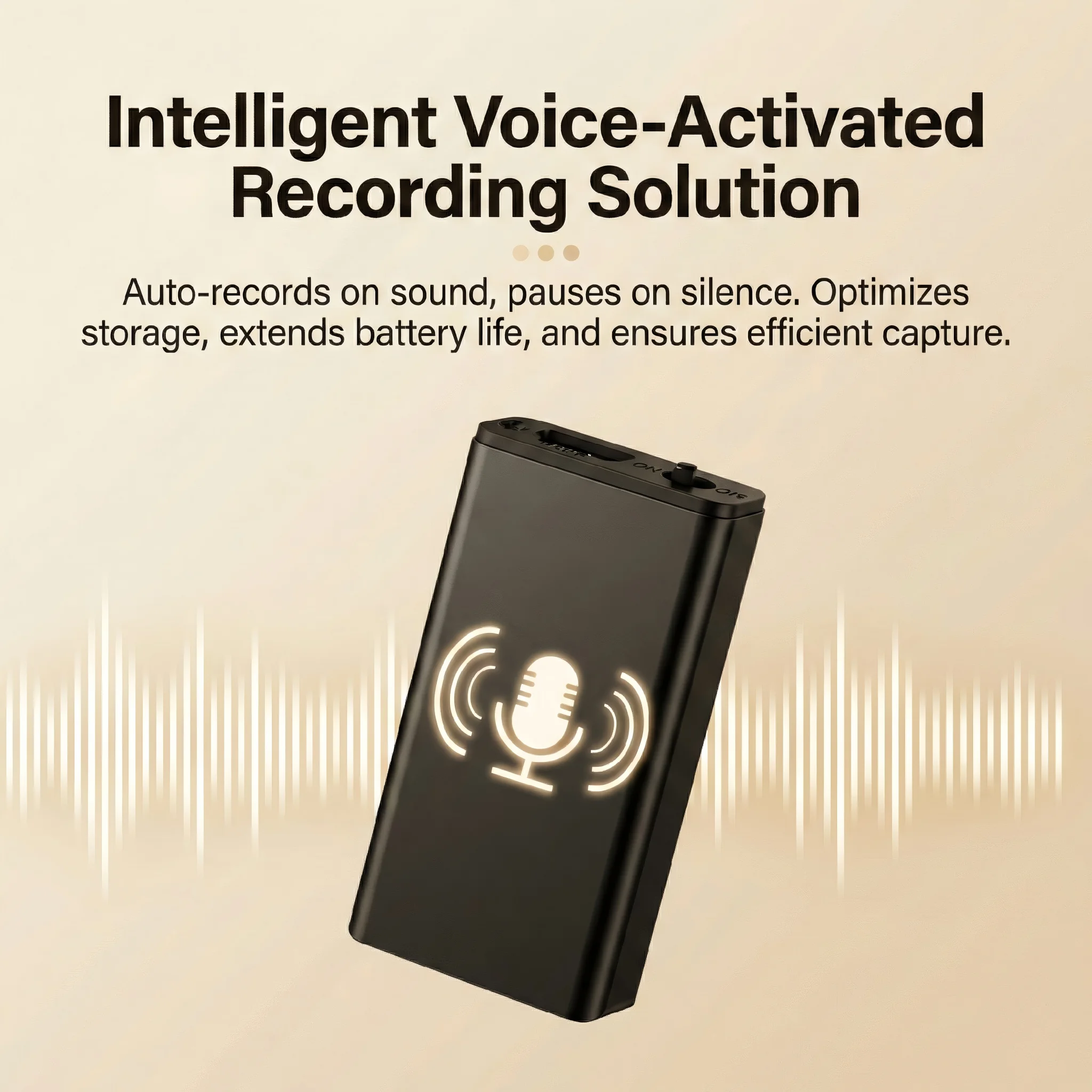
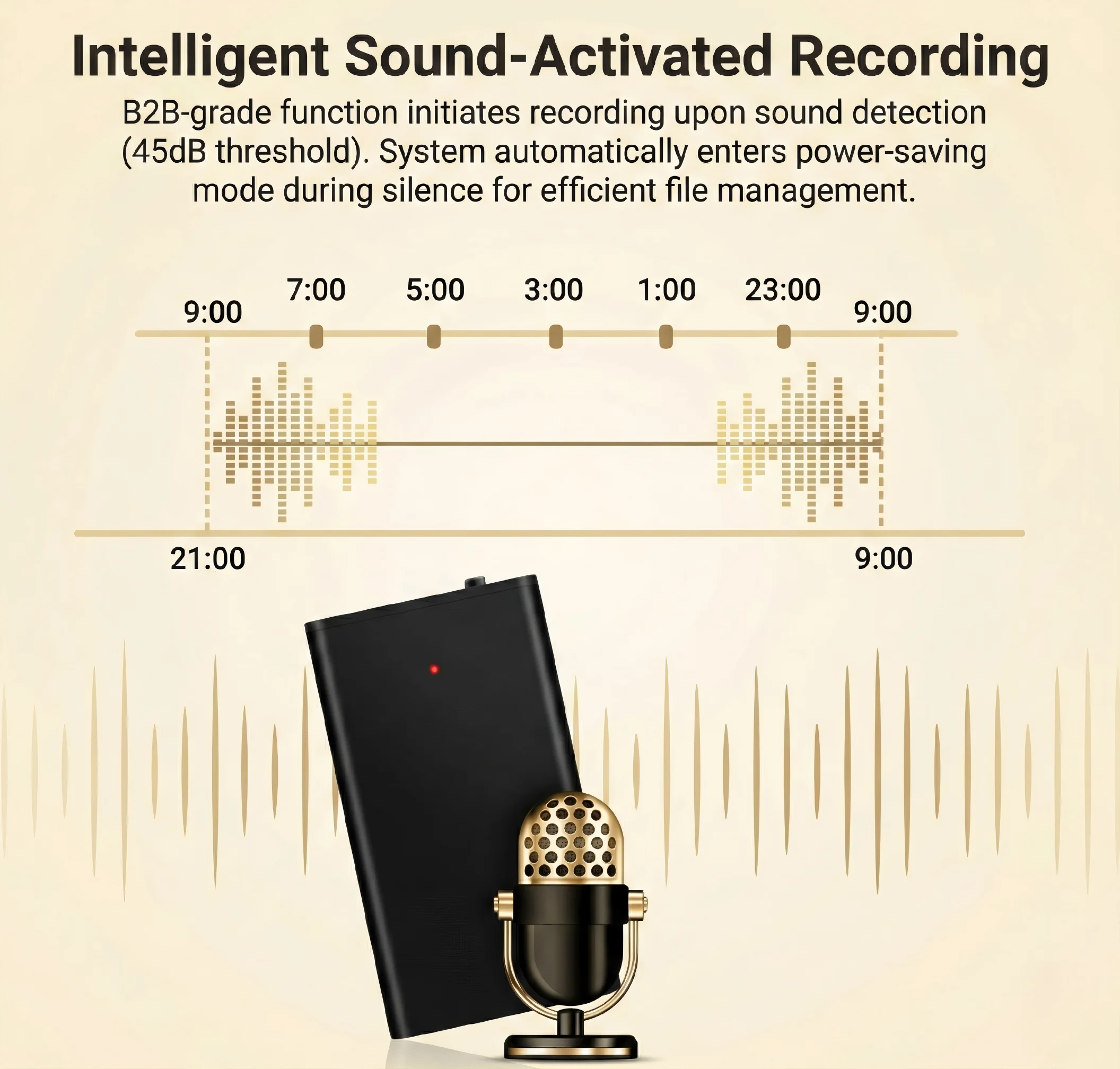
Voice Activation Recording (VAR/VOR) automatically starts and stops recording based on a configurable volume threshold. This is genuinely useful for surveillance applications or passive monitoring, saving storage and battery life. The key parameter is the threshold sensitivity (adjustable range in dB) and the hold time (how long recording continues after audio drops below threshold before stopping). A poorly configured VAR will clip the beginning of sentences and truncate trailing syllables — both of which are catastrophic for legal or evidentiary recordings.
Battery life and standby time have completely different meanings. Battery life under active recording is typically 8–30 hours depending on format. Standby time (powered on, VAR waiting to trigger) can reach 500+ hours on magnetic form-factor recorders with large lithium cells. For surveillance deployments — placing a recorder in a fixed location for days at a time — standby capacity is the dominant spec. For active interview or meeting use, active recording time is what matters.
The Four Use-Case Categories and What Each Demands
Not all recorders are built for the same scenario. Buying a high-sensitivity omni mic recorder for covert surveillance, or a directional interview mic for ambient room monitoring, is an immediate mismatch.
Category 1: Business Meetings and Conference Rooms
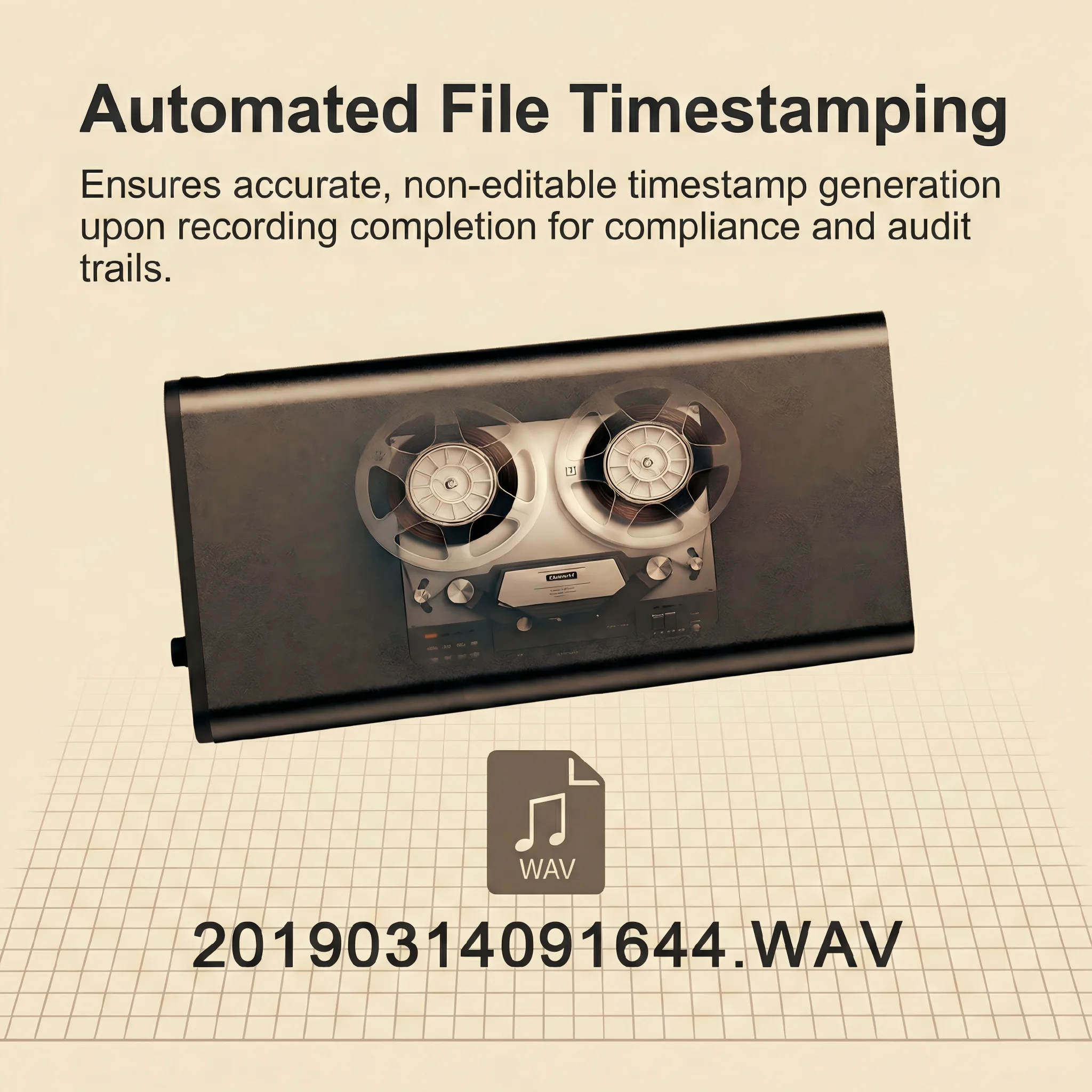
The requirements here are: hands-free operation, 360° pickup pattern, minimum 16-channel separation for transcription, and integration with AI transcription services like Otter.ai, Rev, or OpenAI Whisper. The audio file format matters too — these platforms work best with uncompressed WAV or high-bitrate MP3 (192 kbps+). Most corporate meeting recorders also need onboard timestamp logging for compliance documentation.
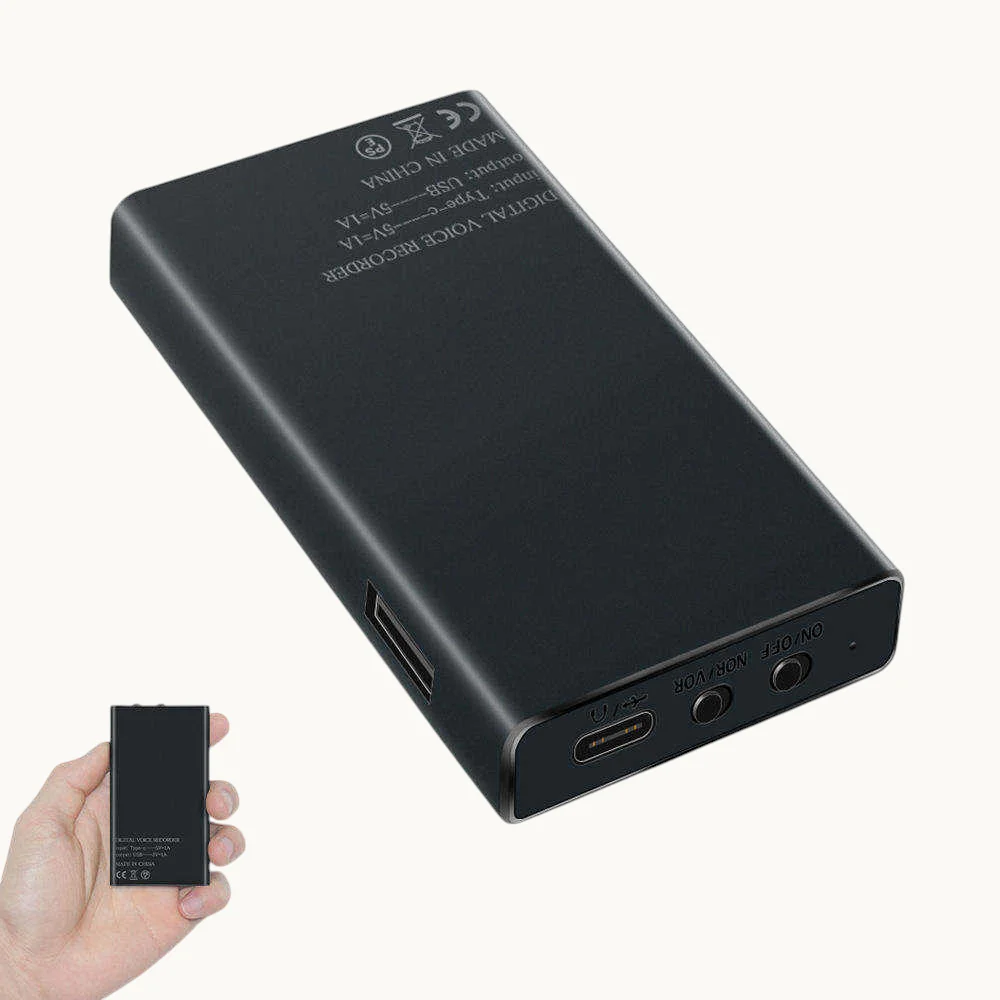
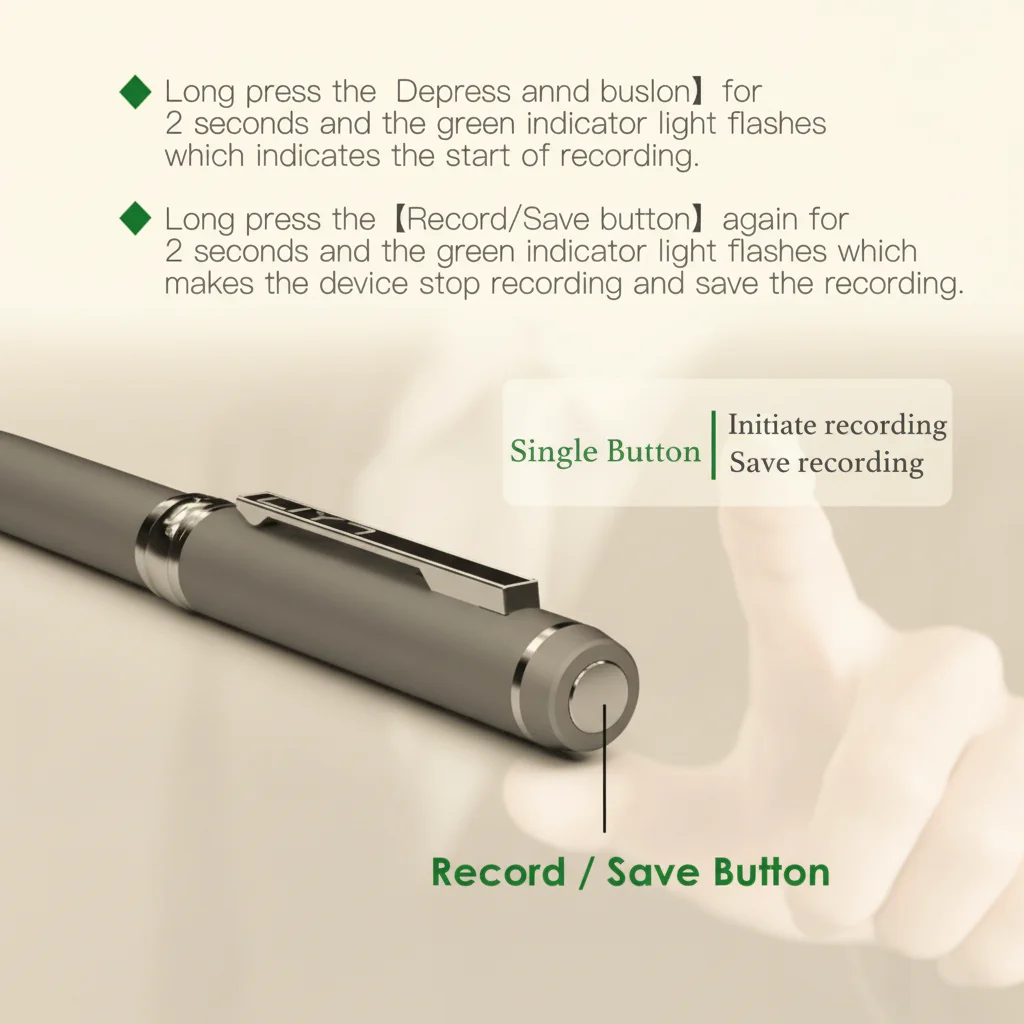
IL Q97 Registratore Vocale Professionale hits this use case well: Type-C connectivity for fast file transfer, DSP noise reduction optimized for reverberant rooms, and a recording format chain that preserves 192 kbps audio. The slim metal body (pen-format) means it sits on a conference table without drawing attention or disrupting the room dynamic.
Category 2: Interviews, Lectures, and Field Work
Field recording demands directional mic performance, rugged handling, and long battery life. You’re often recording one primary speaker at variable distances (0.5–5 meters), in environments with unpredictable acoustic properties — outdoor press conferences, university lecture theaters, courtroom corridors. The failure mode to avoid is overdriving the mic input at close range (distortion) while also maintaining enough sensitivity to capture a speaker at distance.
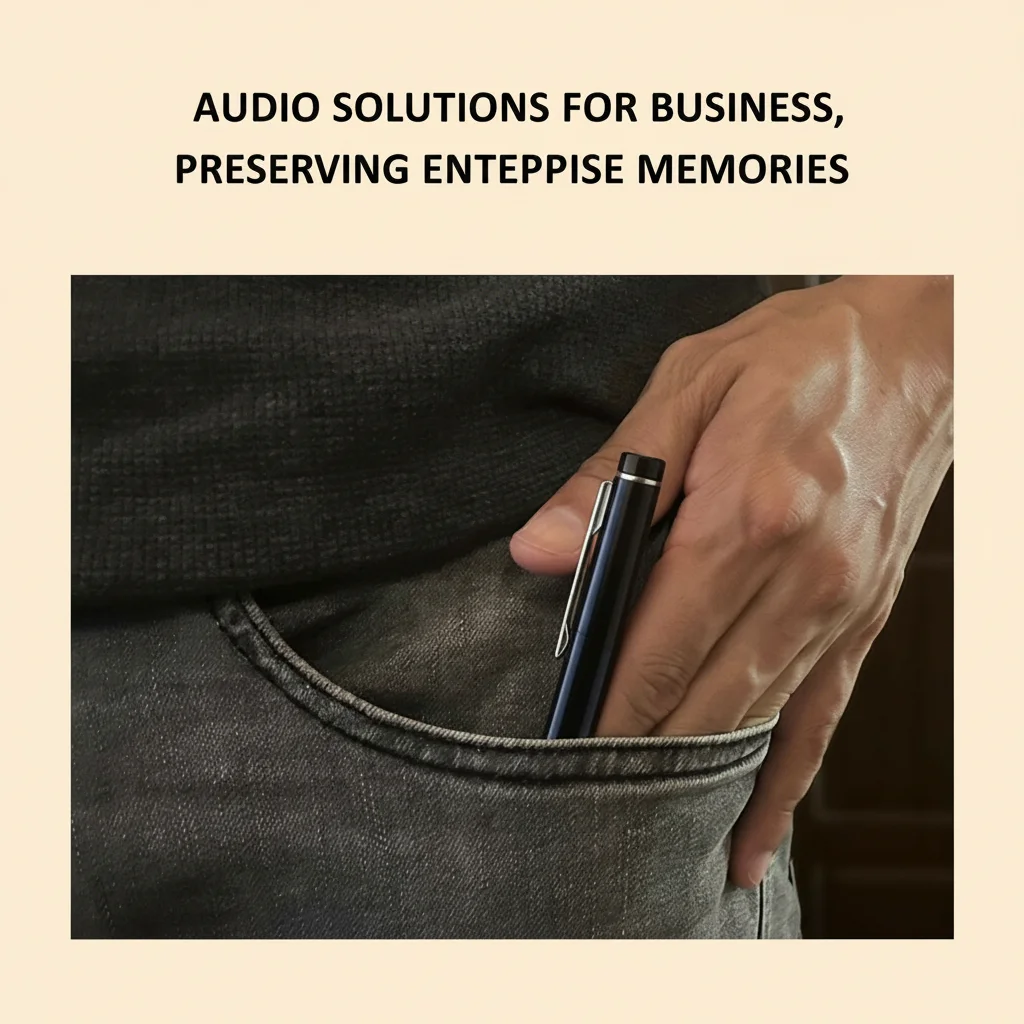
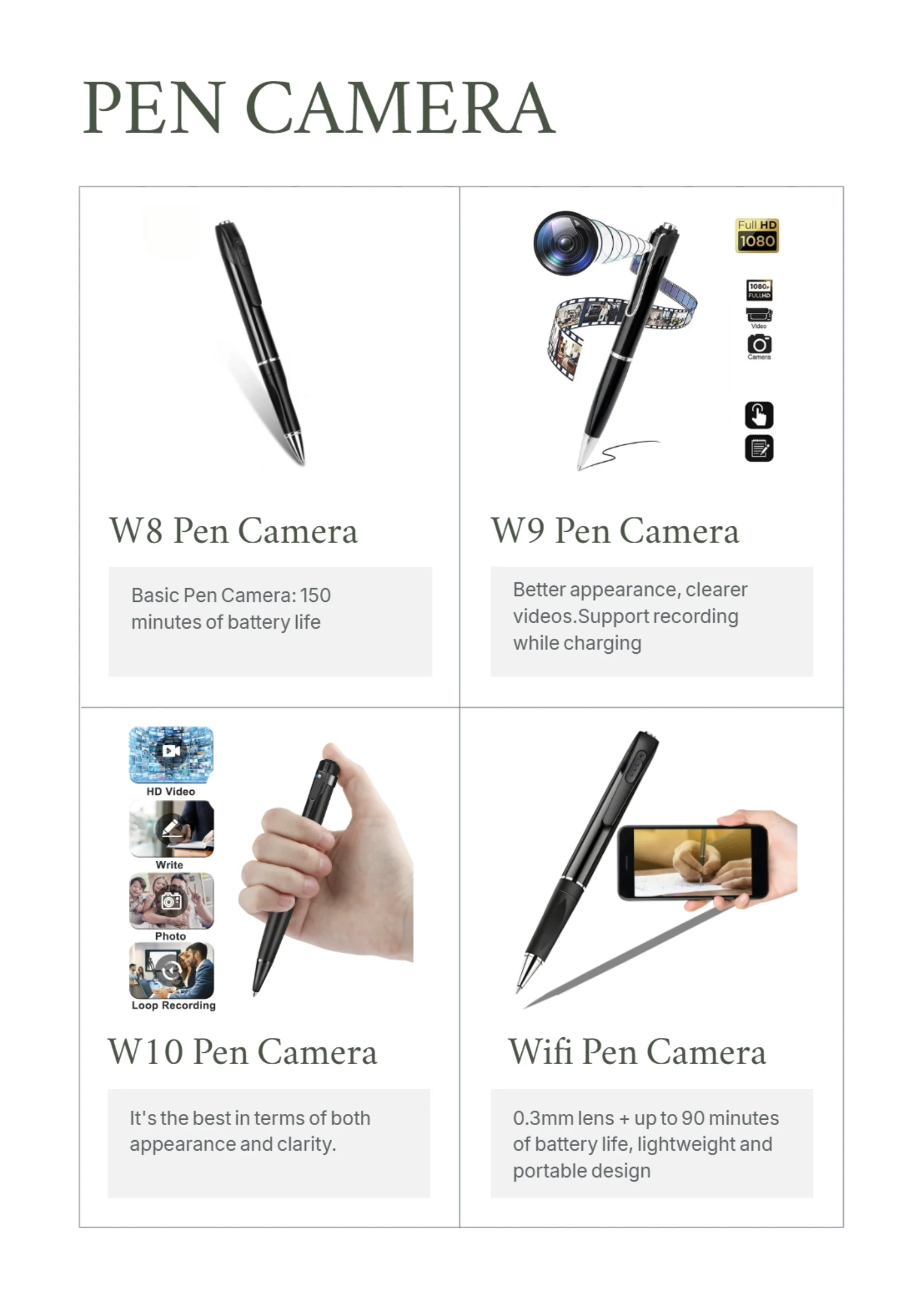
A pen-format recorder worn in a breast pocket faces a specific constraint: the body itself partially occludes the mic. Recorders designed for this form factor route the mic aperture to the pen clip or top end, maintaining clear line-of-sight pickup while the body sits inside a pocket. The WiFi Spy Pen Camera with Audio extends this concept into dual-function devices — simultaneously capturing 1080P video and audio, useful for journalists and investigators who need both media types from a single unobtrusive instrument.
Category 3: Covert Surveillance and Long-Duration Passive Recording
This is where specialized form factors come into play. The core requirement is extended standby time (days, not hours), triggered recording via VAR, and physical form factors that don’t attract attention in fixed locations. Magnetic attachment allows placement under vehicles, on metal furniture, or in concealed indoor positions.
IL Magnetic Spy Voice Recorder 500H is purpose-built for this: 288-hour standby with 32 GB internal storage, voice-activated triggering with adjustable threshold, and a magnetic mount that holds on any ferromagnetic surface. The power bank form factor blends naturally into any desk or bag environment.
Legal context matters here. In most EU jurisdictions, recording a conversation you are party to is permissible under GDPR’s “legitimate interest” basis when the recording is for personal use or evidence preservation. ICO guidance on recording conversations provides the relevant framework for UK deployments. Covert recording of third parties without participation requires explicit legal advice.
Category 4: Academic and Student Use
Student recorders prioritize affordability, storage capacity, and playback speed control (variable-speed playback is critical for note-taking — slowing audio to 0.75x lets you annotate without pausing constantly). Battery life for a full 8-hour school day matters. The typical failure mode in cheap student recorders is the file management system: no timestamps on files, no folder organization, and a USB interface that drops files in a flat root directory, making it impossible to locate lecture recordings from a specific date or course.
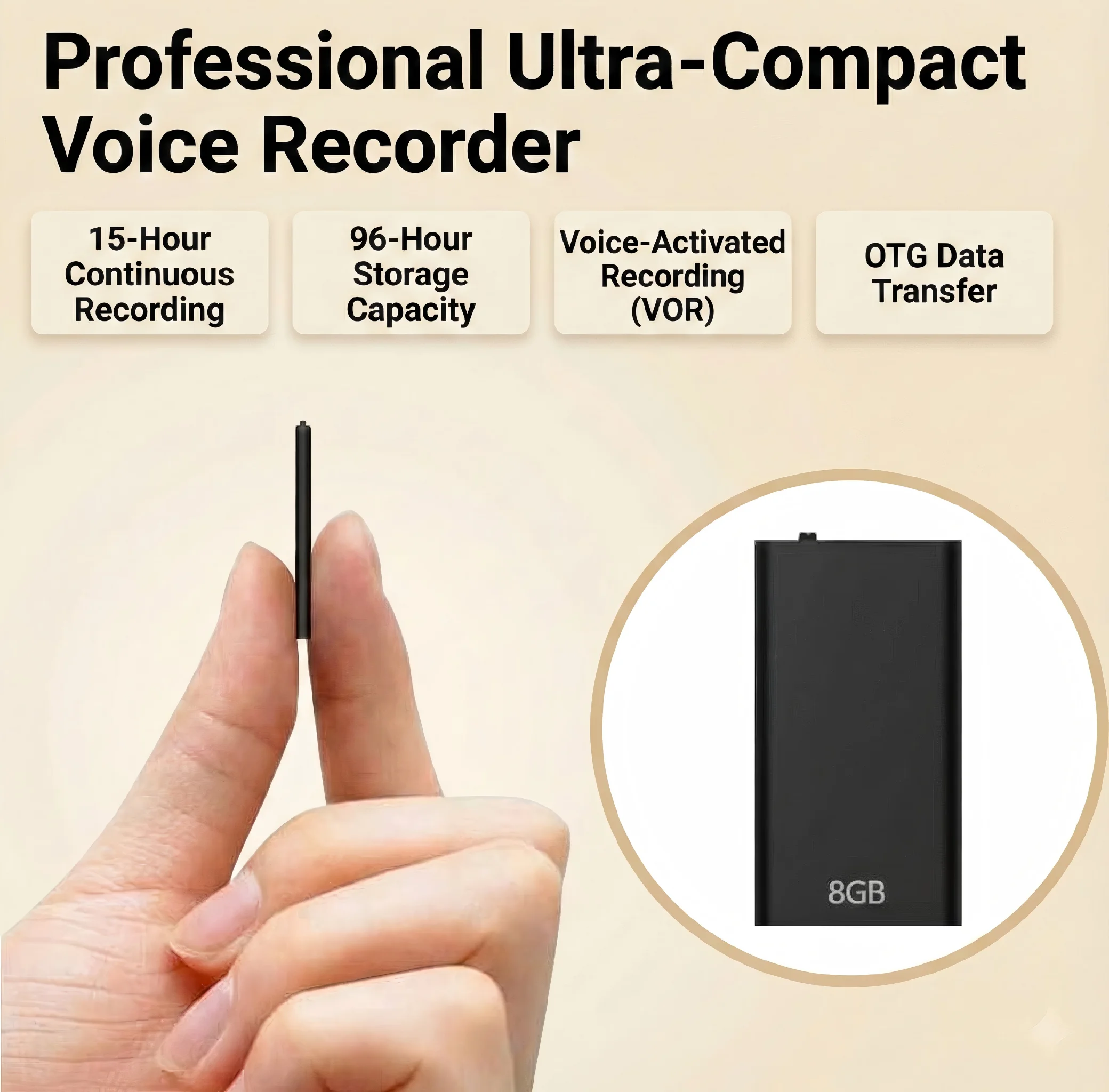
IL Small Voice Activated Spy Recorder covers this use case with automatic file timestamping, VAR to preserve storage across lectures, and a compact body that fits in any pencil case. The VOR threshold is factory set for classroom acoustics but adjustable for louder environments.
Storage Capacity: How to Calculate What You Actually Need
This is one of the most commonly miscalculated specifications. The relationship between audio quality, file format, and storage consumption is:
| Formato | Bitrate | Storage per Hour | 8GB Card Capacity |
|---|---|---|---|
| MP3 64 kbps | 64 kbps | ~28 MB | ~285 hours |
| MP3 128 kbps | 128 kbps | ~56 MB | ~142 hours |
| MP3 192 kbps | 192 kbps | ~84 MB | ~95 hours |
| WAV 16-bit/44.1kHz | ~1,411 kbps | ~635 MB | ~12.5 hours |
| WAV 16-bit/16kHz | ~512 kbps | ~230 MB | ~34 hours |
For most meeting and interview applications, 192 kbps MP3 provides the optimum balance: full speech intelligibility, compatible with all transcription software, and manageable file sizes for archival. WAV is the choice when you need uncompressed audio for forensic analysis or professional audio editing — the files are larger but contain no codec artifacts.
Most recorders in the 8–32 GB range provide between 95 and several hundred hours of recording capacity, which covers virtually any professional use case. The variable is whether the recorder supports microSD card expansion, which allows effectively unlimited archival storage by swapping cards.
Battery Life in Practice: What the Spec Sheet Doesn’t Tell You
Manufacturer battery life specs are measured under optimal conditions: room temperature, continuous recording at the lowest bitrate, fresh lithium cell at 100% capacity. Real-world performance diverges from these figures in several ways.
Temperature has a significant effect on lithium-ion performance. At 0°C, a cell rated for 15 hours of recording may deliver only 9–10 hours. This matters for recorders used outdoors in winter conditions or stored in vehicles. The discharge curve also isn’t linear — the battery drops faster in the final 20% of capacity, and most recorders don’t give accurate low-battery warnings, cutting out abruptly rather than tapering.
VAR mode significantly extends battery life because the processor sleeps between trigger events. A recorder rated for 15 hours continuous will often achieve 300+ hours in VAR standby with light trigger activity. This is the mode used for deployment surveillance — placing the device and leaving it for 3–7 days between retrieval.
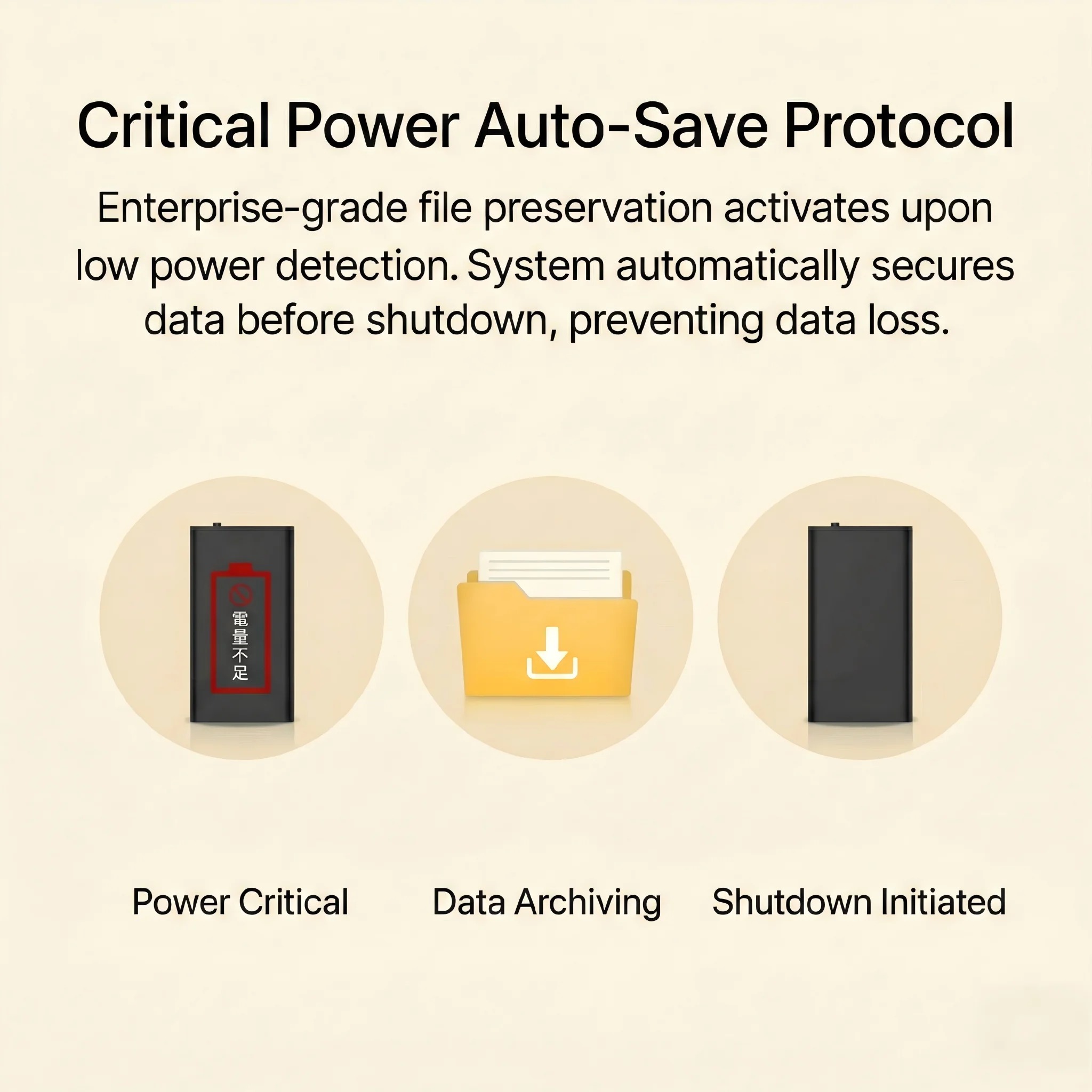
IL Hidden Spy Voice Recorder pairs long standby capability with automatic low-power data preservation: when battery reaches critical level, the device completes the current file write and safely powers down, preventing corrupt audio files from incomplete writes.
How DSP Noise Reduction Actually Works (And When It Doesn’t)
DSP noise reduction in voice recorders works on the assumption that background noise has a predictable, relatively stable spectral profile — HVAC hum sits at specific frequencies, projector fan noise has a consistent tonality. The algorithm builds a noise floor model in the first 0.5–2 seconds of silence, then applies a spectral subtraction or Wiener filter to continuously remove frequencies matching that profile from the active signal.
The failure cases are: (1) variable background noise that shifts frequency profile faster than the algorithm can adapt — crowded environments, traffic, air conditioning that cycles on and off; (2) noise sources that overlap in frequency with speech (human voice fundamentals are 80–255 Hz, harmonics extend to 3–8 kHz); and (3) aggressive settings that introduce “musical noise” artifacts — a metallic warbling sound that’s actually worse for intelligibility than the original background noise.
The practical recommendation: use DSP at medium settings (not maximum) in conference rooms, disable it in quiet interview settings where the algorithm has nothing to model, and test the specific recorder before critical deployments by playing back recordings made in your actual target environment.
B2B Sourcing: Buying Voice Recorders for Resale or Fleet Deployment
For buyers sourcing voice recorders as a wholesale category — whether for corporate fleet deployment, resale through electronics retail channels, or integration into professional service packages — the evaluation criteria shift significantly from individual feature preference to supply chain reliability.
OEM vs. branded products: Most professional voice recorders sold under European and US brands are manufactured in Guangdong or Shenzhen facilities and rebranded. Understanding the original design manufacturer allows direct sourcing at factory pricing, which is typically 40–65% below retail. QZT’s recording product line represents this model: the same hardware quality that supports professional deployments, available with customized branding and packaging for wholesale partners.
Certification requirements for EU sales: CE marking is mandatory for all electronic devices sold within the EU, covering safety and electromagnetic compatibility. RoHS compliance (restriction of hazardous substances) is required for all electronic equipment and components. Recorders with internal batteries additionally require UN 38.3 certification for air freight. Verify these certifications — not assumed to be present — before committing to a wholesale order, as customs seizure risk is real for non-compliant goods entering Germany, France, or the Netherlands.
MOQ and sample policy: Professional-grade wholesale suppliers will offer sample units (typically 1–3 pieces) before minimum order quantities kick in, allowing functional and quality testing before commitment. Be cautious about suppliers who refuse samples or require full MOQ upfront — this is a common fraud pattern in the category.
For wholesale inquiries on the Q97 Registratore Vocale Professionale, Magnetic Spy Voice Recorder 500H, and the full recorder range, QZT provides direct factory pricing for B2B buyers including CE documentation and custom OEM packaging options.
Connectivity and File Transfer: Why It Matters More Than You Think
A recorder that captures excellent audio but makes file retrieval frustrating will eventually be abandoned. The connectivity options have real practical implications:
USB-A (micro or standard): The legacy standard. Works on virtually every computer made in the last fifteen years. The problem is mounting as a USB mass storage device can be blocked by corporate IT policies on managed Windows machines.
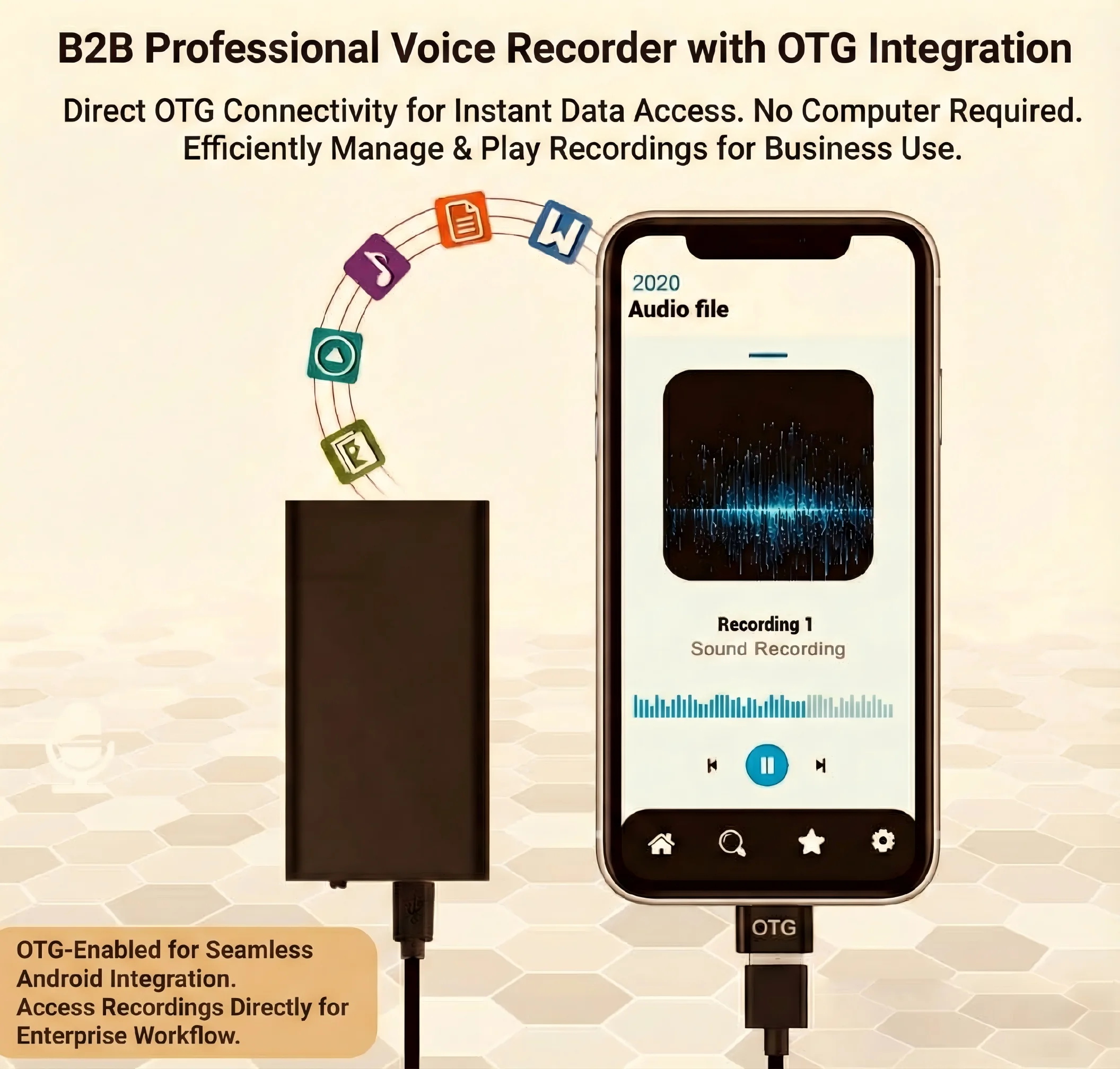
USB-C (Type-C): The current standard for professional devices. Supports faster data transfer (USB 3.0/3.1 in higher-end recorders vs. USB 2.0 on older micro-USB), and OTG (On-The-Go) support allows direct connection to Android phones for immediate playback or file transfer without a computer.
OTG Android integration: This is more useful than it sounds. For a journalist finishing an interview on location, OTG allows connecting the recorder to their Android phone and immediately uploading the file to a cloud transcription service or sending it as an email attachment — without waiting to return to a laptop.
Memory card interface: External microSD slot allows swapping storage cards for long-duration deployments without connecting to a computer. Critical for surveillance applications where physical retrieval is constrained.
How to Compare Recorders: A Decision Framework
Use this decision table to narrow your options:
| Uso primario | Key Spec Priority | Recommended Format | Secondary Priority |
|---|---|---|---|
| Board meetings / legal | 192 kbps+, timestamp, doppio microfono | Penna o slim bar | Type-C + OTG |
| Sorveglianza covert | Ore di standby, VAR, magnetico | Magnetico/power bank | Registrazione in loop |
| Lezioni per studenti | Durata batteria, velocità playback | Clip-on compatto | Memoria espandibile |
| Giornalismo/interviste | Microfono direzionale, riduzione del rumore | Penna o portatile | Trasferimento file veloce |
| Fleet corporate | Certificazione CE, OEM disponibile | Qualsiasi | Prezzo bulk |
IL Collezione Prodotti Registrazione Audio da QZT copre ogni livello, dal livello base Hidden Spy Voice Recorder al professionista Q97 con Type-C.
What to Avoid: Common Failure Points in Budget Recorders
Nessuna batteria per l'orologio in tempo reale (RTC): Senza una batteria RTC di backup, il registratore perde la configurazione data/ora ogni volta che la batteria principale si esaurisce. Ogni file di registrazione viene datato 1 gennaio 2000 — inutile come prova o per i verbali delle riunioni.
Memoria fissa (non espandibile) senza indicatore: Alcune unità economiche hanno una memoria interna senza slot per schede esterne e nessun indicatore di batteria/memoria sul dispositivo. Si scopre che la memoria è pieno quando la registrazione si interrompe silenziosamente.
Compressione solo single-chip: I registratori budget che usano un singolo IC codec audio spesso applicano compressione lossy sempre, senza opzione WAV. Il produttore lo chiama “registrazione HD” — non lo è.
Nessuna compatibilità con il sistema di file FAT32: Alcuni registratori più vecchi formattano la memoria interna con sistemi proprietari che funzionano solo con il software proprietario incluso — spesso software abbandonato. Assicurarsi che qualsiasi registratore si monti come memoria USB standard con file system FAT32 o exFAT.
FAQ: What You Actually Want to Know
D: Posso usare un registratore vocale digitale come prova legale in tribunale?
Le leggi sulla registrazione variano significativamente per giurisdizione. In stati con consenso unilaterale negli USA, registrare una conversazione in cui partecipi è legale. In giurisdizioni che richiedono il consenso di tutte le parti (inclusa la Germania, che richiede il consenso di tutti i partecipanti), la registrazione clandestina è illegale. La registrazione stessa, se ottenuta legalmente, è generalmente ammissibile come prova quando il file audio contiene metadata intatti, inclusi timestamp e documentazione della catena di custodia.
D: Qual è la differenza effettiva tra un registratore a €30 e uno a €150?
A €30 si ottiene generalmente: bitrate fissato a 64 kbps, nessun DSP vero, nessuna batteria RTC, corpo in plastica, solo USB-A e nessuna memoria espandibile. A €150 si ottiene: 192 kbps+ con opzione WAV, riduzione del rumore DSP funzionale, RTC con batteria di backup, corpo in metallo, Type-C con OTG e espansione microSD. Per uso professionale la differenza è udibile e operativa — l'unità a €30 fallirà proprio nel momento peggiore.
D: Come sincronizzo le registrazioni con software di trascrizione?
Molti servizi di trascrizione (Otter.ai, Rev, Whisper) accettano upload diretti di file MP3 o WAV. Il workflow è: registra → connetti il registratore via USB-C → trascina i file sul desktop → upload al servizio di trascrizione. I registratori con supporto OTG permettono di saltare completamente il passaggio desktop. Cerca registratori che esportano MP3/WAV standard invece di formati audio proprietari.
D: Che cosa è la sensibilità VOR/VAR e come la configuro?
La sensibilità VOR (Voice Operated Recording) è generalmente espressa come soglia in dB SPL, con soglie più basse che si attivano su suoni più quieti. Molti registratori permettono l'aggiustamento tramite un menu delle impostazioni. Inizia con una sensibilità media e testa nell'ambiente target — troppo sensibile e il registratore si attiva sul rumore ambientale, riempiendo la memoria con silenzio-plus-artefatti; troppo insensibile e taglia l'inizio delle conversazioni.
D: Posso registrare chiamate telefoniche con un registratore vocale digitale?
Per le chiamate telefoniche in presenza (vivavoce), sì — il registratore semplicemente cattura l'audio dall'altoparlante. Per la registrazione diretta dalla linea telefonica, è necessario un adattatore per registrazione che si collega al telefono o una soluzione software sul telefono stesso. Verificare le leggi locali sulla registrazione delle chiamate prima di procedere.
D: Qual è la distanza massima per un registratore vocale per captare la voce?
Un registratore omnidirezionale a livello della scrivania può catturare efficacemente una voce chiara a 0–3 metri in una stanza silenziosa, riducendo a 1–2 metri in presenza di rumore ambientale moderato. Microfoni direzionali estendono questo a 5–8 metri per un interlocutor chiaro. Oltre questo, si entra nel territorio dei microfoni specialistici. Il Q97 Registratore Vocale Professionale con DSP è valutato per una copertura di 5 metri in una sala conferenze in condizioni acustiche standard.

 English
  Italiano
  Deutsch
  Français
  Español
  Polski