
Mini Hidden Camera with Night Vision: Complete B2B Buying Guide
A mini hidden camera without night vision only works half the day. For B2B buyers in home security, retail loss prevention, and property management, the ability to capture usable footage in darkness is not optional — it is the feature that separates a working product from a refund waiting to happen.
This guide explains the technology behind night-vision mini cameras, the trade-offs between 850 nm and 940 nm infrared LEDs, and what bulk buyers should test before committing to an order.
What Makes a Mini Hidden Camera Good at Night Vision?
Night vision performance depends on the sensor, the LEDs, and the lens working together. Most buyers focus only on resolution, but low-light sensitivity matters more after the lights go out.
A good night-vision camera starts with a back-illuminated CMOS sensor. Sony’s STARVIS series — including the IMX307 and IMX290 — is the benchmark for security cameras because it gathers more light and holds usable response into the near-infrared range. The lens aperture also matters. A wider aperture lets more light reach the sensor. Finally, the infrared LEDs provide the invisible illumination that lets the camera see in complete darkness.
Cheap cameras claim night vision but simply boost digital gain. The result is grainy, motion-blurred footage that lacks detail. Professional buyers should ask for sample night-vision footage before placing a bulk order, not rely on spec sheets alone.
| Componente | Cheap Approach | Professional Approach |
|---|---|---|
| Sensore | Small generic CMOS | Sony STARVIS / IMX307-class back-illuminated |
| Lente | Narrow plastic | Wide-angle glass, f/2.0 or lower |
| LED IR | 850 nm only, low power | 850 nm or 940 nm matched to sensor |
| Image processing | Heavy digital noise reduction | Tuned ISP with noise balance |
Punto chiave: Sensor and lens quality beat raw resolution in darkness.
How Does 850nm IR Differ from 940nm IR?
The infrared wavelength is the most important technical choice in covert night vision. It determines invisibility, range, and power consumption.
850 nm IR LEDs are the industry standard. They convert electrical power into infrared light efficiently, so they deliver longer effective range — typically 8–12 meters in a typical room. The downside is a faint red glow visible to the human eye in complete darkness. 940 nm IR LEDs are completely invisible to the naked eye, making them the choice for truly covert applications. The trade-off is lower efficiency: for the same power input, 940 nm produces roughly 40–50% less illumination, so effective range drops to about 3–6 meters.
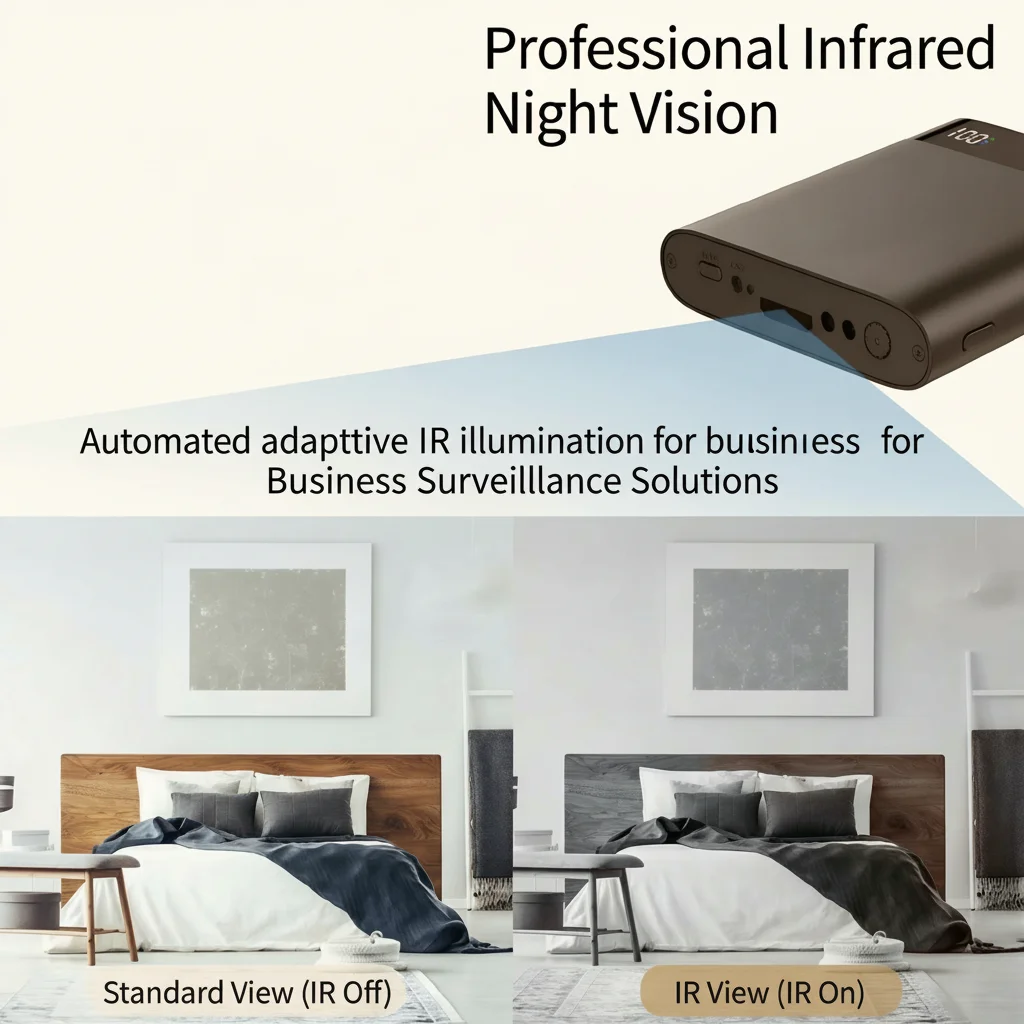
B2B buyers should match the wavelength to the use case. A ceiling-mounted smoke-detector camera can use 850 nm because nobody will look directly at it. A bedside clock camera or a car-key spy camera should use 940 nm because any red glow would give it away.
| Fattore | 850 nm IR | 940 nm IR |
|---|---|---|
| Visibility to human eye | Faint red glow up close | Completamente invisibile |
| Effective range | 8–12 meters | 3–6 meters |
| Efficienza energetica | Più alto | 40–50% lower |
| Best for | Ceiling / shelf placement | Close-range covert placement |
| Typical price impact | Standard | $5–$15 premium per unit |
Punto chiave: 850 nm for range, 940 nm for invisibility.
What Sensor Specs Matter for Low-Light Recording?
Resolution numbers become meaningless if the sensor cannot gather enough photons. Low-light performance is what keeps footage usable at night.
The key specifications to request are pixel size, back-illuminated structure, and minimum illumination rating. Larger pixels collect more light. Back-illuminated sensors move the wiring layer behind the photodiode, improving sensitivity. Sony’s STARVIS technology claims sensitivity beyond the human eye for security applications. The IMX307 is a 1080p, 1/2.8-inch sensor with 2.9 µm pixels and strong near-infrared response. It is a cost-reduced alternative to the IMX290, with slightly lower low-light sensitivity but a better unit price for bulk buyers.
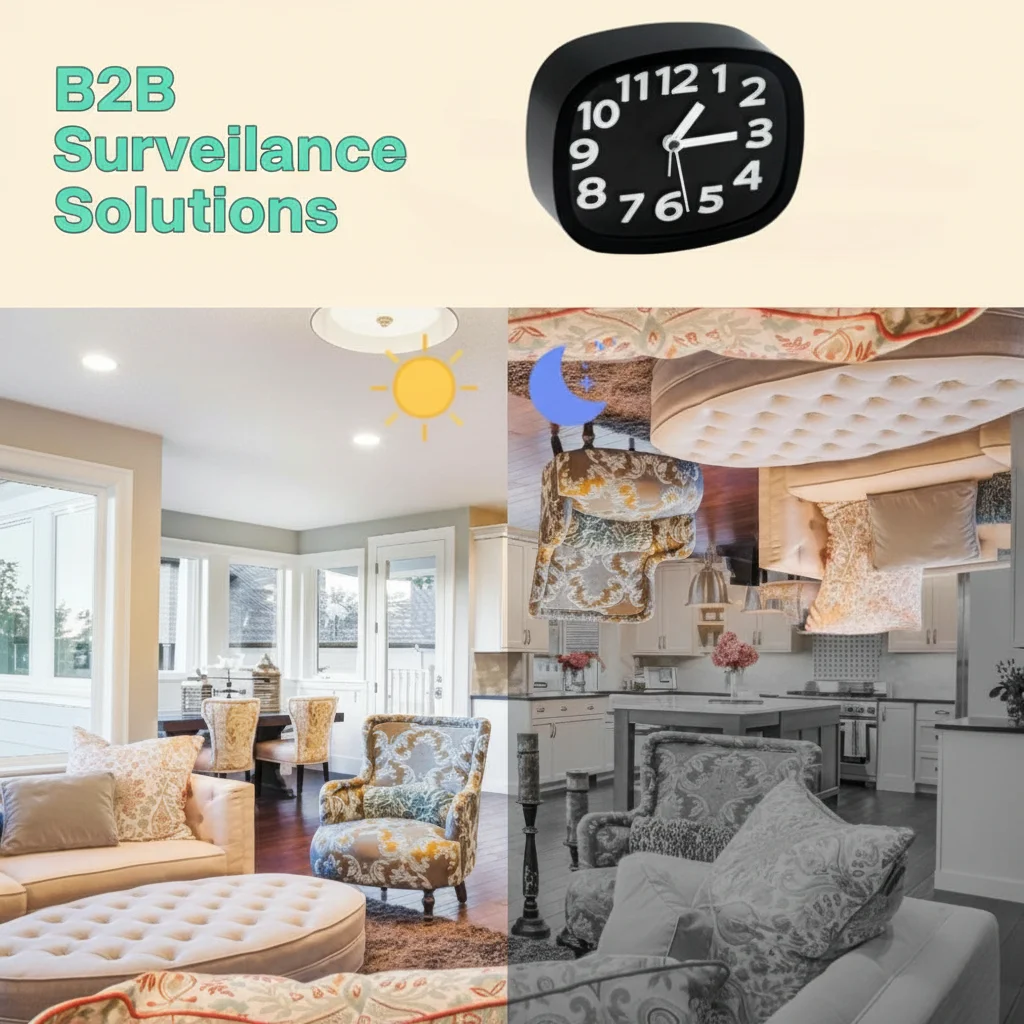
Minimum illumination is usually quoted in lux. Be careful: some manufacturers quote the lux rating with their IR LEDs on, while others quote it without. A realistic figure for usable color footage without IR is 0.1 lux or lower. With IR illumination, most mini cameras can record down to 0 lux, but image quality still depends on the sensor and IR power.
| Spec | What to Ask For | Perché è importante |
|---|---|---|
| Pixel size | 2.0 µm or larger | Bigger pixels capture more light |
| Sensor type | Back-illuminated CMOS | Better low-light and NIR response |
| Min illumination | 0.1 lux color / 0 lux with IR | Determines usable darkness range |
| NIR response | 700–1000 nm quantum efficiency | Needed for 940 nm IR performance |
Punto chiave: Ask for pixel size, sensor type, and real lux ratings — not just 1080p.
How Far Can a Mini Night Vision Camera Actually See?
Published IR ranges are optimistic. Real-world range depends on LED power, wavelength, sensor sensitivity, and room reflectivity.
Most mini hidden cameras with night vision illuminate effectively within 3–6 meters when using 940 nm IR, and 5–10 meters when using 850 nm IR. Beyond that distance, faces become silhouettes and fine detail disappears. In large rooms with dark walls or furniture, the usable range drops by 30–50%. White walls and light-colored floors reflect IR better and extend range.
For B2B buyers, the right question is not “how far can it see?” but “does it cover the target area at the intended mounting distance?” A camera placed on a bedroom shelf 2 meters from the bed does not need 10-meter IR. A lobby camera monitoring a 6-meter hallway does.
| LED Type | Typical Effective Range | Best Room Size |
|---|---|---|
| 940 nm, 2–4 LEDs | 2–4 meters | Bedroom, small office |
| 940 nm, 6+ LEDs | 4–6 meters | Living room, retail floor |
| 850 nm, 4–6 LEDs | 6–10 meters | Hallway, warehouse aisle |
| 850 nm, high-power array | 10–15 meters | Large open spaces |
Punto chiave: Match IR range to the actual monitored distance, not the marketing number.
Does Night Vision Drain the Battery Faster?
Yes — significantly. IR LEDs are the biggest power draw in a night-vision camera.
A mini camera recording in daylight might run for several hours on battery. With IR night vision active, runtime often drops by 40–60%. Some cameras solve this by activating IR only when motion is detected, or by reducing recording resolution in night mode. Others rely on continuous USB power and use the battery only as backup.
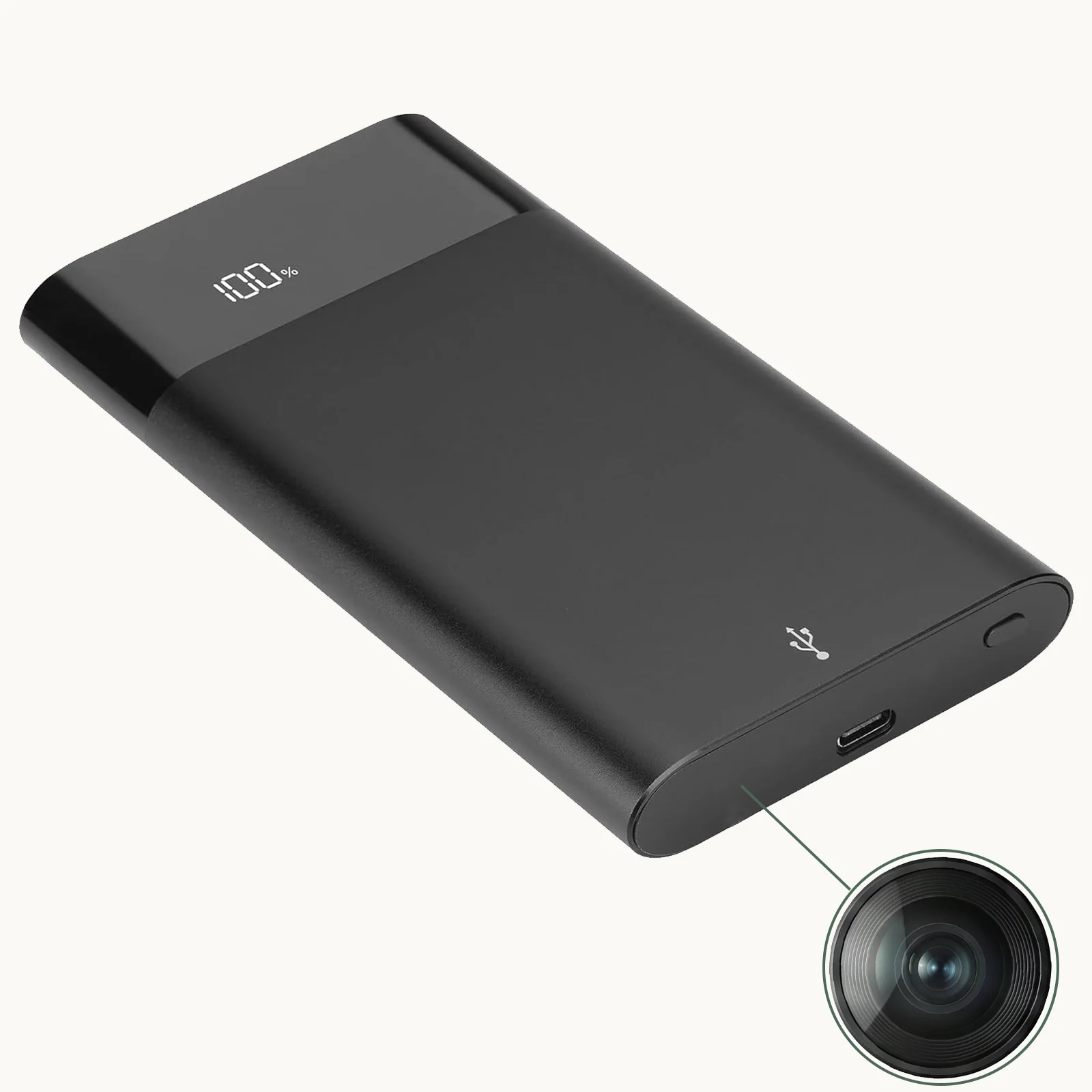
For B2B buyers, this is a specification that should be tested at volume. A 500 mAh battery might deliver 2 hours of daytime recording but only 45–70 minutes with continuous IR. Cameras disguised as power banks solve the problem by using a much larger battery — often 5,000 mAh or more — so they can run IR mode for many hours without giving away the camera form factor.
| Fonte di alimentazione | Daytime Runtime | IR Night Runtime |
|---|---|---|
| 500 mAh internal battery | 2–3 ore | 45–90 minutes |
| 1,000 mAh battery | 4–6 ore | 1,5–3 ore |
| 5,000 mAh power bank | 12–24 hours | 6–12 ore |
| USB continuous power | Illimitato | Illimitato |
Punto chiave: Always request IR-on runtime, not just daytime runtime.
What Form Factors Hide IR LEDs Best?
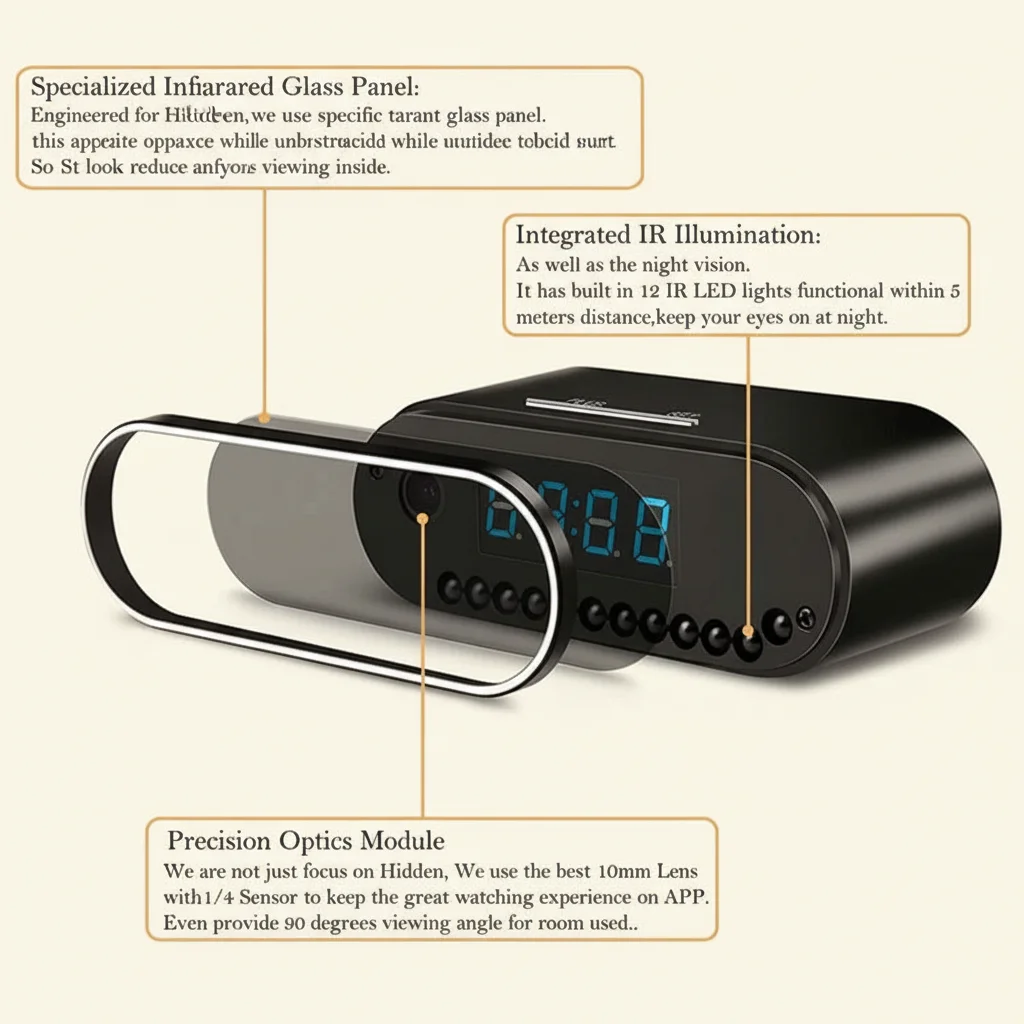
The IR LEDs must not break the disguise. A cluster of obvious red or black circles on a clock face will raise suspicion.
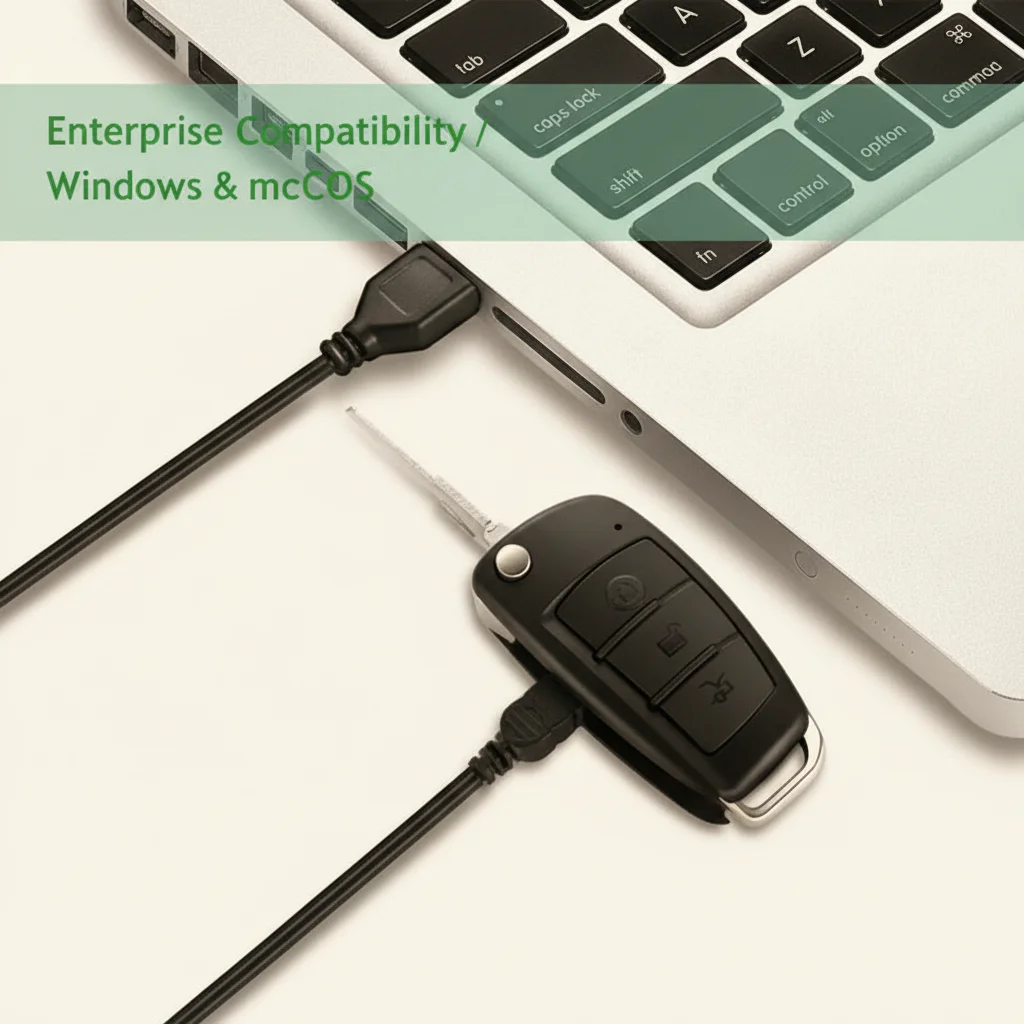
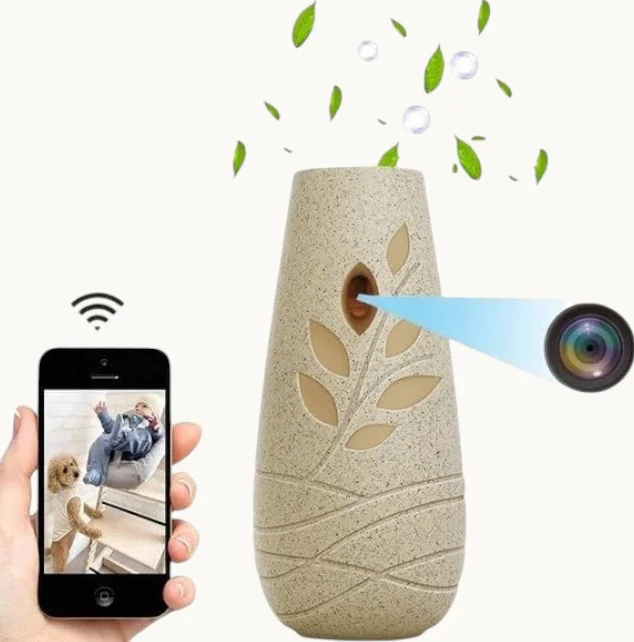
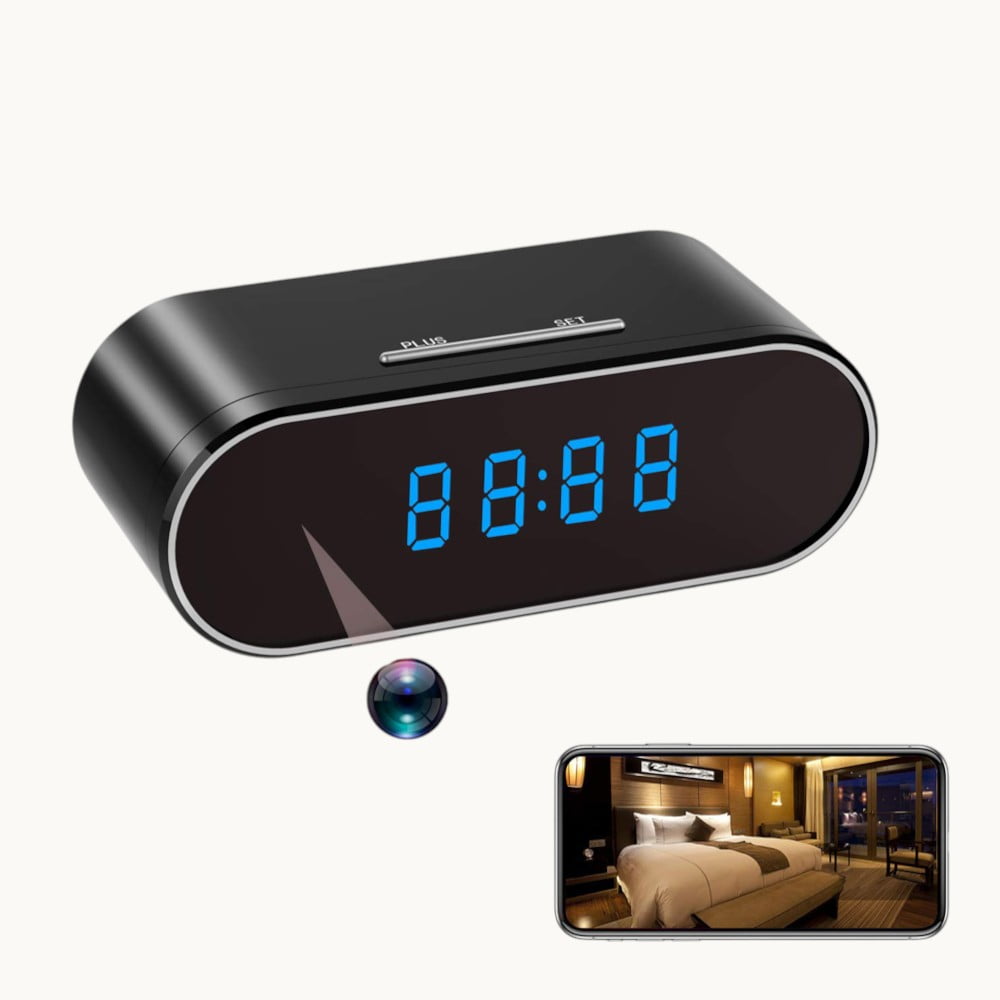
The best form factors hide LEDs behind dark plastic windows, speaker grilles, or decorative elements. Smoke-detector cameras use the vented shell to conceal IR LEDs. Clock cameras hide them behind the display bezel. USB charger cameras distribute them around the charging ports. Car-key spy cameras place them behind dark-tinted plastic near the keychain loop. Power bank cameras have the most space, so they can use larger, better-cooled IR arrays.
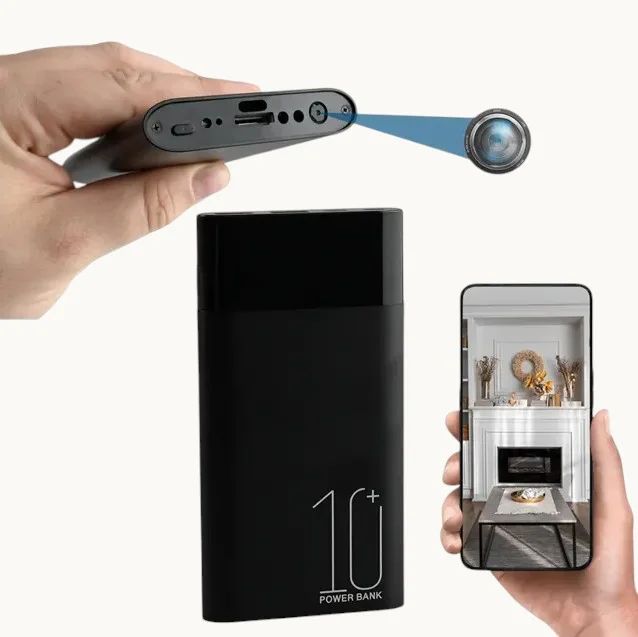
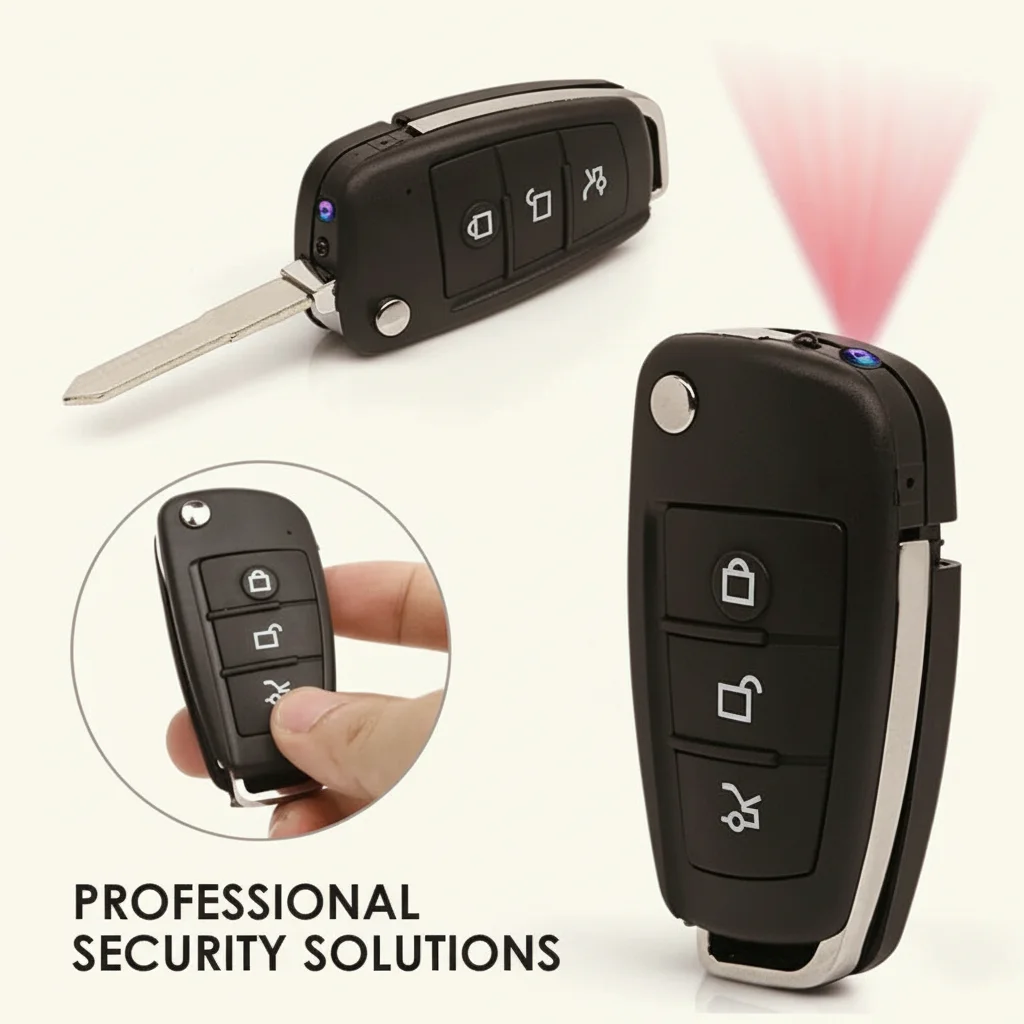
QZT offers several night-vision form factors. The Mini telecamera WiFi XD 1080P con visione notturna measures just 3.1 × 2.9 × 1.1 cm and uses 940 nm IR with a stated range up to 5 meters. The Car Key Spy Camera with IR Night Vision uses a familiar key-fob shell with 1080P recording, 140-degree lens, and 450 mAh battery for about 2 hours of recording. The WiFi Power Bank Hidden Camera with Night Vision provides long runtime through a large battery and concealed IR LEDs.
| Fattore di forma | LED Hiding Method | Typical IR Range |
|---|---|---|
| Detector di fumo | Vented shell | 5–10 meters |
| Clock camera | Display bezel / speaker grille | 3–6 meters |
| USB charger | Around charging ports | 2–4 meters |
| Chiave dell'auto | Dark-tinted plastic | 3–5 meters |
| Power bank | Behind front panel | 5–10 meters |
Punto chiave: The disguise must conceal both the lens and the IR LEDs.
How Does Motion Detection Work in the Dark?
Motion detection at night is harder than in daylight because the camera has less detail to compare between frames.
Most mini cameras use software-based motion detection: the processor compares consecutive frames and triggers recording when a threshold number of pixels changes. In darkness, noise and IR reflections can create false triggers. Spider webs, dust, and moving curtains become common problems. Some professional cameras use PIR (passive infrared) sensors instead, which detect heat rather than pixel changes. PIR reduces false alarms and extends battery life because the camera can sleep until a warm body approaches.
B2B buyers should test motion detection in realistic lighting, not just bright rooms. Ask the supplier for sample footage showing night activation, the trigger delay, and how many false events occur in a 24-hour period.
| Motion Detection Type | Come funziona | Ideale per |
|---|---|---|
| Software pixel comparison | Compares video frames | Continuous-powered cameras |
| PIR heat sensor | Detects body heat | Battery-powered cameras |
| Hybrid | PIR wakes camera, software confirms | Long battery life + accuracy |
Punto chiave: PIR is usually better than pure software detection for battery night-vision cameras.
What Image Quality Should B2B Buyers Expect?
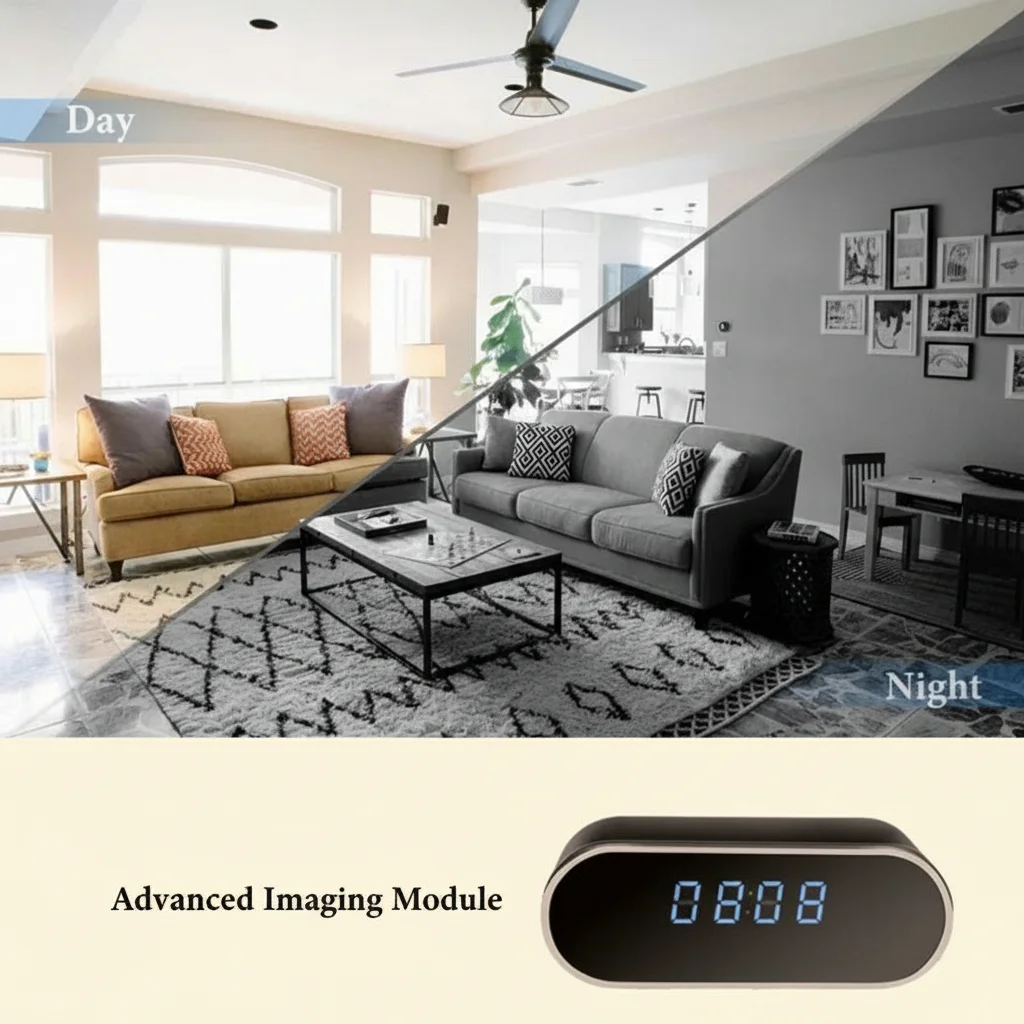
Night-vision footage is almost always black and white. Color requires visible light; IR illumination produces monochrome images.
Image quality at night depends on three factors: sensor sensitivity, IR coverage, and compression settings. A 1080p camera with a good sensor and balanced compression will look better than a 4K camera that crushes shadows with heavy noise reduction. Faces should be recognizable within the rated IR range. License plates and fine text are usually only readable at very close range, especially with mini lenses.
Buyers should reject samples where the center of the frame is washed out while the corners are black. That indicates poor IR diffusion. Also watch for motion blur: slow shutter speeds boost brightness but smear movement. A 30 fps night-vision camera with a 1/30 second shutter will show ghosting on fast movement.
| Quality Factor | Acceptable | Professionale |
|---|---|---|
| Colore | Black and white at night | Black and white at night |
| Face recognition | Clear within IR range | Clear across the frame |
| Motion handling | Minor blur | 30 fps with balanced shutter |
| Corner illumination | Noticeable falloff | Even coverage |
Punto chiave: Good night vision is even illumination and clear faces, not just brightness.
How Should You Test a Night Vision Camera Before Ordering?
Never commit to a bulk order based on daytime sample footage alone. A proper night-vision test follows a simple protocol.
First, request sample footage recorded in a completely dark room at the same distance and angle as your target installation. Second, verify the IR wavelength if covert operation matters: in a dark room, look directly at the camera from 1 meter away. 850 nm LEDs will show a faint red glow; 940 nm LEDs should be invisible. Third, measure battery runtime with IR active. Fourth, test motion detection sensitivity with a person walking at different speeds. Finally, check whether the camera switches cleanly between day and night modes using an IR-cut filter rather than simply tinting the image.
A supplier that refuses to provide night footage should be crossed off the shortlist. For B2B orders, request two or three sample units with different LED configurations so you can compare real performance before approving the SKU.
| Test Step | Cosa controllare | Pass/Fail Standard |
|---|---|---|
| Dark-room sample footage | Detail, noise, range | Faces recognizable at target distance |
| LED visibility check | 850 nm vs 940 nm | Matches claimed covert requirement |
| IR battery runtime | Hours with IR active | Within 20% of supplier claim |
| Motion trigger test | False events, missed events | <5 false events per night |
| Day/night switching | IR-cut filter behavior | Clean switch, no color tint |
Punto chiave: Demand dark-room sample footage before approving any bulk order.
Which QZT Mini Hidden Camera with Night Vision Fits Your Project?
The right camera depends on where it will sit, how long it must run, and how invisible the IR must be.
For ultra-small covert placement, the Mini telecamera WiFi XD 1080P con visione notturna is hard to beat at 3.1 × 2.9 × 1.1 cm with 940 nm IR. For body-worn or pocket-friendly recording, the Car Key Spy Camera with IR Night Vision provides 1080P video, 140-degree field of view, and about 2 hours of recording time. For long-duration room monitoring where battery size is not a constraint, the WiFi Power Bank Hidden Camera with Night Vision delivers extended runtime through a high-capacity battery.
B2B buyers should also ask QZT about OEM customization. Many bulk orders require custom housing, firmware branding, or memory configurations. QZT ships from an Italy warehouse for 2–5 day EU delivery and offers private-label packaging for resellers.
| Project Need | Fotocamera consigliata | Why It Fits |
|---|---|---|
| Smallest size + 940 nm | XD Mini Camera | Tiny body, invisible IR |
| Pocket / wearable covert | Car Key IR Camera | Familiar form, 140° lens |
| Long runtime room monitor | Power Bank IR Camera | Large battery, all-night coverage |
| Ceiling / fixed install | Smoke Detector / Clock Camera | Stable power, wide IR range |
Punto chiave: Match the form factor and IR wavelength to the deployment scenario.
Domande frequenti
Can mini hidden cameras record in complete darkness?
Yes, if they have infrared LEDs and a sensor with good near-infrared response. The footage will be black and white, not color.
What’s better for covert use, 850nm or 940nm IR?
940 nm is better for covert use because it produces no visible glow. 850 nm gives longer range but has a faint red glow up close.
Do all night vision cameras show a red glow?
No. Only cameras using 850 nm IR LEDs show a faint red glow. Cameras using 940 nm IR LEDs are invisible to the naked eye.
How long does night vision battery last?
IR mode reduces battery life by 40–60% compared to daytime recording. A 500 mAh battery might last 45–90 minutes with IR on, while a power-bank-style camera can run 6–12 hours or more.
Can night vision cameras record in color?
Not with IR illumination alone. Color night vision requires visible ambient light from streetlights, monitors, or white LEDs. True covert night vision is monochrome.
Ready to source mini hidden cameras with reliable night vision? Browse the QZT XD Mini Camera with Night Vision or contact QZT today for bulk pricing, OEM customization, and EU warehouse samples.
 English
  Italiano
  Deutsch
  Français
  Español
  Polski