
Requisito di alimentazione:
“Invisibile” è un'affermazione audace. Nessuna telecamera è veramente invisibile — un obiettivo ha bisogno di un'apertura, e un'apertura non può registrare ciò che non vede. Ma alcune telecamere si avvicinano notevolmente. La differenza tra una discrezione genuina e una sorveglianza evidente è la differenza tra filmati che catturano comportamenti naturali e filmati che catturano persone che si esibiscono per la telecamera.
Wireless indoor cameras take discretion a step further by eliminating the cables that are the first visual tell in any covert installation. This guide explains what truly makes a camera invisible, how wireless technology factors into that equation, what to look for when choosing a model, and how to deploy it legally and effectively in residential and commercial indoor environments.
Sommario
1. Cosa rende una telecamera “invisibile”?
2. The Role of Wireless Technology in Covert Cameras
3. Key Specifications for Indoor Covert Surveillance
4. The Best Invisible Indoor Camera Form Factors
5. Installation Best Practices
6. Legal and Ethical Deployment in the EU
1. Cosa rende una telecamera “invisibile”
A camera is genuinely invisible when it exists inside an object that belongs in the environment and is expected to be there. The critical word is expected. A clock on a wall is expected. A tissue box on a shelf in a bathroom is expected. A smoke detector on the ceiling is expected. A small black box sitting on a shelf in a living room is not expected — it draws the eye precisely because it does not belong.
Here is a useful mental framework:
Level 1 — Obvious: Standard dome cameras, bullet cameras, any device with an exposed lens. Intentionally visible as a deterrent.
Level 2 — Concealed: Cameras hidden inside common household objects where a camera is not expected but the object itself is ordinary. Clock cameras, charger cameras, tissue box cameras. Requires closer inspection to detect.
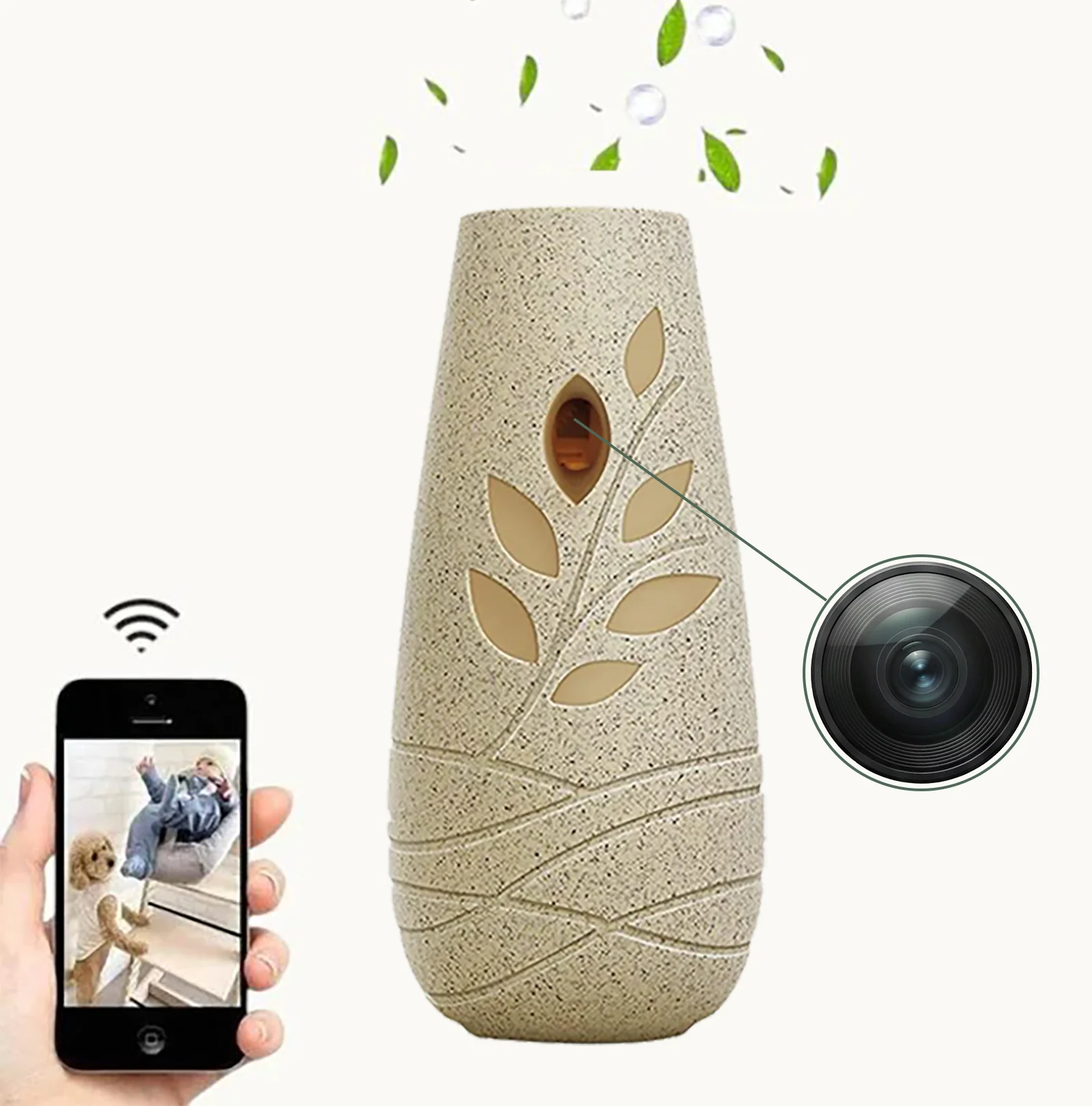
Level 3 — Integrated: Cameras embedded in fixtures that genuinely belong in the environment (smoke detectors, light fittings, electrical outlets). The housing is a legitimate product category on its own.
Level 4 — Micro: Cameras embedded in very small objects — pens, glasses, buttons, key fobs. These are body-worn or used for specific evidence capture tasks rather than continuous room monitoring.
The deeper the level of concealment, the more care required in deployment — because the legal implications of deploying a Level 3 or Level 4 camera without disclosure are significantly more serious than placing an overt security camera.
2. The Role of Wireless Technology in Covert Cameras
Wires are the enemy of covert deployment. A cable running from a wall socket to a tissue box on a shelf is visible from across the room. A cable draped across a floor is a trip hazard and an investigation trigger. Eliminating the wire is what separates genuinely covert cameras from obvious ones.
How Wireless Covert Cameras Transmit
There are three main wireless transmission methods used in indoor covert cameras:
1. WiFi (2.4 GHz) — Most Common
Cameras connect to your home WiFi network and stream footage to a smartphone app or cloud server. This is the method used by all Tuya Smart and Smart Life compatible devices in the QZT Security catalogue.
– Pro: Remote viewing from anywhere; app management; push notifications; cloud backup options
– Contro: Requires WiFi signal at the camera location; consumes home network bandwidth; potential security vulnerability if not properly configured
– Power requirement: occupa la superficie più comune in una camera da letto o in un soggiorno. È orientata verso l'interno da una posizione all'altezza degli occhi o superiore. Il display dell'orologio funzionale è preciso e regolabile.
2. Local Hotspot (AP Mode)
La telecamera crea la propria rete WiFi (tipicamente denominata qualcosa come “IPCAM_XXXX”). Ti connetti direttamente ad essa con il tuo telefono entro circa 10–20 metri. Non è richiesto internet.
– Pro: Works in environments with no WiFi; no footage goes through the internet
– Contro: Only works within direct WiFi range of the camera; no remote access without internet
3. SD Card Local Storage Only
No wireless transmission at all. Camera records to internal or inserted SD card. Footage is retrieved by physically removing the card.
– Pro: Completely undetectable from a network perspective; no hacking surface
– Contro: No remote access; retrieval requires physical access to the device
> Ecco cosa la maggior parte delle persone sbaglia riguardo al “wireless”: They assume wireless means battery-powered and untraceable. Every wireless camera still needs power. A mains-powered socket camera like the Telecamera Nascosta in Presa EU WiFi 1080P is technically wireless (no video cable) but requires a functioning EU socket — which means power is always present and the camera runs 24/7.
Battery vs. Mains Power: The Trade-Off
| Metodo di alimentazione | Durata operativa | Rischio di detezione | Affidabilità |
|---|---|---|---|
| Mains direct (socket/smoke detector) | Indefinito | Low (no cables visible) | Massimo |
| USB power bank | 6–24 hours (continuous) | Medium (power bank visible) | Alto |
| Battery (rechargeable) | 1–6 months (motion detect) | Low–Medium | Medium–High |
| No power (not possible) | — | — | — |
IL Power Bank Nascosta WiFi 1080P represents a practical middle ground: it looks like a standard power bank, provides portable power to phones, and records simultaneously. Its 10,000 mAh battery lasts 8–12 hours in continuous recording mode and much longer in motion-detection mode.
3. Key Specifications for Indoor Covert Surveillance
Choosing a covert indoor camera requires evaluating the same core specs as any security camera — with one critical addition: the form factor must be appropriate for the environment.
Risoluzione
1080p is the practical minimum for covert indoor cameras. The requirement for facial identification (did the nanny actually pick up the baby? did the landlord enter without permission?) demands enough resolution to make out facial features at 2–4 metres. 720p is marginally acceptable for smaller rooms but produces footage that is useless as evidence.
Angolo dell'obiettivo
Most covert indoor cameras use wide-angle lenses in the 120°–140° range. This covers a standard room from a single position. Some users prefer narrower 90° lenses for focused monitoring of a specific area (a cot, a desk, a safe) where a wide-angle view would dilute the subject.
Visione notturna
Indoor night vision typically relies on LED a infrarossi that are invisible to the human eye but allow the camera to record in complete darkness. The number and quality of IR LEDs determine the useful range and image quality in night mode. Six high-quality IR LEDs produce usable footage in total darkness at up to 5 metres. Low-quality units with two weak LEDs produce dark, grainy footage that may be legally insufficient as evidence.
IL Z10 Telecamera spia WiFi a sveglia includes automatic IR cut filter switching — the camera uses colour mode in daylight and switches to IR black-and-white mode when ambient light drops below a threshold. This happens without any user intervention.
Connectivity and App Stability
The app experience matters enormously for covert cameras. If the app crashes, requires frequent reconnection, or has poor remote viewing performance, the camera becomes a liability rather than a security asset.
IL Tuya Smart E Smart Life ecosystems — used by QZT Security cameras — are maintained by Tuya Inc. and receive regular security and feature updates. This is significantly more reliable than proprietary apps from small manufacturers, which frequently stop working after manufacturer abandonment.
Audio
Most indoor covert cameras include audio recording. In the EU, audio recording is subject to stricter legal requirements than video. The general rule:
– Own property, own family: Generally permissible with disclosure
– Employee monitoring: Requires explicit consent and legal basis under national employment law
– Third parties: Requires clear disclosure and GDPR lawful basis
4. The Best Invisible Indoor Camera Form Factors
Different rooms demand different form factors. Here is a breakdown of the most effective invisible indoor camera options and where each works best.
EU Socket Camera — Living Rooms, Bedrooms, Hallways
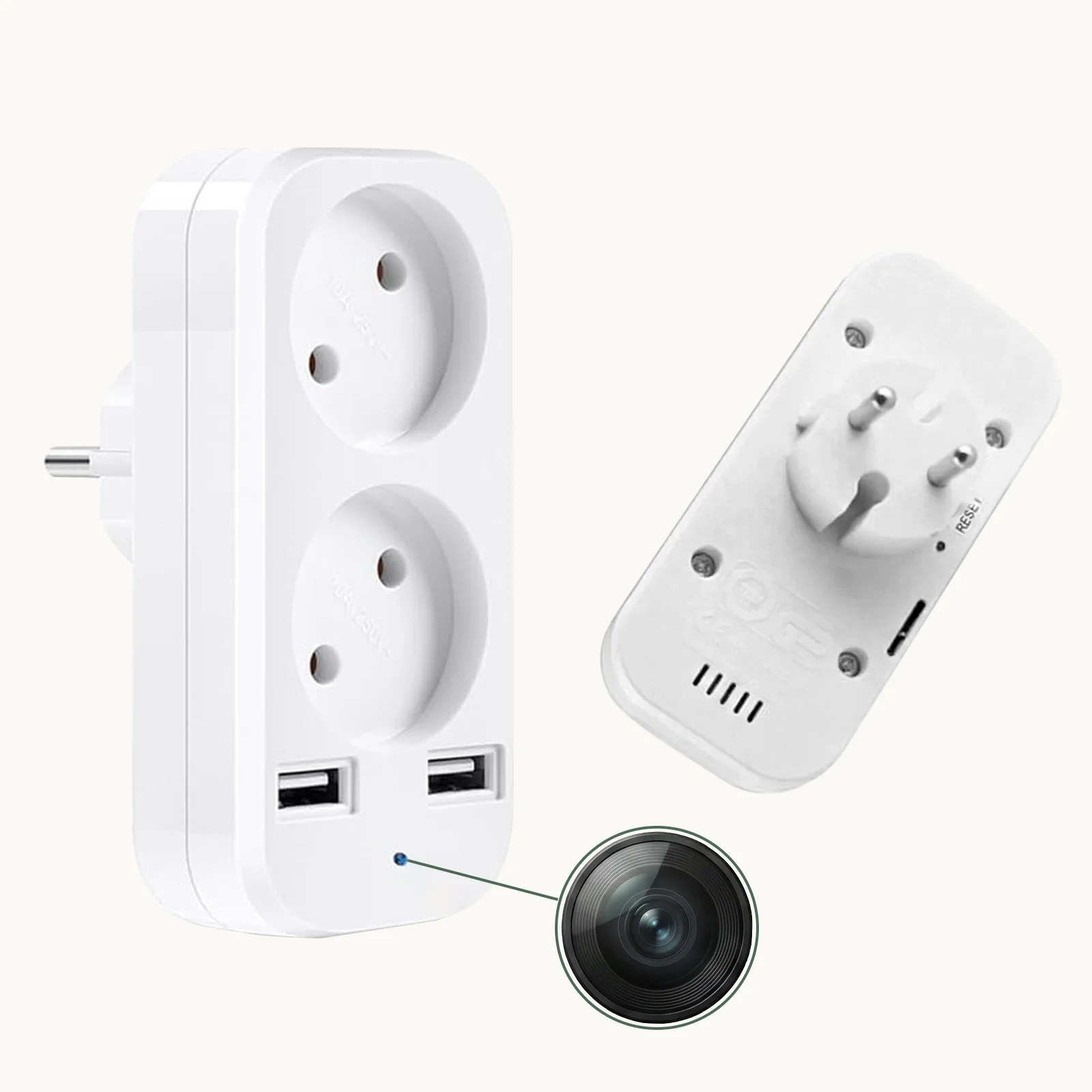
IL Telecamera Nascosta in Presa EU WiFi 1080P replaces any standard EU wall socket and sits at normal wall height — the ideal vantage point for recording room activity. With permanent mains power, it runs 24/7 without battery management. Multiple socket outlets are available to provide real functional sockets alongside the camera.
Ideal for: Long-term home security, Airbnb rental monitoring, elderly care rooms
Clock Camera — Nightstands, Shelves, Mantles
IL Z10 Telecamera spia WiFi a sveglia occupies the most common surface in a bedroom or living room. It faces inward from an eye-level or above position. Functional clock display is accurate and adjustable.
Ideal for: La sorveglianza legata all'occupazione richiede il rispetto del Codice delle Pratiche Occupazionali dell'ICO. Le registrazioni nascoste effettuate da individui nelle proprie abitazioni non sono vietate, ma vengono esaminate se il materiale viene condiviso pubblicamente.
Smoke Detector Camera — Ceilings, Entrances, Wide-Area Rooms
IL Telecamera Nascosta in Rilevatore di Fumo WiFi è montata a soffitto, offrendo una vista dall'alto verso il basso della stanza sottostante. A un'altezza del soffitto di 3–4 metri, una telecamera rilevatore di fumo copre una superficie maggiore rispetto a qualsiasi fattore di forma montato a parete.
Ideal for: Retail entrances, nurseries and playrooms, wide living rooms, professional offices
Power Bank Camera — Portable/travel Use
IL Power Bank Nascosta WiFi 1080P is the most portable option and the best choice when you cannot modify or install anything in the target environment. Hotel rooms, family homes, temporary office spaces.
Ideal for: Travel security, rental monitoring, temporary deployments
USB Charger Camera — Desks, Kitchens, Home Offices
IL Caricabatterie USB con telecamera spia WiFi 1080P E 5-port USB Hub Hidden Camera sit on desks and benchtops. Functional USB ports charge devices while recording. The hub model provides multiple ports, making it look even more ordinary.
Ideal for: Home office monitoring, desk security, kitchen/bottomcounter placement
Bluetooth Speaker Camera — Living Rooms, Shelves
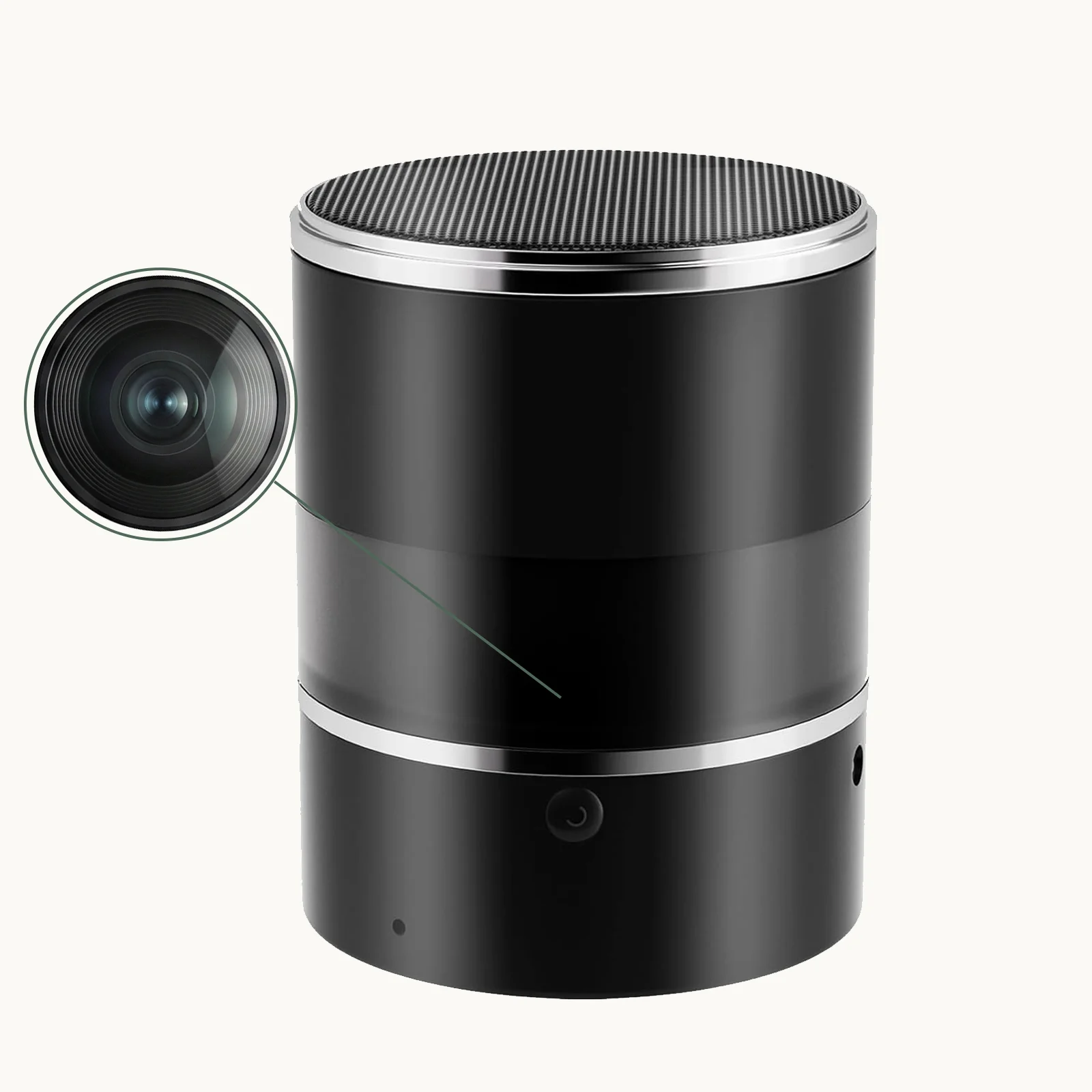
IL WiFi Spy Camera Bluetooth Speaker Rotating Lens offers a unique advantage: a motorised rotating lens that can be aimed remotely via the app. This allows you to cover two different areas from one device — left toward the door and right toward the sofa — without installing two cameras.
Ideal for: Large rooms, open-plan spaces, rooms with multiple areas of interest
5. Installation Best Practices
A well-chosen camera deployed poorly is worse than useless — it creates false confidence. Here is how to install invisible indoor cameras for maximum effectiveness.
Positioning Principles
1. Height matters: Cameras above 1.5 metres record faces more naturally. Cameras at tabletop height record from an odd angle and can miss facial detail.
2. Backlight is the enemy: Avoid positioning cameras where windows or bright lights are directly behind the subject. This causes silhouetting that makes faces unreadable.
3. Distance from subject: At 1080p, usable face detail requires the subject to be within approximately 4–5 metres of the camera. Beyond 5 metres, facial identification becomes unreliable.
4. Widen coverage with multiple units: Rather than buying a wide-angle camera that tries to cover too much, install two narrower-angle cameras facing different areas. The Modulo Telecamera Spia WiFi Nascosta Fai-da-te is designed for exactly this kind of multi-camera custom installation.
Hiding the Power Source
The single biggest challenge in invisible camera installation is hiding the power source. Practical approaches:
– Mains-powered cameras (socket, smoke detector): Use the existing wiring or a standard mains socket. Run a slim USB cable behind furniture to the device if needed — but ideally, select a device that fits directly into a real power source.
– Battery-powered cameras: Schedule regular checks (weekly) to swap and recharge batteries. In motion-detection mode, battery life extends to 1–3 months, making this manageable.
– Power bank cameras: Position the power bank so it is partially hidden (inside a bag, behind an object) while the camera lens remains exposed.
Testing Before Permanent Installation
Before you secure any camera permanently, run it for 48 hours in the intended position and:
– Verificare che il segnale WiFi sia abbastanza forte per una visione remota affidabile
– Controllare la qualità del filmato di giorno e di notte
– Confermare che le zone di rilevamento movimento siano configurate correttamente
– Testare le notifiche di allerta sul tuo telefono
> Pro tip for commercial deployments: Run a one-week test in the target environment with visible SD card access (you will retrieve the card) before switching to hidden-position permanent installation. This gives you an opportunity to adjust the camera angle without the cost of re-installation.
6. Legal and Ethical Deployment in the EU
The legal landscape for invisible indoor cameras is clear in its basics but complex in its details. Here is what you need to know.
The Core Rule: Disclosure
Across all EU member states, the common thread in lawful surveillance deployment is clear, visible disclosure. The GDPR requires transparency under Article 5(1)(a). National implementing laws add specific requirements:
Germany (BDSG §26): Employee monitoring requires works council co-determination. Covert cameras in the workplace are subject to prior review by the Datenschutzbeauftragter. Home nannies are considered employees and require contract disclosure.
France (CNIL): Signage must be placed at a minimum of 3 metres from the camera. A register of CCTV installations must be maintained. Footage may not be retained beyond 30 days without specific justification.
Italy (D.Lgs. 196/2003, Garante): All surveillance in areas accessible to the public requires Garante registration. Private home monitoring requires no registration but must still be proportionate.
UK (Data Protection Act 2018, ICO Code): La sorveglianza legata all'occupazione richiede la conformità al Codice delle Pratiche Occupazionali dell'ICO. La registrazione nascosta da parte di individui nelle proprie case non è vietata, ma è esaminata se i filmati vengono condivisi pubblicamente.
When Disclosure Is Not Required
Come Scegliere Telecamere Wireless Invisibili per Interni per un Monitoraggio Discreto - QZT | Telecamere Nascoste e Miniature all'Ingrosso
– Self-protection in the home: Individuals recording to protect their own property or safety, with no intent to publish or share, are generally not subject to CCTV registration requirements — though local laws vary
– Criminal investigation by law enforcement: Subject to judicial authorisation
– whistle-blower situations: Some national laws protect covert recording as evidence of serious wrongdoing
Ethical Framework
Even where covert cameras are legally permissible, consider:
– Proportionality: Is a hidden camera the least intrusive method to achieve your legitimate aim?
– Dignity: Do the individuals being recorded have a reasonable expectation of privacy in the space?
– Purpose: Will the footage be used only for its stated purpose?
– Conservazione: Will footage be deleted promptly when no longer needed?
A camera that is legally deployable may still be ethically questionable — particularly in live-in care situations where carers are present for extended periods and have a strong claim to a private life even within your home.
7. FAQ
What is the most invisible indoor camera available?
The most genuinely invisible form factor is the EU wall socket camera — it replaces a real electrical socket and sits flush with the wall. From normal viewing distance, it is completely indistinguishable from a standard socket. The Telecamera Nascosta in Presa EU WiFi 1080P requires no battery, no visible device, and no wireless signal cables.
Can wireless indoor cameras be detected?
Wireless cameras can be detected by:
1. Network scanning apps (Fing) — shows devices connected to your WiFi
2. RF detectors — detects the 2.4 GHz wireless transmission
3. Physical lens detection — flashlight at shallow angle in darkened room
4. Thermal imaging — electronic components generate heat visible to thermal cameras
Cameras recording to local SD card only and not connected to WiFi are not detectable by network scanning.
Do wireless cameras work through walls?
No. Le telecamere WiFi standard operano a 2,4 GHz, che non penetra efficacemente le pareti. Posizionare una telecamera all'interno di una stanza dall'esterno della stanza (attraverso una parete) non funzionerà — il segnale WiFi non raggiungerà la telecamera o il filmato della telecamera non verrà trasmesso indietro. Per il monitoraggio da esterno a interno, è necessaria una telecamera posizionata fisicamente all'interno della stanza.
How long do invisible wireless cameras record?
In continuous recording mode on battery power, expect 8–24 hours depending on battery capacity. In motion-detection mode, a Telecamera nascosta con power bank can record for several weeks before requiring a charge. Mains-powered cameras (Telecamera con presa EU, telecamera nel rilevatore di fumo) record indefinitely as long as power is maintained.
What SD card size is needed for 24/7 indoor recording?
At 1080p/15fps: approximately 1 GB per hour. For 24/7 recording:
– 1 giorno = 24 GB → scheda SD da 32 GB
– 3 giorni = 72 GB → scheda SD da 128 GB
– 7 giorni = 168 GB → verificare che la telecamera supporti schede superiori a 128 GB (la maggior parte non lo fa)
Are invisible cameras WiFi-only or do they support other protocols?
All QZT Security indoor cameras operate on WiFi 2.4 GHz exclusively. None currently support Zigbee, Z-Wave, or other smart home protocols as primary connectivity. Some units can be integrated into broader Tuya/Smart Life smart home ecosystems for automation triggers (e.g., record when a door sensor is triggered).
Ready to deploy invisible wireless cameras for your property or business? Contattaci oggi to discuss your requirements — from discrete single-room installations to large-scale commercial OEM deployments across the EU.

 English
  Italiano
  Deutsch
  Français
  Español
  Polski