
Home surveillance in Europe sits under a patchwork of national privacy statutes layered on top of the GDPR, and the rules shift depending on who is filmed, where the lens points and whether anyone consented. This reference explains where a hidden camera may lawfully operate inside a private residence, which rooms and situations are excluded outright, how the household exemption applies to shared entrances and gardens, and what obligations attach when a cleaner, nanny or live-in carer enters the property. Country notes cover Germany, France, Spain, Italy, the Netherlands and Poland. It is a legal orientation document for resellers advising domestic customers, not a product comparison and not a recommendation of any specific model.
Here’s the thing: that assumption is wrong, and it’s causing a lot of homeowners and families in Europe to go without protection they’re fully entitled to have.
This guide breaks down exactly when and how you can use a hidden camera at home in Europe — legally, without violating GDPR, and without putting yourself at risk.
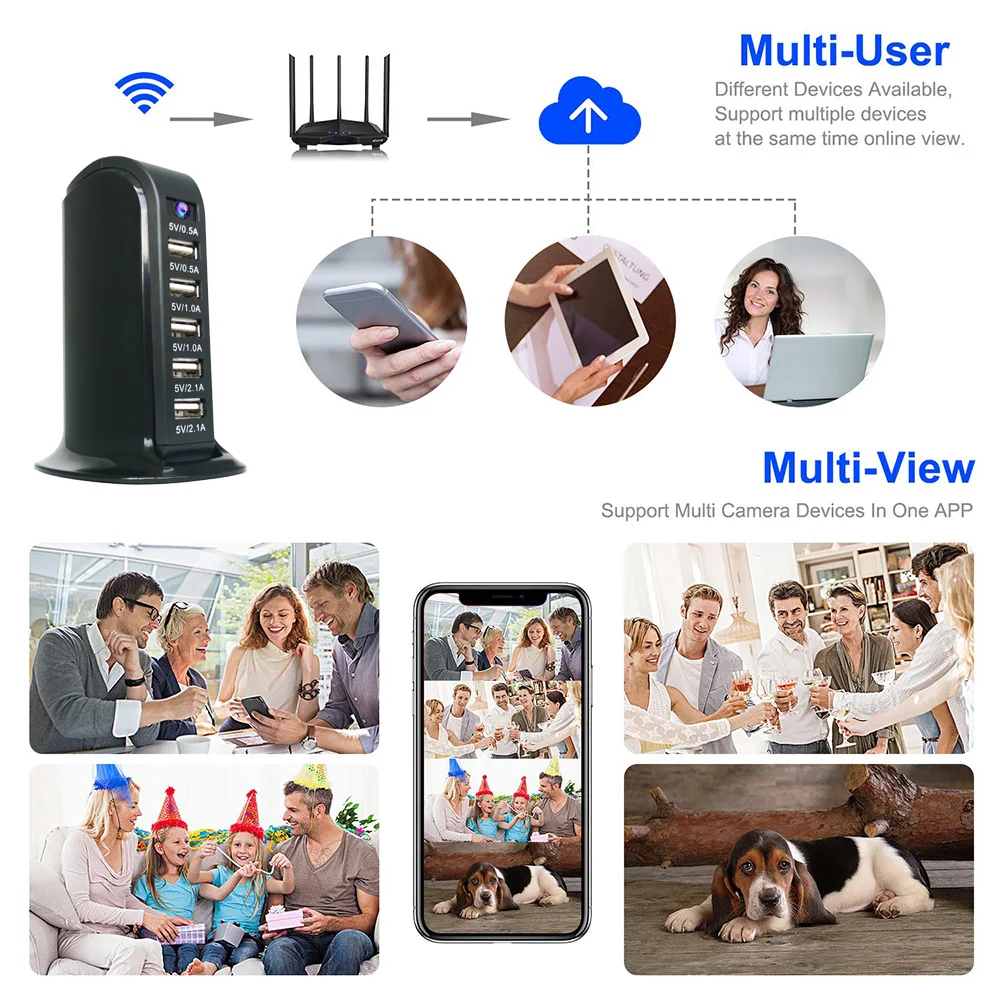
If audio is necessary for your home-security purpose, compare the A57, USB charger and S2 audio-capable models, then verify the consent rule in your country before enabling sound.
What Does GDPR Actually Say About Home Surveillance?
Most people hear “GDPR” and assume it covers everything involving a camera. It doesn’t.
GDPR Recital 18 is explicit: the regulation does not apply to “the processing of personal data by a natural person in the course of a purely personal or household activity.” The European Court of Justice has consistently interpreted this to mean that a camera installed inside your own home, used for personal security purposes, is outside the scope of GDPR entirely.
The UK’s Information Commissioner’s Office (ICO) goes even further. Their published guidance on domestic CCTV systems states directly that cameras used “for personal, family or household purposes” are exempt from data protection law. If your hidden camera is pointed inward — at your own hallway, living room, or garden — UK GDPR simply does not apply to you.
The same principle holds in Germany under the BDSG, in France under the CNIL framework, and across EU member states implementing the GDPR. Personal use inside a private residence is consistently treated as a domestic activity, not data processing.
| Jurisdiction | Governing Law | Home Camera Exemption |
|---|---|---|
| UK | UK GDPR + DPA 2018 | Yes — ICO explicitly exempts domestic use |
| Germany | GDPR + BDSG | Yes — purely personal household activity |
| France | GDPR + Loi Informatique et Libertés | Yes — domestic surveillance excluded |
| Poland | GDPR + UODO | Yes — same Recital 18 exemption applies |
| Italy | GDPR + Codice Privacy | Yes — personal/household processing excluded |
When Does a Home Camera Become a GDPR Issue?
The exemption has limits — and knowing them is what keeps you on the right side of the law.
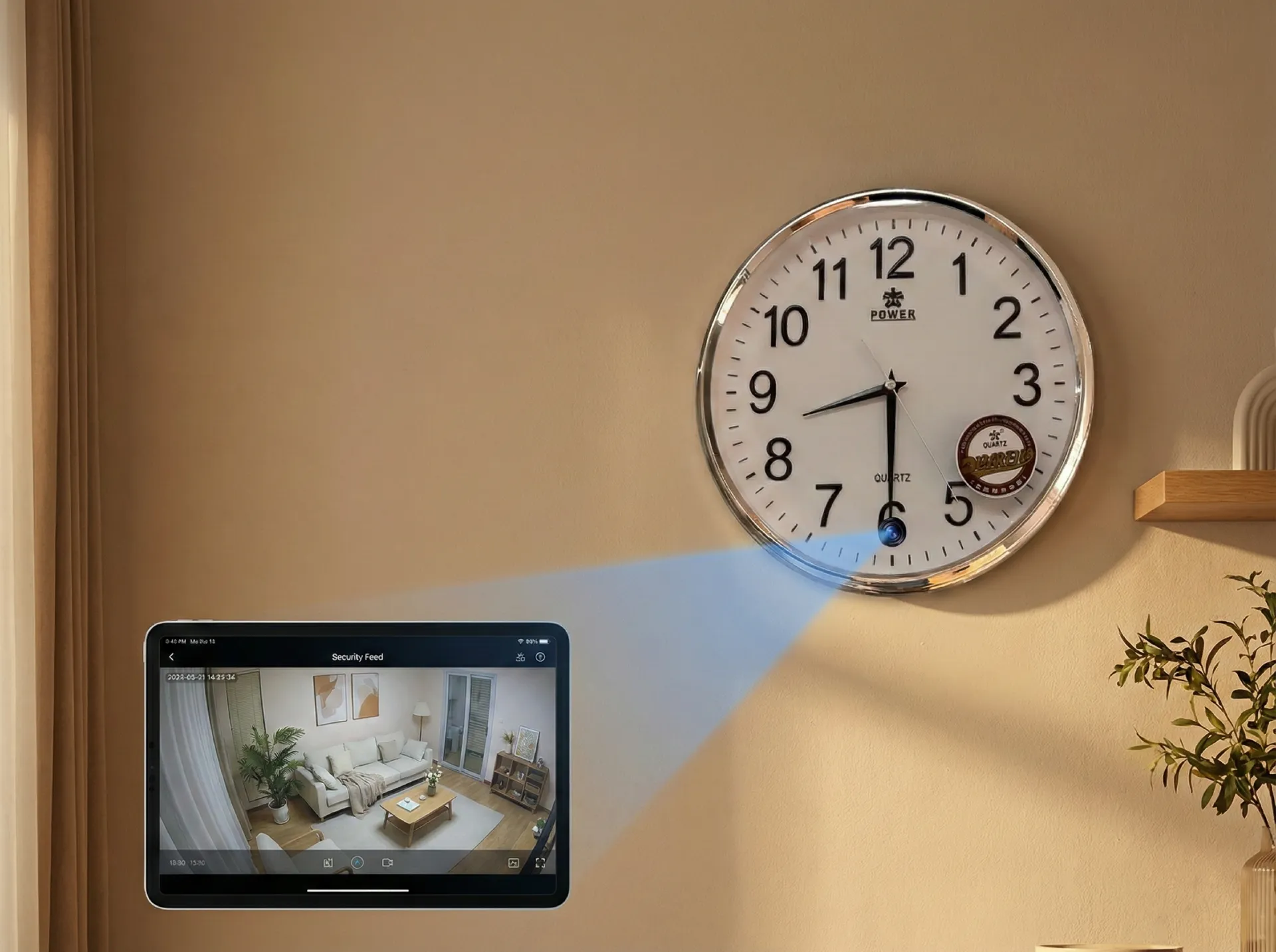
The household exemption disappears when your camera captures people outside your private space. If a WiFi clock hidden camera positioned in your front room also captures the public pavement or your neighbour’s front door, that footage involves third parties who never consented to being recorded. At that point, GDPR obligations kick in.
Here’s what most people get wrong: it’s not about the camera being hidden. It’s about who it captures. A covert device pointed at your own living space is legal. The same device aimed into a shared stairwell, a rented-out flat, or a communal car park enters legally murky territory — and potentially GDPR territory.
A useful rule of thumb: if the camera captures only your own property and people who are lawfully present in your home, you’re in the domestic exemption. If it captures people who have no reasonable expectation of being filmed by you, you need to think carefully about legal basis.

Is a Nanny Cam Legal Under GDPR in Europe?
This is one of the most common questions — and the answer is yes, with one important condition.
Using a hidden camera to monitor a babysitter, nanny, or home carer in your own residence falls under the household exemption when the camera is in your home and the monitoring is for child safety or personal security. Courts in the UK and Germany have upheld this position. The EDPB’s Guidelines on Video Devices acknowledge that legitimate interest under Article 6(1)(f) provides a valid legal basis for monitoring caregivers where there is a genuine safety concern.
But here’s the kicker: if you employ the nanny as a formal employee — meaning you’re their employer, not just a private household — employment law may require that you inform them surveillance is in place. The monitoring doesn’t have to be disclosed as covert, but the existence of monitoring generally does.
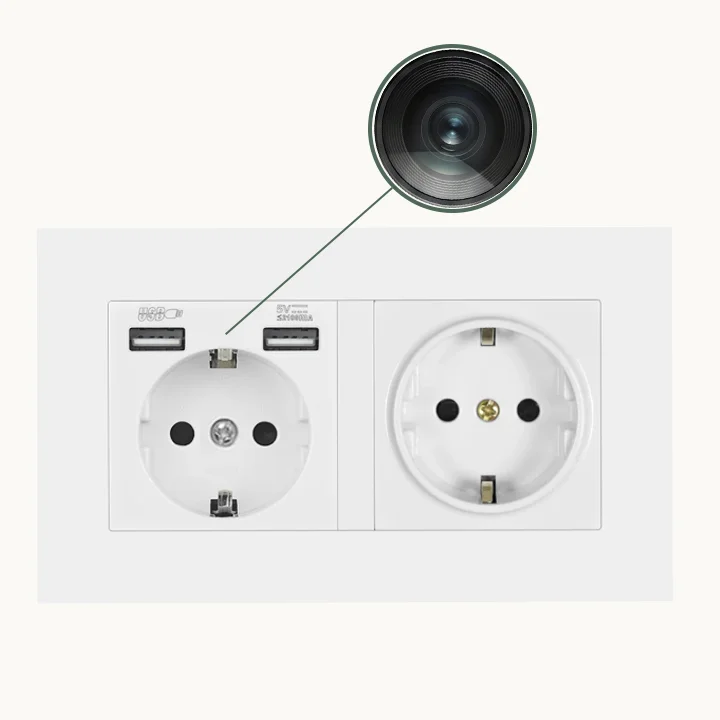
For most families using a clock camera or a WiFi socket camera to check on a carer while working from another room, the household exemption applies in full and no notification is required.
| Scenario | GDPR Applies? | Disclosure Required? |
|---|---|---|
| Family member checking on home carer | No (household exemption) | No |
| Homeowner using nanny cam for child safety | No (household exemption) | No |
| Formal employer monitoring a domestic worker | Partially (employment law) | Recommended |
| Landlord monitoring a tenant’s space | Yes | Yes, mandatory |
How to Choose the Right Hidden Camera for Home Use
Not all covert cameras are equal, and the right choice depends on your specific situation.
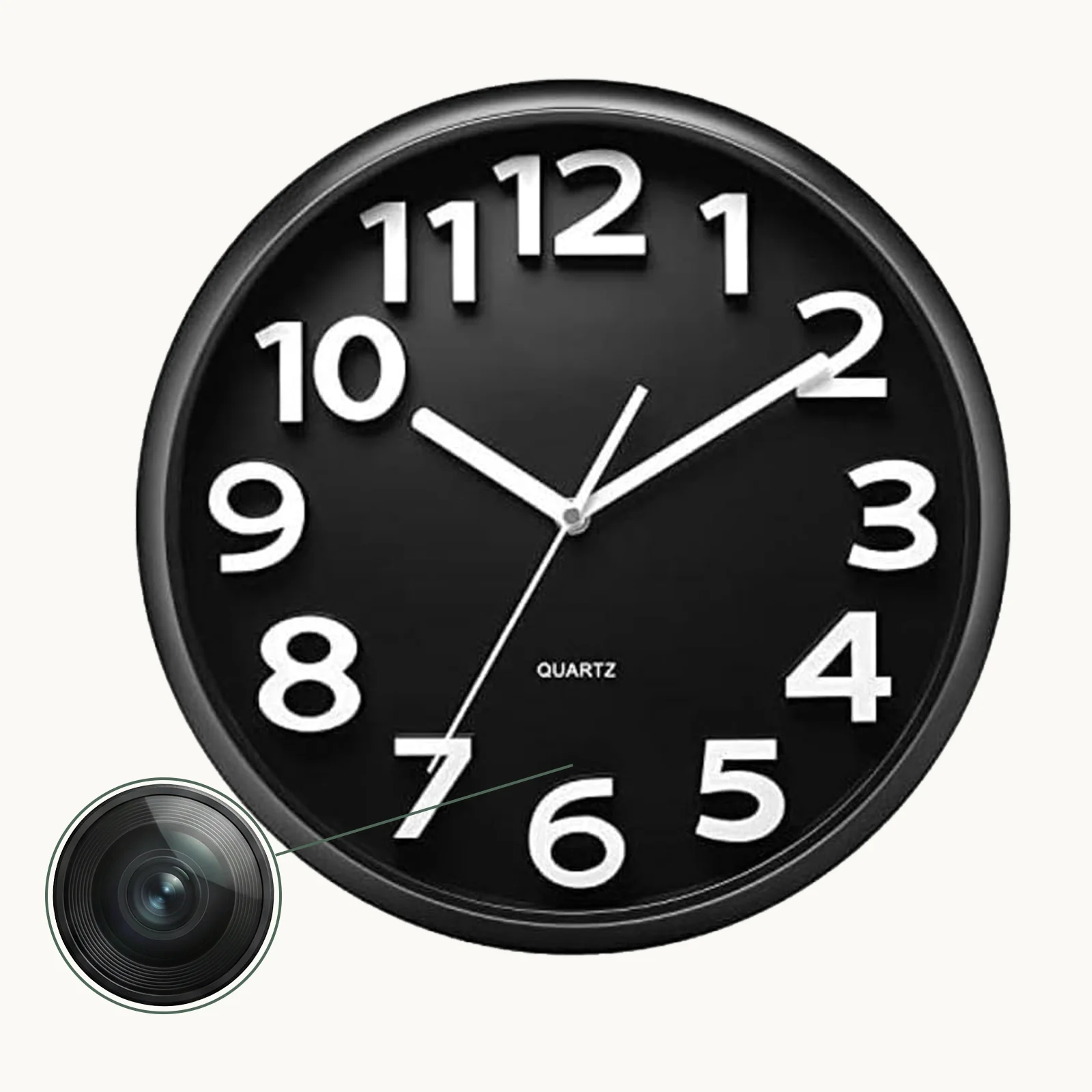
If you need 24/7 monitoring of an interior space, a WiFi wall clock hidden camera is the most practical option for home use. It blends naturally into any room, records continuously or on motion trigger, and streams live footage to your smartphone via the Tuya app. Resolution matters: 1080p is the minimum for identifying faces and reading licence plates if a camera has an outdoor view.
For rooms where a clock would look out of place — kitchens, utility rooms, or small offices — a USB charger camera offers a plug-and-forget option. It draws power from the mains permanently, which solves the single biggest practical problem with hidden cameras: battery life.
If you’re monitoring a space temporarily — during building work, a house sit, or a short-term rental turnaround — a power bank hidden camera gives you 6-10 hours of standalone recording without needing a power outlet nearby.
What About Airbnb and Short-Term Rentals — Is a Hidden Camera Legal?
This is where many people get into trouble, and the answer is unambiguous: no.
Recording guests in a rental property without disclosure is illegal under GDPR, under most national privacy laws, and under Airbnb’s own platform rules. Guests in a rental have a reasonable expectation of privacy. They are not in your “household” — they are paying customers in a temporary private space.
If you want to monitor a rental property for security reasons, the legal route is overt cameras in exterior or common areas only, with a visible notice informing guests that CCTV is in use. Covert cameras inside a rental, in bedrooms, bathrooms, or living spaces, are prohibited across the entire EU and UK, full stop.
This distinction matters because it’s the one area where hidden cameras and GDPR genuinely do collide — not in home use, but in commercial letting.
How to Set Up a Hidden Home Camera Without Legal Risk
The practical steps for compliant home use are straightforward.
Point the camera inward. Your field of view should capture your own property — your hallway, living room, garden, or driveway — and not spill into public streets or adjacent properties. Most covert home cameras use wide-angle lenses in the 90° to 120° range, which is more than enough to cover a room without reaching outside your boundary.
Use motion detection rather than continuous recording where possible. This reduces the volume of footage stored, which is good practice even under the domestic exemption. Cameras like the Tuya WiFi wall clock allow you to set motion sensitivity zones — you can exclude doorways that open onto shared spaces and focus recording on interior zones only.
Store footage securely. Under the household exemption you have no formal data retention obligation, but common sense says you shouldn’t store months of footage on an unsecured SD card. A 32GB card on loop recording overwrites automatically — this is the default setting on most devices and the safest configuration for home use.
Does the Type of Camera Affect Legality?
No. Whether a camera is overt or covert has no bearing on whether GDPR applies.
This surprises most people. The regulation is concerned with data processing — whether personal data about identifiable individuals is being collected, stored, and potentially shared. A visible security camera that records a busy office corridor is fully subject to GDPR. A hidden camera in your own living room capturing only your family is not — not because it’s hidden, but because it’s a purely domestic activity.
What does affect legality is location, the identity of the people captured, and the purpose of recording. A camera is legal when it’s in your own home, it captures people in your household or lawful visitors, and the purpose is personal security. The same camera becomes potentially illegal the moment it’s used to monitor tenants, employees in a formal workplace, or people in public spaces.
Sound familiar? This is exactly the confusion that stops people from protecting their own homes when the law actually supports it.
How to Buy Hidden Cameras Legally in Europe
Purchasing and owning a hidden camera is legal throughout the EU and UK. There is no prohibition on buying, selling, or importing covert security devices — the legal question is always about use, not ownership.
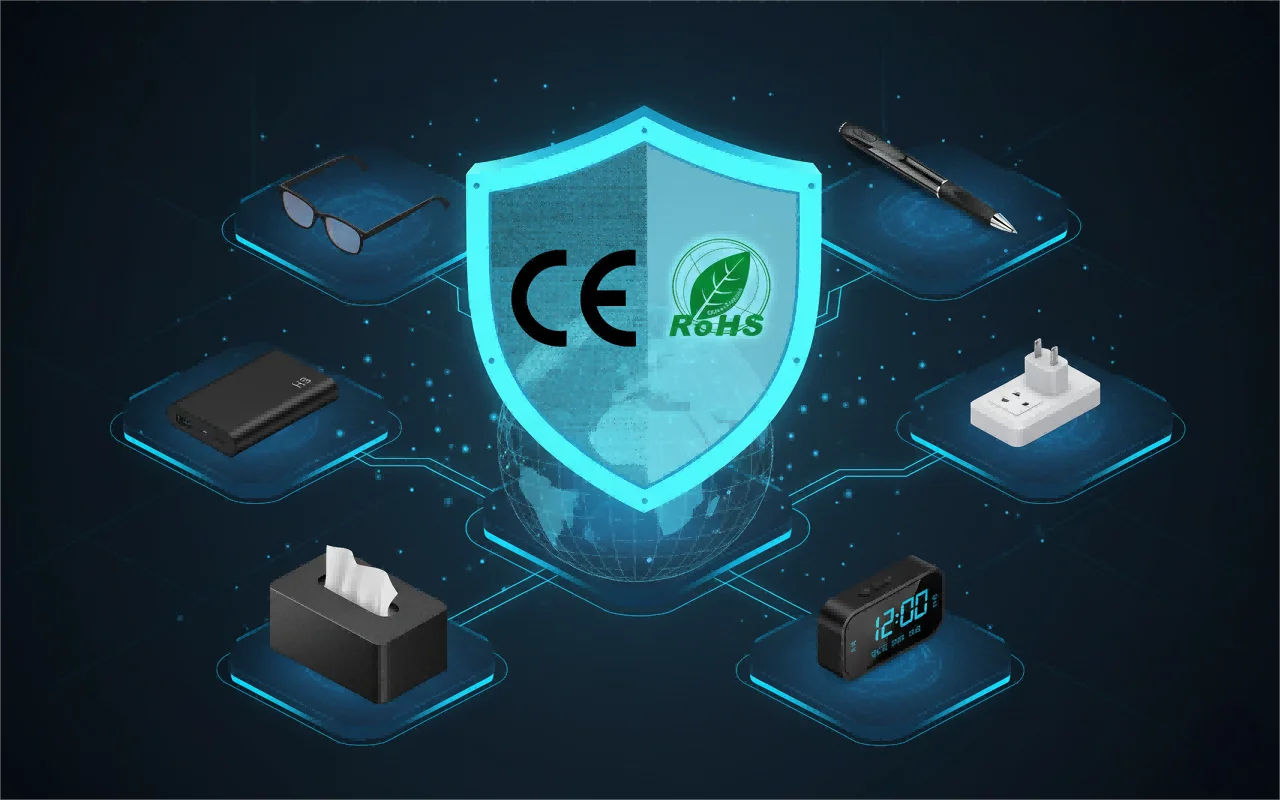
For buyers in Germany, France, Poland, and the UK, QZT ships from a European warehouse in Italy, which means no customs delays, no import duties within the EU, and next-day delivery to many locations. All devices carry CE and RoHS certification, which is required for legal sale in the EU market.
If you’re sourcing for resale — distributing to retail customers, supplying to security installers, or stocking products for your own showroom — the wholesale purchasing guide has full information on MOQ, pricing tiers, and lead times. QZT has supplied European distributors since 2015 and has local sales support available in Italian, English, and French.
Why Are European Distributors Still Hesitant About GDPR?
It’s a fair question. If the law is this clear, why does GDPR still come up as a sales objection?
The answer is that the regulation is widely misunderstood — including by people in the security industry. Many distributors, retailers, and even solicitors conflate the rules that apply to businesses using surveillance (which are genuinely complex) with the rules that apply to individuals using home security (which are simple and permissive).
What you might not know is that several of Europe’s largest security product distributors — including companies in Germany, France, and the UK — have been selling covert home security devices continuously throughout the GDPR era without a single enforcement action related to product sales. The ICO’s enforcement focus is on employers running undisclosed workplace surveillance, not on families using nanny cams.
The practical reality is that GDPR does not prohibit selling, stocking, or distributing hidden cameras. It places obligations on the user in specific circumstances — and even most of those circumstances are either exempt (home use) or straightforwardly manageable (legitimate interest for business use).

What’s the Difference Between Legal and Illegal Hidden Camera Use?
| Legal Use | Illegal Use |
|---|---|
| Monitoring your own home interior | Filming a tenant’s private space |
| Nanny cam in family home | Hidden cameras in hotel rooms or vacation rentals |
| Personal security on your own property | Recording neighbours without consent |
| Caregiver monitoring with legitimate safety concern | Workplace monitoring without employee notification |
| Retail security camera in your own shop | Installing cameras in public toilets or changing rooms |
The line is not about concealment — it’s about reasonable expectation of privacy and your relationship to the space. In your own home, for your own security, you are on solid legal ground in every EU member state and the UK.
Resellers sourcing compliant stock for these domestic use cases can review current wholesale models in our best hidden cameras of 2026 roundup.
For buyers who need current compliant models rather than legal theory, our best hidden cameras of 2026 roundup covers tested picks with CE/RoHS documentation ready for EU resale.
Conclusion: Your Home, Your Security, Your Rights
Yes, you can use a hidden camera at home in Europe. You can buy one, install one, and use it to monitor your family’s safety — and GDPR will not touch you.
The regulation is designed to protect people from surveillance by corporations, employers, and state actors. It was never intended to prevent families from watching over their own homes. GDPR Recital 18 and the consistent guidance of every national data protection authority in Europe makes this unambiguous.
If you have questions about specific use cases or want guidance on which products are best suited for your situation, contact us today — QZT’s team has helped European distributors and end customers navigate these questions for over a decade.
FAQ
Q1: Can I install a hidden camera in my home without telling anyone?
Yes, for purely personal and household use, GDPR’s household exemption applies and there is no legal requirement to notify people in your own home. The exemption covers cameras used for personal security, baby monitoring, and family safety.
Q2: What’s the best hidden camera for monitoring a nanny or babysitter in the EU?
A WiFi-enabled clock camera or wall socket camera offers the best combination of concealment, continuous power, and remote monitoring. Look for a device with motion detection and app-based live view — QZT’s WiFi wall clock hidden camera covers all of these requirements with Tuya app integration.
Q3: Can I use a hidden camera in my Airbnb property in Europe?
No. Recording guests in a rental space without their explicit knowledge and consent is illegal under GDPR and violates platform rules. Exterior CCTV with a visible notice is permissible; interior covert recording is not.
Q4: Does buying or selling hidden cameras violate GDPR in the EU?
No. GDPR governs the processing of personal data, not the sale of hardware. Selling, distributing, or purchasing a hidden camera is fully legal across the EU and UK. The regulation only comes into play when the device is used to record identifiable individuals.
Q5: How do I know if my hidden camera use is covered by the household exemption?
Ask three questions: Is the camera on your own property? Does it capture only your home’s interior and lawful visitors? Is the purpose personal security or family safety? If the answer to all three is yes, you are covered by GDPR Recital 18 and the regulation does not apply to your use.

 English
  Italiano
  Deutsch
  Français
  Español
  Polski