
La surveillance domestique en Europe relève d'un patchwork de lois nationales sur la vie privée qui se superposent au RGPD, et les règles varient selon qui est filmé, où pointe l'objectif et si quelqu'un a consenti. Cette référence explique où une caméra cachée peut légalement opérer à l'intérieur d'une résidence privée, quelles pièces et situations sont exclues d'office, comment l'exemption domestique s'applique aux entrées et jardins partagés, et quelles obligations s'appliquent lorsqu'une femme de ménage, une nourrice ou un aidant à domicile entre dans la propriété. Les notes par pays couvrent l'Allemagne, la France, l'Espagne, l'Italie, les Pays-Bas et la Pologne. Il s'agit d'un document d'orientation juridique destiné aux revendeurs conseillant des clients particuliers, et non d'un comparatif de produits ni d'une recommandation d'un modèle spécifique.
Voici le problème : cette hypothèse est erronée, et elle prive de nombreux propriétaires et familles en Europe d'une protection à laquelle ils ont pleinement droit.
Ce guide explique précisément quand et comment vous pouvez utiliser une caméra cachée à domicile en Europe — légalement, sans violer le RGPD, et sans vous mettre en danger.
Si l'audio est nécessaire pour votre objectif de sécurité domestique, comparez la Modèles A57, chargeur USB et S2 avec capacité audio, puis vérifiez la règle de consentement dans votre pays avant d'activer le son.
Que dit réellement le RGPD sur la surveillance domestique ?
La plupart des gens entendent “ RGPD ” et supposent qu'il couvre tout ce qui implique une caméra. Ce n'est pas le cas.
Considérant 18 du RGPD est explicite : le règlement ne s'applique pas au “ traitement des données à caractère personnel par une personne physique dans le cadre d'une activité purement personnelle ou domestique ”. La Cour de justice de l'Union européenne a constamment interprété cela comme signifiant qu'une caméra installée à l'intérieur de votre propre domicile, utilisée à des fins de sécurité personnelle, est entièrement en dehors du champ d'application du RGPD.
Le Bureau du Commissaire à l'Information (ICO) du Royaume-Uni va encore plus loin. Leurs directives publiées sur systèmes de vidéosurveillance domestiques déclare directement que les caméras utilisées “ à des fins personnelles, familiales ou domestiques ” sont exemptées de la loi sur la protection des données. Si votre caméra cachée est tournée vers l'intérieur — vers votre propre couloir, salon ou jardin — le RGPD britannique ne s'applique tout simplement pas à vous.
Le même principe s'applique en Allemagne sous le BDSG, en France sous le cadre de la CNIL, et dans tous les États membres de l'UE mettant en œuvre le RGPD. L'usage personnel à l'intérieur d'une résidence privée est systématiquement traité comme une activité domestique, et non comme un traitement de données.
| Juridiction | Droit applicable | Exemption pour caméra domestique |
|---|---|---|
| UK | RGPD britannique + DPA 2018 | Oui — la CIL exempte explicitement l'usage domestique |
| Allemagne | RGPD + BDSG | Oui — activité domestique purement personnelle |
| France | RGPD + Loi Informatique et Libertés | Oui — surveillance domestique exclue |
| Pologne | RGPD + UODO | Oui — la même exemption du considérant 18 s'applique |
| Italie | RGPD + Codice Privacy | Oui — traitement personnel/domestique exclu |
Quand une caméra domestique devient-elle un problème RGPD ?
L'exemption a des limites — et les connaître est ce qui vous maintient du bon côté de la loi.
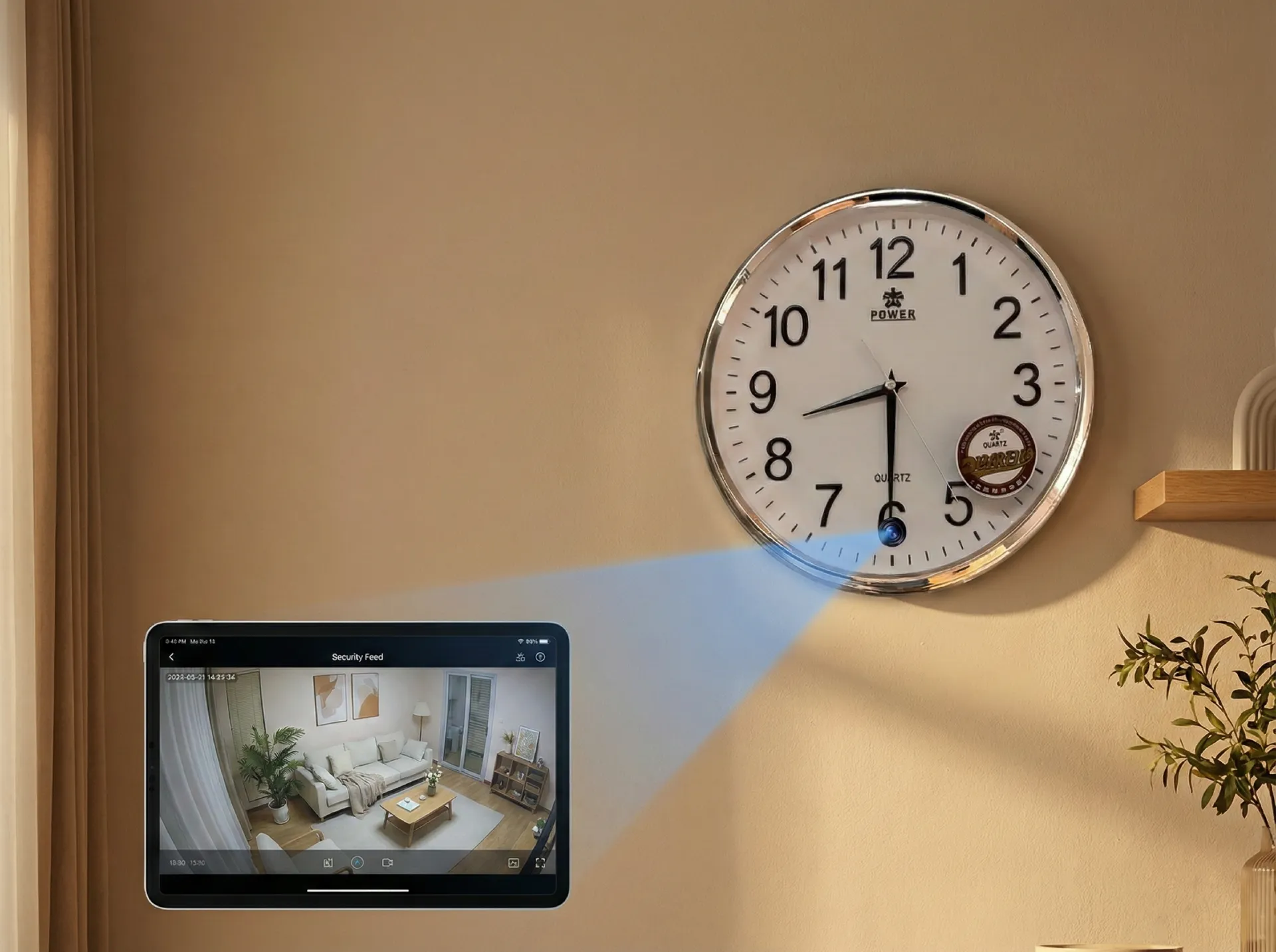
L'exemption domestique disparaît lorsque votre caméra capture des personnes à l'extérieur votre espace privé. Si un Caméra cachée WiFi en horloge positionnée dans votre salon capture également le trottoir public ou la porte d'entrée de votre voisin, ces images impliquent des tiers qui n'ont jamais consenti à être enregistrés. À ce moment-là, les obligations du RGPD entrent en jeu.
Voici ce que la plupart des gens comprennent mal : il ne s'agit pas de savoir si la caméra est cachée. Il s'agit de qui qu'elle capture. Un dispositif dissimulé dirigé vers votre propre espace de vie est légal. Le même dispositif pointé vers une cage d'escalier commune, un appartement loué ou un parking collectif entre dans un territoire juridiquement trouble — et potentiellement dans le champ du RGPD.
Une règle pratique utile : si la caméra ne capture que votre propre propriété et les personnes présentes légalement chez vous, vous bénéficiez de l'exemption domestique. Si elle capture des personnes qui n'ont aucune attente raisonnable d'être filmées par vous, vous devez réfléchir attentivement à la base légale.

Une caméra cachée est-elle légale en vertu du RGPD en Europe ?
C'est l'une des questions les plus courantes — et la réponse est oui, avec une condition importante.
Utiliser une caméra cachée pour surveiller une baby-sitter, une nounou ou un aide à domicile dans votre propre résidence relève de l'exemption domestique lorsque la caméra est chez vous et que la surveillance vise la sécurité de l'enfant ou la sécurité personnelle. Les tribunaux du Royaume-Uni et d'Allemagne ont confirmé cette position. L'EDPB Lignes directrices sur les dispositifs vidéo reconnaissent que l'intérêt légitime au titre de l'article 6(1)(f) constitue une base juridique valable pour surveiller les aidants lorsqu'il existe une préoccupation réelle de sécurité.
Mais voici le hic : si vous employez la nounou comme salariée formelle — c'est-à-dire que vous êtes son employeur, et non simplement un particulier — le droit du travail peut exiger que vous l'informiez de la surveillance. La surveillance n'a pas à être divulguée comme étant dissimulée, mais la existence de surveillance le fait généralement.
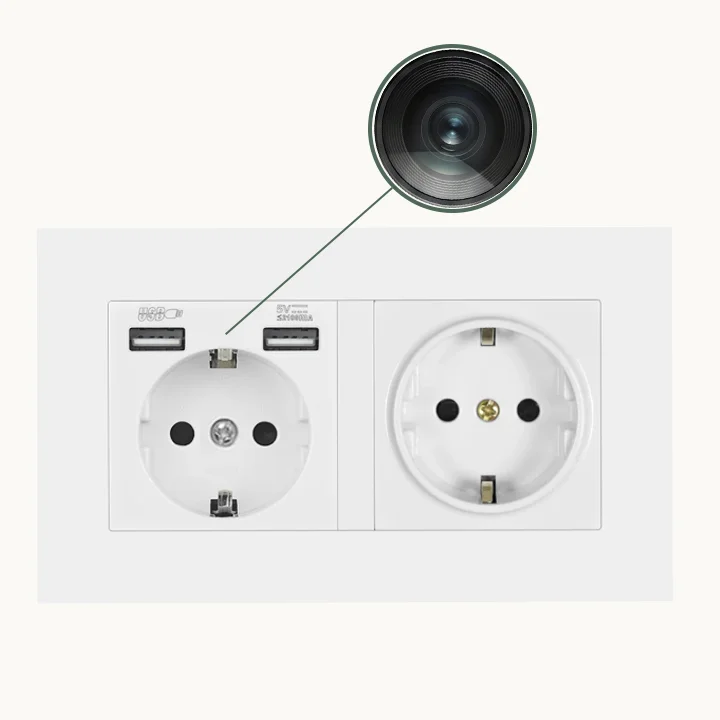
Pour la plupart des familles utilisant une caméra horloge ou un Caméra de prise WiFi pour surveiller un aidant en travaillant depuis une autre pièce, l'exemption domestique s'applique pleinement et aucune notification n'est requise.
| Scénario | Le RGPD s'applique-t-il ? | Divulgation obligatoire ? |
|---|---|---|
| Membre de la famille vérifiant l'aidant à domicile | Non (exemption domestique) | Non |
| Propriétaire utilisant une caméra cachée pour la sécurité de son enfant | Non (exemption domestique) | Non |
| Employeur formel surveillant un travailleur domestique | Partiellement (droit du travail) | Recommandé |
| Propriétaire surveillant l'espace d'un locataire | Oui | Oui, obligatoire |
Comment choisir la bonne caméra cachée pour une utilisation domestique
Toutes les caméras dissimulées ne se valent pas, et le bon choix dépend de votre situation spécifique.
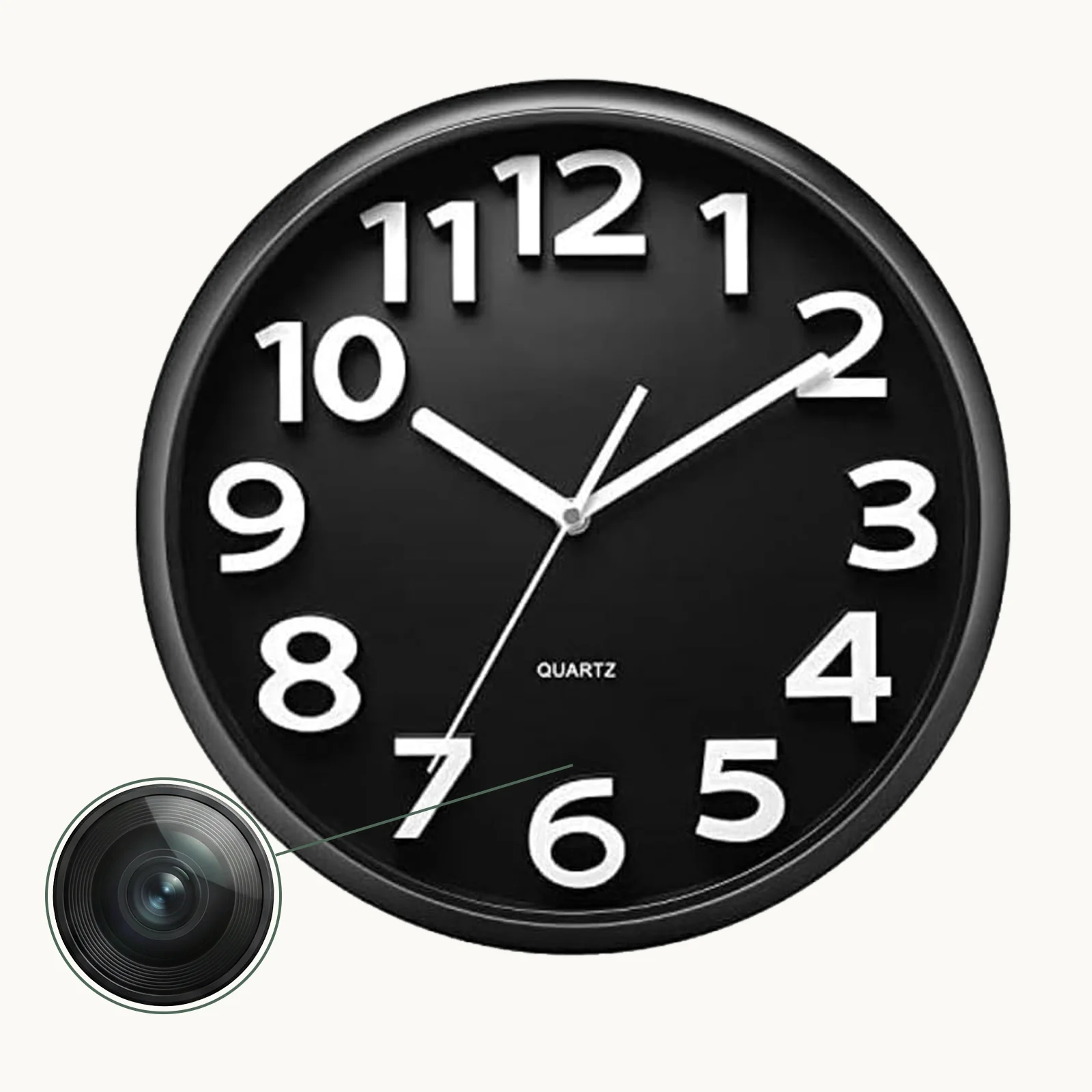
If you need 24/7 monitoring of an interior space, a Caméra cachée horloge murale WiFi est l'option la plus pratique pour un usage domestique. Elle se fond naturellement dans n'importe quelle pièce, enregistre en continu ou sur déclenchement de mouvement, et diffuse des images en direct sur votre smartphone via l'application Tuya. La résolution compte : 1080p est le minimum pour identifier les visages et lire les plaques d'immatriculation si une caméra a une vue extérieure.
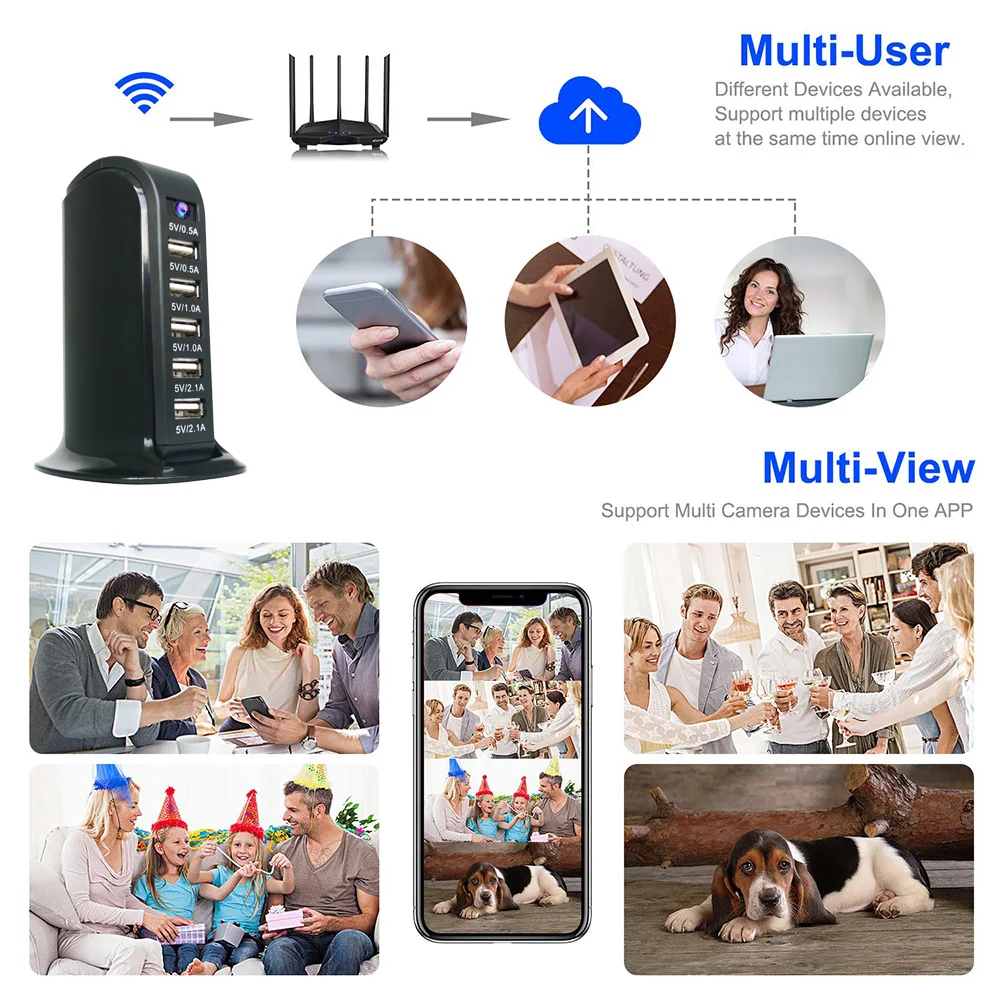
Pour les pièces où une horloge semblerait déplacée — cuisines, buanderies ou petits bureaux — une chargeur USB avec caméra cachée offre une option brancher-et-oublier. Elle est alimentée en permanence par le secteur, ce qui résout le plus gros problème pratique des caméras cachées : l'autonomie de la batterie.
If you’re monitoring a space temporarily — during building work, a house sit, or a short-term rental turnaround — a caméra cachée avec batterie externe vous offre 6 à 10 heures d'enregistrement autonome sans avoir besoin d'une prise de courant à proximité.
Qu'en est-il d'Airbnb et des locations de courte durée — une caméra cachée est-elle légale ?
C'est là que beaucoup de gens s'attirent des ennuis, et la réponse est sans ambiguïté : non.
Enregistrer des clients dans un logement locatif sans les informer est illégal au titre du RGPD, de la plupart des lois nationales sur la vie privée et des propres règles de la plateforme Airbnb. Les clients d'une location ont une attente raisonnable de vie privée. Ils ne font pas partie de votre « foyer » — ce sont des clients payants dans un espace privé temporaire.
Si vous souhaitez surveiller un logement locatif pour des raisons de sécurité, la voie légale consiste à utiliser des caméras visibles uniquement à l'extérieur ou dans les parties communes, avec un panneau visible informant les clients que la vidéosurveillance est en service. Les caméras dissimulées à l'intérieur d'une location, dans les chambres, salles de bains ou pièces à vivre, sont interdites dans toute l'UE et au Royaume-Uni, point final.
Cette distinction est importante car c'est le seul domaine où les caméras cachées et le RGPD entrent véritablement en collision — non pas dans l'usage domestique, mais dans la location commerciale.
Comment installer une caméra cachée chez soi sans risque juridique
Les étapes pratiques pour un usage domestique conforme sont simples.
Orientez la caméra vers l'intérieur. Votre champ de vision doit couvrir votre propre propriété — votre couloir, salon, jardin ou allée — et ne pas déborder sur les rues publiques ou les propriétés adjacentes. La plupart des caméras domestiques dissimulées utilisent des objectifs grand-angle de 90° à 120°, ce qui est largement suffisant pour couvrir une pièce sans dépasser vos limites.
Utilisez la détection de mouvement plutôt que l'enregistrement continu lorsque c'est possible. Cela réduit le volume d'images stockées, ce qui est une bonne pratique même sous l'exemption domestique. Des caméras comme la Horloge murale WiFi Tuya vous permettent de définir des zones de sensibilité au mouvement — vous pouvez exclure les portes qui donnent sur des espaces partagés et concentrer l'enregistrement sur les zones intérieures uniquement.
Stockez les enregistrements en toute sécurité. Dans le cadre de l'exemption domestique, vous n'avez aucune obligation formelle de conservation des données, mais le bon sens veut que vous ne stockiez pas des mois d'enregistrements sur une carte SD non sécurisée. Une carte de 32 Go en enregistrement en boucle s'écrase automatiquement — c'est le réglage par défaut sur la plupart des appareils et la configuration la plus sûre pour un usage domestique.
Le type de caméra affecte-t-il la légalité ?
Non. Le caractère visible ou dissimulé d'une caméra n'a aucune incidence sur l'applicabilité du RGPD.
Cela surprend la plupart des gens. La réglementation concerne traitement des données — si des données personnelles concernant des individus identifiables sont collectées, stockées et potentiellement partagées. Une caméra de surveillance visible qui filme un couloir de bureau fréquenté est pleinement soumise au RGPD. Une caméra cachée dans votre propre salon qui ne capture que votre famille ne l'est pas — non pas parce qu'elle est cachée, mais parce qu'il s'agit d'une activité purement domestique.
Ce qui affecte la légalité, c'est l'emplacement, l'identité des personnes filmées et la finalité de l'enregistrement. Une caméra est légale lorsqu'elle se trouve dans votre propre domicile, qu'elle filme les personnes de votre foyer ou des visiteurs légitimes, et que la finalité est la sécurité personnelle. La même caméra devient potentiellement illégale dès qu'elle est utilisée pour surveiller des locataires, des employés sur un lieu de travail formel ou des personnes dans des espaces publics.
Cela vous dit quelque chose ? C'est exactement la confusion qui empêche les gens de protéger leur propre foyer alors que la loi le permet.
Comment acheter légalement des caméras cachées en Europe
L'achat et la possession d'une caméra cachée sont légaux dans toute l'UE et au Royaume-Uni. Il n'y a aucune interdiction d'acheter, de vendre ou d'importer des dispositifs de sécurité dissimulés — la question juridique porte toujours sur Utilisation, not ownership.
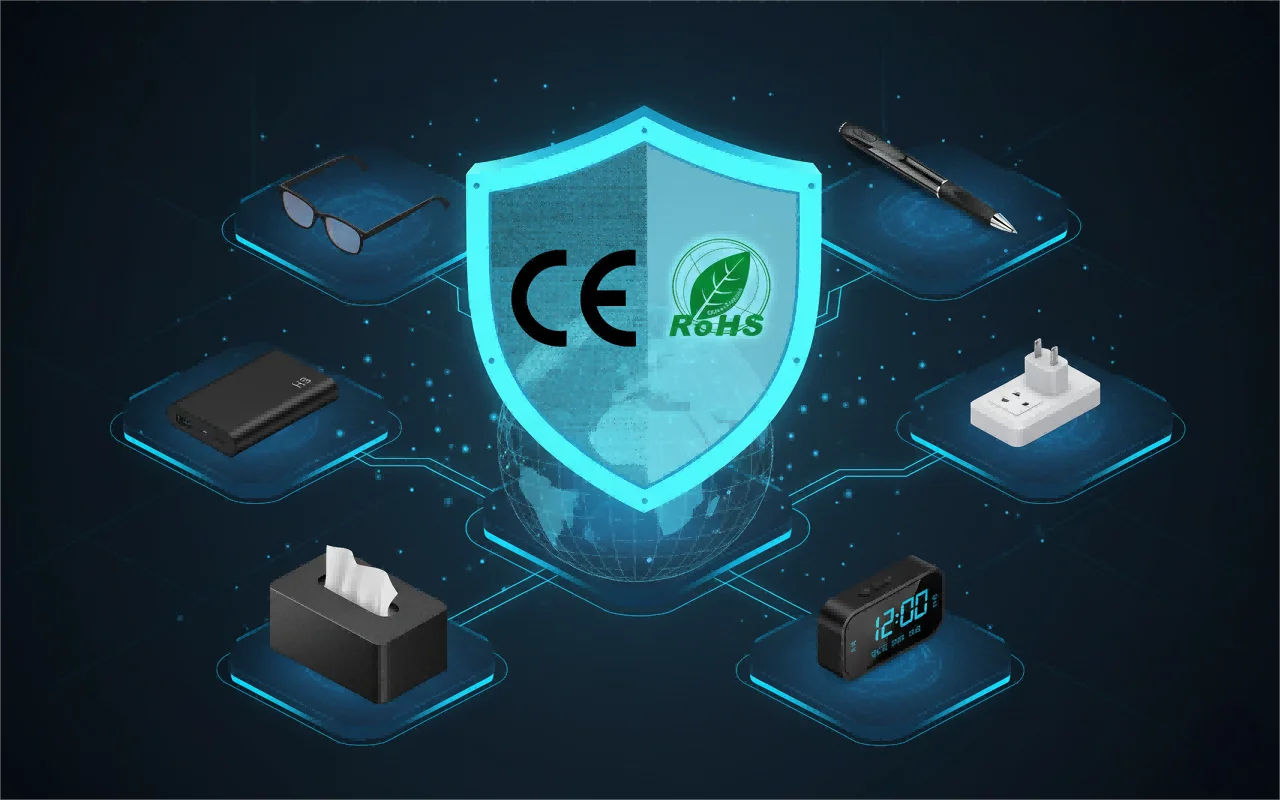
Pour les acheteurs en Allemagne, en France, en Pologne et au Royaume-Uni, QZT expédie depuis un entrepôt européen en Italie, ce qui signifie aucun retard douanier, aucun droit d'importation au sein de l'UE et une livraison le lendemain vers de nombreux emplacements. Tous les appareils sont certifiés CE et RoHS, ce qui est requis pour la vente légale sur le marché de l'UE.
If you’re sourcing for resale — distributing to retail customers, supplying to security installers, or stocking products for your own showroom — the guide d'achat en gros contient toutes les informations sur la quantité minimale de commande, les paliers de prix et les délais de livraison. QZT approvisionne les distributeurs européens depuis 2015 et dispose d'un support commercial local disponible en italien, anglais et français.
Pourquoi les distributeurs européens hésitent-ils encore face au GDPR ?
C'est une question légitime. Si la loi est aussi claire, pourquoi le RGPD est-il encore invoqué comme objection commerciale ?
La réponse est que la réglementation est largement mal comprise — y compris par les professionnels du secteur de la sécurité. De nombreux distributeurs, détaillants et même avocats confondent les règles qui s'appliquent à entreprises l'utilisation de la surveillance (qui sont véritablement complexes) avec les règles qui s'appliquent à particuliers en utilisant la sécurité domestique (qui est simple et permissive).
Ce que vous ignorez peut-être, c'est que plusieurs des plus grands distributeurs européens de produits de sécurité — notamment des entreprises en Allemagne, en France et au Royaume-Uni — vendent en continu des dispositifs de sécurité domestique dissimulés depuis l'entrée en vigueur du RGPD, sans qu'aucune action coercitive liée à la vente de produits n'ait été engagée. L'ICO concentre son action répressive sur les employeurs qui pratiquent une surveillance non divulguée sur le lieu de travail, et non sur les familles qui utilisent des caméras de surveillance de nourrice.
La réalité pratique est que le RGPD n'interdit pas la vente, le stockage ou la distribution de caméras cachées. Il impose des obligations aux utilisateur dans des circonstances spécifiques — et même la plupart de ces circonstances sont soit exemptées (usage domestique) soit facilement gérables (intérêt légitime pour un usage commercial).

Quelle est la différence entre l’utilisation légale et illégale des caméras cachées ?
| Utilisation légale | Utilisation illégale |
|---|---|
| Surveillance de l'intérieur de votre propre domicile | Filmer l'espace privé d'un locataire |
| Caméra cachée dans une maison familiale | Caméras cachées dans les chambres d'hôtel ou les locations de vacances |
| Sécurité personnelle sur votre propre propriété | Enregistrement des voisins sans consentement |
| Surveillance d'un aidant avec une préoccupation légitime de sécurité | Surveillance du lieu de travail sans notification des employés |
| Caméra de surveillance dans votre propre commerce | Installation de caméras dans les toilettes publiques ou les vestiaires |
La ligne ne concerne pas la dissimulation — elle concerne l'attente raisonnable de vie privée et votre relation avec l'espace. Dans votre propre maison, pour votre propre sécurité, vous êtes sur un terrain juridique solide dans chaque État membre de l'UE et au Royaume-Uni.
Les revendeurs qui s'approvisionnent en stock conforme pour ces cas d'usage domestique peuvent consulter les modèles de gros actuels dans notre sélection des meilleures caméras cachées de 2026.
Pour les acheteurs qui ont besoin de modèles conformes actuels plutôt que de théorie juridique, notre meilleures caméras cachées de 2026 le récapitulatif couvre des sélections testées avec documentation CE/RoHS prête pour la revente dans l'UE.
Conclusion : Votre Maison, Votre Sécurité, Vos Droits
Oui, vous pouvez utiliser une caméra cachée à domicile en Europe. Vous pouvez en acheter une, en installer une et l'utiliser pour surveiller la sécurité de votre famille — et le RGPD ne vous touchera pas.
Le règlement est conçu pour protéger les personnes contre la surveillance par les entreprises, les employeurs et les acteurs étatiques. Il n'a jamais été destiné à empêcher les familles de surveiller leur propre domicile. Le considérant 18 du RGPD et les orientations constantes de chaque autorité nationale de protection des données en Europe rendent cela sans ambiguïté.
Si vous avez des questions sur des cas d'utilisation spécifiques ou souhaitez des conseils sur les produits les mieux adaptés à votre situation, Contactez-nous aujourd'hui — l'équipe de QZT aide depuis plus d'une décennie les distributeurs européens et les clients finaux à naviguer ces questions.
FAQ
Q1 : Puis-je installer une caméra cachée chez moi sans en informer personne ?
Oui, pour un usage purement personnel et domestique, l'exemption ménagère du RGPD s'applique et il n'y a aucune obligation légale de notifier les personnes dans votre propre maison. L'exemption couvre les caméras utilisées pour la sécurité personnelle, la surveillance des bébés et la sécurité familiale.
Q2 : Quelle est la meilleure caméra cachée pour surveiller une nounou ou un baby-sitter dans l'UE ?
Une caméra horloge ou caméra de prise murale compatible WiFi offre la meilleure combinaison de dissimulation, d'alimentation continue et de surveillance à distance. Recherchez un appareil avec détection de mouvement et vision en direct via application — les produits de QZT Caméra cachée horloge murale WiFi couvre toutes ces exigences avec l'intégration de l'application Tuya.
Q3 : Puis-je utiliser une caméra cachée dans ma propriété Airbnb en Europe ?
Non. Enregistrer des invités dans un espace de location sans leur connaissance et consentement explicites est illégal en vertu du RGPD et viole les règles de la plateforme. La vidéosurveillance extérieure avec un avis visible est autorisée ; l'enregistrement intérieur caché ne l'est pas.
Q4 : L'achat ou la vente de caméras cachées viole-t-il le RGPD dans l'UE ?
Non. Le RGPD régit la traitement de données personnelles, pas la vente de matériel. Vendre, distribuer ou acheter une caméra cachée est entièrement légal dans toute l'UE et le Royaume-Uni. La réglementation n'entre en jeu que lorsque l'appareil est utilisé pour enregistrer des personnes identifiables.
Q5 : Comment savoir si mon utilisation de caméra cachée est couverte par l'exemption domestique ?
Posez trois questions : La caméra est-elle sur votre propre propriété ? Capture-t-elle uniquement l'intérieur de votre maison et les visiteurs légitimes ? Le but est-il la sécurité personnelle ou familiale ? Si la réponse aux trois est oui, vous êtes couvert par le considérant 18 du RGPD et le règlement ne s'applique pas à votre utilisation.

 English
  Italiano
  Deutsch
  Français
  Español
  Polski