
Where Can I Buy a Spy Camera: A Complete Sourcing Guide for 2026
Whether you’re buying your first hidden camera or sourcing fifty units for resale, the platform and supplier you choose determines far more than just the price. It determines whether you receive a device that actually works as described, whether it carries genuine CE certification for EU legal use, whether customs will release the shipment, and whether you have any recourse when something goes wrong. This guide systematically evaluates every major sourcing channel for spy cameras in 2026: consumer retail, online marketplaces, direct factory sourcing, and wholesale B2B suppliers — with the operational and compliance realities of each.
The Sourcing Channel Landscape: What Your Options Actually Are
The spy camera market in 2026 spans five distinct sourcing channels, each with fundamentally different price points, quality consistency, certification compliance, and after-sales support:
1. Consumer electronics retailers (Amazon, eBay, local electronics stores)
2. Specialist surveillance retailers (online stores dedicated to security equipment)
3. Wholesale platforms (Alibaba, DHgate, Global Sources)
4. Direct factory sourcing (contacting OEMs in Shenzhen/Guangdong)
5. Branded B2B suppliers (companies like QZT that combine factory sourcing with Western-market compliance)
Each channel serves a different buyer profile, and conflating them creates real problems. A consumer buying one camera for home use has completely different requirements than a private investigator sourcing covert devices for professional deployments, or a security equipment retailer building a wholesale catalogue.
Amazon and eBay: What You’re Actually Getting
Amazon and eBay are the default first stop for most buyers because of their familiarity, buyer protection, and fast shipping. For spy cameras specifically, these platforms present specific problems that affect value at every price point.
Brand fragmentation and relabeling: The hidden camera category on Amazon contains hundreds of ASINs, the majority of which are identical hardware sold under different brand names at varying prices. A €35 “Vstarcam” device and a €89 “BIOLUCID” device can share the same sensor module, the same firmware, and the same plastic housing — manufactured in the same factory, differentiated only by packaging and marketing budget. Without access to the hardware teardown data, you’re paying for branding, not product difference.
Certification misrepresentation: CE marking on Amazon listings is frequently either self-declared without third-party testing, or copied from another product’s certification. The FCC ID database and EU RAPEX rapid alert system contain significant numbers of hidden cameras flagged for non-compliant RF emissions and electrical safety failures. For a personal purchase this creates mild risk. For a business importing to sell in the EU, a non-CE-compliant device creates customs seizure risk and potential personal liability under the EU General Product Safety Directive.
No B2B pricing or volume discount: Amazon prices are retail prices. For quantities above 10 units, you’re paying significantly more than alternative channels offer for equivalent hardware.
When Amazon makes sense: Buying 1–3 cameras for personal use, requiring Amazon buyer protection, and needing same-day or next-day delivery within the Prime network. If you fit this profile exactly, Amazon delivers on its value proposition. If you need more than 5 units, need verified CE documentation, or are in a jurisdiction where customs compliance matters, Amazon is the wrong channel.
Specialist Surveillance Retailers: A Narrowing Category
Specialist online security retailers — dedicated stores selling CCTV, body cams, covert cameras, and accessories — offer some advantages over general marketplace platforms: product knowledge, technical pre-sales support, and assembled product ranges where items are tested and documented rather than listed algorithmically.
The limitations: physical specialist retailers have higher operating costs than pure online sellers, which translates to retail price premiums of 20–40% over direct sourcing. Many specialist retailers are themselves sourcing from the same Shenzhen factories available to direct buyers. The value-add is curation, warranty handling, and local-language support — worth paying for buyers who don’t want to manage direct supplier relationships.
For European buyers specifically, there’s a compliance benefit: a legitimate specialist retailer based in the EU has already done the import compliance work and bears liability for the certification status of what they sell. You’re not the importer of record — they are. This matters for commercial buyers.
Alibaba and Wholesale Platforms: The Real Factory Price — With Caveats
Alibaba is the largest B2B sourcing platform globally and the direct path to Shenzhen factory pricing. For an experienced sourcing professional, Alibaba delivers genuine value: factory-direct pricing (40–65% below retail), access to OEM customization (custom branding, packaging, firmware), and the ability to evaluate multiple competing manufacturers simultaneously.
For buyers without sourcing experience, Alibaba is a minefield. The problems:
Trade assurance does not equal quality assurance: Alibaba Trade Assurance protects your payment if a supplier doesn’t ship or ships obviously incorrect items. It does not protect you if the supplier ships plausible-looking products that are technically non-compliant, use lower-spec components than specified, or arrive without functioning firmware. Quality inspection requires either a local inspection agent in China or a robust sample evaluation process before committing to bulk orders.
Certification verification is manual: A supplier listing “CE Certified” has not been verified by Alibaba. You must request the actual CE declaration of conformity, examine which directive(s) it covers (LVD, RED, EMC), who issued the test report, and confirm the product tested is the same product being shipped. CE marking guide from the European Commission explains what valid certification looks like.
MOQ requirements: Most factory suppliers on Alibaba have minimum order quantities (MOQ) of 50–500 units for standard products, and 100–1000+ for OEM customization. This is appropriate for import/export businesses and retailers, not individual buyers.
When Alibaba makes sense: You need 50+ units, have sourcing experience or an inspection agent, need OEM customization, and are willing to invest 30–90 days in sample evaluation and shipment lead time.
Direct Factory Sourcing: The Highest Risk, Highest Reward Option
Direct factory sourcing means bypassing platforms entirely and contacting manufacturers directly via email, WeChat, or at trade shows (Canton Fair, Hong Kong Electronics Fair, Shenzhen Security Expo). This is how the largest importers and retail chains build their product lines — eliminating the Alibaba middleman markup and gaining direct access to the development roadmap, exclusive products, and strongest pricing.
The barriers are real: factory sales representatives primarily communicate in Mandarin, minimum order quantities are typically higher than platform minimums, payment terms often require T/T bank transfer without third-party escrow protection, and relationship building takes multiple order cycles before the factory prioritizes your account.
For established importers or companies with sufficient order volume, direct factory relationships are the correct long-term strategy. For buyers without the language capability, purchasing volume, or relationship infrastructure, the protection mechanisms of platforms or intermediaries are worth their cost.
Trade show sourcing: Attending Canton Fair (held biannually in Guangzhou) or dedicated security trade events is the most efficient way to evaluate multiple factories in person, see live product demonstrations, and initiate relationships directly. Security-category products are concentrated in phases 2 and 3 of Canton Fair.
B2B Specialist Suppliers: The Compliance-First Option
The category that best serves buyers who need verified product quality, genuine certifications, reasonable pricing, and accessible communication is B2B specialist suppliers: companies that sit between pure factory direct and consumer retail. QZT (qztsecurity.com) is an example of this model: direct factory relationships in Shenzhen, product line developed and quality-tested for European markets, documented CE and RoHS certifications per product category, and English-language B2B sales support.
The value proposition for this model:
– Factory pricing without factory complexity: Volume pricing available without the full negotiation and inspection infrastructure of direct factory sourcing
– Verified compliance documentation: Actual CE test reports, not self-declarations
– Product breadth in one supplier relationship: Cameras, recorders, and accessories from a single vendor — simplifying procurement and shipping consolidation
– Sample policy: Professional B2B suppliers offer single-unit sample purchase before MOQ commitment
The product range available directly from QZT covers every major form factor category:
| Category | Product | Key Spec |
|---|---|---|
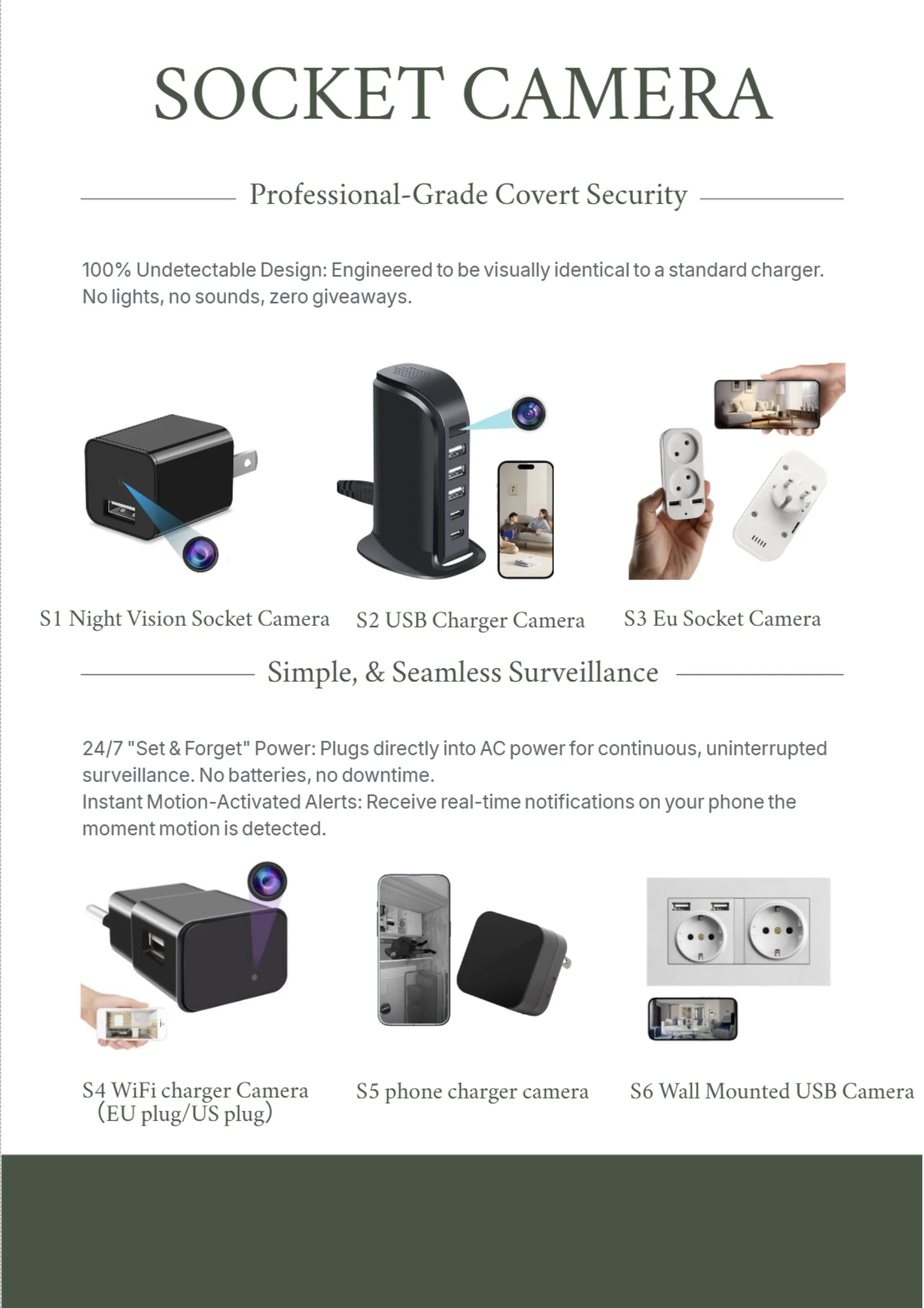
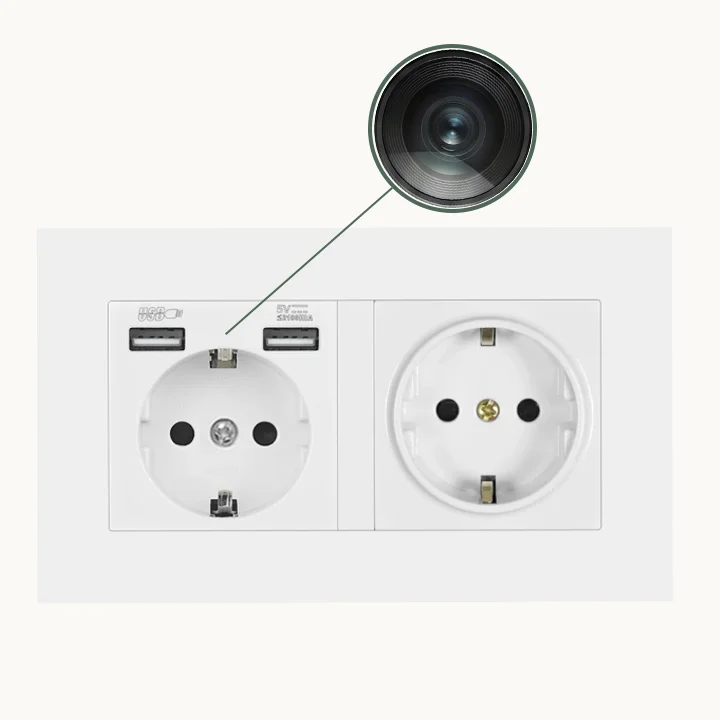
| Socket/charger | WiFi 1080P Hidden EU Socket Camera | Mains-powered, 1080P, WiFi |
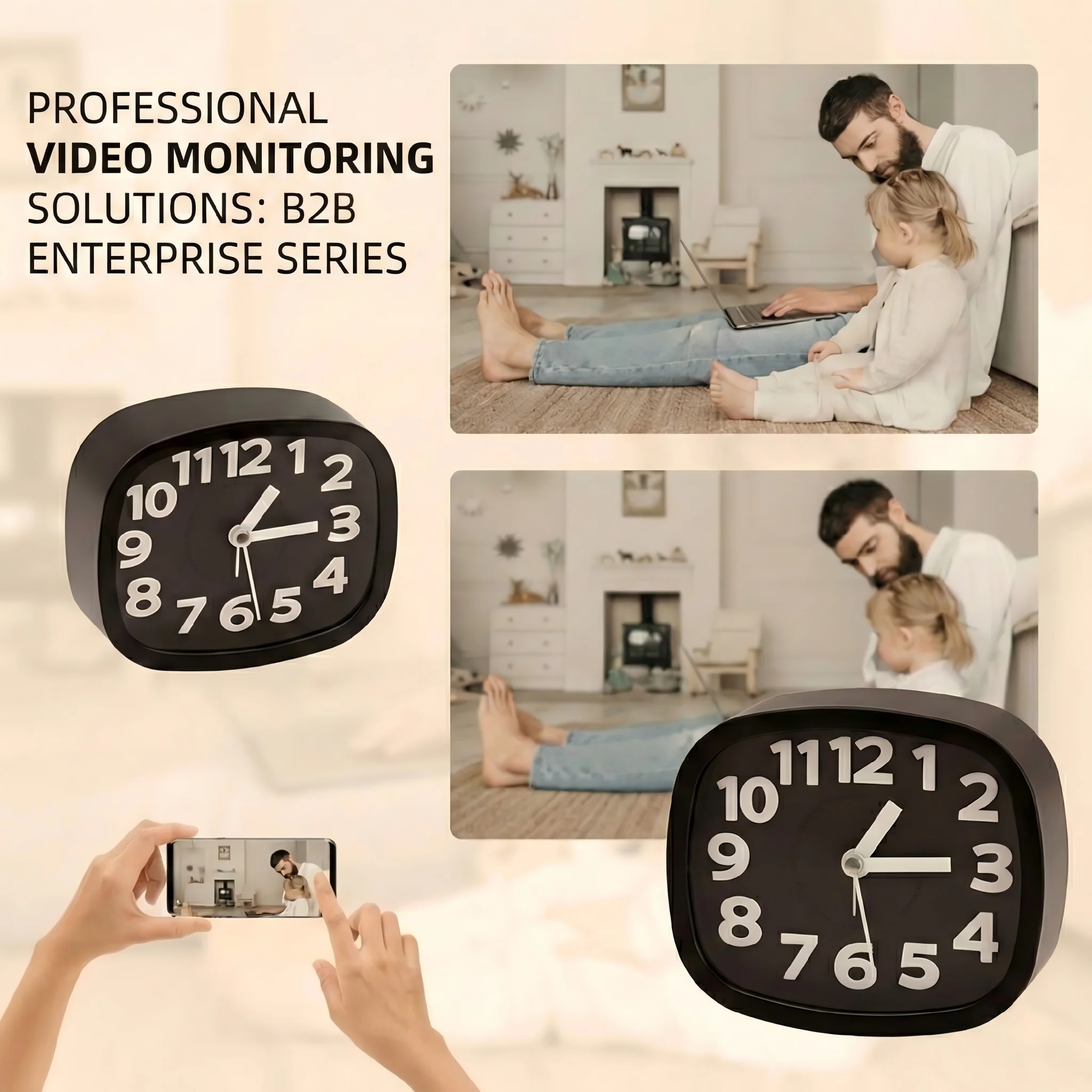
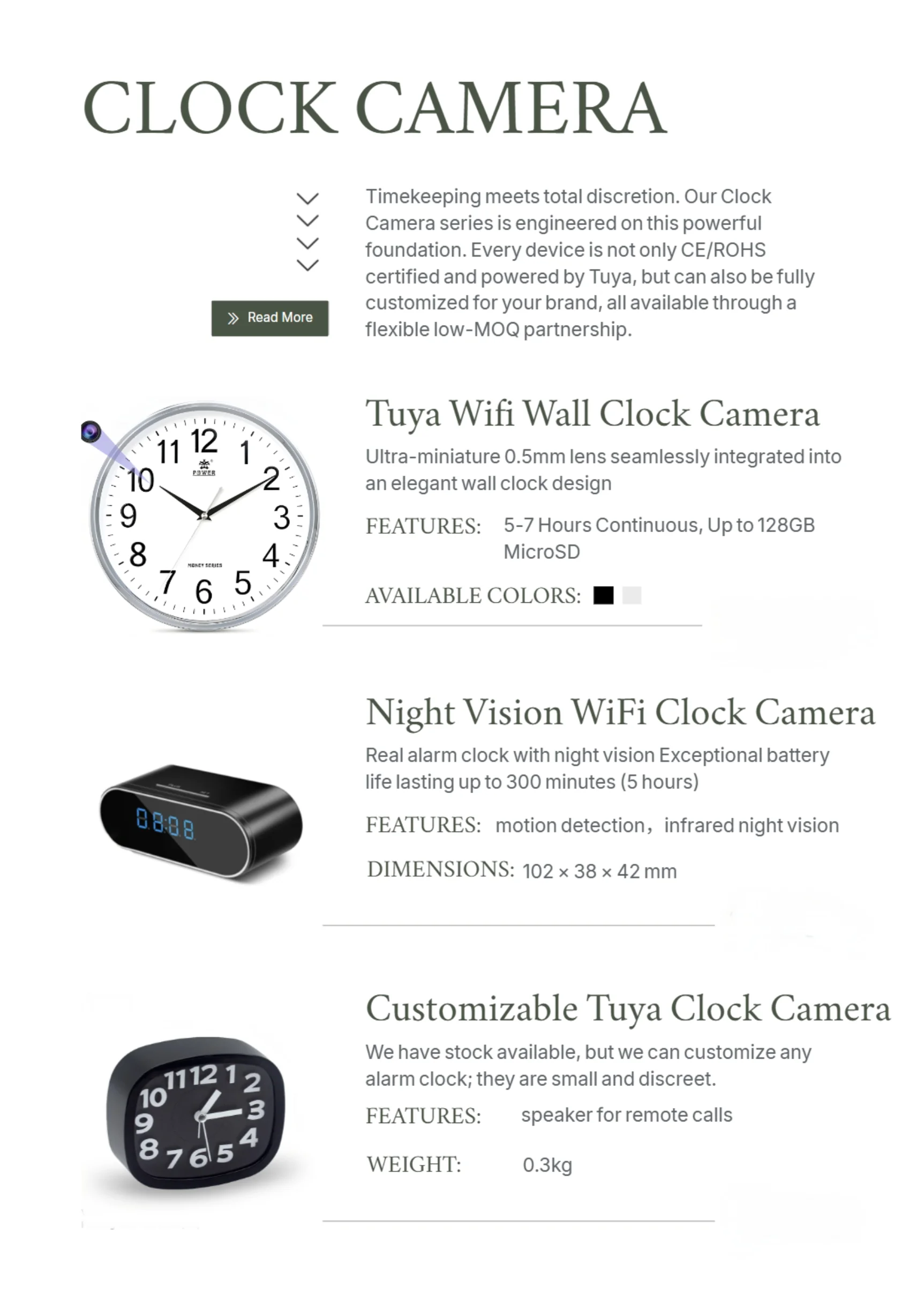
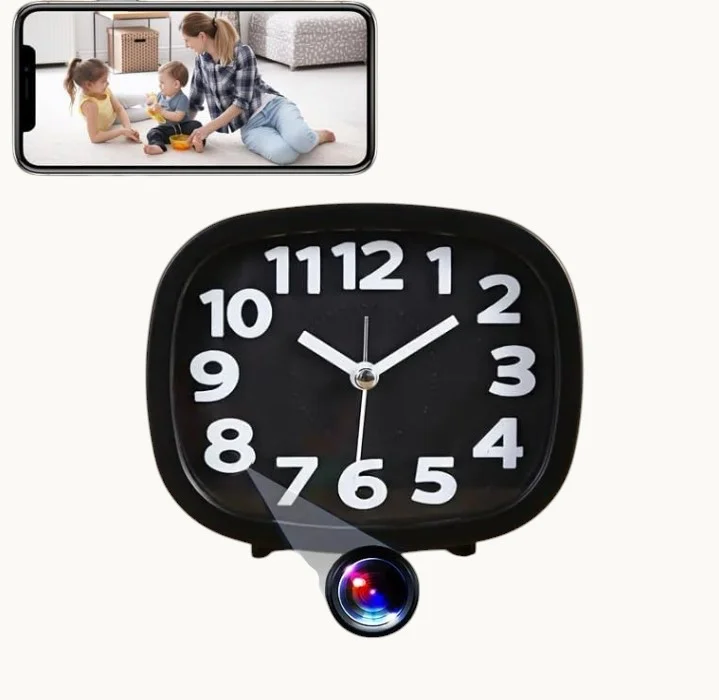
| Clock camera | Z10 WiFi Spy Clock Camera 1080P | Night vision, motion detect |
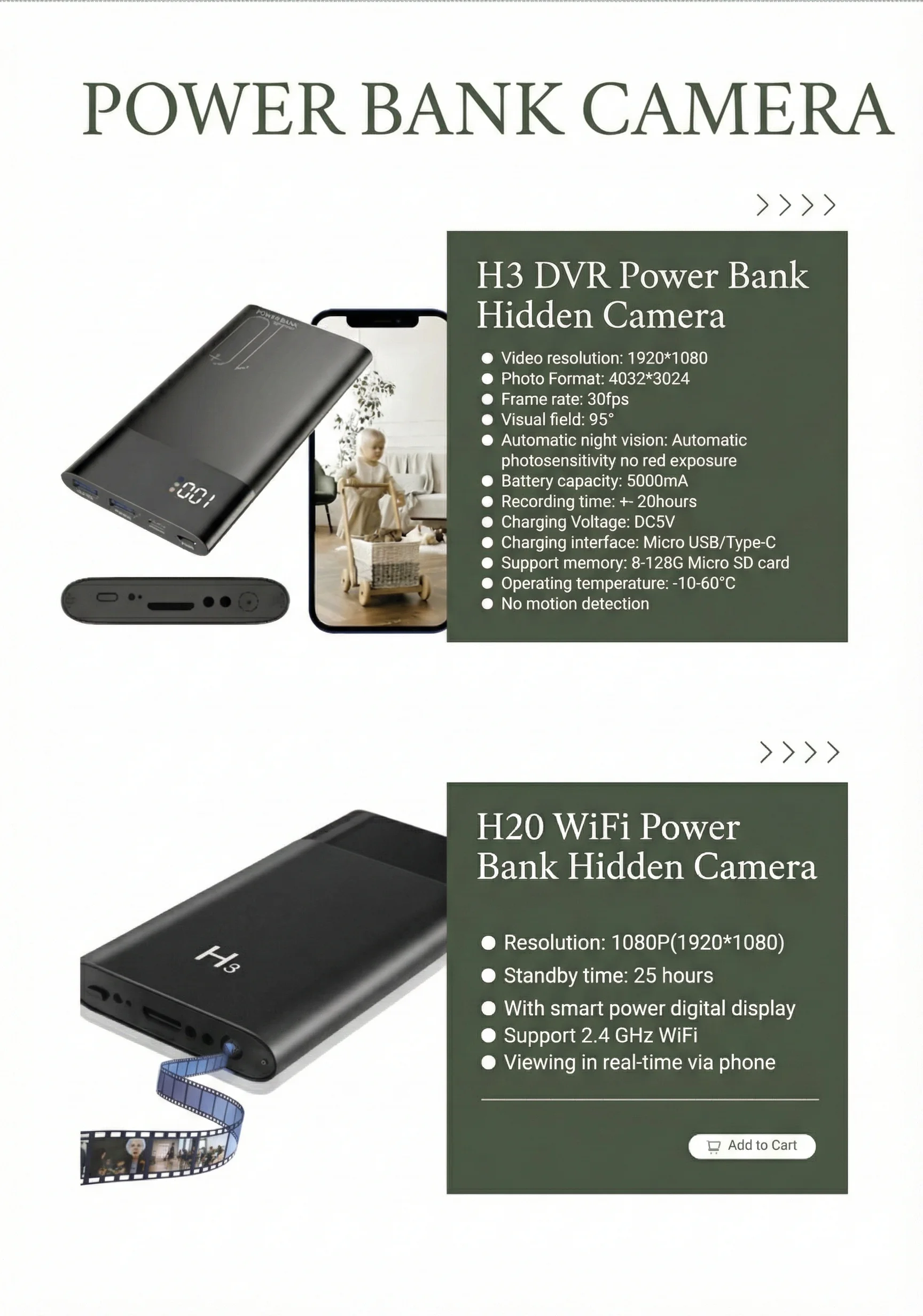
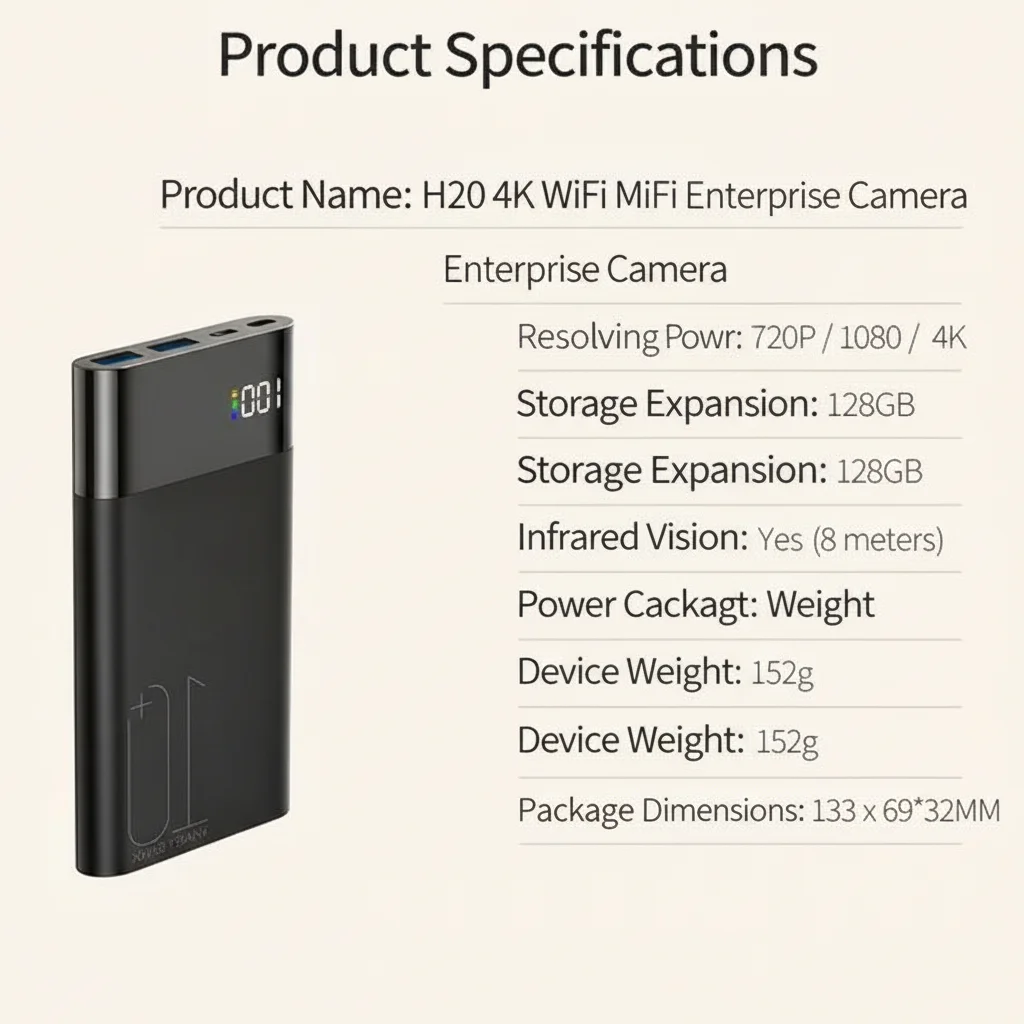
| Power bank | WiFi 1080P Power Bank Hidden Camera | 10,000 mAh, portble, WiFi |
| Smoke detector | WiFi Smoke Detector Hidden Camera 1080P | Ceiling-mount, wide-angle |
| Pen camera | WiFi Spy Pen Camera with Audio | Audio+video, WiFi |
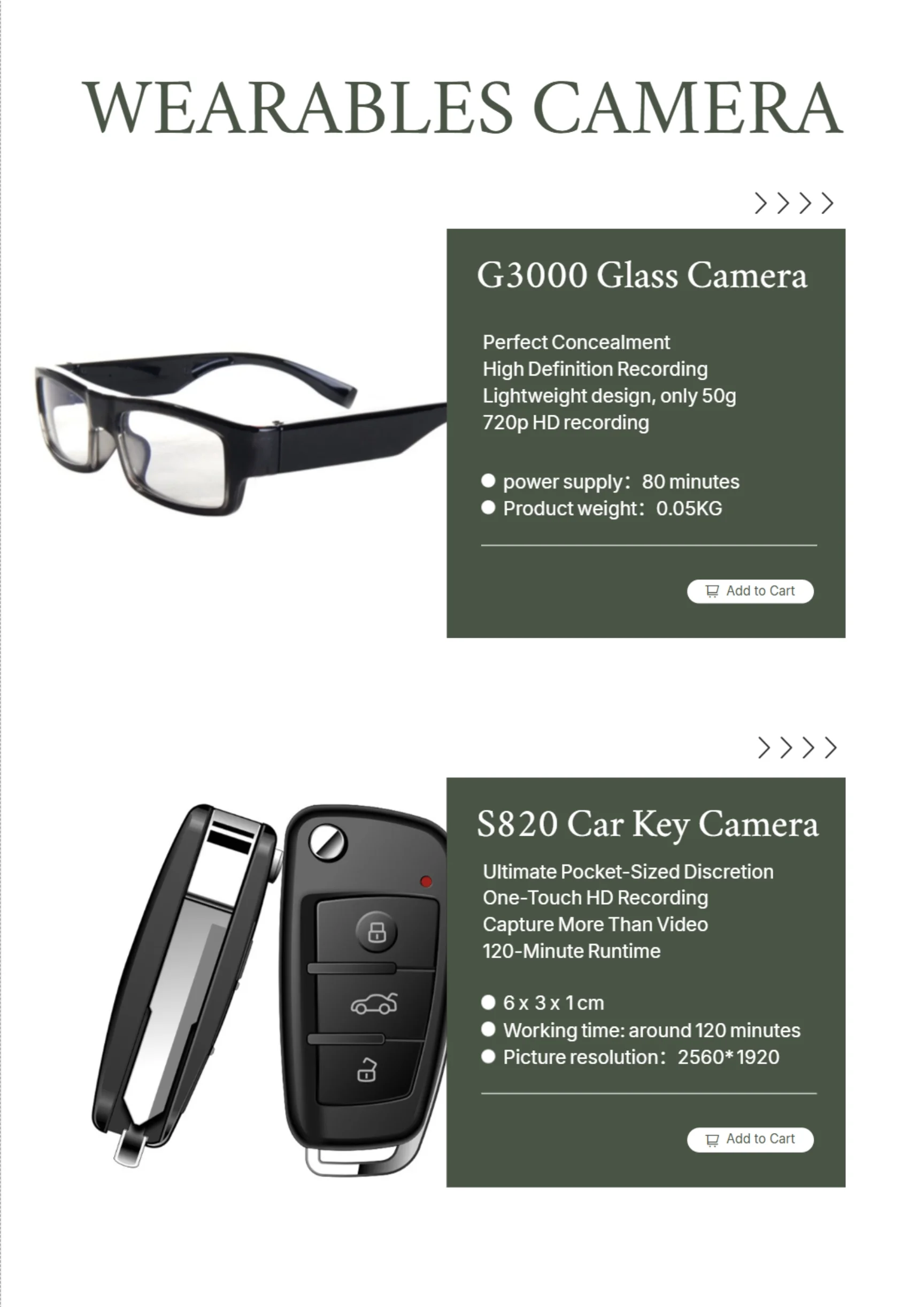
| Car key | Car Key Spy Camera 1080P Night Vision | Compact, portable |
| DIY module | DIY Hidden WiFi Spy Camera Module | 4K, OEM integration |
| Voice recorder | Q97 Professional Voice Recorder | Type-C, DSP, 192kbps |
Certification Deep Dive: What CE and RoHS Actually Mean for Spy Cameras
For any buyer importing cameras into the EU — whether for personal import or commercial sale — understanding what certifications are required and what they certify is non-negotiable.
CE Marking is a manufacturer’s or importer’s declaration that the product meets EU safety, health, and environmental requirements. For spy cameras, the relevant directives are:
– LVD (Low Voltage Directive 2014/35/EU): Covers electrical safety for devices operating at 50–1000V AC or 75–1500V DC
– RED (Radio Equipment Directive 2014/53/EU): Covers all devices using radio frequencies — WiFi, Bluetooth, and cellular. The most commonly tested directive for WiFi cameras
– RoHS (Restriction of Hazardous Substances 2011/65/EU): Restricts lead, mercury, cadmium, hexavalent chromium, and brominated flame retardants in electronic equipment
A valid CE declaration requires: a harmonized standard reference (e.g., EN 300 328 for 2.4GHz WiFi), a test report from an accredited laboratory, and a Declaration of Conformity document signed by the manufacturer or authorized EU representative. Ask any supplier for these documents specifically — not just “the CE certificate.”
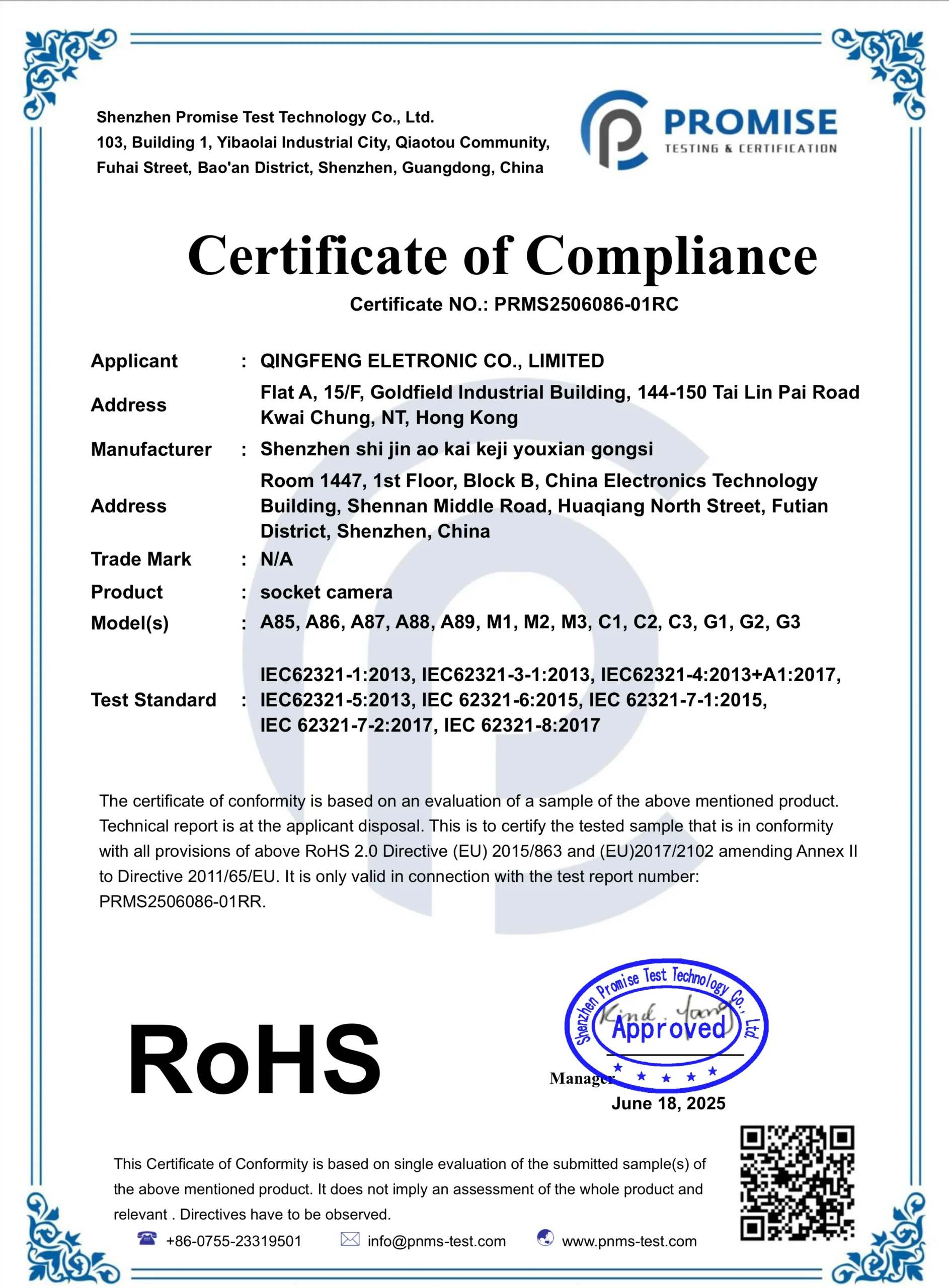
The A85 Wi-Fi Socket Camera RoHS Certificate demonstrates what proper certification documentation looks like: device-specific, citing the exact product SKU, and issued against named EU directives.
For buyers importing goods that are found non-compliant at EU customs, the RAPEX system triggers a recall and potential liability for the importer. This is a real operational risk for commercial importers, not a theoretical concern.
What to Check Before You Buy: Practical Due Diligence
Whether buying from Amazon, Alibaba, or a specialist B2B supplier, run through this checklist before committing:
For any purchase:
– [ ] Does the camera use standard WiFi protocols (2.4 GHz 802.11 b/g/n) or a proprietary protocol requiring a hub?
– [ ] Is the companion app available on both Android and iOS, currently maintained, and positively reviewed?
– [ ] Does the camera support standard cloud storage (Tuya/SmartLife, EZVIZ) or only proprietary cloud with unknown data residency?
– [ ] Is there a local SD recording option if cloud connectivity fails?
– [ ] What is the warranty period and return/replacement process?
For EU commercial imports:
– [ ] Request CE Declaration of Conformity — verify it cites RED Directive 2014/53/EU specifically
– [ ] Request RoHS test report from accredited laboratory
– [ ] Confirm HS customs code classification for the product (spy cameras often have specific HS codes that affect duty rates)
– [ ] Verify UN 38.3 certification if the device contains a lithium battery — required for air freight
For wholesale/B2B purchases:
– [ ] Request OEM/customization options if relevant to your product line
– [ ] Confirm sample availability before MOQ commitment
– [ ] Ask about lead times and shipping terms (FOB, CIF, DDP)
– [ ] Confirm whether the supplier has EU-based warehousing or fulfillment options
Understanding Customs: What Gets Seized and Why
Hidden cameras occupy a legally sensitive category in customs terminology. Most EU customs authorities classify them under HS code 8525.89 (television cameras, digital cameras) or 8525.80 (surveillance cameras), with applicable duty rates varying by country of origin and bilateral trade agreements. As of 2026, cameras originating in China fall under EU general duty rates (typically 0% for cameras, though electronics components may vary), but this can change under tariff modifications.
The seizure risk is not primarily about the product category but about documentation. Under-declared values, missing CE documentation accompanying the shipment, mislabeled HS codes, and batteries without UN 38.3 certification are the four most common triggers for customs inspection and seizure. Commercial shipments without proper documentation face holds, fines, and return shipping costs that can exceed the value of the goods.
Buyers sourcing from QZT receive products with complete export documentation: proper HS code classification, CE declarations for each product, commercial invoice at declared value, and battery certification for lithium-equipped devices. This documentation package is included as standard, not available only on request.
For buyers doing their own direct import, the EU Customs Union guidance on imports and the TARIC database for duty rates and HS codes are the authoritative resources.
Price Benchmarks: What Should a Spy Camera Cost?
Pricing varies enormously across channels, but certain price floors indicate quality compromises worth understanding:
| Camera Type | Amazon/Retail | B2B Wholesale (50+ units) | Direct Factory (500+ units) |
|---|---|---|---|
| Basic 1080P WiFi hidden camera | €25–60 | €12–25 | €7–15 |
| Socket/charger camera | €35–80 | €18–35 | €10–20 |
| Clock camera with night vision | €45–120 | €22–45 | €12–28 |
| Power bank camera 10,000 mAh | €55–150 | €28–55 | €16–32 |
| Smoke detector camera | €50–130 | €25–50 | €14–28 |
| 4K DIY module | €80–200 | €40–80 | €22–45 |
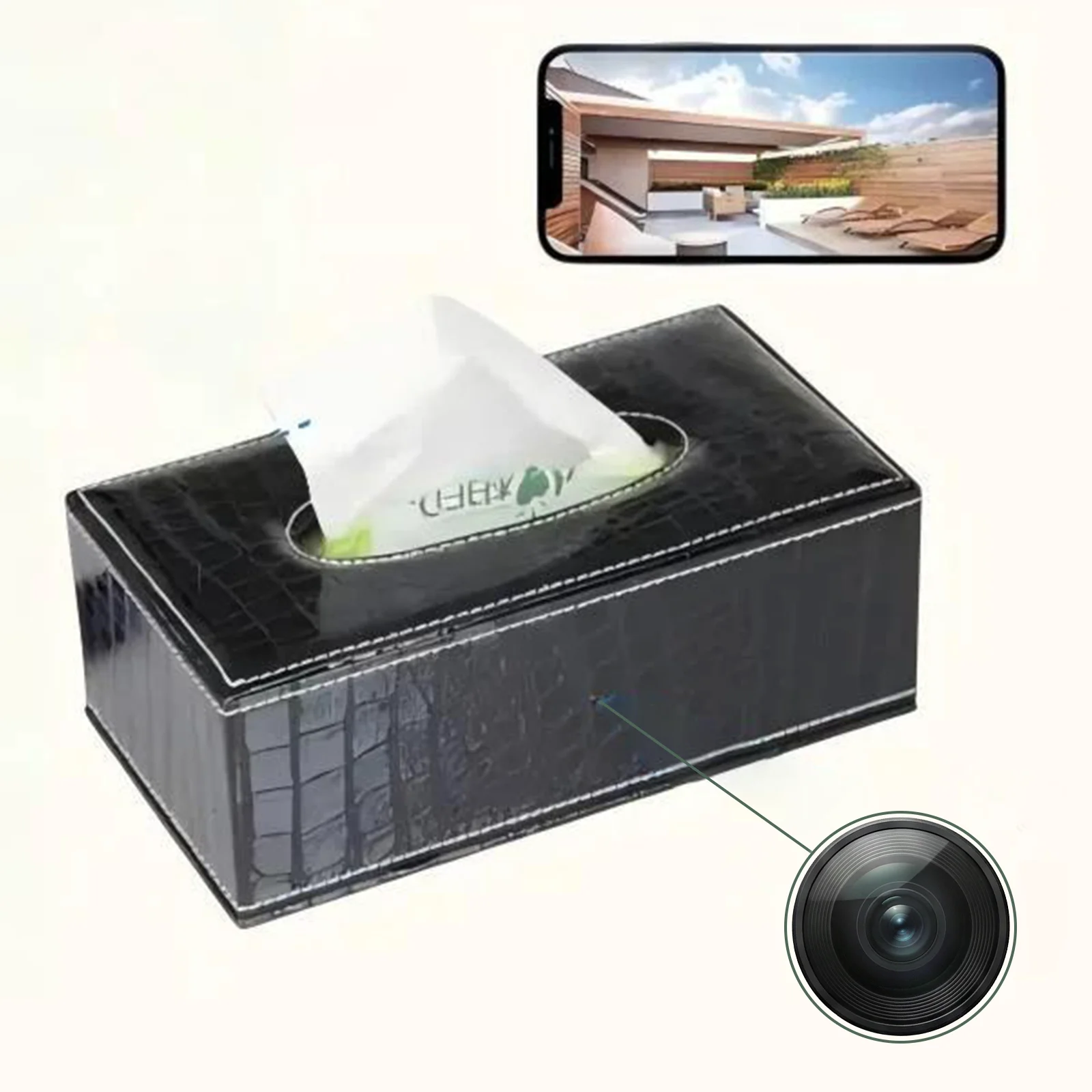
The gap between retail and factory pricing is substantial in this category. For buyers purchasing 10+ units, B2B sourcing from a supplier like QZT delivers quality equivalent to premium Amazon listings at wholesale pricing — with documentation that Amazon listings rarely provide.
Sub-€15 cameras at retail prices almost universally represent genuine quality compromises: 720P-or-lower sensors despite “1080P” marketing, 64 kbps audio, no real RTC, and firmware that stops receiving security updates within months of sale.
Legal Framework: Is It Legal to Buy a Spy Camera?
The question of legality applies to the purchase, the installation, and the use — three distinct legal questions with different answers.
Purchasing a spy camera is legal in the vast majority of jurisdictions worldwide, including all EU member states, the UK, the US, Canada, and Australia. There are no general prohibitions on buying surveillance equipment for private use. The legality question arises at the point of use, not purchase.
Installing a hidden camera on property you own or have permission to monitor is generally legal for legitimate security purposes in most jurisdictions. The specific restrictions typically concern: (1) spaces where individuals have a reasonable expectation of privacy (bathrooms, changing rooms, rented accommodation you don’t occupy); and (2) audio recording in jurisdictions with all-party consent laws (Germany, California, and others).
Using footage for harassment, blackmail, or to record individuals in private situations without legitimate purpose is illegal everywhere, regardless of the technical legality of the recording equipment.
The most relevant legal resources by jurisdiction:
– EU: GDPR Article 6 legitimate interests basis, and EDPB Video Surveillance Guidelines
– UK: ICO CCTV guidance for home users
– US: Electronic Communications Privacy Act (ECPA) and state-level wiretapping laws vary
– Germany: Bundesdatenschutzgesetz (BDSG) and StGB §201 cover private audio-visual surveillance — stricter than EU baseline
Platform Comparison Summary
| Platform | Best For | Price | Cert Assurance | After-Sales | MOQ |
|---|---|---|---|---|---|
| Amazon | 1–3 personal units | Retail | Low (self-declared) | Buyer protection | 1 |
| eBay | Used/rare models | Variable | Very low | Limited | 1 |
| Specialist retailer (EU) | Compliant B2B | Retail+20% | Medium | Good | 1–10 |
| Alibaba | 50+ unit sourcing | Factory -30% | Manual verify | Platform only | 50+ |
| Direct factory | 500+ OEM custom | Factory direct | Your responsibility | None | 500+ |
| QZT (qztsecurity.com) | 5–500 B2B wholesale | Wholesale | Verified CE+RoHS | Direct support | 5+ |
FAQ: Sourcing and Buying Questions
Q: Can I buy spy cameras legally in Germany?
Yes. Purchasing spy cameras is legal in Germany. The usage restrictions are stricter than in some other EU countries — German law (StGB §201) prohibits covert recording of spoken words without consent in many contexts. Buying the camera is legal; using it without proper legal basis carries criminal liability. Consult a German legal professional before deploying in employment contexts.
Q: Why is the same camera cheaper on Alibaba than on Amazon?
Because Alibaba pricing is factory-level wholesale. Amazon pricing includes platform fees (15% referral fee), FBA fulfillment costs, advertising spend, return processing, and seller margin. A product costing €15 at the factory sells for €45–80 on Amazon after these layers. For single-unit purchases the Amazon premium is worth paying for buyer protection and delivery speed. For volume purchases it is not.
Q: How do I verify a supplier’s CE certification is genuine?
Request the CE Declaration of Conformity document, not just a CE logo or certificate image. The DoC must identify: the product name and model, the EU directives it covers (specifically listing directive numbers like 2014/53/EU), the harmonized standards applied (e.g., EN 300 328), and a signature from an authorized representative. Cross-reference the product description in the DoC with the product you’re being sold — generic DoCs covering “all products” are not valid.
Q: What’s the difference between Tuya-based cameras and non-Tuya cameras?
Tuya is a Chinese cloud IoT platform used by hundreds of camera manufacturers. Tuya-based cameras use the Tuya/SmartLife app, have consistent firmware update cycles, and integrate with smart home platforms (Amazon Alexa, Google Home). Non-Tuya cameras typically use proprietary apps with variable support quality. For EU buyers, Tuya’s data infrastructure operates under GDPR-compliant terms for EU users, with data options for EU data residency. This makes Tuya-based cameras preferable for compliance-conscious commercial deployments.
Q: Can I get custom branding on spy cameras for my security business?
Yes. OEM customization — custom packaging, firmware branding, app white-labeling — is available through direct factory relationships and some B2B specialist suppliers. Typical OEM requirements: 200–500 unit minimum, 30–60 day lead time for packaging production, additional cost for custom firmware (app white-labeling is more complex and expensive). Contact QZT’s B2B team for OEM inquiry on specific product categories.
Q: Where can I find the latest spy camera models not yet on Amazon?
Trade shows (Canton Fair), direct factory outreach, and specialist B2B suppliers typically carry products 3–6 months ahead of their Amazon listing. QZT’s product catalog includes models currently in B2B distribution that may not appear in consumer retail channels for several months. For buyers who need specific form factors or features, direct engagement with a B2B supplier is the path to earlier access.

 English
  Italiano
  Deutsch
  Français
  Español
  Polski