
The 22% Margin Killer: How to Legally Bypass Import VAT on Electronics in Europe

If you are importing security cameras or audio recorders from China into Italy, Germany, or Poland, a 22% VAT charge at customs is not just an inconvenience — it is a structural cash-flow trap that can quietly destroy 6–10 points of margin before your product even reaches the shelf. This guide breaks down exactly where the cost comes from, which legal mechanisms eliminate it, and how experienced European distributors are structuring their supply chains in 2026 to stay competitive.
What Is the “22% Margin Killer” and Where Does It Come From?
When a B2C importer clears electronics through Italian customs, the standard VAT rate applied is 22%. This is not a penalty or a tariff — it is the Italian government’s standard consumption tax for goods entering the country under a retail or non-registered commercial framework.
For a distributor placing a €20,000 order, that 22% VAT means €4,400 tied up at the port. Even if you recover it later through the quarterly VAT return cycle, the cash is frozen for 60 to 90 days. For businesses running on 30-day supplier payment terms, this alone can force you to carry a working capital gap that eliminates any margin earned on the deal.
The problem compounds when you are operating across multiple markets simultaneously. Germany applies a 19% VAT; Poland applies 23%. Each country has its own clearance agency, its own VAT registration timeline, and its own invoice validation requirements. If you are managing three importing entities in three countries without a coordinated tax strategy, you are essentially paying customs tax three times on goods that ultimately serve the same B2B distribution network.
The Legal Fix: Reverse Charge Mechanism for EU B2B Buyers

The single most effective tool for eliminating import VAT exposure is the EU Reverse Charge mechanism — and it is entirely above-board, explicitly supported by EU VAT Directive 2006/112/EC.
Here is how it works in practice: if you are an Italian registered business holding a valid EU VAT number (Partita IVA), and you are purchasing goods from a supplier who issues invoices under the B2B intra-EU or EU-import reverse charge framework, the VAT obligation is transferred from the supplier to you as the buyer. The result is that the invoice shows 0% VAT at point of purchase.
You still technically owe the VAT, but you declare it on your own periodic VAT return — and simultaneously claim the exact same amount as a deductible input tax. The net result is zero cash outlay. No money is frozen at customs. No 60-day recovery wait. The 22% that would have killed your working capital simply never leaves your account.
For Italian B2B buyers purchasing from us under the IT_EU_B2B framework, this is our standard invoicing model. As long as your VAT number is valid and the transaction is a genuine commercial purchase for resale or business use, Reverse Charge applies by default. We structure the invoice accordingly so your accountant has everything needed to file correctly.
The key condition is that you must have a registered VAT number in your EU member state. If you are operating informally or purchasing under a personal name, Reverse Charge does not apply and the full 22% becomes your liability. This is worth resolving before your first order, not after.
Our European Warehouse Network: The Second Layer of Protection

Reverse Charge handles the tax side. Local inventory handles the logistics side. Together they eliminate both dimensions of the import cost problem.
We maintain a physical warehouse in Italy. For distributors based in Italy or shipping to Italian end customers, this means delivery can be completed in 3 business days from order confirmation. There are no customs delays because the goods are already cleared and sitting inside the EU. There are no tariff calculations to run. The CE certificates and GDPR compliance documentation ship with every order as standard.
The practical implication for your business: you can take customer orders on Monday and fulfill them by Thursday. You do not need to pre-stock large quantities because we carry the buffer inventory. And critically, the invoice your customer receives comes from a European legal entity — which means their accountant can process it without any of the complications that arise with direct-from-China documentation.
This model also solves a problem that comes up regularly with distributors in Italy who work with smaller retailers or installation contractors. Those customers often do not have the internal capability to handle import paperwork. When goods arrive from an Italian warehouse with a clean Italian invoice, there is no paperwork for them to manage. The entire import and compliance burden has already been absorbed upstream.
How the Local Invoice Loop Works: A Real Example
Here is a scenario that illustrates how we structure supply for Italian distributors when specific SKUs are not in the local warehouse.
A distributor in Milan places an order for 200 units of a digital voice recorder. That particular model is currently out of stock in our Italian facility. The distributor’s customers are corporate accounts — they need a local VAT invoice and cannot process a direct import from China through their accounts payable system.
Our standard process: the distributor places the order and pays as normal. We ship the units from our China facility directly to our Italian warehouse — not to the distributor’s address. Once goods arrive and clear customs at our cost and under our import entity, we dispatch from the Italian warehouse to the distributor. The invoice issued to the distributor is generated by our Italian entity and complies fully with Italian tax law.
From the distributor’s perspective, they received Italian-invoiced goods delivered from a local source. Their accountant sees a standard B2B purchase. Their customers see normal local fulfillment. The fact that the goods originated in China is operationally invisible.
This is not a workaround. It is a supply chain structure that we have built specifically because European B2B buyers have legitimate accounting and compliance requirements that cannot be met by direct-from-China invoicing. We invested in the Italian entity and warehouse precisely so you do not have to.
Poland and Germany: Country-Specific Strategies
Not all European markets work the same way, and our logistics terms are calibrated accordingly.
Poland is one of our strongest growth markets for security cameras and recording devices. Polish distributors almost universally prefer a DDP (Delivered Duty Paid) arrangement — meaning all import duties, customs clearance fees, and local taxes are included in the purchase price. This preference is structural: Polish distributors typically lack in-house customs teams and need a single all-inclusive line item they can pass directly to their accounts payable process. We offer DDP terms for Poland and include full local VAT invoicing in the package.
Germany operates with a more sophisticated import infrastructure. German distributors are generally capable of managing their own customs clearance and prefer DAP (Delivered At Place) arrangements, where they control the customs process and input tax recovery themselves. We ship to the agreed German delivery address; German customs and VAT handling is managed by the buyer. This gives German buyers more control and often results in faster clearance for high-volume importers with established broker relationships.
For markets outside the EU — including the UK post-Brexit, Switzerland, and Moldova — we do not offer DDP terms. These markets carry unpredictable tariff exposure and in some cases regulatory classifications for security electronics that create clearance risk. For all non-EU European destinations, our standard terms are DAP: goods delivered to the named destination address, with customs duties and import taxes for the account of the consignee. This protects both parties from unexpected liability.
Air Freight in Peak Season: The Cost You Are Not Budgeting For
Europe’s peak air freight season runs from September through November. During this window, capacity on China-Europe air routes tightens sharply as the Q4 merchandise surge competes with security electronics, consumer tech, and seasonal goods. Spot air freight rates during this period routinely reach 60 CNY per kilogram or above — compared to a baseline of 25–35 CNY in Q1 and Q2.
For a typical pallet of surveillance cameras weighing 80 kg, the freight cost difference between April and October can exceed €600 per shipment. Across a quarterly procurement cycle, that adds up to a material cost variance that erodes the margin gains you made through careful VAT planning.
Our approach for Tier 1 distributors: if you are placing a multi-line order that requires consolidation from more than one source location, and the assembly time would exceed 3 business days, we automatically split the shipment. The first available stock ships immediately. The remaining SKUs follow as ready. This prevents a situation where you wait for a complete consolidated pallet while freight rates are climbing daily.
For distributors running lean inventory models — particularly those serving Italian or German installation contractors who need just-in-time stock — this split shipment protocol means your critical SKUs arrive on schedule even when the full order is not ready. The additional freight cost of running two shipments instead of one is absorbed on our side. You get the stock you need when your customer needs it.
Why Some Local B2B Buyers Prefer Cash Transactions
This section describes market behavior that exists across the European electronics distribution sector. It is provided for informational context only — it reflects dynamics our distributors observe in their local markets, not practices we facilitate or recommend.
Counterparty risk and trust barriers. For many smaller European distributors — particularly those who have not previously imported from Asia — cash-on-delivery or cash-at-collection transactions represent the lowest-risk way to complete a purchase. The underlying concern is simple: having transferred payment, they want to hold the goods before the transaction is considered closed. For these buyers, a local warehouse transaction where they inspect and collect in person provides a level of certainty that bank transfer with 30-day shipping lead times cannot replicate.
Downstream transaction flexibility. When a business purchases goods on a formal invoice, those goods enter the company’s bookkeeping and must be accounted for through the full sales cycle. Goods purchased with cash are not necessarily subject to the same documentation chain. For small operators — sole traders, workshop technicians, independent security installers — informal procurement can simplify how they handle downstream sales to end consumers, some of whom are also transacting informally.
The sensitivity of security product categories. Hidden cameras, covert audio recorders, and similar devices occupy a sensitive regulatory and social space. Smaller operators — independent security consultants, private investigators, specialist retailers — may prefer that their procurement activity not generate records accessible to regulators or third parties. Their end customers frequently share this preference. This creates a segment of the market where cash transactions are the expected norm, independent of the supplier’s own policies or invoicing capabilities.
Understanding these dynamics matters for distributors building local sales networks. The customer who insists on cash pickup from a local address is not necessarily a problem customer — they may be your most loyal repeat buyer, operating in a part of the market where formal supply chains simply do not function.
Compliance Documentation: What You Should Always Have Ready
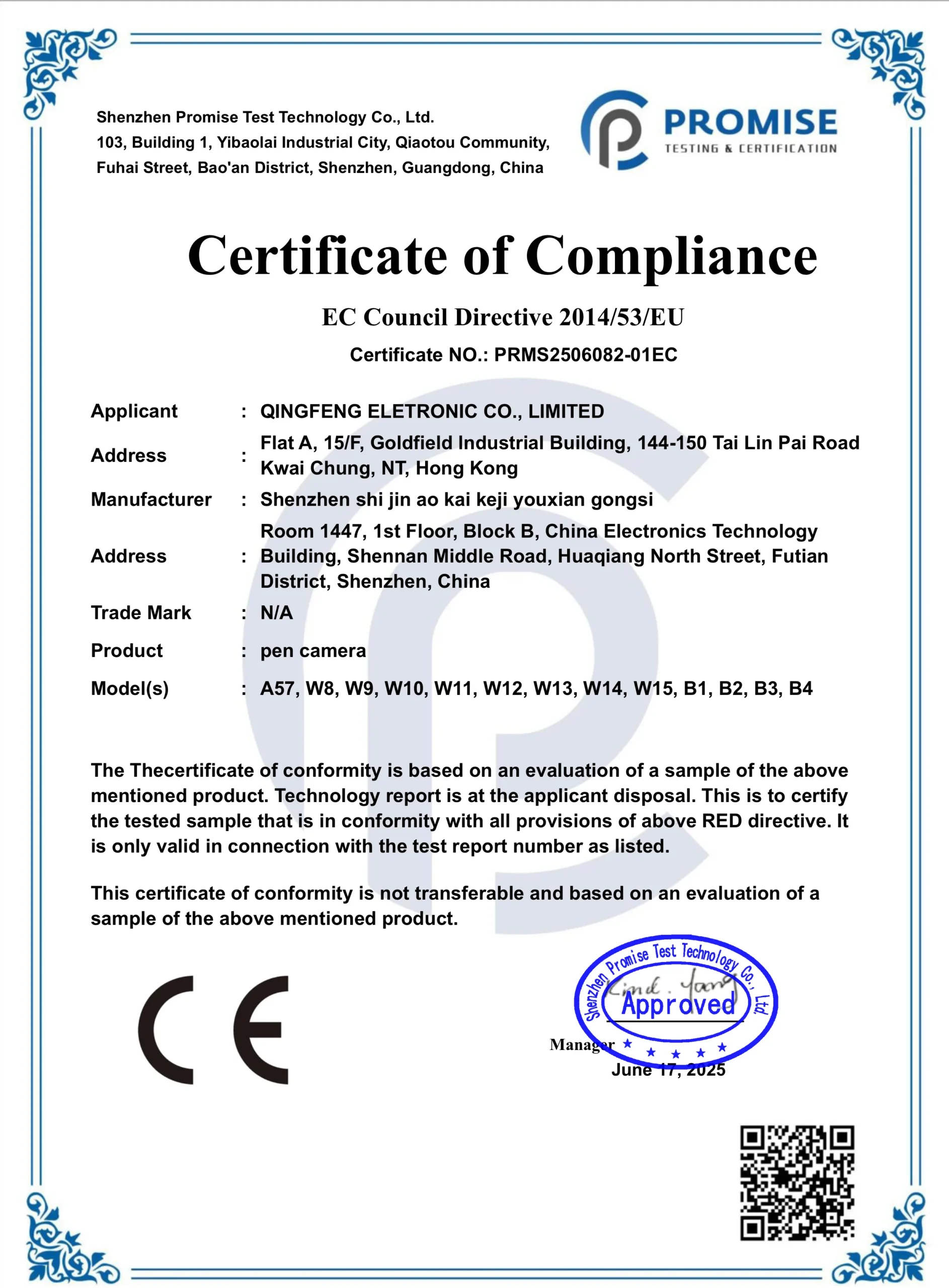
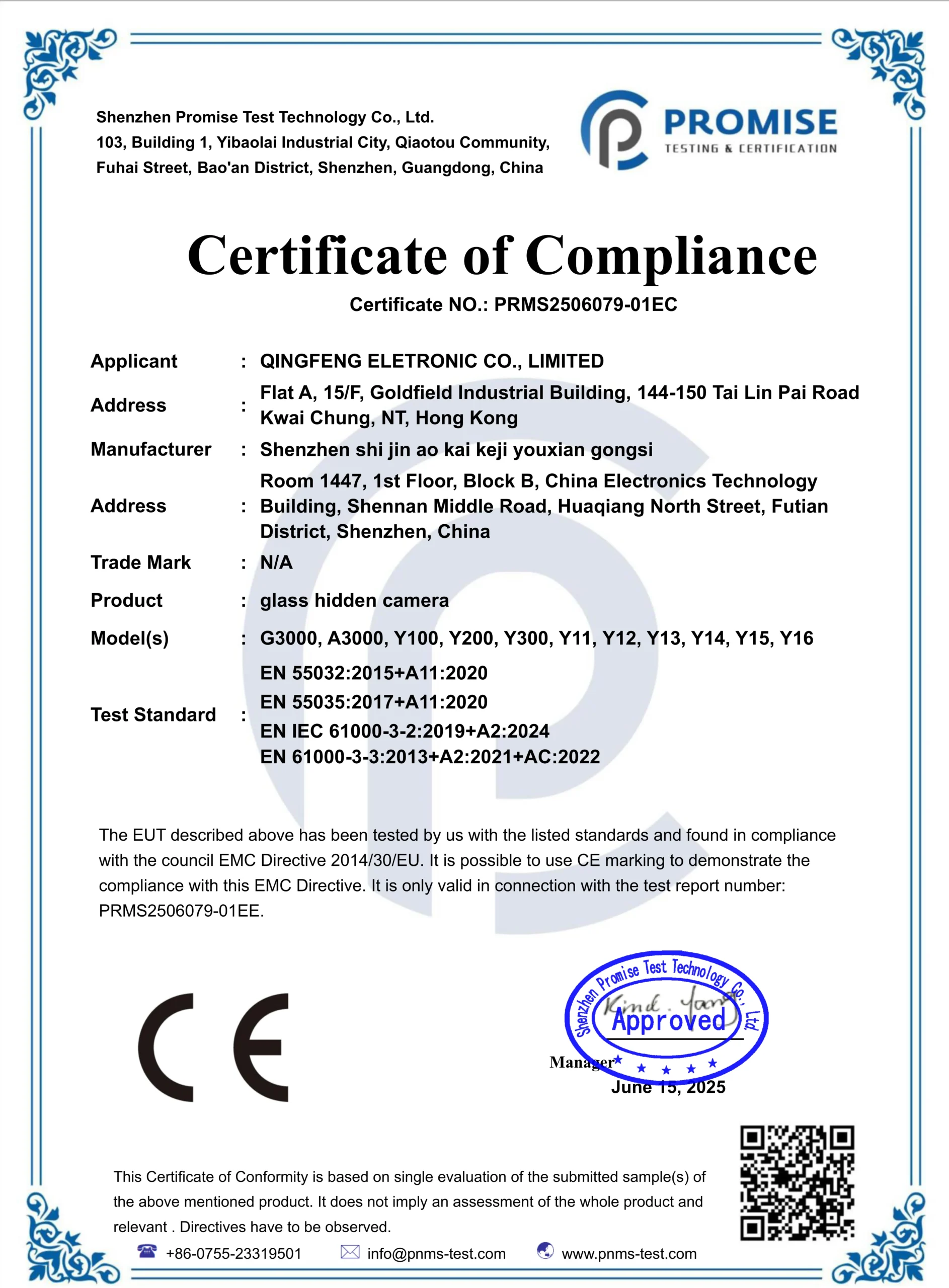
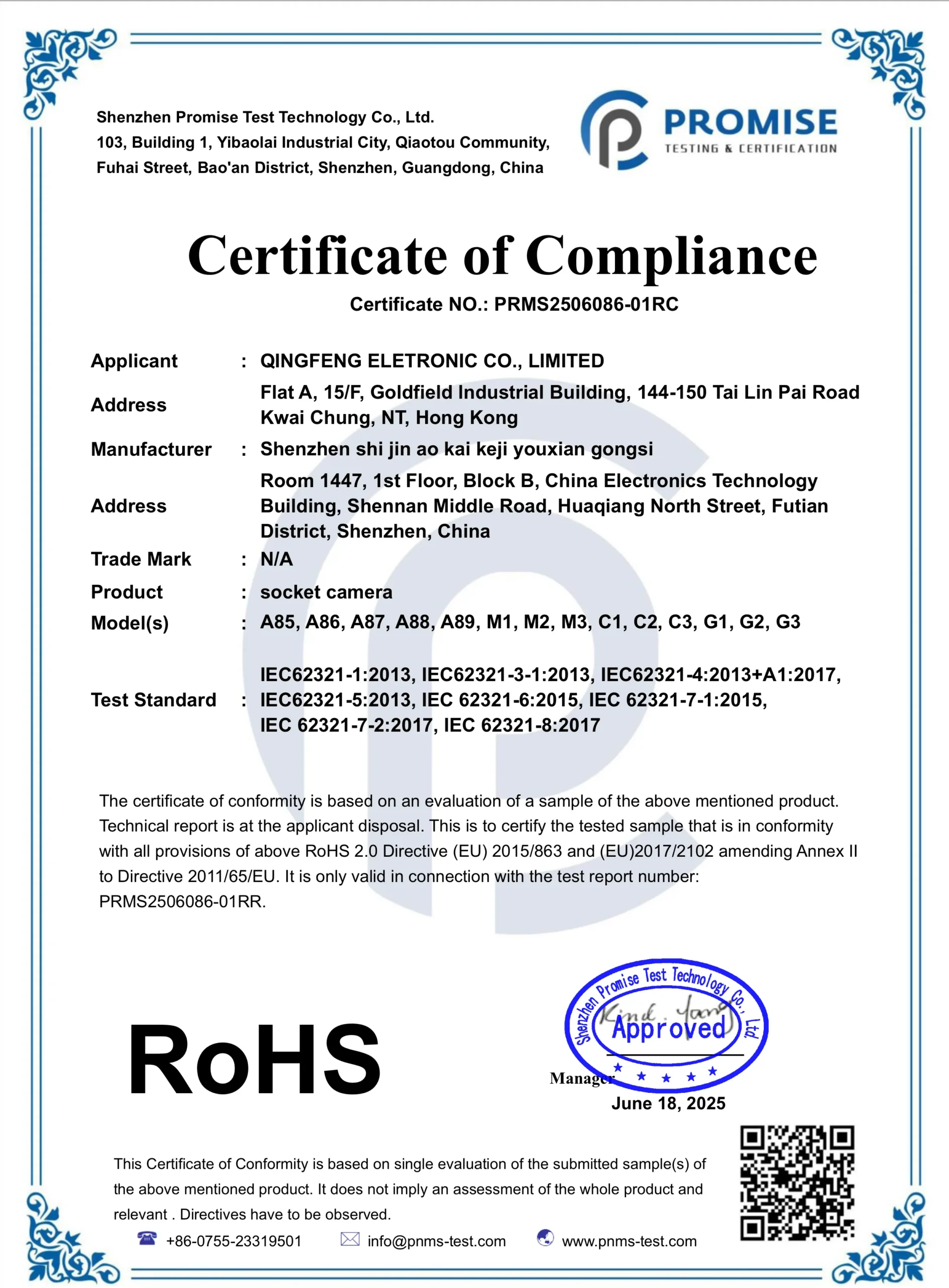
Every shipment we send to European distributors includes the relevant compliance certificates as standard. For the security camera and recording device categories we supply, this means:
– CE Declaration of Conformity (covering EMC and LVD directives where applicable)
– RoHS compliance documentation
– GDPR-relevant technical documentation for Wi-Fi enabled devices
– Product-specific user manuals in English, with Italian, German, or Polish translations available on request
If your customers — particularly institutional buyers, corporate accounts, or government-adjacent procurement — require specific documentation formats, request them at the time of order. We maintain certificate files for all active SKUs and can provide originals or certified copies as required for import clearance or customer tender submissions.
Summary: The Full Cost-Reduction Stack for European Distributors
The 22% that appears on your Italian customs declaration is not inevitable. It is the default outcome for buyers who have not structured their purchasing correctly. The tools to eliminate or substantially reduce it are legal, established, and widely used by professional importers across the EU.
To recap the approach:
Secure a valid EU VAT number and purchase under the Reverse Charge framework to bring your effective import VAT to zero. Source from our Italian warehouse for time-sensitive orders to avoid customs delays entirely. Use DDP terms for Polish fulfillment to simplify your local logistics. Plan your Q4 procurement before September to avoid peak air freight surcharges, and rely on our split shipment protocol to protect delivery timelines when multi-SKU consolidation is involved.
The distributors who margin the best on security electronics in Europe are not the ones with the lowest buy prices. They are the ones who have eliminated the hidden costs that erode margin between the factory gate and the customer invoice. VAT recovery strategy, local warehouse access, and freight planning are where that game is won.
If you are evaluating your current import structure and want to review how our supply terms compare to what you are doing today, contact us directly. We will walk through the numbers with your specific market and order profile.
Ready to Optimize Your European Supply Chain?
Stop letting VAT and freight peak seasons eat your margins. Partner with QZT for 100% compliant, local-invoiced security sourcing.
🇮🇹 Visit Us: Book an appointment at our Nola, Italy Showroom to inspect our CE-certified range in person — cameras, pen recorders, wearable devices, and Tuya-enabled smart modules all available for hands-on evaluation.
📊 Get Your Freight-Locked Quote: Contact our Senior B2B Team today to receive the 2026 Q3/Q4 price list. Your sample costs are fully refunded on your first bulk order — no risk to evaluate our range before committing to volume.
Book a Showroom Visit Request a DDP / Reverse Charge Quote
Quick FAQs
What is Reverse Charge and does it apply to my business?
Reverse Charge is an EU VAT mechanism (Directive 2006/112/EC) that transfers the VAT obligation from the supplier to the buyer. If you are an EU-registered business with a valid VAT number purchasing goods for commercial resale or business use, Reverse Charge applies by default on our B2B invoices. The effective VAT you pay at point of purchase is 0% — you self-report and simultaneously deduct on your own periodic return, resulting in zero cash outlay.
Do you ship DDP to Poland?
Yes. DDP (Delivered Duty Paid) is our standard term for Polish distributors. All import duties, customs clearance fees, and local taxes are included in the quoted price. You receive a single all-in landed cost with full local VAT invoicing — no customs broker required on your end.
What happens if the SKU I need is out of stock in the Italian warehouse?
We ship from China directly to our Italian warehouse at our cost, clear customs under our import entity, and dispatch to you from the Italian facility once stock arrives. The invoice you receive is generated by our Italian legal entity and complies fully with Italian tax law. From your accountant’s perspective, it is a standard local B2B purchase.
Related reading: 2026 Wholesale Guide: Top Wearable Security Cameras | Why Tuya Smart Modules Are the Most Profitable Security Products in Europe | Sourcing Guide: Selecting Concealed Pen Cameras for Corporate Use

 English
  Italiano
  Deutsch
  Français
  Español
  Polski