
Zasada działania kamery szpiegowskiej: Jak ukryte kamery rejestrują materiał filmowy
Zrozumienie, jak działa kamera szpiegowska, to nie tylko ćwiczenie techniczne — to decyzja zakupowa. Każda specyfikacja w każdym opisie produktu opisuje kompromis techniczny, a te kompromisy można ocenić inteligentnie tylko wtedy, gdy wiesz, co dzieje się wewnątrz urządzenia.
Ten przewodnik wyjaśnia pełną ścieżkę sygnału wewnątrz nowoczesnej kamery szpiegowskiej: jak światło staje się obrazem cyfrowym, jak ten obraz jest przetwarzany i kompresowany, jak jest przechowywany lub przesyłany oraz jak system zasilania utrzymuje wszystko w ruchu. Opiera się na rzeczywistych specyfikacjach technicznych z dyskusji na forach, zasobów inżynierskich oraz tego, co doświadczeni kupujący faktycznie sprawdzają przy ocenie kamery.
Spis treści
1. Podstawowe Komponenty: Co Zawiera Każda Kamera Szpiegowska
2. Ścieżka Sygnału: Jak Światło Staje Się Nagraniem
3. Czujniki Obrazu: CMOS vs CCD i Dlaczego To Ma Znaczenie
4. Systemy Soczewek i Pole Widzenia
5. Przetwarzanie i Kompresja Obrazu
6. Tryby nagrywania: ciągły, wyzwalany ruchem i planowany
7. Noktowizja: jak działa oświetlenie podczerwone
8. Przechowywanie: microSD, chmura i łańcuch przechowywania
9. Transmisja bezprzewodowa: Wi-Fi i rzeczywisty koszt łączności
1. Podstawowe Komponenty: Co Zawiera Każda Kamera Szpiegowska
Każda kamera szpiegowska — niezależnie od formy kamuflażu — zawiera te same podstawowe elementy. Jedyną różnicą jest sposób ich zapakowania i zasilania.
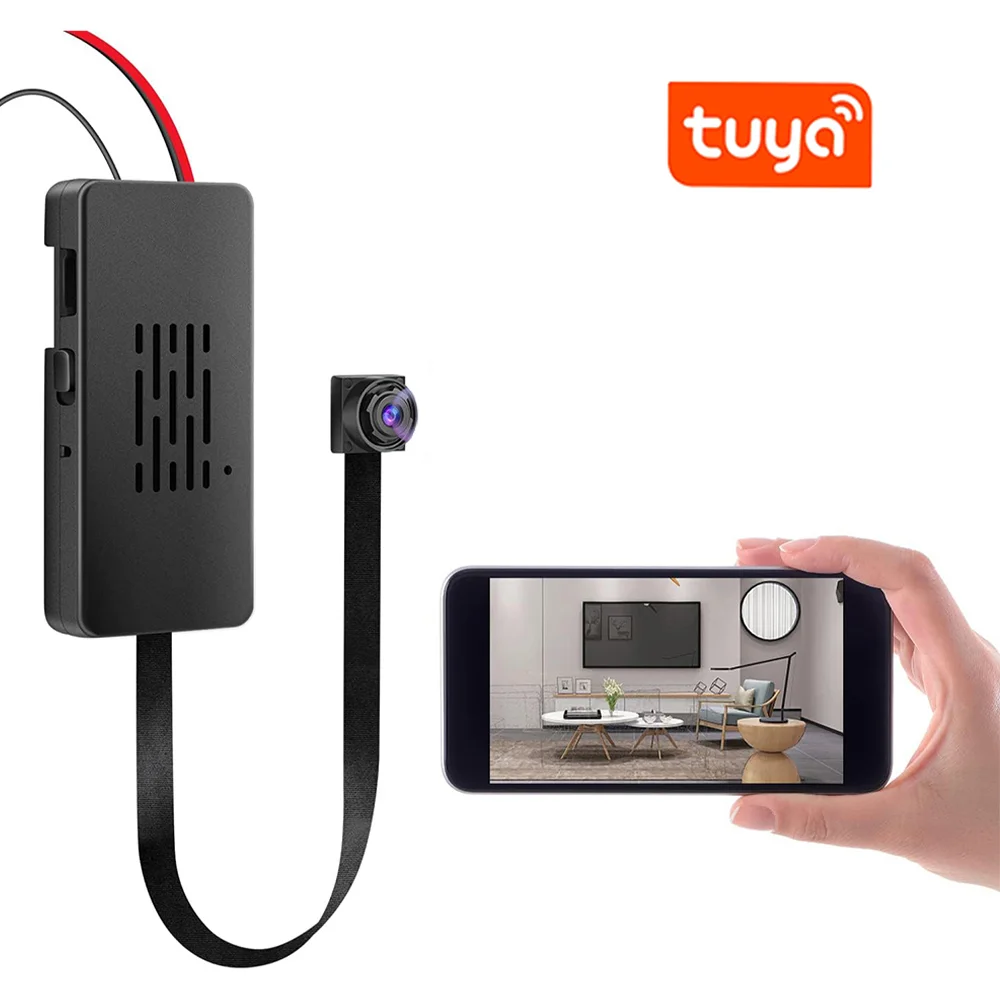
Pięć głównych komponentów:
| Komponent | Funkcjonować | Kluczowa specyfikacja do sprawdzenia |
|---|---|---|
| obiektyw | Zbiera i skupia światło na sensorze | Ogniskowa (mm), przesłona (liczba f), pole widzenia |
| Sensor obrazu | Konwertuje fotony na sygnały elektryczne | Typ sensora (CMOS/CCD), rozmiar (1/4″–1/2.8″), rozdzielczość (MP) |
| Procesor obrazu (ISP) | Przetwarza surowe dane z sensora; obsługuje kompresję | Model chipsetu; obsługa H.264 vs H.265 |
| Moduł pamięci | Zapisuje wideo do lokalnej lub chmurowej pamięci | Maksymalna pojemność microSD; dostawca chmury |
| System zasilania | Dostarcza stabilizowane napięcie do wszystkich komponentów | Pojemność baterii (mAh); passthrough USB; pobór mocy |
Obiektyw i sensor razem decydują o jakości obrazu. Wszystko inne określa, czy ten obraz jest użyteczny: czy jest poprawnie zapisany, niezawodnie przesyłany i zasilany w sposób ciągły.
2. Ścieżka Sygnału: Jak Światło Staje Się Nagraniem
Pełna ścieżka sygnału od sceny do nagranego materiału przebiega następująco:
“`
SCENA → OBIEKTYW → SENSOR OBRAZU → ISP (procesor sygnału obrazu) → KOMPRESJA → PRZECHOWYWANIE/TRANSMISJA
“`
Oto co dzieje się na każdym etapie:
Etap 1 — Ogniskowanie obiektywu: Światło ze sceny przechodzi przez obiektyw, który skupia je na powierzchni sensora. Jakość obiektywu — jego ogniskowa, przysłona i powłoki optyczne — określa, ile światła dociera do sensora i jak dokładnie tworzony jest obraz.
Etap 2 — Konwersja fotonów na elektrony: Sensor obrazu zawiera siatkę światłoczułych pikseli. Każdy piksel gromadzi ładunek elektryczny proporcjonalny do natężenia światła w danym punkcie. Czas naświetlania (czas migawki) określa, ile światła jest zbierane — dłuższa ekspozycja oznacza więcej światła, ale także większe rozmycie ruchu.
Etap 3 — Konwersja analogowo‑cyfrowa: Czujnik wyprowadza sygnał analogowy proporcjonalny do zgromadzonego ładunku w każdym pikselu. Jest on konwertowany na sygnał cyfrowy przez przetwornik ADC (analogowo-cyfrowy), zazwyczaj 10–12 bitów na piksel w nowoczesnych czujnikach.
Etap 4 — przetwarzanie ISP: Surowe cyfrowe zdjęcie przechodzi przez procesor sygnału obrazu, który stosuje:
– Demosaicing (rekonstrukcja koloru z wzorca Bayera)
– Korekta balansu bieli
– Redukcja szumów
– Korekta ekspozycji i gamma
– Konwersja przestrzeni barw
Etap 5 — Kompresja: Przetworzony obraz jest kompresowany przy użyciu kodeka wideo (standardowo H.264 lub H.265), aby zmniejszyć rozmiar pliku przed przechowywaniem lub transmisją.
Etap 6 — Przechowywanie lub transmisja: Skompresowany strumień wideo jest zapisywany na lokalnej karcie microSD lub przesyłany przez Wi-Fi/4G do serwera w chmurze.
> Obiektyw jest najbardziej pomijanym komponentem w kamerach konsumenckich. Plastikowy obiektyw $5 z sensorem 2MP da gorsze obrazy niż szklany obiektyw $5 z tym samym sensorem. Zawsze sprawdzaj, czy producent podaje w specyfikacji “szklany obiektyw” lub “szkło optyczne”.
> — Dyskusja na forum technicznym sprzętu bezpieczeństwa, 2024
3. Czujniki Obrazu: CMOS vs CCD i Dlaczego To Ma Znaczenie
Prawie wszystkie nowoczesne kamery szpiegowskie dla konsumentów wykorzystują Czujniki CMOS (Complementary Metal-Oxide Semiconductor). Czujniki CCD (Charge-Coupled Device), niegdyś standard w profesjonalnym wideo, zostały niemal całkowicie wyparte w kamerach konsumenckich z powodu większego poboru mocy i kosztów produkcji.
Jak działają czujniki CMOS:
Czujnik CMOS wykorzystuje aktywną strukturę pikseli, w której każdy światłoczuły piksel zawiera własny obwód wzmacniacza. Gdy światło pada na piksel, fotodioda generuje elektrony, które są natychmiast przetwarzane na napięcie i odczytywane przez równoległe przetworniki ADC w kolumnach. Ta architektura umożliwia:
– Niskie zużycie energii — kluczowe dla szpiegowskich kamer na baterie
– Szybkie prędkości odczytu — umożliwiając wideo 30 kl./s+ w rozdzielczości 1080p
– Funkcjonalność na układzie scalonym — automatyczna kontrola ekspozycji, balans bieli i redukcja szumów
Kwestia rozmiaru czujnika: Rozmiar czujnika mierzony jest w ułamkach cala (np. 1/2,8″, 1/3″, 1/4″). Większe czujniki przechwytują więcej światła na piksel, zapewniając lepszą jakość obrazu w warunkach słabego oświetlenia. Zależność nie jest liniowa — czujnik 1/2,8″ ma około 1,5 razy większą powierzchnię zbierającą światło niż czujnik 1/4″ — ale praktyczna różnica jest zauważalna w trudnych warunkach oświetleniowych.
| Rozmiar czujnika | Typowa rozdzielczość | Wydajność przy słabym oświetleniu | Koszt |
|---|---|---|---|
| 1/4″ | 1–2 MP | Basic | Niski |
| 1/3″ | 2–3 MP | Dobry | Umiarkowany |
| 1/2.8″ | 2–4 MP | Bardzo Dobra | Średnia–Wysoka |
| 1/2″ (profesjonalny) | 4–8 MP | Doskonały | Wysoki |
Warto znać modele sensorów:
Sony IMX323 oraz IMX307 są podstawą średniej klasy rynku kamer ukrytych. Oba to sensory 1/2,8 cala z autentyczną rozdzielczością 1080p (2MP). IMX307 wykorzystuje architekturę pikseli z podświetleniem tylnym (BSI), co znacznie poprawia czułość w słabym świetle w porównaniu z sensorami z podświetleniem przednim o tej samej rozdzielczości.
> Czujnik Sony IMX307 BSI dostarcza użyteczne obrazy kolorowe przy poniżej 1 luksa — co odpowiada mniej więcej pomieszczeniu oświetlonemu jedynie światłem ulicznym przez zasłony. Na tym poziomie oświetlenia, budżetowy czujnik z przednim oświetleniem generuje niemal czarny obraz z wyraźnym szumem kolorowym.
> — Dokumentacja produktowa Sony Semiconductor Solutions
4. Systemy Soczewek i Pole Widzenia
Obiektyw decyduje o tym, co widzi kamera — konkretnie, jego pole widzenia (FOV) oraz jego zdolność do działania w różnych warunkach oświetleniowych.
Ogniskowa i pole widzenia:
| Ogniskowa | Pole widzenia poziome (czujnik 1/3″) | Najlepsze dla |
|---|---|---|
| 2,8 mm | ~80° | Pokrycie pomieszczenia; ogólny nadzór |
| 3,6mm | ~65° | Monitorowanie celowane; punkty wejścia/wyjścia |
| 4mm | ~55° | Medium-distance; specific area focus |
| 6mm+ | <45° | Long-distance; narrow corridor focus |
Most consumer spy cameras use a fixed-focal-length lens in the 2.8–3.6mm range, which provides a wide enough field of view for typical indoor applications. Some models offer interchangeable lens modules or adjustable-focus lenses for specific use cases.
Aperture (f-number): The aperture, expressed as an f-number (e.g., f/2.0, f/2.8), describes how much light the lens can gather. A lower f-number means a wider aperture, which means more light reaches the sensor. In practical terms: f/2.0 captures roughly twice as much light as f/2.8. For covert cameras that need to record in low-light conditions without triggering visible infrared illumination, a wide aperture is essential.
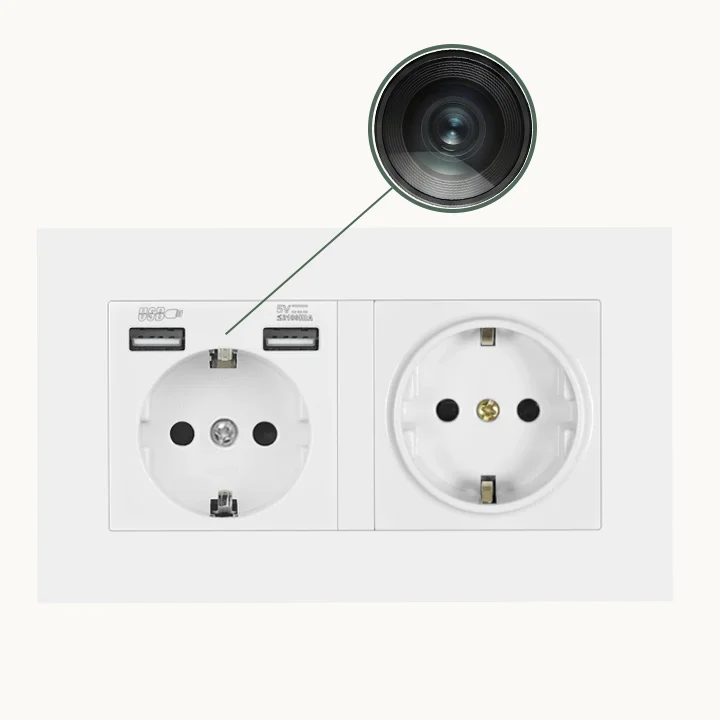
The pinhole lens challenge: Spy cameras that need to hide behind very small openings (behind a wall socket, inside a button) use pinhole lenses — tiny lenses with a very small aperture opening. While this enables extreme concealment, it significantly reduces light-gathering ability. The result is cameras that perform well in bright conditions but struggle below approximately 50 lux of ambient illumination.
5. Image Processing and Compression
The ISP (Image Signal Processor) does more than just convert raw sensor data into a viewable image. Modern ISPs in spy cameras perform:
Noise reduction: In low-light conditions, the sensor signal contains significant noise. The ISP applies algorithms — typically a combination of spatial and temporal noise reduction — to clean up the image. Aggressive noise reduction can introduce “smearing” artefacts on moving objects; conservative noise reduction preserves detail but leaves visible grain.
Wide dynamic range (WDR): When a scene contains both very bright and very dark areas (a window-lit room, for example), the ISP can apply WDR processing to preserve detail in both areas simultaneously. Entry-level cameras often lack true WDR and must choose between a correctly exposed interior or a correctly exposed exterior.
H.264 versus H.265 compression:
| Codec | Compression Efficiency | Bandwidth Requirement | Zgodność |
|---|---|---|---|
| H.264 | Standard | 2–4 Mbps for 1080p | Universal |
| H.265 (HEVC) | ~40% more efficient | 1.2–2.5 Mbps for 1080p | Growing; some older devices lack support |
For Wi-Fi spy cameras, H.265 compression provides a meaningful advantage: the same image quality at lower bandwidth, which means more reliable remote viewing on slower connections. However, H.265 encoding requires more processing power and is not supported by all playback software and mobile devices.
6. Recording Modes: Continuous, Motion-Triggered, and Scheduled
Modern spy cameras offer three distinct recording modes, each with specific power and storage implications.
Nagrywanie ciągłe: The camera records constantly to its storage medium. This produces the most complete footage record but places maximum stress on storage and power systems. A 1080p camera recording continuously at 4Mbps consumes approximately 1.7GB of storage per hour and draws maximum power continuously.
Motion-triggered recording (PIR or software-based): The camera detects movement within its field of view and begins recording automatically. This mode dramatically reduces storage consumption — typically by 70–90% compared to continuous recording for a typical domestic or office environment — and extends battery life significantly.
Two detection methods are used:
– PIR (Passive Infrared): Detects heat signatures from people, animals, and vehicles. More accurate than software-based detection; less prone to false positives from light changes. PIR sensors in consumer cameras typically detect movement at 3–5 metres.
– Software-based motion detection: Analyses successive frames from the image sensor to detect pixel changes. More sensitive to small movements (insects, light changes, dust) but requires more processing power.
Scheduled recording: The camera records only during pre-configured time windows. This is useful for monitoring predictable patterns — a caretaker’s shift, an office outside business hours, a rental property between tenancies.
7. Night Vision: How Infrared Illumination Works
Human eyes cannot see infrared light, but image sensors can — and this is the foundation of covert night vision.
The infrared spectrum:
| Typ | Długość fali | Widoczność dla człowieka | Spy Camera Use |
|---|---|---|---|
| Visible red | 700nm | Red glow visible | Not used |
| Standard IR | 850 nm | Faint red glow in darkness | Consumer cameras; detection risk |
| No-glow IR | 940 nm | Całkowicie niewidoczny | Covert cameras; military-grade |
| Far IR | >1000nm | Invisible | Specialized thermal cameras |
How IR night vision works in practice:
1. The camera’s IR LED array emits infrared light at the target wavelength
2. The light reflects off objects in the scene
3. The image sensor — which is sensitive to IR wavelengths invisible to humans — captures the reflected IR light
4. The ISP processes the IR image and converts it to a monochrome visible image
Range and effectiveness: The effective range of IR illumination depends on three factors: LED power (measured in watts or number of LEDs), wavelength, and the reflectivity of the target surface. A single 850nm LED at 3mW provides effective illumination at approximately 3–5 metres. Multi-LED arrays with 940nm emitters extend this to 8–15 metres in typical indoor environments.
> “The 850nm red glow is detectable by anyone who looks at the camera in a dark room. In a surveillance context, this is the equivalent of leaving a lit cigarette on the table — it completely defeats the purpose of a covert camera.”
> — Technical analysis, surveillance equipment forum, 2024
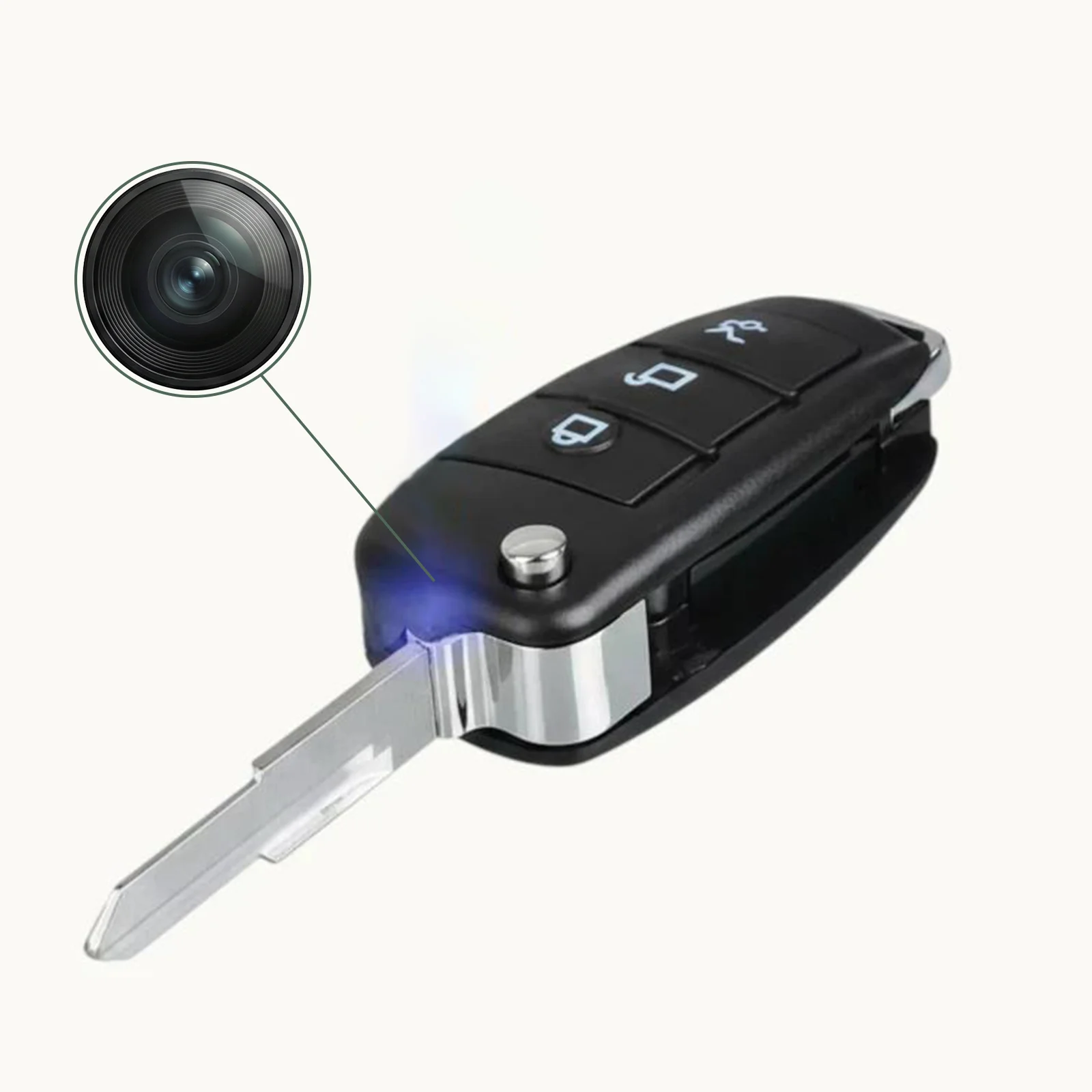
What affects night vision quality:
The IR illumination uniformity is as important as its intensity. Cheap cameras with a single high-power IR LED produce uneven illumination — bright in the centre, dark at the edges. Multi-LED arrays produce more even coverage but at higher manufacturing cost.
8. Storage: microSD, Cloud, and the Chain of Custody
Storage is where footage becomes evidence — or disappears.
Local microSD storage:
| Pojemność karty | Recording Time (H.264 1080p @ 4Mbps) |
|---|---|
| 32 GB | ~18 godzin |
| 64 GB | ~36 godzin |
| 128 GB | ~72 hours (3 days) |
| 256GB | ~144 hours (6 days) |
Loop recording — where the oldest footage is automatically overwritten when the card fills — is standard on virtually all modern covert cameras. This ensures continuous operation without manual card management.
Critical storage note: The microSD card is the most failure-prone component in any camera system. Card failure rates increase with write cycles (more frequent with motion-triggered recording), temperature extremes, and physical shock. Professional installations use industrial-grade or high-endurance consumer cards specifically rated for continuous write applications.
Magazyn w chmurze: Wi-Fi cameras with cloud subscription provide remote access to footage from any device, automatic backup, and protection against local storage failure. Cloud subscription costs typically run $3–$8/month depending on the provider and storage duration. The tradeoff: all footage passes through the provider’s servers, which has GDPR and data sovereignty implications for EU deployments.
The chain of custody question: For footage to be legally useful, its authenticity must be verifiable. This requires either:
– Local SD storage with tamper-evident packaging, or
– Cloud storage with cryptographic timestamp verification
Most budget cameras do not provide any mechanism for proving footage authenticity — a fact that is increasingly relevant as courts become more sophisticated about digital evidence standards.
9. Wireless Transmission: Wi-Fi and the Real Cost of Connectivity
Wi-Fi connectivity enables remote viewing — but it introduces latency, bandwidth requirements, and a dependency on the camera manufacturer’s server infrastructure.
Wi-Fi specifications that matter:
| Specyfikacja | What It Means | Dlaczego to ważne |
|---|---|---|
| Frequency band | 2.4GHz vs 5GHz | 2.4GHz has longer range; 5GHz has more bandwidth and less interference |
| 802.11 standard | n, ac, or ax | 802.11ax (Wi-Fi 6) handles congestion better; most budget cameras are 802.11n only |
| Streaming protocol | RTSP vs P2P vs cloud | RTSP: low latency but requires router configuration. P2P/cloud: works through NAT but has latency |
The latency reality: All consumer Wi-Fi cameras introduce latency between the live event and what the viewer sees on their phone. Typical latency for P2P/ cloud-streamed cameras is 1–3 seconds. RTSP cameras can achieve sub-1-second latency with proper configuration. Cameras marketed as “zero latency” are using direct local preview, not true live streaming.
RF detection reality: It is a persistent myth that Wi-Fi cameras cannot be detected. Any device transmitting on a Wi-Fi network can be identified by a network scanner — even when the SSID is hidden. Apps like Fing reliably detect all Wi-Fi cameras on a local network within seconds. For scenarios where absolute RF silence is required, only cameras with local SD-only storage (no Wi-Fi, no RF transmission) provide genuine invisibility.
10. FAQ
What is the difference between CMOS and CCD sensors in spy cameras?
CMOS sensors dominate virtually all modern consumer spy cameras because they consume less power, cost less to manufacture, and enable faster readout speeds than CCD alternatives. Within CMOS, back-illuminated (BSI) sensors like the Sony IMX307 capture significantly more light per pixel, delivering better low-light performance than front-illuminated sensors at the same resolution.
How does motion detection work in a spy camera?
Most consumer spy cameras use one of two methods: PIR (Passive Infrared) sensors, which detect the heat signatures of people and animals, or software-based motion detection, which analyses pixel differences between successive video frames. PIR is more accurate for human detection but has a shorter range (typically 3–5 metres). Software-based detection is more sensitive to all types of movement but generates more false positives from environmental changes.
Why do some spy cameras perform poorly at night despite having infrared LEDs?
Three reasons explain most night vision failures: low-power 850nm LEDs with limited range; uneven LED distribution creating bright spots and dark shadows; and inadequate ISP noise reduction for IR images, producing grainy footage that loses fine detail. A camera with 940nm multi-LED arrays and a quality ISP consistently outperforms models with more LEDs but inferior supporting electronics.
Can a spy camera record continuously without overheating?
Most covert cameras are designed for intermittent use rather than continuous 24/7 recording in sealed enclosures. A clock camera with adequate ventilation and a stable USB power supply can run continuously without issue. Cameras inside enclosed objects (inside a pen body, behind a very small pinhole in a wall) may experience thermal throttling — reduced frame rate or temporary shutdown — if ambient temperature rises significantly.
What happens to footage when the camera’s SD card is full?
With loop recording enabled (the default on virtually all cameras), the oldest footage is automatically overwritten by new footage once the card reaches capacity. This ensures continuous operation without manual intervention. The risk is that important footage from the period just before a significant event may have been overwritten. For applications where footage preservation is critical, cloud backup with redundant storage is the only reliable solution.
Need a spy camera that delivers on its technical specifications? Skontaktuj się z nami już dziś to discuss the full range of covert cameras — with verified sensor specifications, genuine glass lenses, and stable app infrastructure for EU and UK deployment.

 English
  Italiano
  Deutsch
  Français
  Español
  Polski