
Das Funktionsprinzip einer Spionagekamera: Wie verdeckte Kameras Aufnahmen machen
Understanding how a spy camera works is not just a technical exercise — it is a purchasing decision. Every specification on every product listing describes a technical tradeoff, and you can only evaluate those tradeoffs intelligently if you know what is happening inside the device.
This guide explains the complete signal path inside a modern spy camera: how light becomes a digital image, how that image is processed and compressed, how it is stored or transmitted, and how the power system keeps everything running. It draws on real technical specifications from forum discussions, engineering resources, and what experienced buyers actually check when evaluating a camera.
Inhaltsverzeichnis
1. The Core Components: What Every Spy Camera Contains
2. The Signal Path: How Light Becomes Footage
3. Image Sensors: CMOS vs CCD and Why It Matters
4. Lens Systems and Field of View
5. Image Processing and Compression
6. Recording Modes: Continuous, Motion-Triggered, and Scheduled
7. Night Vision: How Infrared Illumination Works
8. Storage: microSD, Cloud, and the Chain of Custody
9. Wireless Transmission: Wi-Fi and the Real Cost of Connectivity
1. The Core Components: What Every Spy Camera Contains
Every spy camera — regardless of its disguise form factor — contains the same fundamental building blocks. The only difference is how those components are packaged and powered.
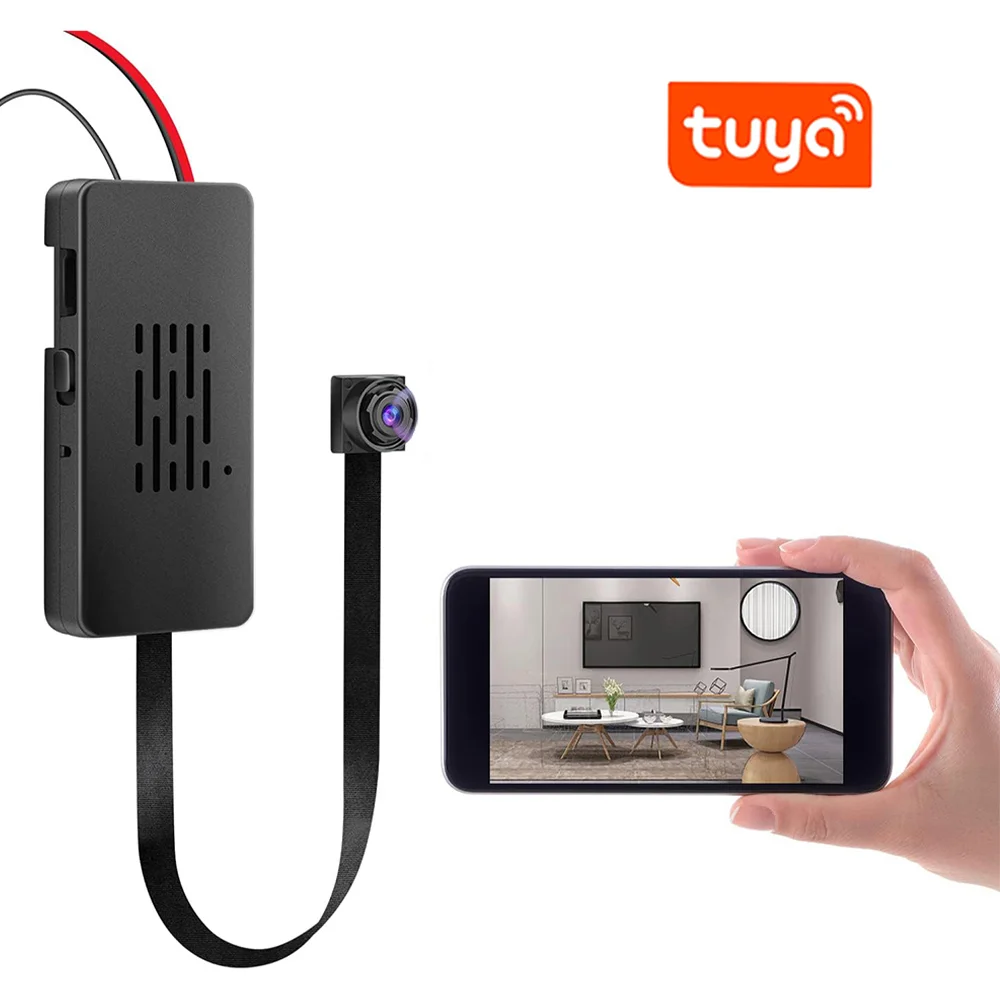
The five core components:
| Komponente | Funktion | Key Specification to Check |
|---|---|---|
| Linse | Collects and focuses light onto the sensor | Focal length (mm), aperture (f-number), field of view |
| Bildsensor | Converts photons to electrical signals | Sensor type (CMOS/CCD), size (1/4″–1/2.8″), resolution (MP) |
| Image processor (ISP) | Processes raw sensor data; handles compression | Chipset model; H.264 vs H.265 support |
| Speichermodul | Records video to local or cloud storage | Max microSD capacity; cloud provider |
| Power system | Supplies regulated voltage to all components | Battery capacity (mAh); USB passthrough; power consumption |
The lens and sensor together determine image quality. Everything else determines whether that image is usable: stored correctly, transmitted reliably, and powered consistently.
2. The Signal Path: How Light Becomes Footage
The complete signal path from scene to recorded footage follows this chain:
“`
SCENE → LENS → IMAGE SENSOR → ISP (Image Signal Processor) → COMPRESSION → STORAGE/TRANSMISSION
“`
Here is what happens at each stage:
Stage 1 — Lens focusing: Light from the scene passes through the lens, which focuses it onto the sensor surface. The quality of the lens — its focal length, aperture, and optical coatings — determines how much light reaches the sensor and how accurately the image is formed.
Stage 2 — Photon to electron conversion: The image sensor contains a grid of photosensitive pixels. Each pixel accumulates an electrical charge proportional to the light intensity at that point. The exposure time (shutter speed) determines how much light is collected — longer exposure means more light but also more motion blur.
Stage 3 — Analog to digital conversion: The sensor outputs an analog signal proportional to the accumulated charge at each pixel. This is converted to a digital signal by an ADC (analog-to-digital converter), typically 10–12 bits per pixel in modern sensors.
Stage 4 — ISP processing: The raw digital image passes through the Image Signal Processor, which applies:
– Demosaicing (reconstructing colour from the Bayer pattern)
– White balance correction
– Noise reduction
– Exposure and gamma correction
– Colour space conversion
Stage 5 — Compression: The processed image is compressed using a video codec (H.264 or H.265 are standard) to reduce file size before storage or transmission.
Stage 6 — Storage or transmission: The compressed video stream is either written to a local microSD card or streamed over Wi-Fi/4G to a cloud server.
> Das Objektiv ist die am meisten übersehene Komponente in Verbraucherkameras. Ein $5-Kunststoffobjektiv mit einem 2MP-Sensor erzeugt schlechtere Bilder als ein $5-Glasobjektiv mit demselben Sensor. Überprüfen Sie stets, ob der Hersteller in den Spezifikationen “Glasobjektiv” oder “optisches Glas” angibt.
> — Diskussion im technischen Forum für Sicherheitsausrüstung, 2024
3. Bildsensoren: CMOS vs. CCD und warum das wichtig ist
Fast alle modernen Verbraucher-Spionagekameras verwenden CMOS (Complementary Metal-Oxide Semiconductor)-Sensoren. CCD-Sensoren (Charge-Coupled Device), einst der Standard für professionelles Video, wurden in Verbraucherkameras aufgrund ihres höheren Stromverbrauchs und Herstellungskosten fast vollständig verdrängt.
Wie CMOS-Sensoren funktionieren:
Ein CMOS-Sensor verwendet eine aktive Pixelstruktur, bei der jedes lichtempfindliche Pixel seine eigene Verstärkerschaltung enthält. Wenn Licht auf das Pixel trifft, erzeugt die Fotodiode Elektronen, die sofort in eine Spannung umgewandelt und durch spaltenparallele ADCs ausgelesen werden. Diese Architektur ermöglicht:
– Geringer Stromverbrauch — entscheidend für batteriebetriebene Spionagekameras
– Schnelle Auslesegeschwindigkeiten – ermöglicht 30+ fps Video bei 1080p
– On-Chip-Funktionalität — automatische Belichtungssteuerung, Weißabgleich und Rauschunterdrückung
Die Frage der Sensorgröße: Die Sensorgröße wird in Bruchteilen eines Zolls gemessen (z. B. 1/2,8″, 1/3″, 1/4″). Größere Sensoren erfassen mehr Licht pro Pixel und erzeugen so eine bessere Bildqualität bei schlechten Lichtverhältnissen. Die Beziehung ist nicht linear – ein 1/2,8″-Sensor hat etwa die 1,5-fache Lichtsammelfläche eines 1/4″-Sensors –, aber der praktische Unterschied ist bei schwierigen Lichtverhältnissen spürbar.
| Sensorgröße | Typische Auflösung | Leistung bei schwachem Licht | Kosten |
|---|---|---|---|
| 1/4″ | 1–2MP | Basic | Niedrig |
| 1/3″ | 2–3MP | Gut | Mäßig |
| 1/2,8″ | 2–4 MP | Sehr gut | Mittel–Hoch |
| 1/2″ (professionell) | 4–8 MP | Exzellent | Hoch |
Wissenswerte Sensormodelle:
Der Sony IMX323 Und IMX307 sind die Arbeitspferde des mittleren Marktsegments für versteckte Kameras. Beide sind 1/2,8-Zoll-Sensoren mit echter 1080p (2MP)-Auflösung. Der IMX307 verwendet eine rückwärtig belichtete (BSI)-Pixelarchitektur, die die Lichtempfindlichkeit bei schwachem Licht im Vergleich zu vorwärts belichteten Sensoren mit derselben Auflösung erheblich verbessert.
> Der Sony IMX307 BSI-Sensor liefert brauchbare Farbbilder bei unter 1 Lux – etwa vergleichbar mit einem Raum, der nur durch Straßenlaternenlicht durch Vorhänge beleuchtet wird. Bei dieser Lichtstärke erzeugt ein günstiger Front-illuminated-Sensor nahezu schwarze Aufnahmen mit erheblichem Farbrauschen.
> — Sony Semiconductor Solutions Produktdokumentation
4. Linsensysteme und Bildfeld
Das Objektiv bestimmt, was die Kamera sieht – insbesondere seinen Sichtfeld (FOV) und seine Fähigkeit, unter verschiedenen Lichtverhältnissen zu funktionieren.
Brennweite und Sichtfeld:
| Brennweite | Horizontaler Sichtwinkel (1/3″-Sensor) | Am besten geeignet für |
|---|---|---|
| 2,8 mm | ~80° | Raumabdeckung; allgemeine Überwachung |
| 3,6mm | ~65° | Gezielte Überwachung; Ein-/Ausgangspunkte |
| 4 mm | ~55° | Medium-distance; specific area focus |
| 6mm+ | <45° | Long-distance; narrow corridor focus |
Most consumer spy cameras use a fixed-focal-length lens in the 2.8–3.6mm range, which provides a wide enough field of view for typical indoor applications. Some models offer interchangeable lens modules or adjustable-focus lenses for specific use cases.
Aperture (f-number): The aperture, expressed as an f-number (e.g., f/2.0, f/2.8), describes how much light the lens can gather. A lower f-number means a wider aperture, which means more light reaches the sensor. In practical terms: f/2.0 captures roughly twice as much light as f/2.8. For covert cameras that need to record in low-light conditions without triggering visible infrared illumination, a wide aperture is essential.
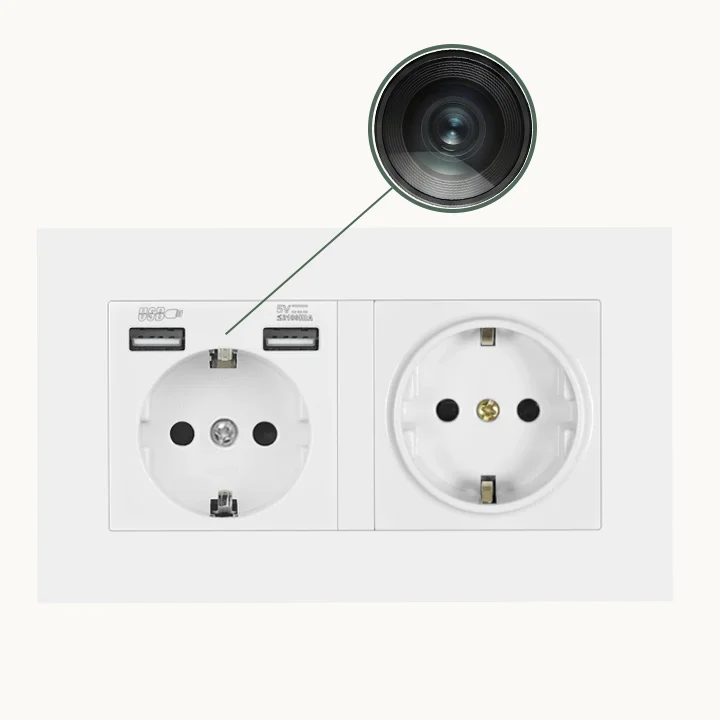
The pinhole lens challenge: Spy cameras that need to hide behind very small openings (behind a wall socket, inside a button) use pinhole lenses — tiny lenses with a very small aperture opening. While this enables extreme concealment, it significantly reduces light-gathering ability. The result is cameras that perform well in bright conditions but struggle below approximately 50 lux of ambient illumination.
5. Image Processing and Compression
The ISP (Image Signal Processor) does more than just convert raw sensor data into a viewable image. Modern ISPs in spy cameras perform:
Noise reduction: In low-light conditions, the sensor signal contains significant noise. The ISP applies algorithms — typically a combination of spatial and temporal noise reduction — to clean up the image. Aggressive noise reduction can introduce “smearing” artefacts on moving objects; conservative noise reduction preserves detail but leaves visible grain.
Wide dynamic range (WDR): When a scene contains both very bright and very dark areas (a window-lit room, for example), the ISP can apply WDR processing to preserve detail in both areas simultaneously. Entry-level cameras often lack true WDR and must choose between a correctly exposed interior or a correctly exposed exterior.
H.264 versus H.265 compression:
| Codec | Compression Efficiency | Bandwidth Requirement | Kompatibilität |
|---|---|---|---|
| H.264 | Standard | 2–4 Mbps for 1080p | Universal |
| H.265 (HEVC) | ~40% more efficient | 1.2–2.5 Mbps for 1080p | Growing; some older devices lack support |
For Wi-Fi spy cameras, H.265 compression provides a meaningful advantage: the same image quality at lower bandwidth, which means more reliable remote viewing on slower connections. However, H.265 encoding requires more processing power and is not supported by all playback software and mobile devices.
6. Recording Modes: Continuous, Motion-Triggered, and Scheduled
Modern spy cameras offer three distinct recording modes, each with specific power and storage implications.
Kontinuierliche Aufnahme: The camera records constantly to its storage medium. This produces the most complete footage record but places maximum stress on storage and power systems. A 1080p camera recording continuously at 4Mbps consumes approximately 1.7GB of storage per hour and draws maximum power continuously.
Motion-triggered recording (PIR or software-based): The camera detects movement within its field of view and begins recording automatically. This mode dramatically reduces storage consumption — typically by 70–90% compared to continuous recording for a typical domestic or office environment — and extends battery life significantly.
Two detection methods are used:
– PIR (Passive Infrared): Detects heat signatures from people, animals, and vehicles. More accurate than software-based detection; less prone to false positives from light changes. PIR sensors in consumer cameras typically detect movement at 3–5 metres.
– Software-based motion detection: Analyses successive frames from the image sensor to detect pixel changes. More sensitive to small movements (insects, light changes, dust) but requires more processing power.
Scheduled recording: The camera records only during pre-configured time windows. This is useful for monitoring predictable patterns — a caretaker’s shift, an office outside business hours, a rental property between tenancies.
7. Night Vision: How Infrared Illumination Works
Human eyes cannot see infrared light, but image sensors can — and this is the foundation of covert night vision.
The infrared spectrum:
| Typ | Wellenlänge | Menschliche Sichtbarkeit | Spy Camera Use |
|---|---|---|---|
| Visible red | 700nm | Red glow visible | Not used |
| Standard IR | 850nm | Faint red glow in darkness | Consumer cameras; detection risk |
| No-glow IR | 940 nm | Völlig unsichtbar | Covert cameras; military-grade |
| Far IR | >1000nm | Unsichtbar | Specialized thermal cameras |
How IR night vision works in practice:
1. The camera’s IR LED array emits infrared light at the target wavelength
2. The light reflects off objects in the scene
3. The image sensor — which is sensitive to IR wavelengths invisible to humans — captures the reflected IR light
4. The ISP processes the IR image and converts it to a monochrome visible image
Range and effectiveness: The effective range of IR illumination depends on three factors: LED power (measured in watts or number of LEDs), wavelength, and the reflectivity of the target surface. A single 850nm LED at 3mW provides effective illumination at approximately 3–5 metres. Multi-LED arrays with 940nm emitters extend this to 8–15 metres in typical indoor environments.
> “The 850nm red glow is detectable by anyone who looks at the camera in a dark room. In a surveillance context, this is the equivalent of leaving a lit cigarette on the table — it completely defeats the purpose of a covert camera.”
> — Technical analysis, surveillance equipment forum, 2024
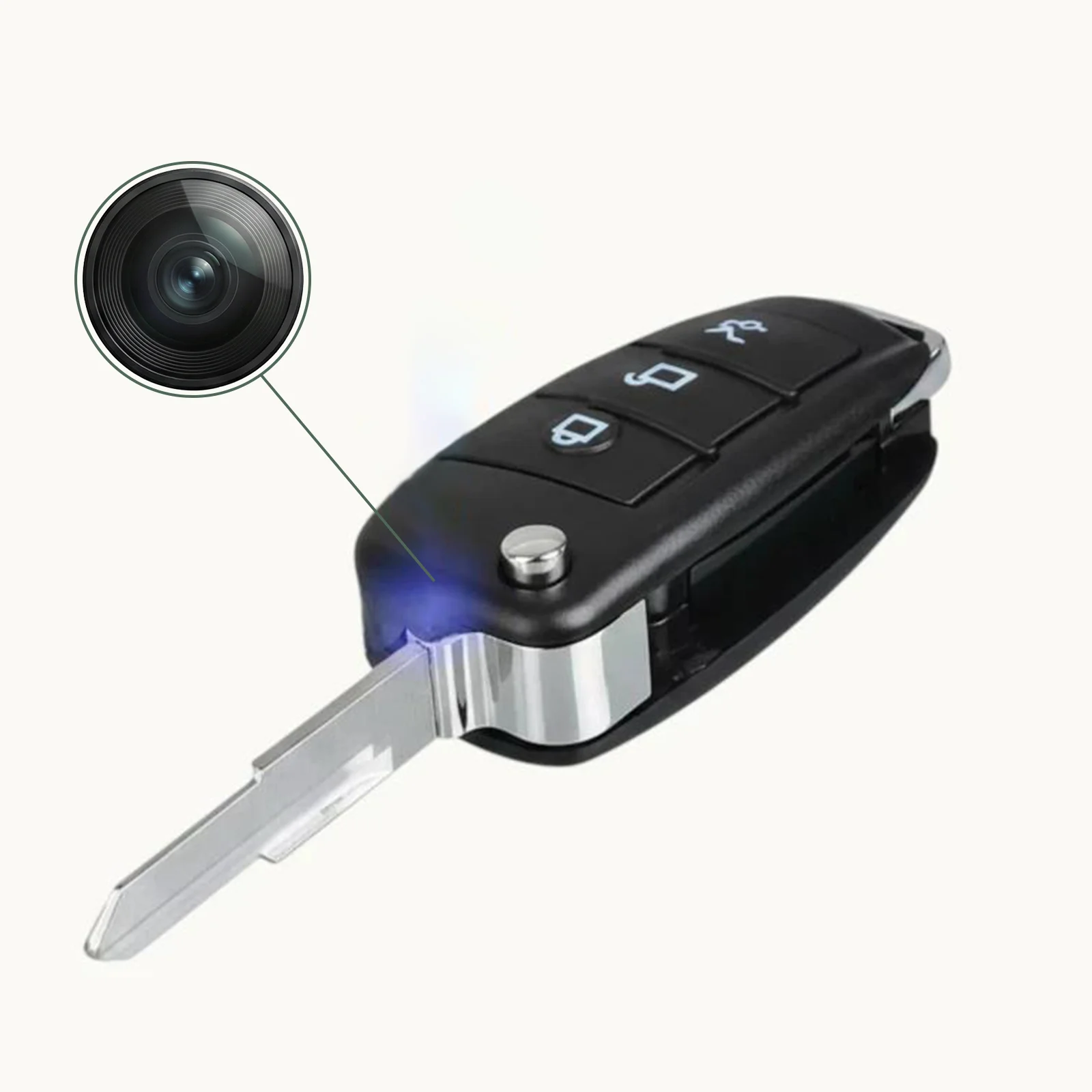
What affects night vision quality:
The IR illumination uniformity is as important as its intensity. Cheap cameras with a single high-power IR LED produce uneven illumination — bright in the centre, dark at the edges. Multi-LED arrays produce more even coverage but at higher manufacturing cost.
8. Storage: microSD, Cloud, and the Chain of Custody
Storage is where footage becomes evidence — or disappears.
Local microSD storage:
| Kartenkapazität | Recording Time (H.264 1080p @ 4Mbps) |
|---|---|
| 32 GB | ~18 Stunden |
| 64 GB | ~36 Stunden |
| 128 GB | ~72 hours (3 days) |
| 256 GB | ~144 hours (6 days) |
Loop recording — where the oldest footage is automatically overwritten when the card fills — is standard on virtually all modern covert cameras. This ensures continuous operation without manual card management.
Critical storage note: The microSD card is the most failure-prone component in any camera system. Card failure rates increase with write cycles (more frequent with motion-triggered recording), temperature extremes, and physical shock. Professional installations use industrial-grade or high-endurance consumer cards specifically rated for continuous write applications.
Cloud-Speicher: Wi-Fi cameras with cloud subscription provide remote access to footage from any device, automatic backup, and protection against local storage failure. Cloud subscription costs typically run $3–$8/month depending on the provider and storage duration. The tradeoff: all footage passes through the provider’s servers, which has GDPR and data sovereignty implications for EU deployments.
The chain of custody question: For footage to be legally useful, its authenticity must be verifiable. This requires either:
– Local SD storage with tamper-evident packaging, or
– Cloud storage with cryptographic timestamp verification
Most budget cameras do not provide any mechanism for proving footage authenticity — a fact that is increasingly relevant as courts become more sophisticated about digital evidence standards.
9. Wireless Transmission: Wi-Fi and the Real Cost of Connectivity
Wi-Fi connectivity enables remote viewing — but it introduces latency, bandwidth requirements, and a dependency on the camera manufacturer’s server infrastructure.
Wi-Fi specifications that matter:
| Spezifikation | What It Means | Warum es wichtig ist |
|---|---|---|
| Frequency band | 2.4GHz vs 5GHz | 2.4GHz has longer range; 5GHz has more bandwidth and less interference |
| 802.11 standard | n, ac, or ax | 802.11ax (Wi-Fi 6) handles congestion better; most budget cameras are 802.11n only |
| Streaming protocol | RTSP vs P2P vs cloud | RTSP: low latency but requires router configuration. P2P/cloud: works through NAT but has latency |
The latency reality: All consumer Wi-Fi cameras introduce latency between the live event and what the viewer sees on their phone. Typical latency for P2P/ cloud-streamed cameras is 1–3 seconds. RTSP cameras can achieve sub-1-second latency with proper configuration. Cameras marketed as “zero latency” are using direct local preview, not true live streaming.
RF detection reality: It is a persistent myth that Wi-Fi cameras cannot be detected. Any device transmitting on a Wi-Fi network can be identified by a network scanner — even when the SSID is hidden. Apps like Fing reliably detect all Wi-Fi cameras on a local network within seconds. For scenarios where absolute RF silence is required, only cameras with local SD-only storage (no Wi-Fi, no RF transmission) provide genuine invisibility.
10. FAQ
What is the difference between CMOS and CCD sensors in spy cameras?
CMOS sensors dominate virtually all modern consumer spy cameras because they consume less power, cost less to manufacture, and enable faster readout speeds than CCD alternatives. Within CMOS, back-illuminated (BSI) sensors like the Sony IMX307 capture significantly more light per pixel, delivering better low-light performance than front-illuminated sensors at the same resolution.
How does motion detection work in a spy camera?
Most consumer spy cameras use one of two methods: PIR (Passive Infrared) sensors, which detect the heat signatures of people and animals, or software-based motion detection, which analyses pixel differences between successive video frames. PIR is more accurate for human detection but has a shorter range (typically 3–5 metres). Software-based detection is more sensitive to all types of movement but generates more false positives from environmental changes.
Why do some spy cameras perform poorly at night despite having infrared LEDs?
Three reasons explain most night vision failures: low-power 850nm LEDs with limited range; uneven LED distribution creating bright spots and dark shadows; and inadequate ISP noise reduction for IR images, producing grainy footage that loses fine detail. A camera with 940nm multi-LED arrays and a quality ISP consistently outperforms models with more LEDs but inferior supporting electronics.
Can a spy camera record continuously without overheating?
Most covert cameras are designed for intermittent use rather than continuous 24/7 recording in sealed enclosures. A clock camera with adequate ventilation and a stable USB power supply can run continuously without issue. Cameras inside enclosed objects (inside a pen body, behind a very small pinhole in a wall) may experience thermal throttling — reduced frame rate or temporary shutdown — if ambient temperature rises significantly.
What happens to footage when the camera’s SD card is full?
With loop recording enabled (the default on virtually all cameras), the oldest footage is automatically overwritten by new footage once the card reaches capacity. This ensures continuous operation without manual intervention. The risk is that important footage from the period just before a significant event may have been overwritten. For applications where footage preservation is critical, cloud backup with redundant storage is the only reliable solution.
Need a spy camera that delivers on its technical specifications? Wie man die beste versteckte Kamera in 2026 auswählt to discuss the full range of covert cameras — with verified sensor specifications, genuine glass lenses, and stable app infrastructure for EU and UK deployment.

 English
  Italiano
  Deutsch
  Français
  Español
  Polski