
Czy kamera Spy Focus jest wodoodporna? Wyjaśnienie funkcji
Most spy camera listings use the word “waterproof.” Almost none of them are.
The truth is uncomfortable for buyers: no consumer-grade spy camera sold at mainstream prices carries a certified waterproof rating. When manufacturers say “waterproof,” they mean the camera will probably survive a brief splash. When they say “water-resistant,” the spec still doesn’t match most real-world wet environments. This guide gives you the actual IP rating data — not marketing language.
The practical question isn’t whether a spy camera is “waterproof.” It’s which form factors and deployment methods can handle specific moisture exposure levels — and when you need to invest in proper IP-rated housing.
What Does IP Rating Actually Mean for Spy Cameras?
The IP (Ingress Protection) rating system is the only standardised measure of water and dust resistance. Most consumer spy cameras carry no IP rating whatsoever — which means zero certified protection.
Here’s what each water protection level actually means, based on IEC standard 60529 test conditions:
IPX0: No protection against water.
IPX4: Protection against water splashing from any direction. This means a light spray or splash — like rain hitting the device at an angle. This is the practical minimum for a device used near water sources.
IPX5: Protection against low-pressure water jets from any direction. A garden hose pointed at the device won’t cause damage.
IPX6: Protection against high-pressure water jets or heavy seas. Stronger than IPX5.
IPX7: Temporary immersion — the device survives being submerged in up to 1 metre of freshwater for 30 minutes under controlled laboratory conditions. This is the most commonly cited “waterproof” benchmark. It’s not the same as waterproof.
IPX8: Continuous immersion under conditions specified by the manufacturer. There’s no universal standard here — one IPX8 device might handle 3 metres for 1 hour; another might only handle 1 metre for 30 minutes.
The critical distinction that manufacturers exploit: “waterproof” is a marketing term. It has no technical definition. Even a device rated IPX8 is technically “water-resistant” — not waterproof under all conditions. Reolink’s technical documentation puts it plainly: “IP67-rated security cameras are highly water-resistant and can withstand temporary immersion in water up to 1 metre… However, they are not totally waterproof to water under all conditions.”
For EU buyers: IP ratings are tested under standardised laboratory freshwater conditions. Saltwater, chlorinated water, rapid temperature changes, physical impacts, and seal degradation over time are not tested. Real-world water exposure is almost always harsher than the test conditions.
Which Spy Camera Form Factors Handle Moisture Best?
Not all form factors are equally vulnerable to moisture damage — and the best choice depends entirely on your deployment environment.
Kamery zegarowe (mains-powered): Run on continuous AC power, so their electronics are sealed inside the clock housing. Normal room humidity doesn’t affect them. But placing a clock camera in a bathroom or directly above a steam source — even an IPX0-rated one — will cause condensation inside the housing within weeks. The Zegar kamera WiFi Z10 handles kitchen and bathroom humidity better than most alternatives because its sealed mains-powered design generates a small amount of continuous heat that reduces internal condensation.
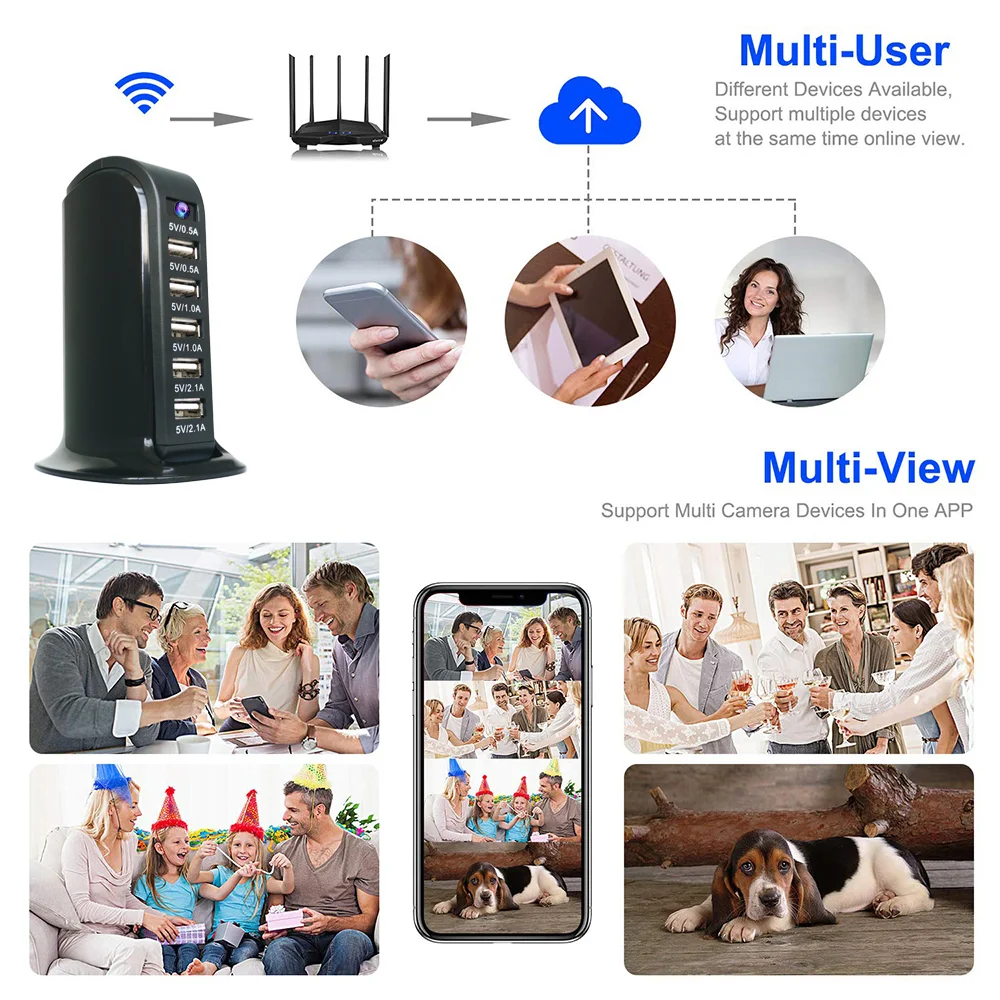
Aparaty z ładowarką USB: Same logic as clock cameras — always powered, sealed housing, handles normal indoor humidity. The Ukryta kamera w gniazdku EU oraz Aparat z ładowarką USB both fall into this category.
Kamery w kształcie długopisu: The most vulnerable form factor. Multiple entry points — pen tip opening, USB port, SD card slot, button mechanisms — create water ingress routes. A pen dropped in water, left in a wet pocket, or exposed to heavy rain will likely suffer immediate damage.
Kamery Power Bank: Better than pens but still battery-powered seals that degrade over time. The Kamera w power banku H3 with its 4-12 hour battery life can handle brief outdoor transitions but isn’t designed for wet environments.
Okulary z kamerą: The G3000 covert camera glasses handle outdoor weather through their use pattern — worn on a face, intermittently exposed, can be dried between uses. Not IP-rated, but more weather-tolerant than fixed-form cameras for personal outdoor use.
| Współczynnik kształtu | Normal Indoor Humidity | Splash/Spray | Rain/Outdoor | Submersion |
|---|---|---|---|---|
| Clock Camera (mains) | Acceptable | Avoid | Not suitable | Not suitable |
| USB Charger Camera | Acceptable | Avoid | Not suitable | Not suitable |
| Aparat w kształcie długopisu | Acceptable | Not suitable | Not suitable | Not suitable |
| Kamera Power Bank | Acceptable | Avoid | Ograniczona | Not suitable |
| Okulary do aparatu | Nie dotyczy | Acceptable | Weather-tolerant | Not suitable |
Kluczowy wniosek: No standard consumer spy camera is submersible. Fixed indoor cameras handle humidity; pens handle nothing beyond dry pockets.
Can a Housing Make a Spy Camera Waterproof?
Yes — but only if you select the right housing for your actual environment.
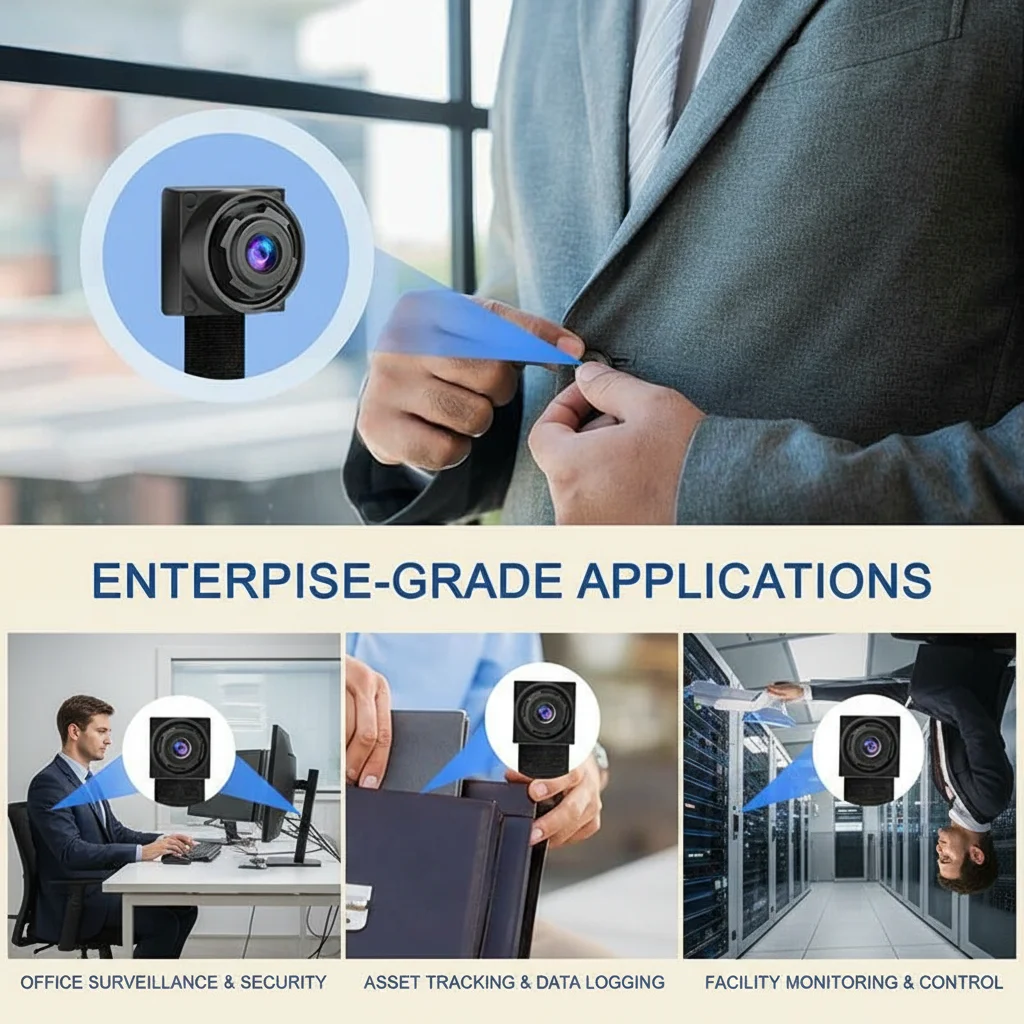
The DIY hidden WiFi spy camera module is specifically designed for custom housing integration. For wet environment deployments, you can pair it with an IP67-rated waterproof enclosure. This is the approach that professional security installers use when the deployment environment genuinely requires water protection.
What most buyers get wrong: a “waterproof bag” or “waterproof pouch” is not the same as a waterproof housing. Zip-lock bags trap moisture inside and create condensation. True waterproof enclosures use silicone seals rated to specific pressure and depth standards. The IP rating of the housing must match or exceed the water exposure in your deployment environment.
For bathroom or steam room deployment (which raises legal issues discussed below): IPX7 minimum is required. For outdoor fixed installations in UK or Northern European climates: IPX5-IPX6 is adequate for rain exposure.
Here’s the practical test before buying: can you explain exactly what liquid exposure the camera will face, for how long, and at what temperature? If the answer is vague, you’re guessing — and guessing on water protection means dead cameras.
What’s the Real Story on “Night Vision” in Humid Conditions?
Even without direct water contact, humidity destroys footage quality over time.
Lens fogging is the most common humidity-related failure. Condensation forms on the lens surface when warm, moist air contacts a cold camera surface — exactly what happens when you bring a camera into a warm, humid bathroom or kitchen. The resulting footage looks like you’re filming through frosted glass.
Anti-fog treatments help but don’t eliminate the problem. Silica gel packets inside the camera’s vicinity absorb ambient moisture and extend the usable humidity range.
Corrosion develops gradually on metal contacts — battery terminals, USB ports, SD card contacts. Often invisible until a critical recording fails. Monthly inspection of contacts for white corrosion residue is part of basic maintenance for any camera used in humid environments.
For EU buyers in Mediterranean climates: summer humidity levels in unventilated Italian, Spanish, or Greek rooms regularly exceed the comfort threshold for standard indoor spy cameras. Southern French coastal areas face similar challenges.
What IP Rating Should You Actually Target?
Here’s the honest guide to matching IP ratings to deployment scenarios.
For normal indoor home and office use (UK and EU): IPX0-IPX4 covers normal humidity, occasional cleaning splashes, and kitchen steam at a safe distance. Most consumer spy cameras (no rating) handle this fine if ventilated.
For kitchens, bathrooms, or areas near water sources: IPX5 minimum. Look for devices with IPX5 certification or source IPX5-rated housings for your module.
For outdoor undercover use in rain-prone UK or German climates: IPX6 minimum. Accept no less.
For fixed outdoor installations that might be submerged during floods or heavy rain pooling: IPX7. Budget for replacement after any submersion event — seals degrade each time.
For continuous underwater or extreme exposure: IPX8, but specify the exact depth and duration with your supplier before purchase. Remember that IPX8 specifications are manufacturer-defined, not standardised.
| Deployment Environment | Minimum IP Rating | Uwagi |
|---|---|---|
| Indoor office, climate controlled | No rating (basic) | Normal humidity only |
| Indoor kitchen, bathroom | IPX4 minimum | Keep ventilated, away from direct steam |
| Covered outdoor, shade | IPX4 | Not suitable for direct rain |
| Outdoor uncovered (UK rain) | IPX6 minimum | Check seal integrity seasonally |
| Possible temporary flooding | IPX7 | Replace seals after any submersion |
| Marine or saltwater | IPX8 with marine sealing | Standard IPX7 degrades in saltwater |
What Are the Actual Legal Boundaries for Wet Environment Deployment?
Installing covert cameras in bathrooms is illegal across every EU jurisdiction and the UK — regardless of your intent. Bathrooms are legally protected private spaces under data protection legislation. This applies to B2B sellers too: knowingly selling cameras for bathroom deployment creates legal liability.
For legitimate wet-environment deployments (outdoor perimeter monitoring in rain, industrial environments, food processing facilities), GDPR Article 35 requires a Data Protection Impact Assessment for systematic monitoring of publicly accessible areas. The Italian Data Protection Authority (Garante) and German supervisory authorities have issued specific guidance on wet-environment CCTV installations that B2B buyers should review before specifying products for commercial clients.
What Should You Take Away About Spy Camera Water Resistance?
The market uses “waterproof” to sell products. The technical reality is different.
Żadna konsumencka kamera szpiegowska sprzedawana w mainstreamowych cenach nie jest wodoodporna. Większość nie posiada żadnej klasyfikacji IP. Kamery w zegarach i ładowarkach USB dobrze radzą sobie z normalną wilgotnością wewnątrz pomieszczeń. Kamery w długopisach są najbardziej narażoną formą. Do każdego realistycznego wilgotnego środowiska zainwestuj w obudowę z klasą IP dla modułu DIY — lub wybierz urządzenie specjalnie zaprojektowane z certyfikowaną klasą.
Dla profesjonalnych kupców z UE i Wielkiej Brytanii, określenie właściwej klasy IP dla środowiska pracy i zweryfikowanie, czy produkt spełnia tę normę, jest częścią należytej staranności przy zakupach. Kamera, która zawodzi w trakcie obserwacji z powodu uszkodzenia wilgocią, jest gorsza niż brak kamery w ogóle.
Potrzebujesz dopasować kamerę do konkretnego wilgotnego środowiska pracy? Skontaktuj się z QZT Security do rekomendacji produktów i weryfikacji klasy IP.
Często zadawane pytania
Czy “wodoodporny” to prawnie zdefiniowany termin dla elektroniki?
Nie. “Wodoodporny” to termin marketingowy bez definicji technicznej. “Odporny na wodę” z klasą IP to jedyny ustandaryzowany wskaźnik ochrony przed wnikaniem cieczy. Każdy produkt twierdzący, że jest wodoodporny bez klasy IP, składa twierdzenie marketingowe, a nie techniczne.
Jaka jest różnica między IPX7 a IPX8?
IPX7 oznacza czasowe zanurzenie — 1 metr w wodzie słodkiej przez 30 minut w kontrolowanych warunkach laboratoryjnych. IPX8 oznacza ciągłe zanurzenie w warunkach określonych przez producenta, które mogą się drastycznie różnić między produktami. IPX8 bez określonej głębokości lub czasu trwania jest zasadniczo bez znaczenia.
Jak wilgoć faktycznie uszkadza kamery szpiegowskie z czasem?
Wilgoć powoduje trzy rodzaje uszkodzeń: zaparowanie obiektywu (skraplanie na powierzchni optycznej), korozję styków metalowych (zaciski baterii, porty USB, gniazda kart SD) oraz degradację pojemności baterii. Te usterki rozwijają się stopniowo — często przez tygodnie lub miesiące — i mogą nie być oczywiste, dopóki nie zawiedzie kluczowa sesja nagrywania.
Czy mogę użyć wodoodpornej obudowy z dowolnym modułem kamery szpiegowskiej?
Tak, ale obudowa musi odpowiadać wymaganiom Twojego zastosowania. Dla IP67 użyj obudowy przystosowanej do zanurzenia na co najmniej 1 metr przez 30 minut. Dla IPX5-IPX6 użyj obudowy chroniącej przed strugami i strumieniami wody. Standardowe “wodoodporne worki” nie są tym samym, co obudowy z certyfikowaną ochroną — zatrzymują wilgoć i nie zapewniają certyfikowanej ochrony.
Jaka forma kamery szpiegowskiej jest najlepsza do brytyjskiej pogody na zewnątrz?
Do osobistego nagrywania na zewnątrz, okulary z kamerą oferują najlepszy kompromis między odpornością na warunki atmosferyczne a użytecznością w warunkach brytyjskich. Do stałych instalacji zewnętrznych, moduł DIY w obudowie klasy IPX6 jest najbardziej niezawodnym podejściem. Standardowe formy wewnętrzne (długopisy, zegary, ładowarki USB) bez klasy IP nie nadają się do ekspozycji na zewnątrz w Wielkiej Brytanii.

 English
  Italiano
  Deutsch
  Français
  Español
  Polski