
Ist die Spy-Focus-Kamera wasserdicht? Funktionen erklärt
Most spy camera listings use the word “waterproof.” Almost none of them are.
The truth is uncomfortable for buyers: no consumer-grade spy camera sold at mainstream prices carries a certified waterproof rating. When manufacturers say “waterproof,” they mean the camera will probably survive a brief splash. When they say “water-resistant,” the spec still doesn’t match most real-world wet environments. This guide gives you the actual IP rating data — not marketing language.
The practical question isn’t whether a spy camera is “waterproof.” It’s which form factors and deployment methods can handle specific moisture exposure levels — and when you need to invest in proper IP-rated housing.
What Does IP Rating Actually Mean for Spy Cameras?
The IP (Ingress Protection) rating system is the only standardised measure of water and dust resistance. Most consumer spy cameras carry no IP rating whatsoever — which means zero certified protection.
Here’s what each water protection level actually means, based on IEC standard 60529 test conditions:
IPX0: No protection against water.
IPX4: Protection against water splashing from any direction. This means a light spray or splash — like rain hitting the device at an angle. This is the practical minimum for a device used near water sources.
IPX5: Protection against low-pressure water jets from any direction. A garden hose pointed at the device won’t cause damage.
IPX6: Protection against high-pressure water jets or heavy seas. Stronger than IPX5.
IPX7: Temporary immersion — the device survives being submerged in up to 1 metre of freshwater for 30 minutes under controlled laboratory conditions. This is the most commonly cited “waterproof” benchmark. It’s not the same as waterproof.
IPX8: Continuous immersion under conditions specified by the manufacturer. There’s no universal standard here — one IPX8 device might handle 3 metres for 1 hour; another might only handle 1 metre for 30 minutes.
The critical distinction that manufacturers exploit: “waterproof” is a marketing term. It has no technical definition. Even a device rated IPX8 is technically “water-resistant” — not waterproof under all conditions. Reolink’s technical documentation puts it plainly: “IP67-rated security cameras are highly water-resistant and can withstand temporary immersion in water up to 1 metre… However, they are not totally waterproof to water under all conditions.”
For EU buyers: IP ratings are tested under standardised laboratory freshwater conditions. Saltwater, chlorinated water, rapid temperature changes, physical impacts, and seal degradation over time are not tested. Real-world water exposure is almost always harsher than the test conditions.
Which Spy Camera Form Factors Handle Moisture Best?
Not all form factors are equally vulnerable to moisture damage — and the best choice depends entirely on your deployment environment.
Uhrenkameras (mains-powered): Run on continuous AC power, so their electronics are sealed inside the clock housing. Normal room humidity doesn’t affect them. But placing a clock camera in a bathroom or directly above a steam source — even an IPX0-rated one — will cause condensation inside the housing within weeks. The Z10 WiFi Uhr Kamera handles kitchen and bathroom humidity better than most alternatives because its sealed mains-powered design generates a small amount of continuous heat that reduces internal condensation.
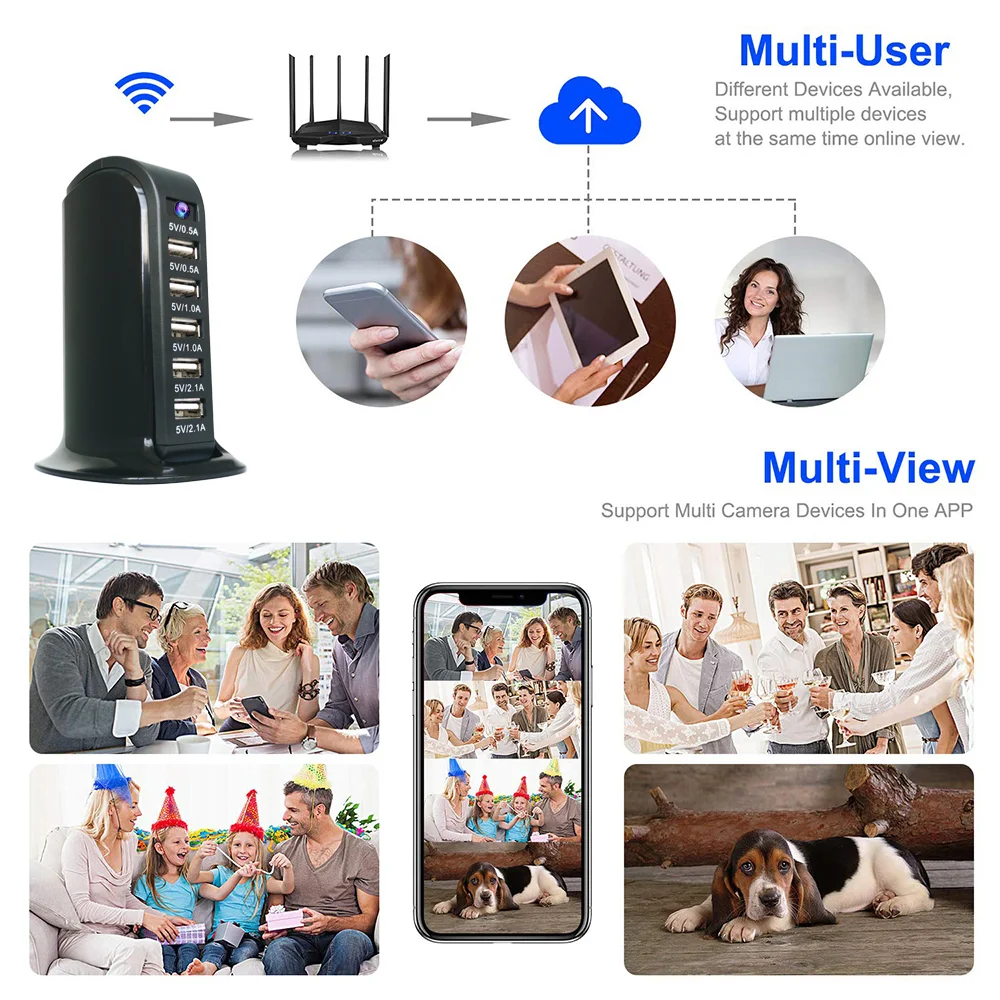
USB-Ladegerät Kameras: Same logic as clock cameras — always powered, sealed housing, handles normal indoor humidity. The EU-Steckdosen versteckte Kamera Und USB-Ladegerät Kamera both fall into this category.
Stift-Kameras: The most vulnerable form factor. Multiple entry points — pen tip opening, USB port, SD card slot, button mechanisms — create water ingress routes. A pen dropped in water, left in a wet pocket, or exposed to heavy rain will likely suffer immediate damage.
Powerbank-Kameras: Better than pens but still battery-powered seals that degrade over time. The H3 Powerbank-Kamera with its 4-12 hour battery life can handle brief outdoor transitions but isn’t designed for wet environments.
Kamera-Brille: Das G3000 covert camera glasses handle outdoor weather through their use pattern — worn on a face, intermittently exposed, can be dried between uses. Not IP-rated, but more weather-tolerant than fixed-form cameras for personal outdoor use.
| Formfaktor | Normal Indoor Humidity | Splash/Spray | Rain/Outdoor | Submersion |
|---|---|---|---|---|
| Clock Camera (mains) | Acceptable | Vermeiden | Not suitable | Not suitable |
| USB Charger Camera | Acceptable | Vermeiden | Not suitable | Not suitable |
| Stiftkamera | Acceptable | Not suitable | Not suitable | Not suitable |
| Powerbank-Kamera | Acceptable | Vermeiden | Begrenzt | Not suitable |
| Kamerabrille | N / A | Acceptable | Weather-tolerant | Not suitable |
Kernaussage: No standard consumer spy camera is submersible. Fixed indoor cameras handle humidity; pens handle nothing beyond dry pockets.
Can a Housing Make a Spy Camera Waterproof?
Yes — but only if you select the right housing for your actual environment.
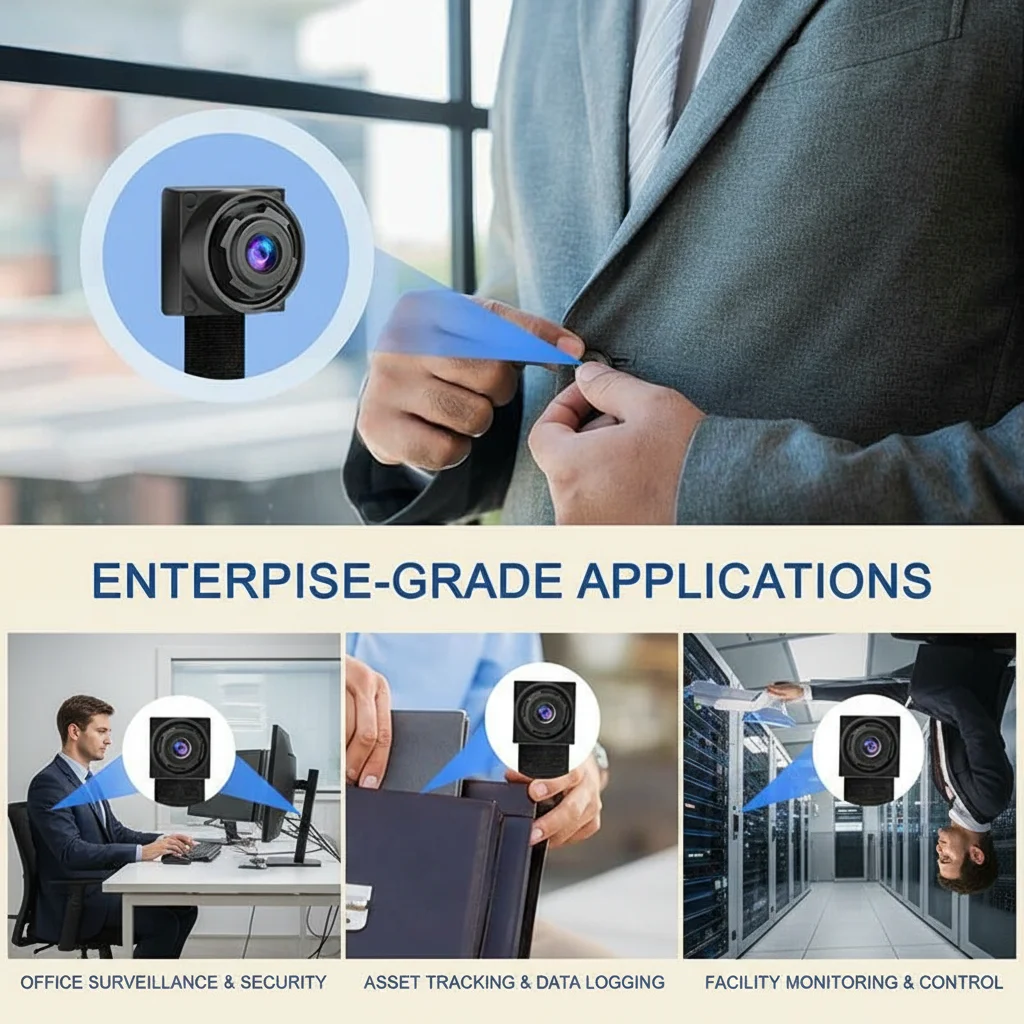
Die DIY verstecktes WiFi-Spionagekamera-Modul is specifically designed for custom housing integration. For wet environment deployments, you can pair it with an IP67-rated waterproof enclosure. This is the approach that professional security installers use when the deployment environment genuinely requires water protection.
What most buyers get wrong: a “waterproof bag” or “waterproof pouch” is not the same as a waterproof housing. Zip-lock bags trap moisture inside and create condensation. True waterproof enclosures use silicone seals rated to specific pressure and depth standards. The IP rating of the housing must match or exceed the water exposure in your deployment environment.
For bathroom or steam room deployment (which raises legal issues discussed below): IPX7 minimum is required. For outdoor fixed installations in UK or Northern European climates: IPX5-IPX6 is adequate for rain exposure.
Here’s the practical test before buying: can you explain exactly what liquid exposure the camera will face, for how long, and at what temperature? If the answer is vague, you’re guessing — and guessing on water protection means dead cameras.
What’s the Real Story on “Night Vision” in Humid Conditions?
Even without direct water contact, humidity destroys footage quality over time.
Lens fogging is the most common humidity-related failure. Condensation forms on the lens surface when warm, moist air contacts a cold camera surface — exactly what happens when you bring a camera into a warm, humid bathroom or kitchen. The resulting footage looks like you’re filming through frosted glass.
Anti-fog treatments help but don’t eliminate the problem. Silica gel packets inside the camera’s vicinity absorb ambient moisture and extend the usable humidity range.
Corrosion develops gradually on metal contacts — battery terminals, USB ports, SD card contacts. Often invisible until a critical recording fails. Monthly inspection of contacts for white corrosion residue is part of basic maintenance for any camera used in humid environments.
For EU buyers in Mediterranean climates: summer humidity levels in unventilated Italian, Spanish, or Greek rooms regularly exceed the comfort threshold for standard indoor spy cameras. Southern French coastal areas face similar challenges.
What IP Rating Should You Actually Target?
Here’s the honest guide to matching IP ratings to deployment scenarios.
For normal indoor home and office use (UK and EU): IPX0-IPX4 covers normal humidity, occasional cleaning splashes, and kitchen steam at a safe distance. Most consumer spy cameras (no rating) handle this fine if ventilated.
For kitchens, bathrooms, or areas near water sources: IPX5 minimum. Look for devices with IPX5 certification or source IPX5-rated housings for your module.
For outdoor undercover use in rain-prone UK or German climates: IPX6 minimum. Accept no less.
For fixed outdoor installations that might be submerged during floods or heavy rain pooling: IPX7. Budget for replacement after any submersion event — seals degrade each time.
For continuous underwater or extreme exposure: IPX8, but specify the exact depth and duration with your supplier before purchase. Remember that IPX8 specifications are manufacturer-defined, not standardised.
| Deployment Environment | Minimum IP Rating | Hinweise |
|---|---|---|
| Indoor office, climate controlled | No rating (basic) | Normal humidity only |
| Indoor kitchen, bathroom | IPX4 minimum | Keep ventilated, away from direct steam |
| Covered outdoor, shade | IPX4 | Not suitable for direct rain |
| Outdoor uncovered (UK rain) | IPX6 minimum | Check seal integrity seasonally |
| Possible temporary flooding | IPX7 | Replace seals after any submersion |
| Marine or saltwater | IPX8 with marine sealing | Standard IPX7 degrades in saltwater |
What Are the Actual Legal Boundaries for Wet Environment Deployment?
Installing covert cameras in bathrooms is illegal across every EU jurisdiction and the UK — regardless of your intent. Bathrooms are legally protected private spaces under data protection legislation. This applies to B2B sellers too: knowingly selling cameras for bathroom deployment creates legal liability.
For legitimate wet-environment deployments (outdoor perimeter monitoring in rain, industrial environments, food processing facilities), GDPR Article 35 requires a Data Protection Impact Assessment for systematic monitoring of publicly accessible areas. The Italian Data Protection Authority (Garante) and German supervisory authorities have issued specific guidance on wet-environment CCTV installations that B2B buyers should review before specifying products for commercial clients.
What Should You Take Away About Spy Camera Water Resistance?
The market uses “waterproof” to sell products. The technical reality is different.
Keine für Verbraucher bestimmte Spionagekamera, die zu Mainstream-Preisen verkauft wird, ist wasserdicht. Die meisten haben überhaupt keine IP-Klassifizierung. Uhrenkameras und USB-Ladegerätekameras vertragen normale Raumluftfeuchtigkeit gut. Stiftkameras sind die anfälligste Bauform. Für jede realistische nasse Umgebung sollten Sie ein IP-zertifiziertes Gehäuse für ein DIY-Modul verwenden – oder ein speziell entwickeltes Gerät mit einer zertifizierten Schutzart wählen.
Für professionelle Käufer in der EU und im UK gehört die Spezifikation der richtigen IP-Schutzart für die Einsatzumgebung und die Überprüfung, ob das Produkt diesem Standard entspricht, zur Sorgfaltspflicht bei der Beschaffung. Eine Kamera, die während der Überwachung aufgrund von Feuchtigkeitsschäden ausfällt, ist schlimmer als gar keine Kamera.
Müssen Sie eine Kamera an eine bestimmte nasse Einsatzumgebung anpassen? Kontaktieren Sie QZT Security für Produktempfehlungen und IP-Schutzart-Verifizierung.
Häufig gestellte Fragen
Ist “wasserdicht” ein gesetzlich definierter Begriff für Elektronik?
Nein. “Wasserdicht” ist ein Marketingbegriff ohne technische Definition. “Wasserbeständig” mit einer IP-Schutzart ist das einzige standardisierte Maß für den Schutz gegen Flüssigkeitseintritt. Jedes Produkt, das behauptet, wasserdicht zu sein, ohne eine IP-Schutzart aufzuweisen, macht eine Marketingaussage, keine technische.
Was ist der Unterschied zwischen IPX7 und IPX8?
IPX7 bedeutet zeitweiliges Eintauchen – 1 Meter Süßwasser für 30 Minuten unter kontrollierten Laborbedingungen. IPX8 bedeutet dauerhaftes Eintauchen unter vom Hersteller festgelegten Bedingungen, die sich zwischen Produkten erheblich unterscheiden können. IPX8 ohne angegebene Tiefe oder Dauer ist im Wesentlichen bedeutungslos.
Wie schädigt Feuchtigkeit Spionagekameras tatsächlich im Laufe der Zeit?
Feuchtigkeit verursacht drei Arten von Schäden: Linsenbeschlag (Kondensation auf der optischen Oberfläche), Korrosion von Metallkontakten (Batteriekontakte, USB-Anschlüsse, SD-Kartensteckplätze) und Verschlechterung der Batteriekapazität. Diese Ausfälle entwickeln sich allmählich – oft über Wochen oder Monate – und werden möglicherweise erst offensichtlich, wenn eine kritische Aufnahmesitzung fehlschlägt.
Kann ich ein wasserdichtes Gehäuse mit jedem Spionagekameramodul verwenden?
Ja, aber das Gehäuse muss Ihren Einsatzanforderungen entsprechen. Für IP67 verwenden Sie ein Gehäuse, das für mindestens 1 Meter Eintauchtiefe für 30 Minuten ausgelegt ist. Für IPX5-IPX6 verwenden Sie ein Gehäuse, das für Spritz- und Strahlenschutz ausgelegt ist. Standard-“Wasserdichte Taschen” sind nicht dasselbe wie zertifizierte wasserdichte Gehäuse – sie halten Feuchtigkeit zurück und bieten keinen zertifizierten Schutz.
Welche Spionagekamera-Bauform eignet sich am besten für das britische Außenwetter?
Für persönliche Außenaufnahmen bieten Kamerabrille die beste Balance aus Wetterbeständigkeit und Benutzerfreundlichkeit unter britischen Bedingungen. Für feste Außeninstallationen ist ein DIY-Modul in einem IPX6-zertifizierten Gehäuse der zuverlässigste Ansatz. Standard-Bauformen für den Innenbereich (Stifte, Uhren, USB-Ladegeräte) ohne IP-Schutz sind für den Einsatz im Freien im UK nicht geeignet.

 English
  Italiano
  Deutsch
  Français
  Español
  Polski