
A practical guide for security professionals, investigators, and business users covering body-worn camera placement, clothing strategies, and legal compliance across the United Kingdom and European Union.
The Direct Answer First
There is no single “correct” way to wear a hidden camera — the right placement depends entirely on your environment, your role, and what you need to capture.
A retail loss-prevention officer wearing a jacket will use a completely different mounting position than a cycling journalist who needs hands-free POV footage. A meeting recorder will benefit from a pen-style device clipped to a shirt pocket, while a field investigator may prefer glasses-mounted optics that stay perfectly level with their line of sight.
This guide covers every major mounting position, the clothing strategies that make them work, and the legal boundaries across the UK and EU that determine what’s acceptable for your buyers’ end customers.
Understanding Body-Worn Camera Form Factors
Before choosing a placement, you need to match the camera’s physical form to the deployment scenario. The mounting position is only as effective as the device it’s hosting.
Glasses-Mounted Cameras: First-Person Perspective
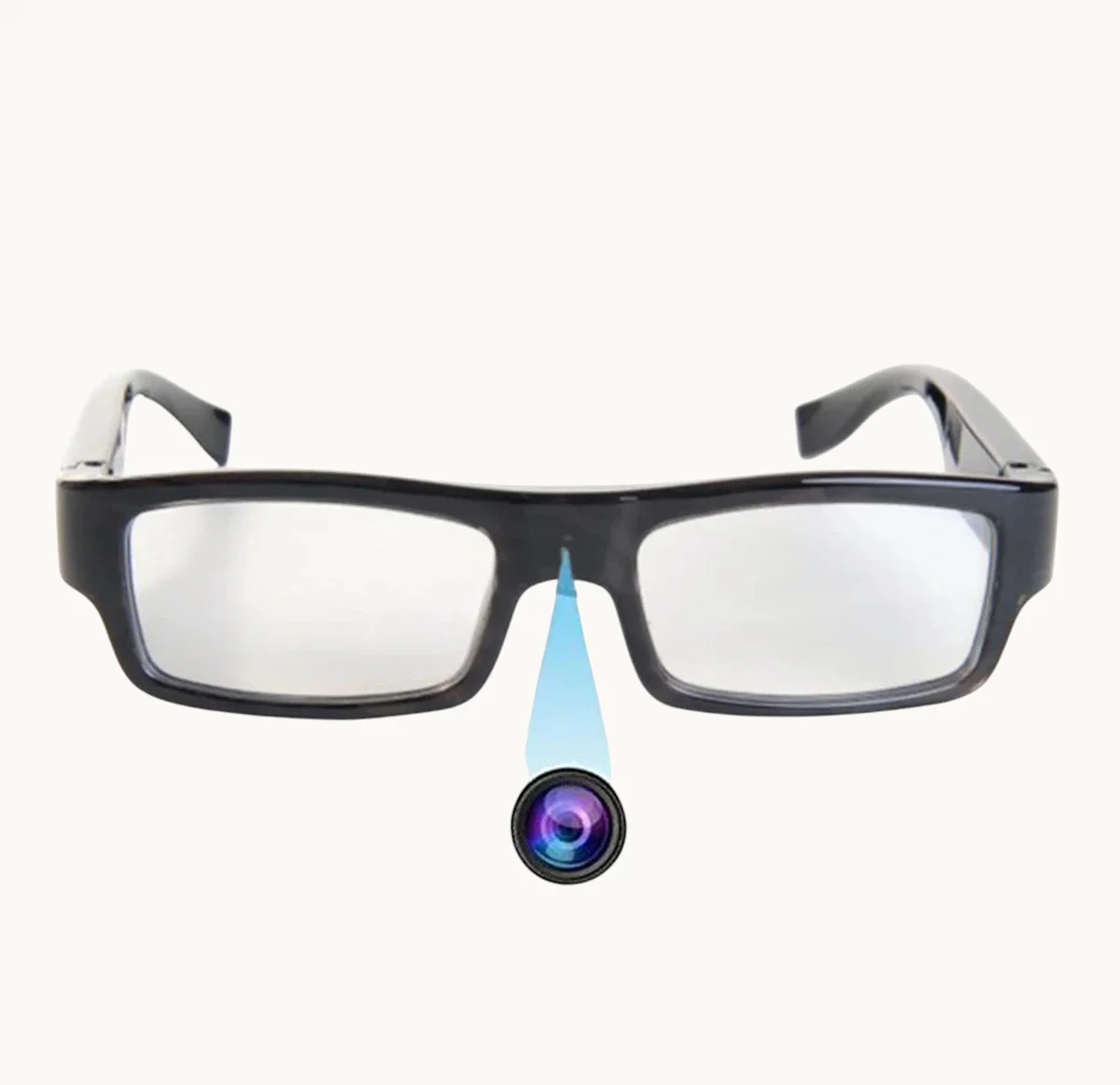
Glasses cameras sit at eye level — the optimal position for capturing exactly what the wearer sees. The Covert HD Camera Glasses 12MP Photo from QZT is designed for exactly this scenario: a functional eyewear frame that records 1080p video while looking indistinguishable from standard prescription or fashion glasses.
Key characteristics:
– Angolo di visione: 65–75° horizontal — matches natural human peripheral vision
– Height advantage: Captures faces at natural eye level, important for identification
– Stabilità: Once adjusted, the camera stays level regardless of body movement
– Limitations: Requires the user to normally wear glasses or sunglasses; otherwise it draws attention
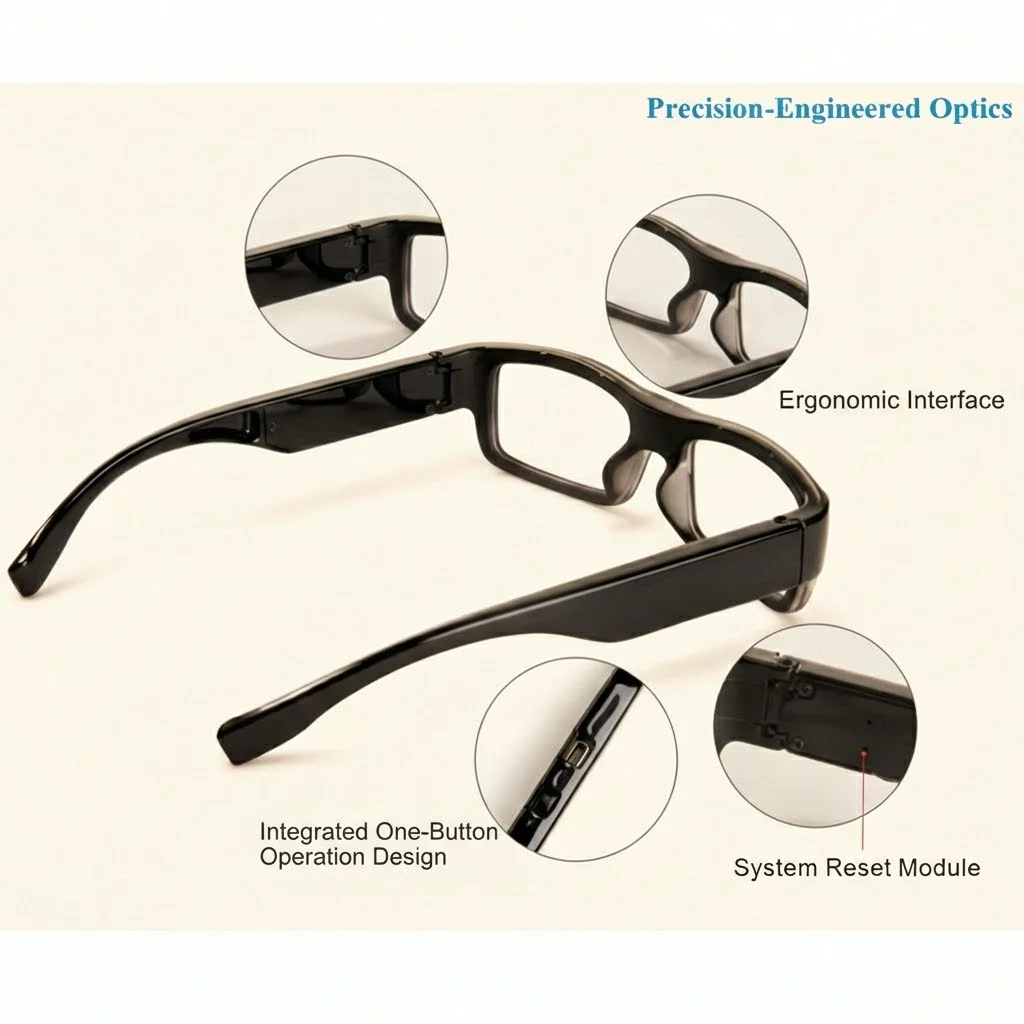
The G3000 series glasses from QZT use a flexible temple arm design where the camera module is embedded in the frame arm — this keeps the weight balanced and prevents the characteristic “sunglasses slump” that cheaper models exhibit after 20 minutes of wear.
Pen Cameras: The Discreet Professional’s Standard
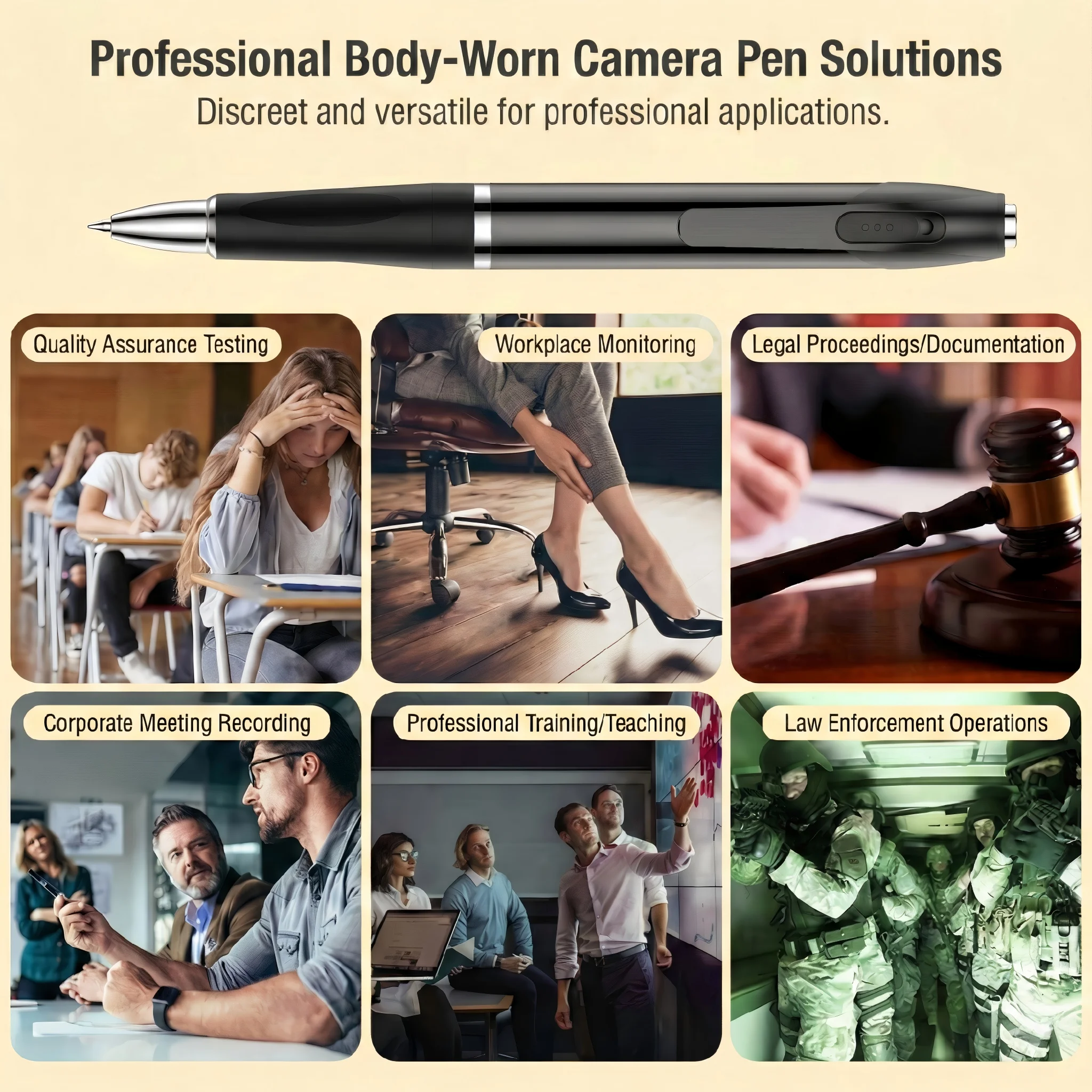
The pen form factor is the most versatile body-worn option because it has dual utility — it’s a functioning writing instrument that also records. A pen clipped to a shirt pocket or tucked into a jacket interior pocket provides reliable chest-level footage with zero suspicious indicators.
IL 1080P Hidden Spy Pen Camera 12MP Photo W9 E 1080P Spy Pen Camera 30MP Photo 128GB W10 are particularly suited for:
– Business meeting documentation
– Academic lecture capture
– Field interview recording
– Evidence collection in public spaces
Car Key Cameras: Pocket-Ready Covert Recording
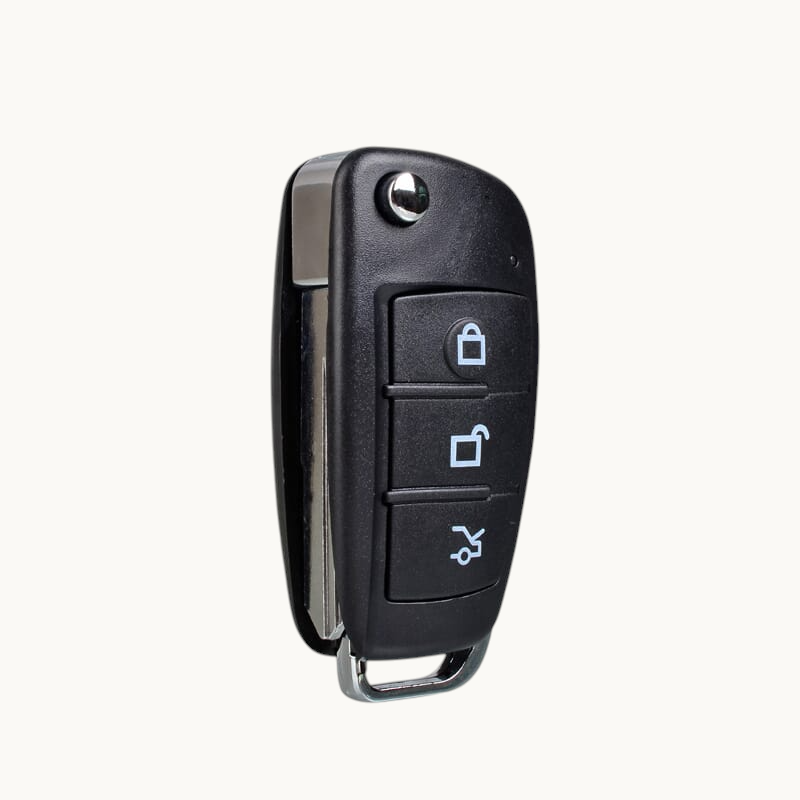
The car key form factor — such as the Chiave Auto Camera Spy 1080P Visione Notturna — offers the advantage of being completely unremarkable in any environment. Keys spend most of their time in pockets or bags, making this one of the easiest placements to maintain throughout a full shift.
Power Bank Cameras: Extended Operation
Power bank cameras like the WiFi 1080P Power Bank Hidden Camera Night Vision can run for 8–12 hours continuously. These are best worn in a jacket interior pocket or clipped to a belt, providing long-duration surveillance without the need to access the device.
The Five Primary Mounting Positions
1. Shoulder and Collar Mount
The most common professional mounting position for body cameras, particularly for security guards, retail loss-prevention officers, and investigators who need consistent chest-level footage.
How it works: A small clip attaches to the collar, lapel, or epaulette of a shirt or jacket. The camera points forward and slightly upward, capturing interactions at a natural conversational angle.
Vantaggi:
– Hands-free throughout the entire shift
– Chest level captures faces clearly within 3 meters
– Easy to position without removing the device
– Compatible with virtually all jacket and shirt collar types
Svantaggi:
– Reaching overhead or forward can obstruct the lens (a known limitation with shoulder-mounted police cameras)
– Requires a jacket or collared shirt to look natural
– Clip tension matters — too loose and it shifts during movement
Best for: Retail security, private investigation, warehouse monitoring
2. Hat and Cap Brim Mount
Mounting a mini camera under the brim of a cap or wide-brim hat gives you a natural first-person perspective without requiring the user to wear glasses. This is particularly effective for:
– Outdoor surveillance and patrol work
– Cycling and sports documentation (where the hands-free video recording glasses for cycling and outdoor sports serve as a dedicated sports eyewear solution)
– Any scenario where a hat is contextually appropriate (construction, outdoor events, cycling)
Vantaggi:
– Highest mounting position — captures above average eye level
– Completely natural if the wearer normally wears headwear
– Hat brim provides shade, reducing lens flare
Svantaggi:
– Limited viewing angle ( brim blocks upward tilt)
– Not appropriate in formal indoor environments
– Seasonal — wearing a woolly hat in summer draws attention
Best for: Outdoor patrol, cycling, construction documentation
3. Chest Pocket and Shirt Placement
The shirt pocket is the most accessible mounting point for pen cameras and card-sized devices. A covert pen camera clipped into a breast pocket provides reliable footage of face-to-face interactions.
Vantaggi:
– Zero clothing modification required
– Easy to reach for one-handed operation
– Works with formal business attire
– Natural placement — no one questions a pen in a pocket
Svantaggi:
– Camera tilts if the wearer bends forward
– Limited for capturing ground-level footage
– Pocket depth matters — a shallow pocket won’t conceal the device fully
Best for: Business meetings, formal events, office environments
4. Eyewear Frame Mount (Glasses Cameras)
The glasses-mounted camera is unique among body-worn options because it captures exactly what the eyes see, at eye level, without any additional clothing requirements.
The critical adjustment is the temple arm position. The camera module must sit flat against the side of the head, not angled forward or backward. Most users find they need 5–10 minutes of adjustment in front of a mirror before getting the angle right.
Important note for distributors: Not every end-user wears glasses. A glasses camera on someone who never wears eyewear is immediately noticeable. For these users, recommend a pen or keychain device instead.
Vantaggi:
– First-person perspective — best footage quality for identification
– No body position changes affect angle
– No clothing requirements
– Professional appearance (when using dress-frame designs)
Svantaggi:
– Requires normal glasses/sunglasses use by the wearer
– Weight affects comfort during extended wear (QZT G3000 addresses this with balanced temple arm design)
– Battery life limited to 3–5 hours for glasses-mounted units
5. Bag and Lanyard Mount
Embedding a camera inside a bag strap or wearing it on a lanyard badge provides an excellent chest-level position with no clothing constraints. This is particularly relevant for:
– Delivery personnel and couriers
– Event staff and greeters
– Anyone in a uniform that includes a lanyard or name badge
Vantaggi:
– No impact on personal clothing choices
– Stable position — bag doesn’t shift during movement
– Excellent for extended-duration recording (power bank cameras in bags can run 8+ hours)
Svantaggi:
– Only captures what’s in front of the bag/wearer
– Bag orientation changes affect angle
– May not capture the wearer’s own actions clearly
Clothing Strategies That Make or Break Discretion
Placement is only half the equation. The clothing worn around the camera determines whether it stays truly hidden.
Layering for Concealment
The single most effective clothing strategy is layering with an outer garment. A jacket, blazer, or cardigan worn over a shirt creates a concealed interior space where camera clips, wires, and devices can be hidden without creating visible bulges.
This is standard practice in loss-prevention work: an officer wears a normal business shirt with a body camera clipped to the collar, covered by an unbuttoned jacket. To an observer, it’s indistinguishable from a normal outfit. To the officer, the camera is fully accessible and protected.
Fabric Selection
Patterned fabrics (stripes, checks, florals) are superior to solid colors for hiding the outline of compact devices. The visual complexity of a pattern breaks up the silhouette of any device worn underneath.
Textured fabrics (tweed, knit, seersucker) provide similar benefits — the surface variation masks the shape of concealed electronics.
Avoid: Thin, form-fitting fabrics (jersey, silk, Lycra) in solid colors. These reveal everything underneath.
Body Movement Considerations
The most common failure mode in body-worn camera deployments isn’t visibility — it’s movement displacement. A camera clip that feels secure when standing still will shift, rotate, or fall during:
– Reaching overhead
– Bending to pick up objects
– Running or brisk walking
– Getting in and out of vehicles
For active roles, recommend:
– Magnetic mounts: Attach through fabric layers with strong neodymium magnets, distributing retention force across a wider area than a clip
– Holster straps: Elastic straps that go around the upper arm or chest, keeping the camera in a fixed position regardless of torso movement
– Belt-clip cameras: A more secure option than pocket placement for active deployments
UK and EU Legal Framework for Body-Worn Recording
This section is essential for European distributors. Body-worn cameras sit at the intersection of privacy law, surveillance regulation, and data protection — and the rules differ significantly across the EU.
United Kingdom
Audio recording: The Protection of Freedoms Act 2012 established one-party consent for audio recording. As a participant in a conversation, you may record it without informing other parties. This applies to body-worn cameras capturing audio.
Registrazione video: The Data Protection Act 2018 / UK GDPR applies. However, the ICO’s home CCTV guidance clarifies that personal use recording (e.g., capturing evidence of anti-social behavior or harassment) falls outside most notification requirements. For professional users (security guards, private investigators), the Surveillance Camera Code of Practice applies, requiring clear signage and defined purposes.
Body-worn cameras in retail: UK retailers deploying body cameras on staff must comply with the Data Protection Act, which means providing staff training, registering with the ICO, and ensuring footage is stored securely. Covert body cameras used without employee knowledge raise employment law concerns under the Employment Practices Data Protection Code.
Germany
Germany applies § 201 of the Strafgesetzbuch (StGB) strictly: recording audio without the knowledge of all participants is a criminal offense, even for personal evidence collection. Video recording is less stringently restricted but still regulated under the Bundesdatenschutzgesetz (BDSG).
For German distributors: body-worn cameras should be marketed for visual-only recording or with audio recording clearly framed as “recording your own participation in conversations.” Do not position them for covert workplace monitoring in Germany.
France
France operates under the CNIL framework. Professional body-worn cameras deployed by employers require prior consultation with works councils (comités sociaux et économiques) and clear employee notification. The Legge Informatique et Libertés requires transparency about surveillance in professional settings.
For personal use, French courts have accepted body-camera evidence in harassment and assault cases, though post-hoc legal scrutiny is higher than in the UK.
Italia
IL Italian Privacy Code (D.Lgs. 196/2003, as amended by D.Lgs. 101/2018) requires that workplace surveillance be:
– Justified by a legitimate purpose
– Proportionate to the objective
– Communicated to employees in advance
– Not used for disciplinary purposes beyond the stated purpose
IL Workers’ Statute (Statuto dei Lavoratori), Article 4 prohibits systematic employee monitoring. Covert body cameras used by employers without judicial authorization are illegal under Italian law.
For Italian distributors: Body-worn cameras can be sold for personal use, licensed private investigation, and security consultancy. Do not market them as “employer tools” in Italy.
EU General Summary
| Applicazione | UK | Germany | France | Italia |
|---|---|---|---|---|
| Personal evidence (harassment) | ✅ Legal | ⚠️ Audio illegal | ⚠️ Context-dependent | ⚠️ Context-dependent |
| Retail loss-prevention (declared) | ✅ Legal with DP notice | ✅ Visual only with notice | ✅ With CSE consultation | ✅ With prior notice |
| Covert employee monitoring | ❌ Prohibited | ❌ Prohibited | ❌ Prohibited | ❌ Prohibited |
| Private investigation | ✅ Licensed | ✅ Licensed | ✅ Licensed | ✅ Licensed |
| Journalistic use | ✅ Broad protection | ⚠️ Strict audio rules | ✅ Subject to source protection | ✅ journalistic privilege |
Setting-Specific Deployment Guide
Retail and Loss-Prevention
The retail environment is the most common body-camera deployment scenario in Europe. Here’s what works:
Recommended placement: Clip camera on collar under an unbuttoned jacket. A professional body-worn pen camera in the breast pocket provides chest-level footage of face-to-face interactions.
Recommended device: Chiave Auto Camera Spy 1080P Visione Notturna — pocket-ready, no clothing modification needed, night vision useful for after-hours warehouse work.
Key considerations:
– UK retail requires Data Protection Act compliance and staff notification
– Germany: inform employees; audio recording strictly limited
– Battery life: retail shifts average 6–8 hours — use power bank cameras for full-shift coverage
Business Meetings and Professional Documentation
Recommended placement: Covert HD Camera Glasses for users who wear glasses; 1080P Spy Pen Camera W10 with 128GB storage for full-meeting capture.
Key considerations:
– One-party consent in the UK applies — recording your own participation in a meeting is legal
– In Germany, recording audio without disclosing it is illegal even in business meetings
– The pen form factor is the most natural for professional environments — it looks like a premium writing instrument
Outdoor Patrol and Field Investigation
Recommended placement: Hat brim mount for POV footage, supplemented by a WiFi 1080P Power Bank Hidden Camera in a jacket interior pocket for extended operation.
Key considerations:
– Night vision capability matters for evening patrols
– WiFi-enabled models allow remote monitoring without accessing the device
– IP rating considerations: most body cameras are not waterproof; protect from rain
Cycling, Sports, and Active Use
Recommended placement: Glasses cameras are ideal for cycling and sports — hands-free, POV, stable during physical movement.
IL hands-free video recording glasses for cycling and outdoor sports are designed for exactly this use case: a sports-frame design with anti-slip temple arms that stay secure at speed.
Key considerations:
– Frame stability at 30+ km/h: QZT G3000 uses flexible temple arms with anti-slip grips
– Battery life: sports recordings drain battery faster; carry a spare or power bank
– Lens fogging: choose models with anti-fog coating or ventilation channels
Troubleshooting Common Body-Worn Camera Placement Issues
Camera Footage is Tilted or Crooked
Cause: Clip tension is uneven, or the mounting position shifts during movement.
Soluzione: Switch to a magnetic mount or holster strap that distributes retention force. Test the setup by walking briskly for 5 minutes before relying on it in the field.
Faces Appear Blurry in Footage
Cause: Camera is too far from subjects, or the lens is dirty or fogged.
Soluzione: Body cameras typically capture clear faces at 2–3 meters. Move closer for important interactions. Clean the lens with a microfiber cloth — sweat and humidity are the most common causes of fogged lenses. For glasses cameras, choose models with anti-fog coating (standard on QZT G3000 series).
Battery Dies Mid-Shift
Cause: Insufficient capacity for the deployment duration, or power-saving features not configured.
Soluzione: Use a power bank camera for shifts exceeding 4 hours. Enable motion detection mode to extend recording time to 2–3x continuous duration. Keep a spare battery or backup device for critical deployments.
Audio is Muffled or Inaudible
Cause: Microphone is blocked by fabric, especially when the camera is inside a pocket or under a jacket.
Soluzione: Use external microphone positioning — place the camera so the microphone port is exposed to air, not covered by clothing. For pen cameras in breast pockets, ensure the pocket button is unfastened and fabric isn’t draped over the mic intake.
Camera is Visibly Noticeable
Cause: Wrong form factor for the clothing or environment, or insufficient adjustment before deployment.
Soluzione: Review the “would I wear this normally?” test — a person who never wears glasses shouldn’t wear glasses cameras; someone in a formal suit should use a pen or badge camera, not a sports action camera. Test in front of a mirror before the actual deployment.
Punti chiave
| Mounting Position | Il migliore per | Tipo di dispositivo | Key Tip |
|---|---|---|---|
| Shoulder/collar | Retail security, investigation | Any small camera with clip | Wear an outer jacket to cover the clip |
| Hat brim | Outdoor patrol, cycling, sports | Ultra-compact or glasses camera | Ensure the brim provides shade to reduce lens flare |
| Breast pocket | Business meetings, formal events | Pen camera | Keep the pocket unfastened for clear audio |
| Glasses frame | First-person POV, active use | Glasses camera | Confirm the wearer normally uses eyewear |
| Bag strap/lanyard | Delivery, events, uniformed staff | Any compact camera | Verify bag orientation before each shift |
| Jacket interior | Sorveglianza prolungata | Power bank camera | Layering with outer garment eliminates visibility |
| Legal Factor | UK | Germany | France | Italia |
|---|---|---|---|---|
| Audio (personal use) | ✅ One-party consent | ❌ Criminal offense | ⚠️ Restricted | ⚠️ Restricted |
| Video (personal use) | ✅ Home/home+ exempt | ✅ With notice | ✅ Personal use OK | ✅ Personal use OK |
| Employee monitoring | ⚠️ Notice required | ❌ Prohibited covert | ❌ CSE consultation needed | ❌ Prior notice required |
| Best wholesale positioning | Personal evidence, licensed PI | Visual recording only | Licensed PI, personal | Licensed PI, personal |
Ready to Stock Body-Worn Cameras for Your UK and EU Customers?
QZT Security supplies a full range of body-worn and wearable covert cameras — including glasses cameras, pen cameras, car key cameras, and power bank cameras — to distributors across the United Kingdom, Germany, France, and Italy. All products carry CE certification and are shipped from our Italian logistics hub for rapid EU delivery.
Contact us today to discuss wholesale pricing, sample orders, and custom packaging options for your retail or e-commerce channel.
Related Products
– Covert HD Camera Glasses 12MP Photo — First-person POV recording, dress-frame design
– 1080P Hidden Spy Pen Camera 12MP Photo W9 — Business professional standard, 75-min battery
– 1080P Spy Pen Camera 30MP Photo 128GB W10 — Extended storage, high-resolution stills
– Chiave Auto Camera Spy 1080P Visione Notturna — Pocket-ready, night vision for low-light surveillance
– WiFi 1080P Power Bank Hidden Camera Night Vision — 8–12 hour operation for full-shift coverage
– Complete Guide to Pen & Mini Cameras — Full product comparison and use-case guide

 English
  Italiano
  Deutsch
  Français
  Español
  Polski

