
Is 1080p Good Enough for Court Evidence in 2026? Hidden Camera Video Quality Guide
The question comes up in almost every serious conversation about hidden cameras: can I actually use the footage as evidence? And underneath that question is a more specific one that buyers are reluctant to ask directly — is 1080p good enough?
The short answer is: in most cases, yes. 1080p (1920×1080 pixels, also marketed as Full HD) is sufficient for hidden camera evidence in UK and EU legal proceedings, provided the footage is captured, stored, and presented correctly. But “sufficient” is doing a lot of work in that sentence, and the longer answer involves understanding what courts actually look for.
This article explains what makes hidden camera footage legally admissible, where 1080p sits in relation to legal standards, what the courts care about beyond resolution, and how to make sure your footage holds up if it ever needs to be produced in evidence.
What UK and EU Courts Actually Require From Video Evidence
Before getting into pixels and frame rates, it helps to understand the legal framework.
In the United Kingdom, video evidence is governed by the Civil Evidence Act 1995 and the Police and Criminal Evidence Act 1984. The core test is whether the footage is authentic — that it has not been altered — and whether it is relevant to the matter at hand. Resolution is not specified anywhere in statute. Courts routinely accept footage from mobile phones, body-worn cameras, and dashcams in criminal cases. Hidden camera footage is treated the same way.
In the European Union, each member state has its own evidence admissibility rules, but the European Court of Human Rights has established through cases like Halford v United Kingdom (1997) that covert surveillance recordings can be used as evidence if obtained lawfully. Under GDPR, footage of identifiable individuals is personal data, but that does not make it inadmissible — it means the recorder must have a lawful basis for processing (Article 6, GDPR), which in most legitimate interest cases is not difficult to establish.
Here is the practical implication: no court in the UK or EU has ever rejected footage because it was “only” 1080p. What courts have rejected footage for is lack of authenticity, Chain of Custody problems, or unlawful acquisition (e.g., recording in highly private spaces without justification).
The 1080p Standard: Why It Works for Evidence

1080p provides 2,073,600 pixels per frame. That is enough to identify a human face at a distance of 3–5 metres in good lighting — which is the basic threshold for most evidence scenarios. License plates are readable at close range. Objects being picked up or handled are clearly visible.
Here is what matters more than raw resolution:
Frame rate affects how smooth the motion appears. 30fps (frames per second) is the standard for most QZT hidden cameras and is considered the minimum for usable evidence footage. A person walking across a room in 30fps footage is clearly shown walking — each step is captured. At 15fps, the motion becomes choppy and it can be harder to establish a sequence of events. At 10fps or lower, courts may question whether the footage accurately represents real-time activity.
Bitrate — the amount of data encoded per second of video — determines how much detail each frame actually contains. Two cameras can both claim 1080p resolution while producing wildly different quality footage. A high-bitrate 1080p file (8–12 Mbps) shows clear detail in dark areas and captures fast movement crisply. A low-bitrate 1080p file (2–3 Mbps) looks soft and blurry, particularly during motion. This is where cheap hidden cameras consistently fail — they advertise 1080p but use aggressive compression that destroys usable detail.
Codec (the compression format used to encode the video) matters for playback compatibility and editing. H.264 is the most widely supported format across all court systems, government agencies, and legal software. QZT cameras produce H.264 video by default. If a camera produces footage in a proprietary or obscure codec, you may face difficulties getting it played in court or converted to a standard format without quality loss.
Lighting conditions are the variable that most affects whether 1080p footage is usable. In bright daylight or a well-lit room, 1080p at 30fps with good bitrate produces excellent evidence-quality footage. In near-darkness, the quality degrades significantly unless the camera has high-quality infrared night vision.
Night Vision and Low-Light Performance
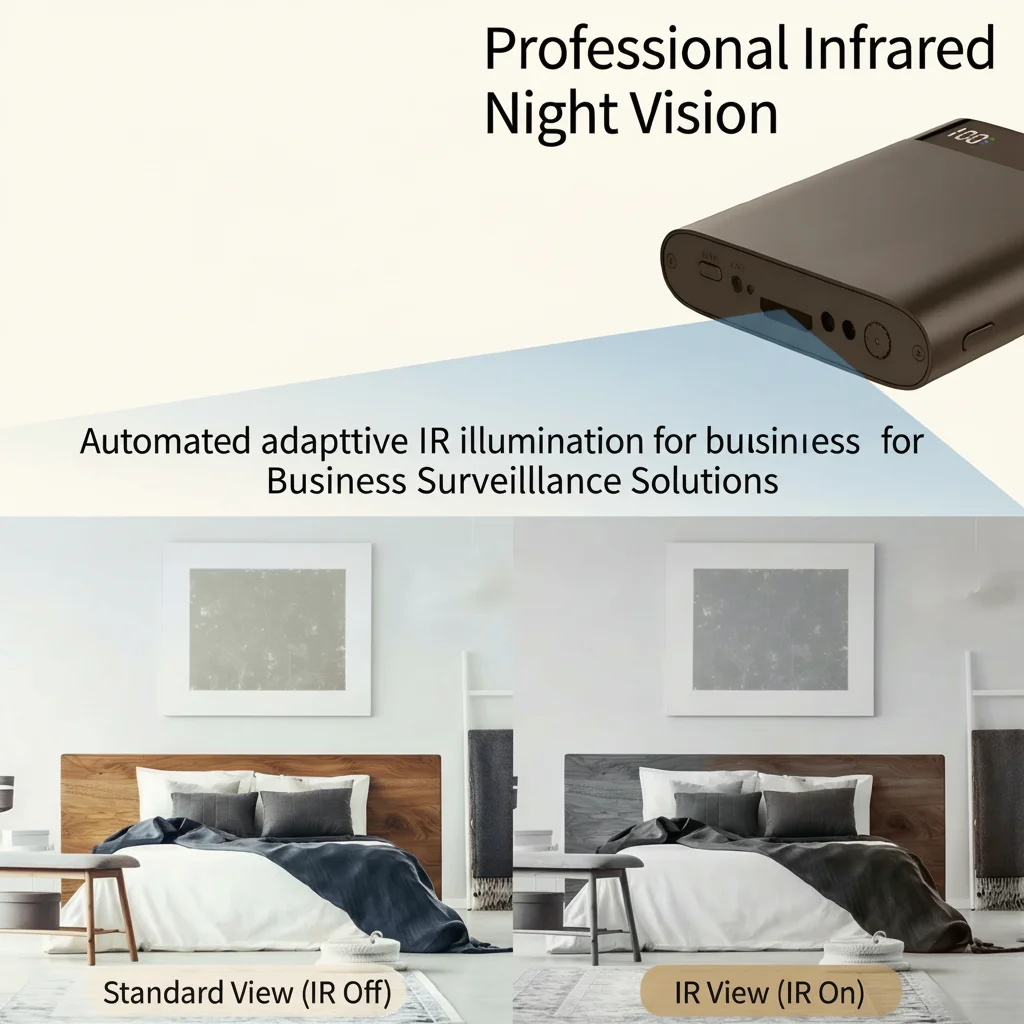
A significant portion of incidents that buyers want to document — employee theft after hours, break-ins, uninvited access — happen in low light. This is where hidden cameras live or die as evidence tools.
Most QZT hidden cameras use infrared (IR) LEDs to illuminate a scene in near-total darkness. The wavelength is typically 850nm, which is invisible to the human eye but creates a black-and-white image on the camera sensor. Here is the critical point that product listings rarely make clear: IR night vision significantly reduces effective resolution and detail.
A camera that produces crisp 1080p faces in daylight may only produce 720p-equivalent usable detail under IR illumination. This is not a defect — it is physics. Infrared light carries less visual information than visible light, and the camera sensor responds differently to it.
For evidence purposes, this means you need to test your camera in the actual lighting conditions where you plan to use it. Place the camera exactly where you intend to deploy it, simulate the worst-case lighting, and record a test clip. Then check whether you can make out faces, clothing details, and object movements clearly on the recorded footage — not on the live view, which often shows a smoothed preview rather than the actual encoded file.
Audio Quality: The Evidence Feature That Gets Overlooked
Here is what most hidden camera buyers do not think about until it is too late: audio is often more legally significant than video.
In UK employment tribunals, an audio recording of a manager making discriminatory remarks carries more immediate evidentiary weight than footage that shows the same interaction without sound. In theft cases, verbal admissions captured on audio can corroborate what the video shows. In personal safety situations, a clear audio track tells the story that video alone cannot.
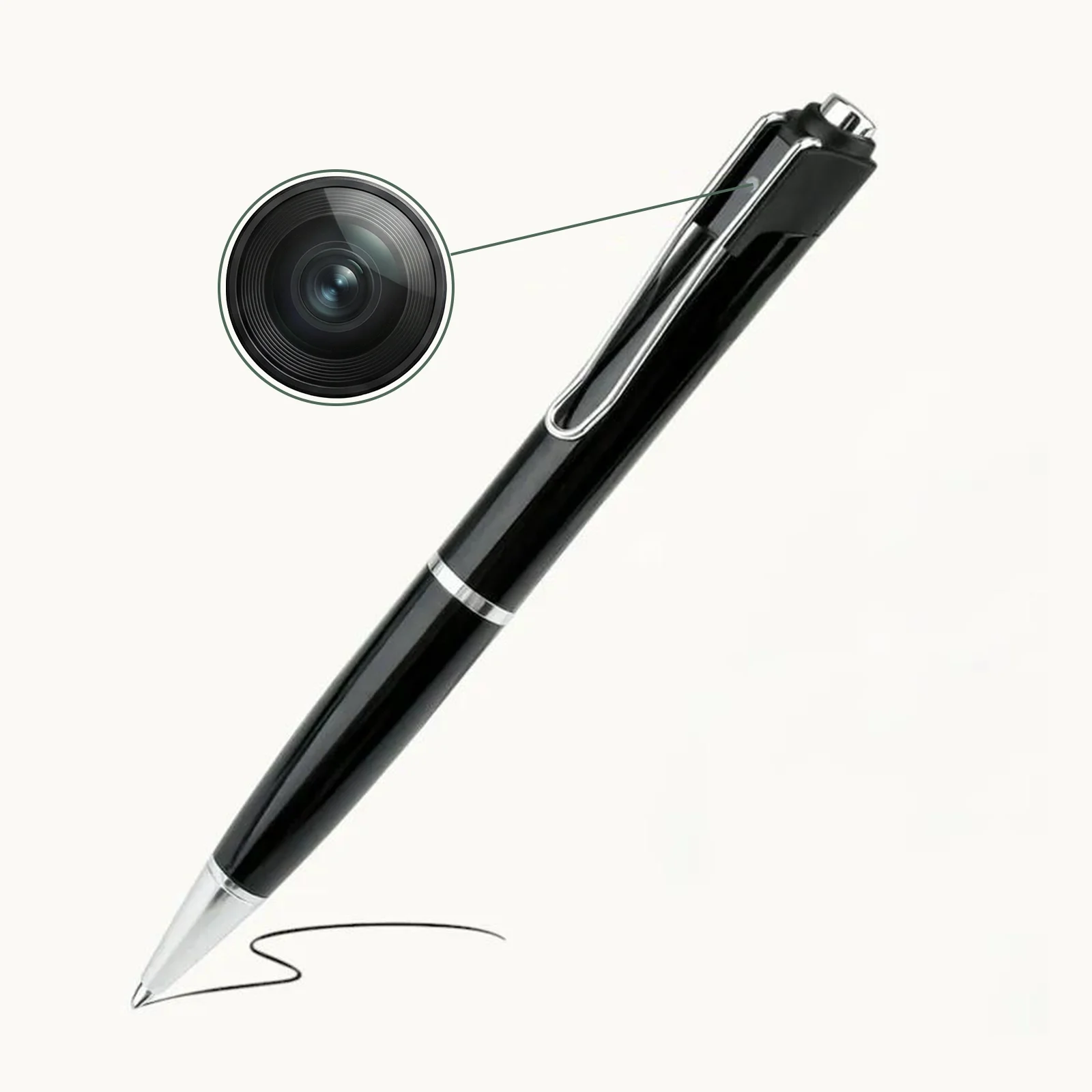
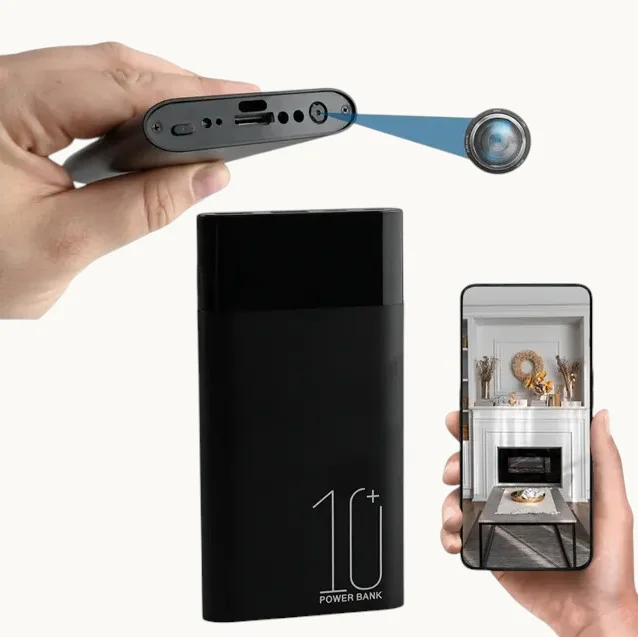
Not all hidden cameras record audio. The QZT WiFi Spy Pen Camera, QZT USB Flash Drive Spy Camera, and QZT WiFi Power Bank Camera all include audio recording. The QZT Covert HD Camera Glasses capture first-person video without audio. If evidence quality matters, check whether your chosen model records audio before buying.
UK law under the Data Protection Act 2018 allows covert audio recording for the prevention or detection of crime, which covers most legitimate private investigation scenarios. One-party consent applies: you do not need to inform the other party that you are recording, provided you are a party to the conversation or have lawful authority.
Chain of Custody: The Step Most Buyers Skip
Resolution and frame rate determine whether your footage can be evidence. Chain of custody determines whether it will be accepted.
Chain of custody is the documented record of who had access to the footage, when, and what they did with it. A gap in this record — anyone who cannot account for their handling of the footage — can be used to challenge its authenticity.
For hidden cameras used in evidence collection, the practical chain of custody steps are:
1. Note the recording date and time — most cameras embed timestamps in the footage. Check that the camera’s clock is set correctly before deployment.
2. Copy, do not move — when you retrieve the SD card, make a copy using a write-blocker or a simple drag-and-drop to a computer. Keep the original card untouched.
3. Store copies securely — cloud backup (if your WiFi camera supports it) and a copy on an encrypted USB drive create redundant evidence.
4. Document the retrieval — write down the date, time, and circumstances of when you retrieved the footage. Photograph the SD card in situ before removing it.
5. Note the device — record the camera model, serial number (if visible), and firmware version. This establishes the exact specifications of the recording device.
Courts are not looking for perfection. They are looking for a credible account of the footage’s journey from recording to presentation. Buyers who skip these steps sometimes find that otherwise excellent footage is challenged on procedural grounds.
Key Takeaway: 1080p Is Almost Never the Problem
The resolution of hidden camera footage is rarely what makes it inadmissible. The footage that gets rejected — or more commonly, that loses its persuasive force in evidence — fails for one of three reasons:
– Audio is missing or unclear, and the key information was verbal rather than visual.
– The chain of custody is broken, and the opposing party successfully argues the footage could have been altered.
– Lighting was inadequate, and the footage shows nothing useful despite capturing the incident.
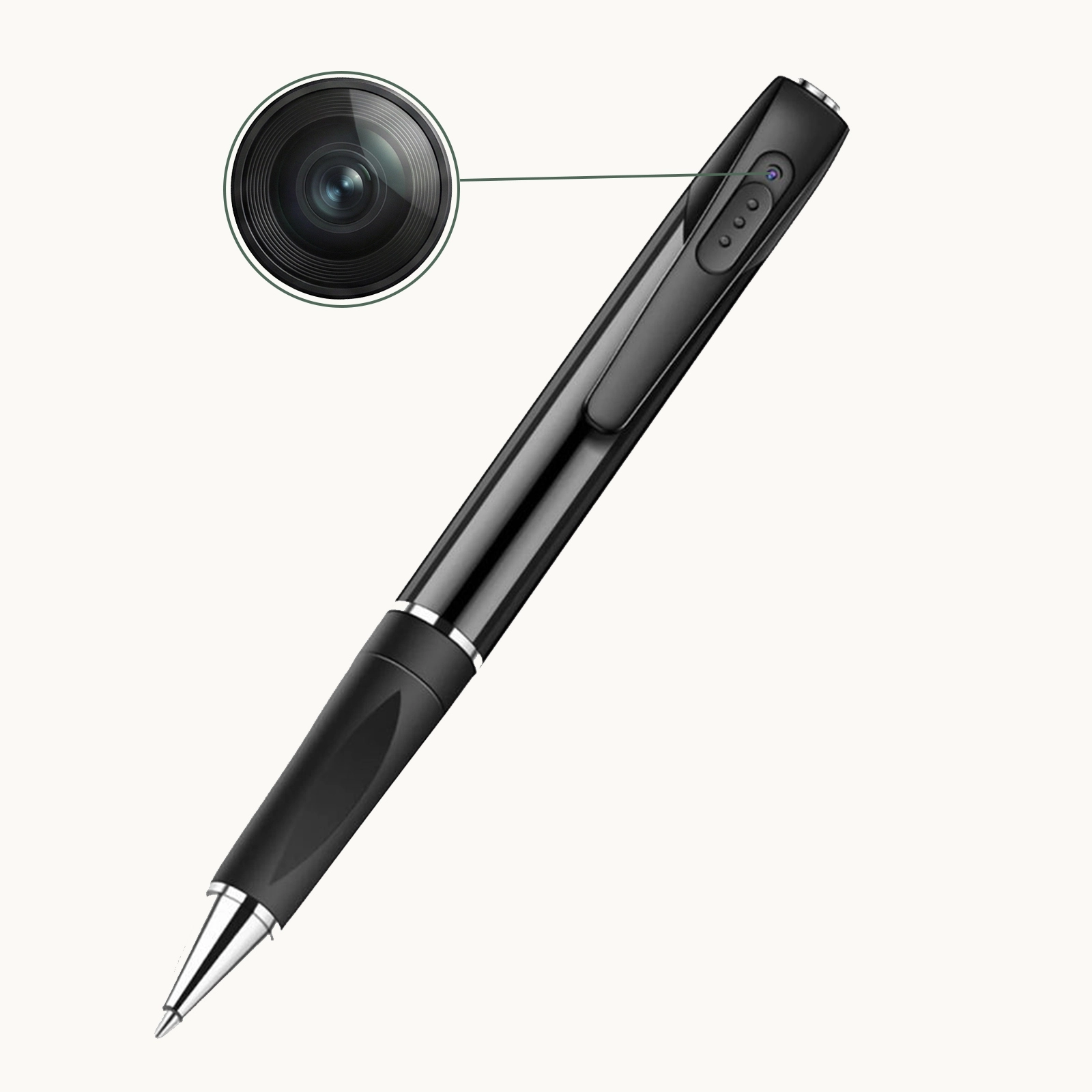
Fix those three things and your 1080p footage will serve you well in UK and EU legal proceedings. The cameras themselves — whether the QZT Pen Camera, QZT Clock Camera, or QZT Smoke Detector Camera — are more than capable of producing evidence-quality 1080p footage under normal conditions.
For distributors, the practical advice to pass on to your end customers: test the camera in the actual environment where it will be used, verify that audio recording is enabled if the scenario requires it, and establish a simple chain of custody routine before the camera is ever needed for evidence. That preparation is worth more than any spec on the product page.
Frequently Asked Questions
Is 720p footage acceptable in UK courts?
Yes, though it is less ideal. 720p footage may be acceptable if the relevant details — faces, objects, text — are clearly visible. Many criminal convictions have been secured on body-worn camera footage that was 720p. However, 1080p provides a meaningful margin of error and is the recommended minimum for any situation where the footage might be used in evidence.
Can I edit or trim hidden camera footage before presenting it in court?
Technically you can, but you should not do so without legal advice. Any editing of evidence footage — even cutting out an irrelevant section at the beginning — can be used to challenge its authenticity. If footage needs to be presented in a legal proceeding, provide the original, unedited file and let the court decide what to view.
Do UK courts accept footage from covert (hidden) cameras?
Yes, provided the recording was done lawfully. In your own home or business, covert recording for the prevention of crime is generally lawful under the Crime and Disorder Act 1998 and the Data Protection Act’s crime prevention exemptions. Recording in areas where people have a reasonable expectation of privacy — bathrooms, changing rooms — is not permitted regardless of where the camera is physically located.
What is the difference between interpolated and native 1080p?
Native 1080p means the camera’s image sensor and processor actually capture and encode 2,073,600 pixels per frame. Interpolated 1080p means the camera captures at a lower resolution — typically 720p or 960p — and software artificially scales the image up to 1080p. The result looks like 1080p on a phone screen but lacks the actual detail of true 1080p footage. For evidence purposes, interpolated footage is noticeably inferior under magnification or in low-light conditions. Our article on spotting fake 1080p cameras covers this in detail.
How long should I keep hidden camera footage before deleting it?
Retain footage for a minimum of 30 days under normal circumstances, or immediately copy and preserve any clip that captures an incident you may need to reference. In employment disputes, tribunal guidance suggests retaining relevant records for at least 6 months. If criminal activity is captured, contact a solicitor before deleting anything — the footage may be needed by law enforcement.
Can EU courts accept footage of employees captured by hidden cameras?
It depends on the EU member state and the specific circumstances. GDPR applies to any footage of identifiable individuals. In Germany, covert employee surveillance is heavily restricted and requires prior consultation with the data protection authority in most cases. In the UK, the Information Commissioner’s Employment Practices Code allows covert surveillance in very limited circumstances where there is a clear suspicion of serious wrongdoing. Always obtain specific legal advice for your jurisdiction before deploying hidden cameras in a workplace.
For guidance on evidence-grade hidden cameras and how to configure them for legal use, contact QZT Security.

 English
  Italiano
  Deutsch
  Français
  Español
  Polski