
How to Legally Use a Nanny Cam in the UK Without Violating Privacy Laws
More UK families rely on hidden cameras to monitor childcare than ever before. But here’s what most parents don’t find out until it’s too late: placing a camera in the wrong room — or recording audio without the right disclosures — can expose you to serious legal liability, render your footage inadmissible in court, and undermine the very protection you were trying to build. Understanding the legal boundaries is not optional. It’s the foundation of everything.
This guide breaks down exactly what UK law says about nanny cams in 2026, where you can and cannot place cameras, how to handle audio recording, what disclosures you need, and what steps to take if you discover a problem on footage.
What the Law Says About Hidden Cameras in UK Homes
The primary legal framework governing nanny cams in the United Kingdom is the Data Protection Act 2018, which incorporates the UK GDPR. This means any camera that captures identifiable individuals is processing personal data — and that applies even when the camera is inside your own home.
Here’s what that practically means for homeowners and parents.
The Information Commissioner’s Office (ICO) is clear: surveillance cameras in domestic settings must be used proportionately. You cannot place a camera simply because you own the property. The purpose of the surveillance must be legitimate — protecting a child from harm, for instance, is a recognised legitimate interest under Article 6(1)(f) of the UK GDPR.
But legitimate interest alone is not enough. You also need to balance that interest against the rights and freedoms of the people being recorded. A live-in nanny, au pair, or childcare provider has a recognised interest in knowing when and where they are being watched.
The Human Rights Act 1998 adds another layer. Article 8 guarantees a right to private and family life. While this right can be interfered with lawfully, any interference must be necessary and proportionate. Mass surveillance or covert recording in private spaces without justification fails that test.
Key Takeaway: Owning the property does not give you unlimited rights to record. Your nanny cam must serve a specific, proportionate purpose — and the people being monitored have rights that limit where and how you can deploy cameras.
Where You Can Legally Place a Nanny Cam in Your UK Home
Not all rooms in your house carry the same legal status when it comes to covert recording. Understanding the distinction between shared spaces and private spaces is essential.
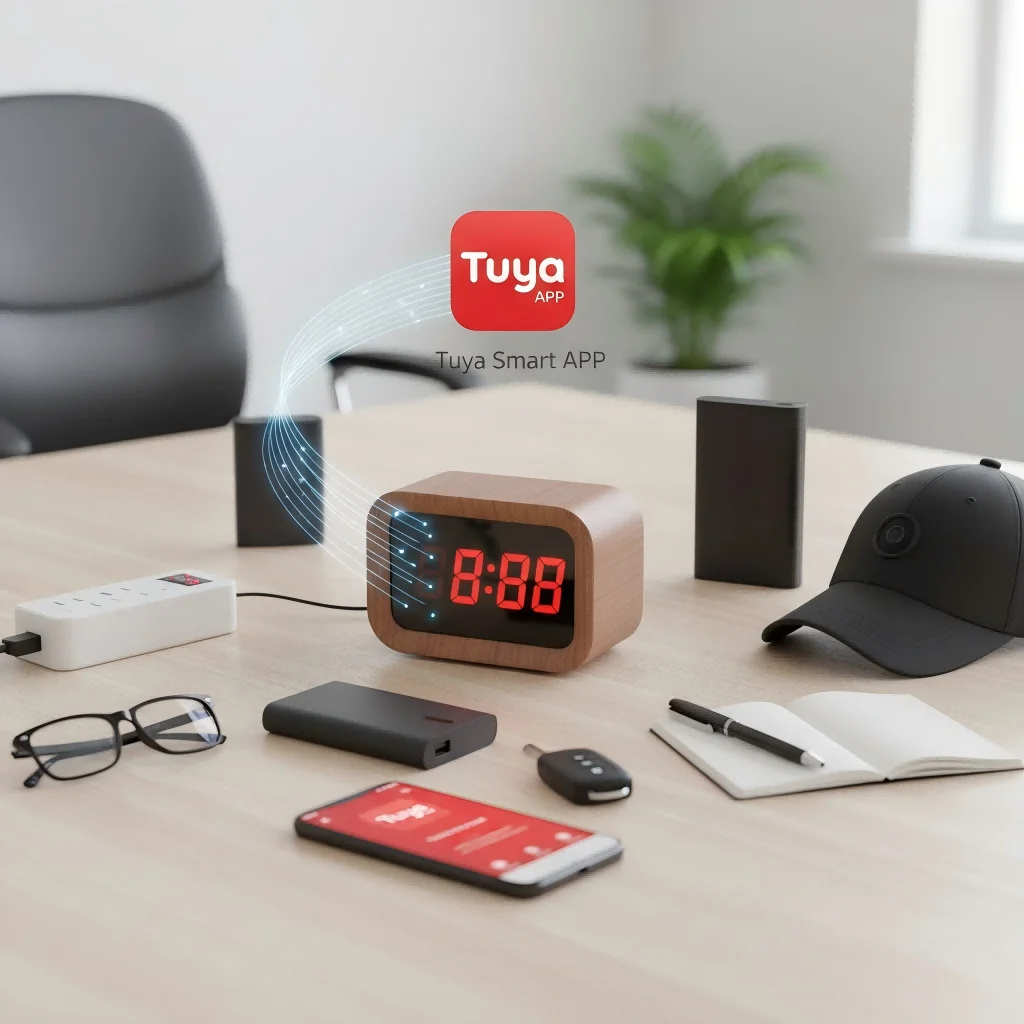
Cameras placed in living rooms, kitchens, hallways, and play areas are generally within the law, provided you meet the disclosure requirements discussed below. These are spaces where there is no reasonable expectation of privacy. A childcare provider working in your living room knows they are in a shared space, and filming there for the purpose of child safety is widely recognised as proportionate.
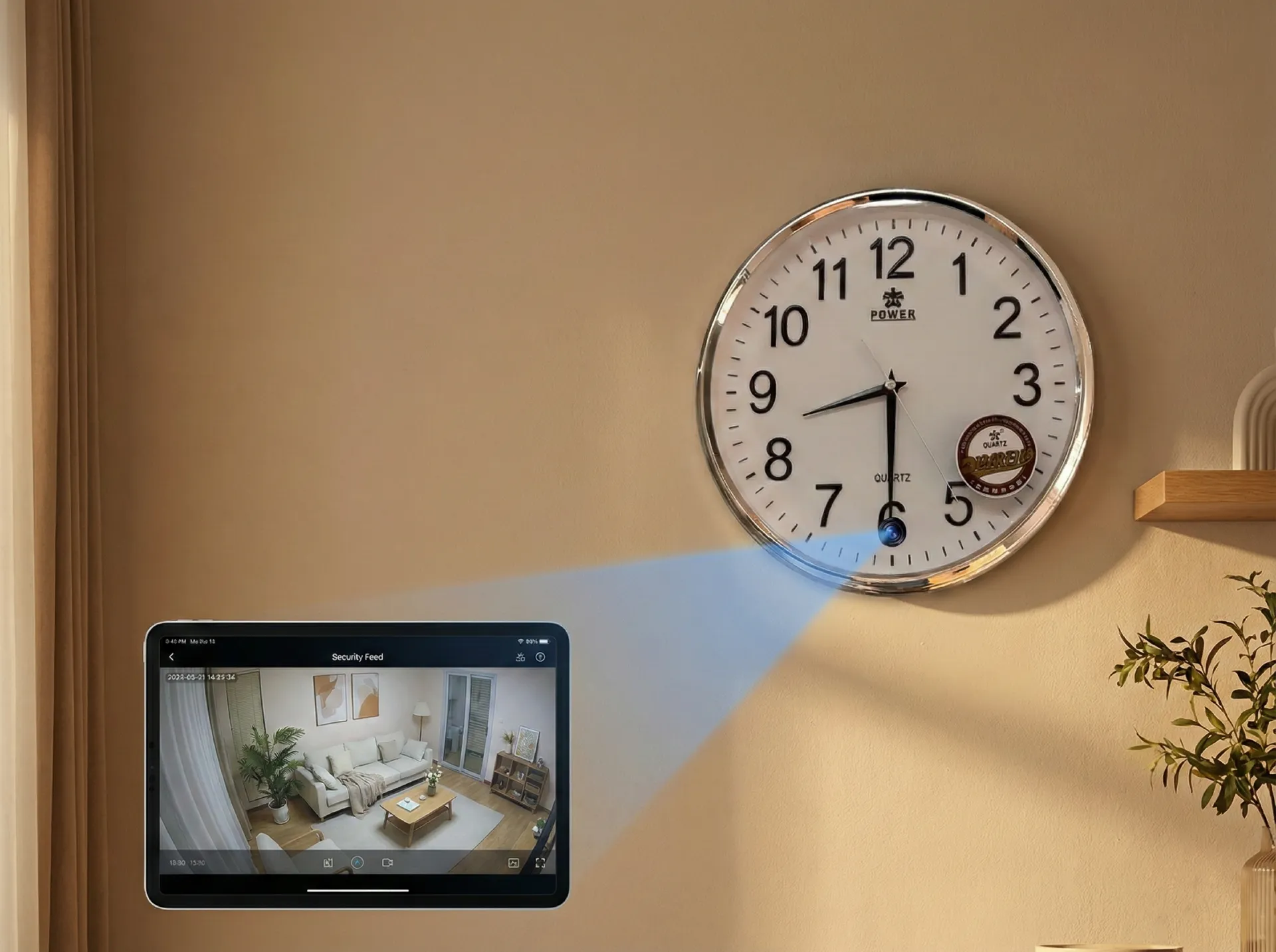
This is where most parents choose to position discreet cameras — behind the face of a wall clock, inside a USB charger, or within a smoke detector mounted at ceiling height. These placements offer wide coverage of the most active areas of the home without intruding on private spaces.
Bedrooms and Bathrooms — Off Limits
Cameras in bathrooms are categorically prohibited. This is true across all UK law frameworks — the Data Protection Act, the Human Rights Act, and general principles of privacy. No exception exists for parents monitoring children in a nanny’s bathroom.
Cameras in a live-in nanny’s or au pair’s private bedroom are equally off-limits. Even if you suspect theft or misconduct, placing a camera in someone’s bedroom is a serious privacy violation that can result in criminal liability and civil claims.
The exception some families explore — placing a camera in a child’s bedroom for child safety monitoring — is a grey area. If the camera is there for the child’s safety (not primarily to monitor the nanny), and no nanny has unsupervised access to the room, the legal exposure is lower. However, if your nanny regularly cares for your child in that bedroom, you should consult a solicitor before relying on that footage in any dispute.
Gardens and Outdoor Spaces
Outdoor cameras covering garden areas used for childcare are generally permissible, subject to the same data protection principles. However, you should ensure cameras do not capture neighbouring properties to any significant degree, as this extends your data processing obligations beyond your household.
Key Takeaway: Place cameras in shared living areas with clear sightlines to child activity zones. Avoid bedrooms and bathrooms under all circumstances. Outdoor cameras require the same data protection discipline as indoor ones.
The Audio Recording Trap: What Most UK Parents Get Wrong
This is the area where UK homeowners face the greatest legal risk — and the one most often overlooked. In the UK, recording a conversation where all parties are not consenting is prohibited under the Regulation of Investigatory Powers Act 2000 (RIPA) and associated interception of communications laws.
Unlike some US states that require only one-party consent for audio recording, the UK takes a stricter view. If your nanny cam records conversations — a nanny talking to your child, a phone call in the background, even casual muttering — you may be capturing communications data that requires explicit lawful authority to process.
The practical consequence is significant. Suppose you capture what appears to be evidence of neglect or abuse on your nanny cam’s audio recording. A court may exclude that audio from proceedings if it was captured without the nanny’s knowledge or consent. In some circumstances, the homeowner who made the recording could face criminal exposure under communication interception laws.
Best Practice: Disable audio recording on your nanny cam wherever possible. If audio is essential — for instance, capturing a specific verbal exchange — include an explicit audio and video surveillance clause in your employment contract (discussed in the section below) and notify the ICO if required. Consult a data protection solicitor for guidance on your specific circumstances.
Disclosure Requirements: What You Must Tell Your Nanny
UK law does not criminalise parents who fail to announce a camera in their own home. However, failing to disclose the presence of cameras creates significant legal and practical risks.
From a data protection standpoint, the UK GDPR requires transparency. If your nanny later discovers a camera and files a complaint with the ICO, your failure to disclose the camera — and the absence of any privacy notice — will count heavily against you. The ICO has the authority to issue enforcement notices and fines for non-compliant surveillance.
From an employment law standpoint, undisclosed surveillance can damage your position in any dispute. A nanny who feels spied upon secretly may have grounds for a constructive dismissal claim, particularly if the surveillance was more intrusive than disclosed. Even if you win on the facts, litigation is expensive and disruptive.
From a practical standpoint, disclosure acts as a powerful deterrent. Research consistently shows that the knowledge of surveillance changes behaviour — the camera works better as a preventative tool when its presence is known.
How to Disclose: Written Notice in Your Employment Contract
The most robust approach is to include a “Notice of Surveillance” clause in your employment or contract agreement before the nanny begins work. This clause should specify:
– The type of surveillance in use (video, audio, or both)
– The locations where cameras are placed
– The purpose of the surveillance (child safety, property protection)
– How footage is stored, who has access, and how long it is retained
– Confirmation that the cameras do not operate in private areas (bathrooms, changing rooms, the nanny’s private bedroom)
This clause provides your legal defence if a dispute arises. It demonstrates transparency and proportionality — the two pillars of lawful UK surveillance.
UK GDPR Compliance Checklist for Nanny Cam Users
Even though this is a domestic setting, the UK GDPR applies. Here is a practical checklist based on ICO guidance:
| Requirement | What You Must Do |
|---|---|
| Lawful basis | Identify your lawful basis (legitimate interest is typically appropriate for child safety) |
| Transparency | Provide a privacy notice to the nanny — either in writing or prominently displayed |
| Purpose limitation | Only use footage for the purpose stated — do not share it publicly or with third parties without legal basis |
| Data minimisation | Record only what is necessary; avoid cameras with broad coverage of unrelated spaces |
| Storage security | Protect recorded footage with a strong password; do not leave it on an unsecured device |
| Retention | Delete footage when it is no longer needed — typically after a few weeks if no incident has occurred |
| Subject access requests | Be aware that the nanny may request access to footage of themselves under UK GDPR Article 15 |
The ICO’s CCTV Code of Practice provides specific guidance for domestic CCTV users and is worth reading before you install any camera. It is freely available on the ICO website.
Signs Your Nanny Cam May Have Been Legally Compromised
There are scenarios where even a well-intentioned parent can end up on the wrong side of the law. Watch for these warning signs:
– Camera was placed without your knowledge by another family member — If a partner or relative installed a camera secretly, you may still be responsible as a data controller.
– Footage was shared with others — Sending nanny cam footage to a lawyer, family WhatsApp group, or social media without considering consent implications can expose you to claims.
– Camera captures neighbouring properties — A wide-angle lens in a garden or living room may capture the street or neighbouring windows, extending your data obligations.
– Audio recording was enabled without checking UK law — Even a single audible conversation recorded without consent can create liability.
What to Do If You Capture Evidence of Abuse or Theft
Finding something troubling on your nanny cam footage is deeply distressing. Here is how to handle it legally and effectively.
First, do not delete the footage. Preserve it immediately by copying it to a secure, separate location. Footage that has been altered or selectively edited may be inadmissible in proceedings and could raise suspicion of manipulation.
Second, do not confront the nanny directly with the footage. This can escalate the situation, destroy evidence, and — if the nanny has legal representation — may prejudice your position.
Third, contact the relevant authority depending on the nature of the concern:
– Child welfare concerns: Contact your local authority children’s social care department or the NSPCC (0808 800 5000). If you believe a child is in immediate danger, call 999.
– Theft or property damage: Contact the police non-emergency line (101) and provide the footage. Do not post it online.
– Employment dispute without criminal element: Consult a solicitor specialising in employment law before taking action. The footage may support a dismissal, but procedural fairness still applies.
Fourth, report the matter to the ICO if there has been a significant data breach — for instance, if footage was inadvertently accessed by an unauthorised person.
Hiring a Professional Investigator vs. Using Your Own Nanny Cam
Some families wonder whether hiring a private investigator is more legally sound than relying on their own cameras. The answer depends on what you are trying to achieve.
A professional investigator holds a SIA (Security Industry Authority) licence and operates under a defined legal framework. They can conduct surveillance in public places and — with appropriate authority — in certain private settings. Their evidence is gathered under strict procedural rules and is more likely to be admitted in court proceedings.
However, professional surveillance is expensive, and an investigator cannot place cameras inside your home without your consent. Your own nanny cam, used lawfully, remains the most cost-effective tool for continuous monitoring of childcare in your home.
The optimal approach, as recommended by private investigators and employment law specialists alike, is to combine a lawful, disclosed nanny cam with a professional background check before hiring. Nanny cams are reactive — they record after something happens. Background checks are proactive — they help ensure you never need the footage.
For UK families seeking to vet childcare providers thoroughly, checks should include an enhanced DBS (Disclosure and Barring Service) certificate, verification of references, confirmation of the right to work in the UK, and — where proportionate — social media due diligence.
The Bottom Line
UK law does not ban nanny cams. It bans their reckless use. You can deploy cameras to protect your children, secure your home, and document childcare — provided you stay within shared living spaces, disable audio recording unless you have proper legal authority, disclose the cameras in writing to your nanny, and handle any footage you capture responsibly.
The families who run into legal trouble are not those who placed a camera with malicious intent. They are those who didn’t know the rules. Now you do.
If you are considering installing a nanny cam and want advice specific to your situation, consult a solicitor specialising in data protection or employment law. The ICO also publishes free guidance for domestic CCTV users that covers the essentials.
Ready to set up a lawful, effective home monitoring system? Contact us today to explore our range of discreet, CE-certified home security cameras — from clock cameras to USB charger cameras — designed for homeowners who take both safety and privacy seriously.
Frequently Asked Questions
Can I legally use a nanny cam in my UK home without telling my nanny?
You are not committing a criminal offence by failing to disclose a camera in your own home. However, the UK GDPR requires transparency, and the ICO considers undisclosed domestic surveillance a compliance failure. More practically, undisclosed cameras provide weaker legal footing if footage is needed in a dispute, and may support claims of breach of trust in employment proceedings. Always disclose cameras in writing.
Where is it illegal to place a nanny cam in the UK?
It is illegal to place cameras in bathrooms, changing rooms, or a live-in nanny’s private bedroom under any circumstances. These spaces carry a reasonable expectation of privacy, and filming in them can constitute a criminal offence under the Data Protection Act, the Human Rights Act, and potentially voyeurism laws. Any footage captured in these spaces is likely to be excluded from court proceedings.
Can I record audio with my nanny cam in the UK?
Audio recording carries greater legal risk than video in the UK. The Regulation of Investigatory Powers Act 2000 restricts the interception of communications, and recording private conversations without consent can expose you to criminal liability. Unless you have taken legal advice specific to your situation, it is safest to disable audio recording on your nanny cam.
What should I include in a nanny cam disclosure notice?
Your written notice should specify: the type of surveillance (video/audio), the locations where cameras operate, the purpose of recording (child safety, property protection), how footage is stored and for how long, who has access to recordings, and confirmation that no cameras operate in private spaces. Give this notice before the nanny commences employment and retain a signed copy.
My nanny cam captured footage of potential abuse. What should I do?
Preserve the footage immediately by copying it to a secure location — do not delete or edit it. Do not confront the nanny directly. If a child may be at risk, contact your local authority children’s social care department or the NSPCC (0808 800 5000); in an emergency, call 999. For theft or other criminal conduct, contact the police on 101. Consult an employment law solicitor before taking any HR action.

 English
  Italiano
  Deutsch
  Français
  Español
  Polski