
How to Choose Micro Outdoor Cameras Connected to Your Phone
The search term micro telecamere da esterno collegate al cellulare captures a real and growing need in the Italian market: homeowners, installers, and small business owners who want a compact outdoor surveillance camera they can monitor directly from their smartphone without paying for expensive CCTV systems or professional installation contracts.
This guide explains what makes an outdoor micro camera suitable for mobile-connected monitoring, how to choose the right model, and what mistakes buyers commonly make when purchasing for outdoor Italian installations.
Why Micro Outdoor Cameras Are Growing in Popularity Across Italy
Traditional outdoor CCTV systems in Italy have typically meant coaxial cables, DVR units, fixed installations, and professional setup costs. A complete 4-camera wired system could easily cost €800–1,500 before the installer finished.
Micro outdoor cameras change the economics entirely. A single compact camera with built-in WiFi, solar or battery power, and direct smartphone app access can be installed in under an hour by the property owner — no electrician, no cable runs, no monthly monitoring fees.
The typical buyer for micro outdoor cameras in Italy falls into one of these profiles:
– Homeowners who want to monitor garden gates, driveways, or backyard areas without committing to a full security system
– Small business owners with outdoor perimeters — cafe terraces, parking areas, delivery zones
– Agricultural businesses — farm owners monitoring barns, equipment storage, and remote entrances
– Holiday rental hosts keeping an eye on outdoor property boundaries
The common thread: they all want real-time visibility from their phone without the complexity or cost of traditional surveillance infrastructure.
What “Micro” Really Means in Outdoor Camera Specifications
In the context of outdoor cameras, “micro” refers to a compact form factor that can be installed discretely and without obvious mounting hardware. This is distinct from a standard bullet or dome outdoor camera.
A true micro outdoor camera typically:
– Measures 50–80mm in its longest dimension
– Weighs under 150g without mounting hardware
– Uses a single-cable or wireless installation
– Conceals the lens within a housing that looks like an ordinary object or outdoor fixture
For Italian buyers searching for micro telecamere da esterno, it is worth clarifying that most cameras marketed as “mini outdoor cameras” are still noticeably camera-shaped. True micro cameras with high concealment rely on form factor integration — disguised as outdoor lighting housings, junction boxes, or sensor units.
WiFi vs 4G: Connecting Your Outdoor Camera to the Internet
This is the first major decision point for outdoor camera buyers, and it is where many people make an expensive mistake.
WiFi outdoor cameras connect to your existing home or business WiFi network. They are the most affordable option and work perfectly in urban and suburban environments where WiFi reaches the installation point. The limitation is range — a WiFi signal degrades quickly through walls and struggles to reach remote outdoor locations like garden sheds, isolated gates, or fields.
4G/LTE outdoor cameras contain a built-in SIM card slot and connect to cellular networks. They do not require WiFi at all. For monitoring a gate 200 meters from the house, a 4G camera is often the only practical option.
For the Italian market, buyers should note:
– Major Italian mobile operators (TIM, Vodafone, Wind Tre, Iliad) offer IoT data plans with 1–5GB per month at €5–10/month, which is more than sufficient for a single outdoor camera
– Some suppliers sell cameras with pre-installed eSIM or a standard SIM slot compatible with Italian carriers
– WiFi + 4G hybrid cameras offer both connectivity options, switching automatically if one is unavailable
> Before purchasing, check whether the camera’s WiFi module supports 2.4GHz only or also 5GHz. Most outdoor micro cameras are 2.4GHz only. If your router is far from the outdoor installation point, consider a WiFi range extender or a 4G model.
Power Options for Outdoor Micro Cameras Without Wired Installation
Eliminating the power cable is where micro outdoor cameras earn their value. Here are the practical options available:
Battery-Powered Cameras use rechargeable lithium batteries and require periodic charging or battery replacement. Battery life ranges from 2 weeks to 3 months depending on recording frequency, temperature, and whether the camera uses PIR motion detection to extend battery life between events. For low-traffic areas, battery cameras work well. For busy commercial perimeters, the maintenance burden becomes significant.
Solar-Panel-Augmented Cameras pair a small solar panel (typically 3–5W) with an internal battery. In sunny regions of Italy — especially southern regions like Puglia, Calabria, and Sicily — a properly oriented solar panel can keep the camera running indefinitely without manual intervention. In northern Italy during winter months, supplemental charging may still be required.
USB Power / Plug-In Cameras require a power source nearby — an outdoor electrical outlet, a nearby building, or a waterproof junction box with a USB output. If power is accessible, this is the most reliable option because the camera never goes offline due to a dead battery.
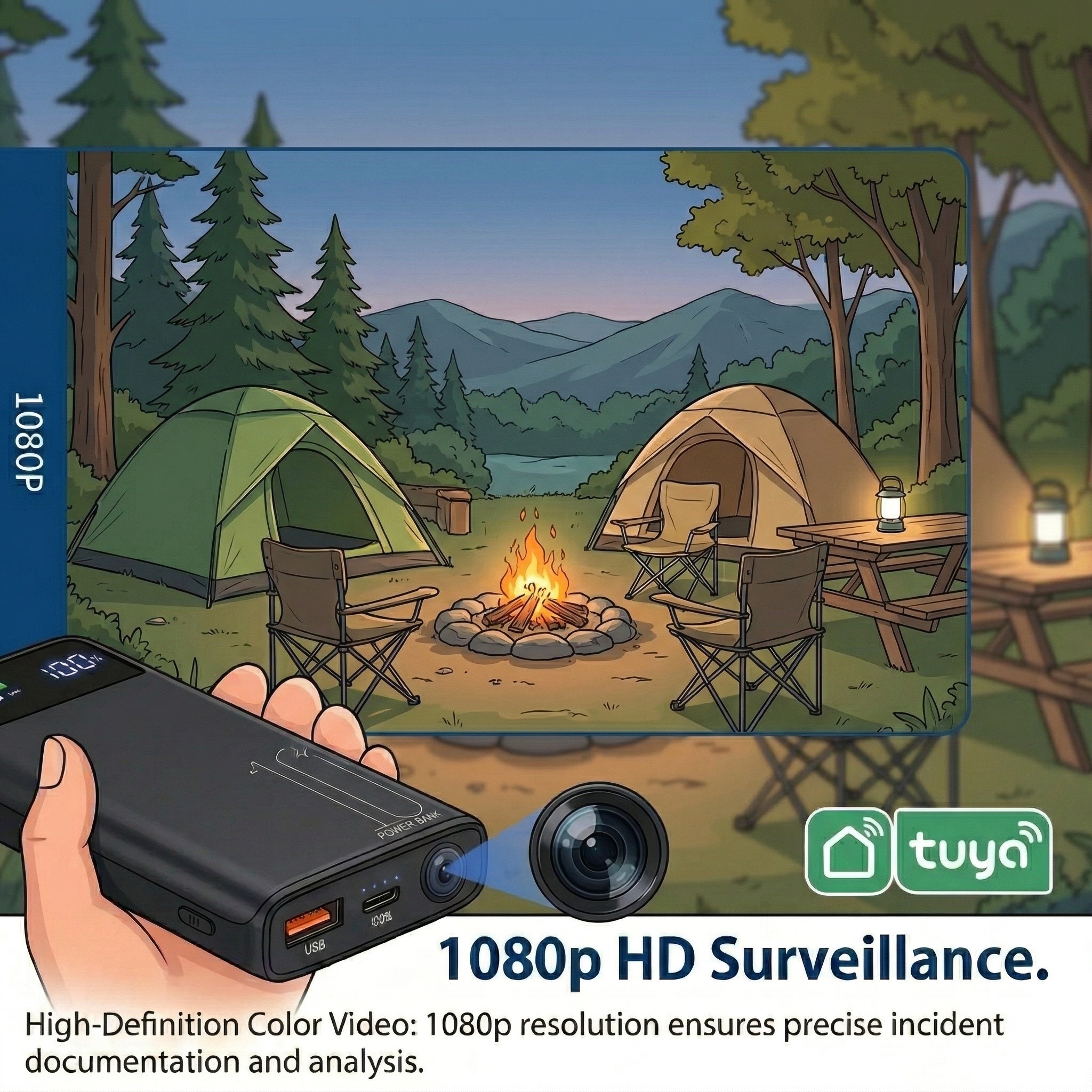
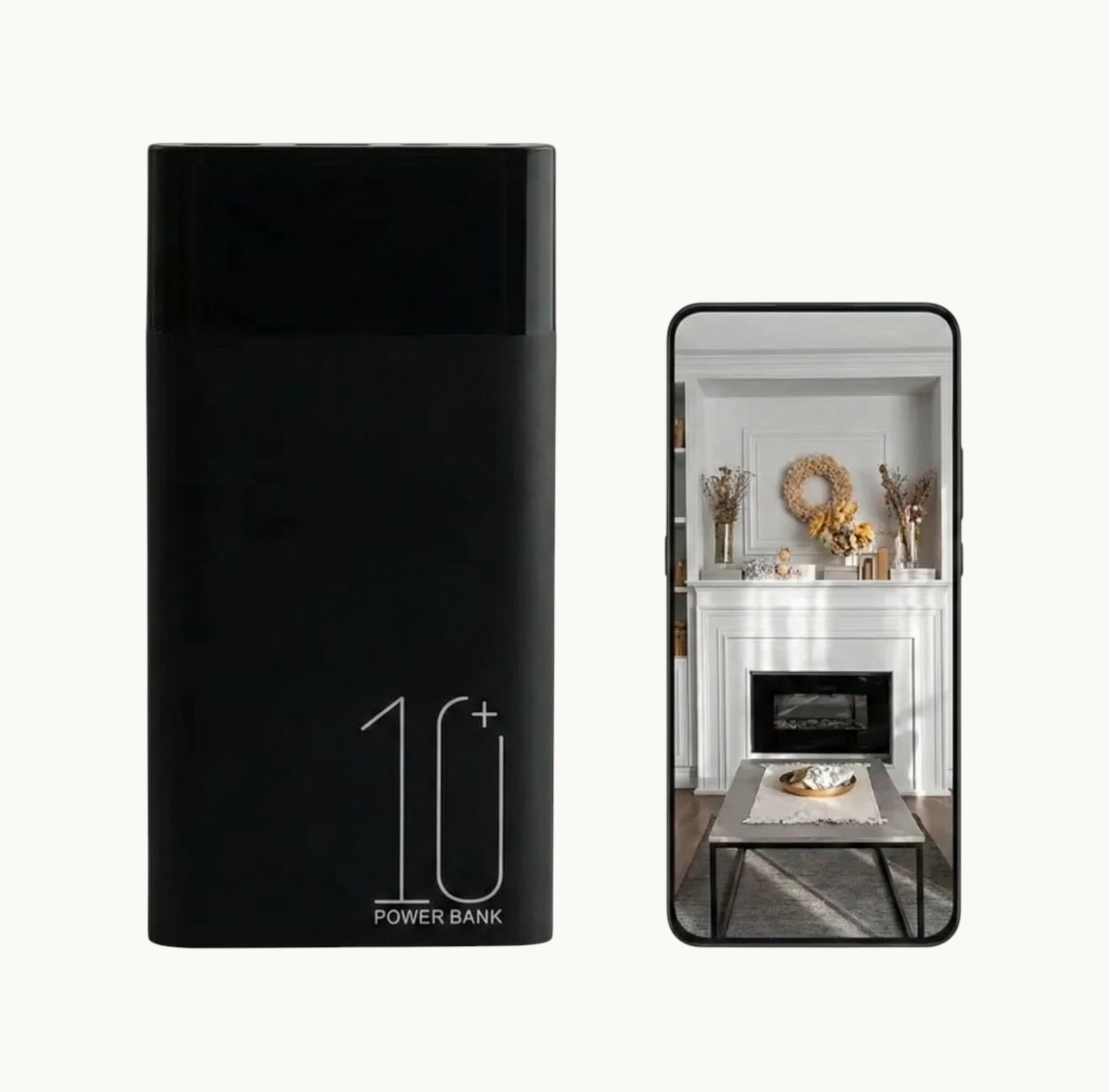
The H3 Power Bank Camera is frequently deployed in outdoor Italian installations where mobile power is needed. The power bank form factor with solar charging capability gives installers flexibility for perimeter monitoring projects without running cables.

Waterproof Ratings: IP65, IP66, IP67 — What Italian Buyers Need to Know
Outdoor cameras must handle rain, humidity, dust, and temperature extremes. The Ingress Protection (IP) rating tells you exactly what the camera can handle.
The first digit after “IP” indicates protection against solid objects (dust, tools, fingers). The second digit indicates protection against liquids.
| Rating | Solid Protection | Liquid Protection | Suitable For |
|---|---|---|---|
| IP65 | Dust-tight | Water jets from any direction | Covered porches, carports |
| IP66 | Dust-tight | Powerful water jets | Exposed walls, pergolas |
| IP67 | Dust-tight | Temporary immersion up to 1m | Ground-level installation, flood risk areas |
For most Italian outdoor installations — garden walls, covered terraces, gate posts — IP65 or IP66 is sufficient. IP67 is necessary only in flood-prone areas or where the camera sits at ground level where standing water is possible.
> A common mistake: buyers assume “outdoor camera” automatically means high waterproof rating. Many cameras marketed as outdoor-capable are only IP54 (splash resistant), which is insufficient for exposed Italian weather conditions. Always verify the IP rating before purchasing.
Mobile App Experience: Live Viewing, Alerts, and Playback
The promise of micro telecamere da esterno collegate al cellulare is only as good as the smartphone application that powers it. Italian buyers should evaluate the app experience carefully before committing to a specific brand.
A competent outdoor camera app for mobile monitoring should deliver:
Live viewing with minimal latency. 2–5 seconds of delay is normal for cloud-connected cameras. Anything beyond 10 seconds suggests poor server infrastructure or insufficient upload bandwidth at the camera location.
Instant push notifications. When motion is detected, the alert should reach your phone within 5 seconds of the event triggering. Delayed alerts reduce the practical value of the camera significantly.
Playback with timeline scrubbing. The app should display a visual timeline of recorded events so you can quickly jump to the footage you need. Downloading clips directly to your phone is essential for sharing footage with authorities or neighbors.
Multiple user access. A household or small business with multiple people monitoring the same camera should allow simultaneous app access without requiring someone to log out.
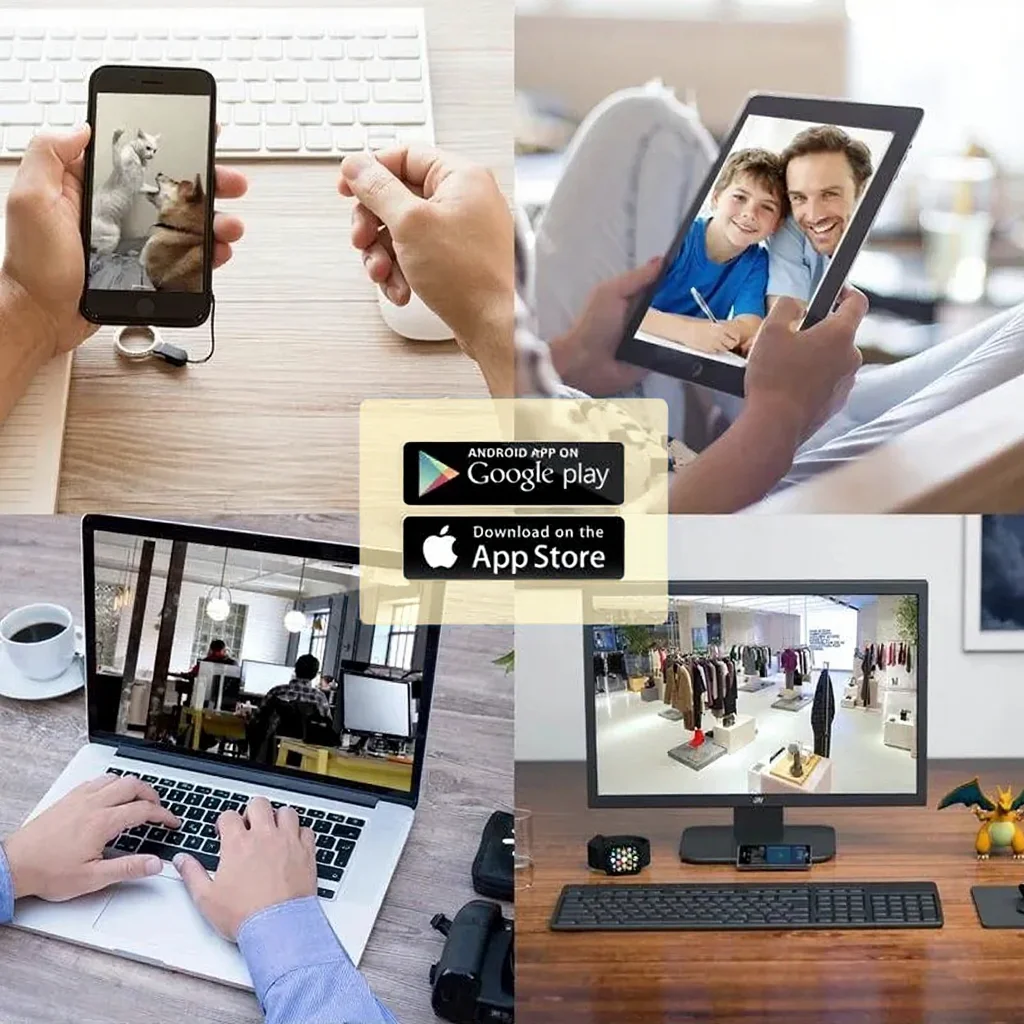
Tuya Smart and Smart Life apps — the same ecosystem used by many WiFi hidden cameras — provide all of these features for most outdoor micro cameras. If you are already using Tuya-compatible devices inside the home, adding an outdoor camera to the same app creates a unified smart home monitoring experience.
Night Vision Performance in Outdoor Installations
Outdoor cameras face their toughest challenge after dark. Italian buyers should evaluate night vision specifications carefully, especially for cameras monitoring rural properties, dark driveways, or unlit garden areas.
Active infrared (IR) is the most common night vision technology in micro outdoor cameras. IR LEDs emit invisible infrared light that the camera sensor can see, illuminating the scene without producing visible light that would warn intruders.
Key night vision specs to evaluate:
– IR LED count and wavelength — more LEDs at 850nm or 940nm generally means longer range. 940nm is invisible to the human eye; 850nm produces faint red glow.
– Lux rating — lower lux numbers mean better low-light sensitivity. 0.001 lux is excellent; 0.1 lux is marginal.
– Blacklight Vision (Starvis) — Sony’s Starvis sensor technology dramatically improves low-light color recording. Cameras with Starvis sensors deliver much better night footage than standard CMOS sensors.
– White light deterrence — some outdoor cameras add a white LED spotlight that activates on motion, illuminating the area in color and potentially deterring intruders. This is useful for driveways and garden entrances.
For Italian buyers in rural areas where ambient light is minimal, a camera with both strong IR night vision and a white light deterrent option provides the most flexibility.
Installing Your Outdoor Micro Camera: Practical Tips
Getting an outdoor micro camera online and operational requires a few steps specific to the outdoor environment:
Choose your mounting surface carefully. Brick, concrete, and wood all require different mounting hardware. Most cameras come with basic wall plugs and screws. Verify the camera’s viewing angle before drilling — some cameras have very narrow fields of view (70°) and require precise positioning.
Position for the right field of view. The ideal placement for perimeter monitoring is 2.5–3.5 meters above ground — high enough to avoid casual tampering, low enough to capture facial detail. Angle the camera slightly downward to capture the approach path rather than aiming straight ahead.
Protect the WiFi signal. Outdoor walls, metal structures, and dense vegetation attenuate WiFi signals significantly. Test WiFi signal strength at the mounting location before finalizing the installation. Use your smartphone’s WiFi signal meter or a WiFi analyzer app to measure the actual signal level.
Seal cable connections properly. Even on cameras with excellent IP ratings, any cable penetration (SD card slot, USB power port) represents a potential moisture entry point. Use outdoor-rated cable glands or place the camera so that the cable connection points face downward.
Frequently Asked Questions
Can I use a micro outdoor camera connected to my phone without a monthly subscription?
Yes. The vast majority of micro outdoor cameras work without any subscription. Local SD card recording is standard on most models and does not require a cloud account. Remote viewing, motion alerts, and playback are handled through the free app. Cloud storage subscriptions are optional add-ons, not requirements.
What is the best way to power a micro outdoor camera if I have no power outlet nearby?
Solar charging is the best solution for power-free outdoor installations in Italy. A 5W solar panel with a compatible micro outdoor camera can operate indefinitely during spring, summer, and autumn. In winter months in northern Italy, you may need to supplement with manual charging or a larger battery capacity. For locations with no sun exposure, consider a 4G/LTE camera with a large internal battery.
Do micro outdoor cameras work in freezing Italian winters?
Most lithium batteries lose capacity significantly below 0°C, which reduces recording time and standby duration. If you are installing in an unheated outdoor area in northern Italy, look for cameras rated for extended temperature ranges (typically -20°C to +50°C). Placing the camera under an overhang or eave provides some protection from direct exposure and ice formation.
How do I know if a micro outdoor camera will connect reliably to my Italian mobile network?
For 4G cameras, verify the supported frequency bands. Italian carriers use bands 1, 3, 7, 20, and 28 for LTE. A camera that only supports North American or Asian frequency bands will not work reliably in Italy. For WiFi cameras, conduct a site survey at the installation location before committing to the hardware choice.
Can I view my outdoor camera footage from multiple phones simultaneously?
Most apps allow you to share camera access with additional household members by sending an invitation from the main account. The exact number of concurrent viewers varies by app and manufacturer, but 3–5 simultaneous connections is typical. For commercial applications requiring many simultaneous viewers, check the specific app’s policy before purchasing.
Conclusion
Choosing the right micro telecamera da esterno collegata al cellulare comes down to matching the technical specifications to the specific installation environment. Prioritize IP65 or higher waterproof ratings, evaluate power options realistically (solar vs battery vs wired), and test the mobile app experience before deploying multiple units.
For Italian installers and B2B buyers building outdoor surveillance packages, sourcing from a single supplier with a complete product range simplifies inventory and support. Browse our outdoor camera catalog or contact our team for project pricing on multi-camera installations.

 English
  Italiano
  Deutsch
  Français
  Español
  Polski