
Nehmen versteckte Kameras Audio auf? UK- und EU-Audioaufnahmegesetze erklärt
Jede Woche kauft jemand eine versteckte Kamera in der Erwartung, dass sie Gespräche aufzeichnet, platziert sie genau dort, wo sie benötigt wird, ruft das Filmmaterial ab – und stellt fest, dass das Audio stumm ist. Oder schlimmer: Sie verwenden das Filmmaterial in einem Arbeitsplatzkonflikt, nur um zu entdecken, dass die Audioaufnahme eine rechtliche Komplikation verursacht, die sie nicht vorhergesehen haben.
Die Frage “Nehmen versteckte Kameras Ton auf?” ist einfach. Die Antwort ist es nicht, denn sie hängt vollständig davon ab, welches Produkt Sie kaufen und wo Sie es einsetzen möchten.
Dieser Leitfaden behandelt die drei Dinge, die Sie vor dem Kauf wissen müssen: welche QZT-Miniaturkameras Audioaufnahmen beinhalten, was das Gesetz zur Audioaufnahme in Großbritannien und der EU sagt und wie Sie Audioaufnahmen legal und effektiv nutzen.
Welche QZT-Versteckten Kameras nehmen Audio auf?
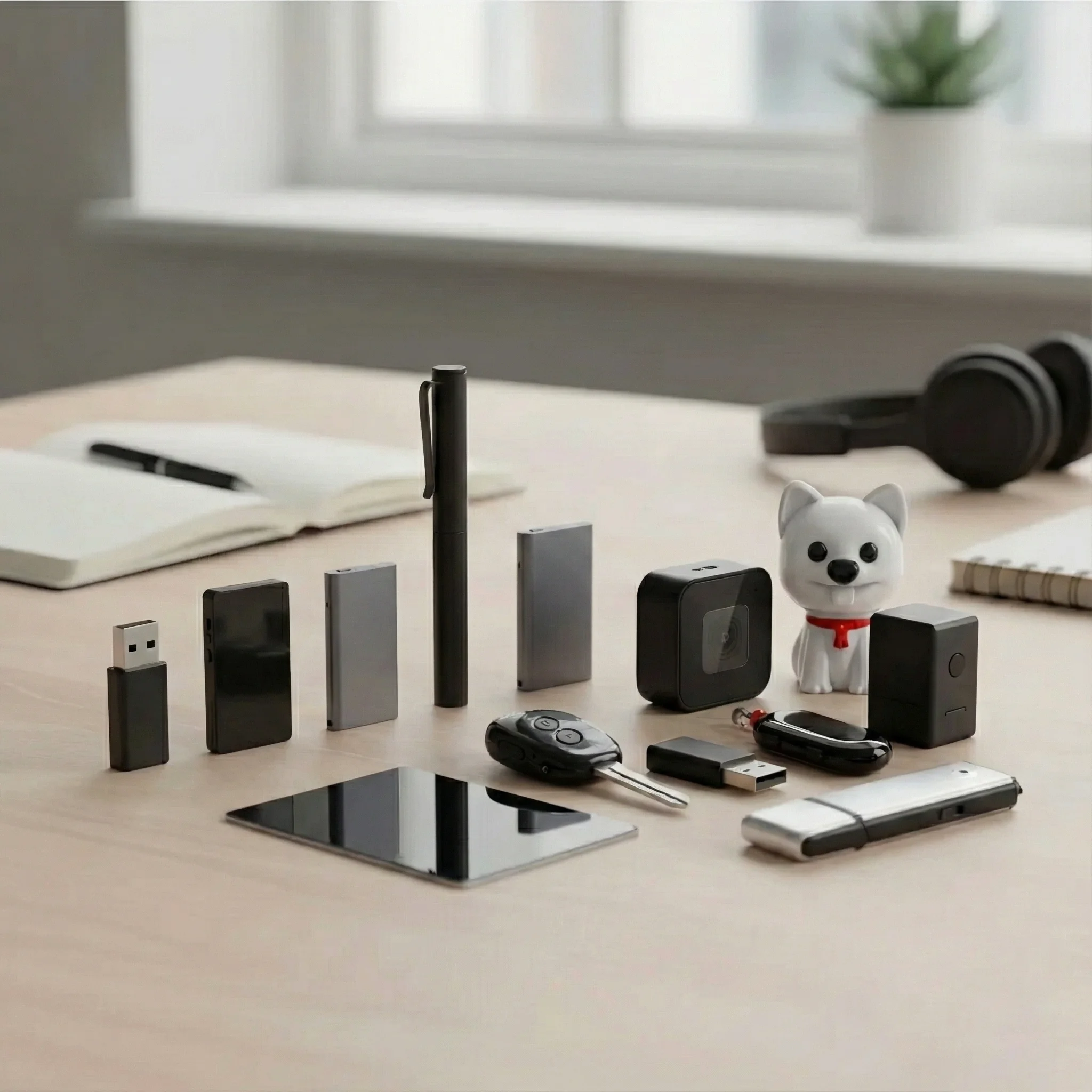
Nicht alle versteckten Kameras nehmen Audio auf. Dies ist die häufigste Quelle der Verwirrung, und die Antwort ist produktspezifisch.
Kameras, die Video mit Audio aufnehmen:
– QZT WiFi-Spionage-Stift-Kamera — eingebautes Mikrofon, erfasst sowohl Video als auch Audio in Besprechungen oder Interviews
– QZT W9 Spionage-Stiftkamera — Audioaufnahme aktiviert, Standard bei diesem Modell
– QZT W10 Spionage-Stiftkamera — Audioaufnahme aktiviert, lange Aufnahmezeit unterstützt ausgedehnte Besprechungen
– QZT WiFi-Powerbank-Kamera — in das Gehäuse integriertes Mikrofon
– QZT Powerbank-Kamera — Audioaufnahme aktiviert
– QZT USB-Stick-Spionagekamera — Audioaufnahme Standard
– QZT WiFi-Spionkamera USB-Ladegerät — eingebautes Mikrofon
– QZT WiFi-Rauchmelder-Kamera — Audioaufnahme aktiviert
– QZT WiFi-Uhr-Kamera — Audioaufnahme Standard
– QZT WiFi-Steckdosensicherheitskamera — Audioaufnahme aktiviert
Kameras, die Video ohne Audio aufnehmen:
– QZT Verdeckte HD-Kamera-Brille — hauptsächlich First-Person-Video, keine Audioaufnahme bei diesem Modell
Dedizierte reine Audiogeräte:
– QZT Verstecktes Spionage-Diktiergerät
– QZT Kleiner sprachaktivierter Rekorder — sprachaktiviert, ideal für die Besprechungsdokumentation
– QZT Q97 Professionelles Diktiergerät — Typ-C, hohe Bitrate-Audio
– QZT Magnetisches Spionage-Diktiergerät 500H — erweiterter Akku, VOR-Modus für lange Einsätze
Wenn die Audioaufnahme für Ihren Anwendungsfall wesentlich ist – und für die meisten Beweise, rechtlichen und geschäftlichen Zwecke ist sie das – vergewissern Sie sich vor dem Kauf, dass Ihr gewähltes Modell Audio beinhaltet.
UK-Audioaufnahmegesetz: Was Sie wissen müssen
Das Vereinigte Königreich arbeitet unter einem Einverständnis einer Partei Regel für Audioaufnahmen. Das bedeutet, dass Sie, solange Sie Teilnehmer des Gesprächs sind oder eine berechtigte Befugnis haben, es aufzunehmen, nicht die Zustimmung der anderen Partei benötigen.
Dies wird durch mehrere sich überschneidende rechtliche Rahmenbedingungen geregelt:
Regulation of Investigatory Powers Act 2000 (RIPA) legt die Regeln für verdeckte Überwachung durch öffentliche Stellen fest. Für Privatpersonen und Unternehmen gilt RIPA nicht – es schafft jedoch den rechtlichen Rahmen, der legale von illegalen Aufnahmen unterscheidet.
Datenschutzgesetz 2018 und DSGVO klassifiziert Audioaufnahmen identifizierbarer Personen als Verarbeitung personenbezogener Daten. Die relevante Rechtsgrundlage für die meisten privaten Nutzungsszenarien ist Artikel 6(1)(f) – berechtigte Interessen – die gilt, wenn Sie zur Verhinderung von Straftaten, zum Schutz von Eigentum oder anderen legitimen Zwecken aufnehmen. Die Information Commissioner’s Office (ICO) hat spezifische Leitlinien zu Überwachungskameras veröffentlicht, die für Audioaufnahmen durch Unternehmen gelten.
Praxis des Arbeitsgerichts ist besonders relevant für Arbeitsplatzkonflikte. Acas-Leitlinien und Gerichtsentscheidungen bestätigen, dass verdeckte Audioaufnahmen von Mitarbeitern ihrer eigenen Arbeitsplatzgespräche in der Regel in Arbeitsgerichtsurteilen zulässig sind. Die Aufnahmen müssen für den Streit relevant sein – sie dürfen nicht als allgemeine Fischereiaktion verwendet werden.
Hier ist, was Einverständnis einer Partei in der Praxis bedeutet: Wenn Sie als Manager eine Untersuchung durchführen, können Sie ein Gespräch, an dem Sie teilnehmen, aufnehmen, ohne die andere Partei zu informieren. Wenn Sie als Mitarbeiter dokumentieren, was Ihr Manager zu Ihnen sagt, können Sie dasselbe tun. Wenn Sie ein Mikrofon in einem Raum platzieren, um Gespräche aufzunehmen, an denen Sie nicht teilnehmen, bewegen Sie sich in rechtlich unklarem Gebiet, das sorgfältige Überlegung erfordert.
The key boundary under UK law is the berechtigte Erwartung auf Privatsphäre. A manager’s office, a changing room, or a private bathroom are spaces where people have a reasonable expectation of privacy. Recording in those spaces — even by the property owner — can breach the Protection from Harassment Act 1997 and the Data Protection Act. A living room, shop floor, or office reception does not carry the same expectation of privacy, which is why hidden cameras are commonly deployed in those spaces.
EU- und DSGVO-Regeln für Audioaufnahmen
The European Union’s approach to audio recording sits within the broader GDPR framework. Audio recordings of identifiable individuals are personal data under Article 4(2) GDPR. Processing (including recording) must have a lawful basis under Article 6.
For private individuals and businesses in EU member states, Article 6(1)(f) — legitimate interests — is the most commonly applicable basis. It allows recording when:
– You have a legitimate interest (e.g., protecting your property, preventing theft, documenting agreements)
– The recording is necessary for that purpose
– Your interests are not overridden by the fundamental rights of the recorded individuals
Die one-party consent rule applies across most EU member states for personal data processing purposes. Germany, France, Italy, Spain, and the majority of EU countries recognise that one party to a conversation may record it without informing the others, provided the recording is for a legitimate purpose.
However, EU law does add requirements that UK law does not:
Datenminimierung (Article 5(1)(c) GDPR) requires that you do not collect more data than is necessary. For audio recording, this means recording only when needed, not continuously for hours when you only need to capture a specific interaction.
Zweckbindung (Article 5(1)(b)) means you cannot record for one purpose and then use the footage for an unrelated purpose without a new lawful basis.
Information obligations (Articles 13 and 14) require that individuals are informed about recording in most circumstances. This is a grey area for private covert recording — the ICO’s guidance and ECtHR case law suggest that covert recording for legitimate crime-prevention purposes can proceed without prior notification — but for businesses deploying audio monitoring systems openly, signage and policy documentation are required.
In Germany specifically, the Bundesarbeitsgericht (Federal Labour Court) has set a high bar for covert workplace audio recording: it is generally only permitted where there is a concrete suspicion of a criminal offence and no less intrusive means of investigation are available. Distributors targeting the German market should advise their B2B customers accordingly.
Praktische Anleitung zur Audioaufnahme für Beweise und Dokumentation
Understanding the law is necessary. Using audio recordings effectively is a separate skill.
Audio quality depends on placement. The microphone on a hidden camera is typically omnidirectional and positioned inside the device casing. This means audio quality varies significantly by product form factor. A pen camera held close to a conversation captures clear audio. A smoke detector camera mounted on a ceiling 3 metres away captures muffled conversation and ambient noise. For important meetings or interviews, a dedicated voice recorder like the QZT Q97 Professionelles Diktiergerät placed within 1–2 metres of the conversation produces significantly better audio than a ceiling-mounted camera.
Environmental noise matters. Recording in a noisy environment — a busy street, a factory floor, a restaurant — significantly reduces the utility of audio recordings. The microphone picks up the ambient noise and the conversation gets lost in it. For evidence in noisy environments, consider a directional lavalier microphone clipped near the speaker, or a dedicated voice recorder in the pocket of the person being recorded.
VOR (Voice Operated Recording) mode on the QZT Kleiner sprachaktivierter Rekorder solves the storage problem for long recordings. Instead of recording 8 hours of silence followed by 10 minutes of conversation, the recorder wakes up when sound exceeds a threshold, captures the relevant audio, and goes back to standby. The QZT Magnetisches Diktiergerät 500H extends this concept to multi-day deployments with up to 500 hours of battery life in VOR mode.
File format affects usability. Most QZT cameras record audio as part of an AVI or MOV video file. Dedicated voice recorders typically produce WAV (uncompressed, highest quality) or MP3 (compressed, more storage-efficient) files. For evidence purposes, WAV is preferred because it is the industry standard for forensic audio analysis. If a recording might be used in serious legal proceedings, convert the file to WAV before submitting it.
Wichtigste Erkenntnis: Audio ist leistungsstark, erfordert aber mehr Sorgfalt

Audio recordings often carry more immediate evidentiary weight than video alone. A video that shows someone entering a room is circumstantial. An audio recording that captures that person making a verbal admission is direct evidence. For workplace disputes, theft investigations, and personal safety documentation, audio matters.
But audio is also more legally sensitive than video. The practical rules are straightforward:
– Only record audio where you have the legal right to do so (your own property, a conversation you are part of, or with specific legal authority).
– Choose the right tool for the recording environment — a dedicated voice recorder for close conversations, a camera with audio for wider coverage.
– Understand the specific rules of your jurisdiction, particularly if you are operating in Germany or other EU member states with stricter workplace surveillance laws.
– For businesses in the UK and EU deploying audio monitoring openly, document your lawful basis, post appropriate notices, and establish a clear data retention policy.
For distributors, this is an area where providing clear guidance to B2B customers reduces returns and liability. A customer who buys a QZT Spy Pen Camera expecting it to capture audio from across a room and finds it does not is a preventable complaint. Setting the right expectation during purchase is part of good customer service.
Häufig gestellte Fragen
Can I record a conversation without the other person knowing in the UK?
Yes, if you are a party to the conversation or have legitimate authority to record it. The one-party consent rule in the UK permits this for private purposes. For workplace investigations, courts have confirmed that covert recordings by employees can be admissible in tribunal proceedings. The key restriction is that you cannot record in spaces where people have a reasonable expectation of privacy (bathrooms, changing rooms) or record conversations you are not party to through bugging devices placed in the environment.
Do I need to tell employees if I install audio recording in my business?
In the UK, yes — if you are deploying audio monitoring openly, you must inform employees under the Data Protection Act 2018 and the ICO’s Employment Practices Code. Failure to inform is a data protection breach. Covert recording for the investigation of a specific suspected offence is exempt from this requirement, but requires careful legal compliance management.
Is audio more sensitive than video under GDPR?
Yes, generally. The Article 29 Working Party (now the European Data Protection Board) has consistently stated that audio data can reveal more sensitive information than video — emotional state, health indicators, opinions, beliefs. This means audio recordings are subject to greater scrutiny and require stronger justification. Where video alone is sufficient for your purpose, consider disabling audio recording on your camera to reduce your data protection obligations.
Which QZT product has the best audio quality for meetings?
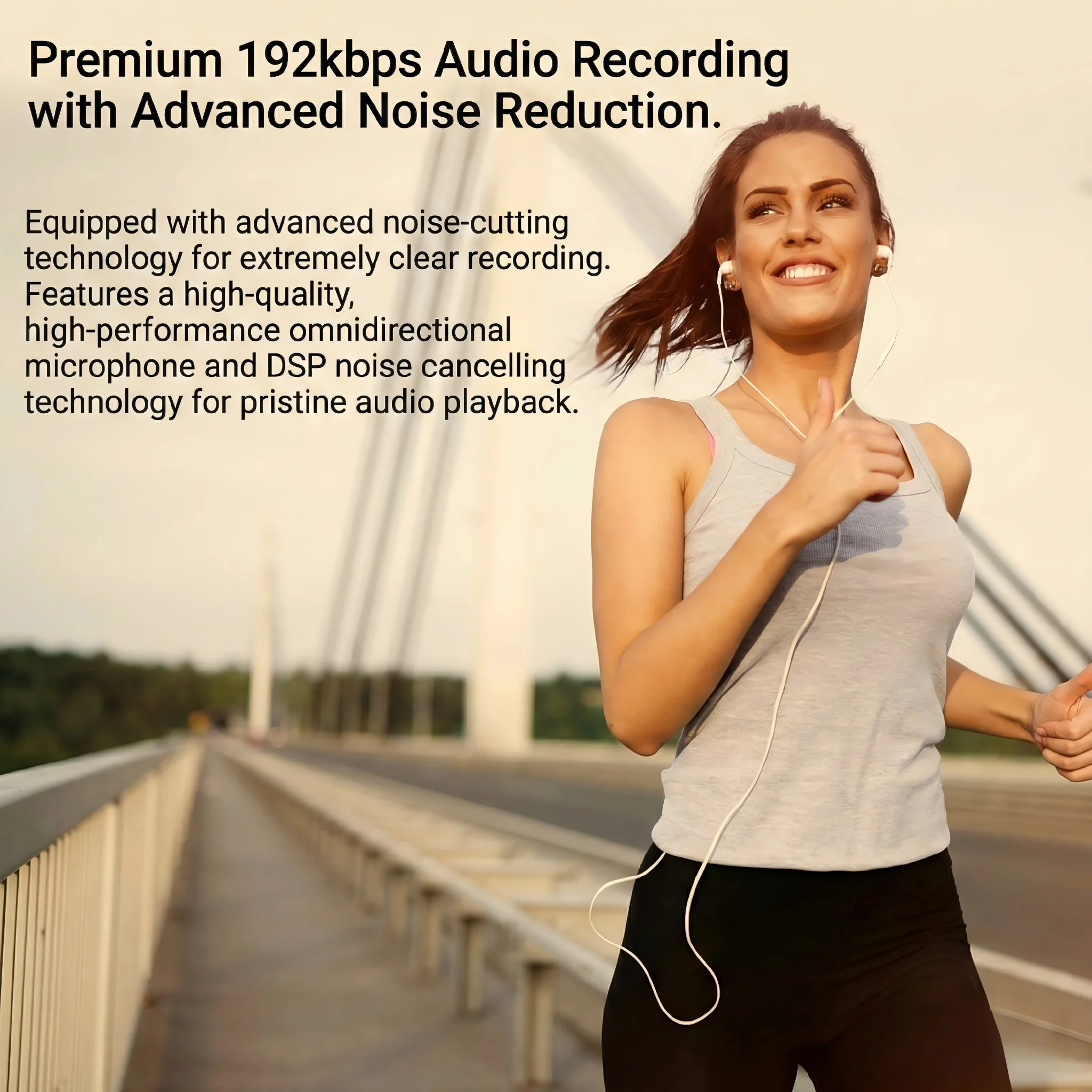
Die QZT Q97 Professionelles Diktiergerät produces WAV-quality audio at up to 192kbps — the highest fidelity of any QZT device — making it the best choice for meeting documentation where audio clarity is paramount. For covert audio recording during interviews or personal safety situations, the QZT Verstecktes Spionage-Diktiergerät in voice-activated mode captures clean audio for extended periods.
Can I use a hidden camera’s audio recording in an employment tribunal in the UK?
Im Allgemeinen ja, wenn die Aufnahme direkt für den Streit relevant ist und an einem Ort gemacht wurde, an dem der Arbeitnehmer keine vernünftige Erwartung auf Privatsphäre hatte. Arbeitsgerichte haben verdeckte Audioaufnahmen in Fällen von Diskriminierung, Belästigung und Fehlverhalten akzeptiert. Sie sollten rechtlichen Rat einholen, bevor Sie eine Aufnahme als Beweismittel vorlegen, insbesondere wenn Fragen dazu bestehen, wie oder wo sie erlangt wurde.
Was ist mit der DSGVO-Konformität bei Audioaufnahmen in der EU?
Der Aufnehmende (ob Unternehmen oder Einzelperson) wird gemäß DSGVO Artikel 4(7) zum Datenverantwortlichen und muss eine rechtliche Grundlage für die Verarbeitung haben. Für private Zwecke der Verbrechensprävention ist Artikel 6(1)(f) – berechtigte Interessen – in der Regel ausreichend. Für Unternehmen wird eine dokumentierte Bewertung berechtigter Interessen (LIA) empfohlen. Bewahren Sie Aufnahmen nur so lange wie nötig auf, teilen Sie sie nicht ohne triftigen Grund und ergreifen Sie angemessene Sicherheitsmaßnahmen, um die Dateien zu schützen.
Für Anleitungen zu DSGVO-konformen Überwachungslösungen oder Hilfe bei der Auswahl einer Kamera mit Audioaufnahme für Ihre spezifische Rechtsordnung, Kontaktieren Sie QZT Security.

 English
  Italiano
  Deutsch
  Français
  Español
  Polski