
Struggling to source WiFi cameras that meet market demands? It's frustrating when technical specs are unclear. This confusion leads to buying products that your customers ultimately won't want.
The key features for a WiFi security camera are 1080P resolution, stable 2.4GHz WiFi connectivity, motion detection alerts, and clear night vision. Depending on the use case, the power source (battery vs. wired) and form factor (covert vs. overt) are also critical considerations.
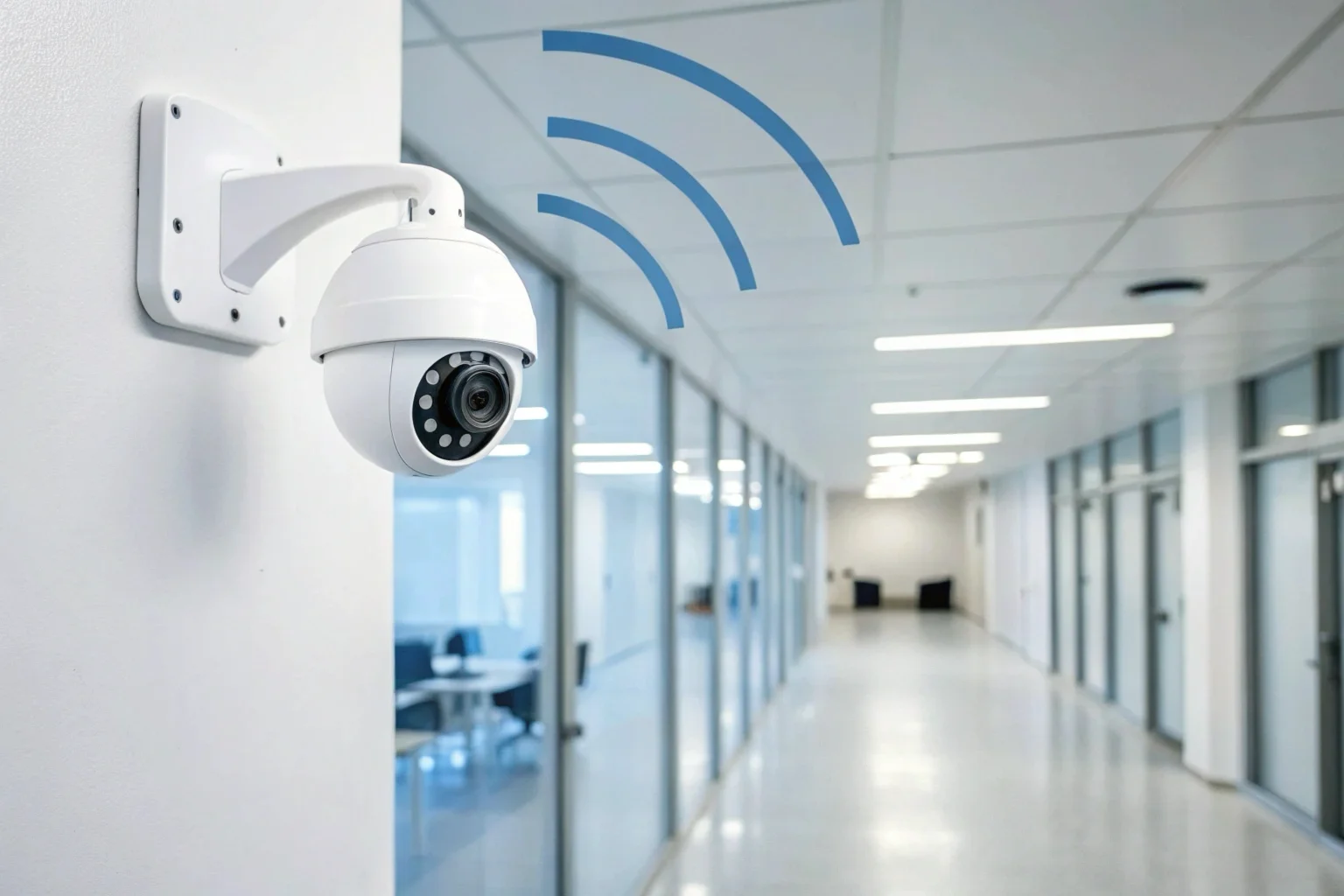
As a manufacturer, I see buyers focus heavily on these core features because they directly impact reliability and user satisfaction. A camera that fails in any of these areas will quickly lead to poor reviews and returns. Understanding how these elements work together is the first step to choosing a product that performs well for the end user and builds your brand's reputation. Now, let's explore some of the more detailed questions my clients in Italy, Poland, and France often ask.
How long do the batteries last in a WiFi security camera?
Worried a battery-powered camera will fail at a critical moment? A device with poor battery life is unreliable. This creates security gaps and leaves your customers feeling unprotected.
A WiFi camera's battery can last from 75 minutes to over 20 hours on a single charge. The duration depends entirely on the battery's capacity (measured in mAh) and how the camera is used. Smaller, covert devices have shorter runtimes than larger units with bigger batteries.
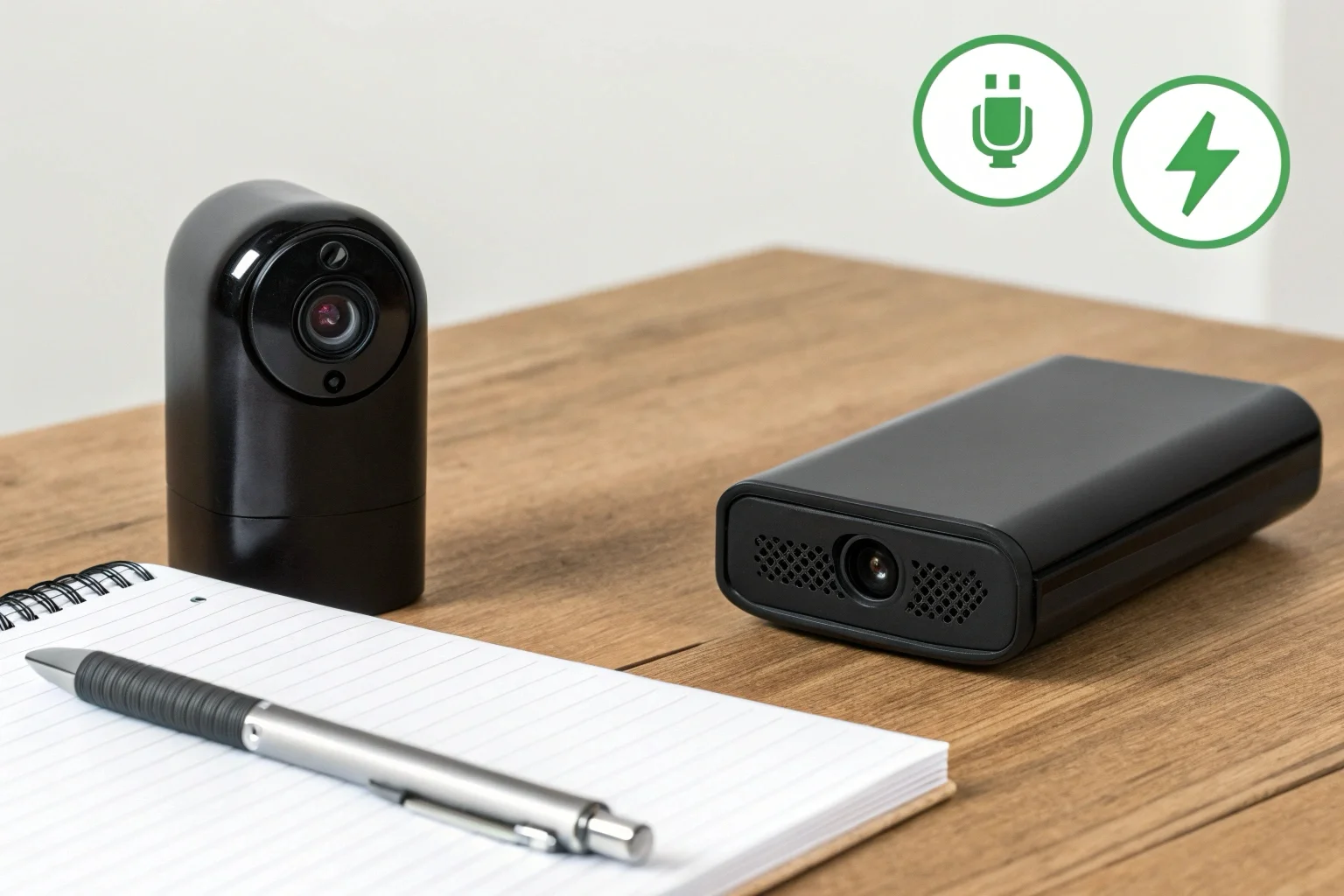
From my experience in production, battery life is a direct trade-off with device size. It is a simple matter of physics. A larger battery holds more power but makes the device bigger and less discreet.
Understanding Battery Capacity vs. Working Time
The relationship is straightforward. A higher milliamp-hour (mAh) rating means a longer potential working time. For instance, a small pen camera might have a 170mAh battery and run for about 75 minutes. A larger device, like one of our clock cameras or DIY modules, might use a 2800mAh battery, pushing the working time to 5–7 hours. For long-term surveillance, a power bank camera with a 5000mAh battery can record for 20 hours or more.
Factors That Drain the Battery Faster
It's not just about capacity. Real-world usage is very important.
- Continuous vs. Motion-Activated Recording: Recording 24/7 drains the battery much faster than recording only when motion is detected.
- Vision nocturne : The infrared (IR) LEDs used for night vision consume extra power. A camera operating at night will have a shorter runtime than one operating in a well-lit environment.
- WiFi Signal Strength: If the camera is far from the router, it must use more power to maintain a stable connection. This can be a significant and often overlooked power drain.
For professional buyers, I always recommend matching the battery specifications to the intended application. For short-term, portable needs, a small battery is fine. For long-term, set-and-forget security, a larger battery or a plug-in model is necessary.
Which is better: battery or plug-in security cameras?
Can't decide between placement freedom and constant power? Choosing the wrong power source creates installation problems. You either have to run wires or deal with constant recharging.
Neither is better; the best choice depends entirely on the surveillance goal. Battery cameras offer unmatched flexibility for temporary or difficult placements. Plug-in cameras provide superior reliability for permanent, 24/7 monitoring where power is accessible.
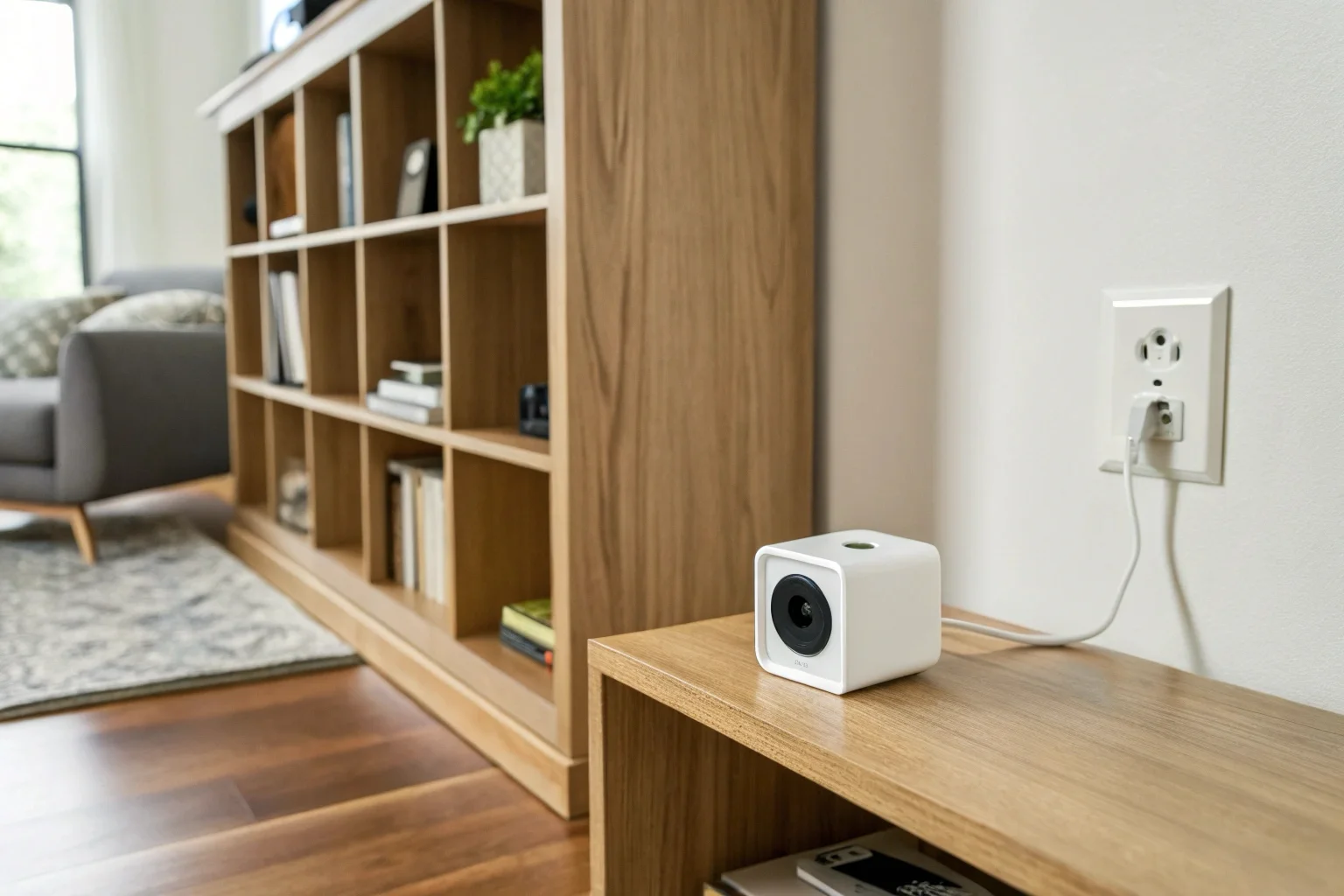
This is one of the most common discussions I have with my B2B clients. The decision always comes down to balancing convenience with reliability. An installer in France might prefer a battery model for a quick setup, while a German client focused on long-term stability will almost always choose a plug-in option.
We manufacture both types because the market needs both. Here is a simple breakdown.
| Fonctionnalité | Battery-Powered Cameras | Plug-in Cameras |
|---|---|---|
| Installation | Extremely flexible, place anywhere | Limited by outlet location |
| Fiabilité | Depends on battery life, requires recharging | Highly reliable, continuous power |
| Cas d'utilisation optimal | Temporary monitoring, areas without power | Permanent security, critical areas |
| Entretien | Regular recharging required | Configurez-le et oubliez-le |
Some of our most popular designs try to merge these two concepts. For example, our WiFi charger cameras and wall socket cameras are plug-in devices that draw continuous power from the mains. This makes them look like ordinary objects, so they are very discreet, but they offer the 24/7 reliability of a wired camera. We also have many models that support "record while charging." This gives the user the option to use it on battery or plug it into a USB power source for indefinite operation. This hybrid approach offers a great deal of flexibility for the end user.
Which is better: 3K or 4K CCTV?
Feeling pressured to offer the highest resolution available? Choosing 4K might seem like a clear winner, but it introduces hidden costs in storage and bandwidth that can affect performance.
For most business surveillance, 3K resolution provides the best balance of image clarity, storage cost, and network bandwidth. 4K offers slightly more detail for zooming in on distant objects, but the practical difference is often negligible while the data demands are significantly higher.
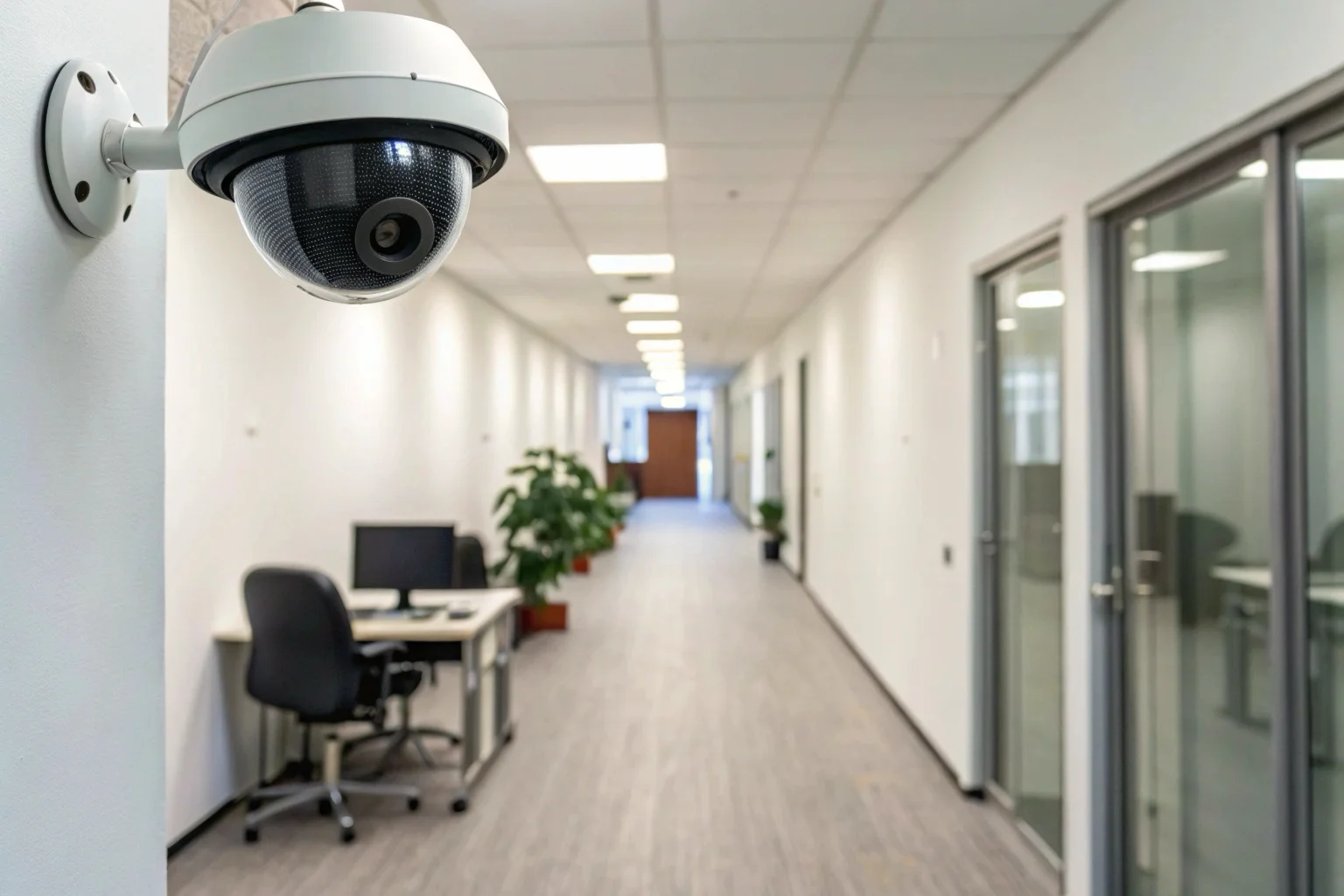
My customers in Europe care deeply about image quality, which they often call "pixel." However, chasing the highest number isn't always the smartest business decision. Most of our best-selling hidden cameras, which you can see at https://qztsecurity.com/camera/, use 1080P. This resolution is more than enough to clearly identify faces and actions in typical indoor environments, which is the primary goal.
The jump from 1080P to 3K or 4K is a matter of diminishing returns.
- Stockage: 4K video files are enormous. A week of 4K footage can require double the storage space of 3K footage. For a business running multiple cameras, this cost adds up very quickly, whether using local SD cards or cloud storage.
- Bandwidth: Streaming live 4K video requires a very fast and stable internet connection. If the network can't handle it, the video will lag, stutter, or drop in quality, defeating the purpose of the high resolution. This is a common point of failure.
- Cost: 4K sensors and processors are more expensive, which increases the unit cost of the camera. This price increase may not be justifiable if the user cannot see a meaningful benefit.
My advice to professional buyers is to focus on the practical application. Is the camera monitoring a small office or a large parking lot? For the office, 1080P or 3K is perfect. For the parking lot, where you might need to digitally zoom in on a license plate from far away, 4K could be a valid choice. But for most indoor and small-area business security, 3K hits the sweet spot of performance and cost efficiency.
Quel type de caméra de sécurité est le mieux adapté à une entreprise ?
Vous essayez de sécuriser votre entreprise mais vous êtes débordé par les choix de caméras ? Le type incorrect peut être inefficace ou même créer des problèmes de confiance avec les employés. Vous avez besoin d'une solution adaptée à votre objectif spécifique.
La meilleure caméra pour une entreprise dépend de l'objectif. Pour une dissuasion visible dans les zones publiques, les caméras traditionnelles bullet ou dome fonctionnent mieux. Pour surveiller discrètement des zones sensibles comme les réserves ou les bureaux, les caméras cachées dans des objets quotidiens sont supérieures.
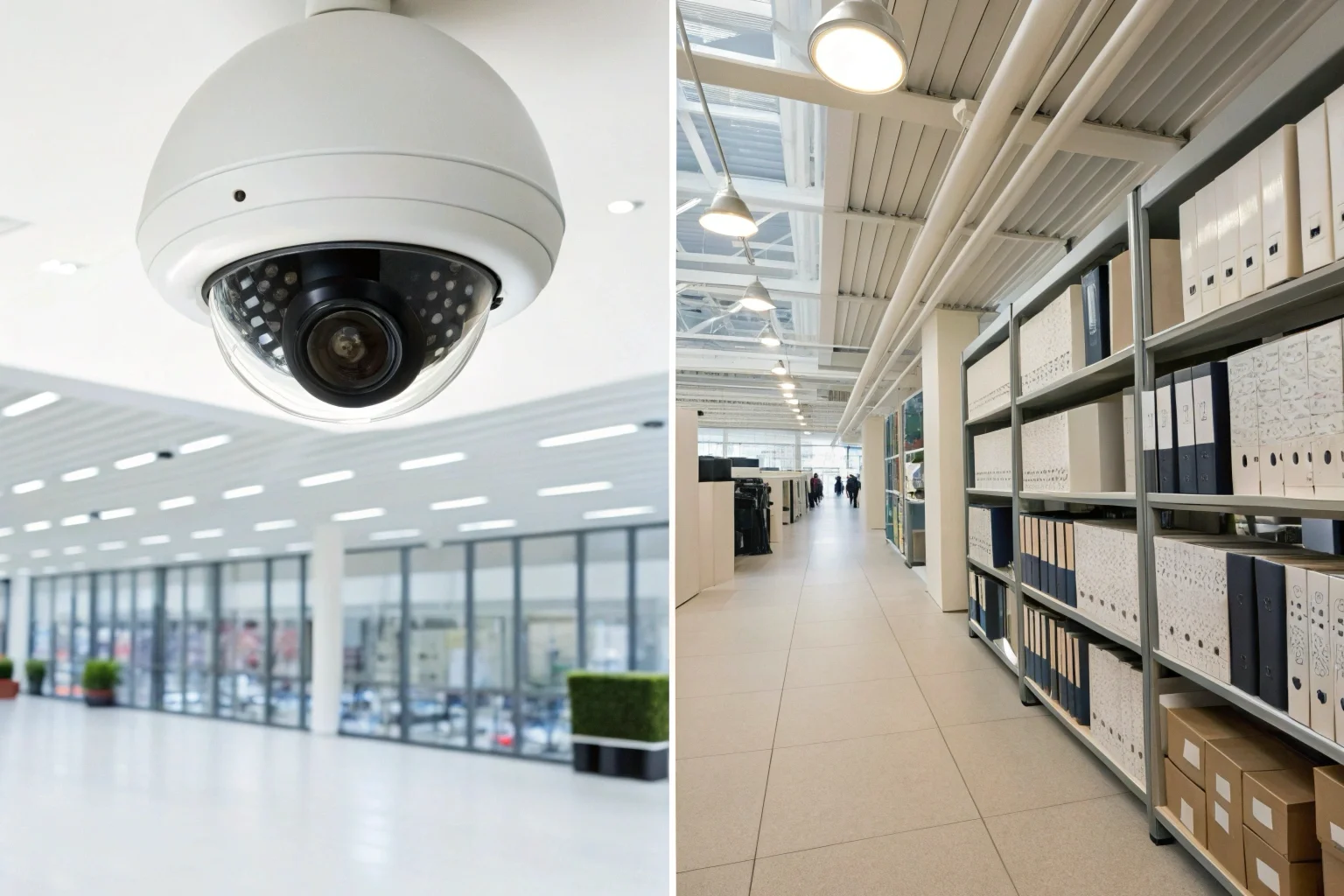
En tant que fabricant de dispositifs discrets, je travaille avec de nombreux clients professionnels qui doivent résoudre des problèmes internes spécifiques sans créer un environnement tendu. Les caméras visibles sont excellentes pour prévenir le vol à l'étalage, mais elles ne sont pas efficaces pour des problèmes comme le vol interne ou les violations de politiques.
Surveillance ouverte vs. Surveillance dissimulée
La stratégie pour une entreprise se divise en ces deux approches.
- Surveillance visible : L'objectif ici est la dissuasion. Les caméras visibles indiquent à tous qu'ils sont surveillés. Cela est idéal pour les entrées, les espaces commerciaux et les entrepôts. La présence de la caméra elle-même est la principale caractéristique de sécurité.
- Surveillance secrète : L'objectif est de collecter des informations discrètement. Ces caméras sont cachées afin que les gens se comportent naturellement. Cela est nécessaire pour enquêter sur des problèmes spécifiques comme le vol d'une caisse ou l'accès non autorisé à une salle serveur.
Choosing the Right Covert Device
Pour les entreprises nécessitant une surveillance discrète, le facteur forme est primordial. Nous produisons une large gamme de caméras cachées précisément pour cette raison.
- Pour un aperçu général : Une caméra détecteur de fumée offre une vue large et orientée vers le bas de toute une pièce sans attirer aucune attention.
- Pour un bureau ou un poste de réception : Une caméra horloge ou une caméra chargeur USB se fond parfaitement dans l'environnement existant.
- Pour les installations personnalisées : Nos modules Tuya DIY sont très populaires auprès des clients professionnels. Ils consistent en une petite lentille de caméra connectée à une petite carte circuit. Un installateur peut placer ce module dans tout objet pour créer une solution de surveillance complètement personnalisée pour un besoin unique.
Le choix correct correspond toujours au problème spécifique que vous essayez de résoudre.
En fin de compte, choisir la bonne caméra WiFi signifie adapter ses caractéristiques à un besoin spécifique et réel. Concentrez-vous sur la fiabilité et l'adaptation à la tâche, pas seulement sur les spécifications les plus élevées.

 English
  Italiano
  Deutsch
  Français
  Español
  Polski