
Comment protéger votre petite entreprise avec des caméras cachées
Diriger une petite entreprise, c’est porter plusieurs casquettes. Vous êtes le patron, le commercial, le service client, et — que vous l’ayez demandé ou non — le responsable de la sécurité. Une seule effraction, un vol à l’étalage ou un vol interne peut anéantir un mois de bénéfices. Voilà pourquoi de plus en plus de propriétaires de petites entreprises se tournent vers les caméras cachées : elles offrent une protection 24 heures sur 24 sans claironner au monde entier qu’ils surveillent.
Voici ce que la plupart des gens comprennent mal : ils pensent que les caméras cachées servent uniquement à attraper les criminels après les faits. La véritable valeur réside dans la dissuasion, les informations opérationnelles et la constitution d’une documentation irréfutable en cas d’incident. Dans ce guide, nous vous expliquerons exactement comment choisir, installer et gérer des caméras cachées pour une petite entreprise, en gardant un œil à la fois sur la sécurité et sur la loi.
Quelles considérations juridiques les propriétaires de petites entreprises devraient-ils connaître avant d'installer des caméras cachées ?
Avant de monter un seul appareil, vous devez comprendre où se trouvent les mines juridiques. Au Royaume-Uni, le Loi sur la protection des données de 2018 et RGPD britannique s'appliquent à toute entreprise qui enregistre des individus identifiables. Cela signifie que si votre caméra capture des employés ou des clients, vous traitez des données personnelles — et vous avez des obligations légales.
Le principe clé: Vous devez avoir une raison légitime., et vous devez être transparent à ce sujet. Pour les zones destinées aux clients, cela signifie mettre un panneau. Pour les zones réservées au personnel, vous devez informer les employés et, dans de nombreux cas, consulter les représentants des employés. Le Bureau du Commissaire à l'Information (ICO) fournit des directives claires à ce sujet, et les ignorer peut entraîner des amendes qui éclipsent le coût de tout système de caméra.
Voici le problème : les caméras cachées dans les zones réservées au personnel, comme les salles de pause ou les vestiaires, ne sont presque jamais autorisées. Les attentes en matière de vie privée y sont les plus élevées. Mais dans les espaces de vente, les entrepôts et les zones de manipulation des espèces, l’argument en faveur de la surveillance est solide. L’article 6, paragraphe 1, point f) du règlement RGPD reconnaît les « intérêts légitimes » comme base juridique, et la protection des actifs de l’entreprise entre clairement dans cette catégorie.
Pour les entreprises dans l'UE, les règles sont similaires mais avec des variations locales. La France, l'Allemagne et l'Italie ont toutes leurs propres implémentations du RGPD, et certaines ont des lois supplémentaires sur la surveillance sur le lieu de travail. L'Italie, par exemple, exige une notification préalable aux employés et, dans les milieux syndiqués, des accords de consultation. Si vous opérez au-delà des frontières—ou vendez à des clients qui le font—ces détails comptent.
Lien interne : Pour approfondir le cadre juridique, consultez notre guide sur Conformité RGPD pour la vidéosurveillance dans les magasins de détail de l'UE.

Point clé à retenir : La légalité repose sur la transparence, la proportionnalité et le respect de la vie privée dans les zones sensibles. En cas de doute, consultez un avocat local—mais le principe général est que la protection des entreprises constitue un intérêt légitime en vertu de la loi.
| Facteur juridique | Royaume-Uni (DPA 2018 / UK GDPR) | UE (RGPD + loi locale) |
|---|---|---|
| Signalétique requise | Oui, dans les zones clients | Oui, visiblement posté. |
| Consentement de l'employé | Avis informé ; consultation recommandée | Varie; l'Italie exige une notification formelle. |
| Zones interdites | Toilettes, vestiaires, salles de pause | Même ; protection de la vie privée renforcée en Allemagne/France |
| Base Légale | Intérêts légitimes (Art 6(1)(f)) | Même chose, plus superposition du droit du travail local. |
| Amende maximale | Jusqu'à £17,5M ou 4% du chiffre d'affaires | Même plafond sous le RGPD |
Comment les caméras cachées se comparent-elles aux CCTV traditionnelles pour les petites entreprises ?
La vidéosurveillance traditionnelle a sa place, mais pour les petites entreprises, elle envoie souvent le mauvais message. Une caméra visible dit à tout le monde : « cet endroit a des problèmes de sécurité ». Cela peut mettre les clients mal à l’aise et donne aux voleurs à l’étalage un avertissement pour soit éviter le magasin, soit repérer les angles morts du système. Les caméras cachées inversent cette dynamique : elles voient tout sans rien révéler.
La comparaison technique mérite qu'on s'y attarde. La vidéosurveillance classique enregistre généralement sur un DVR/NVR sur site, ce qui signifie que si un voleur dérobe l'enregistreur, vous perdez vos preuves. Les caméras cachées, en particulier les modèles WiFi, peuvent envoyer les images vers le cloud ou un serveur sécurisé externe en temps réel. C'est une différence significative lorsqu'il s'agit d'un cambriolage qui inclut le vol du matériel d'enregistrement lui-même.
Mais voici ce que les brochures ne vous diront pas : les caméras cachées ne sont pas une solution miracle. Elles ont généralement des objectifs plus petits, ce qui signifie des performances en basse lumière inférieures à celles d’une caméra de vidéosurveillance dédiée avec un grand capteur. Elles disposent également d’un stockage local plus limité, bien que l’intégration dans le cloud résolve en grande partie ce problème. Et elles nécessitent plus de planification quant à leur placement — vous ne pouvez pas simplement les fixer au mur et considérer que c’est fini.
Pour les petites entreprises, le point idéal est généralement un approche hybride: caméras visibles à l'entrée (dissuasion) et caméras cachées dans les zones de valeur (capture de preuves). Un magasin de détail pourrait avoir une caméra dôme visible à la porte et une détecteur de fumée WiFi avec caméra cachée discrètement placée près des marchandises de grande valeur. La caméra d'entrée dissuade ; la caméra cachée capture.
Un autre facteur : l’assurance. De nombreuses polices d’assurance pour entreprises offrent des réductions pour les systèmes de sécurité surveillés, et certains assureurs reconnaissent désormais les installations de caméras cachées comme faisant partie de cela. Cela vaut la peine de passer un coup de fil à votre courtier – les économies peuvent compenser le coût total du système de caméras sur une année.
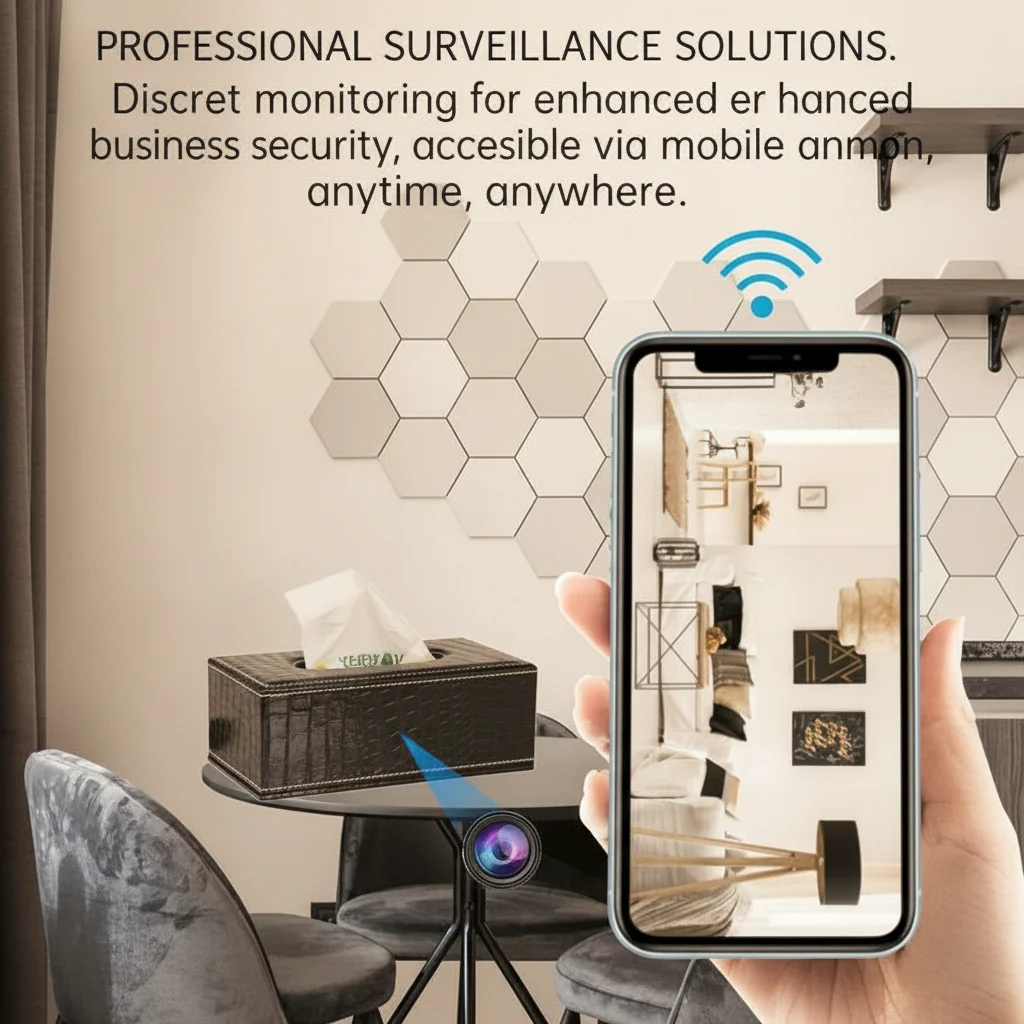
Point clé à retenir : Les caméras cachées excellent pour la capture discrète de preuves et la prévention des tactiques d'évitement des caméras. La vidéosurveillance traditionnelle est meilleure pour la dissuasion ostentatoire. Les meilleures configurations pour petites entreprises utilisent les deux.
| Fonctionnalité | CCTV traditionnel | Caméras cachées |
|---|---|---|
| Valeur dissuasive | Haut (visible) | Faible (discret) |
| Qualité des preuves | Excellent (grands capteurs) | Bon (capteurs plus petits) |
| Sensibilisation aux angles morts | Les voleurs les cherchent. | Les voleurs ne savent pas qu'ils existent. |
| Risque de stockage | DVR peut être volé | Options cloud/hors site |
| Coût d'installation | Plus haut (câblage) | Inférieur (options sans fil) |
| Acceptation de l'employé | Neutre à négatif | Peut soulever des préoccupations en matière de confidentialité. |
Où sont les meilleurs endroits pour installer des caméras cachées dans un magasin de détail ?
L'emplacement est primordial. Une caméra cachée au mauvais endroit est pire que pas de caméra du tout - elle vous donne un faux sentiment de sécurité tout en exposant vos véritables vulnérabilités. L'objectif est de couvrir les zones où les vols se produisent, où les réclamations de responsabilité naissent et où se situent les goulots d'étranglement opérationnels.
Le comptoir de caisse est la priorité numéro un. Les recherches montrent systématiquement que la grande majorité des vols dans le commerce de détail sont internes—le personnel volant dans la caisse ou manipulant les transactions. Un Chargeur USB caméra espion WiFi branché sur une multiprise derrière le comptoir vous offre une vue directe sur chaque transaction sans que personne ne s'en aperçoive. Placez-le de sorte que l'objectif ait une vue dégagée sur la caisse, le tiroir-caisse et les mains de l'employé.
Zones de marchandises de grande valeur sont numéro deux. Si vous vendez des appareils électroniques, des cosmétiques ou de petits articles à forte marge, ces étagères doivent être couvertes. Le défi est de faire en sorte que la caméra ressemble à quelque chose qui appartient à cet endroit. Un Caméra espion WiFi 1080P en batterie externe Posé sur une étagère parmi des produits réels, il est presque impossible à repérer—surtout si la batterie externe est réelle et fonctionnelle.
L'entrée et la sortie importe pour différentes raisons. Vous voulez capturer les visages qui entrent (pour l’identification des voleurs à l’étalage) et ce qui quitte le magasin (pour contester les fausses accusations de vol). Mais vous devez également être prudent concernant la conformité au RGPD ici — un signalement clair est essentiel, et la caméra ne doit pas capturer les zones au-delà de vos locaux.
Réserves et salles de stockage sont des lieux où le vol interne passe souvent inaperçu. Les employés savent que le hall principal est surveillé mais supposent que l'arrière-boutique est privée. A Haut-parleur Bluetooth Caméra Espion WiFi Posé sur une étagère dans la réserve, il se fond parfaitement dans l'environnement tout en capturant qui accède à l'inventaire et quand.
Mais voici ce que la plupart des guides ne vous diront pas : il faut aussi penser à espacement de la caméra par rapport à l'éclairage. Une caméra cachée placée dans l'ombre ou en contre-jour devant une fenêtre produira des images inutilisables, quelle que soit sa résolution. Testez vos emplacements à différents moments de la journée avant de vous engager.

Point clé à retenir : Prioritisez la zone de caisse, les espaces de marchandises de grande valeur et les réserves. Testez l'éclairage à différents moments de la journée avant de finaliser l'emplacement.
Comment les caméras cachées peuvent-elles aider à prévenir le vol des employés sans créer un environnement de travail hostile ?
Le vol des employés est le secret de Polichinelle du commerce de détail. Les enquêtes sectorielles situent systématiquement la perte entre 5 et 10 % du chiffre d'affaires qui passe par la porte de derrière — non pas par les clients, mais par le personnel. Mais y faire face directement peut détruire le moral et la confiance. Les caméras cachées vous permettent de vérifier vos soupçons avant d'agir, plutôt que d'accuser quelqu'un sur la base d'une intuition.
La clé est de cadrer la caméra comme un outil de protection d'entreprise, pas un “attrape-nigaud”. Si vous découvrez un vol, vous le gérez par les canaux RH appropriés avec des preuves documentées. Si ce n’est pas le cas, vous avez confirmé que votre équipe est honnête et pouvez avancer en toute confiance. Dans les deux cas, la caméra a rempli son rôle.
Mais il y a une frontière ténue entre une surveillance raisonnable et la création d’un État de surveillance qui fait que les gens se sentent comme des criminels. Les lignes directrices de l’ICO sont claires : la surveillance doit être proportionnée au risque. Si vous gérez une bijouterie avec un inventaire de 50 000 £, une surveillance complète est proportionnée. Si vous gérez une petite librairie avec un stock de 2 000 £, une seule caméra à la caisse pourrait être tout ce qui est justifié.
La communication compte ici. Vous n'avez pas à annoncer chaque emplacement de caméra (cela irait à l'encontre du but des caméras cachées), mais vous devez informer les employés qu'un système de vidéosurveillance est en fonctionnement et quel est son objectif. Au Royaume-Uni, il s'agit d'une obligation légale en vertu du DPA 2018. Un panneau discret à l'entrée et une note dans le manuel de l'employé vous couvrent.
Une nuance supplémentaire : dans certains pays de l'UE, la surveillance clandestine des employés à leur insu n'est autorisée que si vous avez un soupçon raisonnable d'activité criminelle. Les Pays-Bas et l'Allemagne sont particulièrement stricts à ce sujet. Si vous opérez sur ces marchés — ou vendez du matériel à des clients qui le font — cette distinction est cruciale.
Pour les propriétaires d'entreprise qui veulent surveiller sans tension, un Z10 Caméra d'horloge espion WiFi Sur un bureau ou une étagère, c'est idéal. Il ressemble à une horloge ordinaire, il indique l'heure, et il capture tout ce qui se trouve dans la pièce. Les employés savent que l'entreprise est surveillée (parce que vous leur avez dit que la vidéosurveillance est en service) mais ils ne peuvent pas dire quels objets sont des caméras.
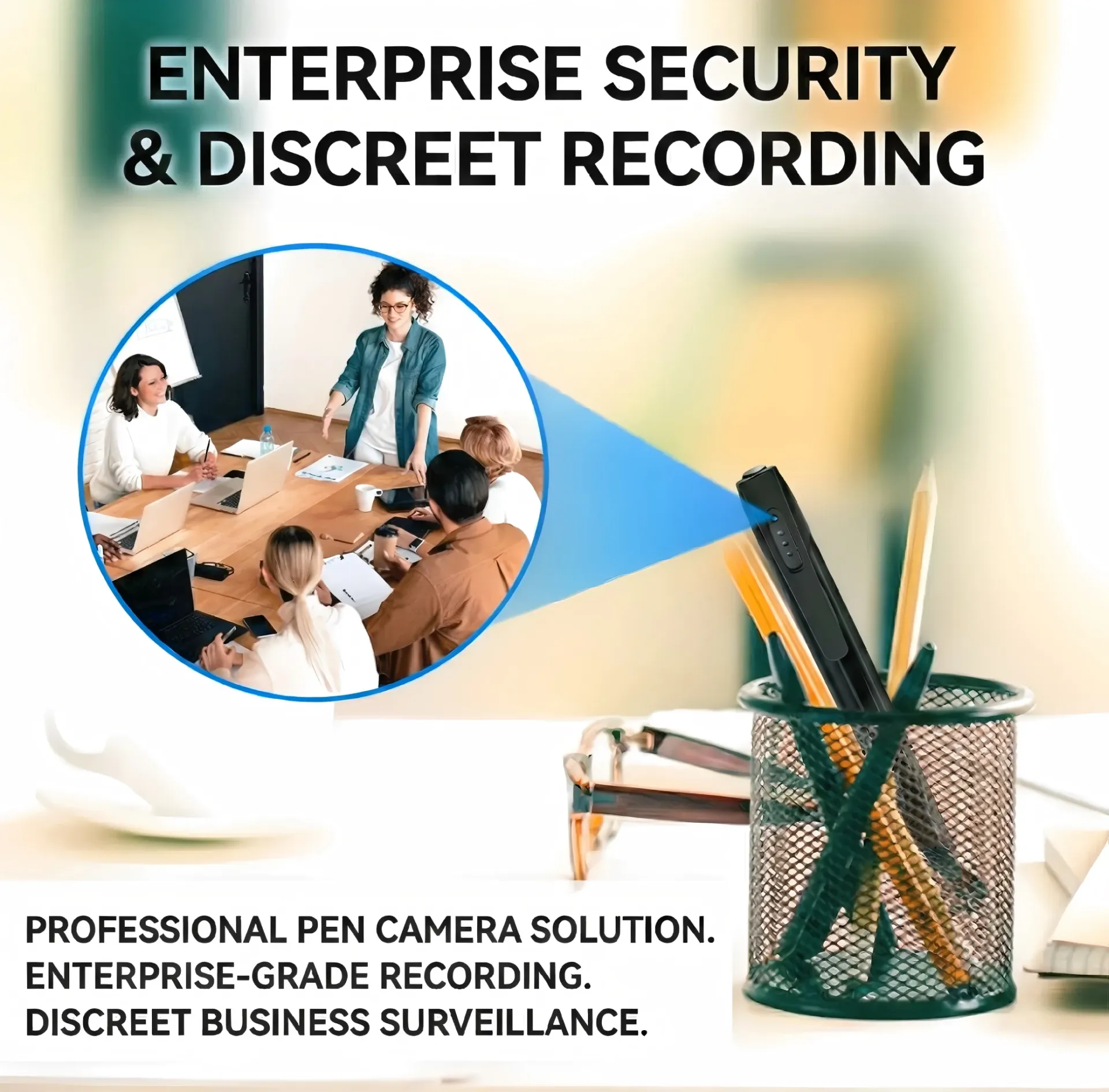
Point clé à retenir : Les caméras cachées vous permettent de vérifier les soupçons avant d'agir, mais les limites juridiques et culturelles varient considérablement dans l'UE. Une surveillance proportionnée avec une divulgation appropriée est l'approche la plus sûre.
| Approche | Impact de la confiance | Risque juridique | Force de la preuve |
|---|---|---|---|
| Vidéosurveillance annoncée uniquement | Neutre | Faible | Faible (le vol se déplace vers les angles morts) |
| Caméras cachées + divulgation | Modéré (si bien communiqué) | Faible-Modéré | Fort |
| Surveillance discrète sans divulgation | Élevé (si découvert) | Élevé (risque de violation du RGPD) | Le plus fort |
| Contrôles aléatoires | Faible | Faible | Modéré |
Quelles sont les caractéristiques les plus importantes lors du choix d'une caméra cachée pour un usage professionnel ?
Les caméras cachées de qualité grand public conviennent pour surveiller une caméra nounou à domicile. Pour un usage professionnel, vous avez besoin d'une fiabilité de qualité professionnelle. La différence se manifeste dans trois domaines : disponibilité, qualité d'image sous contrainte, et intégration avec votre flux de travail.
Capacité d'enregistrement continu n'est pas négociable. De nombreuses caméras grand public n'enregistrent que lorsqu'elles détectent un mouvement, ce qui signifie qu'elles ratent les instants juste avant et après un événement. Pour les preuves professionnelles, vous voulez un appareil capable d'enregistrer 24h/24 et 7j/7 ou au minimum doté d'une mémoire tampon de pré-enregistrement qui capture 10 à 15 secondes avant le déclencheur de mouvement. détecteur de fumée WiFi avec caméra cachée supporte l'enregistrement continu sur une carte microSD ou la synchronisation cloud, pour ne jamais manquer une image.
Qualité de vision nocturne compte plus que vous ne le pensez. La plupart des vols et cambriolages dans les commerces ont lieu après les heures d'ouverture ou dans des conditions de faible luminosité. La vision nocturne infrarouge (IR) est standard, mais tous les IR ne se valent pas. Recherchez des caméras avec LED infrarouges sans lueur—les LED standard émettent un fin point de lumière rouge qui peut révéler la position de la caméra dans une pièce sombre. Les LED sans lueur sont invisibles à l'œil humain.
Enregistrement audio est un champ de mines juridique. Au Royaume-Uni, enregistrer l’audio sans consentement dans des zones où les personnes ont une attente raisonnable de vie privée (comme une salle de repos) est presque certainement illégal. Mais dans les zones destinées aux clients, les règles sont plus floues. Certains propriétaires d’entreprise enregistrent l’audio à la caisse pour résoudre les litiges de transaction. Si vous choisissez cette voie, votre signalisation doit indiquer l’enregistrement audio, pas seulement vidéo.
Stabilité WiFi est là où de nombreux déploiements d'entreprise échouent. Une caméra cachée n'est utile que si elle maintient une connexion à votre réseau. Dans une petite boutique, un routeur grand public peut suffire. Dans un espace plus vaste avec des murs épais ou un entrepôt métallique, vous aurez besoin de points d'accès ou d'un système maillé pour garantir une connectivité fiable. Testez la puissance du signal WiFi à chaque emplacement de caméra avant l'installation.
Source d'alimentation est la pièce finale. Les caméras alimentées par batterie sont pratiques mais nécessitent un entretien—et une caméra avec une batterie morte n'est qu'un presse-papier coûteux. Pour les emplacements critiques pour l'entreprise, privilégiez les caméras qui se branchent sur le secteur, comme le Caméra espion WiFi 1080P en batterie externe (qui peut fonctionner sur secteur tout en chargeant) ou le Chargeur USB caméra espion WiFi, qui tire son énergie directement du mur.
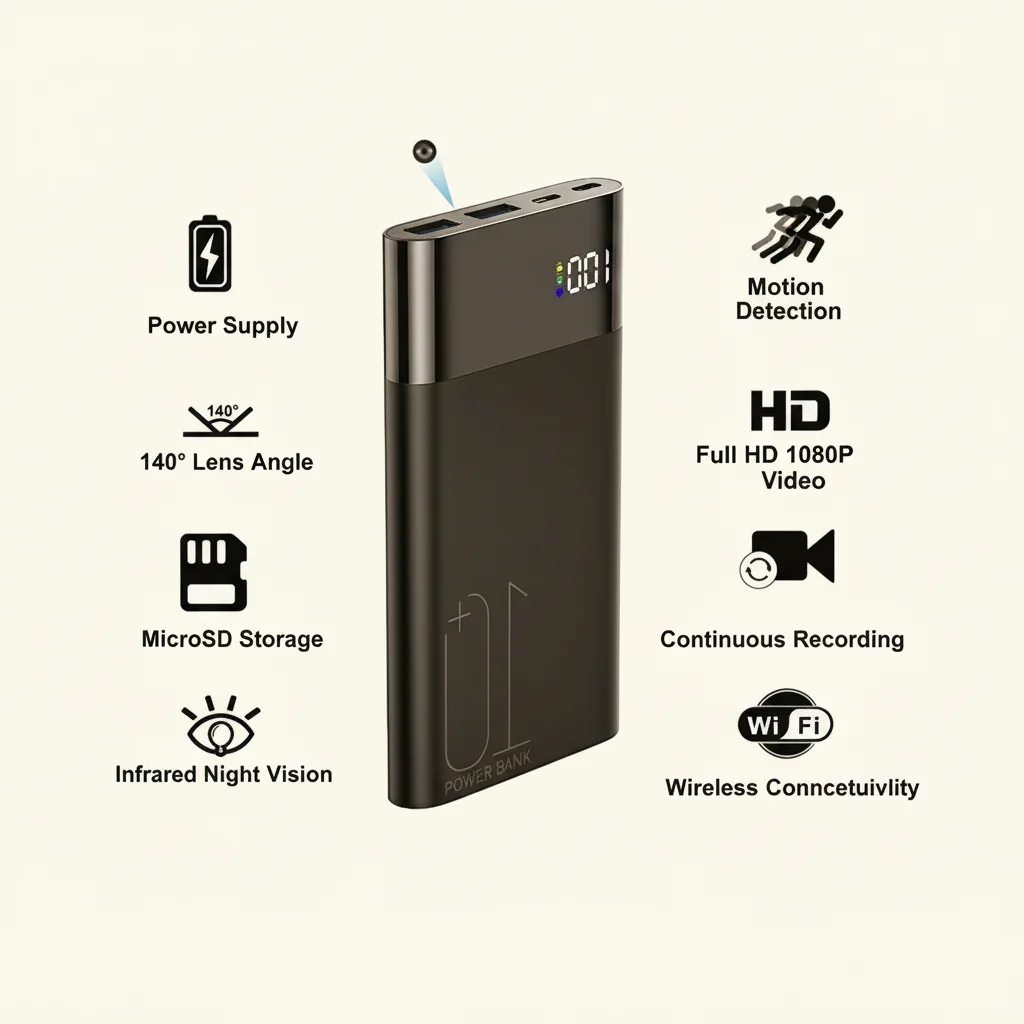
Point clé à retenir : Prioritisez l'enregistrement continu, la vision nocturne sans lueur, la stabilité WiFi et l'alimentation secteur pour les installations professionnelles. L'enregistrement audio nécessite une attention juridique particulière.
Comment configurer la visualisation à distance pour pouvoir vérifier votre entreprise depuis n'importe où ?
L’intérêt d’une caméra cachée WiFi est de pouvoir la consulter depuis votre téléphone pendant que vous dînez, êtes en vacances ou gérez un second établissement. Mais la « visualisation à distance » englobe différentes capacités, et toutes les caméras ne les gèrent pas aussi bien.
La plupart des caméras cachées modernes utilisent une application mobile pour l'accès à distance. Pour les produits QZT, le Tuya Smart or Smart Life les applications sont la norme—elles vous permettent de visualiser les images en direct, de recevoir des alertes de mouvement et de consulter les clips enregistrés depuis n'importe où avec une connexion Internet. Le processus d'installation est simple : vous connectez la caméra à votre WiFi professionnel lors de l'installation, téléchargez l'application, scannez un code QR sur la caméra, et vous êtes en direct.
Mais voilà où beaucoup de propriétaires de petites entreprises se retrouvent bloqués : redirection de ports et configuration de pare-feu. Si vous souhaitez accéder à la caméra depuis l'extérieur de votre réseau professionnel, la caméra doit être accessible via le pare-feu de votre routeur. Certaines caméras gèrent cela automatiquement via un relais cloud (Tuya le fait), mais d'autres nécessitent une redirection de port manuelle. Si vous n'êtes pas à l'aise avec la configuration réseau, choisissez une caméra avec relais cloud intégré – c'est une chose de moins à dépanner à 2h du matin.
Gestion de plusieurs caméras est une autre considération. Si vous gérez une entreprise avec trois ou quatre caméras cachées, vous voulez qu'elles soient toutes accessibles depuis une seule interface d'application. Tuya Smart gère cela élégamment : vous ajoutez chaque caméra au même compte, et elles apparaissent toutes dans une vue en grille. Vous pouvez même configurer des scénarios automatisés, comme « si un mouvement est détecté à la porte arrière après 20 h, envoyer une notification push sur le téléphone du propriétaire ».
Pour les propriétaires d'entreprise qui souhaitent une solution plus robuste, certaines caméras prennent en charge Streaming RTSP—cela signifie que vous pouvez intégrer le flux vidéo dans des logiciels de surveillance professionnels comme Blue Iris ou SecuritySpy. Cela vous donne plus de contrôle sur les plannings d'enregistrement, les politiques de sauvegarde et la visualisation multi-caméras. La configuration est plus technique, mais pour une entreprise disposant de 5+ caméras, l'effort en vaut la peine.
Un avertissement : n'utilisez pas de caméras qui nécessitent un abonnement pour la visualisation à distance.. Certaines marques grand public facturent des frais mensuels pour accéder à distance à vos propres images. Pour une entreprise avec plusieurs caméras, ces frais s'accumulent rapidement. Choisissez des caméras qui offrent la visualisation à distance comme fonction intégrée sans frais récurrents.
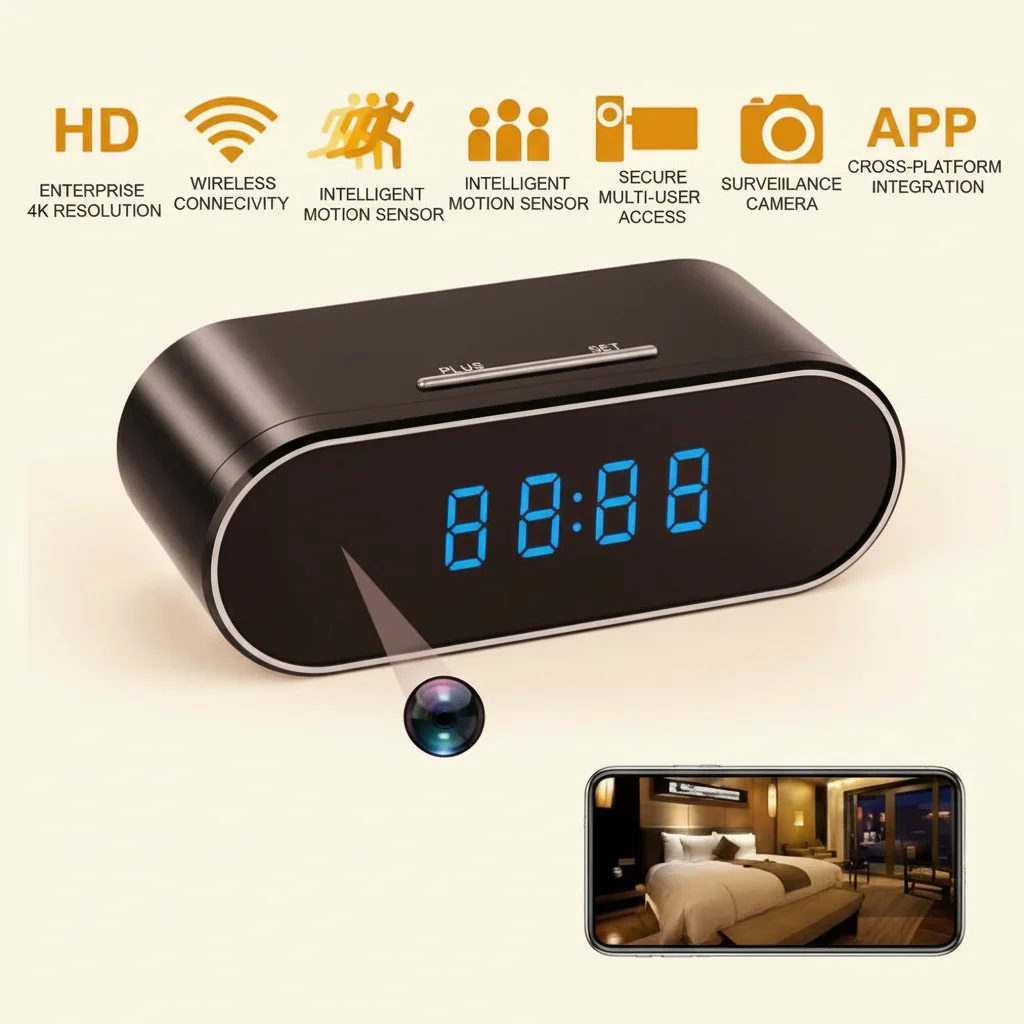
Point clé à retenir : Utilisez des caméras avec relais cloud (pas besoin de redirection de port) et gérez tous les appareils depuis une seule application. Évitez les modèles nécessitant un abonnement pour un usage professionnel.
| Méthode de vision à distance | Difficulté de configuration | Coût mensuel | Idéal pour |
|---|---|---|---|
| Tuya Smart app (relais cloud) | Faible | £0 | 1–4 caméras |
| Logiciel RTSP + NVR | Haut | £0 (coût du logiciel uniquement) | 5+ caméras |
| Abonnement cloud du fabricant | Faible | £5–15/mois par caméra | Entreprises souhaitant une sauvegarde hors site |
| Redirection de port + DNS dynamique | Moyen-Élevé | £0 | propriétaires à l'aise avec la technologie |
Quelles sont les options de stockage et combien de temps pouvez-vous conserver les séquences ?
Le stockage est l'endroit où beaucoup de déploiements de caméras cachées échouent. Vous achetez la caméra, vous l'installez, et trois jours plus tard, elle arrête d'enregistrer parce que la carte SD est pleine. Ou pire, vous avez besoin d'images datant de deux semaines pour poursuivre un voleur à l'étalage, et la caméra les a déjà écrasées.
Il existe trois principales approches de stockage, et chacune a des compromis. stockage microSD local est le plus simple : la caméra enregistre les images sur une carte mémoire insérée dans l’appareil. C’est gratuit, cela ne nécessite pas de connexion Internet, et la consultation est rapide. Mais c’est aussi vulnérable — si quelqu’un vole la caméra, il vole les preuves. Et les cartes microSD ont une durée de vie limitée en cycles d’écriture ; les cartes bon marché tombent en panne en quelques mois en cas d’enregistrement continu.
Stockage cloud résout le problème du vol : vos images sont stockées en toute sécurité hors site même si la caméra est volée ou détruite. Tuya Smart et des plateformes similaires proposent des plans cloud, mais comme mentionné, les abonnements s'accumulent. Une approche hybride fonctionne bien : enregistrer en continu sur la carte SD locale (peu coûteuse, accès rapide) et envoyer les clips déclenchés par mouvement vers le cloud (préservation des preuves).
NVR (Enregistreur Vidéo Réseau) stockage est l’approche professionnelle. Vous dirigez tous vos flux de caméras vers un enregistreur central sur votre réseau d’entreprise. C’est plus cher à l’achat, mais cela vous donne le plus de contrôle sur les politiques de rétention. Pour une petite entreprise, un NVR de 1 To peut stocker plus de 30 jours de séquences provenant de 4 caméras en 1080p. Ensuite, il se renouvelle automatiquement – vous disposez toujours des 30 jours les plus récents.
How long should you keep footage? That depends on your business and local regulations. In the UK, the ICO recommends keeping CCTV footage no longer than necessary. For most retail businesses, 30 days is a reasonable retention period. If you capture an incident, you should extract and preserve that footage separately—once it rolls off the end of the retention period, it’s gone.
One more tip: use high-endurance microSD cards. Standard SD cards are designed for cameras that take a few photos a day, not security cameras that write continuously. Look for “high endurance” or “video monitoring” rated cards from reputable brands. They cost more upfront but they don’t fail at the worst possible moment.
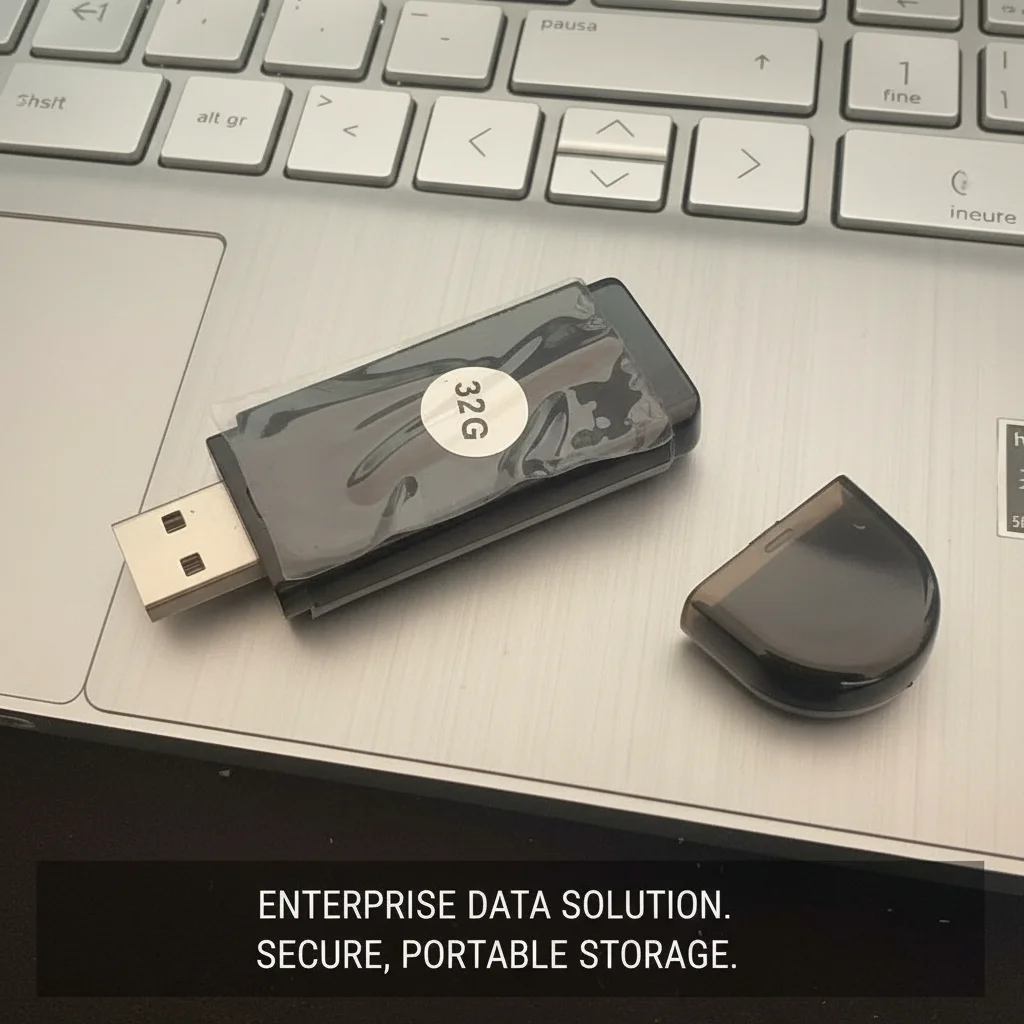
Point clé à retenir : Use high-endurance microSD cards for local storage and consider cloud backup for critical clips. Set a 30-day retention policy as a default, adjusting based on your business needs and ICO guidance.
Combien coûtent les systèmes de caméras cachées pour une petite entreprise ?
One of the biggest myths in security is that you need to spend thousands to protect your business. That might have been true ten years ago, but the economics of hidden cameras have completely changed. You can deploy a professional-grade system for less than the cost of a single shoplifting incident.
Let’s break down the numbers. A single détecteur de fumée WiFi avec caméra cachée costs roughly £80–120. For a small retail shop, three cameras (checkout, high-value area, entrance) would be £240–360. Add a 128GB high-endurance microSD card (£20) and you’re at under £400 for a complete system. Compare that to a traditional CCTV install with cabling and a DVR: you’re easily looking at £1,500–3,000 for a professional install.
But the cost discussion needs to include Valeur, not just price. A visible CCTV system might deter some thieves but it also tells them exactly where your blind spots are. A hidden camera system gives you evidence even if the thief knows you have security—because they don’t know where the cameras are. That evidence is what lets you make an insurance claim, prosecute a case, or terminate an employee for cause.
There’s also the insurance angle. Many UK business insurance policies offer a discount of 5–15% for monitored security systems. If your annual premium is £2,000, a 10% discount saves you £200 a year—enough to cover half the cost of a three-camera system in the first year alone. Over three years, the system effectively pays for itself.
For business owners who want to go further, professional monitoring is an option. Instead of relying on push notifications to your phone, you pay a service to monitor your cameras and call the police if they see something suspicious. This typically costs £20–40 per month per camera. For high-risk businesses (jewelry stores, convenience stores in high-crime areas), it can be worth it. For most small shops, self-monitoring via app notifications is sufficient.
If you’re buying for a business, you should also be thinking about tax deductions. In the UK, security equipment is a capital expense that can be written off against business profits. The Annual Investment Allowance lets you deduct the full cost of equipment up to £1,000,000 in the year of purchase. That means the real cost of your camera system is significantly lower once you factor in the tax savings.

Point clé à retenir : A three-camera hidden camera system can be deployed for under £400. Factor in insurance discounts and tax deductions, and the real cost is even lower.
| Expense Category | Low-End (1–2 cameras) | Mid-Range (3–4 cameras) | High-End (5+ cameras + NVR) |
|---|---|---|---|
| Camera Hardware | £160–240 | £360–480 | £600+ |
| Storage (SD cards) | £20 | £40 | £60 + NVR (£200–500) |
| Professional Install | £0 (DIY) | £100–200 | £300–500 |
| Cloud Subscription | £0 | £5–10/month | £15–30/month |
| Total First Year | £180–260 | £465–730 | £1,160–2,090 |
Les caméras cachées peuvent-elles être utilisées comme preuve devant un tribunal si quelque chose tourne mal ?
This is the question that keeps business owners up at night: you’ve captured footage of a theft, vandalism, or fraudulent injury claim—but will it hold up in court? The answer is yes, with some important caveats that determine whether your footage is admitted as evidence or tossed out.
UK courts accept CCTV and hidden camera footage as evidence under the same general principles as any other documentary evidence. But there’s a chain of custody requirement. You need to be able to prove that the footage hasn’t been edited or tampered with between the time it was recorded and the time it’s presented in court. Cloud storage with a clear audit trail is your best friend here—it creates a tamper-evident record of when footage was accessed and by whom.
Image quality is another factor. Footage that’s too pixelated to identify a face or too dark to see what’s happening is of limited use to a prosecutor. This is why 1080p resolution is the minimum you should consider for business use—and why night vision quality matters so much. A Caméra espion WiFi 1080P en batterie externe with good low-light performance will produce evidence that’s actually usable in court.
Enregistrement audio adds another layer of complexity. In the UK, it’s not illegal to record audio in your own business—but using that audio as evidence requires that the recording was made lawfully. If you’ve followed GDPR requirements (signage, legitimate purpose, proportionality), you’re on solid ground. If you’ve secretly recorded audio in a staff break room, that evidence may be excluded and you could face a GDPR complaint.
One of the strongest pieces of evidence you can have is timestamped, dated footage that shows a clear sequence of events. Courts look for consistency: does the footage match witness statements? Does the timeline make sense? Hidden cameras are particularly valuable here because they capture spontaneous behavior—people who don’t know they’re being recorded act naturally, which makes the footage more credible than a staged reenactment.
For our full guide on using hidden camera footage as legal evidence, see our detailed article: Comment Utiliser les Images de Caméra Cachée comme Preuve Juridique dans les Tribunaux UK et UE.
Point clé à retenir : Footage is admissible if the chain of custody is clear, image quality is sufficient, and the recording was made lawfully. Cloud storage with audit trails strengthens admissibility.
Comment entretenir et dépanner les caméras cachées pour qu'elles continuent de fonctionner ?
A hidden camera is a “set it and forget it” device—until it isn’t. The most common failure modes are predictable, and a little preventative maintenance goes a long way toward keeping your system reliable.
WiFi disconnections are the #1 issue. Your camera might work perfectly for three weeks and then suddenly go offline because your router reprovisioned IP addresses or a firmware update changed a setting. The fix is simple: log into your router and assign a static IP address to each camera. That way, even if the router restarts, the camera always gets the same address and reconnects automatically.
Lens obstructions are the #2 issue—and they’re sneakier. A well-placed hidden camera can be partially blocked by a new display, a stack of inventory, or even a cobweb. Make it a habit to check your camera feeds once a week. If a view looks different than it did last week, investigate. Some cameras send a “camera occlusion detected” alert if the lens is covered, but not all do.
Power issues are the #3 culprit. Cameras that plug into mains power rarely fail—but the power adapter can fail, or someone can accidentally unplug the device. If you’re using a Chargeur USB caméra espion WiFi, make sure nothing else on that power strip is drawing heavy current, which can cause voltage drops that reset the camera.
mises à jour du firmware are a double-edged sword. On one hand, updates patch security vulnerabilities and fix bugs. On the other hand, a bad firmware update can brick a camera or change settings in unexpected ways. My recommendation: if your system is working reliably, don’t rush to update. When you do update, do it one camera at a time—not all at once—so you can roll back if something goes wrong.
SD card corruption is the final common failure. As mentioned earlier, use high-endurance cards. But even the best cards eventually wear out. Check your available storage once a month, and replace cards every 12–18 months in continuous-recording setups. If you notice footage with glitches or missing time segments, replace the card immediately.
Point clé à retenir : Assign static IP addresses, check feeds weekly for obstructions, use high-endurance SD cards, and replace storage media every 12–18 months.
| Problème | Cause probable | Correction |
|---|---|---|
| Caméra hors ligne | IP address changed / WiFi dropped | Assign static IP; check router |
| Grainy night footage | IR LEDs obstructed / camera repositioned | Clean lens; check for new obstructions |
| Footage has gaps | SD card corruption | Replace with high-endurance card |
| App can’t connect remotely | Cloud relay disrupted / firewall change | Restart router; check Tuya service status |
| Camera restarts randomly | Power supply issue | Use a different power adapter; check for voltage drop |
Quels produits QZT Security recommande-t-il pour les déploiements des petites entreprises ?
Not all hidden cameras are created equal, and for business use, you want devices that are reliable, discreet, and legally defensible. At QZT Security, we’ve tested dozens of models in real-world small business environments. Here are the ones that consistently deliver.
Le détecteur de fumée WiFi avec caméra cachée is our top pick for most retail environments. It mounts on the ceiling, giving you a wide-angle view of the entire room. Nobody looks twice at a smoke detector—and even if they do, it’s a functioning smoke detector (with a real alarm) as well as a camera. The 1080p resolution captures faces clearly up to about 5 meters, and the IR night vision is genuinely invisible.
For desk-level coverage—like monitoring a checkout counter or a reception area—the Z10 Caméra d'horloge espion WiFi is the standout choice. It sits naturally on a desk, a shelf, or a bedside table in a B&B setting. The clock function is real (it syncs via WiFi), so there’s a legitimate reason for it to be there. And the camera angle is optimized for capturing anyone standing or sitting within 3 meters of the device.
If you need coverage in an area without convenient power outlets, the Caméra espion WiFi 1080P en batterie externe is the solution. It looks like a standard portable charger—because it is one. You can leave it on a shelf, plugged into a USB power source, and it will run indefinitely. The 10,000mAh versions can also operate on battery power for 8–12 hours, making them ideal for temporary deployments.
For business owners who want the most discreet option possible, the module caméra espion wifi caché à faire soi-même offers ultimate flexibility. It’s a bare camera module that you can integrate into existing objects—a speaker housing, a decorative item, even a hollowed-out book. If you’re handy with basic DIY, this gives you camouflage options that no off-the-shelf product can match.
And for business buyers who need to purchase in quantity—either for multiple locations or for resale—we offer wholesale pricing and OEM customization. Our Spy Camera Wholesale Purchase page has details on minimum order quantities, branding options, and EU warehousing for fast delivery.

Point clé à retenir : For most small businesses, start with a smoke detector camera for ceiling coverage and a clock camera for desk-level monitoring. Expand with power bank cameras for flexible placement.
FAQ
Can I install hidden cameras in my business without telling my employees?
In the UK, you must inform employees that CCTV is in operation. You don’t have to disclose the exact locations of hidden cameras, but you do need to display signage and include monitoring in your employee privacy notice. In some EU countries (Germany, Netherlands), covert monitoring without suspicion of criminal activity may violate workplace surveillance laws.
Will hidden camera footage hold up in court if I need to prosecute a thief?
Yes, provided the footage was obtained lawfully, the chain of custody is documented, and the image quality is sufficient to identify individuals and events. Cloud storage with access logs strengthens your case significantly. See our full guide on legal evidence use.
How many hidden cameras do I need for a small retail shop of about 500 square feet?
Typically three: one at the checkout counter, one covering the entrance/exit, and one covering your highest-value merchandise area. If you have a stock room, add a fourth. The goal is to have no blind spots where high-value items or cash handling occurs.
Do I need to register with the ICO if I use hidden cameras in my business?
If you’re a business that processes personal data (which includes video footage of identifiable individuals), you likely need to register with the ICO and pay the data protection fee. Check the ICO’s fee checker tool to determine your obligation—most businesses that use CCTV do need to register.
Can customers request to see footage of themselves from my hidden cameras?
Yes. Under the GDPR (and UK GDPR), individuals have a right to request access to personal data you hold about them—including CCTV footage. You must provide the footage within one month of the request, though you can redact other people’s faces before sharing. This is another reason to have a clear CCTV policy and retention schedule.
Protecting your small business isn’t just about installing cameras—it’s about creating a layered security approach that deters, detects, and documents. At Sécurité QZT, we’ve helped hundreds of small business owners across the UK and EU deploy discreet, reliable camera systems that fit their budget and comply with local laws.
Contact Us Today to discuss your business’s specific security needs. Whether you’re running a single shop or managing multiple locations, we’ll help you design a hidden camera setup that gives you peace of mind—and the evidence you need if something goes wrong.

 English
  Italiano
  Deutsch
  Français
  Español
  Polski