
Comment détecter les caméras cachées dans votre Airbnb ou votre chambre d'hôtel ?
Trouver une caméra cachée dans votre location n'est pas de la paranoïa — c'est une précaution pratique qui prend dix minutes et vous offre une tranquillité d'esprit pendant toute la durée de votre séjour. Ce guide détaille les méthodes qui fonctionnent réellement, les outils utiles à emporter, et que faire si vous trouvez quelque chose.

Pourquoi vérifier la présence de caméras cachées lors de vos voyages ?
La plupart des hôtes sont des personnes honnêtes qui louent une chambre d'appoint ou une maison de vacances. Mais une petite minorité installe des caméras non déclarées pour observer les invités dans des moments privés — et les changements de politique d'Airbnb n'ont pas entièrement éliminé le problème.
Le risque n'est pas uniformément réparti. Les annonces à bas prix avec peu d'avis, les propriétés dont l'hôte est évasif sur la disposition, et les locations dans des juridictions où l'application est faible sont des scénarios à risque plus élevé. Cela ne signifie pas que vous devez les éviter — cela signifie que vous devez vérifier.
Il y a aussi un principe de confidentialité plus large en jeu. Vous avez une attente raisonnable de confidentialité dans un espace que vous payez, particulièrement dans les chambres et salles de bain. Savoir comment vérifier que cette confidentialité n'a pas été compromise est une compétence de voyage véritablement utile.
Voici le fait : les dix minutes passées à scanner une pièce à votre arrivée sont bien moins gênantes que de découvrir plus tard que vous avez été filmé. Les méthodes ci-dessous sont simples, ne nécessitent pas d'équipement coûteux et peuvent être réalisées avec ce que vous avez déjà dans votre poche.
Pour les voyageurs d'affaires transportant des documents sensibles ou discutant de questions confidentielles par téléphone, les enjeux sont plus élevés. Une chambre compromise n'est pas seulement une violation de la vie privée — c'est une éventuelle faille de sécurité d'entreprise.
Si vous êtes à la recherche d'équipements de sécurité personnelle fiables — y compris des caméras compactes pour une protection personnelle légitime — Sécurité QZT fournit des appareils certifiés aux grossistes et distributeurs à travers l'Europe et le Royaume-Uni.
Que dit réellement la politique des caméras d'Airbnb en 2026 ?
Airbnb a totalement interdit les caméras de sécurité intérieures en mars 2024. Ce fut un véritable changement de politique, et cela a simplifié les règles : aucune caméra dans l'espace de vie, point final. Mais la politique a des limites, et les comprendre vous aide à savoir où chercher.
Caméras extérieures sont toujours autorisés, mais ils doivent être mentionnés dans l'annonce. Les caméras de sonnette, les caméras d'allée et les caméras de porche entrent dans cette catégorie — et elles peuvent capturer par inadvertance de l'audio ou de la vidéo de l'intérieur si elles sont mal positionnées.
Appareils précédemment installés peut encore être présent dans certaines annonces, notamment lorsque les hôtes n'ont pas mis à jour leur installation depuis le changement de politique. Et tous les hôtes ne respectent pas les règles — l'application repose sur les signalements des voyageurs.
Vrbo, Booking.com et d'autres plateformes ont leurs propres politiques. Les règles de Vrbo sont plus strictes à certains égards : aucun dispositif de surveillance à l'intérieur de la propriété, que ce soit en intérieur ou en extérieur. Mais encore une fois, politique et réalité ne correspondent pas toujours.
Le conseil pratique : ne supposez pas que la politique de la plateforme garantit votre vie privée. Ne supposez rien et vérifiez l'espace vous-même.

Point clé à retenir : Airbnb a interdit les caméras intérieures en 2024, mais vous devriez quand même vérifier — les politiques reposent sur l'application, et tous les hôtes ne respectent pas les règles.
| Plateforme | Caméras intérieures | Caméras extérieures | Divulgation obligatoire ? |
|---|---|---|---|
| Airbnb | Interdites totalement (depuis mars 2024) | Autorisé | Oui — dans la description de l'annonce |
| Vrbo | Interdit entièrement | Interdits à l'intérieur du logement | N / A |
| Booking.com | Varie selon les pays | Variable | Oui — dans la description du logement |
| Location indépendante | Aucune politique cohérente | Aucune politique cohérente | Dépend de la juridiction |
Comment utiliser votre smartphone pour détecter les caméras ?
Votre téléphone est l'outil de détection le plus pratique que vous possédez déjà. Deux méthodes sont réellement utiles : l'analyse du réseau Wi-Fi et la technique de détection infrarouge.
Analyse du réseau Wi-Fi fonctionne car la plupart des caméras cachées modernes se connectent au Wi-Fi de la propriété pour permettre une visualisation à distance. Lorsque vous connectez votre téléphone au réseau de la location et exécutez un analyseur réseau, chaque appareil connecté apparaît — y compris les caméras avec des noms non reconnaissables.
L'application Fing (gratuite, disponible sur iOS et Android) est l'outil le plus accessible pour cela. Connectez-vous au Wi-Fi, ouvrez Fing, et lancez une analyse. Cherchez des noms d'appareils comme “ IPCAM ”, “ LXMIMI ”, “ FREDI ”, ou des codes génériques de fabricant. Si vous voyez un appareil que vous ne pouvez pas identifier, cela mérite une investigation.
Détection infrarouge fonctionne pour les caméras avec vision nocturne. La plupart des caméras cachées utilisent des LED infrarouges pour voir dans l'obscurité, et ces LED émettent une lumière invisible à l'œil humain mais visible pour les capteurs des caméras de smartphone.
Pour tester : éteignez toutes les lumières, assombrissez la pièce au maximum et ouvrez la caméra frontale de votre smartphone (la caméra selfie). Balayez lentement la pièce. Si vous voyez de petits points blancs ou violets qui ne correspondent à aucune source lumineuse visible, vous voyez peut-être les LED infrarouges d'une caméra cachée.
Les deux méthodes ont des limites. Une caméra qui ne se connecte pas au Wi-Fi n'apparaîtra pas dans une analyse réseau. Une caméra sans vision nocturne ne sera pas détectée par un contrôle infrarouge. C'est pourquoi l'approche la plus complète combine les méthodes smartphone avec une inspection physique.
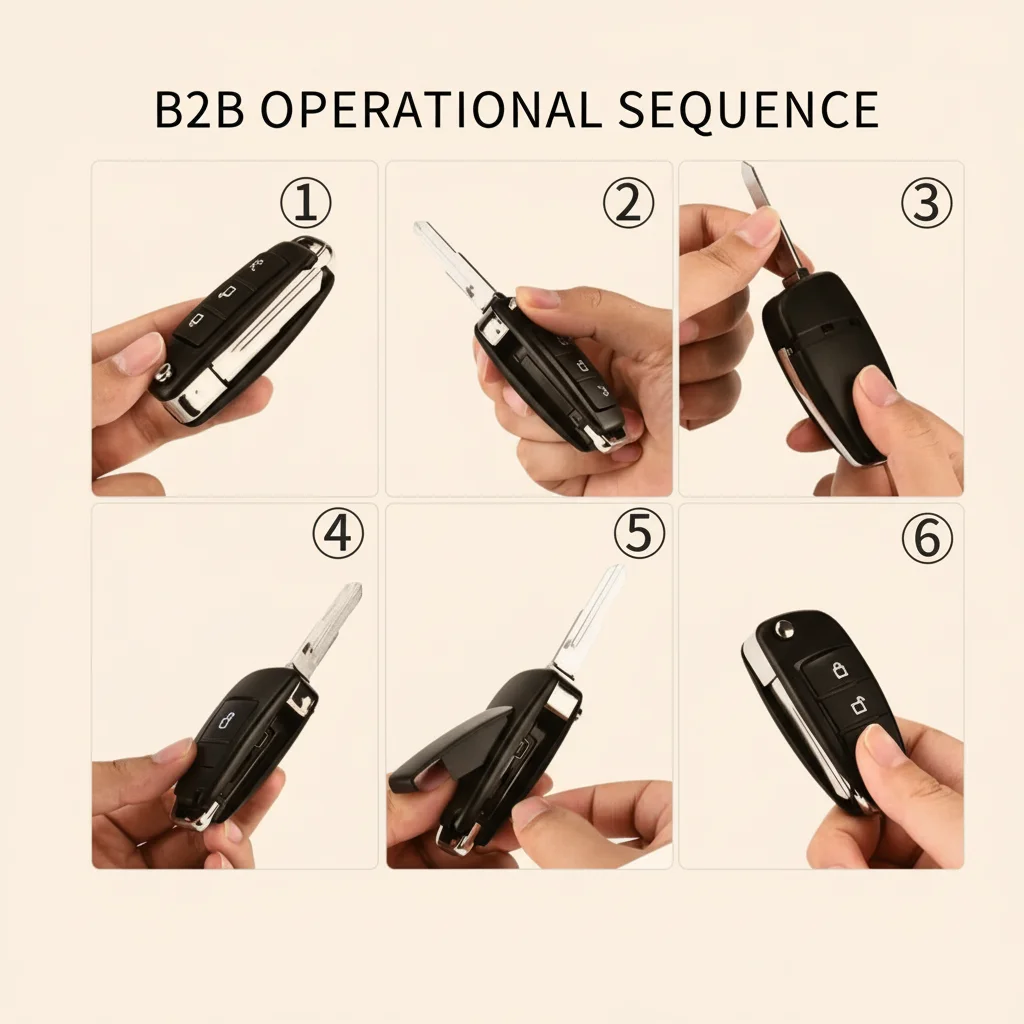
Point clé à retenir : Un smartphone avec l'application Fing et une simple vérification infrarouge détecteront la plupart des caméras connectées en Wi-Fi et des dispositifs de vision nocturne. Aucune méthode n'est parfaite seule — utilisez les deux.
| Méthode | Attrapes | Manques | Temps requis |
|---|---|---|---|
| Analyse du réseau Wi-Fi (Fing) | Caméras IP connectées au Wi-Fi | Caméras non connectées, appareils fonctionnant uniquement sur carte SD | 2–3 minutes |
| Détection des LED infrarouges | Caméras de vision nocturne avec LED infrarouges | Caméras sans vision nocturne, caméras uniquement diurnes | 2–3 minutes par pièce |
| Vérification manuelle des reflets de l'objectif | Caméras avec objectifs en verre | Lentilles en plastique, très petites ouvertures | 3–5 minutes par pièce |
Quels signes physiques suggèrent qu'une caméra cachée pourrait être présente ?
L'inspection physique est peu technologique mais efficace. Le principe est simple : les caméras ont besoin d'un objectif avec une vue, d'une source d'alimentation, et (généralement) d'une position qui a du sens pour la surveillance.
Smoke detectors sont un endroit de cachette courant. Les détecteurs de fumée réels ont une disposition distinctive : un couvercle en maille ou à fentes, un bouton de test, et souvent une petite LED qui clignote périodiquement. Si le détecteur de fumée dans votre chambre a l'air différent — particulièrement s'il a une petite lentille sombre visible à travers le boîtier — c'est un signal d'alarme.
chargeurs USB et adaptateurs secteur sont de plus en plus utilisés comme boîtiers d'appareil photo. Un chargeur avec une petite tache sombre sur la face, ou un qui semble anormalement lourd, mérite un examen plus approfondi. Si le “chargeur” n'est branché à rien mais semble chaud, c'est suspect.
Réveils, enceintes de chevet et purificateurs d'air sont également utilisés. La vérification est simple : l'objet a-t-il une lentille ou une petite ouverture positionnée pour voir le lit ou la zone principale de la pièce ? Si oui, cela mérite d'être examiné.
Décoration murale, cadres photo et objets apparemment ornementaux parfois dissimulent des caméras. L'indice est souvent l'angle : si un objet est positionné exactement à la bonne hauteur et au bon angle pour voir le lit, demandez-vous pourquoi.
Voici ce que la plupart des gens comprennent mal : ils pensent que les caméras cachées sont toujours minuscules et impossibles à trouver. En réalité, de nombreuses caméras cachées sont dissimulées dans des objets du quotidien qui semblent légèrement anormaux si on y prête attention. Un chargeur USB placé sur une étagère orienté vers le lit plutôt que près d’une prise électrique — ce genre de chose.
L'inspection systématique est payante. Passez cinq minutes dans chaque pièce : examinez les lignes de vue depuis le lit et la porte de la salle de bain. Si un appareil a une vue sur l'un ou l'autre, cela mérite un examen plus approfondi.
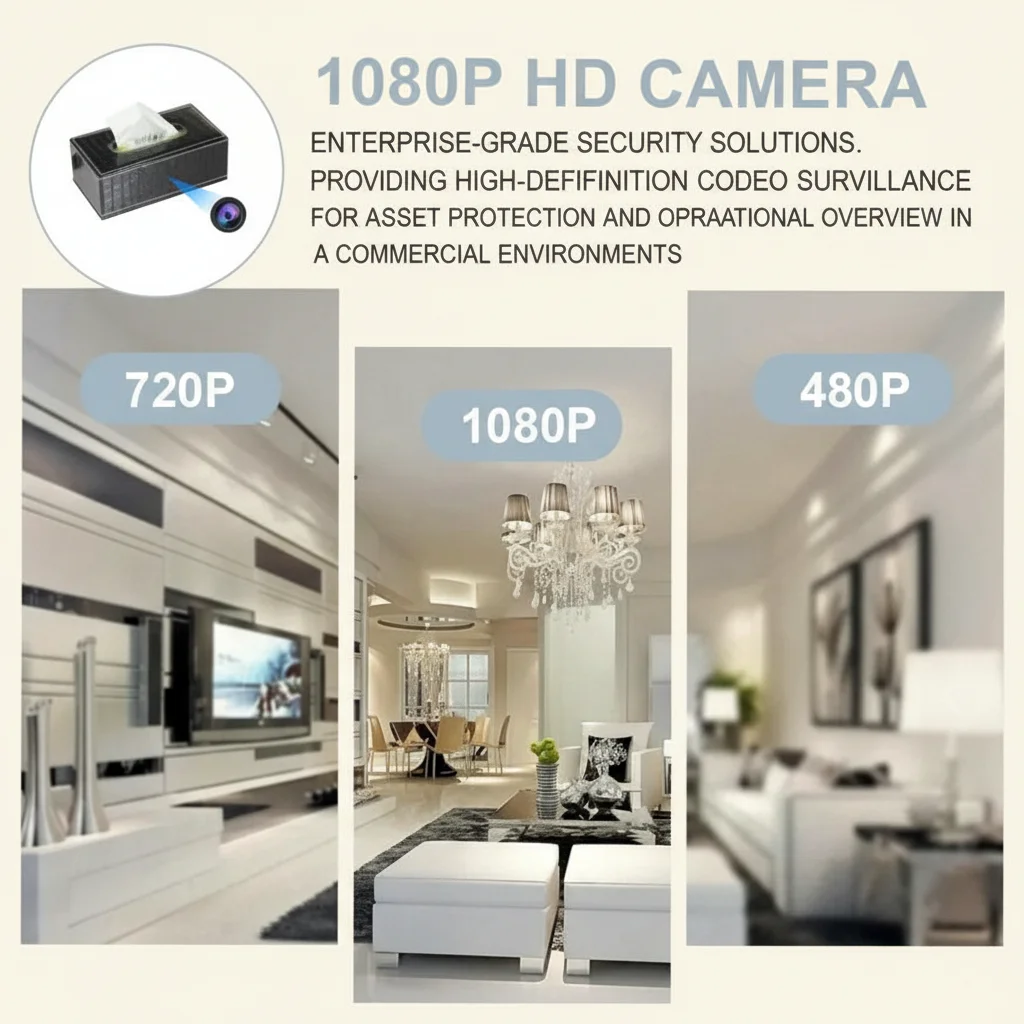
Point clé à retenir : La plupart des caméras cachées sont logées dans des objets du quotidien positionnés pour voir le lit ou la salle de bain. Un scan systématique de cinq minutes des lignes de vue depuis les zones privées en attrape la plupart.
| Cachette commune | À vérifier | drapeau rouge |
|---|---|---|
| Détecteur de fumée | Objectif visible à travers le boîtier ; poids inhabituel. | Point sombre sur le visage ; l'appareil semble anormalement lourd |
| Chargeur USB / adaptateur secteur | Petite lentille sur le visage ; chaleur lorsqu'il est débranché | Positionné pour voir le lit plutôt que près d'une prise |
| Réveil / objet de chevet | Lentille ou ouverture sténopé | Objet positionné à un angle inhabituel par rapport au lit |
| Purificateur d'air / objet décoratif | Angle de vision vers les zones privées | Placement d’objet qui ne correspond pas à l’agencement de la pièce |
| Crochet mural / cadre photo | Petite ouverture à hauteur des yeux | Positionné directement en face du lit ou de la salle de bain. |
Comment fonctionne la méthode de la lampe torche pour trouver les lentilles de caméra ?
La méthode de la lampe torche est à l'ancienne mais fiable. Les objectifs d'appareil photo réfléchissent la lumière d'une manière distinctive à cause de l'élément en verre et du capteur derrière. Lorsque vous dirigez une lumière vive sous le bon angle, l'objectif réfléchit un point lumineux vers vous.
La technique : attendez que la pièce soit complètement sombre. Utilisez une lampe de poche lumineuse (la fonction torche de votre téléphone fonctionne). Balayez lentement la lumière sur les surfaces et les accessoires, en observant attentivement toute réflexion qui ressemble à un petit point lumineux et net. Les reflets des lentilles ont un aspect caractéristique : ils sont nets et brillants, pas diffus comme un autocollant réfléchissant ou une surface brillante.
Que scanner : les boîtiers de détecteurs de fumée, la face des chargeurs USB, les écrans de réveil, les grilles de purificateur d'air, la décoration murale, et tout autre élément à peu près à hauteur de lit ou positionné pour voir la pièce.
La limitation est que tous les appareils photo n'ont pas des lentilles en verre qui réfléchissent fortement. Et certaines surfaces — métal poli, plastiques brillants — peuvent produire des faux positifs. L'astuce est de chercher la cohérence : une réflexion de lentille d'appareil photo reste lumineuse lorsque vous déplacez la lumière ; un faux positif s'estompe ou change souvent de couleur.
Cette méthode fonctionne mieux en combinaison avec les autres. Si la lampe de poche révèle un reflet suspect, utilisez l’appareil photo de votre téléphone pour vérifier les émissions infrarouges, puis décidez si la position et l’apparence de l’objet justifient une action supplémentaire.
Quelles applications et outils offrent la meilleure protection ?
Si vous voyagez fréquemment ou souhaitez une configuration plus complète, quelques outils dédiés méritent d'être connus.
Fing (iOS/Android, version de base gratuite) reste le scanner réseau le plus accessible. Il montre chaque appareil sur le réseau Wi-Fi, signale les fabricants inconnus et met en évidence les appareils avec des ports ouverts. La version premium ajoute une fonctionnalité « Détection de caméras cachées » qui recoupe les empreintes de caméras connues.
Détecteurs RF (radiofréquence) sont des appareils portatifs qui captent les signaux électromagnétiques émis par les caméras sans fil. Ils coûtent entre 30 et 100 £ selon la sensibilité. L'inconvénient : ils produisent des faux positifs avec les téléphones portables, les routeurs Wi-Fi et les appareils Bluetooth. Mais pour une caméra non connectée au réseau qui transmet à un récepteur local, un détecteur RF est le meilleur moyen de la trouver.
Outils de détection d'objectifs utilisent un anneau de LED autour d'un viseur ; lorsque vous regardez à travers le viseur et balayez la pièce, les objectifs des caméras apparaissent comme des points lumineux. Ces outils sont plus fiables que la méthode de la lampe torche et coûtent environ 20–50 £.
Le test du miroir Il est intéressant de mentionner le verre sans tain. Appuyez votre ongle contre le miroir. S'il y a un espace entre votre ongle et son reflet, c'est un miroir normal. S'il n'y a pas d'espace – votre ongle semble toucher son reflet – il peut s'agir d'un verre sans tain avec une caméra derrière. Ce n'est pas un test parfait, mais il ne prend que deux secondes.
Pour la plupart des voyageurs, l'application Fing plus une inspection physique minutieuse est suffisante. Les outils dédiés sont destinés aux personnes qui voyagent fréquemment dans des lieux à risque plus élevé ou qui souhaitent la tranquillité d'un balayage plus approfondi.
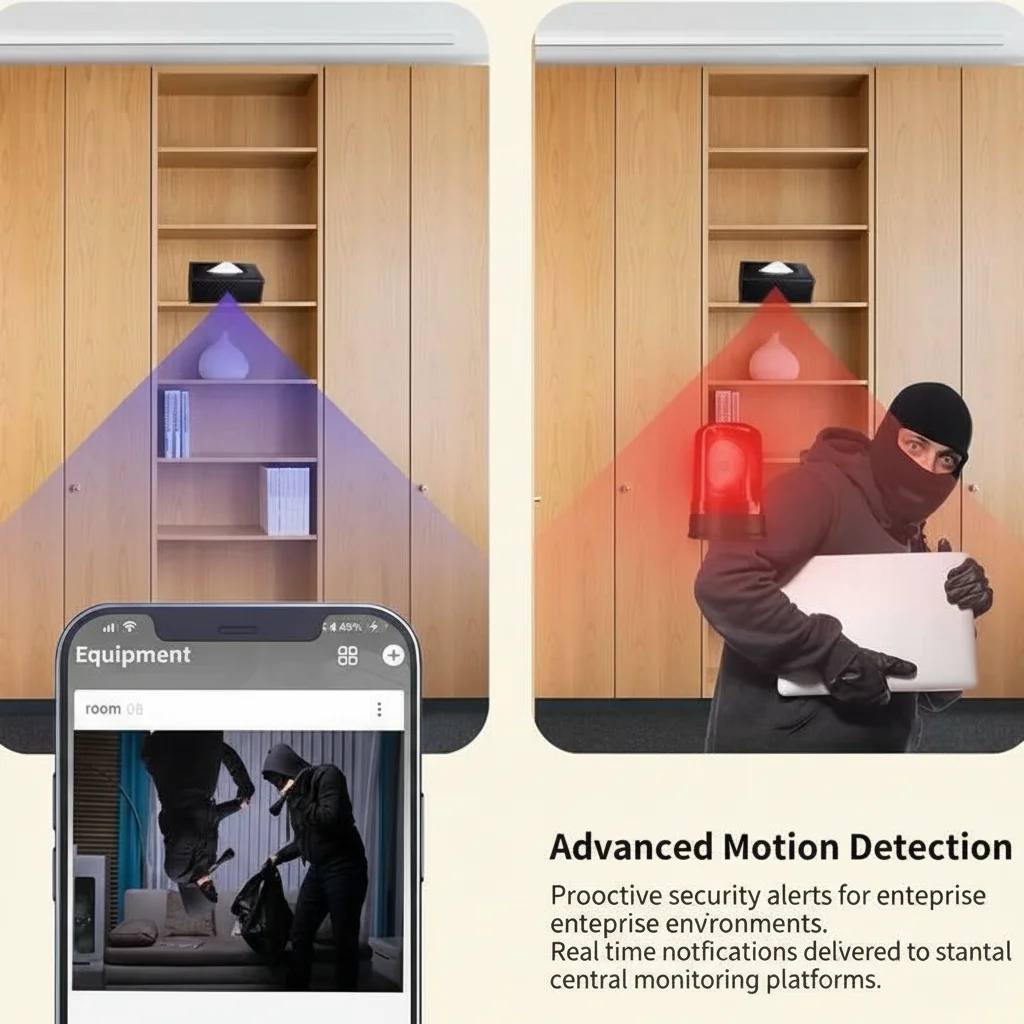
Point clé à retenir : L'application Fing (gratuite) détecte la plupart des caméras Wi-Fi. Pour les appareils non connectés au réseau, un détecteur RF ou un outil de détection d'objectifs (30–100 £) ajoute une couche de protection utile.
| Outil | Attrapes | Coût | Idéal pour |
|---|---|---|---|
| Application Fing (analyse réseau) | Caméras connectées au Wi-Fi | Gratuit / 5 £/mois premium | La plupart des voyageurs – rapide et pratique |
| Détecteur RF | Caméras à transmission sans fil | 30–100 £ | Caméras non connectées ; voyageurs fréquents |
| Détecteur de lentilles (anneau LED) | Objectifs de caméra avec éléments en verre | 20–50 £ | Balayages approfondis ; réduction des faux positifs |
| Lampe torche (manuelle) | Lentilles réfléchissantes | Gratuit | Méthode de secours ; accessible à tous |
| Test de l'ongle dans le miroir | Verre sans tain | Gratuit | Vérifier les miroirs de salle de bain |
Que devriez-vous faire si vous trouvez une caméra cachée?
Découvrir une caméra est inquiétant. Ce que vous faites ensuite compte — tant pour votre sécurité que pour préserver les preuves.
Ne pas y toucher. Déplacer ou couvrir la caméra peut alerter la personne qui l'a installée, et cela peut aussi détruire des preuves. Laissez-la exactement là où elle est.
Tout documenter. Prenez des photographies claires de l'appareil, de sa position et de ce qu'il semble filmer. Notez la date, l'heure et l'emplacement spécifique dans le logement. S'il y a des numéros de série ou des détails du fabricant visibles, photographiez-les également.
Signalez-le immédiatement à la plateforme. Utilisez le système de messagerie d'Airbnb ou Vrbo — pas seulement un appel téléphonique — afin qu'il y ait une trace écrite. Soyez précis : “ J'ai trouvé un appareil qui semble être une caméra positionnée pour voir le lit, située dans [emplacement spécifique]. ” Joignez vos photographies.
Contactez les autorités locales. Dans la plupart des juridictions, enregistrer quelqu'un sans son consentement dans un espace privé est un délit pénal. La police peut saisir l'appareil et enquêter. Même si vous décidez de ne pas poursuivre, un rapport de police crée une trace.
Laissez un avis factuel. Une fois la situation immédiate gérée, un avis factuel et fondé sur des preuves aide les autres voyageurs. Tenez-vous à ce que vous avez trouvé et aux actions que vous avez entreprises. Ne spéculez pas sur les motivations de l'hôte — cela pourrait vous exposer à des poursuites pour diffamation.
Voici le problème : vous pouvez vous sentir mal à l'aise de faire un rapport ou d'impliquer la police, surtout si l'hôte semble sympathique ou si la situation semble ambiguë. Mais le principe est important. Les caméras non déclarées dans les espaces privés constituent une violation de la vie privée, et les signaler protège le prochain invité.
Pour les grossistes et distributeurs approvisionnant le marché européen, de tels incidents stimulent la demande d'équipements de sécurité légitimes et déclarés. Chez Sécurité QZT, nous fournissons des appareils avec une certification appropriée et une documentation claire afin que les acheteurs puissent les déployer de manière transparente et légale.
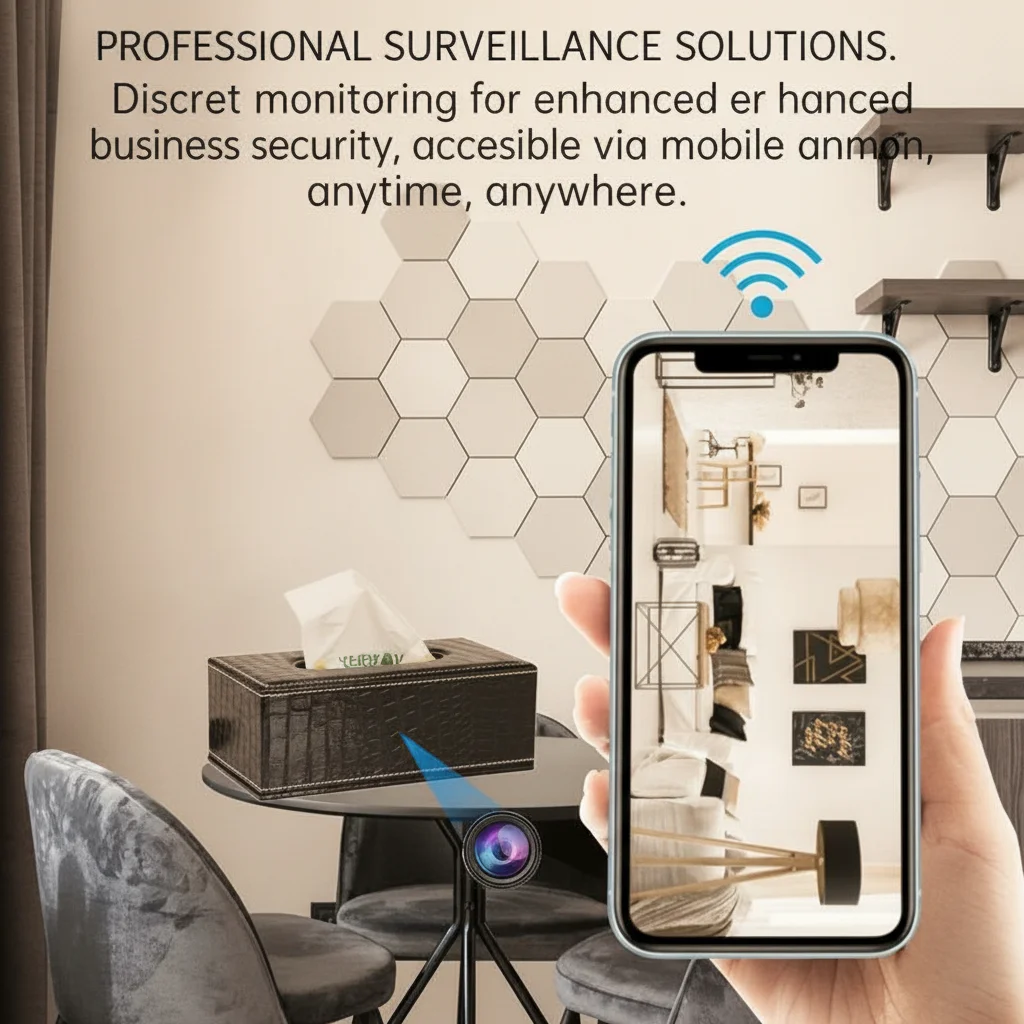
Point clé à retenir : Ne touchez pas à l'appareil. Photographiez-le, signalez-le par écrit à la plateforme et contactez les autorités locales. Votre signalement protège les autres voyageurs.
| Étape | Action | Pourquoi c'est important |
|---|---|---|
| 1 | Ne touchez pas et ne déplacez pas l'appareil | Préserve les preuves ; évite d'alerter l'installateur |
| 2 | Photographier l'appareil et son emplacement | Preuve pour la plateforme et la police |
| 3 | Signaler via la messagerie de la plateforme | Crée une trace écrite |
| 4 | Contacter la police locale | Infraction pénale dans la plupart des juridictions |
| 5 | Laisser un avis factuel | Protège les autres voyageurs |
Comment les lois sur les caméras cachées varient-elles en Europe et au Royaume-Uni ?
Le cadre juridique des caméras cachées dans les locations varie selon les pays, mais il existe des principes communs.
Au Royaume-Uni, la loi sur la protection des données de 2018 et le RGPD britannique s'appliquent à tout hôte qui enregistre des invités. L'enregistrement sans consentement dans des espaces privés (chambres, salles de bain) est presque certainement illégal. Les invités ont le droit de demander les images et de signaler les violations à l'ICO.
Qu'est-ce qu'un module de caméra d'examen WiFi et comment fonctionne-t-il - QZT | Caméras discrètes et miniatures en gros, le droit à la vie privée est particulièrement bien protégé. L'article 2 de la Loi fondamentale allemande et diverses dispositions du code civil rendent sans ambiguïté illégale l'enregistrement non divulgué dans les espaces privés. Les tribunaux allemands ont accordé des dommages et intérêts à des invités enregistrés sans leur consentement.
In France, l'article 9 du Code civil protège la vie privée, et la CNIL (Commission Nationale de l'Informatique et des Libertés) fait respecter les règles sur la protection des données. Les caméras cachées dans les locations sont illégales à moins d'être divulguées et justifiées — et “ parce que je le veux ” n'est pas une justification pour les espaces privés.
In Italy, le code de la vie privée (Codice in materia di protezione dei dati personali) exige un consentement pour tout enregistrement de personnes identifiables. Les caméras cachées dans les locations de vacances ont fait l'objet de mesures d'exécution par le Garante per la protezione dei dati personali.
La réalité pratique pour les voyageurs : connaître les bases de la loi du pays que vous visitez. Si vous trouvez une caméra et que l'hôte prétend qu'elle est “ légale ”, vous pourrez répondre avec quelque chose de plus informé qu'un regard vide.
Pour les grossistes fournissant ces marchés, le paysage juridique détermine les exigences des produits. La certification CE, la conformité RoHS et le déploiement transparent au regard du RGPD ne sont pas optionnels — ce sont les bases pour vendre légalement des équipements de surveillance en Europe.
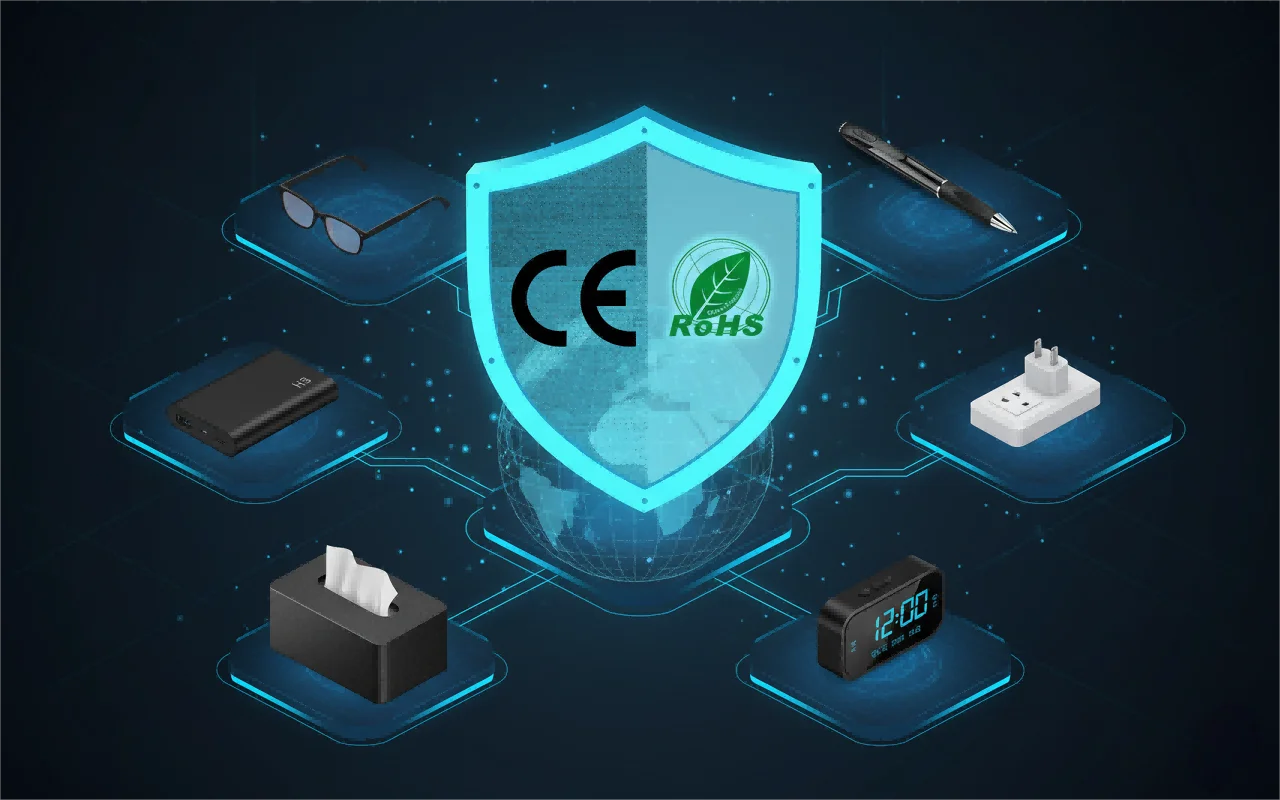
Point clé à retenir : La plupart des pays européens et le Royaume-Uni considèrent l'enregistrement non divulgué dans les espaces privés comme clairement illégal. Le RGPD et les lois nationales sur la vie privée donnent des droits aux invités — et vous donnent des motifs pour signaler les violations.
| Pays | Loi clé | Droit de l'invité |
|---|---|---|
| UK | Loi sur la protection des données de 2018, RGPD britannique | Demander les images ; signaler à la CNIL |
| Allemagne | Loi fondamentale Art 2, Code civil | Protection stricte de la vie privée ; dommages possibles |
| France | Code civil Art 9, règlements CNIL | Protection de la vie privée ; application par la CNIL |
| Italie | Code de la protection des données (Codice) | Consentement requis ; application par le Garante |
| Espagne | Loi organique 3/2018 (LOPDGDD) | Application par l'AEPD ; consentement requis |
Quels sont les meilleurs outils de sécurité portables pour les voyageurs fréquents ?
Si vous voyagez fréquemment pour le travail ou les loisirs, un petit kit d'outils de détection est léger et vraiment utile.
Un détecteur RF compact qui tient dans une trousse de toilette. Des modèles de la taille d'un gros stylo sont disponibles pour environ 30–50 £. Ils ne détecteront pas tout, mais ils sont préférables à l'utilisation d'un smartphone seul.
Une application de scan de réseau (Fing, comme discuté) sur votre téléphone. Aucun matériel supplémentaire nécessaire, et l'analyse prend moins d'une minute.
Un cadenas de voyage portable pour la porte. Bien que cela ne détecte pas les caméras, cela empêche les entrées non autorisées pendant votre sommeil — un risque plus courant que beaucoup de voyageurs ne le pensent.
Un autocollant ou un cache pour les webcams d'ordinateur portable. Pas pour les caméras de la location, mais pour la sécurité de votre propre appareil lors de l'utilisation de réseaux Wi-Fi inconnus.
Une petite lampe de poche à LED avec un faisceau focalisé. Celui de votre téléphone fonctionne, mais une lampe torche dédiée est plus lumineuse et facilite la méthode de réflexion de l'objectif.
Les voyageurs d'affaires et les journalistes travaillant dans des contextes sensibles emportent parfois un équipement plus sophistiqué, mais pour la plupart des gens, la combinaison ci-dessus est proportionnée et efficace.
Si votre activité consiste à fournir des outils de sécurité portables aux voyageurs, aux consommateurs soucieux de la sécurité ou aux clients d'entreprise, contacter QZT Sécurité pour discuter des options de vente en gros. La demande d'outils de sécurité personnelle et de protection de la vie privée augmente à mesure que les voyageurs prennent conscience des risques.
Point clé à retenir : Un détecteur RF compact, l'application Fing et une lampe torche puissante forment un kit de sécurité de voyage léger qui tient dans votre trousse de toilette.
| Article | Poids | Coût | Détections |
|---|---|---|---|
| Détecteur RF de taille stylo | ~50g | 30–50 £ | Caméras à transmission sans fil |
| Application Fing (smartphone) | 0g (application) | Gratuit | Caméras connectées au Wi-Fi |
| Lampe torche LED (faisceau focalisé) | ~80g | 10–20 £ | Reflets d'objectif |
| Serrure de porte portable / cale | ~100g | £15–£30 | Entrée non autorisée (pas de caméras) |
| Autocollants de couverture de webcam | ~5g | 5 £ par pack | Confidentialité de l'ordinateur portable (pas de détection) |
FAQ
Puis-je rechercher des caméras cachées sans télécharger d'applications ?
Oui. La méthode de la lampe torche (pièce sombre, lumière vive, chercher les reflets d'objectif) et la méthode d'inspection physique (vérifier les détecteurs de fumée, chargeurs USB, réveils) ne nécessitent aucune application ni équipement spécial. Elles sont moins approfondies qu'une analyse réseau, mais vraiment efficaces pour la plupart des cachettes courantes.
Est-il légal d'utiliser un détecteur RF dans un hôtel ou un Airbnb ?
Au Royaume-Uni et dans la plupart de l'Europe, la possession d'un détecteur RF est légale pour un usage personnel. Ce qui est illégal, c'est d'installer une caméra sans consentement dans un espace privé. Utiliser des outils de détection pour protéger votre propre vie privée est légal — vous n'interceptez pas de communications, vous identifiez des appareils.
Que dois-je faire si l'hôte me confronte à propos de la vérification des caméras ?
Vous êtes en droit de vérifier l'espace que vous payez. Si un hôte devient agressif ou exige que vous arrêtiez, quittez le logement (si cela est sûr) et contactez la plateforme et la police locale. Aucun hôte légitime ne devrait s'opposer à ce qu'un invité vérifie sa confidentialité.
Les détecteurs de caméras cachées fonctionnent-ils vraiment, ou est-ce une arnaque ?
Les détecteurs RF de base et les détecteurs de lentilles fonctionnent pour les appareils qu'ils sont conçus pour repérer — émetteurs sans fil et caméras avec lentilles en verre. Ce ne sont pas des solutions magiques : ils produisent des faux positifs et peuvent manquer certains appareils. Mais dans le cadre d'une approche combinée (analyse réseau + inspection physique + détecteur), ils apportent une réelle valeur ajoutée.
À quel point les caméras cachées sont-elles courantes dans les annonces Airbnb ?
Les statistiques fiables sont difficiles à obtenir car de nombreux incidents ne sont pas signalés. Des cas très médiatisés apparaissent dans les médias tous les quelques mois. Le risque est faible en termes absolus mais pas nul — et étant donné qu'une vérification de base prend dix minutes, la plupart des voyageurs jugent que cela vaut la peine de le faire.
Si vous êtes un grossiste ou un distributeur à la recherche d'équipements de surveillance et de sécurité personnelle fiables et certifiés, Contactez QZT Security dès aujourd'hui. Nous fournissons les marchés européen et britannique avec des appareils conformes aux normes de certification et accompagnés de la documentation dont vos clients ont besoin.

 English
  Italiano
  Deutsch
  Français
  Español
  Polski