
Wie man das richtige Formfaktor für versteckte Kameras für Ihr Unternehmen wählt
Walk into any covert surveillance equipment catalogue and the number of form factors can feel overwhelming. There are USB charger cameras. Smoke detector cameras. Wall clock cameras. Pen cameras. Key fob cameras. Power bank cameras. Button cameras. Glasses cameras. Each one has a sales page that says it is the best, the most discreet, the most versatile. The truth is simpler: none of them is universally best. The right hidden camera for your business is the one that matches your specific surveillance environment, your placement constraints, and the behaviour you are trying to document.
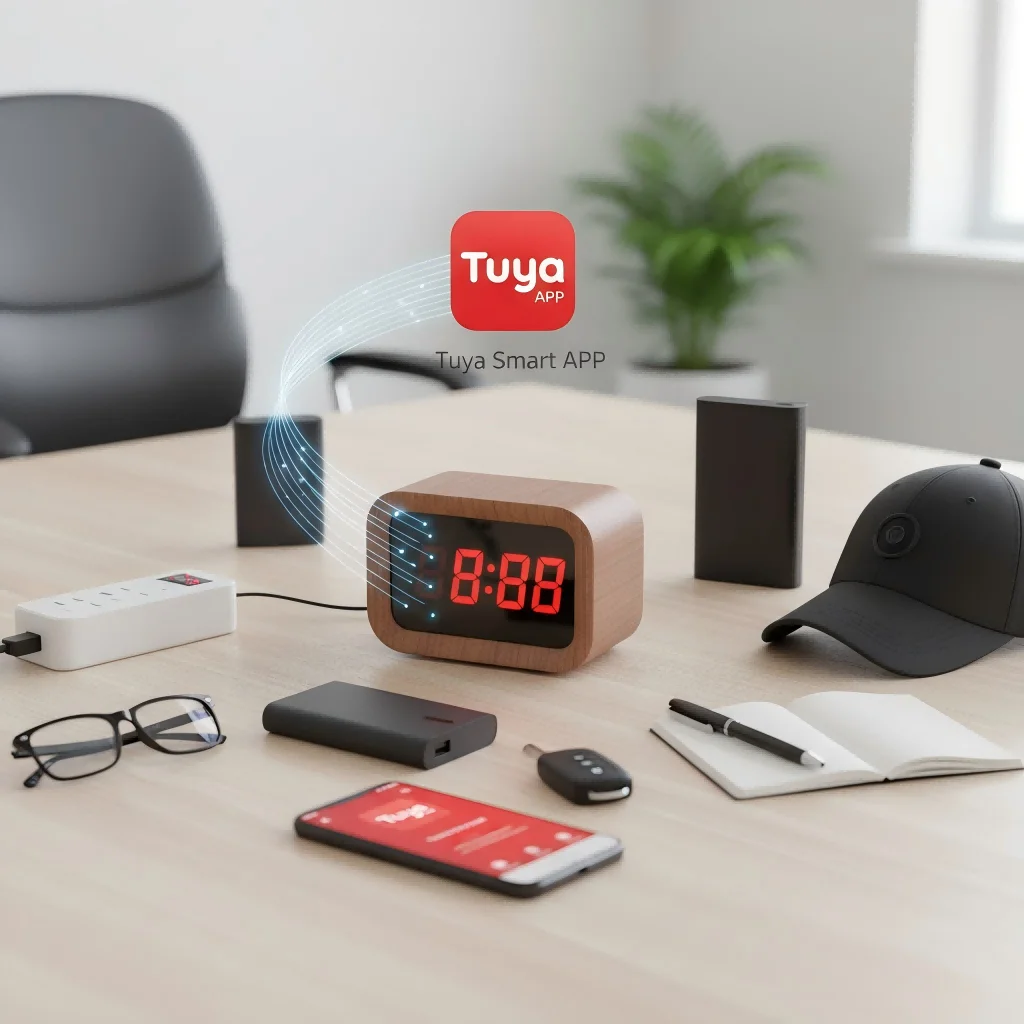
This guide cuts through the noise and gives you a practical framework for choosing between the most common hidden camera form factors.
Why the Form Factor Matters More Than the Spec Sheet
It is tempting to start with resolution, night vision range, or battery life. These specs matter — but they are secondary to a more fundamental question: will the camera go unnoticed in exactly the spot where you need it?
A 4K camera with perfect night vision is worthless if its placement draws attention. A camera that looks out of place in a professional environment — a toy-shaped camera in a retail store, a conspicuous device in a manager’s office — fails its primary mission before it captures a single frame. The form factor is the camera’s camouflage, and camouflage is the only spec that directly determines whether your surveillance succeeds or fails.
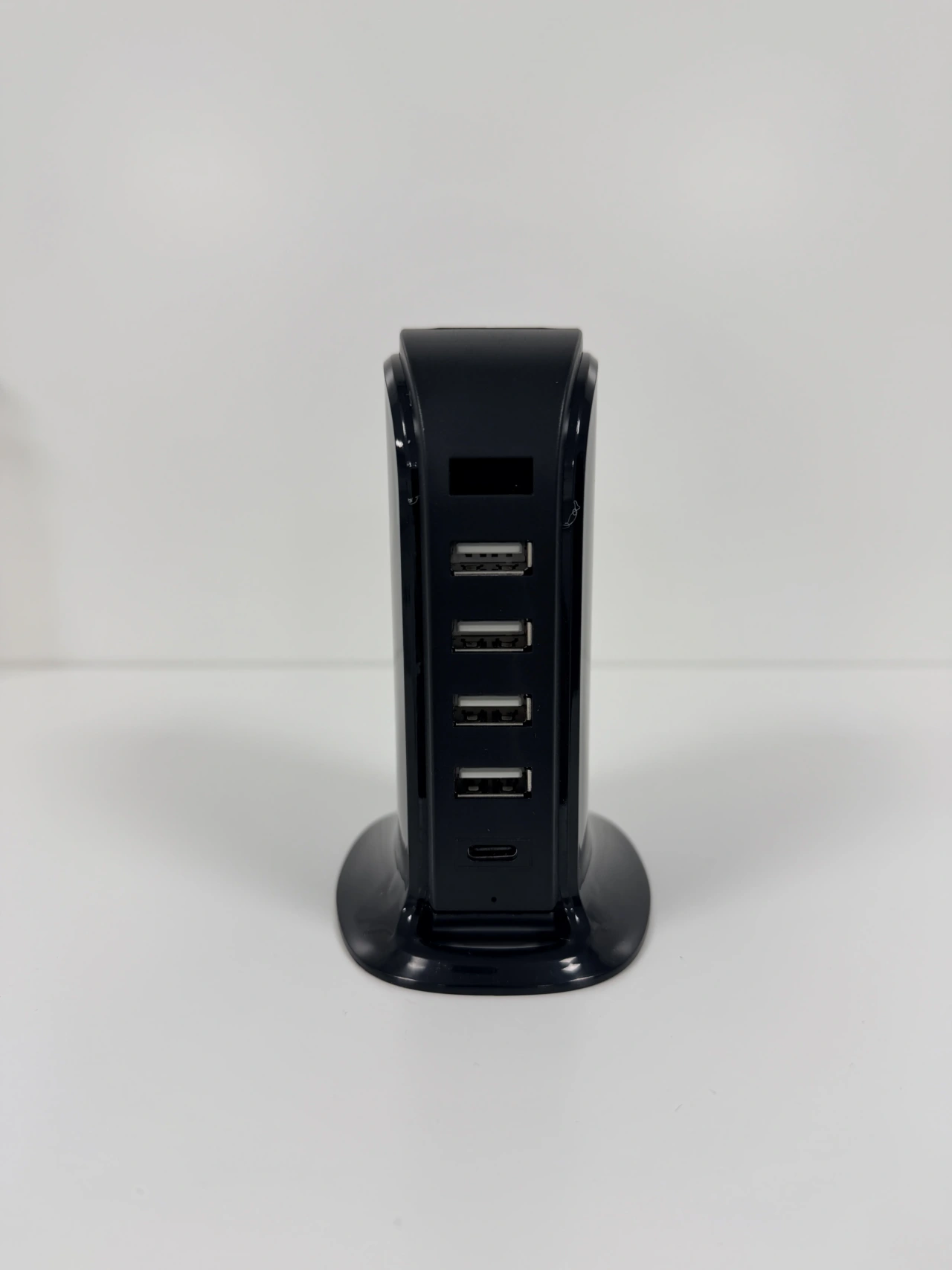
Beyond discretion, form factor determines practical constraints:
– Power availability: A USB charger camera needs a wall socket; a power bank camera needs to be recharged periodically
– Sichtfeld: Ceiling-mounted smoke detectors give a top-down wide view; a pen camera gives a close frontal angle
– Portabilität: Some situations require mobile surveillance; others demand fixed, forgettable placement
Get the form factor right, and the other specs become optimisation problems rather than fundamental choices.
USB Charger Cameras: When to Use Them
A WiFi-Spionagekamera USB-Ladegerät 1080P looks exactly like a standard USB wall charger — the kind you see in every home and commercial building across Europe. It sits in a wall socket and never needs battery charging, never needs to be moved, and never looks out of place.
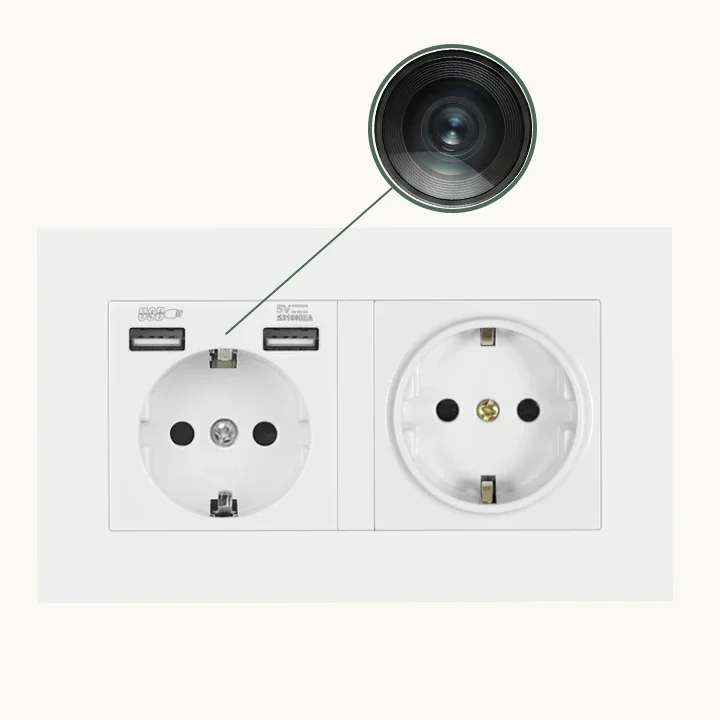
The permanent power connection is the decisive advantage. Unlike battery-powered cameras that can run flat at the worst possible moment, a charger camera draws directly from the mains and will not miss the incident you set out to capture. This makes it the most reliable form factor for continuous surveillance in a fixed location.
Use a USB charger camera when:
– You have a wall socket in your target area — behind the till, in the stockroom corner, in a manager’s office, along a corridor
– You need 24/7 continuous recording without maintenance
– You want a camera that will blend into a professional environment without looking unusual
– You are covering a cash handling or transaction area where the evidence must be uninterrupted
Limitations to consider:
– Fixed position — if the socket is in the wrong place, the camera angle will be wrong too
– Not suitable for locations without accessible wall sockets
– Cannot be moved quickly between locations without leaving a conspicuous empty socket
Best placement scenarios: Behind or adjacent to till areas in retail shops and pharmacies; in stockrooms with socket access near shelving; in manager’s offices; in beauty salons and barbershops where a charging point is expected.
Smoke Detector Cameras: When to Use Them
A WiFi Rauchmelder Versteckte Kamera 1080P mounts on the ceiling in the same position as a standard smoke alarm. This is its primary advantage: in any commercial building, a ceiling-mounted smoke detector is completely unremarkable. It belongs there. No employee, customer, or visitor will look at it twice.
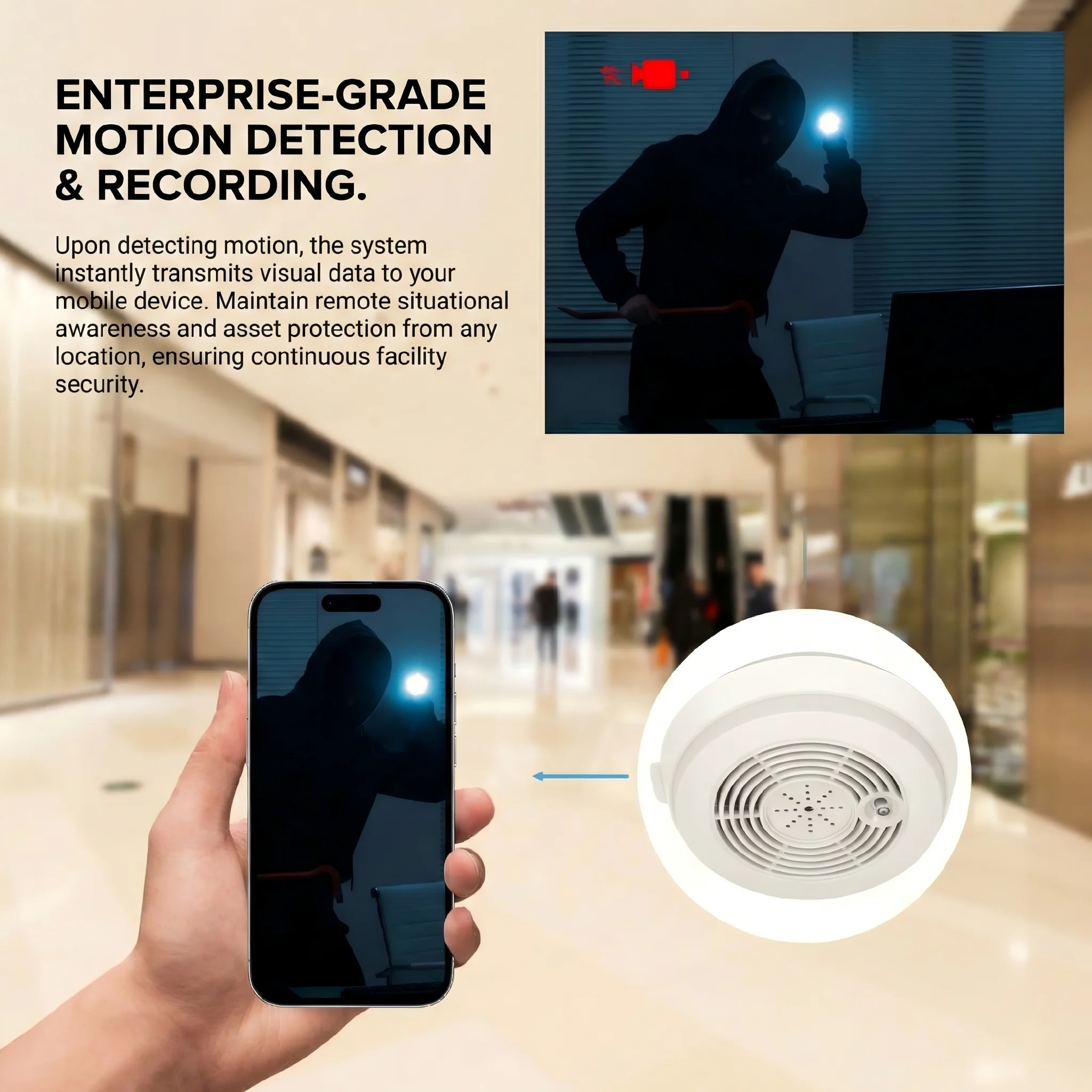
The elevated mounting position gives smoke detector cameras the widest field of view of any fixed-form-factor hidden camera. Mounted at 2.4–3 metres (standard commercial ceiling height), a smoke detector camera can cover a large open-plan area — an entire shop floor, a warehouse aisle, a kitchen — from a single vantage point.
Use a smoke detector camera when:
– You need to cover a large open area from above
– Your building already has smoke detectors — meaning one more is completely unremarkable
– You want a wide-angle view rather than a close-range shot
– You need to cover areas where wall sockets are not conveniently positioned
– The area has normal-to-good ambient lighting (ceiling-mounted devices often have less optimal lighting than eye-level positions)
Limitations to consider:
– Ceiling installation requires the right type of ceiling and mounting hardware
– Camera angle is fixed — you cannot easily adjust the viewing direction without remounting
– May require professional installation in some commercial premises
– Night vision quality may be reduced at the angles typical of ceiling-mounted units
Best placement scenarios: Retail shop floors; warehouse aisles and storage areas; commercial kitchens; offices with open-plan layouts; anywhere a smoke detector is a natural and expected fixture.
Clock Cameras: When to Use Them
Die Z10 WiFi Spy Clock Camera 1080P looks exactly like a standard wall clock — the kind found in virtually every break room, manager’s office, reception area, and stockroom in the country. Wall clocks are so ordinary that no one thinks about them. That ordinariness is the camouflage.
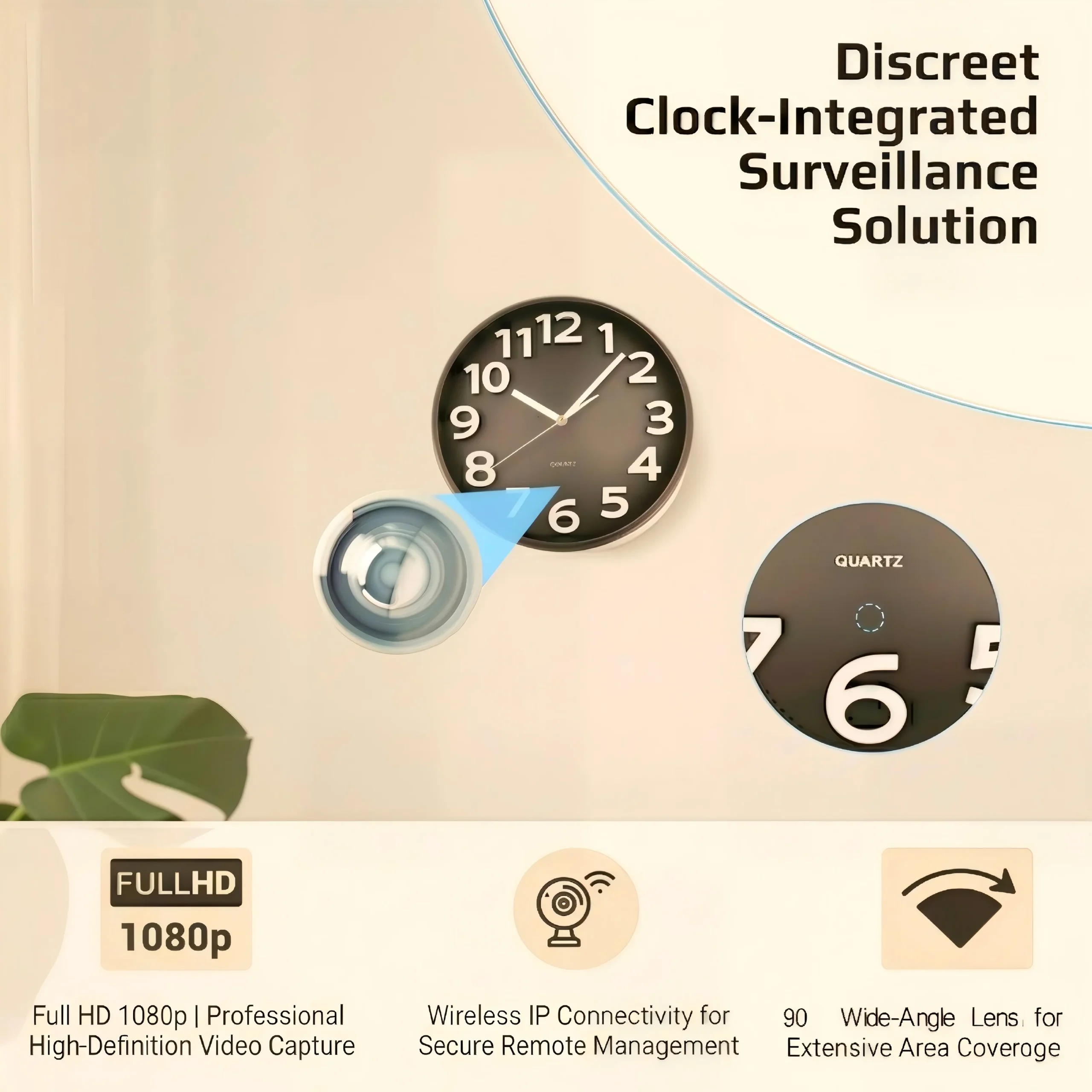
Clock cameras occupy eye level, which gives them a distinct advantage over ceiling-mounted options: they capture facial detail more effectively. At a distance of 2–4 metres, a clock camera pointed at a desk or counter will record clear images of the people in front of it — better suited for identifying an individual than a wide-angle ceiling view from 3 metres up.
Uhr-Kameras sind auch die flexibelste festinstallierte Option für Schreibtisch- und Tresenplatzierung. Sie können auf einem Regal, einer Schublade oder einer Schreibtischoberfläche positioniert werden, ohne ungewöhnlich zu wirken – solange der Raum ein Ort ist, wo eine Wand- oder Schreibtischuhr natürlicherweise zu finden wäre.
Nutzen Sie eine Uhr-Kamera, wenn:
– Sie eine Augenhöhe-Platzierung für klarere Gesichtsidentifikation benötigen
– Ihr Zielbereich ist ein Büro eines Managers, ein Empfangsschalter oder ein Pausenraum
– Sie möchten die Möglichkeit, die Kamera zwischen Ermittlungen relativ leicht neu zu positionieren
– Sie decken einen Tresen oder Schreibtischbereich ab, wo das Subjekt der Kamera gegenübersteht
Limitations to consider:
– Uhrkameras müssen typisch eingesteckt oder regelmäßig aufgeladen werden (außer wenn das Modell eine große interne Batterie beinhaltet)
– Das Zifferblatt limitiert die Linsengröße und damit den Blickfeld
– Weniger geeignet für Bereiche, in denen eine Uhr unpassend wäre (Laderampen, Außenbereiche, kleine Lagerräume)
Best placement scenarios: Managerbüros und Empfangstresen; Pausenräume in Handel, Gastgewerbe und Büroumgebungen; Lagerraumbüros mit einem Schreibtisch oder Schrank, wo eine Uhr natürlicherweise stehen würde.
Power Bank Cameras: When to Use Them
A WiFi 1080P Powerbank versteckte Kamera sieht wie eine normale portable Powerbank aus. Sie kann auf einem Regal, in einem Schrank, unter einem Tresen, auf einem Kabinet – überall platziert werden. Der Formfaktor ist so gewöhnlich und so allgegenwärtig, dass er in praktisch jeder Umgebung keinen Verdacht erregt.
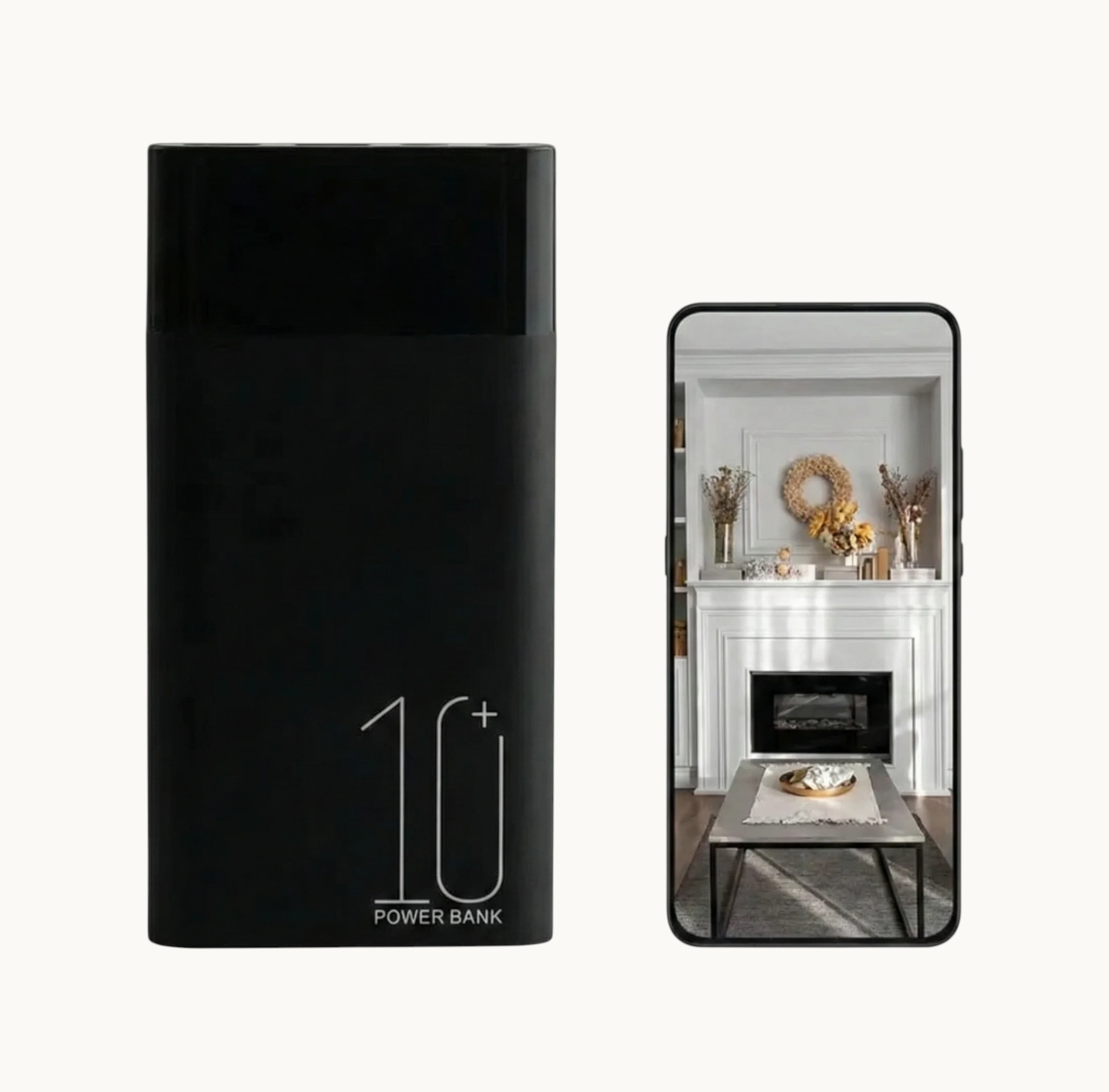
Der Hauptvorteil des Powerbank-Formfaktors ist Portabilität. Anders als Ladegerätkameras (an einer Steckdose fixiert) oder Rauchmelder (an der Decke montiert) kann eine Powerbank-Kamera zwischen Standorten bewegt werden, ohne Hinweise auf ihre frühere Platzierung zu hinterlassen. Sie können sie heute im Lagerraum nutzen, morgen zur Laderampe repositionieren und nächste Woche zu einer Handelsmesse nehmen.
Dies macht Powerbank-Kameras zur flexibelsten Option für Kleinunternehmer, die flexible Überwachung benötigen oder kurzfristige Ermittlungen über mehrere Standorte führen.
Nutzen Sie eine Powerbank-Kamera, wenn:
– Sie benötigen mobile oder umpositionierbare Überwachung
– Ihr Zielbereich verfügt nicht über praktische Wandsteckdosen oder Möglichkeiten zur Deckenmontage
– Sie eine temporäre Untersuchung führen und die Kamera schnell bewegen müssen
– Sie möchten eine Kamera, die kurzfristig diskret eingesetzt werden kann
Limitations to consider:
– Batterielaufzeit limitiert die kontinuierliche Aufnahme — typisch 4–8 Stunden, abhängig von Auflösung und Aufnahmemodus
– Erfordert regelmäßiges Aufladen, was eine Wartungsaufgabe darstellt
– Nicht geeignet für permanente 24/7 Überwachung, außer bei kontinuierlicher Stromversorgung
– Wenn sie in einem Schrank oder geschlossenen Raum platziert wird, können Nachtsehen und Blickfeld beeinträchtigt werden
Best placement scenarios: Mobile Einsatzbereitschaft über mehrere Geschäftslokale; Laderampen und Hintereingänge ohne einfachen Stromzugang; temporäre verdeckte Ermittlungen; Fahrzeug- und Transportüberwachung.
Pen Cameras: When to Use Them
A Für professionelle Überwachung ist die ideale Kombination ist eine voll funktionsfähige Kugelschreiber mit einer versteckten Kamera im Inneren. Die Form ist für persönliche Körpersicherheit – Aufnahme während Sie persönlich in einer Interaktion anwesend sind.
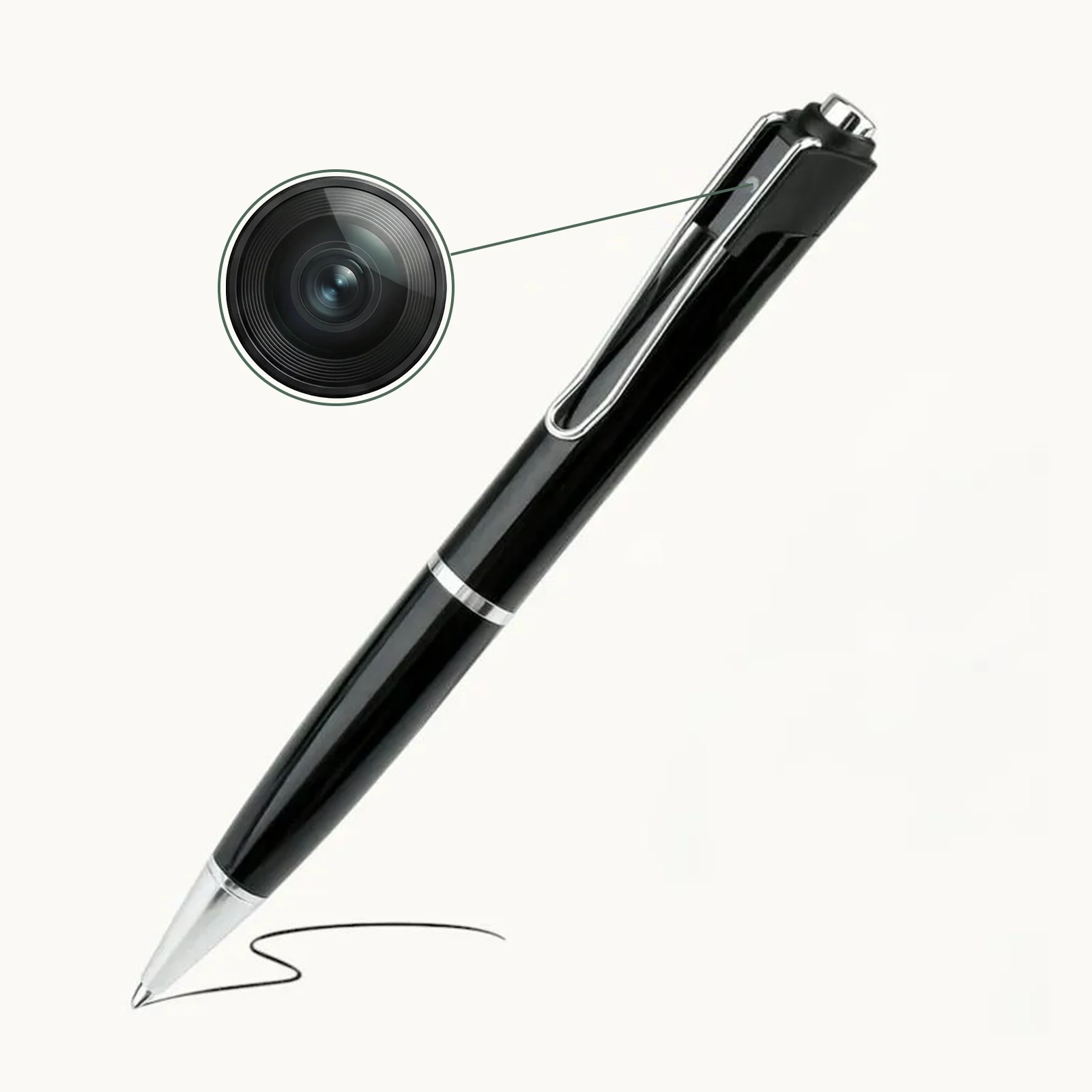
Dies macht Stiftkameras grundsätzlich anders als jede andere Form auf dieser Liste. Festinstallierte Kameras (Ladegerät, Rauchmelder, Uhr, Powerbank) überwachen einen Raum. Stiftkameras überwachen eine Gesprächs- oder Interaktionssituation, in der Sie teilnehmen. Sie erfassen, was Sie aus Ihrem Blickwinkel sehen und hören.
Für Kleinunternehmer ist der Hauptnutzungsszenario nicht die Gebäudesicherheit – es ist Dokumentation von Interaktionen. Wenn Sie einen Lieferanten treffen, von dem Sie vermuten, dass er die Produktqualität falsch darstellt, ein disziplinarisches Gespräch führen, bei dem Sie Ihre eigene Aufzeichnung des Gesagten benötigen, oder eine Handelsmesse besuchen, bei der Sie eine Konversation dokumentieren müssen, bietet eine Stiftkamera diese Aufzeichnung.
Verwenden Sie eine Stiftkamera, wenn:
– Sie Ihre eigenen Interaktionen und Gespräche dokumentieren müssen
– Sie führen ein Meeting oder eine Verhandlung, wo Sie eine unabhängige Aufzeichnung möchten
– Sie benötigen Nahbereich-Audio- und Videoaufnahme einer bestimmten Interaktion
– Sie möchten eine Kamera, die immer bei Ihnen ist, ohne Aufmerksamkeit zu erzeugen
Limitations to consider:
– Begrenzte Batterielaufzeit (typisch 60–90 Minuten kontinuierliche Aufnahme)
– Erfasst eine einzige Perspektive – nützlich für Gespräche, aber nicht für Bereichsüberwachung
– Die meisten Modelle benötigen eine microSD-Karte, da Wi-Fi-Streamingfähigkeit bei Stiftformgeräten nicht vorhanden ist
– Audioaufnahmegesetze sind in den meisten Rechtsgebieten deutlich restriktiver als Videoaufnahmen — holen Sie immer eine Zustimmung vor der Aufnahme von Gesprächen ein
Best placement scenarios: Auf-Person-Aufnahme während Lieferantengesprächen, Kundengesprächen oder Disziplinarbesprechungen; mobile Dokumentation in jeder Situation, in der Sie sowohl Audio als auch Video einer Interaktion aus Ihrem Blickwinkel aufnehmen müssen.
Key Fob and Wearable Cameras: When to Use Them
Schlüsselanhänger-Kameras – wie die Auto-Schlüssel Spy Kamera 1080P — sind für persönliches Tragen und Schnellaufnahmen konzipiert. Sie sehen wie ein Standard-Autoschlüsselanhänger oder Fernbedienung aus und können mit einem einzigen Knopfdruck aktiviert werden.
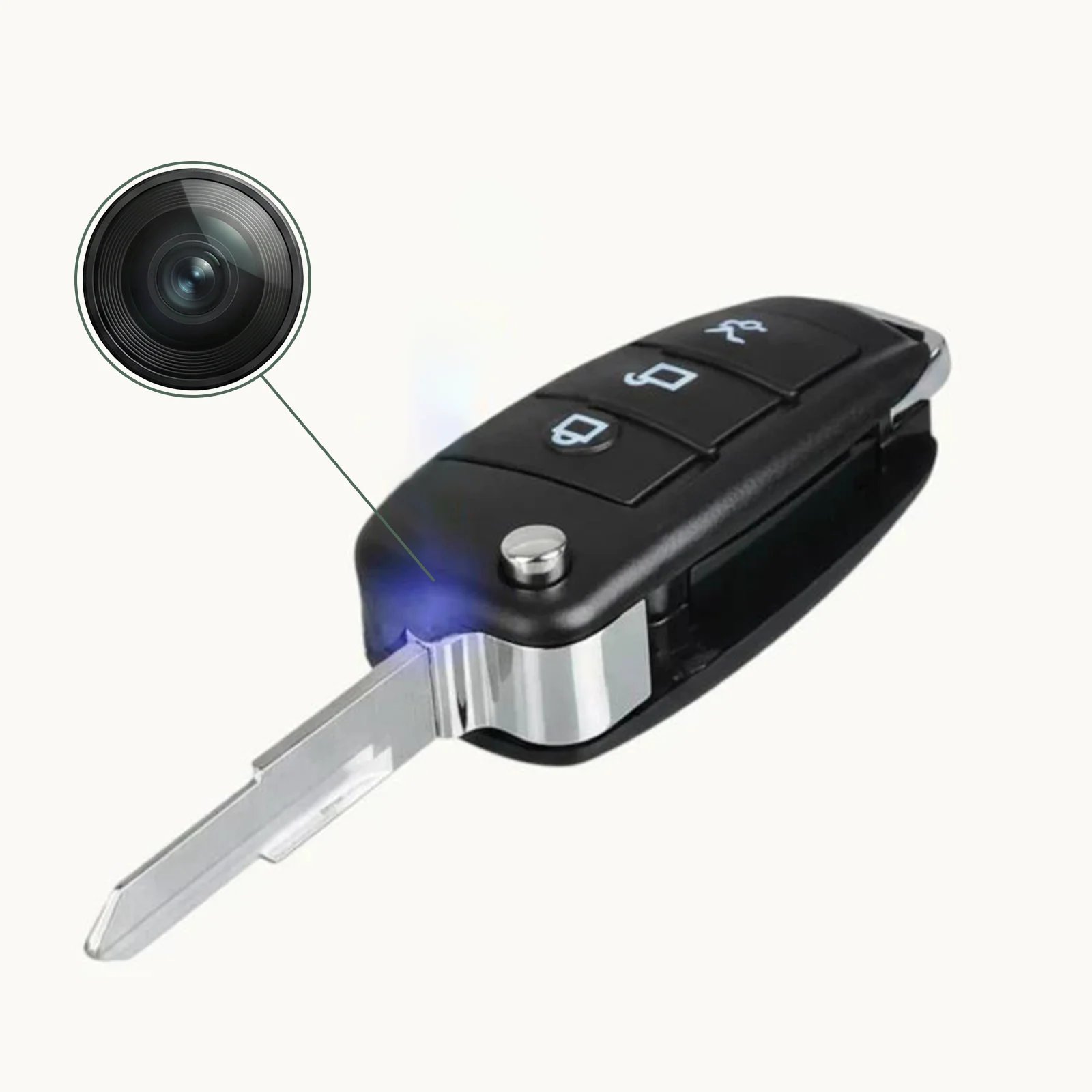
Für Kleinunternehmer dienen Schlüsselanhänger-Kameras einer ähnlichen Funktion wie Stiftkameras: Dokumentation persönlicher Interaktionen und Erstellung einer verdeckten Aufzeichnung von Gesprächen, Meetings oder Beobachtungen während Sie mobil sind. Die Schlüsselanhänger-Form ist besonders geeignet für:
– Geschäftsführer, die häufig zwischen verschiedenen Standorten pendeln
– Aufnahme informeller Gespräche, die während Standortbesuchen auftreten
– Beweise für ungewöhnliche Aktivitäten im Handumdrehen aufnehmen, ohne Aufmerksamkeit zu erzeugen
Brillenkameras — wie die Covert HD Camera Glasses 12MP — are designed for first-person POV recording. They are primarily used in outdoor, trade show, or investigative contexts where hands-free recording from the wearer’s perspective is required.
Form Factor Comparison: Which Is Right for Your Business
| Formfaktor | Am besten geeignet für | Stromquelle | Portabilität | Sichtfeld |
|---|---|---|---|---|
| USB-Ladegerät | Till areas, stockrooms, fixed locations | Always-on (mains) | Fixed | Medium (eye level) |
| Rauchmelder | Open-plan floors, warehouses, kitchens | Hardwired or battery | Fixed | Wide (top-down) |
| Wanduhr | Offices, break rooms, reception desks | Battery or USB | Semi-portable | Medium (eye level) |
| Powerbank | Mobile, temporary, multi-location use | Rechargeable battery | Fully portable | Mittel |
| Stiftkamera | Personal interaction recording | Internal battery (60–90 min) | Fully portable | Narrow (close range) |
| Key Fob | Quick-capture mobile recording | Internal battery | Fully portable | Narrow (close range) |
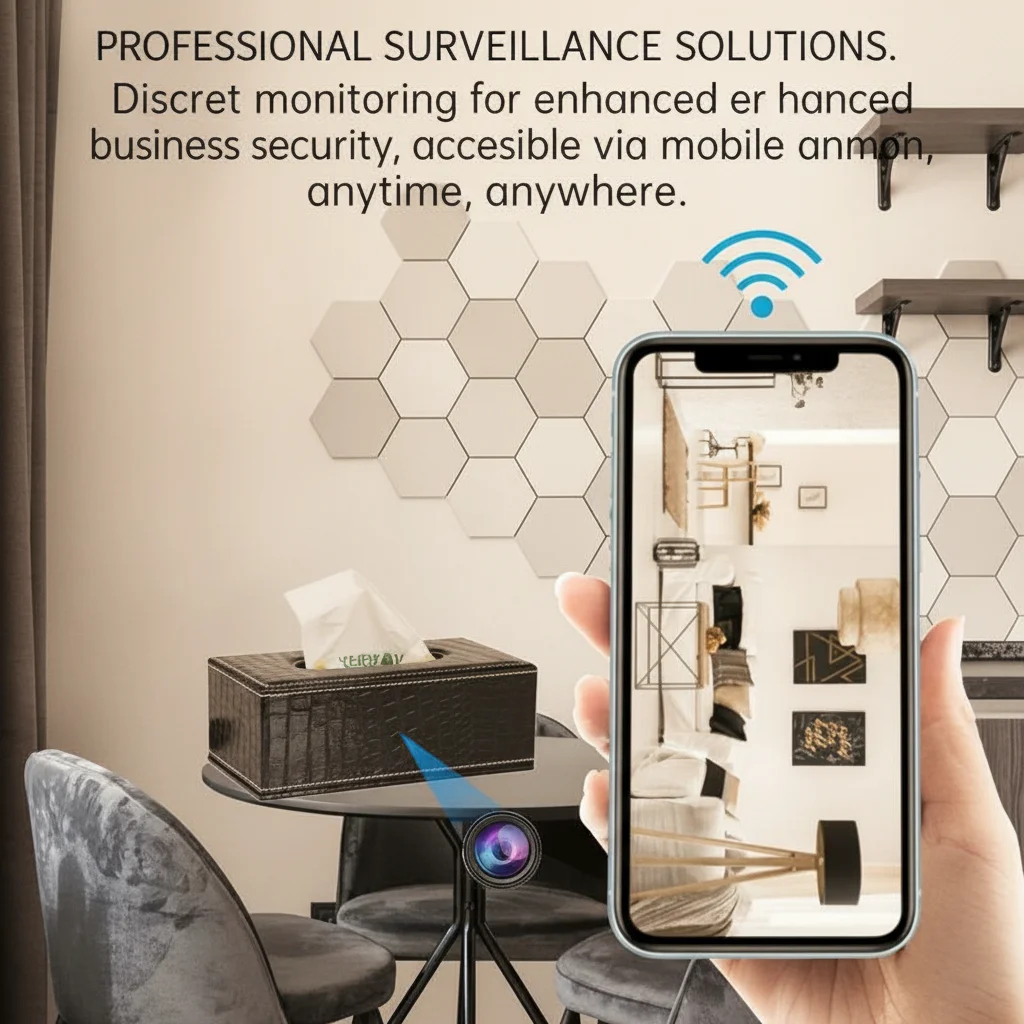
The most effective small business surveillance strategies combine two or more form factors: a permanently placed charger or smoke detector camera for continuous coverage of your highest-risk zones, supplemented by a portable power bank camera for flexible deployment when needed.
Common Mistakes When Choosing a Hidden Camera Form Factor
Choosing based on price rather than placement fit. The cheapest camera is rarely the right camera. A £25 charger camera placed in the perfect position will outperform a £120 smoke detector camera in the wrong location every time.
Ignoring the lighting conditions of the target area. Stockrooms, loading docks, and back corridors are often dimly lit. Not all hidden cameras perform equally in low light. Check the night vision specifications — specifically whether the IR LEDs are 940nm no-glow (invisible) or 850nm (faint visible red glow).
Buying Wi-Fi cameras without verifying router compatibility. Many modern routers — particularly those supplied by internet service providers — have the 2.4GHz band disabled or poorly configured. Hidden cameras that rely on Wi-Fi streaming will not connect if your router does not broadcast 2.4GHz. If in doubt, test with a local-only (SD card) model first.
Failing to account for maintenance. Battery-powered cameras require periodic recharging and SD card management. If you install cameras in hard-to-reach locations (ceiling-mounted smoke detectors, behind fixed furniture) and then neglect the maintenance schedule, you will have surveillance gaps exactly when you need coverage most.
Choosing form factors that look wrong for the environment. A smoke detector in a hair salon is unusual — salons rarely have ceiling-mounted smoke detectors. A USB charger camera in a stockroom without a power outlet at the right height is useless. Before purchasing, observe the physical environment and identify what form factors would be natural and unremarkable in that space.
Häufig gestellte Fragen
What is the best hidden camera for a small shop with limited wall sockets?
For shops with limited socket access, a WiFi Rauchmelder Versteckte Kamera 1080P is the most practical option. It mounts on the ceiling without requiring a wall socket, covers a wide area from an elevated position, and is completely unremarkable in any commercial building. Pair it with a Powerbank versteckte Kamera for portable coverage of high-risk spots like loading docks.
Can I use a hidden camera in a room without any accessible power source?
Yes — use a battery-powered camera like the WiFi 1080P Powerbank versteckte Kamera. With a fully charged power bank, you get 4–8 hours of continuous recording, which is sufficient for most investigation sessions. For longer deployments, some power bank cameras support recording while charging via USB power bank passthrough.
What hidden camera captures the clearest facial detail?
Eye-level placement generally captures clearer facial detail than ceiling-mounted options because the camera is closer to face height. Clock cameras (like the Z10 WiFi-Spionagenuhr-Kamera) positioned at a counter or desk at 2–3 metres typically produce the clearest identifiable facial footage in small business environments. USB charger cameras placed behind a till area at eye level are equally effective for transaction documentation.
Which hidden camera is easiest to install and move between locations?
Power bank cameras are the easiest to redeploy — they require no installation, no mounting, and no socket access. Simply place the device and start recording. For permanent fixed surveillance, USB charger cameras are the simplest: plug into a socket and insert a microSD card. No mounting hardware, no drilling, no professional installation required.
Are Wi-Fi enabled hidden cameras secure?
Wi-Fi enabled hidden cameras stream footage over your local network, which means the security of that footage depends on your router’s security configuration. Use a strong Wi-Fi password, ensure your router’s firmware is updated, and — where possible — choose cameras that support local SD card storage as well as streaming. Local storage means footage never leaves your premises, which is the most GDPR-aligned approach for small businesses handling personal data.
Choosing the right hidden camera form factor is less about finding the most advanced device and more about matching the camera’s physical characteristics to the specific environment and objective you are trying to achieve. A USB charger camera in the right socket is worth more than a 4K smoke detector in the wrong position. Think about where your vulnerability is, what the physical space allows, and which camera will genuinely go unnoticed — and build your surveillance strategy from that foundation.
Need help selecting the right covert surveillance setup for your specific business environment? Wie man die beste versteckte Kamera in 2026 auswählt for a no-obligation consultation. We supply businesses across the UK, EU, and internationally with expert guidance on product selection, legal compliance, and deployment strategy.

 English
  Italiano
  Deutsch
  Français
  Español
  Polski