
Wie man versteckte Kameras in Ihrem Airbnb oder Hotel entdeckt
Da sind Sie, Taschen kaum auf dem Boden, den Raum absuchen – nicht für eine gute Aussicht, sondern für etwas, das Sie hoffentlich nicht dort ist. Sie haben die Horrorgeschichten gelesen: ein Rauchmelder, ein wenig zu gezielt auf das Bett gerichtet, eine Wanduhr, wo niemand die Zeit prüft. Und der unruhige Teil? Die Personen, die diese Eigenschaften führen, wissen genau, wo Ihre Augen nicht gehen.
Versteckte Kameras in Kurzzeitvermietungen sind ein echtes Problem. Eine Untersuchung des Sicherheitsunternehmens IPX1031 aus 2019 fand heraus, dass ein Drittel der Airbnb-Gäste während ihres Aufenthalts eine Kamera oder ein Überwachungsgerät entdeckte. Eine aktuellere Analyse von Aqua Security (2024) fand über 1 Million IoT-Kamerageräte weltweit, die für nicht authentifizierten Zugriff offen sind – und Ferienwohnungen gehören zu den häufigsten Einsatzorten. Diese Zahl sollte Sie jedes Mal innehalten lassen, wenn Sie einen unbekannten Raum betreten.
Aber hier ist der Punkt – die Erkennung versteckter Kameras ist nicht so technisch, wie es sich anhört. Wenn Sie wissen, worauf Sie achten müssen und wie diese Geräte gebaut sind, dauert der gesamte Prozess etwa fünf Minuten.
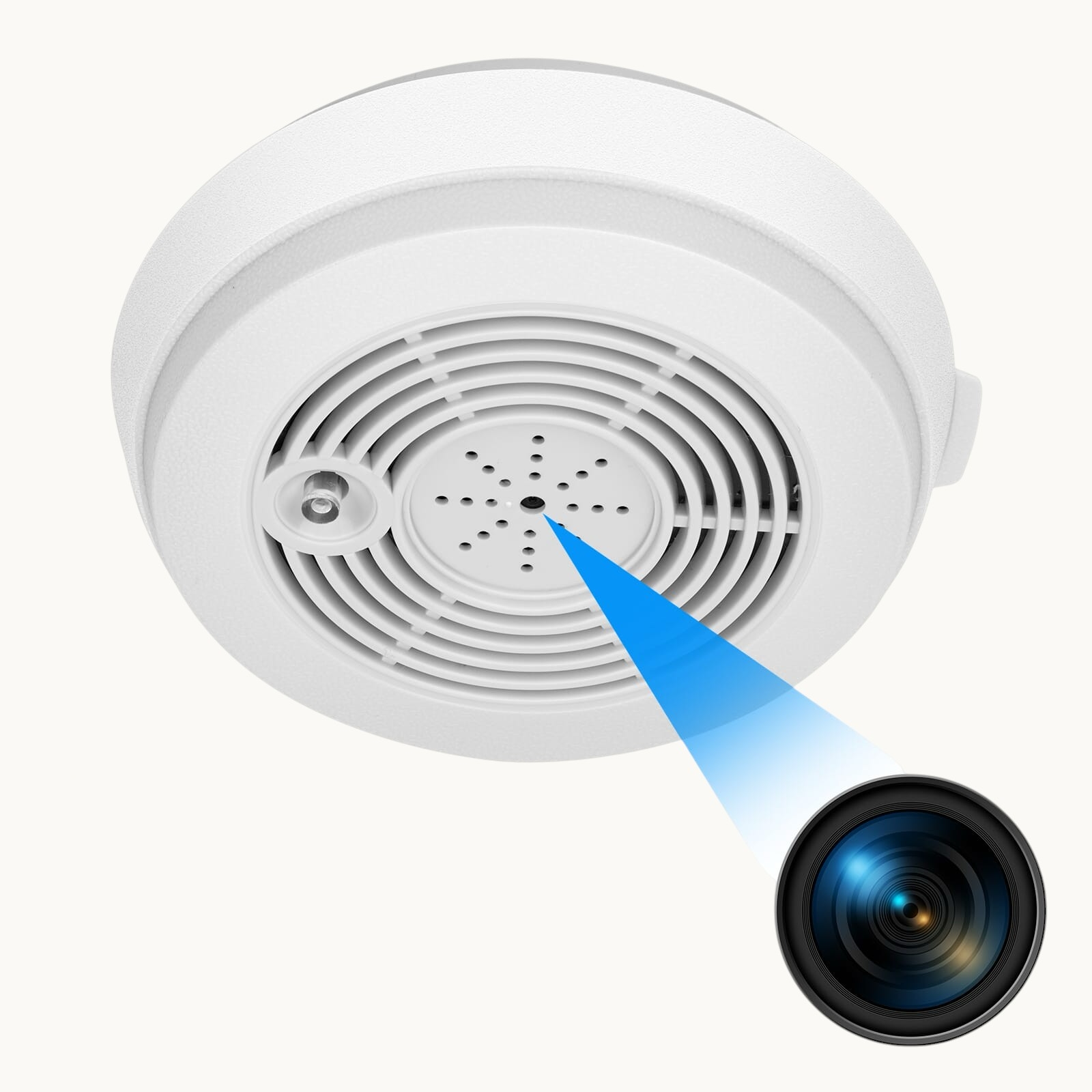
Was macht eine versteckte Kamera anders als eine Spionagekamera?
Die meisten Menschen verwechseln “versteckte Kamera” und “Spionagekamera” als das gleiche, aber die Unterscheidung ist wichtig, wenn Sie eine Überprüfung machen. Eine Standard versteckte Kamera wird installiert, um Videos diskret aufzunehmen – es könnte ein Vermieter sein, der einen Flur überwacht oder ein Gastgeber, der die Haustür prüft. Diese sind technisch legal in vielen Rechtsgebieten, wenn angegeben, in Gemeinschaftsbereichen platziert und nicht auf private Räume wie Schlafzimmer oder Badezimmer gerichtet.
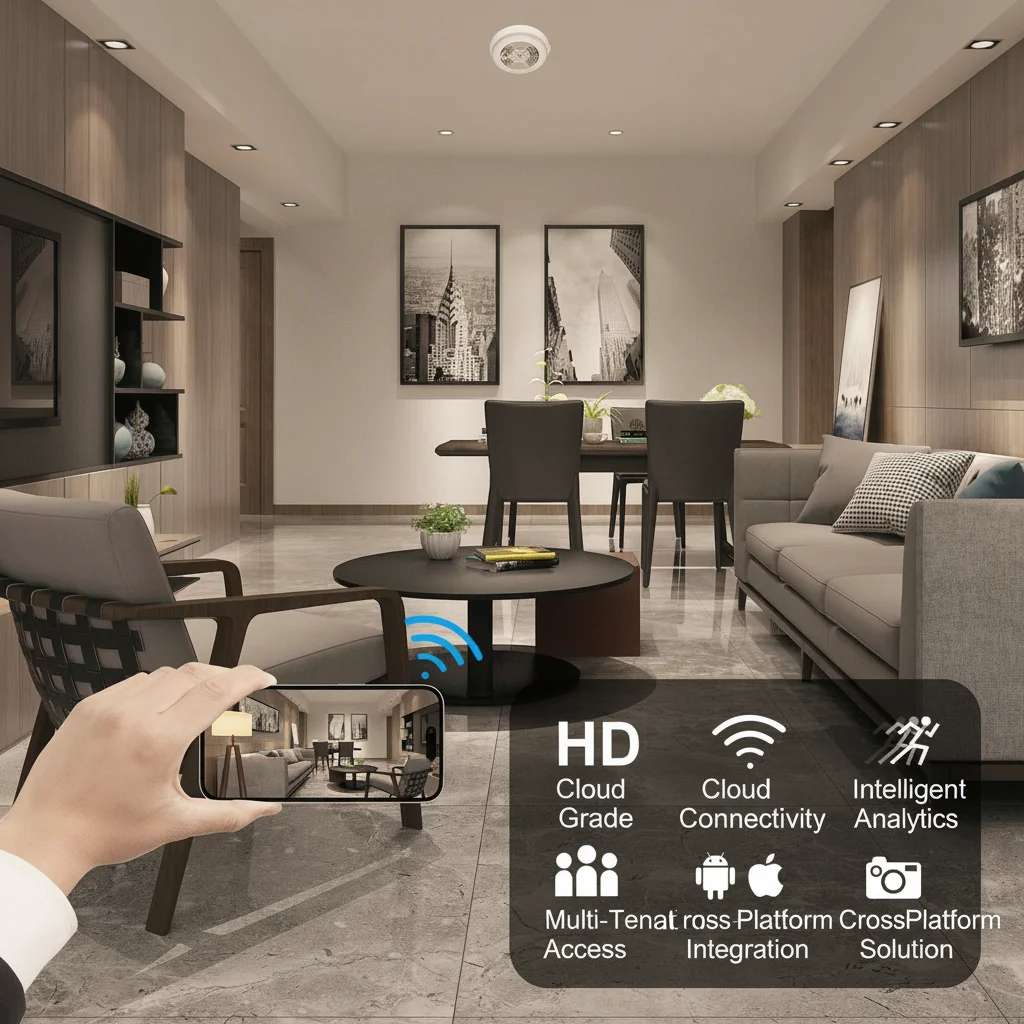
A Rauchmelder-Kamera ist vielleicht die ausgefeilteste Version: Sie integriert eine Live-1080P-WiFi-Linse in ein voll funktionsfähiges Rauchmeldergehäuse, sodass sie auf den ersten Blick physikalisch nicht von einem realen Feuerwehrgerät unterscheidbar ist. Verdeckte Kameras, die als Wandsteckdosen-Ladegeräte, Wecker und Dekorationsartikel wie Vasen getarnt sind, arbeiten nach dem gleichen Prinzip – die Tarnung ist das Produkt, nicht ein nachträglicher Gedanke.
Aus der Perspektive des Konsumenten ist die Sorge nicht die Technologie. Es ist die Platzierung: Kameras, die ohne Aufklärung in Schlafbereichen, Badezimmern oder privaten Räumen installiert werden, wo eine vernünftige Person Privatsphäre erwarten würde. Das ist in Europa unter dem GDPR-Framework und dem lokalen Strafgesetzbuch jedes EU-Mitgliedstaates illegal, einschließlich Artikel 615-bis des italienischen Strafgesetzbuches und dem Voyeurismusgesetz 2019 in Großbritannien.
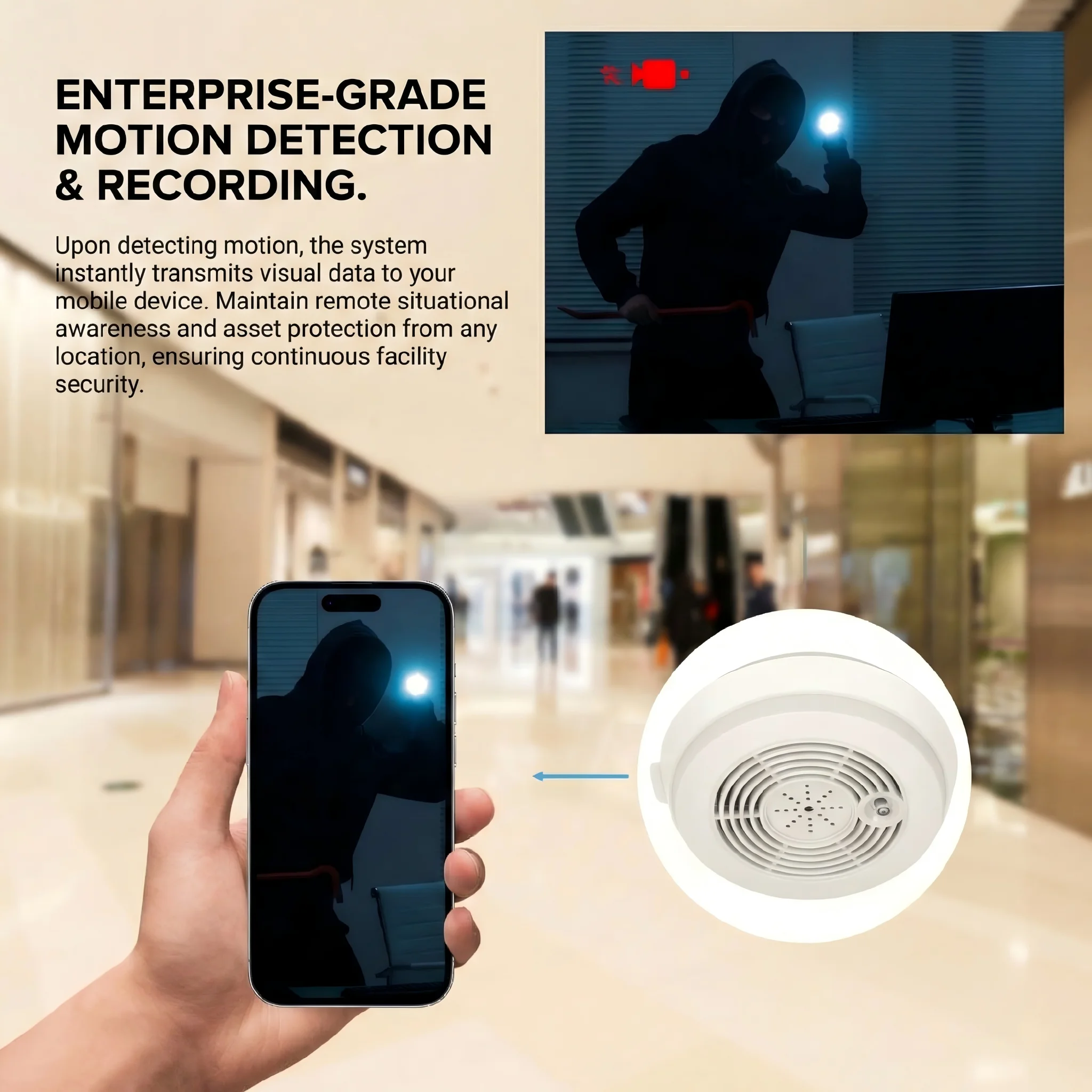
Warum sind Rauchmelder und Uhrkameras in diesem Kontext so häufig?
Sie fragen sich vielleicht, warum diese speziellen Tarnungen so weit verbreitet sind. Die Antwort liegt in der Platzierungslogik: Rauchmelder sind an Decken montiert, was einen Vogelperspektivenblick auf den gesamten Raum ermöglicht. Es wird erwartet, dass sie dort sind – kein Gast stellt einen Rauchmelder in Frage. Weckerkameras sitzen auf Nachttischen oder Regalen auf Augenhöhe, sind auf Betten ausgerichtet und profitieren von der gleichen Annahme: niemand schaut zweimal auf einen Wecker.
Beide Gerätetypen enthalten oft:
– Weitwinkel-Linsen (110°–160° Blickfeld) hinter einer fast unsichtbaren 2–3mm Lochblende versteckt sind
– Nachtsicht / Infrarot LEDs die auf Wellenlängen arbeiten, die für das menschliche Auge unsichtbar, aber für einen Handykamera-Sensor sichtbar sind
– WiFi connectivity für Live-Fernstreaming (eliminiert die Notwendigkeit einer SD-Kartenentnahme)
– Bewegungserkennung + Push-Benachrichtigungen die die Aufnahme nur aktivieren, wenn jemand den Raum betritt
Die WiFi Rauchmelder Versteckte Kamera 1080P verkauft von QZT, verbindet sich beispielsweise mit der Tuya Smart App, streamt Live-1080P-Videos über jedes 2,4GHz-WLAN-Netzwerk und verwendet einen Bewegungsaktivierten Modus, der nur aufzeichnet, wenn jemand vorhanden ist – wodurch es vollständig geräuschlos und nahezu unmöglich ist, nur durch das Verhalten zu erkennen.
Deshalb ist passive visuelle Inspektion nicht genug. Sie müssen auf die Signatur einer versteckten Linse, nicht des Geräts selbst.

Wie man versteckte Kameras mit Ihrem Smartphone entdeckt
Die Kamera Ihres Telefons ist Ihre erste Verteidigungslinie – und eine überraschend effektive. Moderne Smartphone-Sensoren, insbesondere auf Android-Geräten, reagieren empfindlich auf Nahinfrarotlicht (NIR) im Bereich von 700–1000 nm. Die meisten versteckten Kameras verwenden IR-LEDs für Nachtsicht, die genau in diesem Bereich arbeiten.
Schritt 1: Alle Lichter im Raum ausschalten. Völlige Dunkelheit ist entscheidend. Ziehen Sie Vorhänge zu, blockieren Sie jegliches Licht unter Türen.
Schritt 2: Öffnen Sie Ihre Frontkamera (nicht die Rückseitenkamera – die meisten Rückseitensensoren haben besser IR-Cut-Filter). Auf Android ist die Frontkamera oft empfindlicher gegenüber IR. Auf iPhone, probieren Sie die Rückseitenkamera mit eingeschaltetem Blitz (die Linsenreflexionen sind trotz IR-Filter sichtbar).
Schritt 3: Scannen Sie den Raum langsam. Jeder IR-Emitter wird auf Ihrem Bildschirm als weißes oder purpurnes Leuchten erscheinen. Schauen Sie auf: Rauchmelder, Radiowecker, USB-Ladegeräte, Dekorationsobjekte auf Regalen, Bilderrahmen und jedes Objekt mit einem kleinen dunklen Loch, das auf den Raum gerichtet ist.
Schritt 4: Verwenden Sie das Handy-Licht tagsüber. Leuchten Sie direkt von verschiedenen Winkeln auf jedes verdächtige Objekt. Eine versteckte Linse – sogar ein 2mm Loch – erzeugt einen winzigen blauen oder grünen Reflex, den sogenannten “Katzenaugen”-Effekt, der sichtbar ist, wenn Licht die Linsenbeschichtung im richtigen Winkel trifft.
Ein richtiger RF (Radiofrequenz)-Detektor kann diesen Prozess ergänzen. Geräte wie der JMDHKK RF Bug Detektor scannen für drahtlose Übertragungen im Bereich 1MHz–8000MHz, welcher das 2.4GHz-Band abdeckt, das von meisten WiFi-Kameras verwendet wird. Wenn eine Kamera aktiv streamt, wird sie innerhalb von 1–2 Metern einen Signalalarm auslösen.

Was zu suchen ist: Eine Raum-für-Raum Inspektions Checkliste
Schauen Sie nicht nur auf die offensichtlichen Stellen. Trainieren Sie Ihr Auge, um Dinge zu finden, die leicht falsch – ein Objekt, das zum Bett geneigt ist, ein USB-Ladegerät, das neben dem Port ein zweites Loch hat, eine Uhr, deren Zifferblatt einen dunklen Punkt in einer ungewöhnlichen Position hat.
| Standort | Hochrisiko-Objekte | Was zu prüfen ist |
|---|---|---|
| Schlafzimmer | Weckerradios, Taschentuchboxen, Rauchmelder, Ladestecker | Winkel (zum Bett gerichtet?), zusätzliche Löcher, ungewöhnliches Gewicht |
| Bathroom | Duschkopfbefestigungen, Toilettenzubehörhalter, Luftverbesserer | Linsenreflexionen, ungewöhnliche Montageorientierung |
| Lebensbereich | Bücherregale, Stromverteiler, Dekorationsobjekte | Kleine dunkle Löcher, Leitungen, die ins Nichts führen |
| Eingang | Peepholes (reversed), doorbells, coat hooks | Lenses in unusual housings |
Sound familiar? Yes — many of these objects are legitimate products. The difference is context: a charging cube with a perfectly round hole on its face that does not correspond to any button or LED is not a charger.
What you might not know is that the lens is rarely the giveaway — the LED indicator is. Many hidden cameras have a small status LED that can be disabled in software, but some remain active. In low light, run your phone camera across every object at eye level: a single blinking red or blue dot that doesn’t correspond to a known device is a red flag.

Wie man das WiFi-Netzwerk für verbundene Kamerasgeräte scannt
If a property has a public or shareable WiFi network (as most Airbnb rentals do), you can scan it for connected devices. This is one of the most effective methods for detecting WiFi cameras because every device connected to the network has a MAC address that identifies its manufacturer.
Use a free app like Fing (iOS/Android) or Network Analyzer Pro. Connect to the property’s WiFi, run a device scan, and look at the list of connected devices. Cameras made by Tuya, Hikvision, Dahua, Reolink, or generic IoT manufacturers will appear with their brand names or MAC prefixes.
Key steps:
1. Connect to the property WiFi and open Fing
2. Run “Discover Devices” — this lists every device on the local network
3. Look for device names or manufacturer IDs you don’t recognize
4. If you see entries like “Espressif Inc.” (common in ESP32-based cameras), “HiSilicon,” or “Tuya Smart Life,” that device is almost certainly a camera or smart sensor
This method does not catch cameras that are on a separate network — some hosts use a secondary LAN for their surveillance devices, keeping them invisible to guests. In that case, the RF detector method is your backup.
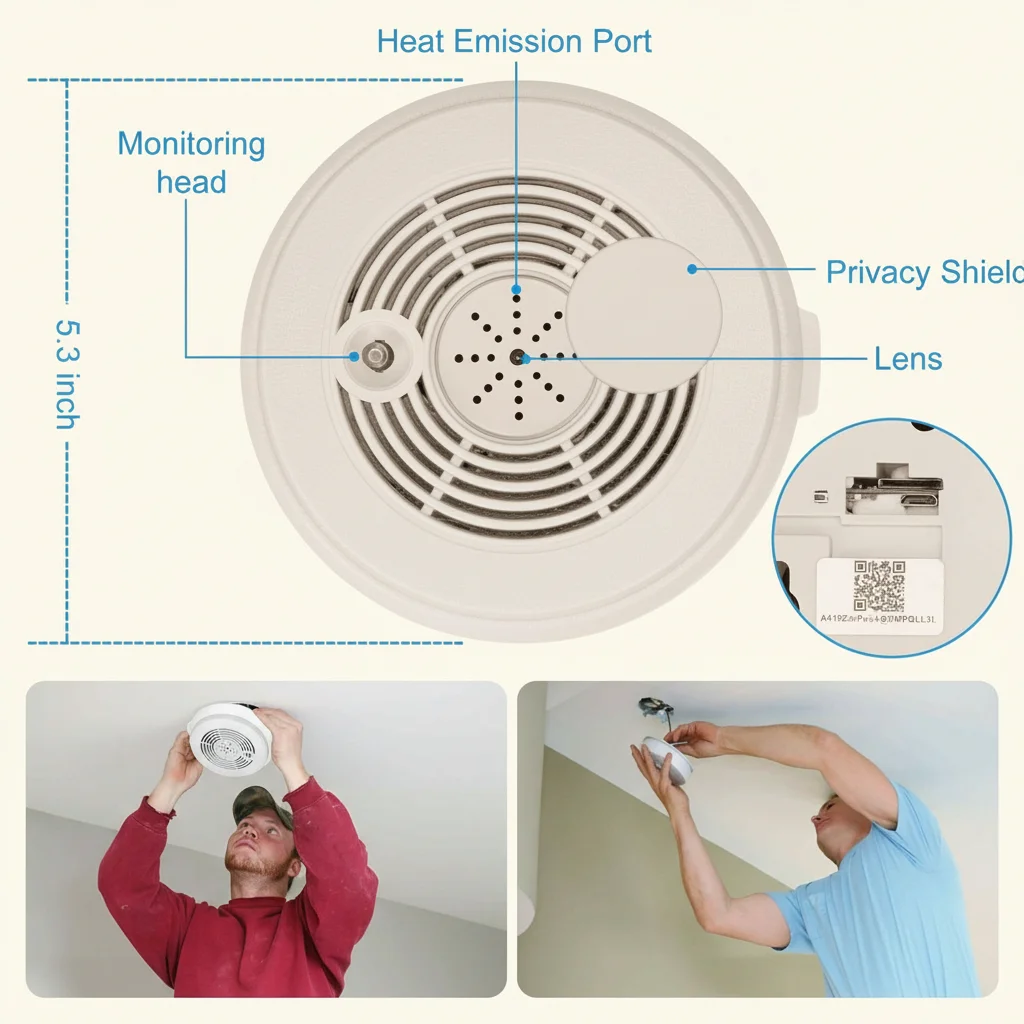
Tipps zur Überprüfung von Uhrkameras und Ladegerätkameras
Clock cameras are among the most difficult to detect visually because they are perfectly functional timepieces — the camera is genuinely secondary to the product. A Uhrkamera uses a 2mm pinhole lens hidden in the clock face, typically integrated into a decorative segment that does not obviously correspond to any display element.
Here’s what most people get wrong: they look for a hole on the front face. But the lens may be embedded at an angle within the hour markings, behind a ventilation slot, or hidden inside a painted segment of the face. The best approach:
– Hold the clock at arm’s length and use your phone camera flashlight from various angles
– Look specifically at 9 o’clock and 3 o’clock positions — common lens placements due to the visual symmetry of clock faces
– Check the USB charging cable: if a bedside clock has a USB port on the back, that’s normal, but if it also has a cable running to a power outlet Und a separate USB hub nearby, that’s worth questioning
For USB charger cameras, the same logic applies. A standard USB charger has one or two USB-A ports and possibly a Type-C port. If the unit has an additional dark circle or slot that does not correspond to any port, socket, or LED indicator, treat it as suspicious.
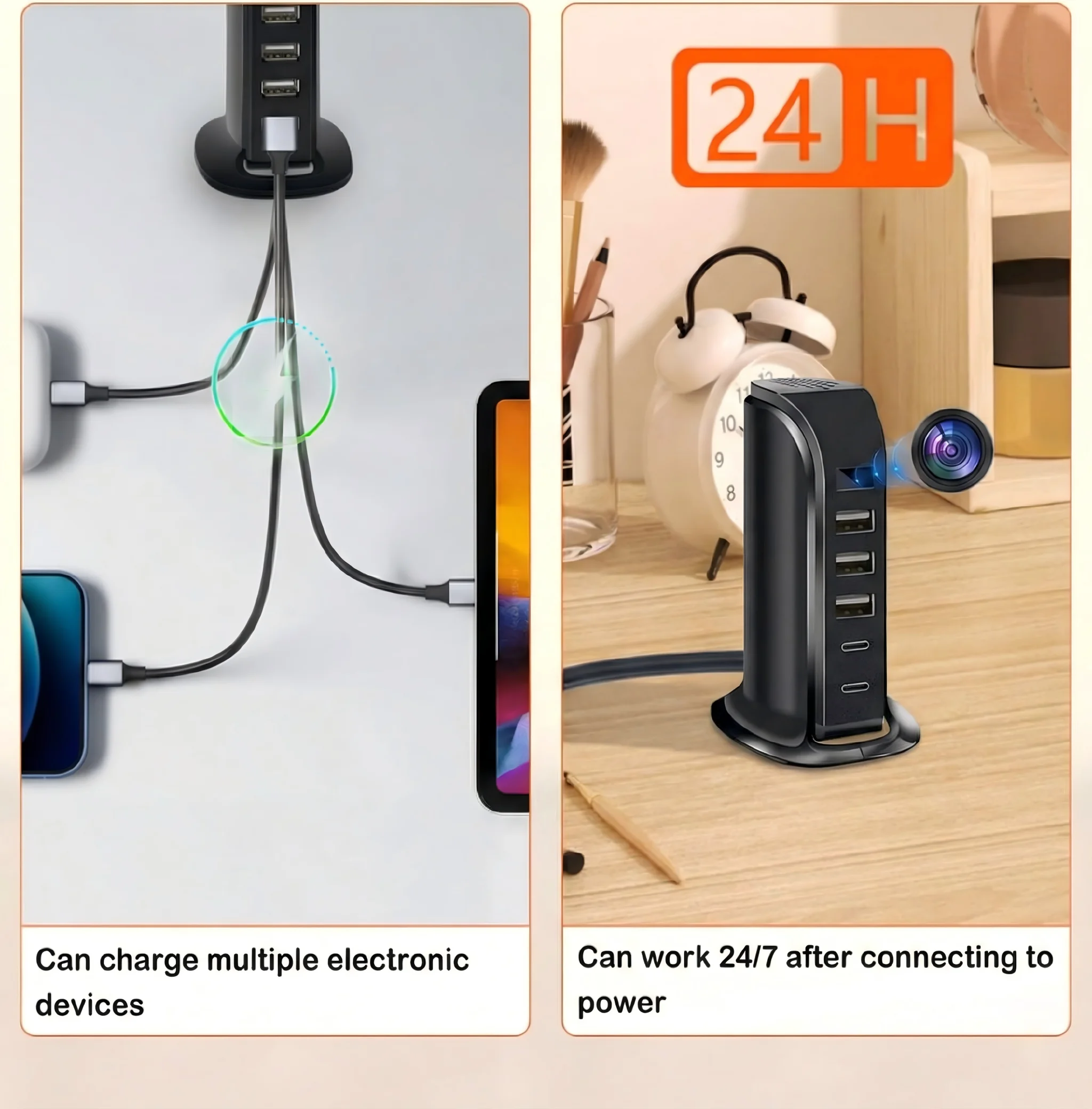
Warum Sie wissen sollten, wie diese Kameras funktionieren
And that’s where most people give up — they don’t find anything obvious and assume the room is clean. But understanding how these devices function tells you something more useful than a visual inspection alone: it tells you what conditions activate them.
WiFi hidden cameras typically operate in one of two modes:
– Kontinuierliche Aufnahme — stores to SD card non-stop, usually drains battery quickly
– Bewegungsaktivierte Aufnahme — only activates when someone enters the frame
The second mode is far more common in covertly deployed cameras because it conserves battery and storage. Practically, this means: if you walk into a room and stand still, the camera may not capture you in the first 5–10 seconds while the motion detection algorithm confirms your presence. This is not a detection opportunity, but it explains why sweeping the room immediately when you enter is the most effective timing.
For devices using cloud storage and live streaming, the camera is continuously active the moment it connects to WiFi. This is why the network scan method catches more devices than the IR method — even a camera with its IR LEDs disabled will still appear on the local network if it’s connected.
Was zu tun ist, wenn Sie eine versteckte Kamera finden
First: document without destroying. Use your phone to photograph and video the device in place, from multiple angles. Do not touch or move it — this preserves evidence integrity. Note the room number, address, and time.
Second: report to the platform. Both Airbnb and Booking.com have specific protocols for hidden camera reports. Airbnb’s Trust & Safety team can be reached directly at airbnb.com/help/contact-us. They are required to investigate and remove listings with substantiated reports within 24 hours under their 2019 non-disclosure camera policy.
Third: contact local authorities. In Italy, covert filming of people in private spaces is a criminal offense under Article 615-bis of the Penal Code (“Illecita interferenza nella vita privata”), punishable by 6 months to 4 years imprisonment. In the UK, the Voyeurism (Offences) Act 2019 specifically criminalises upskirting and covert bedroom/bathroom filming. In Germany, §201 StGB covers illegal audio recording and wiretapping, while §201a covers image capture in private spaces.
Do not attempt to confront the host yourself. Collect the evidence and let the legal process move forward.
Abschluss: Fünf Minuten, die Ihre Privatsphäre schützen können
Here’s the kicker — the entire detection process takes under five minutes when you know the methodology. Turn off the lights, run the phone camera in IR mode, scan the WiFi network, check the objects that don’t quite belong. You are not looking for a needle in a haystack; you are looking for a lens that reflects light in a specific way, a device on a network, or an object slightly out of place.
Das Wachstum von Geräten wie dem WiFi Rauchmelder-Kamera im legitimen Markt für Heimüberwachung ist eine zweischneidige Geschichte. Dies sind leistungsstarke Werkzeuge für Eltern, die Babysitter überwachen, Geschäftsinhaber, die ihre Räumlichkeiten schützen, und Hausbesitzer, die Paketzustellungen verfolgen. Aber dieselbe Technologie in den falschen Händen und an den falschen Orten wird zu einem Eingriff in die Privatsphäre. Zu wissen, wie diese Kameras aufgebaut sind – ihre Linsengrößen, ihre Konnektivität, ihre Bauformen – ist die beste Verteidigung gegen ihren Missbrauch.
Sicherer reisen. Fünf Minuten, bevor Sie Ihre Taschen auspacken.
Häufig gestellte Fragen
F: Kann ein herkömmlicher Metalldetektor versteckte Kameras finden?
A: Nein. Metalldetektoren können Kamerakomponenten nicht von anderen metallischen Gegenständen unterscheiden. Ein spezieller RF (Radiofrequenz)-Detektor oder Linsendetektor (der IR/LED-Beleuchtung verwendet, um Linsenreflexionen zu erzeugen) ist weitaus effektiver.
F: Benötigen versteckte Kameras immer WLAN, um zu funktionieren?
A: Nein. Einige Kameras speichern lokal auf einer micro SD-Karte ohne Netzwerkverbindung. Diese sind für WiFi-Scanning unsichtbar. Sie benötigen jedoch physischen Zugriff, um das Material zu erhalten, was ihre Nutzung in den meisten Vermietungsszenarien limitiert.
Q: Sind versteckte Kameras in Airbnb-Vermietungen häufig?
A: Häufiger als die meisten Gastgeber denken. Die Airbnb-Policy-Update von 2023 selbst gab an, dass “unbekannte Indoor-Kameras” unter den Hauptgründen für die Entfernung von Gastgebern aus der Plattform sind. Unabhängige Forschung deutet darauf hin, dass 1–3% der Kurzzeitvermietungen mindestens ein verdecktes Aufzeichnungsgerät enthalten.
Q: Ist es legal, das WiFi eines anderen für Geräte zu scannen?
A: Passive Netzwerkerkennung (Betrachtung von Geräten, die mit einem gemeinsamen Netzwerk verbunden sind, für das Sie Zugangsberechtigung haben) ist in der EU und UK generell legal, da Sie ein legitimer Nutzer dieses Netzwerks sind. Aktive Port-Scanning ohne Genehmigung kann in den Bereich der Computer-Missbrauch überschreiten. Bleiben Sie bei passiver Geräteenumeration.
Q: Was sollte ich tun, wenn Airbnb nicht auf meine Bericht reagiert?
A: Erstellen Sie einen Bericht bei der lokalen Polizei (denúncia in Italien, denuncia bei der Polizia Postale für Cyber-bezogene Datenschutzverletzungen). Sie können auch über die nationale Datenschutzbehörde – den Garante per la Protezione dei Dati Personali in Italien oder die ICO in UK – eskalieren.

 English
  Italiano
  Deutsch
  Français
  Español
  Polski