
Kamera w czujniku dymu wygląda jak zupełnie zwyczajne, sufitowe urządzenie przeciwpożarowe. Jedyna różnica polega na tym, że za tą samą przyciemnioną plastikową obudową, która skrywa czujnik fotoelektryczny, znajduje się miniaturowa kamera do nadzoru — zazwyczaj obiektyw pinhole 2MP lub 4MP z szerokokątnym polem widzenia, noktowizją IR i łącznością WiFi do zdalnego monitorowania.
Jeśli jesteś dystrybutorem sprzętu bezpieczeństwa z Wielkiej Brytanii lub UE, instalatorem lub nabywcą B2B oceniającym kamery w czujnikach dymu do swojego katalogu produktów, ten przewodnik obejmuje wszystko, co musisz wiedzieć, aby ocenić rynek, zrozumieć ramy prawne i dopasować odpowiedni produkt do właściwego zastosowania. Przyjrzymy się, jak faktycznie działa sprzęt, gdzie te urządzenia są legalnie wdrażane w całej Europie oraz jakie obowiązki zgodności mają zastosowanie, gdy sprzedajesz lub instalujesz je komercyjnie.
Jak działa ukryta kamera w czujniku dymu?
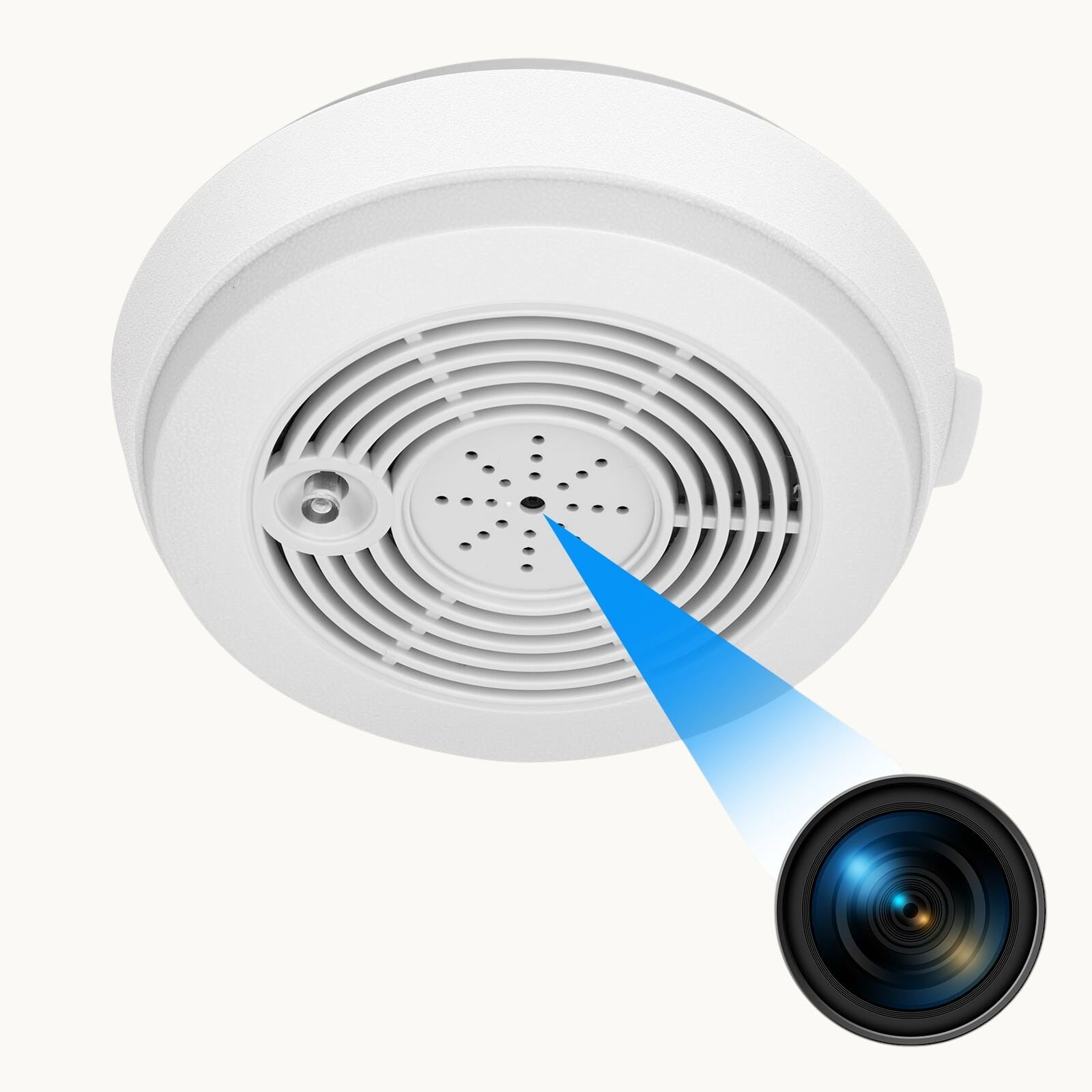
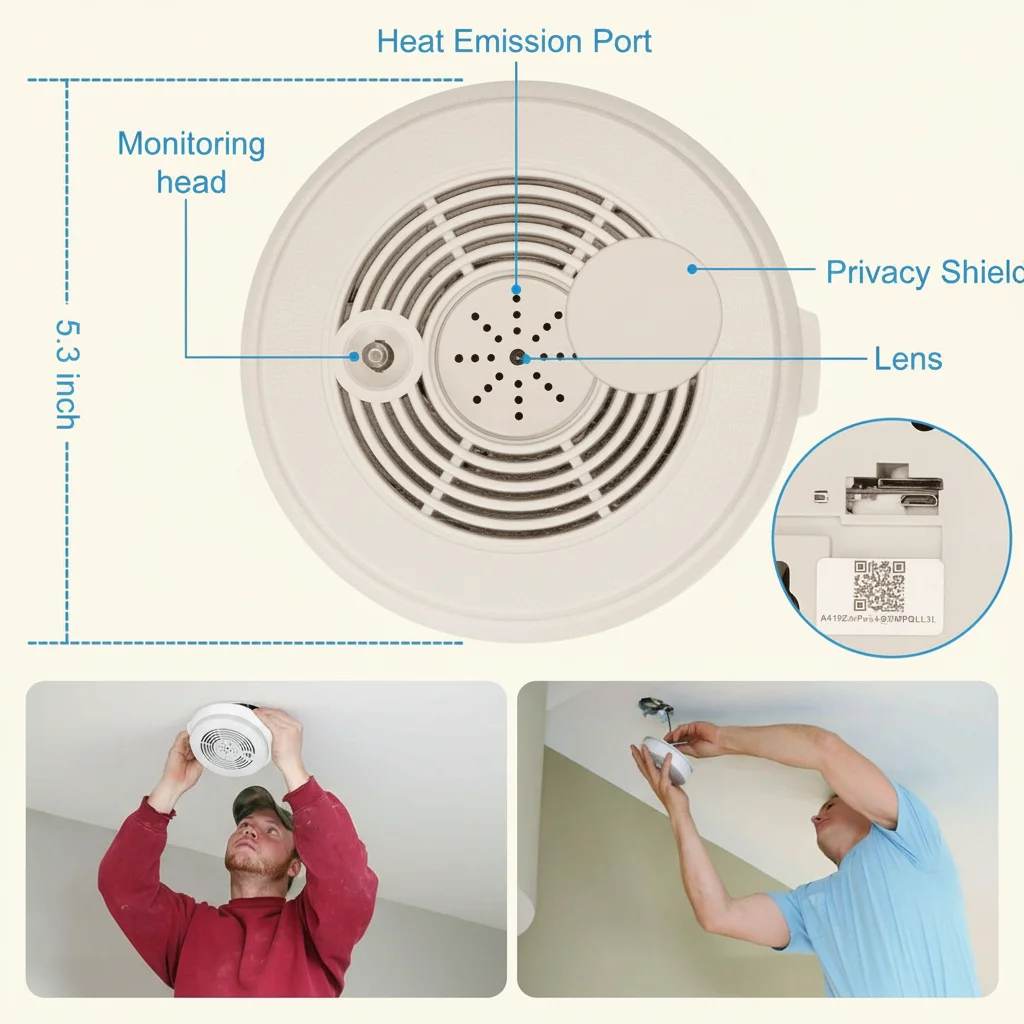
Zrozumienie konstrukcji wyjaśnia, dlaczego ta forma urządzenia jest zarówno skuteczna, jak i wrażliwa pod względem prawnym.
Obudowa dwufunkcyjna
Standardowy czujnik dymu wykorzystuje komorę fotoelektryczną do wykrywania cząstek dymu. Obudowa jest zaprojektowana tak, aby umożliwić cyrkulację powietrza, jednocześnie chroniąc komorę pomiarową przed kurzem i zanieczyszczeniami. Producenci wykorzystują tę obudowę ponownie — otwory wentylacyjne pozostają funkcjonalne, dzięki czemu urządzenie nadal przechodzi kontrolę wizualną jako autentyczny element bezpieczeństwa przeciwpożarowego.
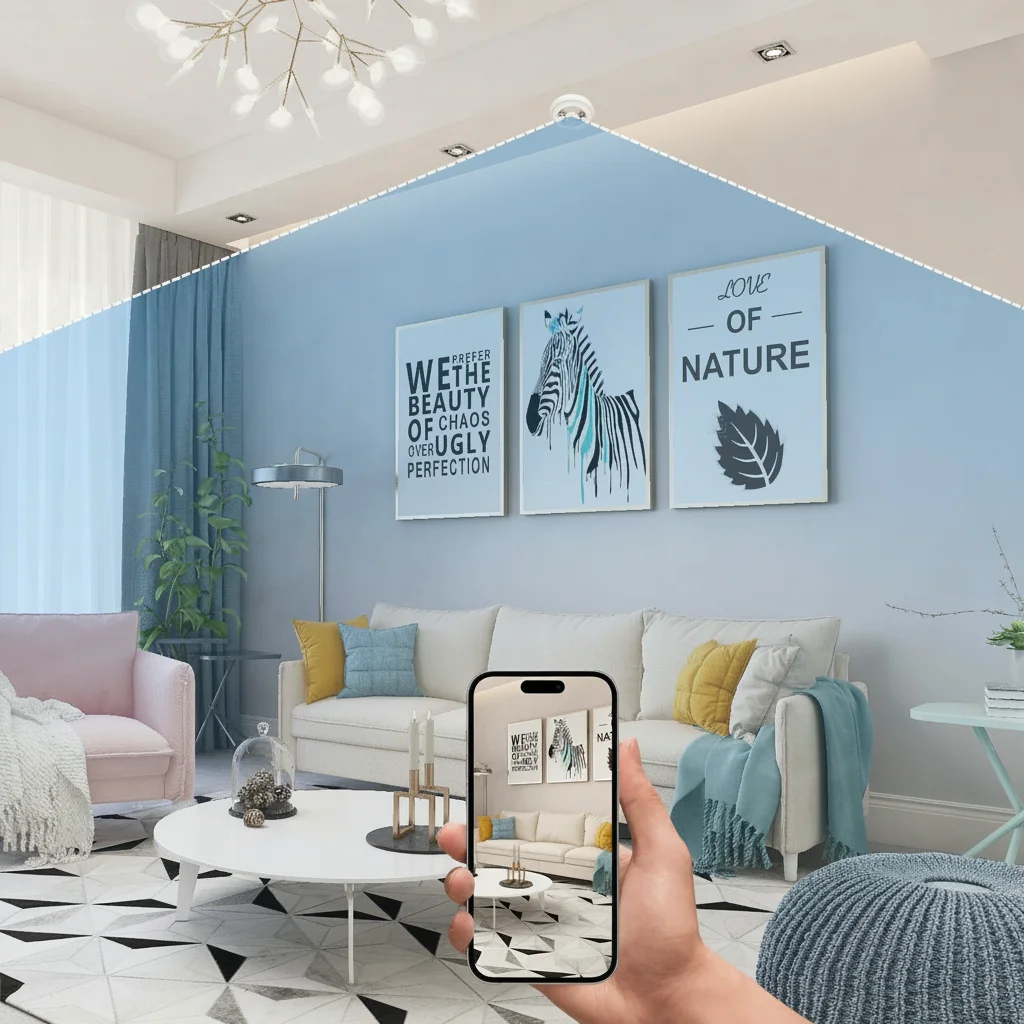
Za przednią płytą dyfuzyjną znajduje się maleńki moduł kamery na poziomie płytki. Obiektyw to zazwyczaj otworek 3,6 mm (odpowiadający w przybliżeniu 90° przekątnego pola widzenia) lub wariant szerokokątny 2,8 mm sięgający 110°. Znajduje się on za małym ciemnym okienkiem, które jest albo zintegrowane z istniejącym wzorem otworów wentylacyjnych, albo wywiercone jako osobny dyskretny otwór.
Architektura zasilania
Większość kamer WiFi w czujnikach dymu pobiera zasilanie z istniejącej instalacji 230 V AC budynku przez mały wewnętrzny moduł obniżający napięcie, dokładnie tak jak standardowy przewodowy czujnik dymu. Oznacza to:
– Brak konieczności wymiany baterii, brak martwych punktów związanych z awarią baterii
– Ciągła praca bez zaplanowanych przeglądów konserwacyjnych
– Urządzenie wygląda identycznie jak każdy inny czujnik sufitowy na planie obwodów
Istnieją warianty z zasilaniem awaryjnym, ale są rzadziej stosowane w instalacjach komercyjnych, ponieważ wprowadzają pojedynczy punkt awarii, którego przepisy budowlane dotyczące systemów sygnalizacji pożaru nie uwzględniają.
Nagrywanie i łączność
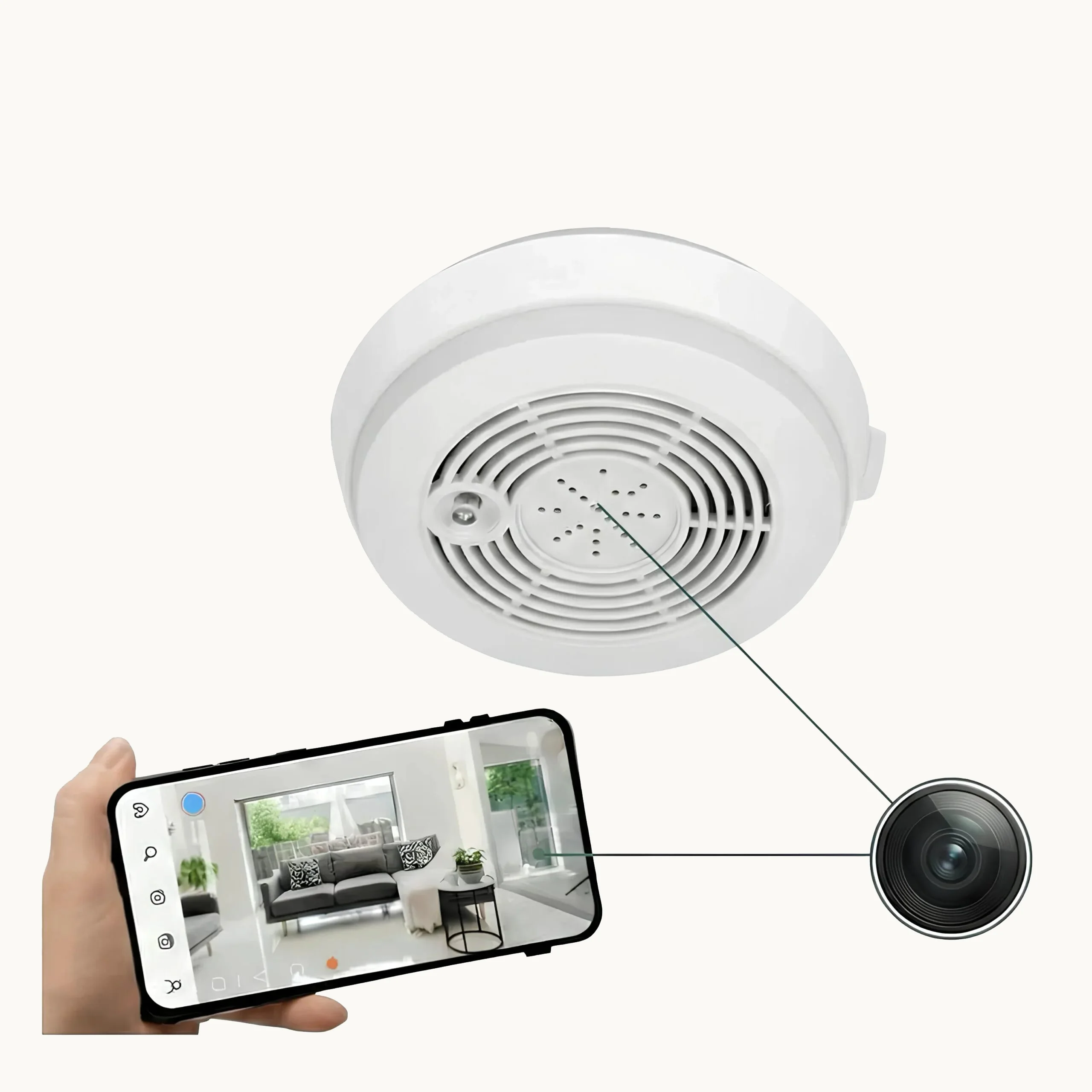
Nowoczesne kamery WiFi w czujnikach dymu (2,4 GHz, 802.11n) łączą się z lokalnym routerem i przesyłają obraz do towarzyszącej aplikacji mobilnej — Tuya, V380 i podobne platformy white-label dominują na tym rynku. Tryby nagrywania zazwyczaj obejmują:
| Tryb nagrywania | Wyzwalacz | Składowanie | Dostęp zdalny |
|---|---|---|---|
| Ciągła pętla | Zawsze włączone | microSD (do 128 GB) lub NVR | Przez aplikację |
| Wyzwalane ruchem | Detekcja PIR lub zmiany pikseli | microSD / chmura | Powiadomienia push + aplikacja |
| Wyzwalane dźwiękiem | Regulowany próg dB | microSD | Powiadomienia push + aplikacja |
| Oparty na harmonogramie | Okna czasowe | microSD | Odtwarzanie w aplikacji |
Dźwięk jest obsługiwany przez mały mikrofon MEMS na płytce. To tutaj koncentruje się ryzyko prawne — omówimy to w sekcji zgodności poniżej.
Ekosystem TUYA
Większość kamer w czujkach dymu z segmentu budżetowego i średniej półki sprzedawanych przez dystrybutorów kanałem Alibaba wykorzystuje ekosystem TUYA Smart lub TUYA Smart Life. Oznacza to:
– Aplikacja jest uniwersalna (działa z setkami marek urządzeń)
– Aktualizacje oprogramowania układowego są wysyłane przez TUYA, a nie przez sprzedawcę sprzętu
– Dane mogą być kierowane przez serwery TUYA (istotne dla kwestii rezydencji danych w RODO)
– Lokalne strumieniowanie RTSP jest często blokowane lub ograniczane, co oznacza zależność od łączności z chmurą
W przypadku wdrożeń komercyjnych w UE, do których mają zastosowanie umowy powierzenia przetwarzania na podstawie art. 28 RODO, zależność od TUYA jest czynnikiem zgodności, który musisz ujawnić swoim klientom.
Czy kamery w czujnikach dymu są legalne w Wielkiej Brytanii?
Oto bezpośrednia odpowiedź, a następnie niuanse: tak, kamery w czujnikach dymu są legalne w Wielkiej Brytanii do uzasadnionych celów bezpieczeństwa na terenie prywatnym, z zastrzeżeniem obowiązków w zakresie ochrony danych oraz szczególnych zakazów rejestrowania prywatnych czynności bez zgody.
Trójwarstwowe ramy prawne
Warstwa 1 — The Voyeurism (Offences) Act 2019
To warstwa karna. Sekcja 1 tworzy przestępstwo, w którym osoba obsługuje sprzęt, aby obserwować lub nagrywać inną osobę wykonującą prywatny czyn bez zgody tej osoby, w celu uzyskania satysfakcji seksualnej lub spowodowania upokorzenia, niepokoju lub cierpienia.
Czynność prywatna obejmuje sytuacje, gdy osoba jest rozebrana, korzysta z toalety lub przebywa w miejscu, w którym może racjonalnie oczekiwać prywatności od obserwacji.
Maximum sentence: 2 lata pozbawienia wolności. Ma to zastosowanie niezależnie od tego, czy nagranie jest przechowywane lokalnie, czy przesyłane strumieniowo zdalnie.
Kluczowy punkt dla dystrybutorów: The Voyeurism Act jest wymierzony w instalator i użytkownik, a nie producenta ani sprzedawcy. Jednak świadoma sprzedaż do wyraźnie nielegalnego zastosowania (np. klient, który wprost mówi, że instaluje urządzenie w przebieralni) może narazić Cię na zarzuty współodpowiedzialności.
Warstwa 2 — UK GDPR i ustawa o ochronie danych z 2018 r.
Każdy materiał filmowy przedstawiający możliwą do zidentyfikowania osobę stanowi dane osobowe na mocy UK GDPR (zachowanego w prawie brytyjskim po brexicie). Jako administrator danych, osoba lub firma wdrażająca kamerę ma obowiązki:
– Podstawa prawna: Prawnie uzasadniony interes (bezpieczeństwo domowe) lub, w przypadku wdrożeń komercyjnych, często test równowagi wobec prawa do prywatności
– Przezroczystość: Kodeks praktyk zatrudnienia ICO wymaga, aby firmy informowały pracowników o monitoringu — ukryte kamery w miejscu pracy wymagają wyraźnego uzasadnienia i rzadko są zgodne z prawem bez powiadomienia
– Minimalizacja danych: Nie nagrywaj więcej niż to konieczne
– Retention limitation: Nagrania starsze niż 30 dni są trudne do uzasadnienia w większości celów bezpieczeństwa
– Wnioski o dostęp do danych: Sfilmowani pracownicy lub odwiedzający mają prawo zażądać nagrań, na których się znajdują
Wyłączenie dotyczące gospodarstw domowych na mocy DPA 2018 (odzwierciedlające art. 2 ust. 2 lit. c RODO) oznacza, że osoba prywatna instalująca kamerę w czujniku dymu we własnym domu w celach bezpieczeństwa osobistego zasadniczo nie podlega zakresowi UK GDPR — pod warunkiem że nagranie nie obejmuje przestrzeni publicznych ani obszarów wspólnych.
Warstwa 3 — RIPA 2000 i nagrywanie dźwięku
To najczęściej pomijana warstwa. Ustawa o regulacji uprawnień śledczych z 2000 r. reguluje przechwytywanie komunikacji. Jeśli kamera w czujniku dymu obejmuje nagrywanie dźwięku:
– Nagrywanie rozmowy, w której jesteś stroną: zasadniczo zgodne z prawem
– Nagrywanie rozmowy dwóch innych osób bez ich wiedzy: potencjalnie niezgodne z prawem na mocy RIPA oraz common law w zakresie naruszenia poufności
– Używanie urządzenia do ciągłego nagrywania dźwięku otoczenia w miejscu pracy: prawie na pewno wymaga autoryzacji RIPA dla podmiotów publicznych; w przypadku prywatnych pracodawców ryzykiem jest odpowiedzialność cywilna i niedopuszczalność dowodów
ICO enforcement powers: Biuro Komisarza ds. Informacji może wydawać nakazy egzekucyjne, nakładać kary do 17,5 mln funtów lub 4% globalnego rocznego obrotu za poważne naruszenia oraz prowadzić postępowania karne za umyślne utrudnianie obowiązków wynikających z DPA.
Szkocja, Irlandia Północna i Walia
Podstawowe ramy prawne (DPA 2018, UK GDPR, ustawa o wizjerstwie z 2019 r.) obowiązują we wszystkich czterech krajach. Odrębny system sądowniczy Szkocji sprawia, że argumenty o niedopuszczalności dowodów opierają się na szkockim prawie zwyczajowym, a nie na angielskich precedensach, ale obowiązki w zakresie ochrony danych są identyczne.
Przepisy dotyczące kamer w czujnikach dymu w UE
Sprzedaż i wdrażanie kamer w czujnikach dymu na rynkach UE oznacza poruszanie się po krajowych implementacjach RODO oraz przepisach dotyczących monitoringu specyficznych dla danego kraju. Oto, co powinna uwzględniać dokumentacja zgodności dla czterech największych rynków UE.
Niemcy
Niemcy stosują Bundesdatenschutzgesetz (BDSG) jako krajowe uzupełnienie RODO, a także Betriebsverfassungsgesetz (BetrVG) w sprawach dotyczących miejsca pracy.
– Tajny nadzór w miejscu pracy: Rada zakładowa (Betriebsrat) ma prawa współdecydowania na podstawie §87 ust. 1 pkt 6 BetrVG w odniesieniu do wszystkich urządzeń technicznych służących do monitorowania zachowań pracowników. Instalacja kamery w czujniku dymu w miejscu pracy bez zgody rady zakładowej stanowi nieuczciwą praktykę pracowniczą, a instalacja może zostać nakazana do usunięcia
– BDSG §26: Przetwarzanie danych pracowników musi być uzasadnione stosunkiem pracy. Szeroki, nieujawniony monitoring jest nieproporcjonalny
– RODO art. 35 — DPIA: Ocena skutków dla ochrony danych jest obowiązkowa w przypadku systematycznego monitorowania przestrzeni publicznych lub półpublicznych — większość komercyjnych instalacji czujników dymu uruchamia ten wymóg
– Strafgesetzbuch §201: Odpowiedzialność karna za rejestrowanie prywatnych wypowiedzi bez zgody — funkcja audio tworzy w Niemczech dodatkowe ryzyko karne, którego nie stwarza sam obraz wideo
Francja
Francuska CNIL (Commission Nationale de l’Informatique et des Libertés) prowadzi jedne z najsurowszych kontroli w zakresie nadzoru w Europie.
– Obowiązkowa DPIA: Under CNIL guidance implementing GDPR Article 35, any systematic video surveillance installation — including covert smoke detector cameras — requires a documented DPIA before deployment
– Règlement intérieur: Firmy zatrudniające ponad 50 pracowników muszą uwzględnić zasady dotyczące urządzeń monitorujących w swoich regulaminach wewnętrznych (regulaminie pracy), zatwierdzonych przez komitety IT i HR
– Rejestracja CNIL: W zależności od skali wdrożenia instalacja może wymagać zgłoszenia do CNIL za pośrednictwem ich portalu internetowego
– Szatnie i pomieszczenia sanitarne: Bezwzględnie zabronione we wszystkich okolicznościach; francuskie prawo karne (Code Pénal §226-1) przewiduje karę do 1 roku pozbawienia wolności za nielegalne rejestrowanie wizerunku w przestrzeniach prywatnych
Włochy
Italy’s Garante per la Protezione dei Dati Personali is an active enforcer.
– Statut pracowników (Statuto dei Lavoratori), art. 4: Zabrania pracodawcom wykorzystywania sprzętu audiowizualnego do kontrolowania wydajności pracowników bez zgody związku zawodowego lub zgody sądowej
– Egzekwowanie przez Garante: Kary administracyjne do 20 mln euro lub 4% globalnego obrotu; Garante wydał szczegółowe wytyczne dotyczące sprzętu do nadzoru w miejscu pracy
– Inteligentna praca: Włoska ustawa o pracy zdalnej z 2020 r. dodaje dodatkowe wymogi informacyjne dotyczące monitorowania pracy zdalnej; kamera w czujniku dymu w biurze domowym wykorzystywana do monitorowania pracownika zdalnego wymaga wyraźnej pisemnej zgody
– Nagrywanie dźwięku: Włochy należą do najsurowszych państw UE w zakresie nadzoru audio; wymogi dotyczące zgody na rejestrowanie głosu są rygorystyczne
RODO Artykuł 35 — Kryteria progowe DPIA
Dla wszystkich państw członkowskich UE Ocena skutków dla ochrony danych jest obowiązkowe przy wdrażaniu kamer w czujnikach dymu w którymkolwiek z tych scenariuszy:
– Systematyczny monitoring obszaru publicznie dostępnego
– Przetwarzanie prawdopodobnie skutkuje wysokim ryzykiem naruszenia praw i wolności osób fizycznych
– Nowe technologie stosowane na dużą skalę
– Śledzenie lokalizacji lub zachowania osób
Nawet jeśli DPIA nie jest prawnie obowiązkowa, przygotowanie jej jako dostawca lub instalator stanowi silny atut sprzedażowy — świadczy o kompetencjach w zakresie RODO i zmniejsza ryzyko odpowiedzialności prawnej Twojego klienta.
Gdzie legalnie stosuje się kamery w czujnikach dymu?
Oto uczciwe zestawienie, gdzie te urządzenia mają rzeczywistą wartość komercyjną — a gdzie przekraczają granicę.
Zgodne z prawem wdrożenia
Monitoring bezpieczeństwa domu i opieki nad osobami starszymi
Kamera w czujniku dymu w przedpokoju, salonie lub kuchni prywatnego domu pełni podwójną funkcję: ochronę przeciwpożarową i monitoring bezpieczeństwa. Wyłączenie dotyczące gospodarstw domowych oznacza, że UK GDPR i DPA 2018 mają zastosowanie w minimalnym zakresie. Dystrybutorzy z Wielkiej Brytanii/UE kierujący ofertę do rynku zabezpieczeń domowych napotykają tu najmniejsze przeszkody prawne.
W przypadku opieki nad osobami starszymi w prywatnym domu: członek rodziny instalujący kamerę w czujniku dymu w celu monitorowania wrażliwego krewnego mieści się w pełni w uzasadnionym interesie i jest powszechnie uznawany za zgodny z prawem.
Zapobieganie stratom w handlu detalicznym (z powiadomieniem)
Kamera w czujce dymu umieszczona w celu monitorowania powierzchni sprzedażowej, magazynu lub obszaru POS jest zgodna z prawem, gdy:
– Pracownicy są powiadomieni (wytyczne ICO, Kodeks praktyk zatrudnienia)
– Kamery nie są skierowane na obszary, w których pracownicy mają podwyższone oczekiwania prywatności (pokoje socjalne, toalety)
– Wyświetlana jest informacja o ochronie prywatności zgodna z DPA 2018
Uwaga: kamera musi być wystarczająco widoczna, aby klienci i personel mogli ją zauważyć — kamera w czujniku dymu zainstalowana ukrycie w przestrzeni handlowej, o której personel nie wie, stwarza znaczne ryzyko prawne.
Obiekty magazynowe i logistyczne
Obiekty o niskim stosunku liczby personelu do odwiedzających (samoobsługowe magazyny, huby logistyczne z ograniczoną obecnością pracowników) to typowe scenariusze wdrożenia. Kluczowym wymogiem jest to, aby każdy pracownik pracujący w danym pomieszczeniu został poinformowany. Kamera w czujniku dymu obejmująca dok załadunkowy lub strefę wysokowartościowych towarów jest generalnie proporcjonalna w świetle DPA 2018 / RODO.
Obiekty hotelarskie i nieruchomości na wynajem
Tu obraz prawny się komplikuje — i tu Twoi klienci będą zadawać pytania.
Instalowanie kamer w czujnikach dymu w obiektach Airbnb lub wynajmowanych na wakacje: sytuacja prawna różni się w zależności od jurysdykcji. W Anglii i Walii wynajmujący instalujący kamery wewnątrz wynajmowanej nieruchomości muszą poinformować o tym najemców zgodnie z Housing Act 2018 (z późniejszymi zmianami) oraz Consumer Rights Act 2015. Brak ujawnienia to co najmniej sprawa cywilna, a w przypadku najmu mieszkaniowego potencjalnie sprawa karna na podstawie Protection from Eviction Act 1977.
Kamery w częściach wspólnych hoteli (holach, korytarzach) są zasadniczo zgodne z prawem przy odpowiednim oznakowaniu. Kamery w pokojach gości nie są.
Zabronione wdrożenia (uniwersalne)
Niezależnie od jurysdykcji, takie wdrożenia są niezgodne z prawem w Wielkiej Brytanii i UE:
– Każde pomieszczenie, w którym osoba ma uzasadnione oczekiwanie prywatności: łazienki, przebieralnie, toalety, sypialnie
– Każdy ukryty monitoring w miejscu pracy bez wyraźnego zgodnego z prawem uzasadnienia, a w Niemczech bez zgody rady zakładowej
– Nagrywanie dźwięku prywatnych rozmów bez wiedzy i zgody wszystkich stron (RIPA 2000, Wielka Brytania; niemiecki Strafgesetzbuch §201; włoskie prawo o ochronie prywatności)
– Dystrybucja lub udostępnianie nagrań zarejestrowanych w przestrzeniach prywatnych bez wyraźnej zgody
How to Spot a Smoke Detector Hidden Camera
Twoi klienci końcowi — szczególnie w sektorze hotelarskim — staną przed tym pytaniem ze strony własnych gości i najemców. Oto jak wygląda wykrywanie z drugiej strony obiektywu.
Metoda oględzin wizualnych
Spójrz na czujnik dymu, jakbyś nigdy wcześniej go nie zauważył. Prawdziwe czujniki dymu mają:
– A uniform appearance — same manufacturer, same model, same mounting height
– Mały przycisk testowy (zwykle czerwony lub biały, często blisko krawędzi)
– Brak widocznego otworu obiektywu za dyfuzorem
Wersja wyposażona w kamerę może mieć:
– Nieco inny odcień plastiku (często w jednym miejscu nieco ciemniejszy)
– A very small pinhole opening (0.5–2mm diameter) — sometimes disguised as a second mounting screw
– Brak przycisku testowego lub przycisk testowy, który nie wygląda na fabrycznie oryginalny
Metoda latarki
Wyłącz światło w pomieszczeniu. Skieruj jasną latarkę pod kątem na powierzchnię czujki. Obiektyw kamery za plastikiem wytworzy charakterystyczny niebiesko-biały błysk — odmienny od rozproszonego odbicia zwykłego plastiku.
Metoda z kamerą smartfona
Skieruj kamerę smartfona na czujnik dymu. Diody podczerwieni (używane do noktowizji) pojawią się jako jasne czerwone lub fioletowe punkty na ekranie telefonu. Uwaga: wiele prawdziwych czujników dymu używa diod LED sygnalizujących stan; odróżnij równomiernie migającą diodę LED zwykłego czujnika od wzoru oświetlenia IR kamery.
Metoda detekcji RF
Kamery w czujnikach dymu WiFi przesyłają dane, gdy wykryją ruch lub w zaplanowanym interwale. Podstawowy detektor RF (dostępny u dostawców elektroniki za 20–50 GBP) zarejestruje skok w paśmie 2,4 GHz, gdy kamera się aktywuje. Włącz wykrywanie ruchu i pomachaj przed detektorem — skok RF na detektorze potwierdza aktywną transmisję.
Co zrobić, jeśli znaleziono ukrytą kamerę
To pytanie ze strony konsumenta, z którym spotkają się Twoi klienci z branży hotelarskiej. Prawidłowa odpowiedź:
1. Dokument — Photograph and video the device’s position, any visible markings, and any serial numbers
2. Nie dotykaj ani nie usuwaj — Manipulowanie przy urządzeniu może stanowić przestępstwo uszkodzenia mienia; zabezpiecz dowody
3. Zgłoś do zarządu nieruchomości — If in a hotel or rental, contact management immediately
4. Contact police — W Wielkiej Brytanii voyeurism jest przestępstwem; zgłoś na 101 lub udaj się na posterunek policji
5. Tymczasowo zasłoń obiektyw — Ręcznik lub kawałek taśmy na urządzeniu zasłania widok, gdy czekasz na pomoc
Specyfikacje techniczne istotne dla wdrożeń komercyjnych
Oceniając kamery w czujnikach dymu do odsprzedaży B2B lub instalacji, te specyfikacje odróżniają urządzenie hobbystyczne od produktu klasy komercyjnej.
Rozdzielczość i obiektyw
| Specyfikacja | Minimum dla identyfikowalnego nagrania | Standard komercyjny |
|---|---|---|
| Rozdzielczość | 1080p (1920×1080) | 1080p lub 2K |
| Ogniskowa obiektywu | 3,6 mm (kąt widzenia 90°) | 2,8–3,6 mm |
| Rozmiar czujnika | 1/4″ | 1/2.8″ or larger |
1080p przy szerokim kącie 90° z wysokości sufitu 2,4–3 m pozwoli uzyskać możliwą do zidentyfikowania twarz z odległości w poziomie około 3–5 m. Poza tym identyfikacja staje się trudna.
Noktowizja
Konfiguracja diod IR LED determinuje wydajność w słabym oświetleniu:
– 6–8 IR LEDs: adequate for residential use (5–8m range)
– 12+ diod IR z regulacją intensywności: lepsze dla środowisk komercyjnych/magazynowych
– No IR LEDs: daytime use only — clarify with your customer
Niektóre modele stosują mechaniczny filtr odcinający IR, który przełącza się automatycznie; tańsze modele mogą dawać lekki zafarb przy mieszanym oświetleniu.
Kwestie dotyczące WiFi
Nearly all smoke detector cameras operate on Tylko WiFi 2,4 GHz. Ma to znaczenie w komercyjnych wdrożeniach:
– 2,4 GHz przenika ściany i sufity lepiej niż 5 GHz, co jest pomocne przy montażu sufitowym
– Jednak 2,4 GHz jest zatłoczone na obszarach miejskich i w blokach — zakłócenia od kuchenek mikrofalowych, urządzeń Bluetooth i sąsiednich sieci mogą powodować utratę połączenia
– W przypadku wdrożeń wymagających gwarantowanej łączności zalecaj dedykowany SSID z rezerwacją przepustowości
Modele obsługujące 5 GHz istnieją, ale są rzadsze w tej obudowie i zazwyczaj kosztują więcej.
Przechowywanie i retencja
– Lokalna karta microSD: Najbardziej zgodna z RODO opcja — nagrania nie opuszczają obiektu, chyba że zostaną wyraźnie wyeksportowane. Zalecane: 64–128 GB na 7–14 dni ciągłego nagrywania zapętlonemu w 1080p
– Magazyn w chmurze: Kamery z ekosystemu TUYA zazwyczaj oferują 24-godzinny zapis w chmurze w modelu subskrypcyjnym. Kwestia rezydencji danych musi zostać rozwiązana w komercyjnych wdrożeniach w UE — potwierdź lokalizację serwerów TUYA
– Integracja z NVR: Modele wyższej klasy obsługują ONVIF/RTSP, co umożliwia integrację z komercyjnym systemem NVR. To preferowana opcja w instalacjach z wieloma kamerami
Pobór mocy i zgodność elektryczna
Urządzenia przewodowe 230V powinny posiadać oznakowanie CE zgodnie z dyrektywą niskonapięciową (LVD) 2014/35/UE. Wewnętrzny moduł zasilania musi być izolowany zgodnie z odpowiednimi normami bezpieczeństwa elektrycznego. Wersje zasilane bateryjnie powinny być zgodne z obowiązującymi dyrektywami dotyczącymi baterii.
Upewnij się, że Twój dostawca może dostarczyć deklaracje zgodności — importerzy z UE są odpowiedzialni za zgodność z LVD na mocy rozporządzenia UE 2019/1020 (rozporządzenie w sprawie nadzoru rynku).
Wybór odpowiedniej kamery w czujniku dymu do Twojego zastosowania
Skorzystaj z tych kryteriów decyzyjnych przy dopasowywaniu produktu do wdrożenia u klienta.
Bezpieczeństwo domu / opieka nad osobami starszymi: Podstawowe urządzenie 1080p, zgodne z Tuya, przewodowe, z nagrywaniem wyzwalanym ruchem i powiadomieniami push jest wystarczające. Przedział cenowy: 40–80 GBP. Kluczowe cechy: kompaktowa obudowa, niezawodna aplikacja, współpraca ze standardową instalacją 230 V.
Airbnb / holiday let: Priorytetowo wybierz urządzenie z tylko nagrywanie lokalne (bez zależności od chmury), działającym przyciskiem testowym zachowującym autentyczny wygląd oraz dyskretnymi diodami statusu. Przedział cenowy: 50–100 GBP. Potwierdź obowiązki informacyjne w danej jurysdykcji.
Zapobieganie stratom w handlu detalicznym: Rozważ urządzenie z Obsługa ONVIF/RTSP do integracji z NVR, umożliwiające centralne przechowywanie nagrań i zarządzanie nimi zgodnie ze standardową polityką bezpieczeństwa. Szukaj WDR (Wide Dynamic Range) do obsługi mieszanego oświetlenia naturalnego i sztucznego. Przedział cenowy: 80–150 GBP.
Magazyn / logistyka: Preferuj urządzenia z Detekcja ruchu PIR (niezawodniejszą niż detekcja zmian pikseli w dużych otwartych przestrzeniach), 12+ diodami IR do pracy w słabym świetle oraz lokalnym zapisem na karcie SD jako główną metodą retencji. Przedział cenowy: 80–120 GBP.
Komercyjne wdrożenia wielokamerowe: Oceń platformę zarządzania. Urządzenia oparte na TUYA sprawdzają się w małych instalacjach, ale przy większej skali stają się nieporęczne. Zastanów się, czy komercyjny VMS (Video Management Software) z obsługą ONVIF nie będzie lepszym długoterminowym rozwiązaniem.
Lista kontrolna zgodności z RODO dla instalacji komercyjnych
Przejdź z klientami komercyjnymi z UE i Wielkiej Brytanii przez tę listę kontrolną przed instalacją:
1. Udokumentowana podstawa prawna — Czy uzasadniony interes jest właściwą podstawą, czy bardziej odpowiednia jest zgoda? W przypadku pracowników — czy przeprowadzono DPIA?
2. Wdrożone środki przejrzystości — Are appropriate notices displayed? Have employees been notified per ICO/CNIL guidance?
3. Skonfigurowana minimalizacja danych — Czy pole widzenia kamery jest ograniczone do minimalnego wymaganego obszaru? Czy nagrywanie jest ograniczone do ruchu/harmonogramu, a nie ciągłe?
4. Zdefiniowana polityka przechowywania danych — Czy nagrania są automatycznie usuwane po [30] dniach? Czy jest to udokumentowane?
5. Wdrożone kontrole dostępu — Kto może przeglądać nagrania? Czy aplikacja jest chroniona silnymi hasłami i uwierzytelnianiem dwuskładnikowym?
6. Potwierdzono rezydencję danych — Jeśli korzystasz z pamięci w chmurze, gdzie znajdują się serwery TUYA/podobne? Czy istnieje umowa powierzenia przetwarzania danych zgodna z art. 28 RODO?
7. Third-party sharing assessed — Czy nagrania będą kiedykolwiek udostępniane organom ścigania, ubezpieczycielom lub innym stronom trzecim? Na jakiej podstawie prawnej?
8. Zdefiniowano proces wniosków o dostęp podmiotu danych — Czy mają Państwo procedurę umożliwiającą osobom fizycznym żądanie nagrań, na których występują, w ustawowym terminie 30 dni?
Często zadawane pytania
Czy mogę legalnie zainstalować kamerę w czujniku dymu w mojej nieruchomości na wynajem w Wielkiej Brytanii?
Jako wynajmujący możesz zainstalować kamerę w czujce dymu w częściach wspólnych oraz w pokojach wynajmowanych jako krótkoterminowe lokale wakacyjne, pod warunkiem ujawnienia gościom obecności urządzeń rejestrujących przed dokonaniem rezerwacji lub przy zameldowaniu. W przypadku umów Assured Shorthold Tenancy instalacja jakiegokolwiek urządzenia monitorującego wewnątrz nieruchomości wymaga wyraźnej zgody najemcy na podstawie Housing Act 2018. Rejestrowanie obszarów, w których najemcy mają podwyższone oczekiwania prywatności (sypialnie, łazienki), jest niedozwolone.
Czy kamery w czujnikach dymu wymagają rejestracji w ICO?
W przypadku wdrożeń komercyjnych, w których instalator lub właściciel nieruchomości działa jako administrator danych, rejestracja w ICO (brytyjskim organie nadzorczym na mocy DPA 2018) jest obowiązkowa, jeśli organizacja przetwarza dane osobowe. Rejestracja odbywa się samoobsługowo przez stronę ICO i jest bezpłatna. Odpowiedniki w UE to CNIL we Francji, Garante we Włoszech i BfDI w Niemczech.
Czy kamera w czujniku dymu może nagrywać dźwięk w Wielkiej Brytanii?
Nagrywanie dźwięku w Wielkiej Brytanii podlega dodatkowym ograniczeniom prawnym wykraczającym poza wideo. Nagrywanie rozmowy, w której bierzesz udział, jest zasadniczo zgodne z prawem. Nagrywanie rozmów innych osób bez ich wiedzy może stanowić nielegalne przechwytywanie na mocy RIPA 2000 oraz naruszenie poufności. W przypadku wdrożeń komercyjnych najbezpieczniejszym domyślnym rozwiązaniem jest wyłączenie funkcji audio, chyba że nagrywanie dźwięku jest wyraźnie konieczne i prawnie uzasadnione.
Jaka jest różnica między kamerą w czujniku dymu a standardową kamerą WiFi w obudowie czujnika dymu?
Funkcjonalnie wydajność kamery jest podobna — różnica polega wyłącznie na obudowie. Zaletą kamery w czujniku dymu jest dyskrecja: montaż na suficie na wysokości 2,4–3 m zapewnia naturalnie szeroki kąt widzenia i umieszcza obiektyw tam, gdzie odwiedzający nie patrzą. Standardowa kamera WiFi na półce lub ścianie jest bardziej widoczna. W zastosowaniach, w których odstraszanie nie jest pożądane, obudowa czujnika dymu jest skuteczniejszą opcją.
Co dzieje się z nagraniami, jeśli kamera w czujniku dymu zostanie skradziona?
Skradzione nagrania na lokalnej karcie microSD są dostępne dla każdego, kto posiada tę kartę. Obowiązki administratora danych wynikające z RODO UE / UK GDPR wymagają kontrolowania fizycznego dostępu do urządzeń rejestrujących. W przypadku wdrożeń komercyjnych kamery należy montować przy użyciu elementów odpornych na manipulacje, a kartę pamięci umieszczać w miarę możliwości w fizycznie zabezpieczonej komorze. Jeśli urządzenie zostanie skradzione, należy potraktować to jako potencjalne naruszenie ochrony danych i powiadomić ICO w ciągu 72 godzin, jeśli nagranie zawierało możliwe do zidentyfikowania osoby.
Instalacja kamery w czujniku dymu jest prosta. Prawidłowe wdrożenie pod względem prawnym i technicznym wymaga zrozumienia granic. Dystrybutorzy i instalatorzy, którzy potrafią przeprowadzić swoich klientów przez te granice — zamiast po prostu sprzedawać produkt — budują trwałe relacje i unikają odpowiedzialności wynikającej z niewłaściwego użycia przez klienta.
Jeśli rozważają Państwo kamery w czujnikach dymu do zastosowań detalicznych, ochrony domów lub monitoringu komercyjnego, QZT Security oferuje szereg kamer WiFi w czujnikach dymu z pełną dokumentacją techniczną, certyfikatem zgodności CE oraz wysyłką w UE z naszego magazynu we Włoszech. Skontaktuj się z nami już dziś aby omówić Państwa wymagania lub zamówić egzemplarz próbny do oceny.

 English
  Italiano
  Deutsch
  Français
  Español
  Polski