
How Temu Budget Spy Cameras Are Changing the European Market
If you sell covert surveillance equipment anywhere in Europe today, you have felt the effect. A customer walks into a security equipment installer in Birmingham, asks about a 1080p mini camera, and the installer hands them a quote at £85. The customer pulls up Temu on their phone. They find a “1080p covert camera” at £11. They leave the shop. The installer calls us frustrated — asking whether the £11 unit is “basically the same thing.”
This article looks at the real data: what Temu is actually selling, how it compares to CE-certified products, what the regulatory consequences are for European resellers, and — critically — how established distributors can compete without entering a margin-destroying price war that they cannot win.
1. What Is Temu Actually Selling?
Temu operates on a model that is fundamentally different from traditional B2B distribution. Products are shipped directly from manufacturers in China to European consumers, bypassing importers, distributors, and local resellers entirely. The products are not CE certified. They are not GDPR compliant. They do not meet EU radio equipment (RED) directives. Most of them do not have a manufacturer name or contact address — a legal requirement under the EU’s Market Surveillance Regulation 2019/1020.
When a European consumer buys a “mini spy camera” on Temu for €12, what they receive is:
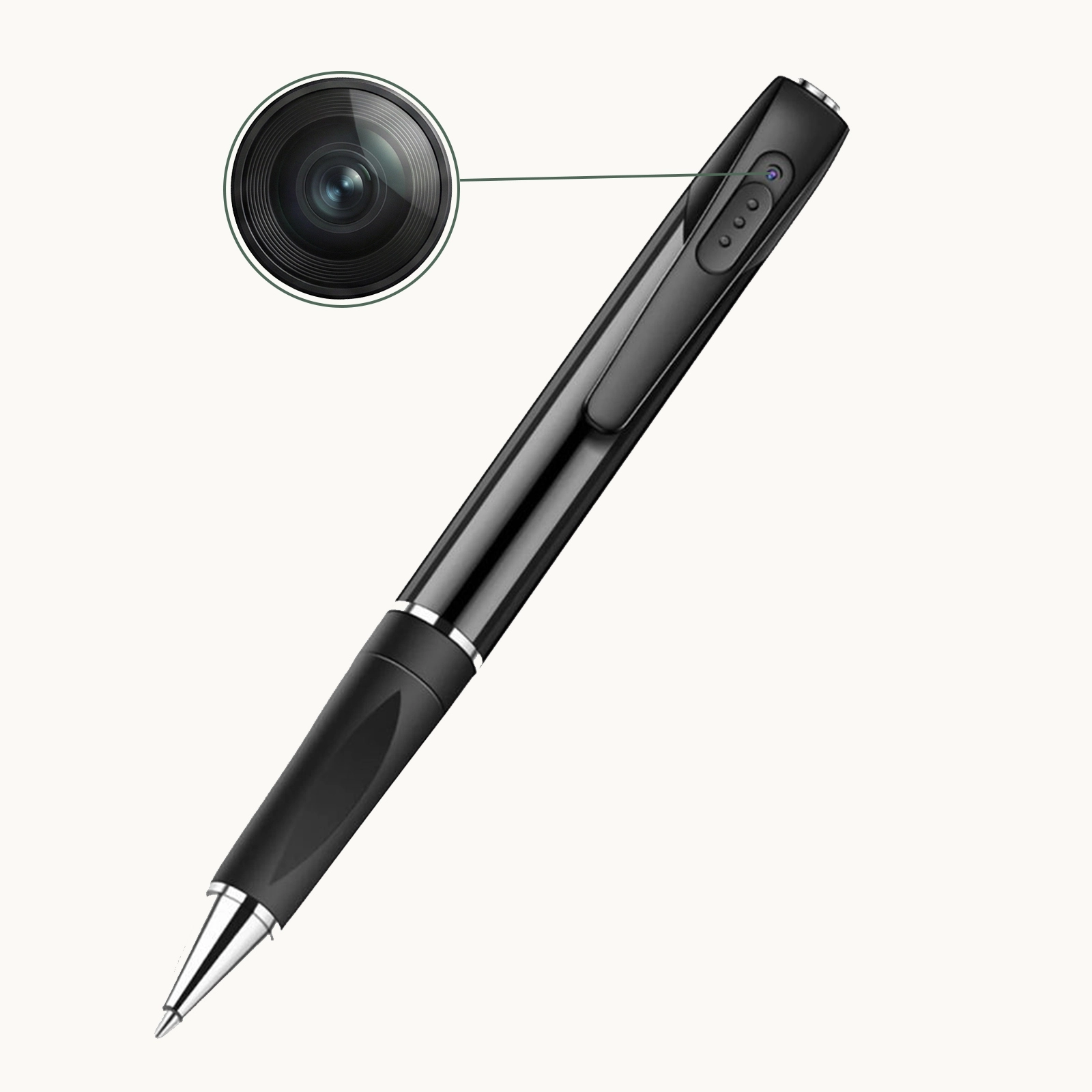
– A low-spec 720p or 1080p camera module (often with misleading “4K” or “12MP” marketing on the listing)
– A generic USB charger and a Chinese-language manual (sometimes with crude English translation)
– No CE marking, or a fake CE mark printed without a notified body number
– No privacy policy, no data protection information, and no identifiable importer or manufacturer
– An app that the customer downloads from a third-party APK site (because the app is frequently delisted from Google Play and the Apple App Store)
This is not a conventional product. It is a regulatory blind spot.
2. The CE Compliance Gap — Why It Matters for European Resellers
The most important difference between a Temu camera and a CE-certified camera from a legitimate supplier is not image quality, battery life, or price. It is the legal standing of the product in the EU market.
Under the EU’s CE marking system, any electronic product sold in the European Union must:
– Have a technical file demonstrating compliance with applicable directives (EMC, RoHS, RED for radio equipment, LVD for electrical safety)
– Be tested by, or declared by, a notified body (for radio equipment, a notified body must be involved)
– Have a Declaration of Conformity (DoC) signed by the manufacturer or an authorised representative within the EU
– Display the CE mark in the correct format, with the four-digit notified body number (where applicable)
– Have an identifiable manufacturer or importer name and address within the EU
Temu products do not meet most of these requirements.
What this means for European resellers: If you sell a covert camera without CE certification to a customer who deploys it in their business, and a data protection authority investigation follows, the liability flows through the supply chain. The end customer may attempt to claim damages from you as their supplier. The CE certificate is your primary defence.
Temu purchasers have no such protection.
3. Real Product Comparisons — Temu Budget Units vs Certified Distributor Stock
| Cecha | Temu €12 “1080p Spy Camera” | QZT 1080p Certified Pen Camera | Uderzenie |
|---|---|---|---|
| Rozdzielczość | Usually 720p upscaled to 1080p | True 1080p CMOS sensor | Temu unit shows visible artifacting on motion |
| Build quality | ABS plastic, fragile button mechanism | ABS + metal clip, reinforced internals | Temu unit breaks within 2–4 weeks on average |
| App quality | Third-party APK, frequent disconnects | Verified app with supplier support | Temu unit requires side-loading Android apps |
| CE Certification | Brak lub fałszywe | Genuine CE + RED certification | Civil and potential criminal liability for end user |
| Gwarancja | No warranty | 12-month warranty with replacement | Temu purchase is final |
| Data privacy | App server location unknown; data may be processed in China | App servers in EU/third-party audited | GDPR compliance risk with Temu units |
| Battery life | Frequently overclim at 200–400% of real capacity | Documented 2–5 hour ranges | Temu battery claims are systematically false |
The pattern is clear: the Temu product costs less because it cuts every corner that certification, quality control, and legal compliance require. The €12 price point includes none of those costs.
4. Market Impact — What Distributors Are Reporting
We have interviewed distributors across six European markets. The pattern is consistent.
Italy. A security installer in Milan reports that residential customers increasingly mention Temu prices during consultations. His response is to focus on CE certification, warranty terms, and — critically — GDPR compliance. For customers deploying cameras in residential settings (condomini, rental apartments), the Garante’s enforcement activity has made CE certification and documented compliance a genuine selling point. He has successfully migrated price-sensitive customers upward by explaining the liability risk of unidenfied electronic equipment.
Germany. German distributors report a more sophisticated market response. German buyers (B2B customers, not end consumers) are generally aware of the CE marking requirements and the BDSG implications of non-compliant surveillance equipment. The Temu impact is primarily in the consumer DIY segment, which was never a high-margin market for professional distributors anyway. The competitive moat for German distributors is technical competence, works council compliance guidance, and professional certification — things Temu cannot provide.
France. The CNIL has been increasingly active in enforcement actions related to covert surveillance in professional settings. French distributors who proactively provide CNIL compliance documentation with their products have largely insulated themselves from Temu competition in the B2B segment. The consumer segment is more exposed, but this was always a low-margin, high-churn market.
United Kingdom. The ICO has been less active than the CNIL or Garante in covert surveillance enforcement, but Brexit has not changed the fundamental legal requirements for data protection in the workplace. UK distributors who sell to SMEs and tradespeople are reporting that Temu pricing is making price-led conversations more frequent. The successful response is to talk about visible signage packets, employee consent templates, and ICO audit trails — services that come with a properly sourced product and cannot be downloaded from a €12 listing.
5. Customer Complaints About Temu Spy Cameras — And What They Tell Us
Distibutors who have tested Temu units against their own stock report consistent failure patterns.
“The image quality is nothing like the listing.” The most common complaint from end customers who tried a Temu unit first. A €12 “4K” camera records at 720p upscaled. The difference is visible immediately on a laptop screen. The distributor who can show a side-by-side comparison wins the sale.
“The app does not work after a phone update.” Temu camera apps are frequently delisted from Google Play and the App Store. After an OS update, the app may stop working entirely, and because it cannot be re-downloaded, the camera becomes unusable. Certified products have maintained app support and documented update paths.
“The battery died after six charges.” Lithium cells in uncertified budget products frequently fail before 20 charge cycles. There is no warranty, no support channel, and no recourse. The total cost of ownership over 12 months is often higher for a €12 unit that is replaced three times than for a €55 unit with a 12-month warranty.
“I got a letter from the Garante.” We have received three separate reports from Italian end customers who used Temu cameras and later received compliance inquiries from the Garante per la protezione dei dati personali. The camera had no CE marking and no identifiable manufacturer — making the user fully liable. Each case concluded with a fine or a formal warning. None of this happens with properly sourced equipment.
6. Competitive Strategy — How to Respond Without Destroying Your Margins
You cannot win a price war with Temu. Their cost structure is fundamentally different from yours, and attempting to match €12 pricing will destroy your business. Here is what does work.
Lead with compliance. Make CE certification, GDPR guidance, and warranty terms the first thing your customers see. A customer who understands that using a non-CE camera can result in a €20 million fine (GDPR maximum) will pay €55 for a compliant product. A customer who does not understand this will buy the €12 unit and learn the hard way. Your job is education, not price matching.
Bundled services, not bundled discounts. Instead of lowering the product price, bundle services: a free GDPR compliance guide, a signage template, a 15-minute phone consultation on deployment options, or a free microSD card with every unit. These have high perceived value and low cost to you, and they differentiate your product in ways a €12 listing cannot.
Target the B2B segment specifically. Temu sells to consumers. Your advantage is in B2B sales: security installers, HR departments, small business owners, property managers. These buyers care about liability, documentation, and warranty. They are not buying on Temu.
Use the Temu comparison as a sales tool. Order two or three of the most common Temu-listed covert cameras. Test them. Document the failures. Show your customers a side-by-side comparison of a €12 unit and your €55 unit. Let the quality difference sell the product. Distributors in Germany and Italy who do this report significantly higher close rates.
7. Regulatory Risk for European Marketplaces — Temu’s CE Problem
This is an evolving area. The EU’s new General Product Safety Regulation (GPSR), fully applicable from December 2024, imposes stricter requirements on online marketplaces to verify that products sold to EU consumers comply with applicable safety standards. Temu, like AliExpress and Shein, is under increasing pressure to enforce CE compliance — but enforcement is inconsistent, and many non-compliant products continue to be available.
What this means for distributors. The regulatory environment is moving in your favour. As the EU increases enforcement on online marketplaces, non-compliant products will face more barriers to entry. Your CE-certified, fully documented products will become more valuable, not less, as the market clears low-quality imports.
What to watch. The European Commission has launched multiple investigations into Temu’s product safety practices in 2024–2025. If the EU moves to require marketplace platforms to verify CE certification before listing, the Temu advantage in the surveillance equipment category will erode significantly. Distributors who have built compliance-first value propositions will be well positioned.
8. The Long-Term Outlook for the European Covert Camera Market
The Temu phenomenon is not permanent in its current form. Several forces are converging:
– Regulatory enforcement is increasing. The EU GDPR enforcement has been stepped up since 2023, with multiple €10M+ fines issued against companies for non-compliant data processing. The Garante, CNIL, and ICO are all more active than they were five years ago.
– Marketplace liability is expanding. The EU’s Digital Services Act (DSA) and the new GPSR create obligations for online marketplaces to police non-compliant products. Temu’s ability to ship non-CE goods into the EU will face increasing friction.
– Corporate and professional buyers (the highest-margin segment for distributors) are becoming more compliance-aware, not less. The trend is toward documented, auditable supply chains, which is incompatible with anonymous marketplace purchases.
For distributors who position correctly — compliance-first, service-bundled, B2B-focused — the Temu wave is a short-term challenge and a long-term competitive advantage. The distributors who try to match Temu on price will not be in business to see the regulatory pendulum swing back.
Często zadawane pytania
Is it legal to buy a spy camera on Temu and use it in the UK?
Purchasing is not prohibited, but deploying a non-CE-certified surveillance device, particularly in a workplace or rental property, carries significant legal risk. The ICO’s Employment Practices Code requires that covert monitoring be authorised under RIPA in the UK — and one of the factors the ICO considers is whether the surveillance equipment meets recognised technical standards. A non-CE camera may undermine the lawfulness of the monitoring.
What is the Garante’s position on non-CE camera equipment?
The Garante has taken the position that using surveillance equipment without proper CE marking and without a manufacturer or importer identifiable within the EU constitutes a violation of both the Privacy Code and GDPR. Fines have been issued for this category of violation. Distributors selling into Italy should provide a compliance statement with every product, confirming CE status and the identity of the EU-based responsible person.
How do I explain to a price-sensitive customer why they should not buy the €12 Temu camera?
Ask them two questions: (1) “If this camera captures footage that you need for legal purposes, are you confident the app and the device will still be functional in 12 months?” (2) “If the Garante or ICO investigates your use of surveillance equipment, do you have a CE certificate and a responsible supplier to produce in your defence?” Most customers who understand the liability will pay for compliance.
Is Temu’s impact the same across all European markets?
No. Markets with stronger enforcement cultures (Germany, Italy, France) show more resilience among B2B distributors because corporate buyers are compliance-conscious. Markets with weaker enforcement traditions, or with larger informal economies, show more erosion in the consumer and small-business segments. The UK sits in between — ICO enforcement is active but not at the level of the Garante or CNIL.
Concerned about Temu competition in your market? Contact our distributor team for CE documentation packages, compliance guides, and competitive positioning support tailored to your country.

 English
  Italiano
  Deutsch
  Français
  Español
  Polski