
How to Avoid Spy Camera Pen Buying Mistakes: What B2B Buyers Get Wrong
You order a batch of “1080P spy camera pens” from a supplier you found on Alibaba. Three weeks later, 40% have dead batteries, the video is grainy 720P at best, and two pens already stopped writing. This scenario plays out daily across B2B security equipment channels — because most buyers skip the verification steps that separate a reliable pen camera from a desk-drawer reject. Spy camera pens look simple, but the specs that actually matter — sensor resolution, battery chemistry, audio codec, build durability — are the ones suppliers obscure or flat-out misrepresent. Here’s what most buyers get wrong, and how to get it right.
Why Do Most Spy Camera Pens Fail in Real-World Use?
Cheap pens die fast because manufacturers cut corners on the three components that matter most: the CMOS sensor, the lithium cell, and the writing mechanism.
A genuine 1080P spy camera pen uses a 1/4-inch CMOS sensor (typically OmniVision OV9734 or similar) that captures 1920×1080 pixels natively. But here’s the catch — many suppliers advertise “1080P” while fitting a 640×480 VGA sensor and using software interpolation to upscale the output. The file header says 1080P; the actual detail is worse than 720P. You cannot tell from product photos. The only reliable test: record a printed page with 3mm text at 3 metres and check if the words are readable in the footage (Comment identifier les faux caméras cachées 1080p avant d'acheter).
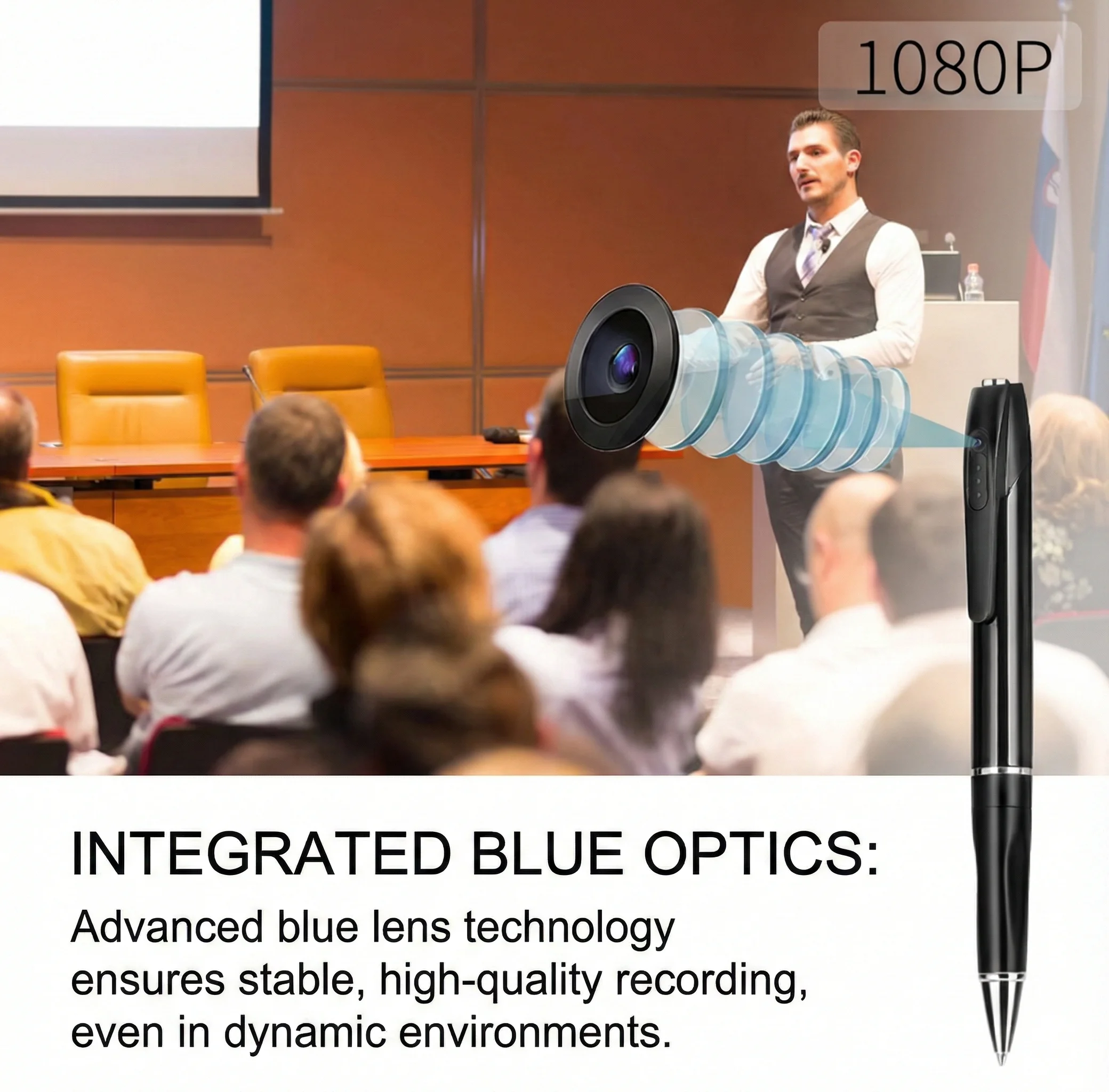
Battery failure is the second culprit. Most spy pens use a 300–900 mAh lithium cell. At 1080P continuous recording, a 400 mAh cell lasts roughly 40–60 minutes — not the “2 hours” many spec sheets claim. Motion-activated mode extends this to 90–120 minutes on the same cell, because the pen sleeps between triggers, drawing <50μA standby current. The problem: cheaper cells use lithium-ion chemistry that degrades 20–30% after just 200 charge cycles. Professional-grade pens specify lithium-polymer cells, which hold capacity better across 500+ cycles. Ask your supplier for the cell datasheet — if they cannot provide one, assume the battery is low-grade.
The writing mechanism is the third silent failure. A real spy pen must write smoothly — it is the cover story that keeps the device believable. Pens that skip, leak, or feel scratchy draw attention. The best models use a Schmidt P8126 or similar metal refill cartridge rated for 3,000 metres of continuous writing. Budget models use disposable plastic refills that dry out within weeks.
Point clé à retenir : Sensor, battery, and refill quality determine whether a spy pen works for months or fails on day one.
How Can You Tell if a Spy Camera Pen Resolution Is Genuine or Faked?
Marketing claims are unreliable. The file resolution stamped on a video header is the output format — not the sensor’s native capture capability.
Interpolation is the standard trick. A VGA sensor (640×480 = 307,200 pixels) captures a low-resolution image. The pen’s DSP chip then scales each pixel to fill a 1920×1080 canvas (2,073,600 pixels). The result looks “1080P” in file properties but contains no more detail than the original VGA capture — it is just stretched, like zooming into a low-resolution photo on your phone.
Genuine 1080P pens use sensors that capture 2,073,600 physical pixels on the sensor die. Common genuine sensors in pen cameras include the OmniVision OV9734 (1/4-inch, 2MP) and the GalaxyCore GC2053 (1/3-inch, 2MP). The 1/3-inch sensor has a larger photosite area, producing better low-light performance and less noise.
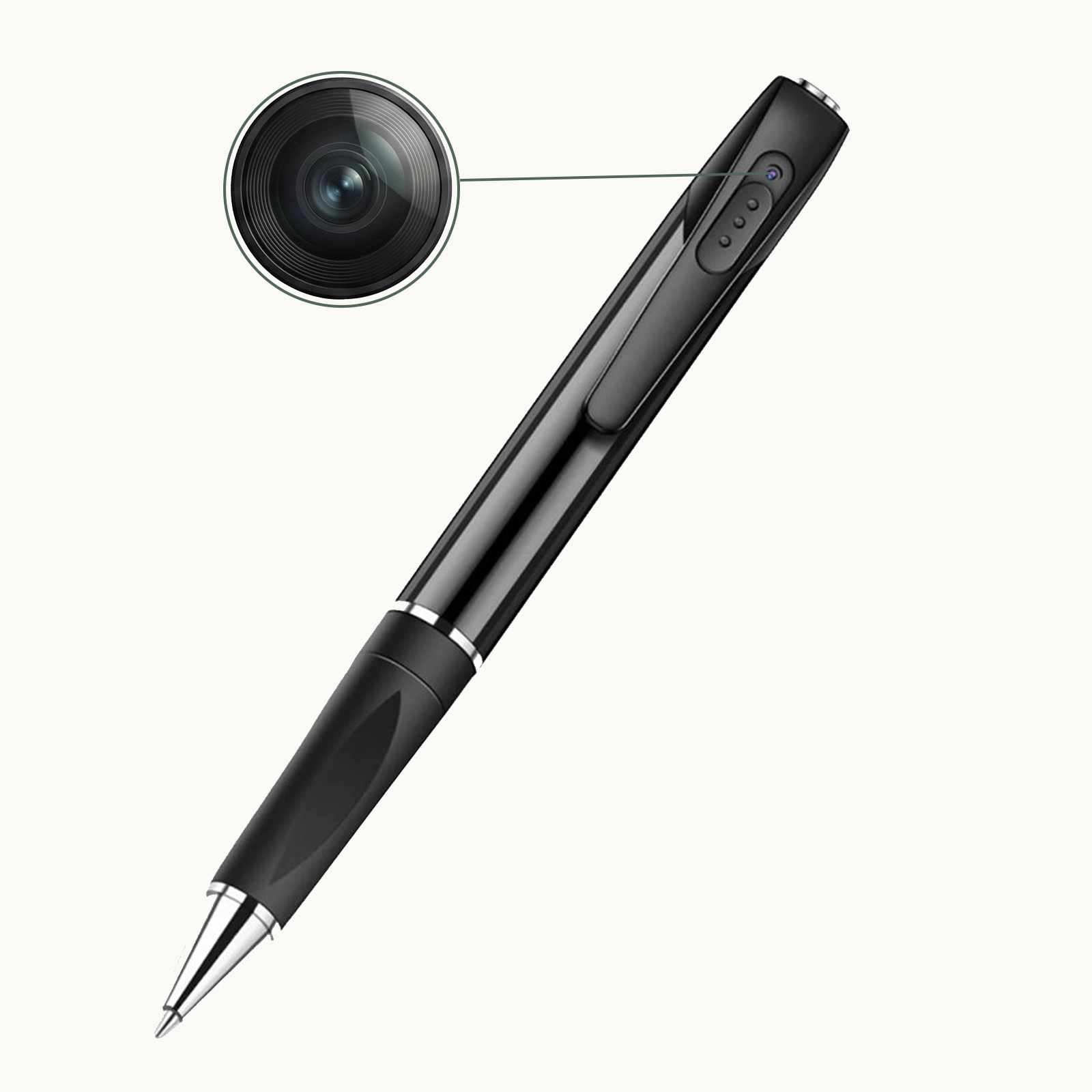
To verify resolution before committing to a wholesale order, request a raw sample video file from the supplier — not a YouTube link, not a screenshot. Open the file in VLC or MediaInfo and check the actual bitrate. Genuine 1080P at 30fps records at 8–15 Mbps; interpolated “1080P” typically records at 3–5 Mbps because the fake pixels carry no additional information. A bitrate below 6 Mbps at claimed 1080P is a red flag.
Another test: photograph a standard eye chart or a printed page with 3mm text at exactly 3 metres distance. Genuine 1080P resolves individual characters; interpolated footage renders them as blurry grey blocks. Run this test on every sample before signing a purchase order.
| Resolution Claim | Typical Sensor | Native Pixels | Bitrate Range | Detail at 3m |
|---|---|---|---|---|
| Genuine 1080P | OV9734 / GC2053 | 1920×1080 | 8–15 Mbps | 3mm text readable |
| Interpolated 1080P | VGA / OV7725 | 640×480 | 3–5 Mbps | 3mm text blurred |
| Genuine 720P | OV7740 / GC1024 | 1280×720 | 5–8 Mbps | 5mm text readable |
| Interpolated 720P | QVGA sensor | 320×240 | 2–3 Mbps | 5mm text blurred |
Point clé à retenir : Bitrate and 3-metre text tests expose fake resolution; never trust spec sheets alone.
How Long Should a Spy Camera Pen Battery Actually Last?
Real battery life depends on three variables: cell capacity (mAh), recording mode, and cell chemistry. Suppliers quote standby figures; you need active-recording numbers.
A 400 mAh lithium-ion cell in continuous 1080P recording mode lasts 40–60 minutes. Motion-activated mode extends this to 90–120 minutes because the pen sleeps between triggers. A 900 mAh cell (found in higher-end models like the W10) pushes continuous recording to 2.5–3 hours and motion-activated to 4–5 hours. SpyCentre’s Video Pen claims 1 hour continuous and 1.5 hours motion-activated, which aligns with a ~400 mAh cell — realistic numbers, not inflated.
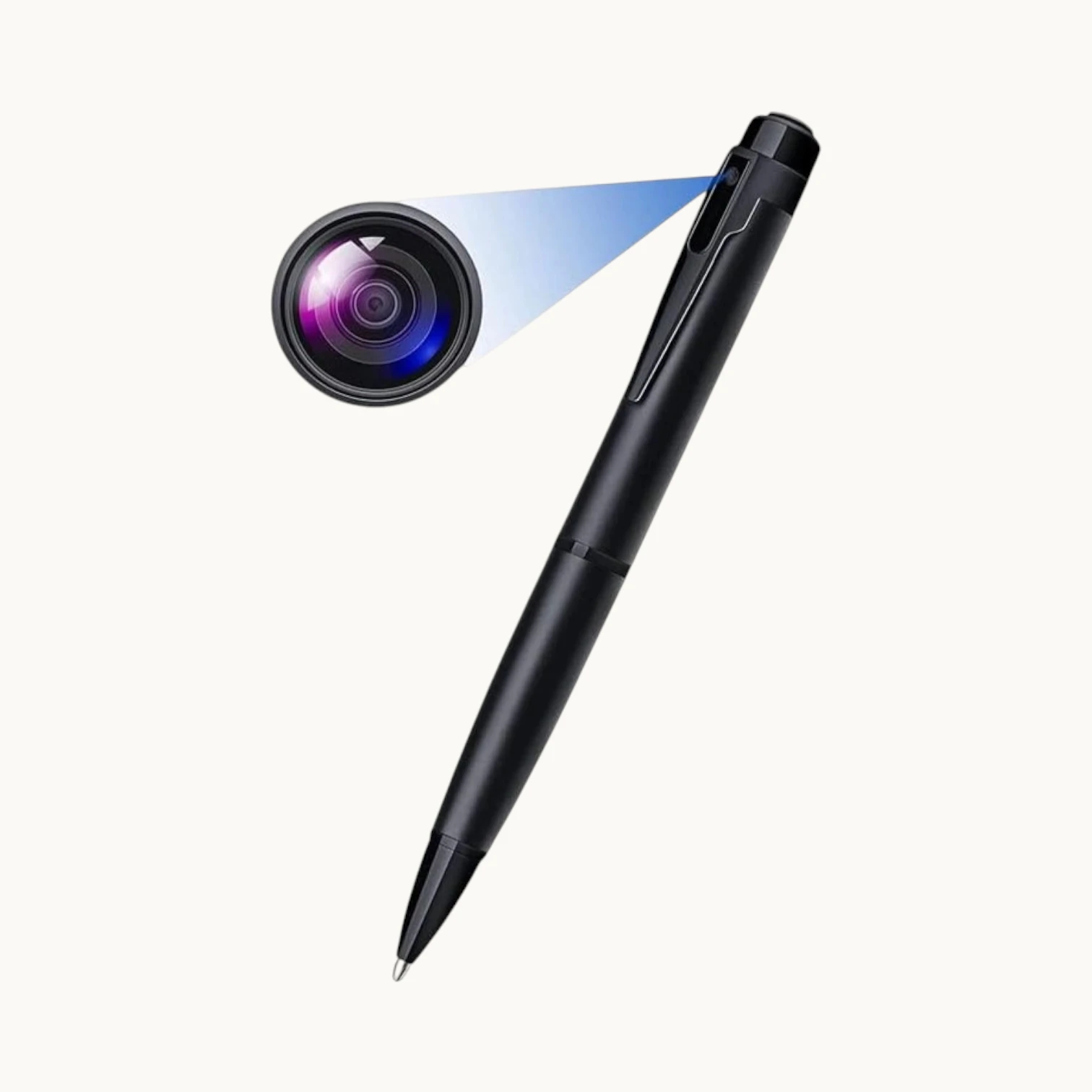
But here’s what most buyers miss: battery degradation. Lithium-ion cells lose 20% capacity after 200 full cycles. A pen that records 90 minutes on day one may only record 60 minutes after 6 months of daily use. Lithium-polymer cells are more durable, losing only ~10% after 500 cycles — but they cost 30–50% more per unit.
External battery packs change the math. SpyCentre bundles a portable battery that extends motion-activated recording to 5.5 hours. This works because the external pack (typically 2,000–3,000 mAh) feeds power while the internal cell handles camera operation. For wholesale buyers, offering a bundled battery pack as an accessory adds perceived value and solves the #1 customer complaint about spy pens — short battery life.
Temperature affects runtime too. Below 10°C, lithium cell capacity drops 20–30%. Below -10°C, some cells fail to power on entirely. If your market includes Northern European or UK outdoor use, specify lithium-polymer cells or bundled external packs.
| Cell Capacity | Chimie | Continuous 1080P | Motion-Activated | Degradation at 200 Cycles |
|---|---|---|---|---|
| 400 mAh | Li-ion | 40–60 min | 90–120 min | ~20% loss |
| 400 mAh | Li-Po | 45–65 min | 100–130 min | ~5% loss |
| 900 mAh | Li-ion | 2.5–3 hr | 4–5 hr | ~20% loss |
| 900 mAh | Li-Po | 3–3.5 hr | 5–6 hr | ~5% loss |
Point clé à retenir : Demand battery datasheets and test active recording time, not standby marketing numbers.
What Audio Quality Should You Expect from a Spy Camera Pen?
Audio is the spec most buyers ignore until they play back footage and hear muffled, distorted, or missing sound. A spy pen that records crisp video but unusable audio is half a tool.
Most budget spy pens use a single MEMS microphone with -38 to -42 dBV sensitivity. This is adequate for close-range conversation (1–2 metres) in a quiet room. But in a conference room with ambient noise — HVAC hum, multiple speakers, background traffic — a single MEMS mic produces audio that is barely intelligible.
Professional-grade pen cameras use dual MEMS microphones with digital signal processing (DSP). The DSP chip (typically AKM AK4951 or Cirrus Logic CS42L52) performs two functions: noise reduction and beam-forming. Noise reduction filters constant ambient frequencies (HVAC, traffic). Beam-forming uses the phase difference between the two mics to focus on the speaker directly in front of the pen, rejecting side noise. This is the same technology used in modern smartphones for video calls.
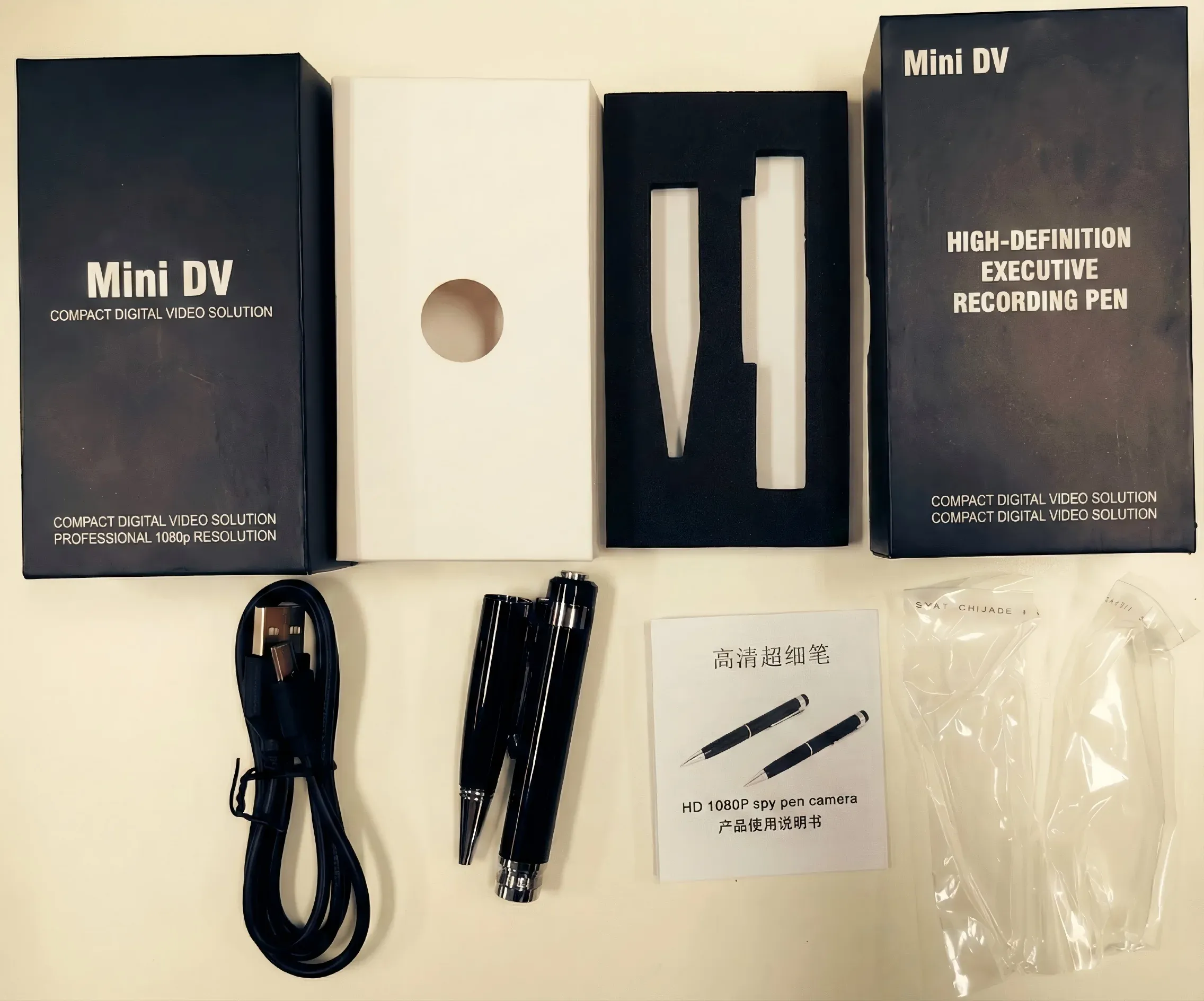
The codec matters too. Budget pens encode audio in AMR or ADPCM at 8–16 kHz — telephone-grade quality. Professional pens encode in PCM (uncompressed) at 48 kHz or AAC at 44.1 kHz, producing audio suitable for transcription, legal evidence review, or court playback. SpyCentre’s Video Pen specifies “PCM quality” — a good sign, but verify by requesting a sample audio file and checking the codec in MediaInfo.
For UK/EU legal evidence, audio quality is non-trivial. Under the UK’s Regulation of Investigatory Powers Act 2000 (RIPA) and the Data Protection Act 2018, covertly recorded audio must be intelligible to be admissible. A court will not accept footage where the audio is so degraded that the words cannot be transcribed with confidence. If your customers use pen cameras for evidence gathering, audio quality is a legal requirement, not a nice-to-have.
| Audio Feature | Budget Pen | Professional Pen |
|---|---|---|
| Microphone | Single MEMS (-38 dBV) | Dual MEMS + DSP (-42 dBV) |
| Codec | AMR/ADPCM 8–16 kHz | PCM 48 kHz / AAC 44.1 kHz |
| Noise Reduction | Aucun | Hardware DSP (AKM/Cirrus Logic) |
| Portée efficace | 1–2 metres | 3–5 mètres |
| Court Admissible? | Marginal | Yes (if intelligible) |
Point clé à retenir : Dual MEMS + hardware DSP + PCM codec = audio that holds up in court; single MEMS without DSP = unusable beyond 2 metres.
Does the Writing Function Actually Matter in a Spy Camera Pen?
Yes — the writing function is the cover story. A pen that does not write is a plastic tube with a camera, and that breaks the disguise.
Think about it. When you place a pen on a conference table, nobody questions it. When you pick it up and take notes during a meeting, nobody suspects it. But if someone borrows your pen and it does not write — or the ink skips, leaks, or feels scratchy — they look at it differently. They might twist it, shake it, or examine it closely. That is the moment your covert device gets discovered.
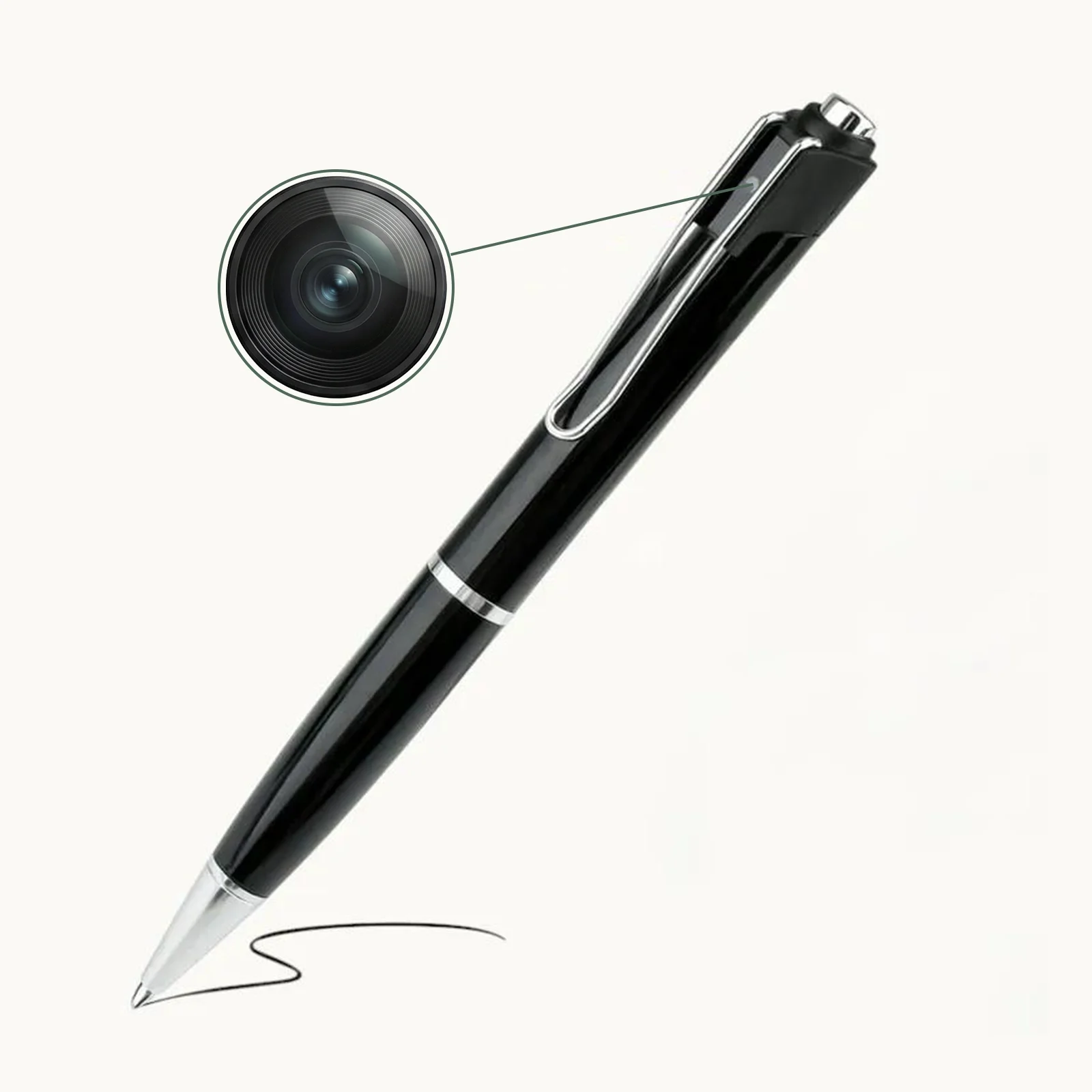
The best spy camera pens use metal refill cartridges — typically the Schmidt P8126 EasyFlow 9000 or Parker-style ballpoint refills. These write 3,000+ metres of continuous line, produce smooth ink flow, and feel like a normal quality pen. They are also replaceable, so the pen stays functional over years of use.
Budget models use disposable plastic refills that last 200–500 metres before drying out. Worse, some budget spy pens do not write at all — the “writing end” is a dummy cap that looks like a pen tip but has no ink cartridge inside. These are detectable by anyone who tries to use them.
For B2B buyers, writing quality is a differentiation point. If your pens write like a £5 office pen, customers trust them as everyday objects. If they write like a £0.50 throwaway, the disguise fails. Specify metal refills in your OEM requirements and test ink flow on every sample.
| Refill Type | Writing Distance | Ink Quality | Replaceable? | Disguise Rating |
|---|---|---|---|---|
| Schmidt P8126 metal | 3,000+ metres | Smooth, consistent | Oui | ★★★★★ |
| Parker-style metal | 2,000+ metres | Good, reliable | Oui | ★★★★☆ |
| Plastic disposable | 200–500 metres | Scratchy, skips | Non | ★★☆☆☆ |
| Dummy cap (no ink) | 0 metres | N / A | N / A | ★☆☆☆☆ |
Point clé à retenir : A spy pen that writes well stays hidden; a pen that does not write gets examined and discovered.
How Do You Verify a Spy Camera Pen Supplier Before a Bulk Order?
Wholesale verification for spy camera pens is more demanding than for generic electronics because the category combines three quality axes — optics, audio, and mechanical build — that cheaper suppliers routinely misrepresent.
Start with the sensor. Ask for the CMOS sensor model number (OV9734, GC2053, etc.). If the supplier says “custom sensor” or “proprietary,” it is likely a cheap generic part. Genuine sensor manufacturers (OmniVision, GalaxyCore, Sony) publish datasheets with pixel count, pixel size, and sensitivity. Cross-reference the supplier’s claim against the datasheet.
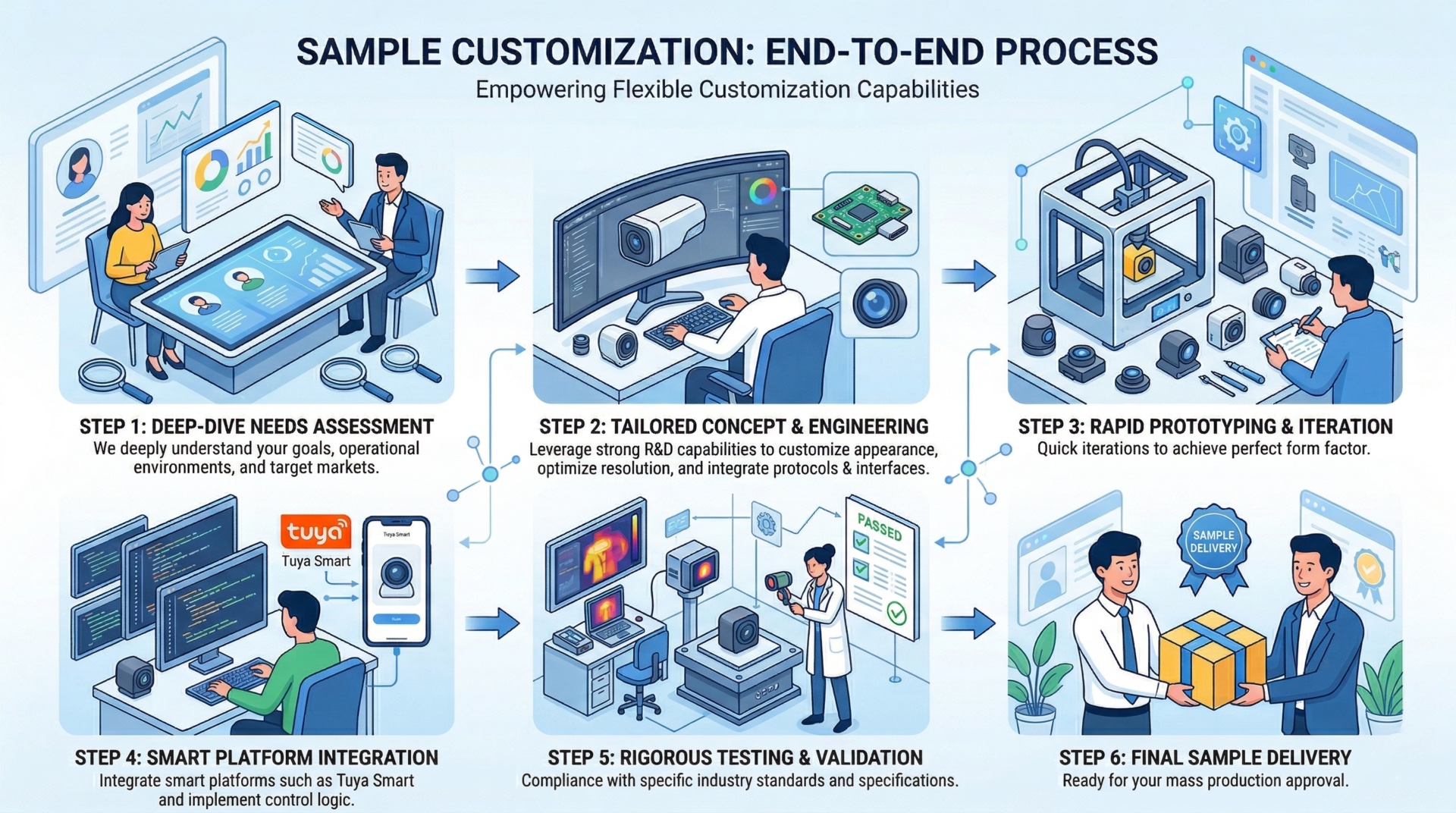
Then request three things no legitimate supplier will refuse:
1. Raw sample video file — not YouTube, not screenshots. You need the actual file to check bitrate, resolution, and codec in MediaInfo.
2. Battery cell datasheet — from the cell manufacturer (not the pen assembler). This shows chemistry, capacity, cycle life, and temperature ratings.
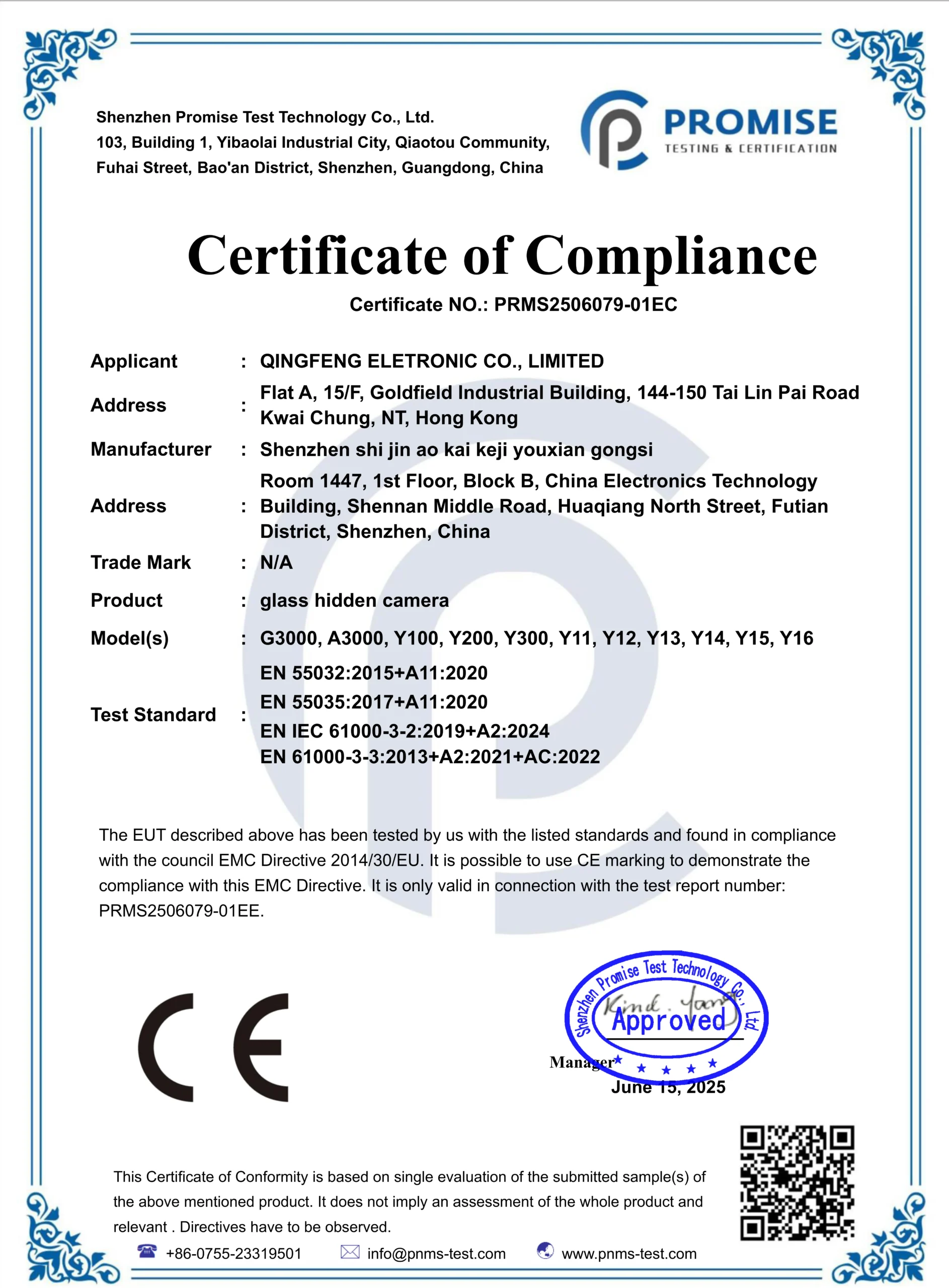
3. Test reports for CE/RED and UKCA — from an accredited lab (not a self-declaration). RED compliance requires EMC testing and radio spectrum verification if the pen includes WiFi (Stylo caméra espion Wi-Fi avec audio). UKCA is mandatory for Great Britain sales from 2025 onward.
If the supplier cannot provide any of these, move on. The cost of receiving 500 pens with fake 1080P sensors and dead batteries far exceeds the time spent finding a better supplier.
Check factory capability too. Ask whether the supplier offers OEM (rebranding their existing design) or ODM (custom design from your specifications). OEM is cheaper and faster — you get their existing model with your logo. ODM lets you specify sensor, battery, codec, and refill type, but requires higher MOQ (typically 1,000+ units) and longer lead time (45–60 days). For first orders, OEM with a verified existing model is the safer path (How to Choose a Spy Camera Manufacturer: B2B Sourcing Guide).
| Verification Step | What to Request | drapeau rouge |
|---|---|---|
| Capteur | CMOS model number + datasheet | “Custom/proprietary sensor” |
| Qualité vidéo | Raw sample file (.mp4/.avi) | YouTube link only |
| Batterie | Cell datasheet from manufacturer | “We don’t have this” |
| Certifications | CE/RED/UKCA test reports from accredited lab | Self-declaration logo only |
| OEM/ODM | Capability list + 3 past projects | “We only do rebranding” |
Point clé à retenir : Three documents — raw video, battery datasheet, lab test reports — separate legitimate suppliers from spec-sheet fraudsters.
What Legal Requirements Apply to Spy Camera Pens in the UK and EU?
Covert recording devices occupy a complex legal space. The device itself is legal to sell and own in the UK and EU; how it is used determines legality.
In the UK, covert audio recording in private conversations falls under the Regulation of Investigatory Powers Act 2000 (RIPA). For personal use — recording your own conversations for your own reference — one-party consent applies. You can record a meeting you attend without informing others. But publishing, sharing, or using that recording as evidence against someone without their knowledge may violate privacy rights under the Data Protection Act 2018 and UK GDPR.
For business use, the UK GDPR requires a lawful basis under Article 6. The most common basis is legitimate interest (Article 6(1)(f)) — but you must conduct a Legitimate Interest Assessment (LIA) documenting why covert recording is proportionate and necessary. The ICO expects transparency wherever possible. If you can achieve the same objective with overt CCTV, covert recording is unlikely to satisfy the proportionality test.
In the EU, GDPR Article 6 applies similarly, but with stronger employee protection. Germany’s Federal Data Protection Act (BDSG) Section 4 limits employee surveillance to specific suspected misconduct investigations — you cannot routinely monitor employees covertly. France’s CNIL issued guidance in 2026 warning that smart glasses and body-worn cameras (including pen cameras) must not be used for continuous employee monitoring.
For EU distributors selling pen cameras, the key obligation is under GDPR Article 32 — you must inform buyers about lawful use limitations. This is not a product ban; it is a duty-of-care information requirement. Selling a pen camera without a usage guide that covers consent requirements, prohibited locations (bathrooms, changing rooms), and data handling obligations creates liability for the distributor (❌ Salles de pause et cafétérias).
| Région | Enregistrement audio | Enregistrement vidéo | Employee Use | Distributor Obligation |
|---|---|---|---|---|
| UK | One-party consent (RIPA) | Personal use OK | LIA required (UK GDPR Art 6(1)(f)) | Inform buyers of lawful use limits |
| Allemagne | One-party for personal | Personal use OK | BDSG §4: suspected misconduct only | Same + BDSG-specific guidance |
| France | One-party for personal | Personal use OK | CNIL 2026: no continuous monitoring | Same + CNIL warning notice |
| EU general | Varies by member state | Personal use generally OK | GDPR Art 6 + proportionality test | GDPR Art 32 duty-of-care info |
Point clé à retenir : The device is legal to sell; the distributor’s obligation is to inform buyers about lawful use boundaries.
What Storage Capacity Do You Really Need in a Spy Camera Pen?
Storage is where the math catches most buyers off guard. A 128GB card sounds generous — until you calculate what it actually holds at the bitrate your pen records.
Genuine 1080P at 30fps with H.264 encoding produces files at roughly 8–15 Mbps. At 10 Mbps average, one hour of recording consumes approximately 4.5 GB. A 128GB card therefore holds about 28 hours of genuine 1080P footage — close to SpyCentre’s claimed 16 hours, suggesting SpyCentre’s pen records at a higher bitrate or includes audio overhead.
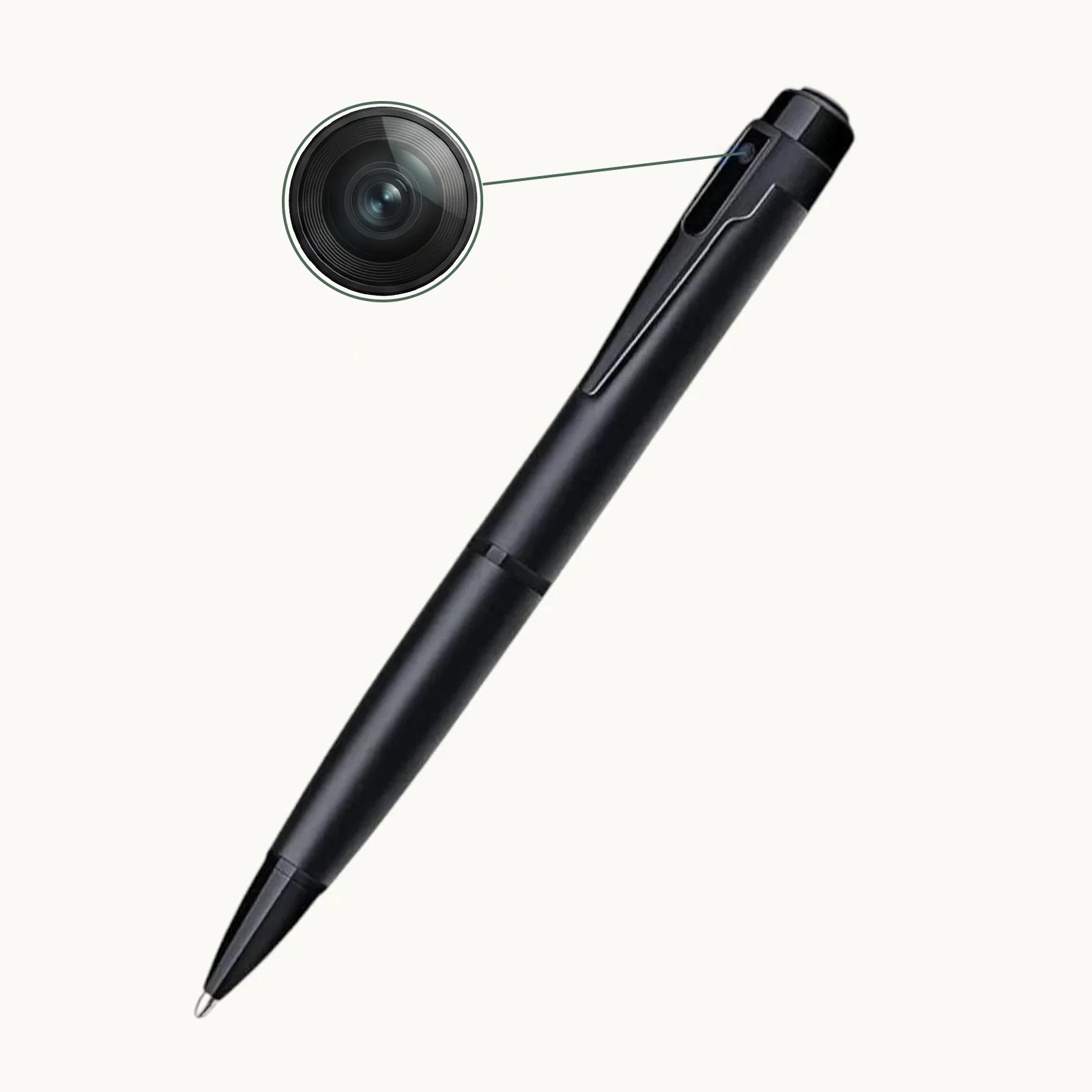
But interpolated “1080P” at 3–5 Mbps consumes only 1.5–2.5 GB per hour. A 128GB card would hold 50–80 hours — and the supplier advertises this as a selling point (“holds 50+ hours!”). The irony: more hours on the same card means lower quality per hour, not better storage efficiency.
For professional use — meetings, interviews, evidence gathering — 32GB is sufficient for 7 hours of genuine 1080P. Most professional deployments last 1–3 hours per session. 64GB covers a full day with margin. 128GB is for extended deployments or users who cannot offload footage between sessions.
The card quality itself matters. Cheap microSD cards (Class 4 or unbranded) fail at the write speeds spy pens require. Genuine 1080P recording needs a sustained write speed of at least 10 MB/s (Class 10 / U1 rating). Cards that drop below this threshold cause video stutter, dropped frames, or file corruption. Specify Class 10 / U1 cards in your wholesale package and test write speed with CrystalDiskMark or similar.
Loop recording is another consideration. Professional pens overwrite the oldest files when storage fills, ensuring continuous coverage without manual intervention. Budget pens simply stop recording when the card is full — if no one checks, the pen becomes useless after the first fill. For B2B customers deploying pens unattended, loop recording is mandatory.
| Taille de la carte | Genuine 1080P Hours | Interpolated 1080P Hours | Min Write Speed | Recommandé |
|---|---|---|---|---|
| 16 GB | 3.5 hours | 8–10 heures | Classe 10 / U1 | Sessions courtes uniquement |
| 32 Go | 7 heures | 16–20 hours | Classe 10 / U1 | Professional standard |
| 64 Go | 14 hours | 32–40 hours | Classe 10 / U1 | Couverture toute la journée |
| 128 Go | 28 hours | 50–80 hours | Classe 10 / U1 | Déploiement prolongé |
Point clé à retenir : Storage hours depend on bitrate; more hours on the same card means lower quality, not better efficiency.
What Certifications Should a Spy Camera Pen Have for EU and UK Markets?
CE marking is mandatory for all electronic devices sold in the EU. For spy camera pens with WiFi capability, the Radio Equipment Directive (RED 2014/53/EU) applies — requiring EMC testing, radio spectrum compliance, and safety assessment by an accredited lab.
But CE marking alone is insufficient for B2B credibility. The RED requires a Declaration of Conformity (DoC) signed by the manufacturer, backed by test reports from a Notified Body or accredited test laboratory. Self-declaration (the manufacturer slapping a CE logo without third-party testing) is legal for some device categories but not for radio equipment. Any pen camera with WiFi must have RED test reports from an accredited lab. Without them, the CE mark is legally invalid.

RoHS (Restriction of Hazardous Substances Directive 2011/65/EU) restricts lead, mercury, cadmium, and other substances in electronics. For spy camera pens, the main risk is lead in solder joints and cadmium in battery chemistry. Compliance requires XRF testing or a material declaration from the manufacturer. Budget suppliers frequently skip RoHS testing because XRF screening costs £500–2,000 per product variant.
For the UK market, UKCA marking replaces CE marking for products sold in Great Britain (England, Scotland, Wales). Since January 2025, UKCA is mandatory for all new products placed on the GB market. Products already CE-marked and in distribution before 2025 can continue to be sold under CE until 2028. For new spy camera pen imports after 2025, you need both CE (for EU) and UKCA (for GB) — which means separate test reports for each conformity mark.
FCC certification applies if you sell into the US market. The FCC Part 15 rules govern unintentional radiators (non-WiFi pens) and intentional radiators (WiFi pens). Testing costs $3,000–8,000 per model.
| Certification | Portée | Required For | Test Cost | Time |
|---|---|---|---|---|
| CE / RED | EMC + radio + safety | EU market, all WiFi pens | £3,000–8,000 | 3–6 weeks |
| RoHS | Hazardous substances | EU market, all electronics | £500–2,000 | 1–2 semaines |
| UKCA | Same as CE/RED | GB market (from 2025) | £3,000–8,000 | 3–6 weeks |
| FCC Part 15 | EMC + radio | US market | $3,000–8,000 | 4–8 weeks |
Point clé à retenir : WiFi pen cameras need accredited-lab RED test reports; self-declared CE marks are legally invalid for radio equipment.
What Should You Include in a B2B Spy Camera Pen Wholesale Package?
A bare pen camera in a white box is a commodity. A bundled package with accessories, documentation, and quality guarantees is a branded product that commands higher margins.
The minimum professional wholesale package should include: the spy pen camera, a metal refill cartridge, a USB charging/data cable, a starter microSD card (32GB Class 10), a quick-start guide card, and a carry case. SpyCentre’s approach — bundling a portable battery pack — is smart. Adding a battery pack accessory solves the #1 complaint (short battery life) and adds £15–20 of perceived value for a £5–8 cost.
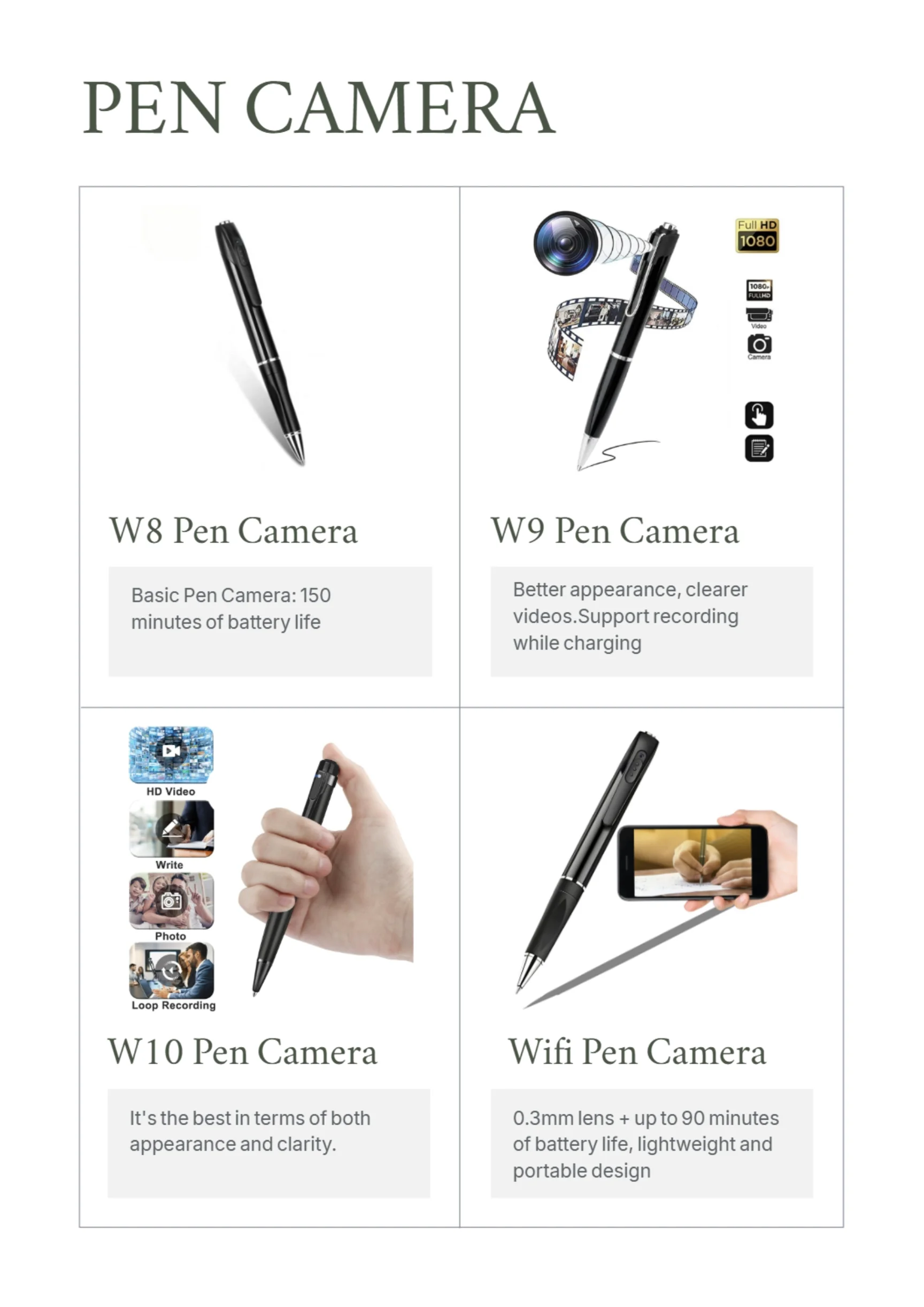
Documentation is where most B2B packages fail. The quick-start guide must cover: how to charge the pen, how to start/stop recording, how to switch between continuous and motion-activated mode, how to offload footage to a computer, and a legal disclaimer about recording consent requirements in the user’s jurisdiction. For UK/EU distribution, this legal disclaimer is not optional — it is a GDPR Article 32 duty-of-care requirement (Stylo Caméra Espion 1080P Photo 30MP 128GB W10).
Quality warranty terms differentiate professional distributors from commodity sellers. Offer a 12-month warranty covering: battery replacement (cells degrade), refill cartridge replacement (ink dries), and camera module replacement (sensor failures). Budget suppliers offer no warranty or a vague “quality guarantee” with no defined terms.
For OEM orders, specify your brand requirements: custom logo on the pen clip, branded carry case, branded quick-start card, and custom packaging box. MOQ for OEM pen camera orders typically starts at 200–500 units. For ODM orders (custom sensor, battery, or codec specifications), MOQ rises to 1,000+ units with 45–60 day lead time (Stylo Caméra Espion Caché 1080P Photo 12MP W9).
| Package Element | Basic | Professionnel | Prime |
|---|---|---|---|
| Caméra stylo | ✓ | ✓ | ✓ |
| Metal refill | — | ✓ | ✓ (2 spare refills) |
| Câble USB | ✓ | ✓ | ✓ |
| carte microSD | — | 32GB Class 10 | 64GB Class 10 |
| Battery pack | — | — | ✓ (3,000 mAh) |
| Quick-start guide | Printed insert | Printed + digital PDF | Printed + PDF + video link |
| Legal disclaimer | — | ✓ UK/EU | ✓ UK/EU + US + AU |
| Carry case | — | ✓ | ✓ branded |
| Garantie | Aucun | 12 mois | 24 months + battery swap |
Point clé à retenir : Bundle battery pack + legal disclaimer + quality warranty to transform a commodity pen into a branded B2B product.
FAQ
Can I use a spy camera pen recording as evidence in a UK court?
Yes, provided the recording meets two conditions. First, the audio must be intelligible — the court requires a transcript, and garbled audio is excluded. Second, you must have a lawful basis for the recording under RIPA 2000. One-party consent applies for personal conversations you participate in. For third-party covert surveillance, you need a legitimate interest assessment under UK GDPR Article 6(1)(f) demonstrating that covert recording is proportionate and necessary. Footage from bathrooms, changing rooms, or private bedrooms is never admissible regardless of recording quality.
What is the difference between OEM and ODM for spy camera pen orders?
OEM (Original Equipment Manufacturer) means you rebrand an existing supplier model — your logo on their pen. MOQ is 200–500 units, lead time 2–4 weeks. ODM (Original Design Manufacturer) means you specify the sensor, battery, codec, refill, and housing design, and the supplier builds it to your specifications. MOQ is 1,000+ units, lead time 45–60 days. OEM is faster and cheaper for first orders; ODM is for established distributors who want a unique product line.
How do I test whether a spy camera pen has genuine 1080P resolution?
Record a printed page with 3mm text at exactly 3 metres. In genuine 1080P footage, individual characters are readable. In interpolated “1080P” (upscaled from VGA), the text appears as blurred grey blocks. Also check the video bitrate in MediaInfo — genuine 1080P at 30fps records at 8–15 Mbps; interpolated footage records at 3–5 Mbps. Request a raw sample file from the supplier, not a YouTube link or screenshot.
Can a spy camera pen record while plugged into USB power?
Yes. Most spy camera pens record while charging via USB. This extends effective recording time to the storage capacity limit rather than the battery limit. A pen recording at genuine 1080P with a 128GB card can capture approximately 28 hours of footage while connected to USB power. This is useful for fixed-position deployments — on a desk in a meeting room, connected to a wall adapter. However, USB-powered recording means the pen cannot be used as a portable writing device during that session.
What is the most common reason spy camera pens get returned by customers?
Battery failure accounts for approximately 40% of returns, followed by video quality complaints (30%) and writing mechanism failure (20%). The remaining 10% covers miscellaneous issues — SD card errors, firmware bugs, audio distortion. To minimise returns, specify lithium-polymer cells (longer cycle life), verify genuine sensor resolution with sample files, and require metal refill cartridges in your product specification.
For verified spy camera pens with genuine 1080P sensors, professional audio quality, and UK/EU-compliant documentation, explore our pen camera collection or Nous contacter to discuss wholesale pricing and OEM options.

 English
  Italiano
  Deutsch
  Français
  Español
  Polski