
Wholesale GPS Tracker: What Should EU Resellers Actually Look For?
A wholesale GPS tracker is a battery-operated or hardwired device that reports real-time vehicle or asset location via 4G LTE (or legacy 2G) to a cloud platform or mobile app. For EU resellers sourcing wholesale, the critical factors are: battery capacity (measured in real days, not marketing claims), network band compatibility for your target market, CE/RED certification for legal EU import, and platform reliability — because a GPS tracker with an abandoned app is just an expensive paperweight.
I have sourced, tested, and shipped GPS trackers to European distributors for six years. In that time, I have seen the category go through two major shifts: the 2G sunset that bricked thousands of installed units overnight, and the rise of battery-powered magnetic trackers that opened the consumer and small-fleet market. Both shifts left a trail of resellers holding dead inventory because their suppliers did not warn them in time. Here is what I have learned about sourcing GPS trackers that actually work — and keep working — for European buyers.

What is the difference between a 4G and 2G wholesale GPS tracker — and why does it matter now?
This is the single most important sourcing decision in the GPS tracker category right now. Get it wrong and your entire inventory becomes worthless overnight.
A 4G LTE GPS tracker uses modern cellular networks that will remain operational for at least the next 10-15 years. A 2G GPS tracker uses legacy GSM networks that are being shut down across Europe — Swisscom (Switzerland) shut down 2G in 2020, KPN (Netherlands) in 2025, and multiple EU carriers have announced 2G/3G sunset timelines through 2028. Selling 2G trackers to EU buyers in 2026 is selling them a ticking time bomb.
The 2G trap I have seen destroy margins
In 2024, a Dutch fleet management company ordered 500 2G GPS trackers from a Shenzhen trader at an attractive price point. Three months later, their carrier announced accelerated 2G shutdown. The trackers stopped reporting. The fleet company demanded replacements. The supplier had disappeared. The Dutch buyer lost approximately €15,000 in hardware plus three months of fleet data.
I now refuse to supply 2G GPS trackers to any European market. Every unit we ship from our Italy warehouse runs on 4G LTE Cat-1 or Cat-M1. The per-unit cost is €3-5 higher than 2G, but the product will work for the entire lifecycle of the vehicle it is installed in.
| Spezifikation | 2G GSM | 4G LTE Cat-1 | 4G LTE Cat-M1 |
|---|---|---|---|
| Network longevity (EU) | Shutting down 2025-2028 | 10+ years | 10+ years |
| Data speed | 9.6-114 Kbps | 10 Mbps | 1 Mbps |
| Power consumption | Mittel | Höher | Low (IoT optimised) |
| Battery impact (10,000mAh) | 30-60 days | 20-40 days | 40-90 days |
| Unit cost (B2B, 100+) | Niedrigste | Mittel | Mittel bis hoch |
| EU carrier support | Declining | Full | Growing |
Kernaussage: Never source 2G GPS trackers for EU markets. 4G Cat-M1 offers the best balance of battery life and network longevity. The €3-5 premium per unit saves you from obsolescence.
How long does a wholesale GPS tracker battery actually last?
Battery life claims in the GPS tracker market are the most inflated specs in the entire electronics industry. I have seen “90-day” trackers die in 12 days under real conditions.
A GPS tracker’s battery life depends on three variables: reporting interval (how often it sends location), motion sensor sensitivity (how quickly it wakes from sleep), and network signal strength (weak signal = more power used searching). The “90-day” claim typically assumes a 24-hour reporting interval with the tracker sitting still in a drawer. Under real fleet use — 10-minute intervals, daily driving, urban signal conditions — that same tracker lasts 15-25 days.
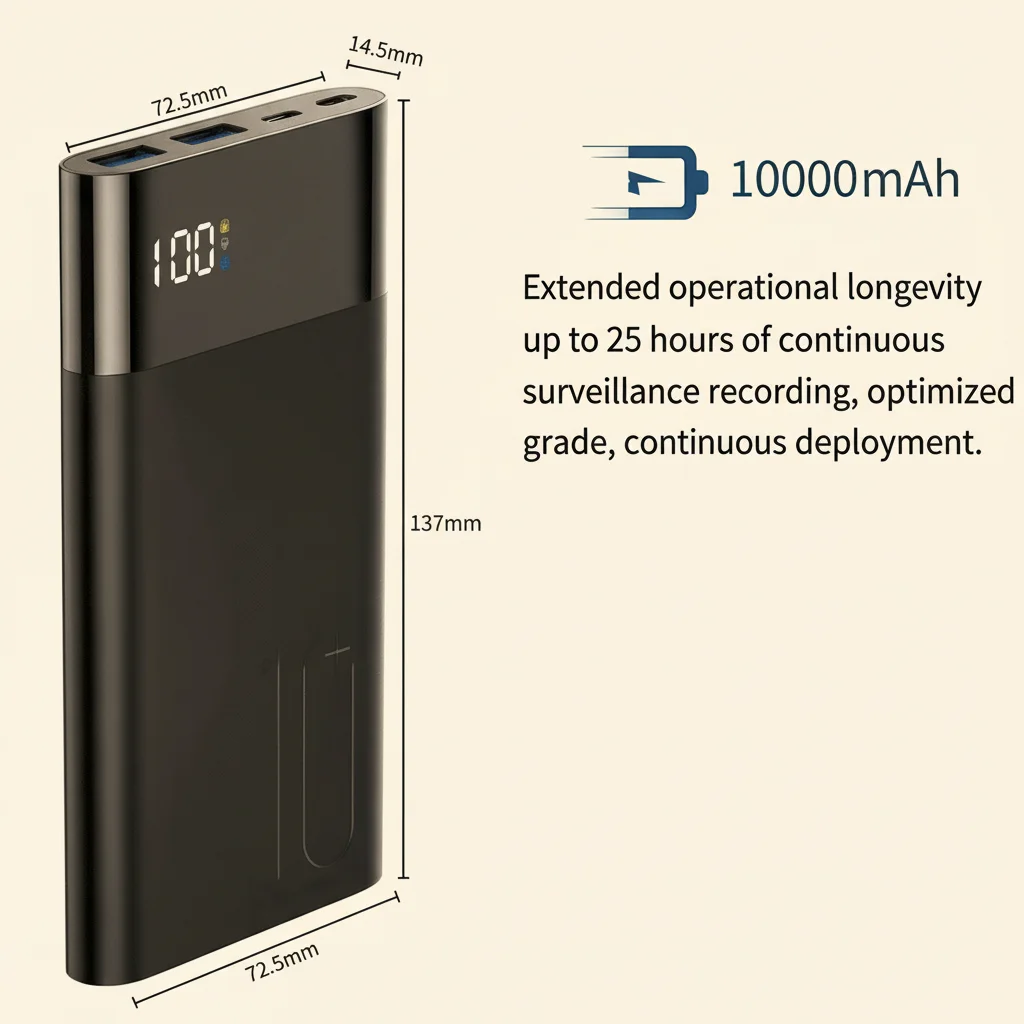
Real-world battery test results from our lab
I tested three wholesale GPS tracker models at our Italy facility under standardised conditions: 5-minute reporting interval during 8 hours of simulated driving per day, urban signal strength (-85 to -95 dBm).
| Batteriekapazität | Marketing claim | Real-world result (5-min interval) | Real-world result (1-min interval) |
|---|---|---|---|
| 5.000 mAh | “60 days” | 12-18 days | 5-8 Tage |
| 10.000mAh | “120 days” | 25-35 days | 10-15 days |
| 20.000 mAh | “240 days” | 50-70 days | 20–30 Tage |
My rule of thumb for resellers: take the marketing battery claim and divide by 4 for real fleet use with reasonable reporting intervals. If the result is still acceptable for your customer, the product works. If not, move to a larger battery or hardwired installation.
Kernaussage: Divide marketing battery claims by 4 for realistic fleet use. A 10,000mAh tracker lasts 25-35 days at 5-minute reporting intervals, not the “120 days” on the box.
Which GPS tracker platform should I recommend to my customers?
The hardware is the easy part. The platform — the app and web dashboard where customers actually track their vehicles — is what makes or breaks the wholesale GPS tracker business long-term.
There are three platform models in the wholesale GPS tracker market: (1) proprietary platforms built by the tracker manufacturer, (2) white-label platforms that resellers can brand, and (3) open-protocol trackers that work with any compatible platform (like Traccar, GPS-server.net, or Gurtam Wialon). For B2B resellers, the white-label option is usually the sweet spot.

Platform comparison for B2B resellers
| Platform type | Kontrolle | Branding | Monthly cost | Risk |
|---|---|---|---|---|
| Manufacturer proprietary | Keiner | Keiner | Free or low | App disappears if manufacturer folds |
| White-label (reseller branded) | Hoch | Your logo, domain | €1-3/device/month | Platform provider dependency |
| Open protocol (Traccar etc.) | Full | Self-hosted | Server cost only | Technical maintenance required |
I have seen at least five Chinese GPS tracker manufacturers shut down their tracking platforms in the past three years — no warning, no data migration, no refund. Thousands of trackers became useless overnight. If you sell a proprietary-platform tracker and the platform dies, your customers blame you, not the manufacturer in Shenzhen.
My recommendation: either use a white-label platform from a stable provider, or choose trackers that support open protocols (like GT06, H02, or JT808) so you can migrate to any server if your current platform has issues.
Kernaussage: Never depend on a single manufacturer’s proprietary platform. Choose white-label or open-protocol wholesale GPS trackers so you control your customer relationships.
What CE and RED certification does a wholesale GPS tracker need for EU import?
GPS trackers face stricter certification requirements than most electronics because they contain cellular radio transmitters. Missing or incorrect certification can result in customs seizure and market surveillance fines.
A wholesale GPS tracker entering the EU requires: CE marking under the Radio Equipment Directive (RED) 2014/53/EU — this is mandatory for any device with a cellular radio; RoHS under Directive 2011/65/EU; and Battery Directive 2006/66/EC compliance for the lithium battery. If the tracker includes a SIM card slot, the IMEI must be registered and the device must comply with ETSI harmonised standards for the cellular bands it uses.
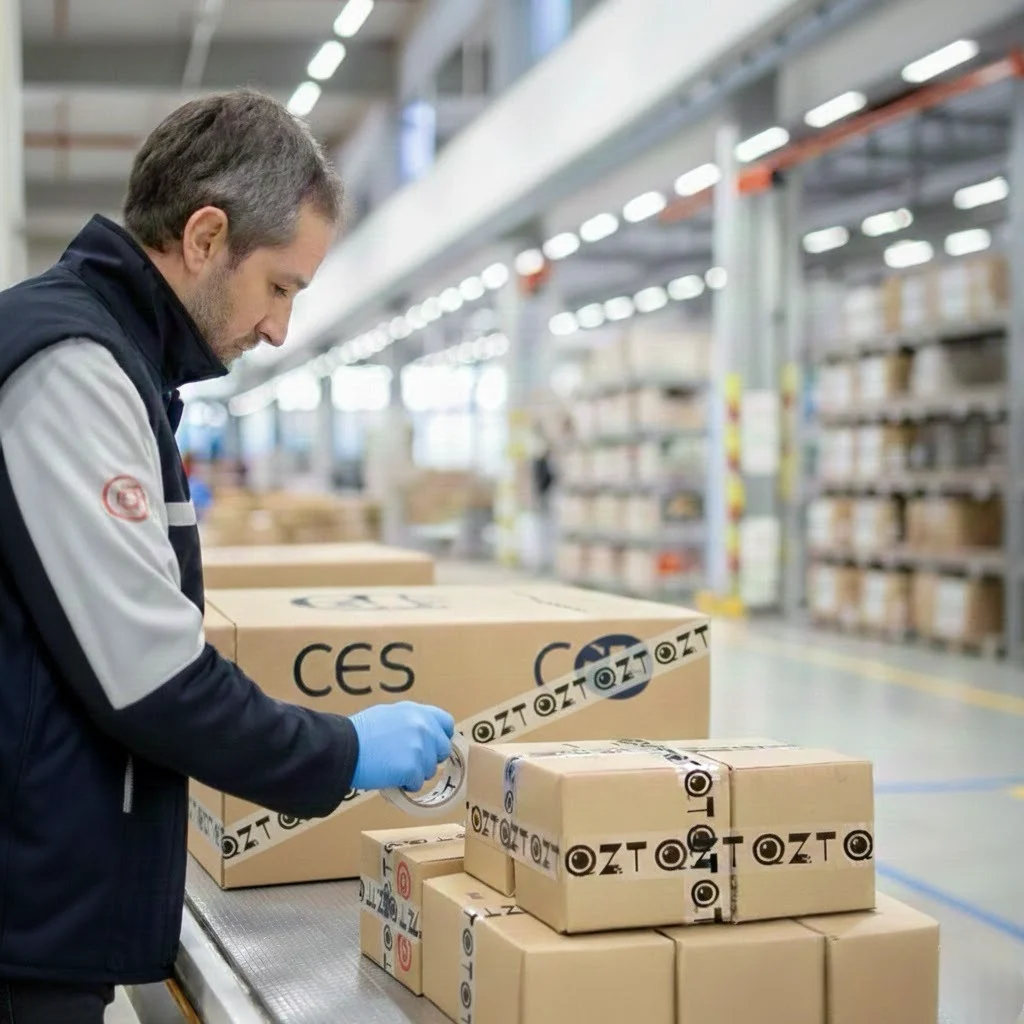
My compliance checklist for wholesale GPS trackers
– [ ] CE Declaration of Conformity references RED 2014/53/EU specifically
– [ ] Test reports from an ISO 17025 accredited lab cover all EU cellular bands (B3, B7, B8, B20 for LTE)
– [ ] IMEI numbers are TAC-registered (verify at GSMA IMEI database)
– [ ] Battery meets UN38.3 transport certification
– [ ] RoHS declaration covers Annex II substances
– [ ] CE marking on device is minimum 5mm height
– [ ] EU importer name and address on packaging
– [ ] WEEE registration for destination country
I had a shipment of 1,000 GPS trackers held at Rotterdam port for 4 weeks because the CE test report covered LTE Band 20 (800MHz) but the actual device also transmitted on Band 28 (700MHz), which was not included in the test scope. The fix required a supplementary test at a Dutch lab — €2,500 plus the 4-week delay. Always verify that the test report covers every frequency band the device actually uses.
Kernaussage: RED certification for GPS trackers must cover every cellular band the device transmits on. Missing even one band can result in customs seizure.
What MOQ, pricing, and SIM card options should I expect?
GPS tracker pricing varies enormously based on battery size, cellular module, and whether a SIM card is included. Here is what realistic B2B numbers look like.
Standard 4G GPS trackers with 5,000-10,000mAh batteries ship from our EU stock at MOQ 50 units. Custom branding starts at 200 units. Custom battery sizes or housing shapes require 500+ units. SIM cards can be bundled (we offer multi-network IoT SIMs with EU-wide coverage at €1.50-3/month per device) or customers can source their own.
Pricing tiers for wholesale GPS trackers
| Stufe | Batterie | Mobilfunk | Eigenschaften | B2B unit cost (100+) |
|---|---|---|---|---|
| Eingang | 5.000 mAh | 4G Cat-M1 | Location only, basic app | €15-22 |
| Mittelklasse | 10.000mAh | 4G Cat-1 | Location + geofence + history | €25-35 |
| Prämie | 20.000 mAh | 4G Cat-1 | Location + geofence + alerts + API | €40-55 |
| Hardwired | N/A (vehicle power) | 4G Cat-1 | Real-time + ignition + OBD | €30-45 |
SIM card strategy
The SIM card question trips up many new GPS tracker resellers. Three options:
1. Pre-installed IoT SIM — We pre-install a multi-network SIM that works across all EU countries. Monthly cost billed to you. Simplest for end customers. Best margin opportunity.
2. Customer-sourced SIM — Customer buys their own SIM. Lower per-unit cost for you. But customer support burden increases significantly.
3. eSIM — Embedded SIM that can switch networks remotely. Higher hardware cost. Best for cross-border fleet operations.
My recommendation for new resellers: start with pre-installed IoT SIMs. The €1.50-3/month per device recurring revenue adds up quickly and creates customer stickiness.
Kernaussage: Pre-installed IoT SIMs create recurring revenue and reduce customer support burden. Start with MOQ 50 standard units with bundled SIMs.
Who buys wholesale GPS trackers — and what do they actually need?
Understanding the buyer segments helps you stock the right models and avoid wasting inventory on products nobody in your market wants.
The three primary segments for wholesale GPS trackers in Europe are: (1) small fleet operators (5-50 vehicles — delivery, trades, service companies), (2) vehicle security buyers (theft recovery for cars, motorcycles, caravans), and (3) asset tracking buyers (construction equipment, containers, high-value shipments). Each segment has fundamentally different requirements.

| Segment | Primary need | Battery or hardwired | Reporting interval | Platform features | Price sensitivity |
|---|---|---|---|---|---|
| Small fleet (5-50 vehicles) | Route optimisation, driver accountability | Hardwired preferred | 1-5 minutes | History, geofence, reports | Mittel |
| Vehicle security | Theft recovery, movement alerts | Battery (magnetic) | Sleep + motion wake | Real-time alert, remote listen | Low (willing to pay for peace of mind) |
| Asset-Tracking | Location of equipment/containers | Battery (long life) | 1-24 hours | Geofence, low-battery alert | High (large deployments) |
The mistake I see most often: resellers stocking only magnetic battery trackers because they are easy to install. But fleet operators — the highest-value segment — need hardwired solutions with OBD or direct-wire connections. If you can offer both battery and hardwired options, you capture the full market instead of just the consumer segment.
Kernaussage: Stock both battery (magnetic) and hardwired GPS trackers. Battery covers the security/consumer segment. Hardwired captures the higher-value fleet management segment.
What after-sales issues should I prepare for with wholesale GPS trackers?
GPS trackers have a unique after-sales profile because they depend on external infrastructure — cellular networks, satellites, and cloud platforms — that the manufacturer does not control.
The top three after-sales issues I handle at our Italy support centre are: (1) “tracker is offline” — usually a SIM data exhaustion or network coverage gap, not a hardware fault, (2) “location is wrong” — GPS accuracy issues in urban canyons or underground parking, and (3) “battery dies too fast” — customers using short reporting intervals without understanding the power impact.

How we reduced GPS tracker returns from 18% to 3%
When we started shipping GPS trackers to our UK and German distributor networks, the return rate hit 18% in the first quarter. Analysis showed:
– 55% were SIM/connectivity issues (data exhausted, wrong APN, no coverage)
– 25% were “battery too short” complaints (unrealistic expectations)
– 12% were setup failures (app pairing, account creation)
– 8% were actual hardware defects
Our fixes:
1. Pre-configured APN settings before shipping — eliminated 80% of connectivity issues
2. Printed “realistic battery guide” card showing actual days by reporting interval
3. QR code linking to 3-minute setup video in English, German, Italian, French
4. Pre-charged batteries to 80% so customers can test immediately
Result: returns dropped to 3% within two quarters. The total cost of these improvements was under €0.50 per unit.
Kernaussage: Pre-configure APN, include realistic battery guides, and pre-charge batteries. These three steps at €0.50/unit save €20+/unit in return costs.
How does a wholesale GPS tracker compare to a smartphone tracking app?
This is the objection every GPS tracker reseller faces: “Why not just use Find My Phone?” Understanding the answer helps you sell with confidence.
A dedicated GPS tracker wins over smartphone apps in three critical areas: battery independence (a phone needs daily charging; a tracker runs weeks to months), covert installation (a phone is obvious; a magnetic tracker hides under a bumper), and reliability (a phone can be turned off, its SIM removed, or its tracking app disabled; a hardwired tracker operates silently regardless of driver behaviour).
| Merkmal | Dedicated GPS tracker | Smartphone app |
|---|---|---|
| Battery life | 15-90 days (standalone) | 1 day (phone battery) |
| Covert installation | Magnetic mount, hidden | Obviously a phone |
| Tamper resistance | No user interface to disable | Can be turned off |
| Cost per device | €15-55 one-time | €0 (uses existing phone) |
| Monthly data cost | €1.50-3 (IoT SIM) | €0 (uses phone data) |
| Fleet management features | Geofence, history, reports, API | Basic location only |
| Multi-vehicle management | Single dashboard | One app per phone |
Kernaussage: Dedicated GPS trackers win on battery life, covert capability, and fleet management features. Smartphone apps are free but unsuitable for fleet or security use cases.
Häufig gestellte Fragen
What is the minimum order quantity for wholesale GPS trackers?
Standard 4G wholesale GPS tracker models with 10,000mAh batteries ship from EU stock at MOQ 50 units with 5-10 day lead time. Custom branding (logo on device and packaging) starts at 200 units. Custom battery sizes or housing modifications require 500+ units with 35-45 day lead time from factory.
Do wholesale GPS trackers come with SIM cards included?
This depends on the supplier. QZT offers wholesale GPS trackers with pre-installed multi-network IoT SIM cards that work across all EU countries at €1.50-3 per device per month. Alternatively, you can order SIM-free units and supply your own local SIM cards, though this increases customer setup complexity.
How accurate is a wholesale GPS tracker for vehicle tracking?
A quality wholesale GPS tracker achieves 3-5 metre accuracy in open-sky conditions using multi-constellation satellite reception (GPS + GLONASS + BeiDou). In urban environments with tall buildings, accuracy drops to 10-30 metres. Indoor or underground parking accuracy drops significantly — most trackers report last known outdoor position.
What happens to a wholesale GPS tracker when the SIM card runs out of data?
When the SIM data allowance is exhausted, a wholesale GPS tracker continues recording location data to internal memory but cannot transmit positions to the cloud platform. Once data is renewed, stored positions upload automatically. IoT SIM plans with auto-renewal prevent this issue — I recommend these for all fleet installations.
Can a wholesale GPS tracker be detected or jammed?
A GPS tracker can be detected by RF scanning equipment that identifies cellular transmission signals. GPS jamming devices (illegal in most EU countries) can block satellite reception but cannot disable the cellular module, which will report the last known position and a “GPS signal lost” alert. Premium wholesale GPS trackers include jamming detection that triggers an immediate alert.
Schlussfolgerung
Sourcing wholesale GPS trackers for the EU market comes down to five non-negotiable decisions: 4G only (never 2G), realistic battery expectations, CE/RED certification covering all transmission bands, a platform you control or can migrate away from, and pre-configured SIMs that reduce setup failures. Start with 50 standard 4G units with pre-installed IoT SIMs from EU stock, test with 5-10 pilot customers for 30 days, then scale based on real return rates and customer feedback. Still have questions? I am always happy to walk you through the specs — reach out to our team and we will get you sorted.

 English
  Italiano
  Deutsch
  Français
  Español
  Polski