
Was ist eine HD-Mikrokamera und warum ist die Auflösung wirklich wichtig?
The Italian market is saturated with cameras that claim “HD,” “Full HD,” “2K,” and “4K” on their listings — but the actual video quality these terms represent varies enormously between manufacturers. When you search for microcamera hd, you are probably trying to cut through that noise and find a device that actually delivers clear, usable footage. This guide explains what HD really means in a micro camera context, what specs matter beyond the resolution number, and how to evaluate actual performance from listing claims.
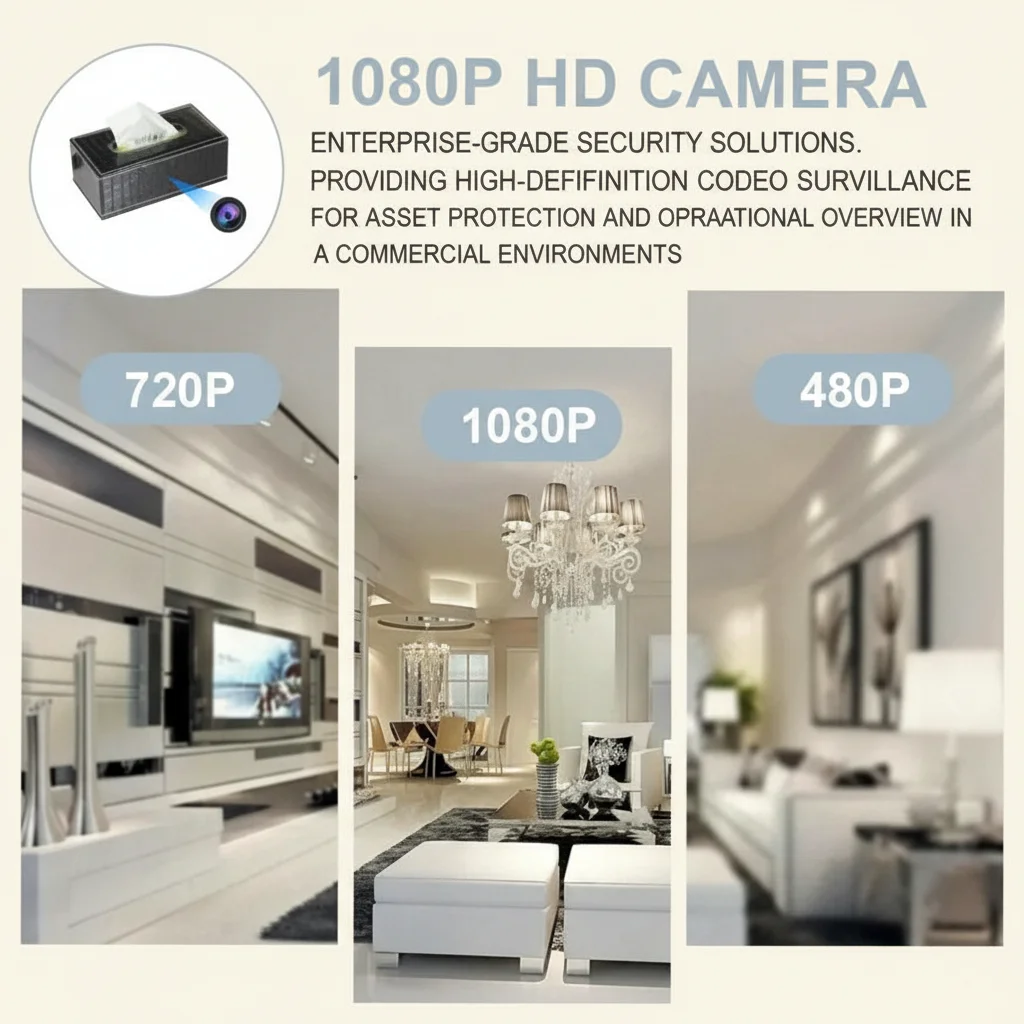
Understanding What “HD” Actually Means
HD — High Definition — is a video resolution standard, not a quality certification. In practice, the term is applied so broadly that it has become almost meaningless in product listings.
Here is the practical resolution landscape:
| Label | Actual Pixels | Use Case for Micro Cameras |
|---|---|---|
| SD / VGA | 640×480 | Not suitable for any security use |
| 720p / HD | 1280×720 | Bare minimum for basic identification |
| 1080p / Full HD | 1920×1080 | Recommended for most indoor and portable use |
| 2K / QHD | 2560×1440 | Useful for capturing detail at distance |
| 4K / UHD | 3840×2160 | Large files; benefits only in specific scenarios |
The jump from 720p to 1080p is significant — facial features become clearly identifiable, text on screens is readable, and small objects in the frame are visible. The jump from 1080p to 4K is much less dramatic for most micro camera use cases, while the file size quadruples.
> Most micro cameras sold as “HD” by unverified sellers are actually 720p or lower. The listed spec is aspirational marketing, not a measured specification. Always request a sample video before committing to bulk orders.

Why Sensor Quality Matters More Than Resolution Numbers
Here is the most important thing most buyers overlook: the image sensor matters more than the resolution number.
Resolution tells you how many pixels are in the output image. The sensor tells you how well each pixel captures light. A camera with a 4K resolution but a cheap sensor will produce blurry, noisy footage in any lighting condition other than bright daylight. A 1080p camera with a high-quality Sony CMOS sensor will produce sharp, usable footage in a dimly lit living room at midnight.
For Italian buyers evaluating micro cameras, the sensor brands to look for are:
– Sony Starvis / Starvis 2 — industry-leading low-light performance, used in professional surveillance equipment
– Sony CMOS (general) — reliable, consistent performance across lighting conditions
– OmniVision — good value option, widely used in mid-range cameras
– Generic / Unknown — avoid unless the price reflects the low quality
The sensor size also matters. Larger sensors (measured in inches, typically 1/2.8″ or 1/3″) capture more light per pixel than smaller sensors. In a micro camera form factor where the lens and sensor are both miniaturized, a larger sensor in the same body means measurably better image quality.

Frame Rate: 30fps vs 15fps and Why It Matters
Frame rate — how many individual images (frames) the camera captures per second — is a spec that rarely appears prominently in listings but makes a significant difference in practice.
30fps (frames per second) is the standard for smooth video. Movement appears natural, and you can accurately see the sequence of actions — someone entering a room, reaching for something, leaving. This is the minimum for useful evidence.
15fps or 25fps is sometimes used to reduce file sizes or extend battery life. The footage looks slightly choppy, and fast movements can appear blurred between frames. For casual monitoring this may be acceptable; for evidence gathering it is not.
60fps is available on some higher-end models and is useful for capturing fast action or producing smoother slow-motion playback. For most Italian buyers using a micro camera for home security or meeting documentation, 30fps at 1080p is the sweet spot.
When evaluating frame rate, also check whether the camera maintains that frame rate at the listed resolution. Some cameras advertise 1080p/30fps but drop to 15fps when recording in low-light conditions to compensate for the sensor’s limitations — a deceptive but common practice.
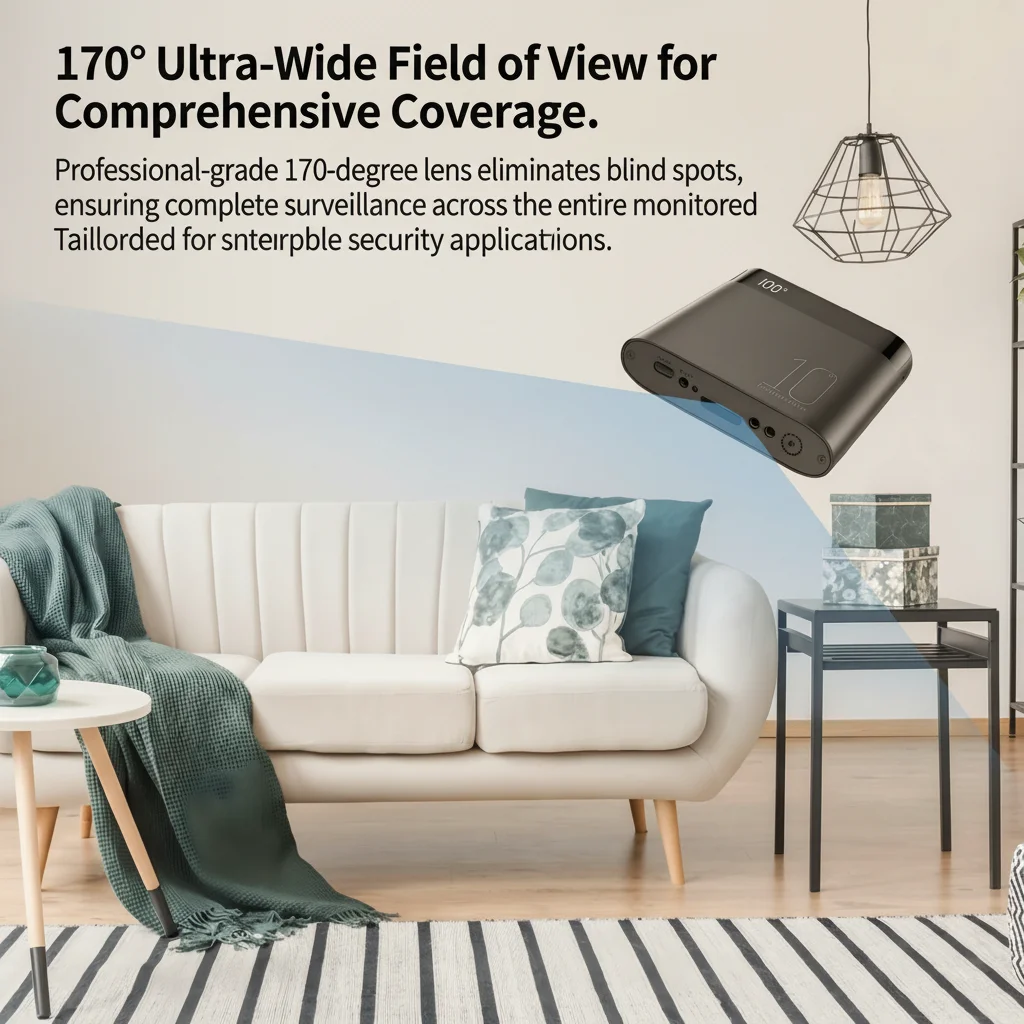
Lens Quality: Aperture, Focal Length, and the 3G/5G Glass Factor
Beyond the sensor, the lens determines what the camera can actually capture. Two micro cameras with identical sensors can produce dramatically different footage if they use different lenses.
Aperture (f-number, e.g., f/2.0, f/2.8) describes how much light the lens can gather. A lower number means a wider aperture — the lens captures more light in low conditions. For indoor use and any application where lighting is not perfectly controlled, f/2.0 or lower is preferable. Budget cameras typically use f/2.8 or higher, which means noticeably darker footage in typical indoor evening lighting.
Focal length determines the field of view and the magnification of distant objects. Micro cameras typically have fixed wide-angle lenses (3–4mm focal length) which give a broad view suitable for rooms. If you need to capture detail at distance, you need a longer focal length, which means a physically larger lens — often incompatible with truly “micro” form factors.
Lens material — glass lenses outperform plastic lenses in almost every measurable way: better color accuracy, less distortion at the edges, better performance in temperature extremes. Budget cameras use plastic lenses. Professional micro cameras use multi-element glass lenses. The difference is visible in any side-by-side comparison.
Night Vision Performance: Why It Is a Litmus Test for HD Quality
A camera that produces sharp, clear footage in daylight but produces black or blurry footage at night is not a complete surveillance device. For Italian buyers who plan to monitor their homes overnight, a property at night, or an outdoor area from an indoor position, night vision performance is a critical differentiator.
Infrared (IR) night vision uses infrared LEDs to illuminate the scene with light invisible to the human eye. The camera’s sensor detects this light and produces a black-and-white image. Key specifications:
– IR LED count — more LEDs generally means longer illumination range, but quality of the LEDs matters more than quantity
– Wellenlänge — 940nm LEDs are completely invisible; 850nm LEDs produce a faint reddish glow visible in the dark
– IR cut filter — a mechanical or electronic filter that switches between color day vision and IR night vision. Poorly implemented filters cause a brief flash or color cast during the switch
Die H3 Powerbank-Kamera with night vision capability demonstrates the difference between budget and quality night vision implementation — the difference is immediately apparent in any side-by-side test with a non-night-vision model.
Compression: H.264 vs H.265 and Why It Affects Your Storage
Video files are enormous. A single hour of uncompressed 1080p/30fps video consumes roughly 30GB of storage. Videokomprimierung reduces file sizes to manageable levels while preserving as much visual information as possible.
H.264 (AVC) is the current industry standard for surveillance video. It achieves roughly 10:1 compression while maintaining good visual quality. A 1080p/30fps camera using H.264 produces approximately 3–4GB per hour of footage.
H.265 (HEVC) is the newer standard, achieving 30–50% smaller files than H.264 at the same quality level. This means longer recording times on the same SD card and less bandwidth for remote viewing. H.265 support is increasingly common on newer micro cameras.
For Italian buyers, the practical implication is this: a camera that supports H.265 will record roughly twice as long on the same SD card compared to an H.264 camera at equivalent quality. If you are running motion-triggered recording with a 64GB card, H.265 support can extend your effective coverage from a few days to a full week.
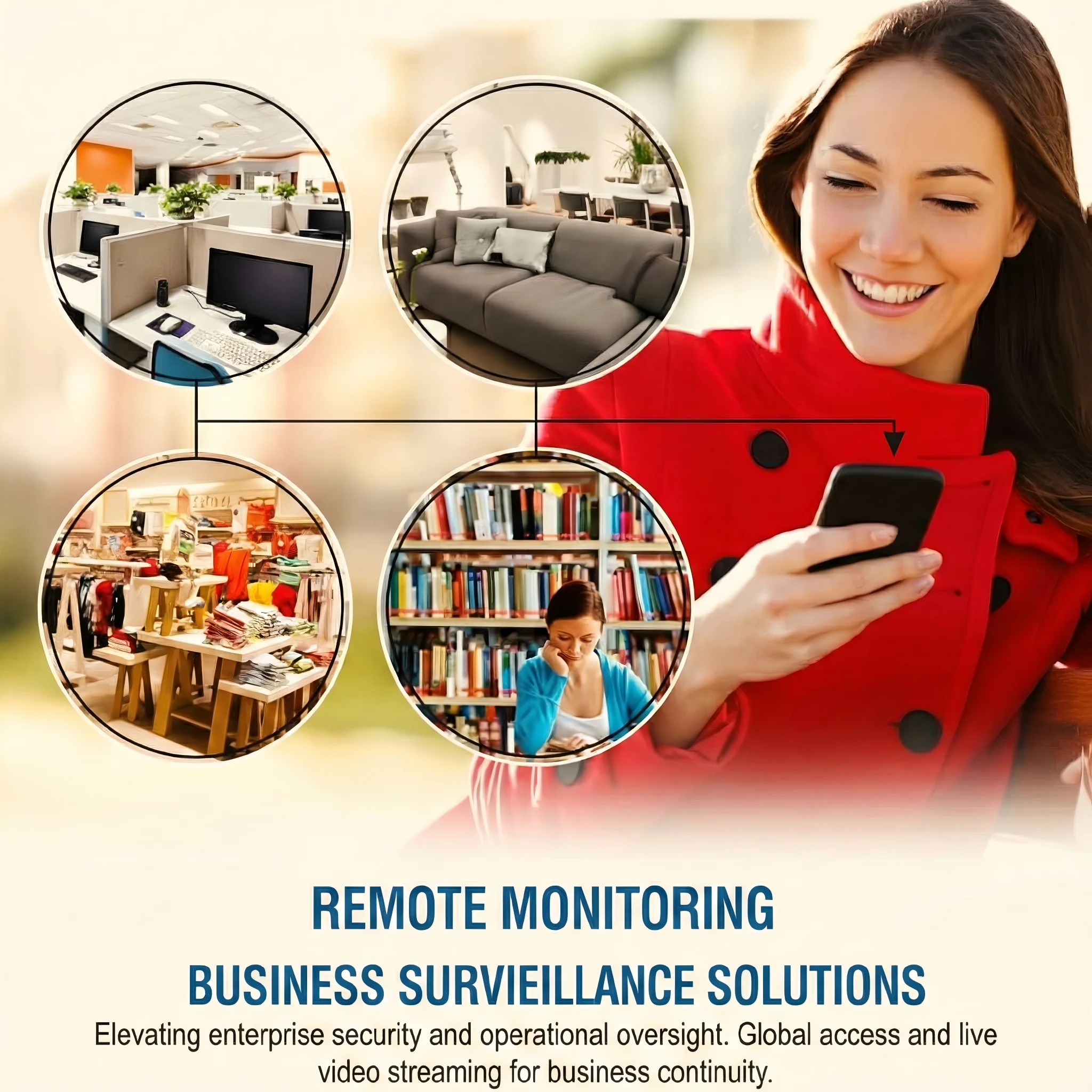
HD Micro Cameras in Practice: Real-World Use Cases
Understanding what HD micro cameras actually do in the field helps Italian buyers match specifications to requirements.
Home security in an Italian apartment — A 1080p camera positioned in a corner of a living room covers the main entrance and most of the room. PIR motion detection reduces false alerts from sunlight or curtains. Footage is stored locally on a 128GB SD card with loop recording. This configuration handles 95% of Italian household monitoring needs.
Meeting documentation in an office or studio — For professionals documenting meetings, lectures, or client conversations, a pen camera like the Für professionelle Überwachung ist die ideale Kombination provides both video and audio recording in a completely unobtrusive form. 1080p at 30fps provides clear enough footage to read documents or screens in the frame.
Nursery and childcare monitoring — Parents monitoring a child’s room need reliable night vision, quiet operation (no fan noise), and instant motion alerts. A clock-form camera like the Z10 WiFi-Spionagenuhr-Kamera sits naturally in a nursery and delivers the necessary performance without looking like a security device.
Häufig gestellte Fragen
What is the difference between HD 720p and Full HD 1080p in practice?
720p captures 921,600 pixels per frame. 1080p captures 2,073,600 pixels — more than double. In practice, this means 1080p footage clearly shows facial features and readable text from 3–5 meters away, while 720p footage identifies general shapes and movement but loses fine detail. For any application where you might need to use the footage as evidence or to identify someone, 1080p is the minimum acceptable specification.
Can an HD micro camera record continuously for 24 hours?
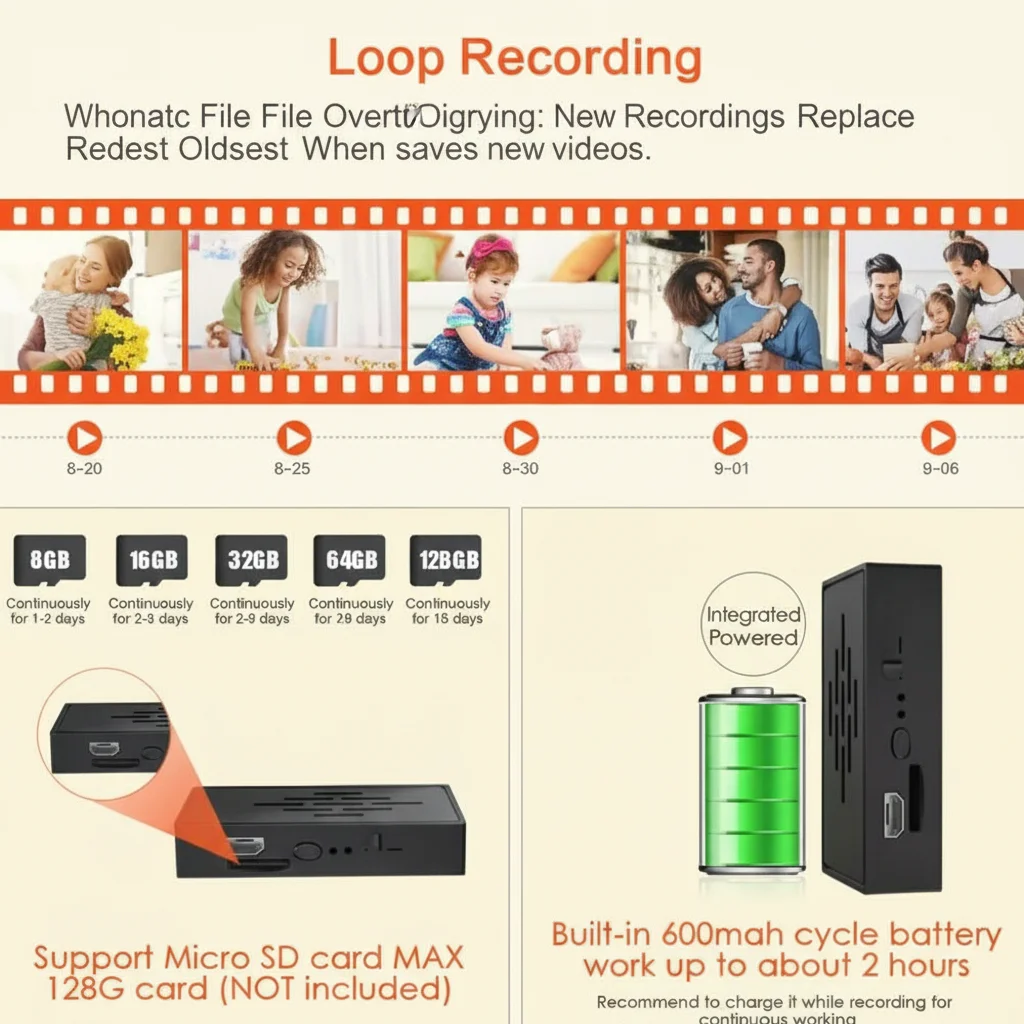
Yes — most HD micro cameras support continuous recording. However, this generates large files (roughly 3–4GB per hour for 1080p H.264 footage). A 128GB SD card holds approximately 35–40 hours of continuous 1080p recording. For overnight monitoring, motion-triggered recording is more practical, extending the effective recording period to a week or more on the same card.
Do HD micro cameras work in complete darkness?
Only with infrared night vision. Standard HD micro cameras without IR LEDs produce black or near-black footage in total darkness. Cameras with IR LEDs produce black-and-white footage in complete darkness by illuminating the scene with infrared light invisible to the human eye. For 24-hour coverage in an unlit room, infrared night vision is essential — verify this feature before purchasing if your application involves dark conditions.
Why do micro cameras sometimes produce blurry footage even in good lighting?
Blurry footage in a micro camera typically has one of three causes: a dirty or scratched lens (common in pen cameras and body-worn devices), incorrect focus due to the lens being too close to the subject (many micro cameras have a minimum focus distance of 1–2 meters), or motion blur from slow shutter speeds in low-light conditions. Testing the camera at the intended use distance before permanent deployment helps identify focus issues before they become a problem.
Ist eine 4K-Mikrokamera den zusätzlichen Preis wert?
Für die meisten Innen- und am Körper getragenen Anwendungen, nein. Die Dateigrößen sind viermal größer, erfordern viel größere SD-Karten und verbrauchen schnell mehr Speicherplatz. Der reale visuelle Verbesserung gegenüber 1080p ist unter typischen Innenraumbedingungen marginal. 4K-Mikrokameras sind nur sinnvoll, wenn Sie feine Details aus der Entfernung erfassen müssen — einen Bildschirm in einem großen Raum lesen, kleinen Text auf Dokumenten identifizieren oder einen weiten Außenbereich von innen überwachen.
Schlussfolgerung
Eine echte microcamera hd — eine, die unter realen Bedingungen scharfe, zuverlässige Aufnahmen liefert — erfordert, über die Auflösungszahl in einer Auflistung hinauszusehen. Priorisieren Sie die Sensorqualität (Sony Starvis oder gleichwertig), überprüfen Sie die Objektivspezifikationen (Glas statt Plastik, f/2.0 oder niedriger) und testen Sie die Nachtsichtleistung, bevor Sie sich für Großbestellungen entscheiden. Der Unterschied zwischen einer ordnungsgemäß umgesetzten 1080p-Kamera und einer 4K-Kamera mit einem billigen Sensor ist in der Praxis sofort erkennbar — und die 1080p-Kamera gewinnt normalerweise.
Durchsuchen Sie unseren kompletten HD-Mikrokamera-Katalog unter qztsecurity.com oder kontaktieren Sie unser Team für Datenblätter und Anfragen nach Beispielaufnahmen.

 English
  Italiano
  Deutsch
  Français
  Español
  Polski