
Spionagekamera mit Audio: Der komplette Kaufratgeber (Was 2026 tatsächlich funktioniert)
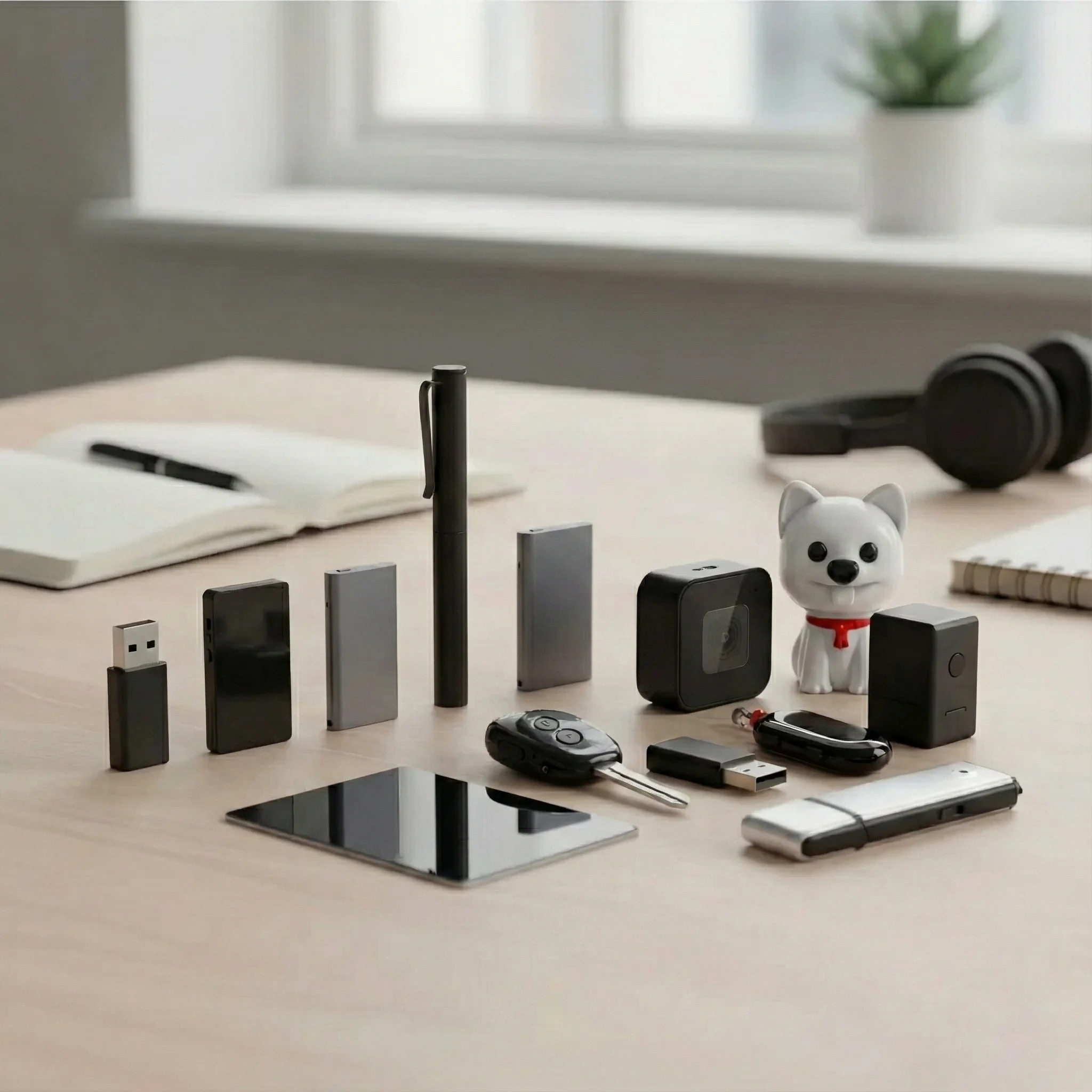
Over 90% of spy camera buyers don’t realize that “audio-ready” doesn’t mean the microphone actually works. They unbox a camera branded with “HD Audio” on the packaging, set it up in their living room, play back the first recording — and hear something that sounds like it was captured through a tin can at the bottom of a well. Muffled. Distorted. Useless.
If you’ve ever been there, you’re far from alone. Audio quality is the single most neglected spec in the hidden camera market, and the gap between what manufacturers promise and what you actually hear is staggering. The global spy camera market, valued at $266 million in 2025 with a projected 6.9% annual growth rate, is flooded with products that treat audio as an afterthought, a checkbox feature rather than a core capability.
A clear, honest framework for separating cameras that capture usable sound from those that just claim to. We’ll cover the audio specs that matter, break down the legal landscape (audio recording is a very different legal animal than video), and rank the best spy cameras with audio by real-world use case, not marketing bullet points.
By the end, you’ll know exactly which camera fits your situation, how to set it up for optimal sound capture, and how to stay on the right side of the law.
> Kernaussagen
> – “Audio-ready” on a spy camera box means nothing — look for SNR ratings above 58 dB and MEMS microphones for usable sound quality.
> – 13 U.S. states require all-party consent for audio recording; violating federal wiretapping law (18 U.S.C. § 2511) carries up to 5 years imprisonment and a minimum $10,000 civil penalty per violation.
> – Battery life is the #1 complaint across spy cameras (24.3% of negative reviews), making plug-in models the more reliable choice for continuous monitoring.
> – Effective audio range in real-world conditions is typically 40-60% less than manufacturer claims — always verify before deployment.
> – Scenario-first selection (home, office, outdoor, nanny cam) beats feature-first shopping every time.
What Makes a Spy Camera with Audio Actually Worth Buying
Walk into any online marketplace and search for a spy camera with audio. You’ll get hundreds of results, most priced between $20 and $80, all claiming “crystal clear sound” and “HD audio recording.” Most of them deliver audio that’s barely intelligible beyond three feet.
Understanding what separates a genuinely useful audio-equipped hidden camera from a covert surveillance camera with audio that’s just a paperweight with a microphone requires knowing three things that manufacturers hope you won’t ask about.
Audio Quality: The Number That Actually Matters (SNR Explained)
Signal-to-Noise Ratio (SNR) is the single most important metric for audio quality on any recording device — and almost no spy camera manufacturer publishes it.
SNR measures the difference between the actual sound you want to capture (a voice, a conversation) and the background electronic noise the microphone itself generates. It’s expressed in decibels (dB). Here’s what the numbers mean in practice:
| SNR Range | What You’ll Hear | Real-World Result |
|---|---|---|
| Below 50 dB | Heavy hiss, voices barely distinguishable | Unusable for evidence or conversations |
| 50-58 dB | Noticeable noise floor, voices understandable at close range | OK for basic presence detection |
| 58-65 dB | Clean audio, voices clear up to 8-10 feet | Solid for most home/office use |
| Above 65 dB | Broadcast-quality clarity, picks up whispers | Professional-grade surveillance |
Most mini spy cameras on the market use cheap electret microphones with SNR ratings in the 45-52 dB range. The ones worth buying use MEMS (Micro-Electro-Mechanical Systems) microphones — the same technology found in modern smartphones — which typically deliver 58-65 dB SNR in a package small enough for covert applications.
The takeaway: If a camera doesn’t specify its microphone type or SNR, assume it’s mediocre. Manufacturers who invest in good audio components are proud of it — they’ll tell you.
The “HD Audio” Marketing Trap — And How to Spot It
“HD Audio” means nothing. It’s not a technical standard. It’s not a certification. It’s a marketing term that appears on cameras with 8 kHz sampling rates — lower than a landline telephone call.
Here are the red flags that tell you a camera’s audio isn’t worth your money:
– No sampling rate specified. A camera that records audio at 8 kHz (telephone quality) but calls it “HD” is counting on you not knowing the difference. For reference, CD-quality audio is 44.1 kHz. Decent spy camera audio should be at minimum 16 kHz sampling with ADPCM or AAC encoding.
– “Two-way audio” advertised as the main audio feature. Two-way audio (a speaker and microphone for real-time conversation) is useful for some applications, but it tells you nothing about recording quality. A camera can have two-way audio and still record garbage.
– No audio sample or demo available. If a manufacturer is confident in their audio, they’ll provide a sample. If the only demo is video-only, that’s telling.
Effective Audio Range: Why “15 Feet” Claims Are Misleading
That “picks up sound from 15 feet away” claim on the product listing? In a quiet room with no ambient noise, speaking directly toward the camera — maybe.
Real-world effective range depends on four factors:
1. Room acoustics. Hard floors and bare walls reflect sound, creating echo that garbles speech. Carpet and curtains absorb it, reducing what reaches the microphone.
2. Ambient noise. An air conditioning unit, refrigerator hum, or traffic outside can cut effective range by 50% or more.
3. Speaker orientation. A person facing away from the camera speaks at roughly 6 dB lower at the microphone than someone facing it — that’s half the perceived loudness.
4. Microphone directionality. Omnidirectional mics pick up sound from all directions equally (good for general room coverage, bad for isolating specific conversations). Directional mics focus on one area but miss everything else.
Practical rule of thumb: Expect real-world effective audio range to be 40-60% of the manufacturer’s claim. A camera rated for 15 feet will reliably capture clear speech at 6-9 feet in typical indoor conditions.
Want to see how a well-engineered mini camera handles audio in practice? Explore the QZT C10 mini WiFi camera →
7 Critical Factors When Choosing a Spy Camera with Audio
Shopping for a spy camera with audio by feature list is how you end up with a device that checks boxes on paper but fails in your actual situation. Instead, evaluate cameras against these seven factors in order of importance for your use case.
The seven critical factors for choosing a spy camera with audio, in order of importance:
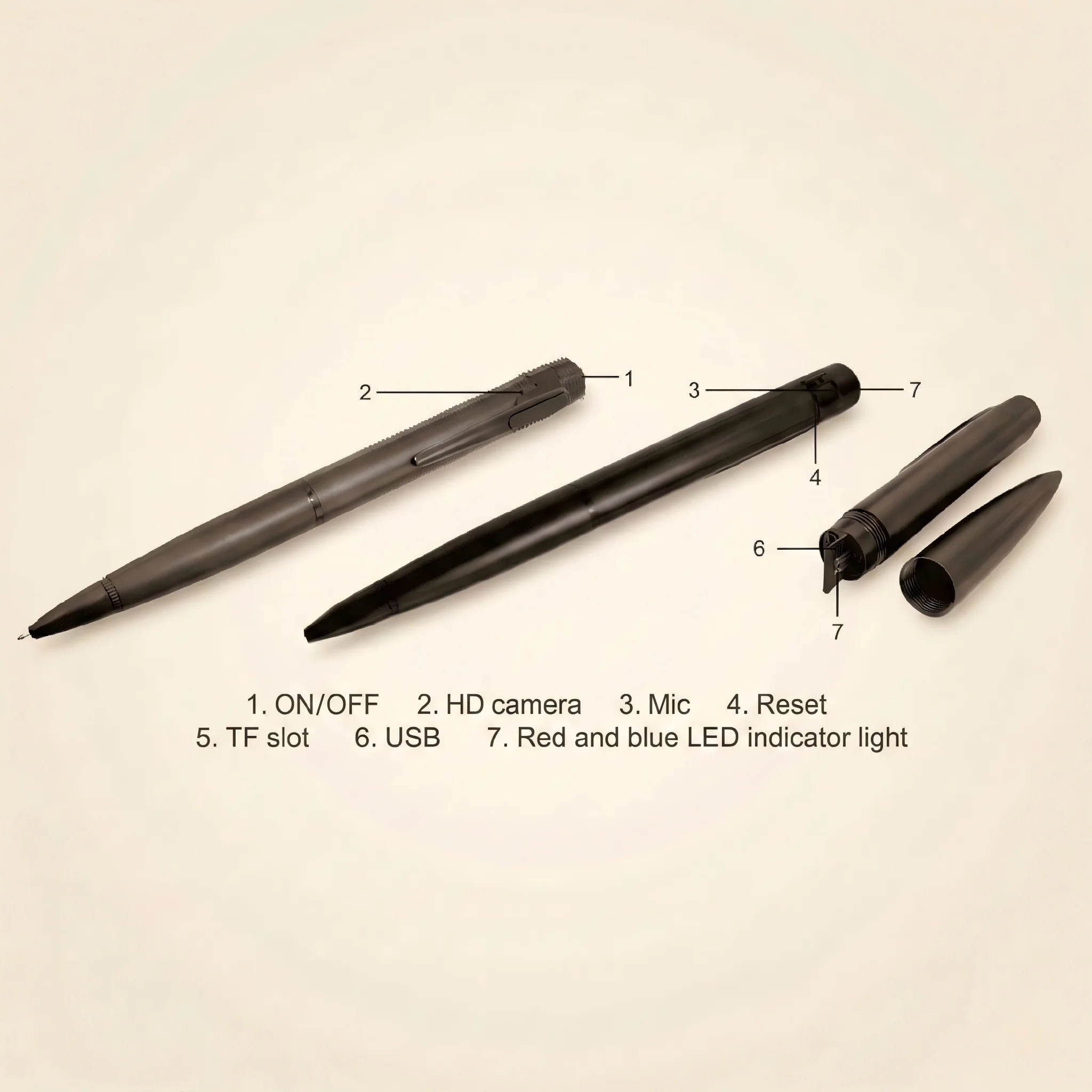
1. Audio clarity and recording format (MEMS microphone, 16+ kHz sampling)
2. Video resolution and night vision (1080p minimum, 940nm IR)
3. Covert design and disguise type (functional > ambient > bare)
4. Battery life and power options (plug-in for continuous, 2500+ mAh for portable)
5. Storage: local vs. cloud (use both when possible)
6. WiFi and remote viewing (2.4 GHz, Tuya Smart App)
7. Motion detection and alerts (PIR sensors, adjustable sensitivity)
Audio Clarity & Recording Format
This is the whole point of buying a camera with audio instead of a video-only model.
What to look for:
– MEMS microphone (not electret) for better SNR
– Sampling rate of 16 kHz minimum (22 kHz preferred)
– ADPCM or AAC audio encoding (avoid uncompressed PCM on limited storage)
– Audio bitrate of at least 64 kbps
Red flag: If the product description mentions audio only in the context of “two-way talk” and says nothing about recording format or quality, the recorded audio is likely an afterthought.
Video Resolution & Night Vision
Audio and video work together. A recording where you can hear a conversation but can’t see who’s speaking has limited value.
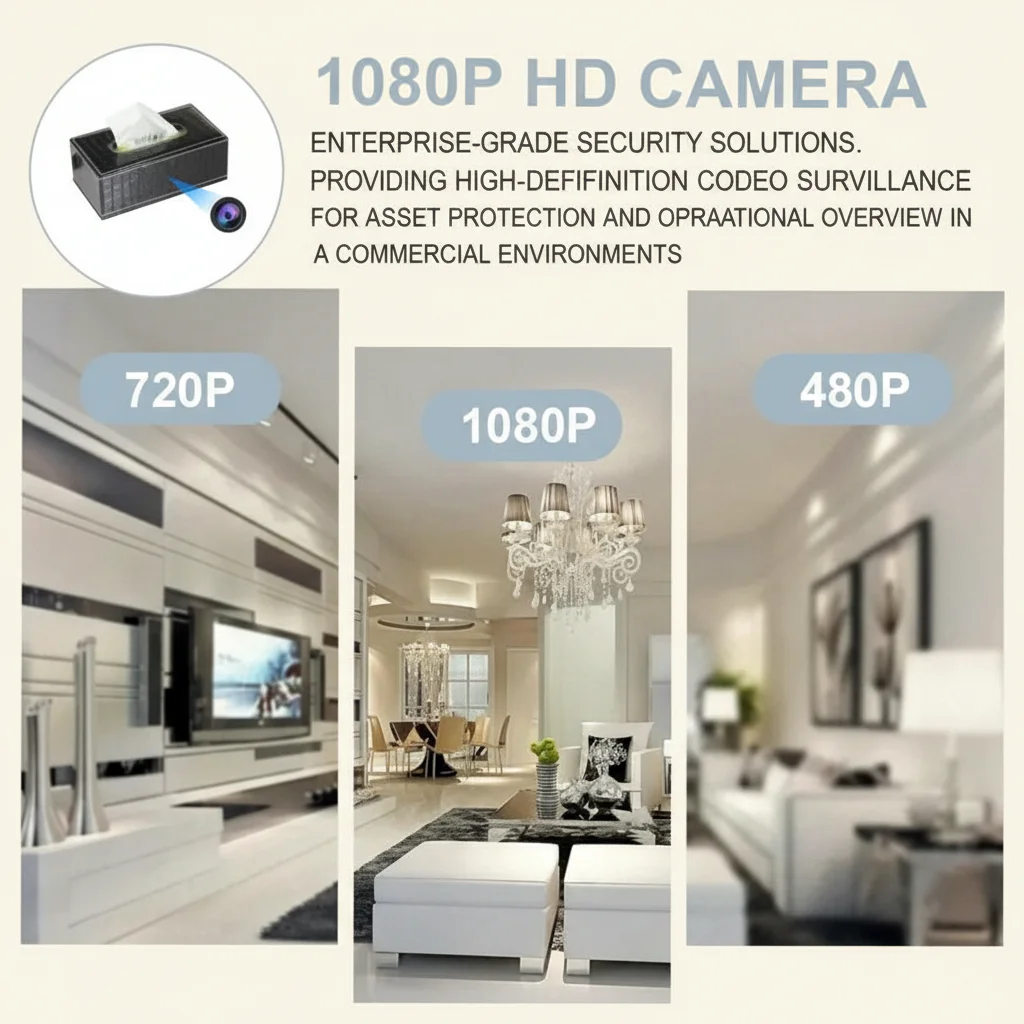
– 1080p (1920×1080) is the practical minimum in 2026. Anything less and you’ll struggle to identify faces beyond 10 feet.
– 4K sounds appealing but comes with trade-offs: larger file sizes, shorter battery life, and — critically — many “4K” spy cameras upscale from 1080p sensors. Verify the native sensor resolution, not the output resolution.
– Night vision using 940nm infrared LEDs is invisible to the human eye (unlike 850nm, which produces a faint red glow). If covert nighttime recording matters, 940nm is non-negotiable.
Covert Design & Disguise Types
The best spy camera is the one nobody finds. Disguise options fall into three tiers:
| Stufe | Beispiele | Detection Risk | Ideal für |
|---|---|---|---|
| Functional objects | Clock radios, USB chargers, power banks, smoke detectors | Very low — they’re expected in the environment | Long-term deployment |
| Ambient objects | Picture frames, tissue boxes, book spines | Low — blend into clutter | Home/nanny cam |
| Bare modules | Cube cameras, lens-only units | High — visible if not carefully hidden | Quick temporary placement |
Choose based on deployment duration. A bare module hidden inside a custom object beats a poorly disguised clock radio that looks suspicious.
Battery Life & Power Options
Battery problems account for 24.3% of all negative spy camera reviews — more than any other single complaint. This is where expectations and reality collide hardest.
Realistic battery expectations:
| Stromversorgungstyp | Kontinuierliche Aufzeichnung | Motion-Activated Standby | Reality Check |
|---|---|---|---|
| 250-500 mAh (pen cam) | 80-120 minutes | 8-24 hours | Short-term use only |
| 1000-2500 mAh (mini cam) | 4-7 hours | 2-7 days | Good for daily monitoring windows |
| 5000-10000 mAh (power bank cam) | 15-25 hours | 30-90 days | Best for extended deployment |
| Plug-in (wall powered) | Unlimited | Unlimited | Most reliable for 24/7 use |
For any scenario where you need more than a few hours of continuous recording, a plug-in model or one that supports charging while recording is the practical choice.
Storage: Local vs Cloud
Local storage (microSD):
– No subscription fees
– No internet dependency (works in DV/offline mode)
– Privacy advantage — data stays on the card
– Limited capacity (typically 32-256 GB)
– Risk of card corruption or physical loss
Cloud storage:
– Remote access to recordings even if the camera is found and removed
– Typically requires subscription ($3-10/month)
– Over 70% of consumer hidden cameras offer cloud storage, but very few disclose their encryption standards — a serious privacy concern
– Dependent on stable WiFi
Empfehlung: Use both. Loop record to a local microSD card as your primary, with cloud backup for critical motion-triggered events. If a camera only offers one or the other, local storage is more reliable for evidence purposes.
WiFi & Remote Viewing
WiFi capability transforms a spy camera from a passive recorder into a real-time monitoring tool. But not all WiFi implementations are equal.
– 2.4 GHz only is the standard (5 GHz is rarely supported on mini cameras due to antenna size constraints). If your home network is 5 GHz only, check that your router supports dual-band or you’ll need to configure a 2.4 GHz guest network.
– Tuya Smart App integration is a plus — it’s a widely supported platform that allows centralized management of multiple cameras and smart home devices.
– Latency matters. Real-time viewing on most consumer spy cameras has a 1-3 second delay. If you need instant response (like two-way audio confrontation), this lag is a limitation.
Motion Detection & Alerts
Motion detection serves two purposes: extending battery life by only recording when something happens, and alerting you in real time so you can check the feed.
What to look for:
– PIR (Passive Infrared) sensors are more reliable than pixel-based motion detection, which can be triggered by shadows, lighting changes, or insects.
– Adjustable sensitivity prevents false alarms from pets or ceiling fans.
– Push notification speed varies dramatically — 2-3 seconds on good cameras, up to 15 seconds on budget models.
– Recording clip length should be configurable. Fixed 30-second clips miss extended events; unlimited recording fills storage fast. The sweet spot is 1-5 minute clips with continuous recording option.
Best Spy Cameras with Audio — Tested & Ranked by Real Use Case
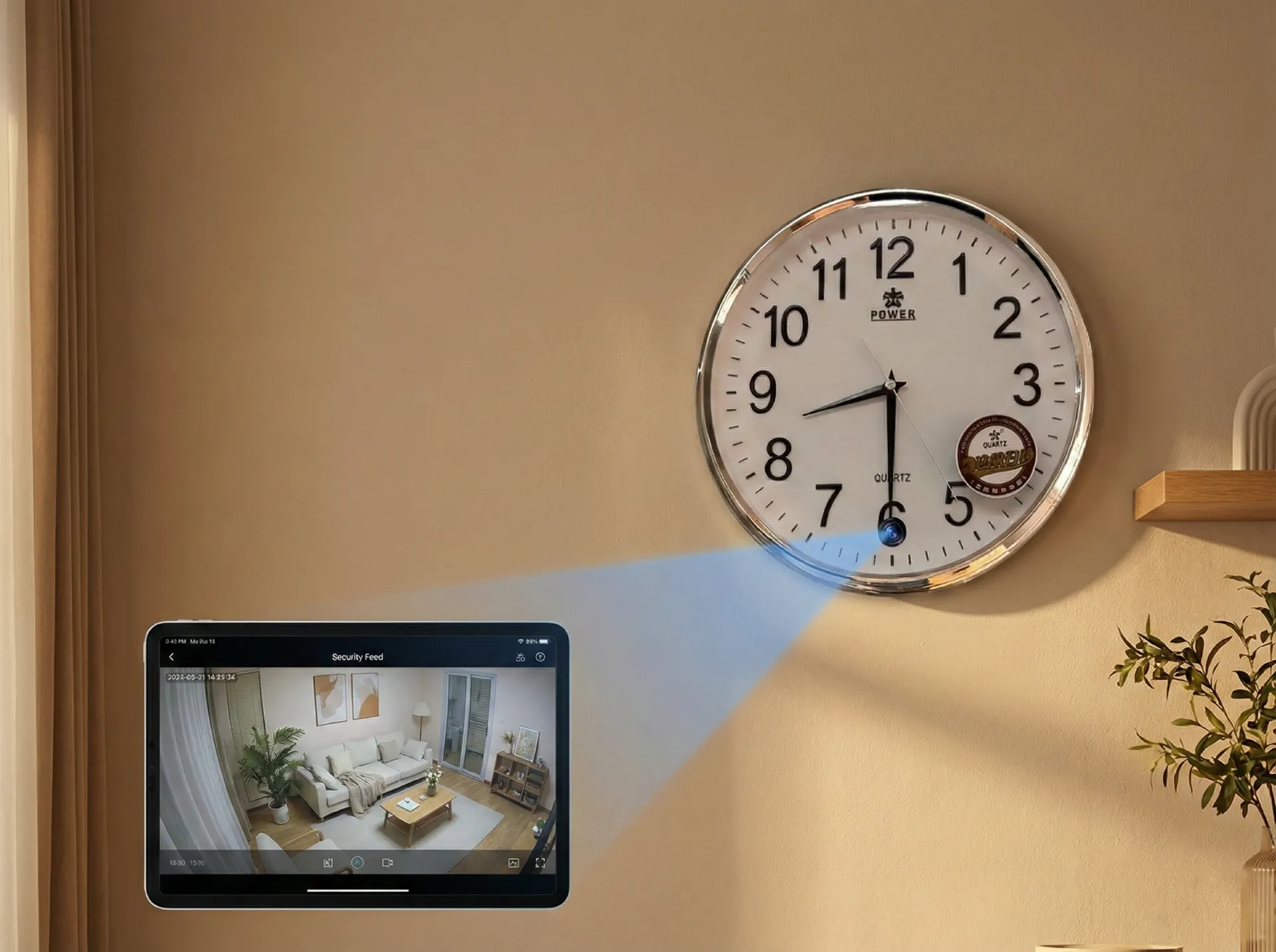
A camera that’s perfect for monitoring your home office is useless on a construction site with no WiFi. We’ve organized these recommendations by scenario first, because your use case should drive your choice, not the other way around.
Best for Home Security
When Maria came home from work last March, she noticed her living room blinds had been moved. Nothing was missing, but something felt off. A neighbor later told her a delivery person had been entering her home during her work hours. Maria needed proof — and she needed audio, because video alone wouldn’t capture what was being said or done when no one was visibly on camera.
Top Pick: QZT C10 Mini WiFi Camera
| Spezifikation | Detail |
|---|---|
| Rating | 7.5 / 10 |
| Auflösung | 1080p (1920×1080) |
| Audio | Built-in microphone with Tuya Smart App |
| Batterie | 2500 mAh (6-7 hours continuous) |
| W-lan | 2.4 GHz with remote viewing |
| Lagerung | microSD up to 256 GB + Tuya cloud |
| Nachtsicht | Low-light mode (requires ambient light) |
| Bewegungserkennung | Intelligent with push notifications |
What makes this the right call for home security: The C10’s 2500 mAh battery covers a full workday of monitoring, and its compact form factor (22.9 × 3.6 × 1 cm) hides easily on a bookshelf or between decorative items. Loop recording ensures you never miss footage, and the Tuya Smart App gives you real-time access from your phone. The dual-mode design (WiFi for live viewing, DV/offline for recording without network) means it keeps recording even if your WiFi drops.
Vorteile: Compact size, dual-mode operation, supports charging while recording, Tuya ecosystem integration, affordable price point
Nachteile: No true infrared night vision (requires ambient light), 2.4 GHz WiFi only, no SD card included
Ready to see how this camera performs in your home? Explore the QZT C10 mini WiFi camera →
Best Nanny Cam with Audio
The nanny cam use case has specific requirements: it needs to record for 8+ hours, capture conversations clearly, and — above all — look completely innocuous in a family environment.
Top Pick: Functional Clock Radio Hidden Camera
| Spezifikation | Detail |
|---|---|
| Rating | 8.0 / 10 |
| Auflösung | 1080p |
| Audio | Wide-range microphone (8-10 feet effective) |
| Leistung | Plug-in (unlimited recording) |
| W-lan | 2.4 GHz with app viewing |
| Lagerung | microSD + cloud backup |
| Disguise | Fully functional clock radio |
Where this camera earns its keep as a nanny cam: Plug-in power eliminates the battery anxiety that plagues battery-powered cameras in this scenario. A clock radio is one of the least suspicious objects in a child’s bedroom or living room. The wide-range microphone captures conversations at normal volume across a typical room.
Vorteile: Unlimited recording time, natural placement, functional disguise, no battery to charge
Nachteile: Requires wall outlet proximity, less flexible placement than battery models
Best for Office/Evidence Collection
When David, an HR director at a mid-size logistics company, suspected an employee of making threats against colleagues, he needed documentation that would hold up in an internal investigation. A hidden camera with audio in the break room gave him three days of recordings that confirmed the behavior — and the audio was what made the evidence actionable. Video alone would have shown a conversation; audio revealed what was actually said.
Top Pick: QZT TANK Pen Camera
| Spezifikation | Detail |
|---|---|
| Rating | 7.8 / 10 |
| Auflösung | 1080p HD (AVI format) |
| Audio | Built-in microphone with clear recording |
| W-lan | 2.4 GHz with remote view and control |
| Batterie | Extended battery for professional use |
| Lagerung | microSD |
| Disguise | Fully functional writing pen |
The practical case for this pick in evidence collection: A pen camera is the most natural object in a professional setting — it’s expected on desks, in shirt pockets, and during meetings. The QZT TANK captures both audio and video simultaneously, and its WiFi capability allows real-time monitoring during sensitive situations. The AVI format is widely compatible for evidence review.
Vorteile: Natural in professional settings, WiFi remote viewing, functional pen, compact form factor
Nachteile: Limited battery compared to plug-in models, small form factor limits microphone size and audio range, recording indicator can’t be completely disabled on some models
Best Budget Pick Under $50
Sometimes you need a camera for a specific, short-term situation — checking on a hotel room, verifying a pet sitter’s behavior, or monitoring a single event.
Top Pick: Popular Mini WiFi Cube Camera
| Spezifikation | Detail |
|---|---|
| Rating | 6.5 / 10 |
| Auflösung | 1080p |
| Audio | Basic built-in microphone |
| Batterie | ~3 hours continuous |
| W-lan | 2.4 GHz |
| Lagerung | microSD |
What you get for under $50: At this price, you get the basics: video, audio, WiFi, and motion detection. Audio quality is functional but not impressive — expect clear speech within 5 feet, diminishing rapidly beyond that. This is a “good enough” solution for short-term, close-range monitoring where you primarily need video and audio is a bonus.
Vorteile: Very affordable, compact, easy to set up
Nachteile: Weak audio quality, short battery life, limited night vision, app connectivity can be unreliable
Best 4K with Audio
The premium you’re paying for with 4K: If you need to capture fine details — license plates, facial features at distance, small text on documents — and want audio to match, 4K is worth the premium.
Top Pick: 4K Mini Camera with Enhanced Audio
| Spezifikation | Detail |
|---|---|
| Rating | 7.0 / 10 |
| Auflösung | 4K (verify native sensor, not upscaled) |
| Audio | Enhanced microphone with noise reduction |
| Batterie | 6-8 hours at 1080p, 4-6 hours at 4K |
| W-lan | 2.4 GHz |
| Lagerung | microSD + cloud |
Important caveat: Many “4K” spy cameras on the market use 1080p or 2K sensors and upscale the output. Before buying, verify whether the 4K resolution is native to the sensor. Upscaled 4K offers no detail advantage over native 1080p but costs more and drains battery faster.
Vorteile: Superior video detail (when native 4K), better audio processing than budget models
Nachteile: Higher price, larger file sizes, shorter battery life, upscale fraud risk
Best for Outdoor/Off-Grid (4G LTE)
Construction sites, remote properties, farm perimeters — these locations have two things in common: no WiFi and no power outlets. A WiFi-only camera is useless here. You need 4G LTE connectivity and battery or solar power.
Top Pick: QZT W10 4G LTE Outdoor Camera
| Spezifikation | Detail |
|---|---|
| Rating | 8.2 / 10 |
| Auflösung | 1080p |
| Audio | Built-in microphone with outdoor-optimized capture |
| Konnektivität | 4G LTE (no WiFi required) |
| Leistung | Rechargeable battery + solar compatible |
| Lagerung | microSD + cloud |
| Nachtsicht | Infrared for 24/7 outdoor monitoring |
| Weather Resistance | Outdoor-rated housing |
How this stays connected off-grid: The W10’s 4G LTE connectivity means you get real-time video and audio feeds from anywhere with cellular coverage — no WiFi, no ethernet, no problem. Solar compatibility extends deployment time indefinitely in sunny locations. The outdoor-rated housing handles rain, dust, and temperature extremes that would destroy an indoor camera within days.
Vorteile: True off-grid capability, no WiFi dependency, solar-compatible, weather-resistant, real-time remote access via cellular
Nachteile: Requires SIM card and data plan, higher upfront cost than WiFi models, cellular coverage dependent
Need surveillance where WiFi can’t reach? See how the QZT W10 4G LTE outdoor camera keeps you connected anywhere →
Best No-WiFi Simple Setup
Not everyone wants to connect a camera to their home network — and for good reason. WiFi-enabled cameras can be discovered by network scanning tools, and some people simply prefer an offline approach for privacy or security reasons.
Top Pick: Plug-in Offline Hidden Camera (No WiFi Required)
| Spezifikation | Detail |
|---|---|
| Rating | 7.5 / 10 |
| Auflösung | 1080p |
| Audio | Integriertes Mikrofon |
| W-lan | None — records to local SD card only |
| Leistung | Plug-in (unlimited) |
| Lagerung | microSD with loop recording |
The security of zero connectivity: No network connection means no remote hacking risk, no network discovery, and no dependency on WiFi stability. Insert an SD card, plug it in, and it records. Playback requires removing the card and viewing on a computer — less convenient but more secure.
Vorteile: Maximum security (no network attack surface), simple setup, unlimited recording, no WiFi needed
Nachteile: No remote viewing, must physically retrieve SD card to review footage, no push notifications
Comparison Table: Spy Cameras with Audio at a Glance
| Merkmal | QZT C10 (Home) | Clock Radio (Nanny) | QZT TANK Pen (Office) | Budget Cube | 4K Mini | QZT W10 (4G LTE) | Plug-in Offline |
|---|---|---|---|---|---|---|---|
| Price Range | $30-75 | $60-80 | $40-70 | $17-30 | $50-80 | $80-150 | $35-60 |
| Auflösung | 1080p | 1080p | 1080p | 1080p | 4K* | 1080p | 1080p |
| Audioqualität | Gut | Gut | Gut | Basic | Good+ | Gut | Gut |
| Lebensdauer der Batterie | 6-7 hrs | Unlimited (plug) | Mäßig | ~3 hrs | 4-8 hrs | Extended | Unlimited (plug) |
| W-lan | Ja | Ja | Ja | Ja | Ja | No (4G) | Nein |
| Fernzugriff | Ja | Ja | Ja | Ja | Ja | Yes (4G) | Nein |
| Nachtsicht | Low-light | Variiert | Nein | Basic | Ja | Yes (IR) | Variiert |
| Ideal für | Home monitoring | Nanny cam | Evidence/professional | Quick checks | Detail capture | Outdoor/off-grid | Maximum security |
*Verify native 4K sensor before purchase
Is It Legal to Record Audio on a Spy Camera? The Complete Compliance Guide
Audio recording law is fundamentally different from video recording law. Getting it wrong can result in criminal prosecution, not just a civil dispute.
Can you legally record audio on a hidden camera? It depends on your state. Federal law permits one-party consent, but 13 states require all-party consent — meaning everyone in the conversation must agree. Recording audio in a private space without consent in an all-party state is a felony carrying up to 5 years in prison and $10,000+ per violation under 18 U.S.C. § 2511.
One-Party vs All-Party Consent: State-by-State Overview
Under federal law — specifically the Electronic Communications Privacy Act (ECPA), 18 U.S.C. § 2511(2)(d) — at least one party to a conversation must consent to the recording. If you are part of the conversation, your own consent satisfies this requirement.
But here’s where it gets complicated: federal law sets the floor, not the ceiling. States can impose stricter requirements, and 13 have done exactly that.
All-Party (Two-Party) Consent States:
| State | Statute Reference | Key Detail |
|---|---|---|
| California | Penal Code § 632 | All-party consent; $5,000 minimum per violation |
| Connecticut | Gen. Stat. § 52-570d | All-party consent for in-person; criminal penalties |
| Florida | Statute § 934.03 | All-party consent; third-degree felony |
| Illinois | 720 ILCS 5/26-4 | All-party consent; strict enforcement history |
| Maryland | Cts. & Jud. Proc. § 10-402 | All-party consent; felony charges possible |
| Massachusetts | Gen. Laws ch. 272 § 99 | All-party consent; “secret recording” specifically criminalized |
| Michigan | Comp. Laws § 750.539c | All-party, but participant-recording carve-out (Sullivan v. Gray) |
| Montana | Code § 45-8-213 | All-party consent; requires actual notification |
| New Hampshire | RSA 570-A:2 | All-party consent |
| Nevada | NRS 200.650 | All-party consent; one-party for police |
| Oregon | ORS 165.540 | All-party for in-person conversations |
| Pennsylvania | 18 Pa. Cons. Stat. § 5703 | All-party consent |
| Washington | RCW 9.73.030 | All-party consent; private conversation protections |
The remaining 37 states follow the federal one-party consent standard, meaning you can record a conversation you’re part of without informing the other parties.
Interstate complication: If a conversation crosses state lines (a phone call between California and Texas, for example), courts generally apply the stricter standard. When in doubt, follow all-party consent rules.
Where Audio Recording Is Always Illegal
Regardless of which state you’re in, recording audio in certain contexts is unambiguously illegal:
– Bathrooms and locker rooms. Recording audio or video in areas where people have a reasonable expectation of privacy for intimate activities is illegal in all 50 states.
– Hotel rooms (without consent). As CNN reported, Airbnb banned all indoor cameras in April 2024 after 35,000 surveillance-related customer support tickets between 2013 and 2023. Many states have specific criminal statutes for hidden cameras in rental properties — Florida’s statute (810.145) makes it a third-degree felony.
– Interception of communications you’re not part of. Under 18 U.S.C. § 2511, a third party who is not a participant in the conversation cannot authorize recording. Your consent only covers conversations where you are actually present.
– Recording for tortious purposes. The consent exception under federal law disappears if the recording is made for the purpose of committing a criminal or tortious act — extortion, blackmail, trade-secret theft. Recording to document harassment is not tortious; recording for blackmail is.
International Audio Recording Laws (Quick Reference)
If you’re traveling or deploying cameras internationally, the legal landscape shifts significantly:
| Region | Standard | Key Consideration |
|---|---|---|
| EU/UK | GDPR / Data Protection Act 2018 | Requires lawful basis; covert recording extremely difficult to justify |
| Canada | One-party consent (Criminal Code § 184) | Federal standard; provinces may add requirements |
| Australia | Varies by state | Most states require one-party; some require all-party for private conversations |
| Japan | Generally permissive | But wiretapping is criminalized under the Wiretapping Act |
GDPR note for EU readers: Covert audio recording in the workplace or in a context where individuals have a reasonable expectation of privacy is extremely unlikely to have a lawful basis under GDPR Article 6. The penalties can reach €20 million or 4% of global annual revenue.
Can Spy Camera Audio Be Used as Evidence in Court?
Can spy camera audio be used as evidence in court? Yes, but only if the recording was obtained legally. In one-party consent states, audio recorded by a conversation participant is generally admissible. In all-party consent states, illegally obtained recordings are almost always inadmissible and carry independent criminal liability.
In one-party consent states: Audio recorded by a participant in the conversation is generally admissible, provided the recording device was not placed in a location where there’s a reasonable expectation of privacy (bathroom, bedroom of a non-consenting party).
In all-party consent states: Illegally obtained audio recordings are almost always inadmissible in criminal proceedings (exclusionary rule) and carry independent criminal liability for the person who made the recording. However, some states allow illegally obtained recordings in civil proceedings under limited circumstances — but relying on this exception is reckless.
Authentication requirements: Even legally obtained audio must be authenticated to be admissible. This typically requires testimony about how the recording was made, that it hasn’t been altered, and that it accurately represents what was said. Chain of custody for the recording device and storage media strengthens admissibility.
Praktischer Rat: If you’re recording audio for potential legal proceedings, keep the original recording on the device or SD card, document the date, time, and location of each recording, and avoid editing or converting the file format. A pristine original file is your strongest evidence.
Spy Camera Audio Quality — What the Specs Don’t Tell You
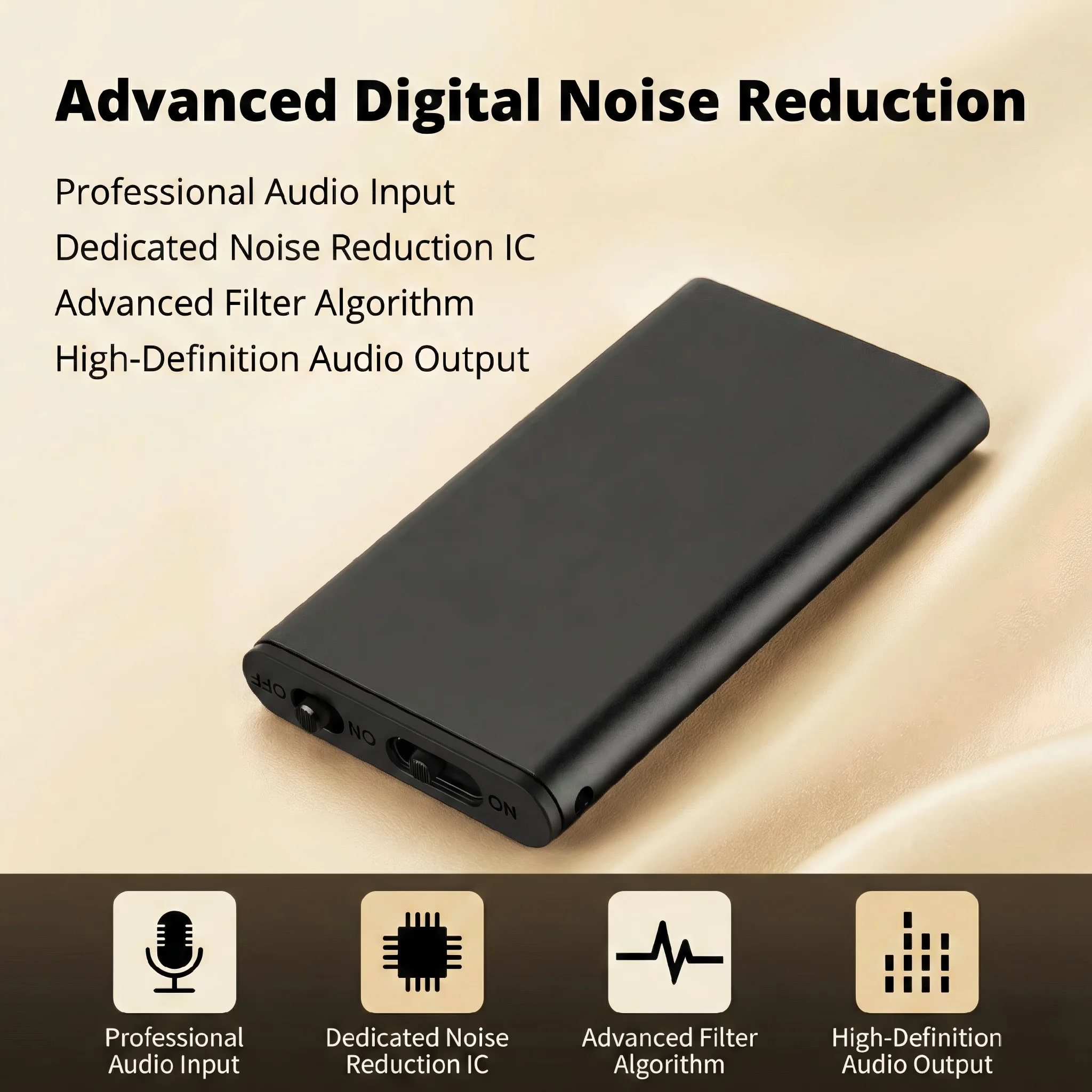
You’ve bought a camera. The audio specs looked reasonable on paper. You set it up, press record, and… the playback sounds like it was recorded underwater. What happened?
Why Most Spy Camera Audio Sounds Like a Phone Call from 2005
Three reasons, and none of them appear on product spec sheets:
1. Microphone placement inside the housing. Mini spy cameras are designed for video first. The microphone is typically crammed into whatever space remains after the lens, sensor, WiFi module, and battery take their share. When a MEMS microphone is pressed against a plastic housing wall with no acoustic port, the sound has to travel through solid plastic to reach the diaphragm. The result? Muffled, bass-heavy audio with almost no high-frequency clarity — which is where speech intelligibility lives.
2. Electromagnetic interference. The WiFi module, battery management IC, and image processor all generate electrical noise. In a device the size of a sugar cube, the microphone picks up this noise directly. This manifests as a constant low-level hiss or buzzing that’s impossible to remove in post-processing.
3. Audio compression. To save storage space, most spy cameras apply aggressive audio compression. ADPCM at low bitrates or compressed AAC at 32 kbps removes the frequency ranges where speech clarity lives (2-8 kHz) while keeping the frequencies that contribute to muddiness. The recording file says “audio” but your ears say “why bother.”
How to Verify Audio Claims Before You Buy
Don’t trust spec sheets. Verify with these steps:
1. Search for user reviews that specifically mention audio quality. Filter Amazon or retailer reviews for keywords like “audio,” “sound,” “microphone,” “muffled,” or “can’t hear.” The ratio of positive to negative audio mentions tells you more than any spec sheet.
2. Look for audio sample recordings. Some YouTube reviewers play back actual recorded audio from the camera. This is the closest you’ll get to hearing the real thing before buying.
3. Check the return policy. Buy from a retailer with a no-questions-asked return window. Test the audio in your actual deployment environment within that window.
4. Test immediately upon receipt. Before you need the camera for real, set it up in the target room and record yourself having a conversation at normal volume at the expected distance. Play it back. If you can’t clearly understand every word, no one else will be able to either.
External Microphone Options (When Built-in Isn’t Enough)
Some spy cameras support external microphones — and if audio quality is critical for your application, that feature alone can justify a higher price point.
Types of external microphones for covert applications:
– Lavalier (clip-on) microphones: Small enough to hide under clothing or behind objects. Decent models deliver 60+ dB SNR. Requires a camera with a 3.5mm audio input or adapter.
– Parabolic microphones: Highly directional, can capture clear audio at 30+ feet. Not covert — these are for stationary outdoor surveillance where the microphone itself can be concealed.
– Bluetooth microphones: Some WiFi cameras support Bluetooth audio input, allowing you to place the microphone in a different location from the camera. This is ideal when the camera needs to be in one position for video while the audio source is elsewhere.
Important note: Adding an external microphone may have legal implications. In some jurisdictions, the use of an external microphone to capture audio beyond what the camera’s built-in microphone could naturally pick up may be treated differently under surveillance law. Consult local statutes before deploying.
How to Set Up a Spy Camera with Audio for Optimal Sound Capture
Even a well-engineered spy camera with audio will deliver poor results if it’s set up wrong. Audio capture is far more sensitive to placement and environment than video. For more detailed instructions, see our complete spy camera setup guide.
Placement Tips for Clear Audio
– Minimize the distance. Every doubling of distance from the sound source reduces audio level by approximately 6 dB. Place the camera as close to the expected conversation location as possible.
– Avoid corners. Corners create comb filtering — sound reflections that cancel out specific frequencies, making speech sound hollow or tinny. Center placement on a wall or shelf is better.
– Face the microphone toward the speaker. If the camera’s microphone has any directional bias (most mini cameras don’t, but some disguise housings partially block one side), orient it so the open side faces the audio source.
– Keep it away from HVAC vents, fans, and appliances. The hum from a refrigerator (60 Hz in the US, 50 Hz in Europe) or air conditioning unit will dominate the recording and make speech difficult to isolate.
– Use soft surfaces. If you can choose between placing the camera on a hard countertop or a soft shelf, choose the soft surface. It absorbs reflected sound and reduces echo.
Reducing Background Noise in Recordings
You can’t eliminate all background noise, but you can minimize it:
– Schedule recordings during quiet hours. If you’re monitoring an office, recording during business hours is unavoidable — but if you’re checking for after-hours activity, the ambient noise floor drops dramatically when HVAC systems power down.
– Close windows and doors in the monitoring room before deploying. Traffic noise is one of the most common contaminants in home surveillance audio.
– Set motion detection sensitivity to filter out recordings triggered by noise alone (some cameras have audio-triggered recording, which you should disable if you’re in a noisy environment).
– Post-processing options: Software like Audacity (free) or Adobe Podcast can reduce background noise after recording. These tools work best when the noise is consistent (fan hum, AC) and struggle with intermittent noise (music, other conversations).
Testing Your Camera’s Audio Before Deployment
Before relying on the camera for real monitoring, do this:
The 3-minute audio test:
1. Place the camera in its intended location.
2. Stand at the expected distance of the person you’re monitoring.
3. Speak at normal conversational volume for 30 seconds.
4. Move to a secondary position (farther away, facing away) and speak for another 30 seconds.
5. Have another person speak while you remain silent, to test how well the microphone captures voices other than your own.
6. Play back the recording on headphones (not phone speakers — they mask audio problems).
If any portion of the test recording is unintelligible, reposition the camera or reconsider the model before relying on it for real monitoring.
Common Problems & Troubleshooting
“My Spy Camera Audio Is Muffled/Barely Audible” — 5 Fixes
1. Check the microphone port. Many disguised cameras have a tiny pinhole for the microphone. If it’s pressed against a surface or partially blocked by the disguise housing, sound can’t reach the microphone. Reposition or create a small clearance.
2. Clean the microphone opening. Dust, lint, and adhesive residue from mounting tape commonly block the microphone port on mini cameras. A gentle brush or compressed air can resolve this.
3. Reduce interference sources. Move the camera away from WiFi routers, microwave ovens, and other electronics that generate electromagnetic interference.
4. Check the audio encoding settings. If the camera’s app allows you to adjust audio quality, increase the bitrate. Some cameras default to a low-bitrate audio mode to save storage.
5. Verify the playback device. Before concluding the camera’s audio is bad, play the recording on good headphones or external speakers. Phone speakers, especially at low volume, can make reasonable audio sound terrible.
Audio and Video Out of Sync — Causes and Solutions
Audio-video desync is common on WiFi cameras that process video and audio streams separately:
– Network latency. If you’re viewing live feed, the video and audio may take different routes through the network, creating a lag. This is normal and doesn’t affect the recorded file.
– Encoding delay. Some cameras use different encoding chips for audio and video, resulting in a fixed offset. Check the camera’s app for an audio delay adjustment setting.
– SD card speed. A slow microSD card (Class 4 or below) may not write audio and video data simultaneously, causing drift over time. Use a Class 10 or UHS-I card.
– Post-recording fix. If the sync issue is in the recorded file, video editing software (VLC, Adobe Premiere, DaVinci Resolve) can shift the audio track to realign it.
Storage Filling Up Too Fast — Audio-Only Mode Tips
Audio recordings are tiny compared to video. A one-hour 1080p video with audio might consume 3-4 GB, while the audio portion alone is only 50-100 MB.
– Enable audio-only recording if your camera supports it. Some models allow you to disable video while continuing to record audio, extending storage capacity by 30-40x.
– Use loop recording with the shortest overwrite interval your camera allows. This ensures storage is always available for new recordings.
– Reduce video resolution. If audio is your priority, dropping from 1080p to 720p halves the video file size with minimal impact on most surveillance footage quality.
– Motion-triggered recording only. Continuous recording fills storage fast. If the camera supports motion-activated recording, use it — most real-world surveillance events are short and triggered by movement.
Häufig gestellte Fragen
Can spy cameras record audio legally?
Yes, in most U.S. states under one-party consent law (18 U.S.C. § 2511). However, 13 states require all-party consent, and recording audio in private areas like bathrooms is always illegal. Always check your state’s specific requirements before deploying a camera with audio.
How far can a spy camera pick up sound?
Most consumer spy cameras with built-in microphones capture clear speech at 5-8 feet in quiet conditions. Premium models with MEMS microphones may reach 12-15 feet. Manufacturer claims of 20+ feet are measured in ideal acoustic conditions that rarely exist in real deployments. Expect 40-60% of the claimed range.
Do all spy cameras with WiFi support two-way audio?
No. Two-way audio requires both a microphone (for recording) and a speaker (for playback), plus the processing power to handle simultaneous recording and streaming. Many WiFi spy cameras offer one-way audio (recording only) and list “two-way” as a separate, more expensive feature. Check the specs carefully.
Can I view live audio remotely on my phone?
Yes, on most WiFi-enabled spy cameras with the companion app (Tuya Smart, etc.). Expect a 1-3 second delay between live action and what you hear on your phone. This delay is inherent in the encoding-transmission-decoding pipeline and can’t be eliminated on consumer-grade cameras.
How long do spy cameras with audio record on battery?
It varies dramatically by battery capacity and recording mode. A typical 2500 mAh mini camera records continuously for 4-7 hours with audio. Motion-activated standby extends this to 2-7 days. Power bank-style cameras with 10,000 mAh batteries can record 20-25 hours continuously or last up to 90 days on standby. For anything beyond a day, plug-in models are more reliable.
Are spy cameras with audio detectable?
Yes, through several methods. RF detectors can identify the wireless signal from WiFi cameras. Camera lens detectors use infrared reflection to locate hidden lenses. Audio bug detectors can pick up the electromagnetic emissions from active microphones. However, cameras in offline/DV mode (no WiFi transmission) are much harder to detect and typically require physical inspection.
What’s the difference between one-way and two-way audio on spy cameras?
One-way audio means the camera records audio from its environment (microphone only). Two-way audio adds a small speaker to the camera, allowing you to speak through the camera remotely via the app. Two-way audio is useful for pet monitoring or communicating with someone at home, but it doesn’t improve recording quality and may reveal the camera’s presence if the speaker activates unexpectedly.
Can I use a spy camera with audio in my office?
It depends on your state and the circumstances. In one-party consent states, if you are physically present in the office and part of the conversations being recorded, you can generally record audio. If you are not present, or if you are in an all-party consent state, recording office conversations without consent may violate both state wiretapping laws and federal ECPA. Even in one-party states, though, employees may have workplace privacy protections that override consent rules. Consult an employment attorney before deploying audio recording in a workplace.
What should I do if I find a hidden camera in my Airbnb?
Do not touch or unplug the device. Document it with photos and video. Call local police first — before contacting Airbnb — to preserve evidence. Then report to Airbnb within 72 hours. Airbnb banned all indoor cameras in April 2024, but enforcement relies on guest discovery, and the platform does not routinely notify law enforcement.
Is cloud storage for spy camera recordings secure?
It depends on the provider. Over 70% of consumer hidden cameras offer cloud storage, but very few disclose their encryption standards. Without end-to-end encryption, your recordings could potentially be accessed by the storage provider, law enforcement with a warrant, or hackers. For sensitive recordings, local SD card storage with physical access control is more secure.
Schlussfolgerung
Choosing a spy camera with audio isn’t about finding the “best” camera — it’s about finding the right camera for your specific situation. Here’s the decision framework that actually works:
– Home monitoring during work hours? A compact WiFi camera with 6+ hours battery life and Tuya Smart integration, like the QZT C10, covers a full day and lets you check in remotely.
– Nanny cam or long-term indoor? Plug-in disguise cameras (clock radios, USB chargers) eliminate battery anxiety and hide in plain sight.
– Professional evidence collection? A pen camera or functional disguise in a professional setting captures audio and video without raising suspicion.
– Off-grid outdoor surveillance? 4G LTE cameras like the QZT W10 deliver real-time monitoring where WiFi can’t reach.
– Maximum privacy and security? Offline plug-in cameras with local SD storage have zero network attack surface.
Three things matter more than anything else: audio quality (look for MEMS microphones and SNR above 58 dB), rechtliche Compliance (know your state’s consent laws before you record), and honest expectations (assume real-world performance is 40-60% of manufacturer claims).
The best spy camera with audio is the one that captures what you need, stays within the law, and works reliably when it matters. Choose based on your scenario, verify before you deploy, and test the audio before you need it. Explore the full range of hidden cameras with audio from QZT Security, or check wholesale spy camera pricing for distributors for distributor and OEM inquiries.

 English
  Italiano
  Deutsch
  Français
  Español
  Polski