
Caméras stylo espion : L'outil en croissance pour les professionnels britanniques et européens en 2026
There is a specific kind of frustration that every professional eventually encounters: a meeting where promises were made, an interview where details mattered, a property inspection where verbal agreements were reached — and no record exists of what was actually said. The person on the other side may remember it differently six months later. You have no proof.
This is the problem that spy pen cameras solve. And across the UK and Europe in 2026, a growing number of professionals — lawyers, journalists, property managers, freelancers, investigators, and field workers — are discovering that the humble recording pen is one of the most practical tools in their professional kit.
The global surveillance camera market is projected to reach USD 75.63 billion by 2031, with the spy camera segment growing at 8.6% annually. Within that market, spy pen cameras occupy a distinct niche: they are not for securing your home or monitoring a property. They are for capturing what happens when you are physically present and need an accurate, tamper-evident record of events.
This article examines why spy pen cameras are becoming essential business tools in 2026, who benefits most from them, what features matter for professional use, and how to stay on the right side of UK and EU recording laws.
Why a Recording Pen, Not a Phone
Most professionals already carry a smartphone with a capable camera and voice recorder. So why would anyone choose a dedicated pen camera instead?
The answer is about psychology, reliability, and evidence.
When you open your phone to record a meeting, everyone in the room notices. The dynamic shifts. People speak more carefully, self-censor, or explicitly refuse to participate in a recorded conversation. The act of recording becomes the event — distracting from the substance of the meeting and potentially souring the relationship.
A pen camera changes this entirely. It sits in your hand, on the table, or in your pocket. It records audio and video without announcing itself. The conversation proceeds naturally. You get an accurate record of what was actually said, not a performance for the camera.
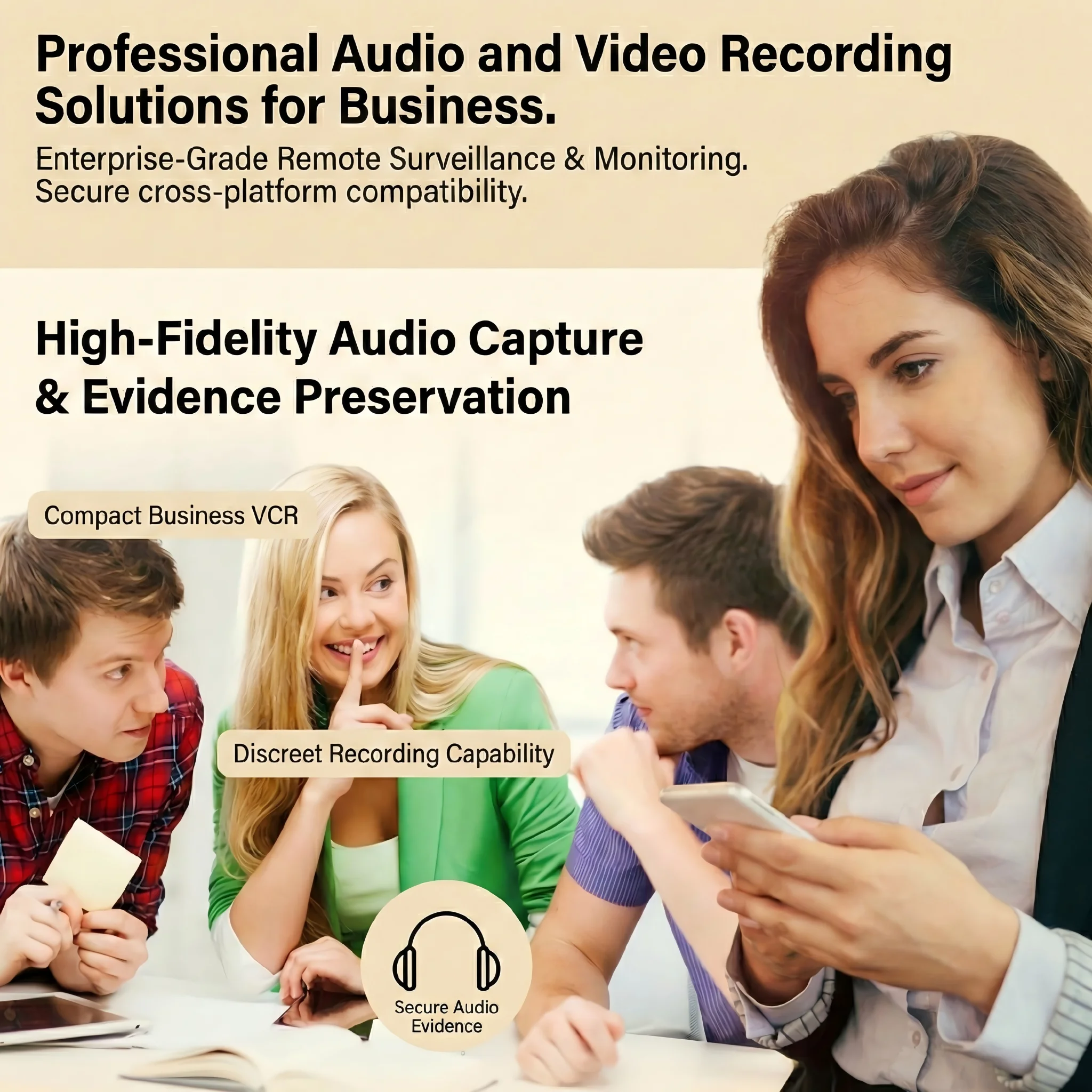
Beyond psychology, there are practical reasons pen cameras outperform phones for professional recording. A pen camera has a dedicated recording button — you do not fumble through an app to start recording. It runs independently of your phone — if your phone battery dies or you receive a call that interrupts recording, the pen keeps going. And in the event of a dispute, a dedicated recording device with its own storage is harder to tamper with than a phone file that could be claimed to have been edited.
For field professionals — investigators, property surveyors, insurance assessors — a pen camera is also considerably more discreet than a phone held up at chest or face height. It allows you to document a property inspection, a site walk, or a vehicle assessment without making the subject aware, which is often essential for capturing an accurate picture.
The UK and EU Legal Framework for Recording Conversations
Before discussing use cases, it is essential to address the legal dimension — and to be clear about something that many online guides gloss over.
The law on recording conversations differs significantly between the UK and most EU member states, and getting this wrong has real consequences.
United Kingdom: One-Party Recording in Private Settings
In the UK, a single party to a conversation can legally record it without the knowledge or consent of the other parties — provided the recording is for a legitimate purpose and the conversation is in a private setting. This is established under the Regulation of Investigatory Powers Act 2000 (RIPA) and related case law.
“Private setting” generally means a place where the parties have a reasonable expectation of privacy. A private meeting room, your office, or someone’s home qualifies. A public street does not — and recording conversations in public spaces with no expectation of privacy may still engage other legal considerations.
The legitimate purpose requirement means you cannot record a conversation with the intention of using the recording for blackmail, harassment, or other unlawful purposes. Recording a business meeting, interview, or property inspection for documentation purposes is clearly a legitimate purpose.
The ICO guidance on covert recording confirms that recording for one’s own purposes in a private setting — such as documenting a meeting or protecting oneself in a potential dispute — does not require prior notification to the other parties. However, sharing the recording with third parties (such as posting it online or distributing it widely) engages data protection obligations under UK GDPR.
Key distinction from the US: Many US states operate under “two-party consent” laws, meaning all participants in a conversation must agree to recording. The UK operates under a one-party rule, making covert recording of private conversations considerably more permissible on these shores.
European Union: Significant Variation by Country
The EU presents a more complex picture because recording laws vary by member state. Some EU countries — including Germany, under Section 201 of the Strafgesetzbuch (StGB) — impose strict restrictions on intercepting private communications, even for one’s own records. Others take a more permissive view similar to the UK.
For EU business users, particularly those operating across multiple member states, this creates an important due diligence requirement. Before deploying a recording pen in France, Germany, Italy, Spain, or any other EU country, you should confirm the specific laws of that jurisdiction.
Germany stands out as particularly restrictive. Section 201 StGB criminalises creating an unauthorised recording of someone’s unauthenticated private spoken words, even if you are one of the parties to the conversation. Violation can result in criminal penalties. Business users in Germany should obtain explicit consent before recording any conversation.
France, by contrast, generally permits one-party recording for personal purposes, though using recordings as evidence in legal proceedings requires careful procedural handling. Italy’s framework similarly permits recording in one’s own interest, but the recording must be genuine and not obtained through illegal means.
The GDPR adds a further layer across all EU member states. A recording of a conversation containing identifiable voices is personal data. This means that even when recording is legally permissible, you have obligations regarding how the recording is stored, who can access it, and how long it is retained.
Best practice for EU business users: Include a standard clause in your contracts and engagement letters confirming that meetings may be recorded for documentation purposes. This provides a clear lawful basis under GDPR Article 6(1)(b) (contractual necessity) and Article 6(1)(f) (legitimate interests) and removes ambiguity about consent across jurisdictions.
Who Benefits Most From Spy Pen Cameras in 2026
Solicitors, Paralegals, and Legal Professionals
A solicitor meeting a client to take instructions, a paralegal conducting a witness interview, or a family law mediator documenting an agreement all face the same challenge: capturing an accurate record of everything that was said without altering the dynamic of the conversation.
A Stylo caméra espion QZT W8 records 1080p video with audio in a format that is difficult to contest. The timestamp embedded in the file provides a tamper-evident record of when the conversation occurred. For solicitors dealing with clients who later claim they were given different advice, this is direct evidence that protects both the client and the firm.
The WiFi-enabled W8 pen also allows recordings to be transferred directly to a secure device after the meeting, reducing the risk of the physical pen being lost or the storage being corrupted.
Journalists and Investigative Reporters
Journalists operate under increasing pressure to document their interactions accurately — particularly in sensitive situations where sources may be vulnerable and accuracy is paramount. A pen camera provides an additional layer of documentation beyond handwritten notes and audio recorders.
The ethical considerations for journalists are significant: recording without consent in many circumstances is a breach of press ethics guidelines and, in some countries, the law. However, in jurisdictions where it is permissible, a pen camera can serve as a tool of last resort for documenting events that would otherwise leave no record.
The key distinction is between recording for documentation (which may be permissible) and recording for publication (which triggers additional consent and privacy requirements). Journalists should consult their editor and legal team before deploying covert recording in the field.
Property Managers and Estate Agents
Property inspections, tenancy sign-ups, and rental viewings are frequent sources of disputes. A landlord who conducts a check-out inspection with a pen camera has an objective record of the property’s condition that protects against false damage claims. An estate agent documenting a property viewing with a pen camera can demonstrate exactly what was and was not disclosed to prospective buyers.
Le Stylo enregistreur vocal WiFi QZT A57 is particularly suited to property documentation because it emphasises audio clarity — capturing clear voice notes about property conditions, room measurements, and specific observations that are more useful than video for technical assessments.
For estate agents in England and Wales, recording tenancy negotiations serves a practical purpose beyond dispute resolution: it provides evidence in the event of a future harassment or discrimination claim.
Freelancers and Independent Contractors
Freelancers are particularly vulnerable to scope disputes, unpaid invoices, and clients who deny agreeing to specific terms. A pen camera provides documentary protection that a written email trail cannot match.
A freelancer who records a project kickoff meeting, a mid-project review, or a payment negotiation has an objective record of what was agreed. If the client later disputes the scope of work or claims that certain features were not discussed, the recording provides direct evidence.
This is especially valuable in creative industries — design, copywriting, consulting — where the deliverables are often subjective and the boundary between agreed scope and creative additions is frequently contested.
Private Investigators and Security Professionals
Private investigators are perhaps the most obvious professional users of covert recording equipment. For licensed investigators operating under SIA (Security Industry Authority) regulations in the UK, lawful surveillance is a core part of the job.
However, this is also the area where legality becomes most complex. PI surveillance in public spaces is governed by RIPA and requires authorisation in certain circumstances. Covert recording in private spaces raises additional data protection obligations. Professional investigators typically hold specific SIA licences and receive training on the legal boundaries of their work.
For non-licensed individuals who attempt to conduct their own investigations — following a suspected cheating partner, for instance — covert recording in private spaces can quickly cross into unlawful activity. If you are not a licensed investigator, the safest approach is to consult a professional rather than attempting your own surveillance.
Key Features for Professional Pen Camera Buyers
Not all spy pen cameras are suitable for professional use. Here is how to evaluate what matters.
Video Quality: 1080p Minimum
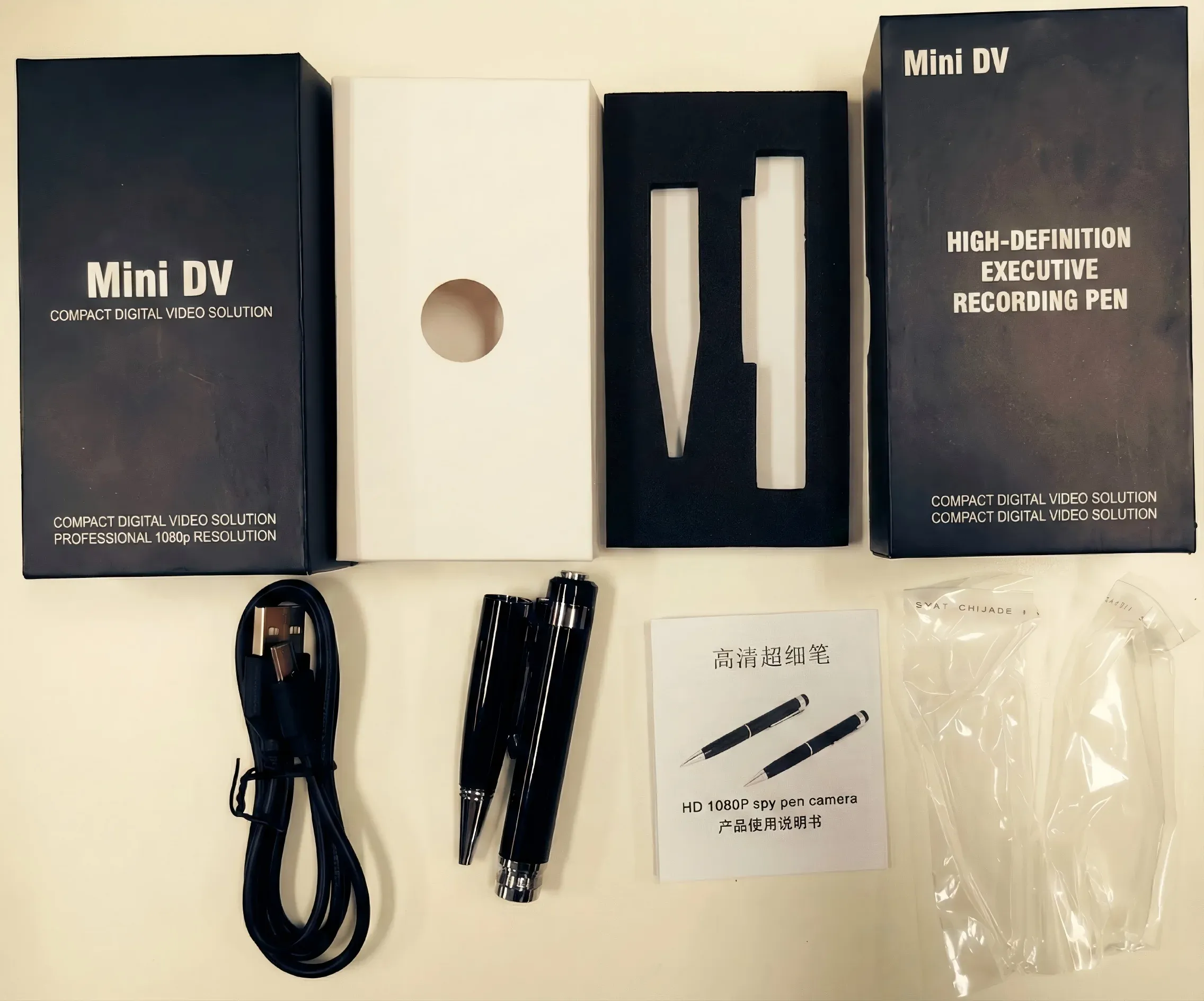
For any professional application where you might need to use the recording in a dispute or legal proceeding, 1080p is the minimum acceptable resolution. A 720p recording may capture a recognisable face in good light at close range, but will struggle to capture details — text on documents, product labels, vehicle number plates — that are often the point of the recording.
Le QZT W8 pen camera records at Full HD 1080p and includes a 30-megapixel photo mode for capturing still images of documents or evidence in passing.
Look for cameras with wide apertures (lower f-numbers such as f/1.8 or f/2.0) — these admit more light and produce better quality footage in indoor and variable lighting conditions.
Audio Quality: The Most Underrated Feature
Professional users consistently underestimate the importance of audio quality. A video recording where the dialogue is muffled, distorted, or obscured by background noise is nearly useless as evidence. A clear audio recording of the same conversation is invaluable.
When evaluating pen cameras, prioritise models with:
– Directional microphones that capture voice clearly while minimising background noise
– Audio bitrates of 128kbps or higher (higher is better)
– Noise reduction processing, particularly for use in busy environments
Le Stylo enregistreur QZT A57 is designed with audio clarity as its primary focus, featuring voice-activated recording mode that starts capturing the moment sound is detected — useful for capturing conversations that begin without warning.
Storage and Battery Life
For field professionals who may conduct multiple interviews or inspections in a single day, battery life and storage are critical practical considerations.
| Spécification | Minimum for Professional Use | Ideal |
|---|---|---|
| Battery life | 4+ hours continuous recording | 8–12 hours |
| Storage capacity | 32GB (4–6 hours 1080p) | 64–128GB |
| Charging method | USB-C (fast charge preferred) | USB-C, power bank compatible |
| Recording format | H.264 MP4 | H.265 MP4 (smaller files) |
Some pen cameras support voice-activated recording — the device records only when sound is detected, extending battery life and storage capacity significantly. This is particularly useful for interview scenarios where the pen may be placed on a table for long periods with intermittent speech.
Connectivity: WiFi vs. Local Transfer
WiFi-enabled pen cameras allow you to transfer recordings to a secure device without physically handling the pen. This matters for two reasons: first, it allows you to back up critical recordings immediately after a meeting before the pen is lost or misplaced; second, it means the physical pen does not need to leave your possession, which is important if you are concerned about the security of recordings in transit.
However, WiFi connectivity also introduces network security considerations — the pen must connect to your phone or laptop via an app, and footage passes through a server somewhere. For professionals with heightened confidentiality requirements, a non-WiFi model that transfers via USB cable after the event may be more appropriate.
How to Use a Recording Pen Professionally
Before the Meeting
1. Confirm the legal position for your jurisdiction (see above). If operating across EU countries, have a written policy.
2. Charge the pen fully and format the storage card. Confirm it is recording correctly with a 30-second test recording.
3. Set the date and time on the device — many pen cameras embed timestamps automatically, but check this is working.
4. Si vous utilisez l'activation vocale, testez le réglage de sensibilité dans votre environnement habituel.
During the Meeting
5. Positionnez le stylo naturellement. Dans votre main, sur la table, ou dans une poche de poitrine — partout où un stylo serait normalement placé. Évitez de le placer dans un sac ou un tiroir où il pourrait capter un son étouffé.
6. Ne pas attirer l'attention dessus. Le stylo doit accomplir sa tâche de manière invisible. Si on vous interroge à son sujet, un simple “ Je porte toujours un stylo sur moi ” suffit.
7. Évitez de couvrir le microphone. Assurez-vous que le port du microphone — généralement une petite grille sur le côté ou le haut du stylo — n'est pas obstrué par votre main ou du papier.
After the Meeting
8. Transférez l'enregistrement rapidement vers un emplacement sécurisé — un dossier chiffré sur votre ordinateur ou un service cloud sécurisé.
9. Sauvegardez le fichier original vers un deuxième emplacement avant de faire quoi que ce soit d'autre avec celui-ci. Une fois l'original sauvegardé, créez une copie de travail pour révision.
10. Ne modifiez pas l'enregistrement — modifier un enregistrement, même pour supprimer les silences, peut soulever des questions sur son authenticité dans des procédures légales. Gardez-le intact.
11. Étiqueter et stocker en toute sécurité, conformément à vos obligations de conservation des données en vertu du RGPD britannique. La plupart des professionnels conservent les enregistrements de réunions pendant 6 à 12 mois, ou plus longtemps si un litige est anticipé.
GDPR Compliance for Recorded Conversations
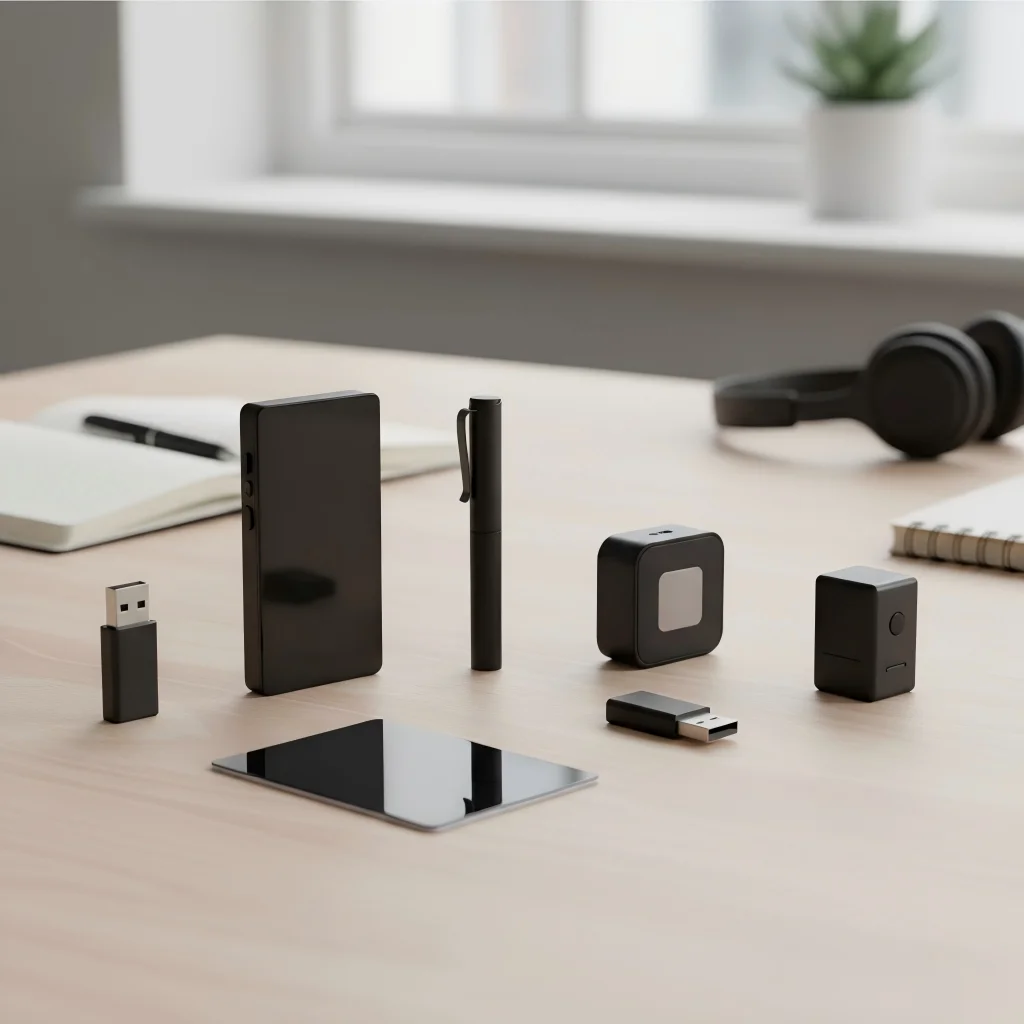
Même lorsque l'enregistrement est légalement autorisé, le fichier résultant constitue des données personnelles au sens du RGPD britannique et du RGPD européen. Voici ce que la conformité exige pour les utilisateurs professionnels :
Base légale : Pour les réunions B2B et l'usage professionnel, la base légale la plus applicable est probablement l'article 6(1)(b) (nécessité contractuelle — vous avez besoin de l'enregistrement pour remplir votre part de l'accord) ou l'article 6(1)(f) (intérêts légitimes — documenter les interactions professionnelles est un intérêt commercial légitime qui n'est pas supplanté par les droits des personnes concernées).
Transparence: Vous n'êtes pas tenu d'annoncer l'enregistrement dans les contextes privés à consentement unilatéral. Cependant, pour les utilisateurs de l'UE, particulièrement en Allemagne et dans les pays dotés de cultures de confidentialité strictes, divulguer de manière proactive que les réunions peuvent être enregistrées est une bonne pratique et réduit le risque de plaintes.
Sécurité du stockage : L'enregistrement doit être stocké de manière sécurisée — protégé par mot de passe, chiffré au repos, accessible uniquement au personnel autorisé. Laisser des enregistrements sur une carte SD non chiffrée dans un sac ou un tiroir de bureau est un incident de sécurité des données qui ne demande qu'à se produire.
Rétention: Vous ne pouvez pas conserver les enregistrements indéfiniment. Définissez une période de conservation adaptée à votre cas d'utilisation et supprimez les enregistrements à l'expiration de cette période. Pour la plupart des réunions professionnelles, 12 mois est un maximum raisonnable ; les enregistrements pertinents pour des litiges en cours doivent être conservés jusqu'à la résolution du problème.
Demandes d'accès des personnes concernées : L'autre partie à une conversation enregistrée a le droit de demander une copie de tout enregistrement contenant sa voix en vertu de l'article 15 du RGPD britannique. Vous devez la fournir dans un délai d'un mois. C'est une autre raison de réviser vos enregistrements et de ne conserver que ceux qui sont réellement nécessaires.
Top Business Use Cases by Sector
| Profession | Cas d'utilisation principal | Fonctionnalité recommandée |
|---|---|---|
| Avocat / juriste | Documentation de réunion, entretiens avec témoins | Haute clarté audio, transfert WiFi, horodatage |
| Journaliste | Documentation source, dossiers d'entretien | Design discret, mode photo |
| Gestionnaire immobilier | Documentation d'inspection, dossiers de location | Autonomie longue durée, activation vocale |
| Freelance / consultant | Protection du périmètre, preuve de litige | Vidéo 1080p, stockage local |
| Expert d'assurance | Documentation des dommages, relevés de site | Objectif grand angle, photo + vidéo |
| Enquêteur privé | Documentation de surveillance | Vision nocturne (pour les missions en soirée), batterie étendue |
Addressing the Ethics: When Covert Recording Is and Is Not Justified
L'utilité pratique des stylos-caméras ne signifie pas que leur utilisation est toujours justifiée. L'enregistrement dissimulé dans des contextes professionnels soulève des questions éthiques légitimes — particulièrement dans les relations de confiance comme la thérapie, les soins de santé ou le conseil, où l'enregistrement dissimulé par un client peut compromettre la relation thérapeutique.
Pour la plupart des relations professionnelles — réunions commerciales, négociations de contrats, transactions immobilières, briefings clients — l'enregistrement est une forme défendable de diligence professionnelle. L'ICO et les tribunaux britanniques ont régulièrement reconnu que les individus ont le droit de créer des archives des interactions qui affectent leurs intérêts.
La limite est franchie lorsque l'enregistrement est effectué dans l'intention d'utiliser le matériel à des fins allant au-delà de la documentation — en particulier pour le chantage, la publication non autorisée ou le harcèlement. L'outil lui-même est neutre ; l'intention et le contexte déterminent si son utilisation est éthique.
Si vous n'êtes pas certain qu'enregistrer une interaction spécifique soit éthiquement défendable, consultez votre organisme professionnel ou un avocat avant de procéder.
Besoin d'un stylo d'enregistrement fiable pour un usage professionnel ? comment choisir la meilleure caméra cachée en 2026 pour découvrir notre gamme d'appareils certifiés CE stylos caméras espions et stylos enregistreurs vocaux — conçu pour les professionnels ayant besoin d'une documentation précise et inviolable.
Questions fréquemment posées
Is it legal to record a business meeting with a pen camera in the UK?
Oui, dans la plupart des circonstances. En vertu du Regulation of Investigatory Powers Act 2000 et des orientations connexes de la CCI, une seule partie à une conversation privée peut l'enregistrer à l'insu ou sans le consentement des autres participants, à condition que l'enregistrement serve un objectif légitime (comme documenter une réunion professionnelle, se protéger contre des litiges ou prendre des instructions). Vous ne devez pas partager l'enregistrement avec des tiers non autorisés sans tenir compte de vos obligations en matière de protection des données.
Do I need to tell someone I am recording with a pen camera?
Au Royaume-Uni, pour les conversations privées à une seule partie avec un objectif légitime, vous n'êtes pas légalement tenu d'annoncer l'enregistrement. Cependant, pour les utilisateurs de l'UE — en particulier en Allemagne et dans d'autres pays aux lois strictes sur la vie privée — une divulgation explicite est fortement recommandée. Pour un usage professionnel dans les États membres de l'UE, inclure une clause standard “ les réunions peuvent être enregistrées ” dans vos conditions d'engagement offre à la fois une clarté juridique et une conformité au RGPD.
Can a pen camera recording be used as evidence in court?
Oui, s'il a été obtenu légalement. Au Royaume-Uni, un enregistrement d'une conversation privée réalisé par l'une des parties à cette conversation, sans aucune forme de coercition ou d'intrusion, est généralement admissible comme preuve. Les principales exclusions sont les enregistrements obtenus dans des espaces privés sans base légitime, les enregistrements de conversations où toutes les parties avaient une attente raisonnable de confidentialité (qui peut varier) et les enregistrements réalisés dans l'intention de commettre un acte répréhensible. Conservez toujours le fichier original non modifié.
What is the best resolution for a professional pen camera?
La résolution 1080p (Full HD) est la résolution minimale recommandée pour tout usage professionnel. En 1080p, vous pouvez capturer des visages reconnaissables à des distances de table de réunion (1–3 mètres), lire du texte sur des documents et capturer suffisamment de détails à des fins probatoires. Des résolutions plus élevées telles que 2K ou 4K capturent plus de détails mais génèrent des fichiers plus volumineux et réduisent le temps d'enregistrement sur une carte de stockage donnée.
How long can a pen camera record on a single charge?
L'autonomie de la batterie varie considérablement selon le modèle et les paramètres. Les stylos caméras d'entrée de gamme peuvent gérer 2 à 3 heures d'enregistrement continu. Les modèles de qualité professionnelle avec des batteries plus grandes et des processeurs économes en énergie peuvent enregistrer pendant 8 à 12 heures sur une seule charge. Si vous avez besoin d'enregistrer des réunions toute la journée ou plusieurs sessions, recherchez des modèles qui prennent en charge l'alimentation externe via une batterie externe USB-C — cela élimine efficacement l'anxiété liée à la batterie pour un usage professionnel.
Are pen camera recordings subject to GDPR?
Oui. Un enregistrement d'une conversation contenant des voix identifiables constitue des données personnelles au sens du RGPD britannique et du RGPD de l'UE. En tant que responsable du traitement, vous devez avoir une base légale pour traiter l'enregistrement (l'intérêt légitime ou la nécessité contractuelle sont généralement applicables aux réunions professionnelles), le stocker de manière sécurisée, le conserver uniquement aussi longtemps que nécessaire et en fournir une copie à toute personne qui soumet une demande d'accès. Le non-respect des obligations du RGPD peut entraîner des mesures d'exécution de la part de la CCI.

 English
  Italiano
  Deutsch
  Français
  Español
  Polski