
Cómo elegir la grabadora de voz digital adecuada para empresas y ventas al por mayor
A digital voice recorder captures audio using a built-in microphone, converts it into a digital file, and stores it on internal memory or a removable card. For business professionals, journalists, and wholesale buyers across the UK and EU, the right device eliminates missed details, reduces note-taking fatigue, and creates verifiable records of meetings, interviews, and field observations.
But here’s the thing. Most buying guides online target consumers shopping on Amazon. They talk about “best sound” and “easy buttons.” They do not tell a B2B buyer in Germany how to evaluate voice activation sensitivity for a 14-day deployment. They do not explain why a distributor in France needs CE and RoHS documentation before customs clearance. This guide closes that gap.
What Is a Digital Voice Recorder and How Does It Work?
Many buyers confuse a voice recorder with a smartphone app. The difference matters for reliability.
A digital voice recorder is a dedicated hardware device with a microphone, analog-to-digital converter (ADC), storage chip, and battery. It records audio independently of Wi-Fi, mobile signal, or operating system updates. Files are saved in formats such as MP3, WAV, or WMA.
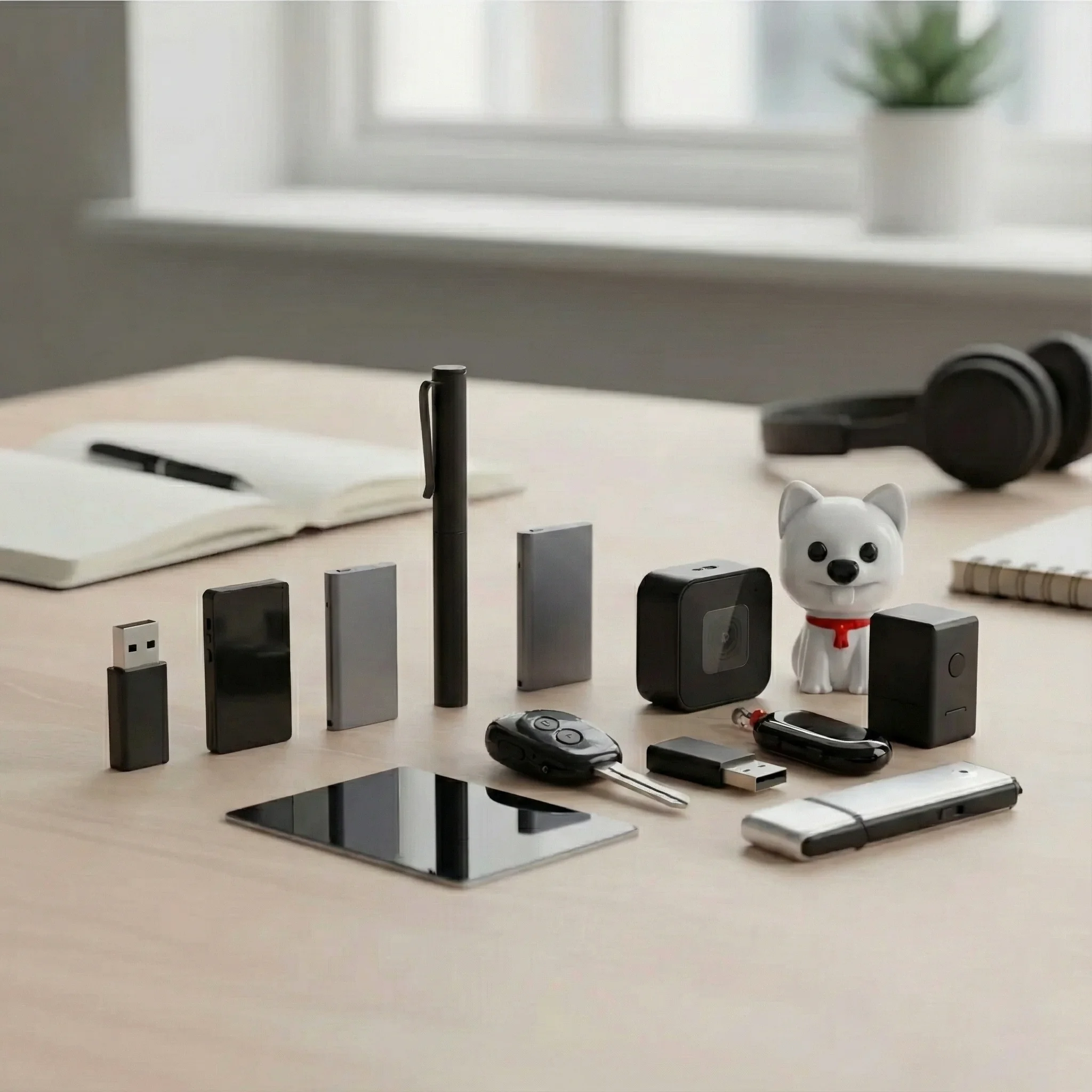
The ADC samples sound waves at rates between 8 kHz (low-quality voice memos) and 48 kHz (broadcast-grade interviews). Bit depth, typically 16-bit or 24-bit, determines dynamic range. For business meetings, 44.1 kHz at 16-bit or 192 kbps MP3 delivers clarity without bloating file sizes. Higher sampling rates matter for music or forensic analysis, not for conference rooms.
Dedicated hardware wins over phones for three reasons. First, microphones on recorders are directional or dual-mic noise-canceling designs, not the omnidirectional pinholes found on smartphones. Second, battery life is measured in days, not hours. Third, a recorder does not interrupt recording when a call, notification, or OS update arrives.
For wholesale buyers, understanding this architecture helps you answer customer questions about compatibility, file handling, and longevity.
| Componente | Consumer-Grade | Professional/B2B Grade |
|---|---|---|
| Frecuencia de muestreo del ADC | 8–22 kHz | 44.1–48 kHz |
| Bit Depth | 16-bit | 16–24-bit |
| Almacenamiento | 4–8 GB internal | 32–128 GB + microSD |
| Batería | 10–20 horas | 200–500 hours (VOR mode) |
| Micrófono | Omnidireccional único | Dual directional + DSP |
Conclusión clave: A digital voice recorder is standalone hardware with dedicated ADC, storage, and power. It outperforms smartphones for reliability and runtime.
How Long Can a Digital Voice Recorder Record?
Battery anxiety ruins deployments. Know the real numbers before you quote a project.
Continuous recording time ranges from 12 hours on budget units to over 70 hours on professional models. But that metric misleads most buyers. The figure that matters is Voice Activated Recording (VOR) standby time, which can stretch from 14 days to 150 days on devices like the Grabadora de voz magnética espía 500H.
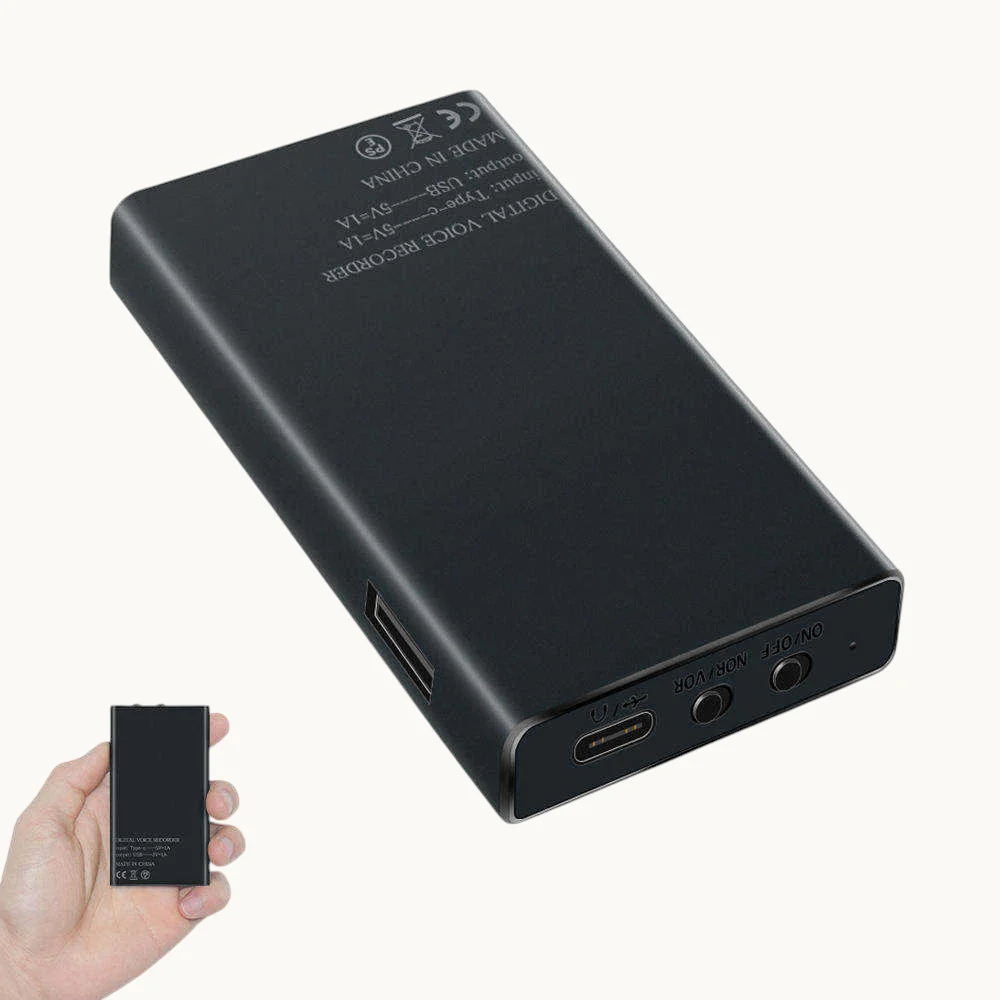
Here’s what most people get wrong. They look at “battery life” on a product page and assume it means continuous use. In reality, 90 percent of business recordings are intermittent: a 45-minute meeting, a two-hour interview, a 10-minute dictation. VOR detects sound above a set threshold, records, then sleeps. The sleep current is measured in microamps. The result is weeks of deployment on a single charge.
For B2B buyers sourcing for security firms or legal practices, ask your supplier for the quiescent current spec. If they cannot provide it, the device likely uses a generic chip without power management.
| Modo de grabación | Typical Runtime | Ideal para |
|---|---|---|
| Continuo | 12–72 hours | Lectures, all-day conferences |
| VOR activo | 14–30 días | Intermittent meetings, field monitoring |
| Modo de espera VOR | 60–150 days | Long-term security, evidence gathering |
| Power Bank Hybrid | Unlimited (USB powered) | Fixed installations, vehicle use |
Conclusión clave: VOR standby time, not continuous recording, determines real-world battery performance for business use.
What Audio Quality and File Formats Matter for Business Use?
Not all recordings are equal. A lecture needs intelligibility. A legal deposition needs fidelity. A security log just needs presence detection.
For meetings and interviews, 192 kbps MP3 at 44.1 kHz strikes the best balance. File size runs approximately 1.4 MB per minute. A 32 GB device stores over 380 hours at this rate. WAV (uncompressed PCM) at 44.1 kHz/16-bit produces larger files, roughly 10 MB per minute, but preserves every nuance for transcription services and court admissibility.
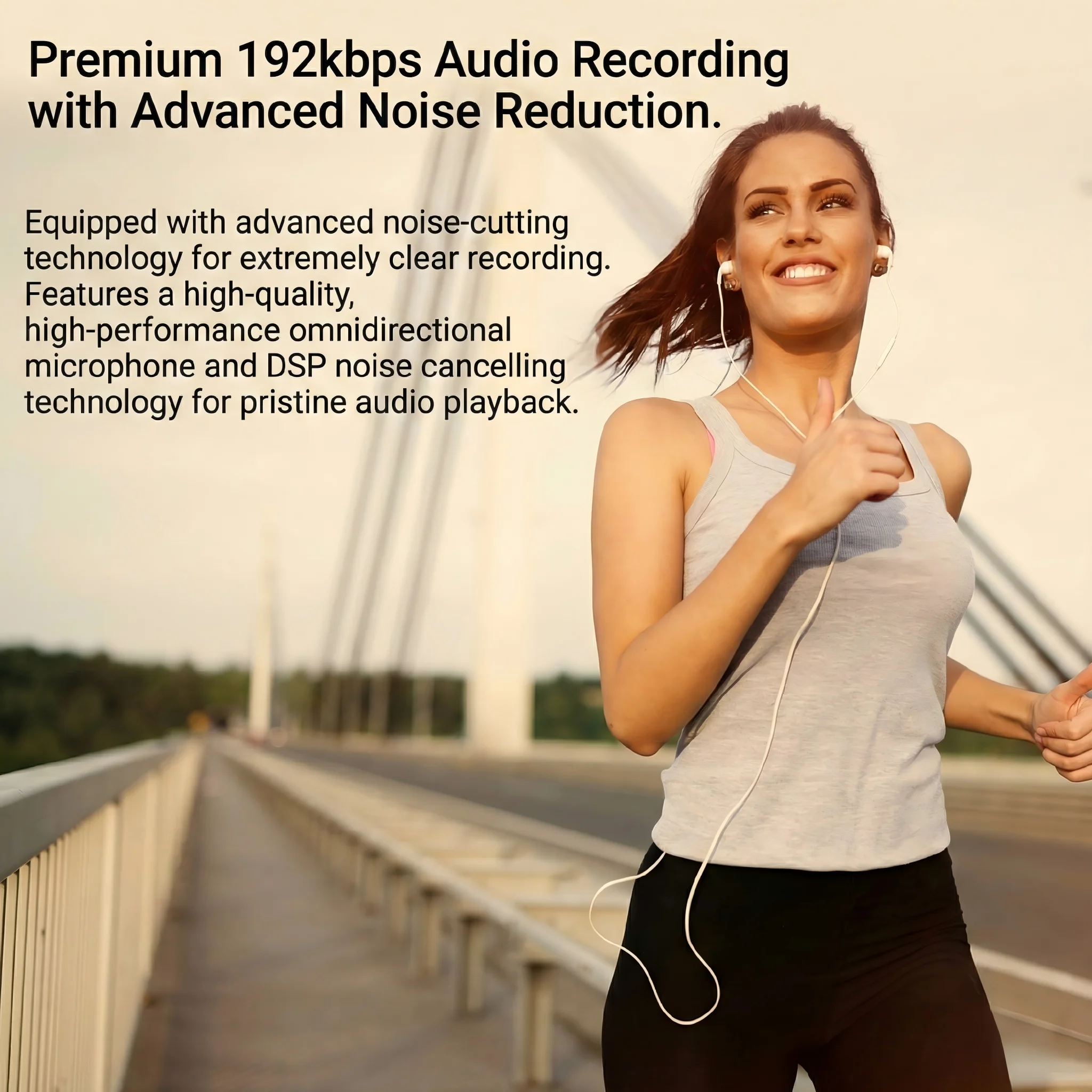
En Pequeña grabadora espía con activación por voz y reducción de ruido uses DSP (Digital Signal Processing) to suppress background hum from HVAC systems and keyboard clicks. This is not marketing fluff. DSP applies adaptive filtering algorithms that identify stationary noise patterns and subtract them from the signal in real time. Without it, a recording in a typical office sounds like someone speaking inside a washing machine.
For wholesale buyers, ask whether the DSP is hardware-accelerated or software-emulated. Hardware DSP runs on a dedicated audio chip and adds zero CPU load. Software DSP drains battery and can skip during high-complexity audio scenes.
| Formato | Tasa de bits/Frecuencia de muestreo | Tamaño de archivo (1 hora) | El mejor caso de uso |
|---|---|---|---|
| MP3 | 128 kbps / 44,1 kHz | ~56 MB | General notes, long archives |
| MP3 | 192 kbps / 44,1 kHz | ~84 MB | Entrevistas, reuniones, transcripción |
| Onda | 16 bits / 44,1 kHz | ~606 MB | Legal evidence, broadcast, music |
| Onda | 24 bits / 48 kHz | ~1,04 GB | Producción de audio profesional |
Conclusión clave: 192 kbps MP3 suits most business use. Choose WAV only for legal or broadcast scenarios where fidelity outweighs storage cost.
What Is Voice Activation and Why Does It Extend Battery Life?
Voice activation (VOR) is the single most misunderstood feature on digital voice recorders. Buyers think it is a convenience. It is actually a power management strategy.
VOR works by sampling the microphone input at a low frequency when idle. When the amplitude crosses a programmable threshold, the device wakes the full recording chain, ADC, encoder, and storage, in under 50 milliseconds. After silence returns for a preset duration (typically 1–5 seconds), the device returns to sleep.
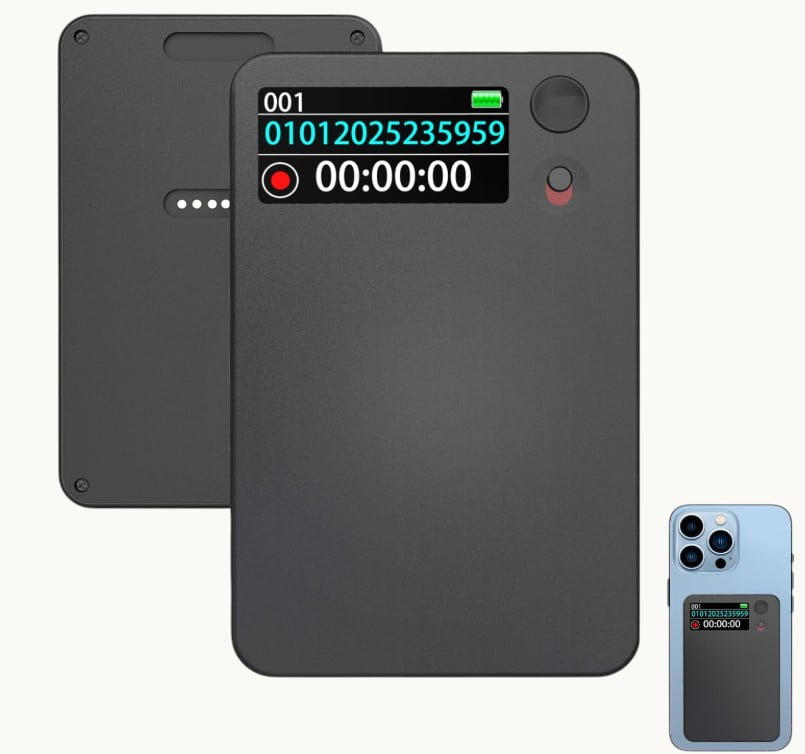
En Q97 Professional Voice Recorder Type C offers adjustable VOR sensitivity. This matters because thresholds set too low capture every footstep and air conditioner cycle. Thresholds set too high miss soft-spoken participants in meetings. Professional units let you calibrate this in the field using a test recording.
But here’s the thing. Cheap VOR implementations use simple amplitude gating. They trigger on any loud noise. Advanced units use frequency analysis to distinguish human voice patterns (typically 85 Hz–255 Hz fundamental for males, 165 Hz–500 Hz for females) from mechanical noise. This reduces false triggers by 60–80 percent.
For distributors, VOR is a selling point to security firms, private investigators, and compliance officers who need unattended recording.
| Tecnología VOR | Método de activación | Tasa de falsos disparos | Rango de precio típico |
|---|---|---|---|
| Gating por amplitud | Solo umbral de volumen | Alto (20–40%) | $15–$40 |
| Análisis de frecuencia | Detección de banda de voz | Medio (5–15%) | $40–$80 |
| Clasificación IA/ML | Detección de voz neuronal | Bajo (1–5%) | $80–$200+ |
Conclusión clave: El VOR verdadero utiliza detección de voz por frecuencia o basada en IA, no solo activación por volumen. Esto determina la duración de la batería y la calidad de grabación en entornos ruidosos.
How Much Storage Capacity Do You Need for Professional Recording?
Storage math is simple, but buyers consistently overestimate their needs.
A 32 GB recorder at 192 kbps MP3 stores approximately 570 hours of audio. That is 71 eight-hour workdays of continuous recording. Most business users record 2–4 hours per week. At that rate, 32 GB lasts three years before you need to archive.
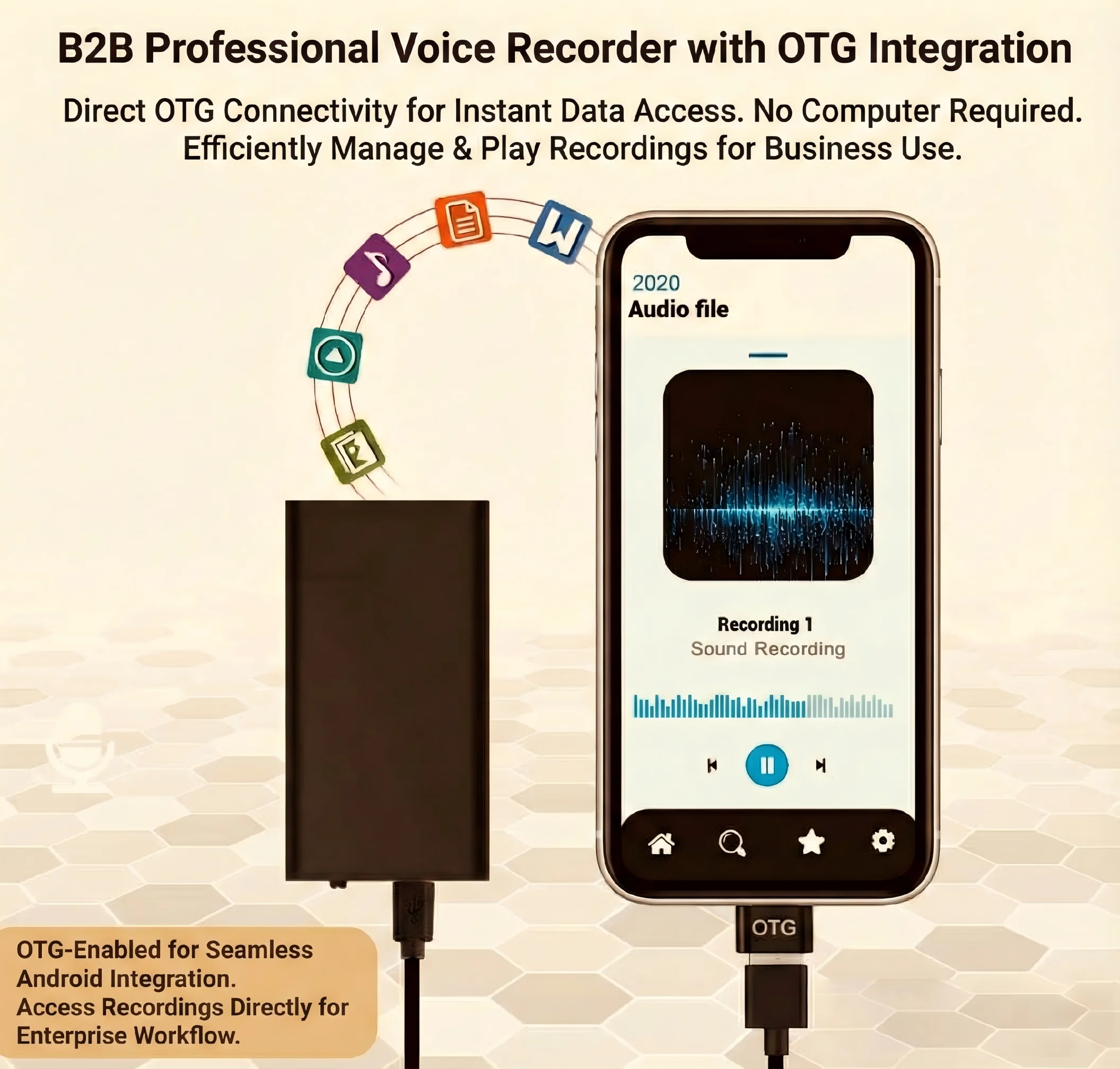
The real question is not capacity. It is access speed and file management. Professional devices auto-segment recordings into timestamped files every 30 or 60 minutes. This prevents corruption (a 10-hour single file is fragile) and makes retrieval faster. The Grabadora de Voz Espía Oculta admite segmentación con marca de tiempo y permite la reproducción directa a través de auriculares o conexión OTG a dispositivos Android.
For wholesale buyers, microSD expandability matters more than built-in capacity. A device with 8 GB internal + 128 GB microSD slot future-proofs your inventory. Buyers can upgrade storage without replacing hardware.
| Capacidad | Horas en MP3 a 192 kbps | Horas en WAV a 44,1 kHz | Perfil típico de usuario |
|---|---|---|---|
| 8 GB | ~142 horas | ~13 horas | Uso personal ligero |
| 16 GB | ~285 horas | ~26 horas | Students, occasional meetings |
| 32 GB | ~570 horas | ~53 horas | Business professionals |
| 64 GB | ~1.140 horas | ~106 horas | Security, legal, fieldwork |
| 128 GB | ~2.280 horas | ~212 horas | Vigilancia a largo plazo |
Conclusión clave: 32 GB handles nearly all business use cases. Prioritize microSD expandability and auto-segmentation over raw capacity.
What Battery Type and Power Options Work Best for Field Use?
Battery chemistry determines lifespan, temperature tolerance, and safety compliance.
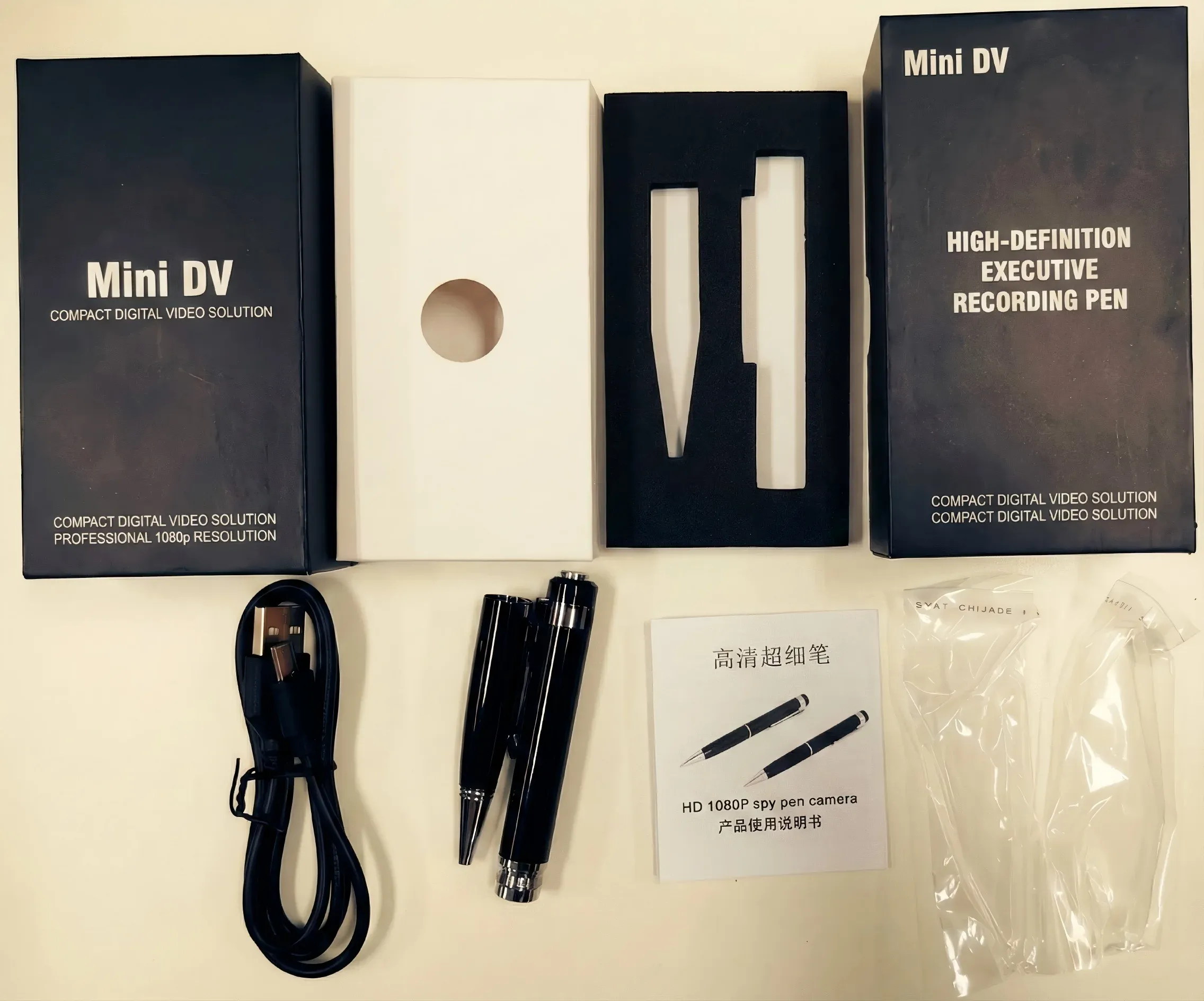
Lithium-ion (Li-ion) and lithium-polymer (Li-Po) dominate the market. Li-ion offers higher energy density and lower self-discharge (2–3% per month). Li-Po allows flexible form factors, which is why the Cámara espía bolígrafo WiFi con audio fits a functioning pen barrel. Both chemistries handle 300–500 charge cycles before capacity drops to 80 percent.
For EU wholesale, battery regulations are tightening. The EU Battery Regulation (2023/1542) requires replaceable batteries in consumer electronics by 2027. Distributors should prioritize devices with accessible battery compartments or standard cell formats (AAA, 18650 Li-ion). This future-proofs inventory against regulatory changes.
Temperature matters too. Standard Li-ion performance degrades below 0°C and above 45°C. For outdoor fieldwork in Scandinavia or Southern Europe, specify industrial-grade cells rated for -20°C to 60°C.
| Tipo de batería | Capacidad | Cycles | Temperature Range | Replaceable? |
|---|---|---|---|---|
| AAA Alkaline | ~1,000 mAh | Single use | -18°C to 55°C | Sí |
| Li-ion 18650 | 2,000–3,500 mAh | 500+ | 0°C to 45°C | Sí |
| Li-Po (internal) | 200–800 mAh | 300–500 | 0°C to 45°C | No |
| Industrial Li-Po | 400–1,000 mAh | 500+ | -20°C to 60°C | No |
Conclusión clave: Li-ion 18650 or AAA replaceable batteries offer the best balance of capacity, longevity, and regulatory compliance for EU distribution.
Digital Voice Recorder vs Smartphone: Which Is Better for Business?
The smartphone in your pocket records audio. So why buy dedicated hardware?
Three reasons: reliability, battery, and discretion. A smartphone relies on the operating system to manage background processes. iOS and Android both throttle background apps to preserve battery. A 3-hour recording can be interrupted by a low-battery warning, an incoming call, or a system update. A dedicated recorder has none of these failure modes.
Battery comparison is stark. A smartphone recording audio drains 15–25% battery per hour. A professional voice recorder uses 1–3% per hour in continuous mode, and 0.1% per day in VOR standby. For a three-day conference where power outlets are scarce, the choice is obvious.
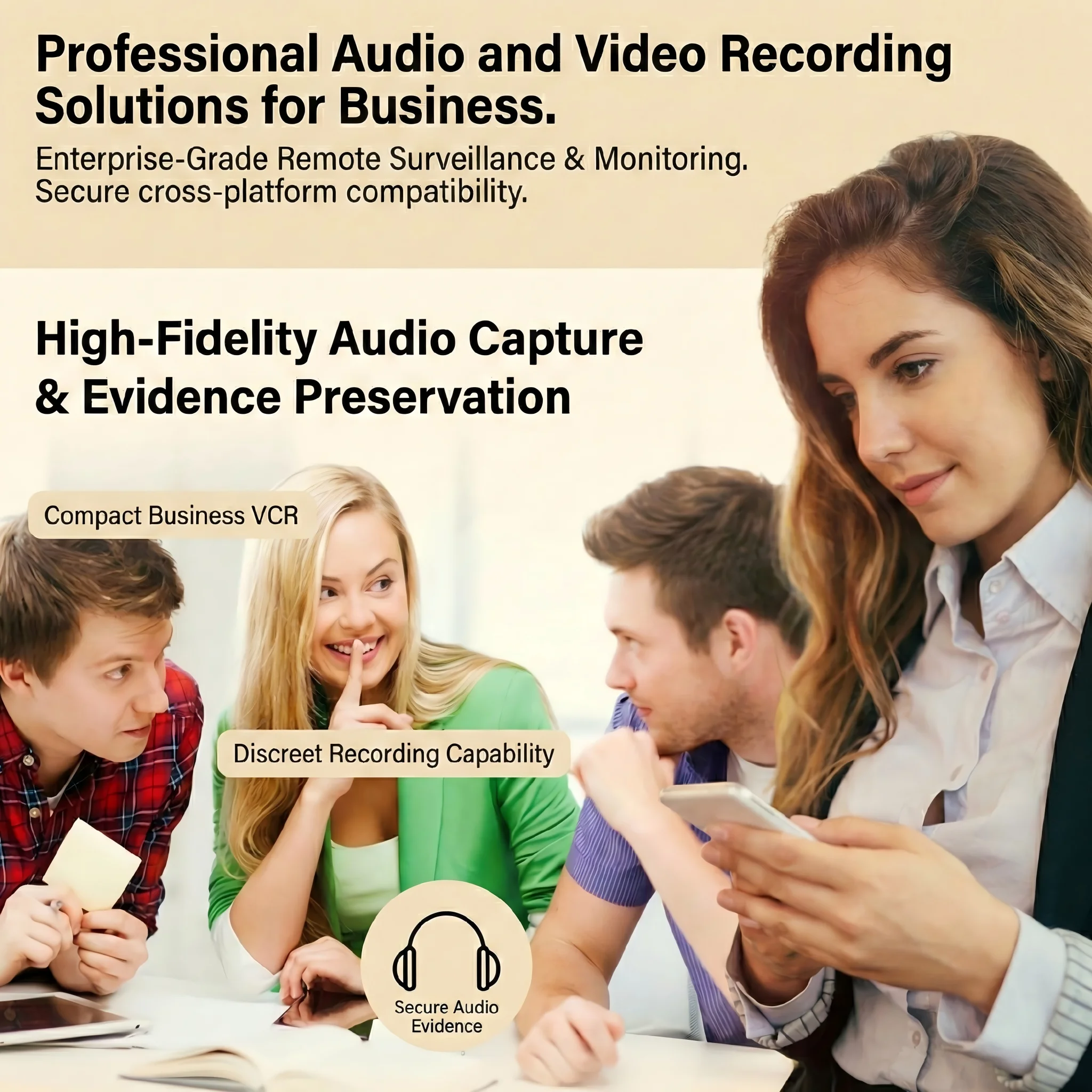
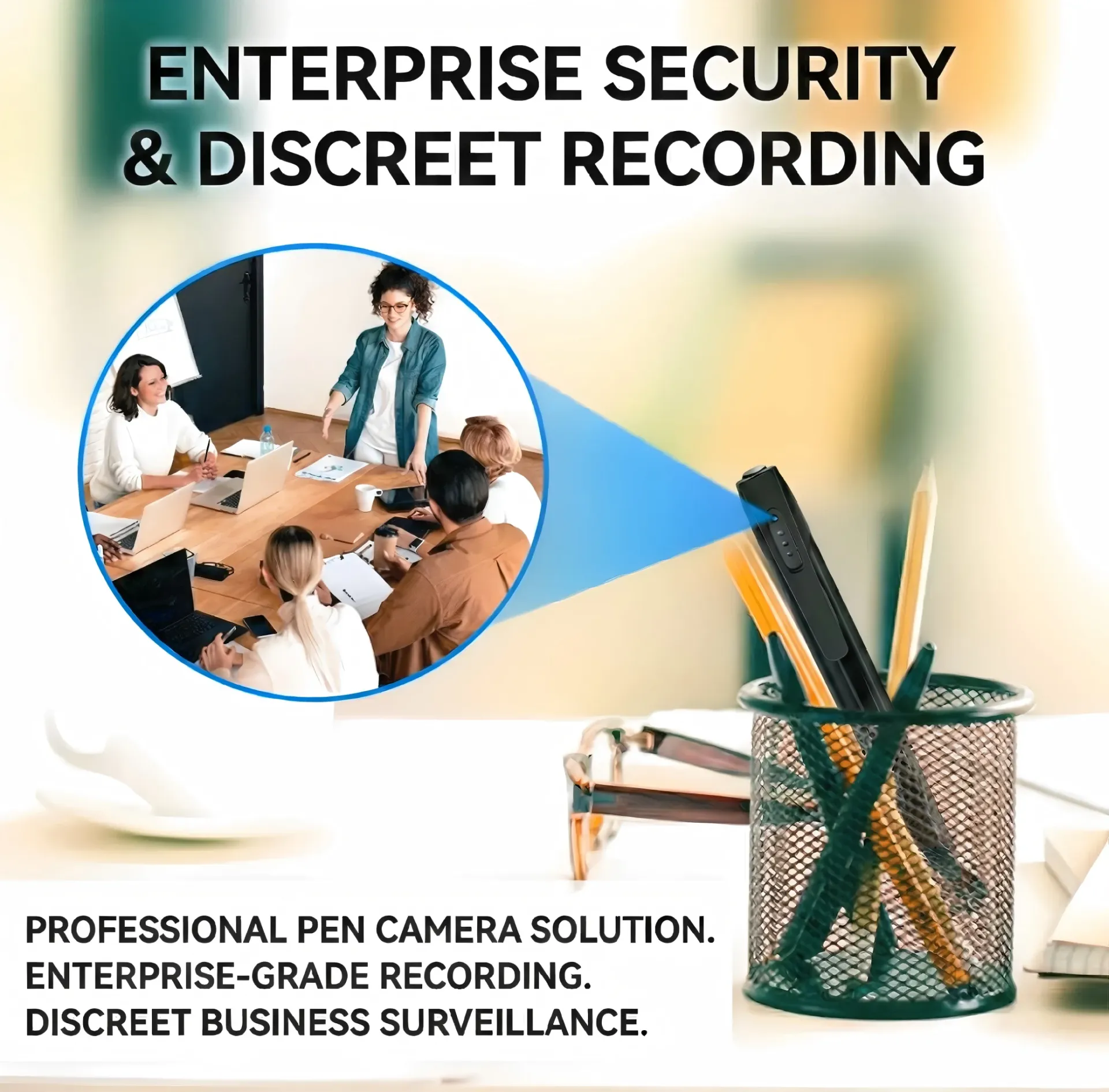
Discretion matters in legal and journalistic contexts. Pulling out a smartphone to record signals intent. A pen recorder or keychain device does not. The Cámara espía bolígrafo 1080P 30MP foto 128GB W10 funciona como un instrumento de escritura normal mientras captura audio y video en HD.
Para los compradores B2B, el debate entre smartphone y grabadora es una herramienta de habilitación de ventas. Posicione el hardware dedicado como un seguro contra los tres modos de fallo anteriores.
| Factor | Dedicated Recorder | Smartphone |
|---|---|---|
| Fiabilidad de grabación | 99%+ ininterrumpido | Interrumpido por llamadas, actualizaciones, batería |
| Batería (reunión de 3 horas) | ~5% de consumo | ~45 % de consumo |
| Calidad del micrófono | Direccional, cancelación de ruido | Omnidireccional, sin DSP |
| Discreción | Alta (formatos bolígrafo, llavero, USB) | Bajo (dispositivo obvio) |
| Exportación de archivos | USB, OTG, microSD | Dependiente de la nube, formatos limitados |
| Coste por unidad | $25–$150 | $0 (ya en propiedad) |
Conclusión clave: Smartphones suffice for casual notes. Dedicated recorders are essential for reliability, battery endurance, and discreet professional use.
What Certifications Should B2B Buyers Look for in the EU and UK?
Certifications are not stickers. They are legal shields.
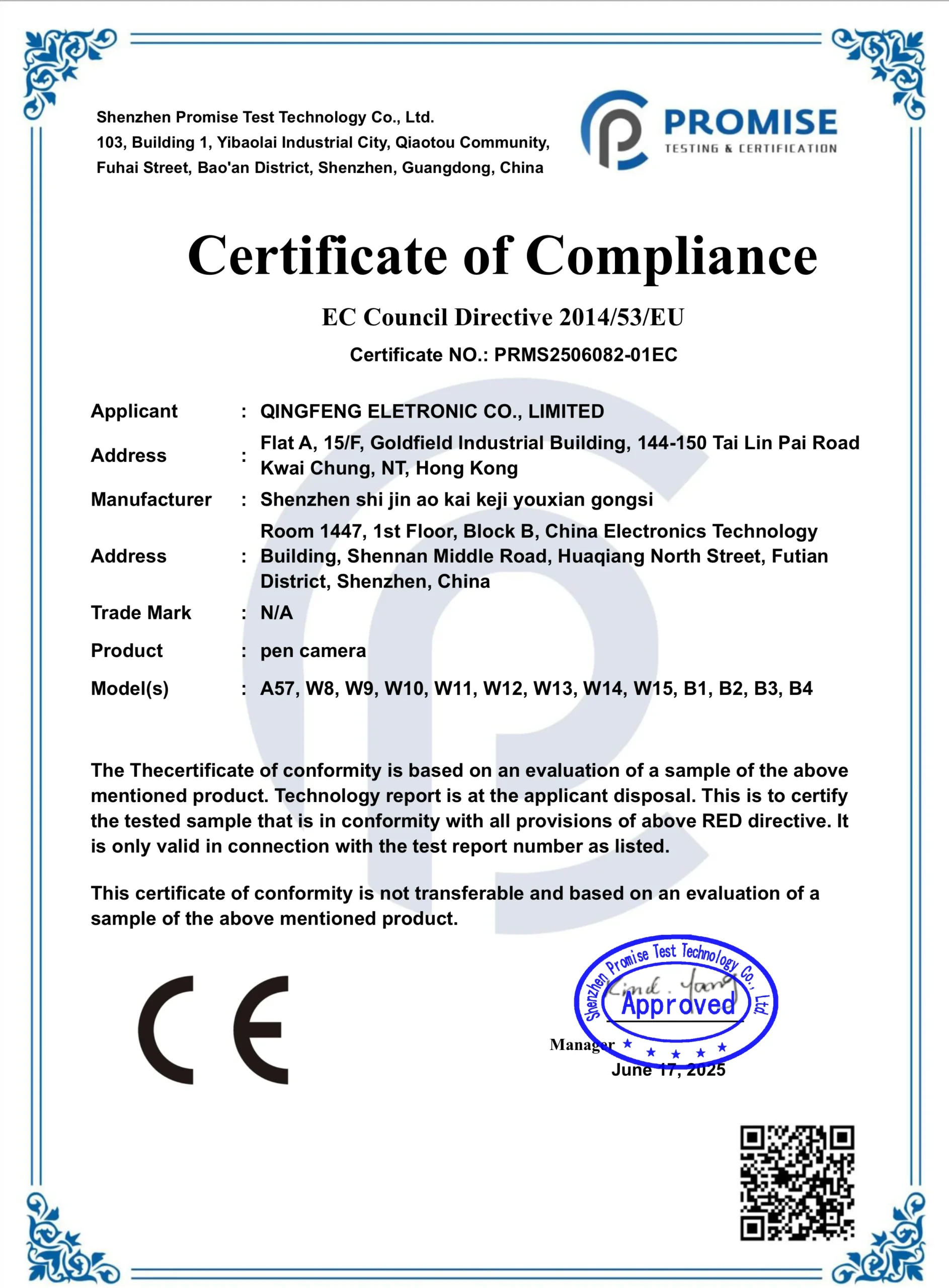
CE marking is mandatory for electronics sold in the European Economic Area. It indicates compliance with the Low Voltage Directive (2014/35/EU), EMC Directive (2014/30/EU), and Radio Equipment Directive (2014/53/EU) for Wi-Fi-enabled devices. RoHS (2011/65/EU) restricts hazardous substances like lead and cadmium in circuit boards and solder.
Para el mercado del Reino Unido tras el Brexit, el marcado UKCA sustituye al CE para los productos comercializados en el mercado de Gran Bretaña. Irlanda del Norte sigue aceptando el CE en virtud del Marco de Windsor. Los distribuidores que atienden ambos mercados deben verificar el marcado dual o la documentación de cumplimiento por separado.
GDPR adds a layer of complexity for recording devices. Article 6 requires a lawful basis for processing personal data, including audio recordings. Article 32 mandates encryption and access controls. While these obligations fall on the end user (the employer or data controller), wholesalers should provide documentation explaining how their devices support compliance: encrypted storage, password protection, and tamper-evident file hashing.
The ICO (UK Information Commissioner’s Office) guidance on workplace monitoring confirms that covert recording is generally unlawful without explicit justification. Distributors should educate customers on transparency requirements, not just sell hardware.
| Proceso de dar un título | Región | Alcance | Base legal |
|---|---|---|---|
| CE | UE + EEE | Seguridad, EMC, radio | Directivas de la UE 2014/30, 2014/35, 2014/53 |
| UKCA | Gran Bretaña | Seguridad, EMC, radio | Instrumentos legales del Reino Unido |
| RoHS | UE + Reino Unido | Límites de sustancias peligrosas | Directiva 2011/65/UE |
| REACH | UE + Reino Unido | Registro químico | Reglamento CE 1907/2006 |
| FCC | EE. UU. | Interferencia electromagnética | 47 CFR Parte 15 |
Conclusión clave: CE + RoHS son obligatorios para la entrada en la UE. UKCA es obligatorio para Gran Bretaña. La documentación de cumplimiento del RGPD aporta valor competitivo para las ventas corporativas.
Which Industries Use Digital Voice Recorders Most?
Comprender los mercados verticales ayuda a los distribuidores a posicionar el inventario y crear marketing dirigido.
The legal sector is the largest professional buyer. Solicitors, barristers, and paralegals record client consultations, witness interviews, and dictation. Requirements: long battery, WAV format for court admissibility, and timestamped files. The UK Legal Services Board estimates that 78% of law firms use digital recording for matter documentation.
Journalism and media production are secondary markets. Reporters need compact devices for field interviews. Podcasters use recorders as backup audio sources. Key spec: 48 kHz/24-bit WAV, XLR or 3.5 mm mic input, and low self-noise (below -120 dBV).
Security and private investigation represent a growing B2B segment. VOR devices monitor unattended properties, vehicles, or hotel rooms. The EU private security market grew 4.2% annually from 2020–2024, per the European Confederation of Security Services (CoESS). These buyers prioritize standby time, magnetic mounting, and inconspicuous form factors.
La sanidad y la educación son mercados regulados. Los trusts del NHS en el Reino Unido utilizan grabadoras de voz para dictado clínico. Las universidades graban clases para cumplir con la accesibilidad. Ambos sectores requieren un manejo conforme al RGPD y a menudo prefieren el almacenamiento local en lugar de la carga en la nube.
| Industria | Requisito clave | Especificación preferida | Sensibilidad al Precio |
|---|---|---|---|
| Legal | Admisibilidad en tribunales | WAV, timestamp, >30 hr battery | Bajo |
| Periodismo | Portabilidad + calidad | <100g, 48 kHz, mic input | Medio |
| Seguridad | Funcionamiento desatendido | VOR, >14 days standby, magnetic | Medio |
| Sanidad | Cumplimiento del RGPD | Cifrado, contraseña, sin nube | Bajo |
| Educación | Archivo extenso | MP3, 32 GB+, segmentación automática | Alta |
Conclusión clave: Legal and security sectors drive premium demand. Education is volume-driven but price-sensitive. Match product tiers to vertical markets.
How Do You Choose a Digital Voice Recorder Supplier for Wholesale?
Las especificaciones del producto no significan nada si el proveedor no puede entregar de manera consistente.
Primero, verifique las credenciales de fabricación. Un OEM legítimo cuenta con gestión de calidad ISO 9001 y certificación ambiental ISO 14001. Solicite informes de auditoría de fábrica. Si el proveedor duda, probablemente sea una empresa comercializadora, no un fabricante.
Segundo, confirme la documentación de certificación. Los certificados CE y RoHS deben nombrar el modelo de producto específico y el laboratorio de pruebas. Los certificados genéricos no valen nada. TÜV, SGS e Intertek son organismos reconocidos. Una CE autodeclarada de un laboratorio desconocido levanta banderas rojas en la aduana de la UE.
Third, evaluate sample quality before committing to MOQ. Order three units: test one for 72-hour continuous recording, disassemble one to inspect PCB soldering and battery labeling, and ship one to your target market to verify customs clearance. This $200 investment prevents a $20,000 inventory mistake.
Fourth, negotiate warranty and RMA terms. A 12-month warranty is standard. Ask about the RMA process: who pays return shipping? What is the repair turnaround? Do they maintain spare parts inventory for discontinued models? A supplier with no spare parts stock cannot honor long-term warranties.
Fifth, request packaging and branding options. EU retailers often require multi-language manuals (EN, DE, FR, ES, IT). Distributors may want private-label packaging. Confirm whether the supplier supports ODM firmware customization, such as splash screens or feature locks, and what the NRE (non-recurring engineering) cost is.
| Paso de evaluación | Qué verificar | Señal de alerta |
|---|---|---|
| Auditoría de fábrica | ISO 9001, capacidad de producción | Sin informe de auditoría, rechaza visitas |
| Proceso de dar un título | CE/RoHS por modelo, laboratorio reconocido | Certificado genérico o caducado |
| Pruebas de muestra | Prueba de quemado de 72 horas, desmontaje, prueba de aduanas | Las muestras difieren de la hoja de especificaciones |
| Términos de garantía | 12 meses, proceso RMA, piezas de repuesto | Términos vagos, sin política escrita |
| Personalización | ODM, embalaje, firmware | MOQ alto para cambios menores |
Conclusión clave: Supplier verification beats price negotiation. A cheap unit stuck in customs or returned under warranty destroys margin faster than a 10% higher unit cost.
Preguntas frecuentes
Can I use a digital voice recorder for legal evidence in UK courts?
Yes, if the recording is authentic, unedited, and obtained lawfully. The Criminal Procedure Rules 2020 (Part 33) admit digital recordings as hearsay evidence if the device is shown to be reliable. Use WAV format, maintain a chain of custody, and avoid voice enhancement that alters the original content.
What’s the best recording format for meeting transcription services?
192 kbps MP3 at 44.1 kHz. This format balances clarity with file size. Most transcription APIs (Otter.ai, Rev, Trint) accept MP3 and process it faster than uncompressed WAV. If the transcription service requires lossless audio, export to WAV after recording in MP3.
How do I know if a voice recorder’s VOR actually works?
Pruébalo en tu entorno objetivo. Coloca la grabadora en la sala donde se utilizará. Realiza una prueba de 24 horas con ruido ambiental normal. Verifica la cantidad de archivos resultantes y la duración total de grabación. Un VOR que funciona produce muchos archivos cortos que suman mucho menos de 24 horas. Si el archivo es una pista continua de 24 horas, el VOR está desactivado o no funciona.
Can digital voice recorders be detected by RF scanners or bug detectors?
Most standalone recorders emit no radio frequency signal during recording. They are passive devices. Wi-Fi-enabled models, however, transmit on 2.4 GHz or 5 GHz bands and are detectable by RF scanners when actively uploading. For covert operations, choose non-Wi-Fi models or disable wireless transmission.
What’s the typical MOQ for wholesale voice recorder orders from China?
El MOQ varía según el proveedor y el nivel de personalización. Modelos estándar sin marca: 50–100 unidades. Envasado con marca blanca: 200–500 unidades. Cambios de firmware o hardware ODM: más de 1.000 unidades. Algunas fábricas ofrecen pedidos de muestra de 10 unidades a precio mayorista para compradores primerizos. Negocie siempre precios escalonados a 100, 500 y 1.000 unidades.
Conclusión
Choosing the right digital voice recorder for business or wholesale is not about finding the “best” product. It is about matching technical specifications to real-world use cases, verifying supplier credentials, and ensuring compliance with EU and UK regulations.
Whether you are a security firm in Germany deploying VOR devices for property monitoring, a legal practice in London recording client consultations, or a distributor sourcing inventory for European retailers, the principles remain the same. Test samples, verify certifications, and negotiate terms before you commit to bulk orders.
Contáctenos hoy to discuss wholesale pricing, OEM customization, and certification documentation for your market. QZT Security supplies CE and RoHS-compliant recording devices with dedicated B2B support for distributors across the UK and EU.

 English
  Italiano
  Deutsch
  Français
  Español
  Polski