
Best Body-Worn Hidden Cameras for Personal Safety
The best body-worn hidden camera for personal protection is one that records continuously for at least one full shift, captures clear audio at conversation distance, saves to a tamper-resistant file format, and stays unnoticed under normal clothing. For most adult users — gig workers, lone retail staff, women walking home late, or field service techs — the right pick balances 1080p video, 4–6 hours of real recording (not standby), and lawful-use awareness in your jurisdiction.
If you searched for a body-worn mini camera for personal safety, you have probably already seen the marketing photos that promise “12-hour HD recording” on a button-sized device. That number is almost always standby time, not real recording time. This guide cuts through that and helps you choose by use case, not by ad copy.
What does “body-worn hidden camera” actually mean here?
A body-worn cámara oculta is a small recording device worn on or under clothing — clipped to a collar, hidden in a pen, glasses, keyfob, or shirt button — that captures video and audio of incidents involving you. Unlike police body cams, the consumer category is small, battery-only, and often disguised. Personal-safety buyers want evidence of harassment, road-rage incidents, false accusations, or unsafe customer interactions.
In sample checks, we look at three things first: how the device clips or mounts, whether the lens is genuinely concealed at arm’s length, and whether the audio survives a coat layer.
Conclusión clave: A body-worn hidden camera is a personal evidence tool, not a security camera — choose it based on real recording time and concealment, not megapixel marketing.
How we judged the body-worn category
We did not score these on box specs. We scored on what actually matters when something happens to you on the street, in a parking lot, or at a difficult work call.
Our test criteria:
| Criterio | What we measured | Umbral de aprobación |
|---|---|---|
| Real recording time | Continuous 1080p with audio, fully charged | ≥ 3 hours |
| Audio pickup | Clear speech under one cotton shirt layer | Intelligible at 1.5m |
| Ocultación | Visible lens at arm’s length under normal lighting | Not obvious |
| File integrity | Power loss mid-recording | Last clip recoverable |
| One-touch start | Time from pocket to recording | ≤ 3 seconds |
| Loop / overwrite | Behavior when SD card fills | Configurable |
Conclusión clave: Battery runtime under continuous recording and audio clarity through fabric are the two specs that decide whether a body-worn hidden camera is useful when you actually need it.
Which form factor fits which user?
There is no single “best” body-worn hidden camera — the right form factor depends on what you wear daily and what kind of incident you’re documenting.
| Factor de forma | Ideal para | No es ideal para |
|---|---|---|
| Cámara bolígrafo | Office workers, meetings, clipped to shirt pocket | Outdoor walking (lens points down) |
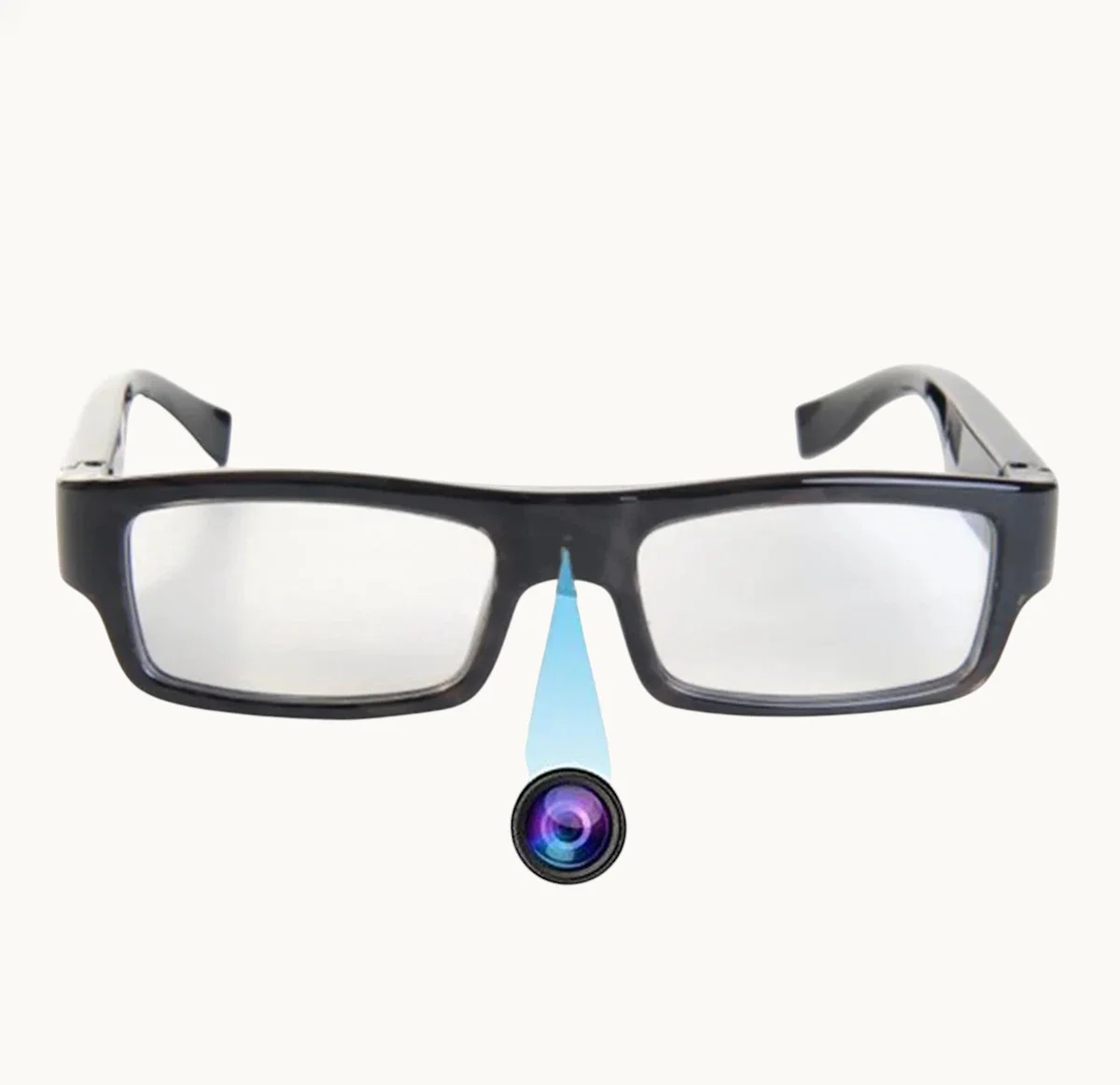
| Gafas con cámara | Walking, cycling, hands-free POV | Indoor low light, reading glasses users |
| Keyfob / car key | Driving, gig drivers, parking-lot disputes | Long workday wear (battery) |
| Button / clip cam | Retail staff, healthcare, lone workers | Loose clothing, heavy coats |
| Smartwatch-style | Casual daily wear | Boardrooms (looks recording-capable) |
If you mostly walk or move outdoors, Gafas con cámara give the most stable point-of-view footage. If you spend the day driving rideshare or delivery, a cámara en llavero de coche sits naturally on the dashboard or in your hand.
Conclusión clave: Match the device to your daily clothing and posture, not to the highest-spec model.
Best overall pick for daily personal protection
For most personal-safety buyers, a clip-style or pen-style cámara espía is the most realistic choice. It clips to a coat, lapel, or bag strap; the lens sits roughly chest-high and points where you are looking; and a single button starts recording within two to three seconds.
Look for these specs:
– 1080p at 30fps (anything higher kills the battery)
– Built-in microphone, not relying on the phone
– Micro-SD up to 32GB (about 4 hours of 1080p)
– One-touch record with a vibration confirmation
– USB-C charging
We reject claims that do not survive a continuous-recording test. If the spec sheet says “8 hours” but the device dies at 3.5 hours with audio on, that is the number that matters.
Conclusión clave: A clip-on or pen-style hidden camera with honest 3–4 hour recording time covers most personal-safety scenarios better than higher-resolution gadgets that overheat.
Best for driving and rideshare work
Drivers face a specific problem: they need a recording device that does not look like a recording device when a passenger or another driver becomes aggressive.
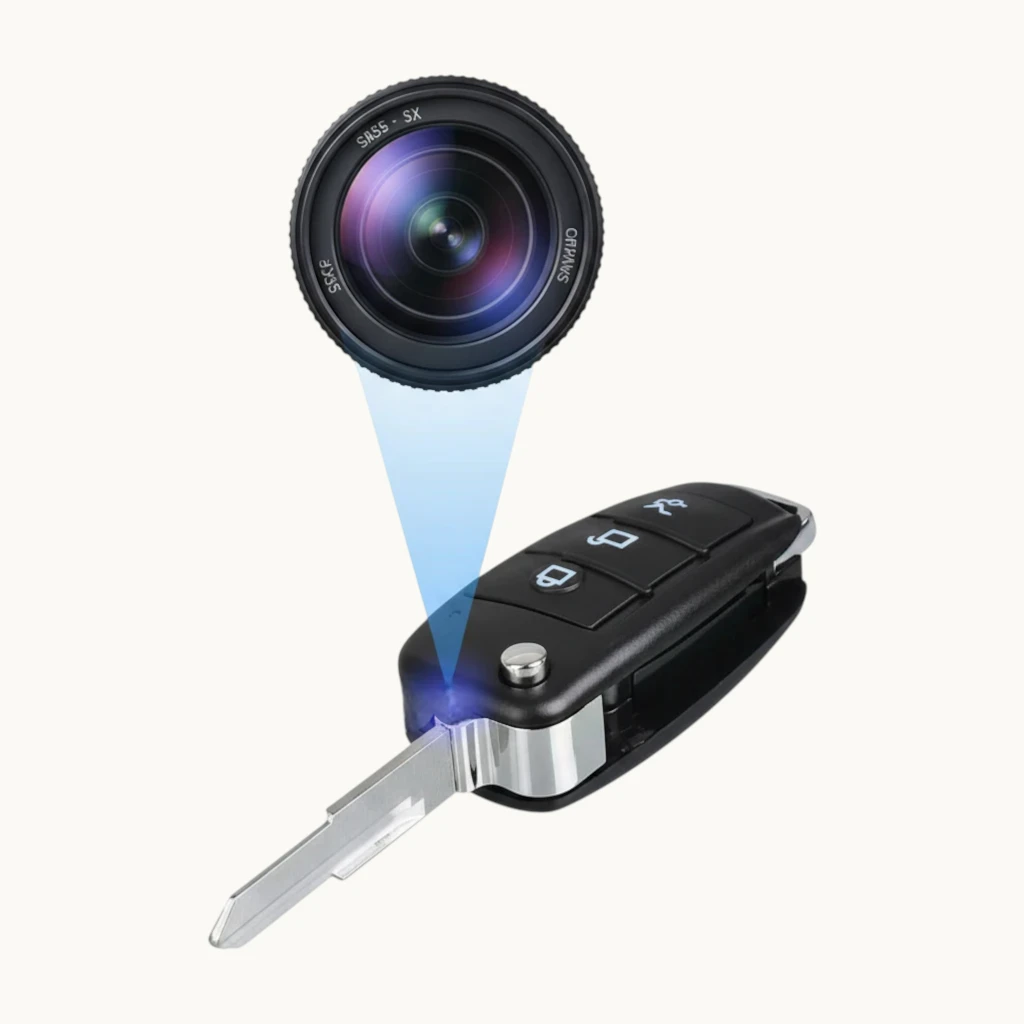
A keyfob-style hidden camera sits on the center console or in a cupholder without raising suspicion. The lens covers the front cabin, and the form factor lets you grab and exit the vehicle quickly while still recording. For rideshare or delivery drivers, this is more practical than a windshield dashcam, which only films forward.
Choose this when: you want passenger-side audio and video evidence.
Not ideal for: long-shift drivers — most keyfob cams give 60–90 minutes of continuous recording, so you’ll want a USB power lead.
Conclusión clave: A keyfob-style hidden camera handles in-cabin incidents better than a windshield dashcam, but plan for external power on long shifts.
Best for women walking home or commuting alone
For walking commutes, the priorities are different: hands-free, fast activation, and a microphone that works through coat fabric.
Gafas con cámara work well here because the camera looks at whatever you look at. If someone follows you or confronts you, the footage shows their face from a natural eye-level angle. Battery on most glasses cameras runs 60–120 minutes of continuous 1080p — enough for a commute, not a full day.
A second option is a button-style clip cam on a coat lapel. It is more discreet but the lens can be blocked by a scarf or bag strap.
Conclusión clave: For solo walking commutes, a hidden camera in glasses gives the most reliable face-level footage; a button clip is the backup option.
What specs actually matter (and which are marketing)
Specs that matter:
– Continuous recording time at 1080p with audio on — ask for this number specifically
– Tamaño del sensor — 1/3″ or larger handles low light better than the common 1/4″
– Tasa de bits — 8–12 Mbps is enough for evidence; higher just fills the card
– Audio sample rate — 44.1 kHz is the floor for clear speech
– File length — 3–5 minute segments survive corruption better than one long file
Specs that are usually marketing:
– “4K” on a sensor smaller than 1/3″ — interpolated, not real
– “Night vision” without IR LEDs — useless in true darkness
– “12-hour battery” — almost always standby
– “Motion detection” — fine for static cameras, irrelevant when you’re moving
Conclusión clave: Continuous recording time, sensor size, and audio sample rate decide real-world usefulness; resolution past 1080p rarely helps a body-worn hidden camera.
What claims to ignore on listings
Three claims appear on almost every body-worn hidden camera listing and should be tested, not trusted:
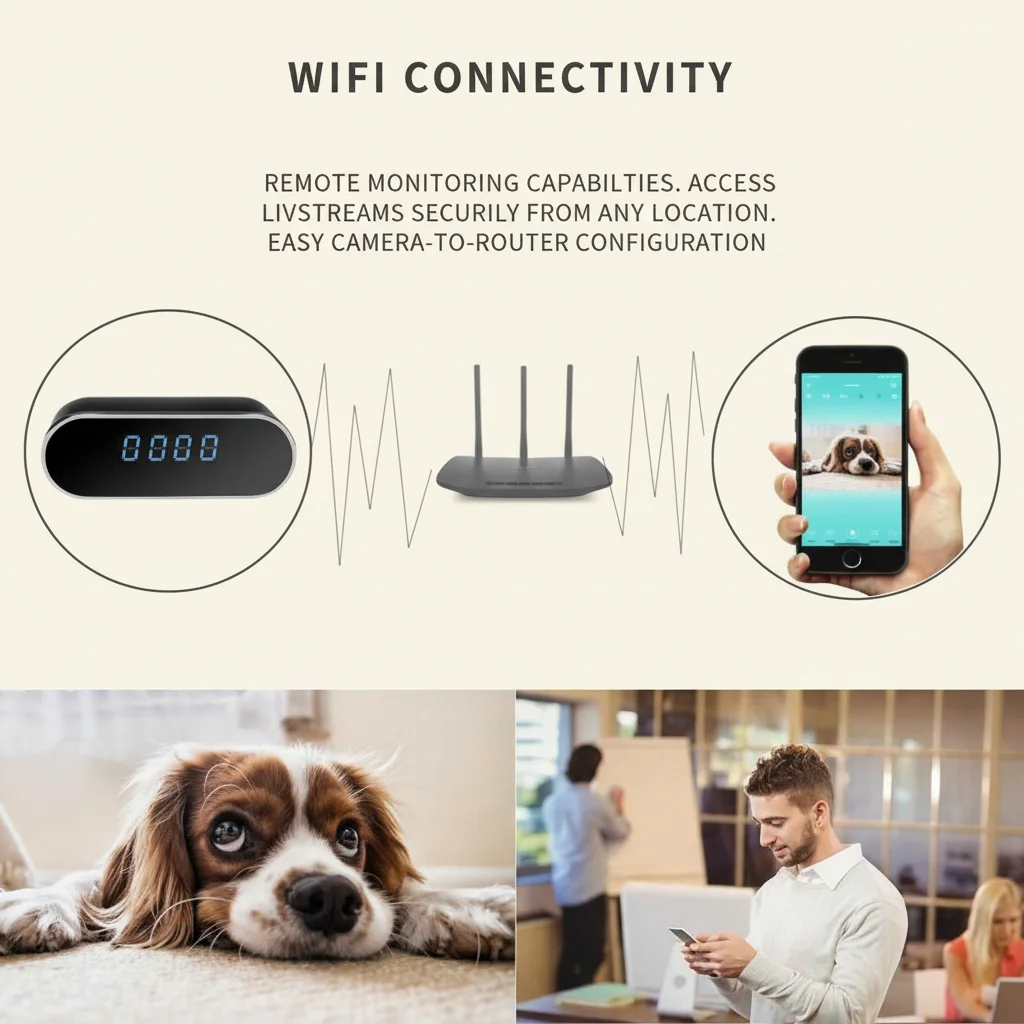
1. “WiFi live streaming” — On a body-worn device, live streaming drains the battery in under an hour and depends on cellular hotspot stability. Useful for static cámara de reloj products, less useful when you’re moving.
2. “Loop recording forever” — Loop only works if the SD card was formatted on the device. If you format it on a PC, many devices stop after one fill cycle.
3. “Crystal-clear audio at 10 meters” — Through fabric, real conversational pickup is 1.5–3 meters. Anything beyond that is open-air, no clothing.
Conclusión clave: Treat WiFi, infinite loop, and long-distance audio claims as features to verify in your own testing, not as proof points.
Privacy and lawful use — read this before buying
Owning a hidden camera is legal in most countries. Using one is where the law gets specific.
General principles (verify your local law):
– Video in public spaces: generally legal where you have a right to be.
– Grabación de audio: in many EU countries and US states, you must be a party to the conversation. Some US states require all-party consent.
– Workplace recording: your employer’s policy may prohibit it even if the law allows it.
– Recording in private spaces (bathrooms, changing rooms, someone else’s home without consent): illegal almost everywhere.
A body-worn camera used to document an attack, harassment, or threat against you personally is treated more leniently than covert recording of third-party private conversations. When in doubt, consult a local lawyer before relying on footage as evidence.
Conclusión clave: Buying a hidden camera is rarely the legal issue — how and where you record is. Know your jurisdiction’s audio-consent rule before you press record.
Buying checklist before you order
Use this checklist on any product page before you add to cart:
– [ ] Manufacturer states continuous recording time, not standby
– [ ] 1080p resolution confirmed (not interpolated 2K/4K)
– [ ] Microphone spec listed (sample rate, mono/stereo)
– [ ] Supports at least 32GB micro-SD
– [ ] One-button record with tactile or vibration feedback
– [ ] USB-C charging (micro-USB is being phased out)
– [ ] File segmentation configurable (3–5 min recommended)
– [ ] Time/date stamp toggle available
– [ ] Clear return window in your country
– [ ] Lawful-use guidance included with the device
Conclusión clave: A buyer who checks these ten points avoids 80% of the disappointment that comes with cheap body-worn hidden camera listings.
How to choose by your real situation
Quick decision guide:
– Office worker worried about a hostile colleague: pen-style grabadora de voz with optional camera, clipped to shirt pocket.
– Rideshare or delivery driver: keyfob hidden camera plus external USB power.
– Solo female commuter: camera glasses for walking, backup button clip.
– Retail or hospitality lone worker: button clip cam, 1080p, 3-hour battery minimum.
– Field service technician: pen camera plus a separate phone audio backup.
If you genuinely cannot predict the scenario, choose a pen camera with 1080p and 4-hour real runtime. It is the most flexible body-worn form factor.
Conclusión clave: Pick by clothing and scenario first, by spec second — a $40 hidden camera that fits your daily routine beats a $150 device you forget to wear.
Preguntas frecuentes
Q1: How long can a body-worn hidden camera actually record on one charge?
Most consumer body-worn hidden camera devices deliver 60–240 minutes of continuous 1080p recording with audio on. “8-hour” or “12-hour” claims usually refer to standby with motion detection, not active recording. For a full work shift, expect to carry a small power bank or choose a model rated for at least 4 real hours.
Q2: Is it legal to wear a hidden camera for personal protection?
Wearing a hidden camera is legal in most countries when you are documenting interactions you are personally part of, in places you have a right to be. Audio rules are stricter — some US states and EU countries require consent from all parties. Always check your local audio-recording law before relying on footage as legal evidence.
Q3: Will a body-worn hidden camera record clear audio through a coat?
A decent body-worn hidden camera with a 44.1 kHz microphone picks up conversational speech clearly through one cotton shirt or a thin coat layer at 1.5–2 meters. Heavy wool, padded jackets, or scarves directly over the mic muffle audio significantly. Test your specific device under your normal clothing before you depend on it.
Q4: What is the difference between a body-worn hidden camera and a regular dashcam?
A dashcam is fixed in a vehicle and records the road or cabin from one angle. A body-worn hidden camera moves with you, captures face-level footage of people you interact with, and works outside the car. For drivers, both have value: dashcam for road incidents, body-worn or keyfob hidden camera for in-cabin and post-exit situations.
Q5: Can a hidden camera be detected by someone scanning for it?
A non-WiFi body-worn hidden camera with no active radio is hard to detect by RF scanner because it does not transmit. WiFi-enabled models can be picked up by 2.4GHz scanners. Lens-glint detectors can find any camera if someone shines a flashlight directly at the lens, regardless of whether it transmits.
Conclusión
The best body-worn hidden camera for personal protection is the one that survives a real continuous-recording test, fits invisibly into clothes you already wear, and matches the legal rules where you live. For most users, a 1080p pen or clip-style camera with honest 3–4 hour runtime, USB-C charging, and a 32GB card covers the realistic personal-safety scenarios — harassment documentation, workplace incidents, road disputes, and unsafe encounters.
Skip the marketing for “4K” on a button-sized lens or “12-hour battery” without a load test. Choose a device that records when you press the button, captures clear speech under a coat, and writes files you can actually open afterward. Browse QZT’s full range of body-worn and concealed camera options to compare form factors, real specs, and lawful-use guidance side by side.

 English
  Italiano
  Deutsch
  Français
  Español
  Polski