
Wireless Spy Cameras: Complete B2B Buyer’s Guide
You walk into a trade show booth in Guangzhou and a supplier hands you a wireless spy camera the size of a coin. The spec sheet says “1080P WiFi, 8-hour battery, night vision 10 metres.” You ask one simple question — “Show me the RED test report for the WiFi module” — and the sales rep’s smile freezes. That moment is why you need this guide.
Most wireless spy camera content on the web is C-end fluff: product listings, affiliate links, and “Top 10 Best” listicles that never mention CE/RED compliance, actual battery runtime under continuous WiFi streaming, or the difference between 2.4GHz and 5GHz band performance through brick walls. SpyAssociates lists 70+ wireless hidden cameras — a product catalogue, not a buying guide. If you are sourcing for a security reseller business in the UK, Germany, or Poland, you need answers that commodity review sites do not provide.
This guide answers the four questions your wholesale clients ask most often — and the ones your suppliers hope you never ask.
How Does a Wireless Spy Camera Actually Work?
You cannot evaluate a wireless spy camera without understanding what “wireless” actually means inside the device — and this is where most buyers go wrong.
A wireless spy camera has five core components chained together in a pipeline: the CMOS image sensor captures raw light data, the ISP (Image Signal Processor) converts it into a video stream, the encoder chip compresses it using H.264 or H.265, the WiFi module packetises and transmits it, and the power management IC feeds all four stages. If any link in this chain breaks — a cheap sensor paired with a decent WiFi chip, or a good sensor throttled by an undersized battery — the whole unit fails.
The key distinction buyers miss: “wireless” can mean WiFi streaming to an app, or it can mean the camera creates its own WiFi hotspot for direct phone connection without a router. These are different architectures with different power, range, and security profiles.
Here is the signal chain in a typical WiFi spy camera:
| Etapa | Componente | Common Hardware | B2B Implication |
|---|---|---|---|
| 1. Capture | Sensor CMOS | OV9734 (1/4-inch) / GC2053 (1/2.9-inch) | Sensor size determines low-light performance; 1/4-inch sensors lose detail below 5 lux |
| 2. Process | ISP/DSP | HiSilicon Hi3516 / Ingenic T31 | Chipset determines encoding efficiency; H.265 saves 35-50% bitrate vs H.264 |
| 3. Compress | Encoder | Hardware H.264/H.265 pipeline | Software encoding on a weak SoC introduces latency; always prefer hardware encoding |
| 4. Transmit | WiFi Module | Realtek RTL8188 / Espressif ESP32 | 2.4GHz-only modules are cheaper but congested in urban UK/EU environments |
| 5. Power | Battery/PMIC | 400-5000 mAh Li-Po / Mains via USB | WiFi streaming drains 2-3× faster than local-only recording |
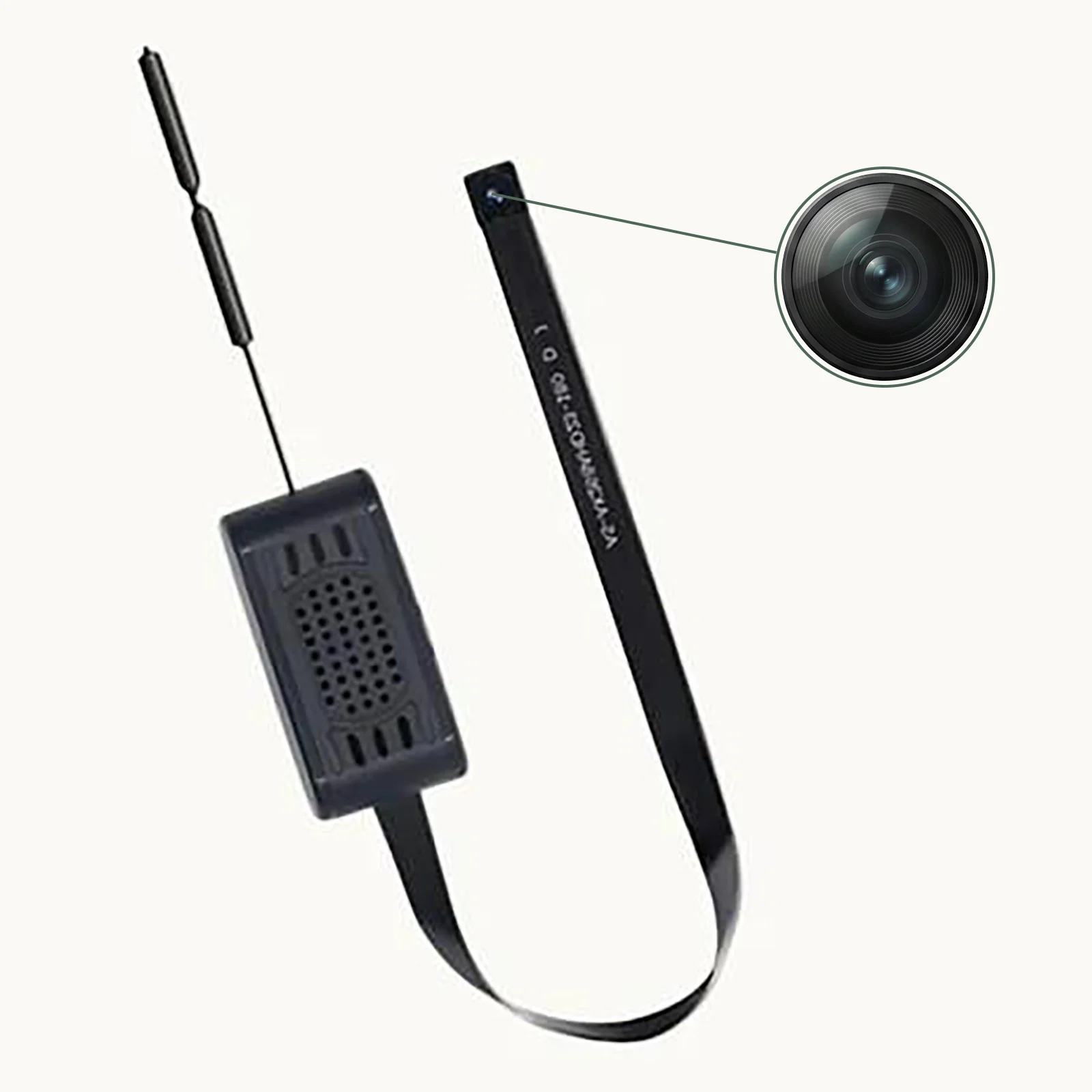
But here’s the thing most buyers do not realise: when the camera streams over WiFi, the WiFi module is transmitting continuously — and transmission draws far more current than passive recording to a microSD card. A camera that records 5 hours locally might stream for only 90 minutes. The antenna design also matters: a poorly placed chip antenna inside a metal-bodied “clock camera” housing can attenuate the signal by 15-20 dB, reducing effective range from 30 metres to 10. For B2B buyers, always ask your supplier for a sample unit with antenna placement diagram — not just a glossy spec sheet. The C10 WiFi Spy Camera Module from QZT, for instance, uses a flexible PCB antenna positioned away from metal components to maintain signal integrity in custom enclosures.
Conclusión clave: Wireless means a hardware pipeline, not a checkbox — test every stage.
What Is the Best Wireless Spy Camera for Different Use Cases?
There is no single “best” wireless spy camera. The right answer depends entirely on deployment context — and context is what most C-end review sites ignore.
If you are running a PI agency in Birmingham that needs evidence-grade footage in unpredictable environments, your requirements are fundamentally different from a retail chain in Frankfurt that needs always-on coverage of POS terminals. Asking “what is the best wireless spy camera” without specifying deployment context is like asking “what is the best vehicle” without mentioning whether you need a delivery van or a motorcycle.
Here is your decision framework across four axes:
| Caso de uso | Factor de forma | Power Strategy | Conectividad | Recommended QZT Model |
|---|---|---|---|---|
| POS/retail fixed monitoring | Cámara de enchufe | Mains-powered (unlimited) | WiFi 2.4GHz | Cámara de enchufe WiFi S3 |
| Mobile evidence gathering | Gafas con cámara | 400 mAh battery (90 min) | Local microSD only | G3000 Spy Camera Glasses |
| Desk/office continuous | Cámara con batería externa | 10000 mAh external (18 hr) | WiFi + local recording | H3 Power Bank Spy Camera |
| Custom integration (OEM) | DIY WiFi module | Customer-defined | WiFi 2.4GHz / TUYA | C10 WiFi Module (90°/120°/TUYA variants) |
| Covert personal carry | Cámara bolígrafo | 400 mAh (2.5 hr) | Local microSD + WiFi | W10 1080P WiFi Spy Pen Camera |
| Vehicle/outdoor motion | cámara en llavero de coche | 500 mAh (3 hr motion) | Local microSD | Cámara espía con forma de llave de coche S820 |
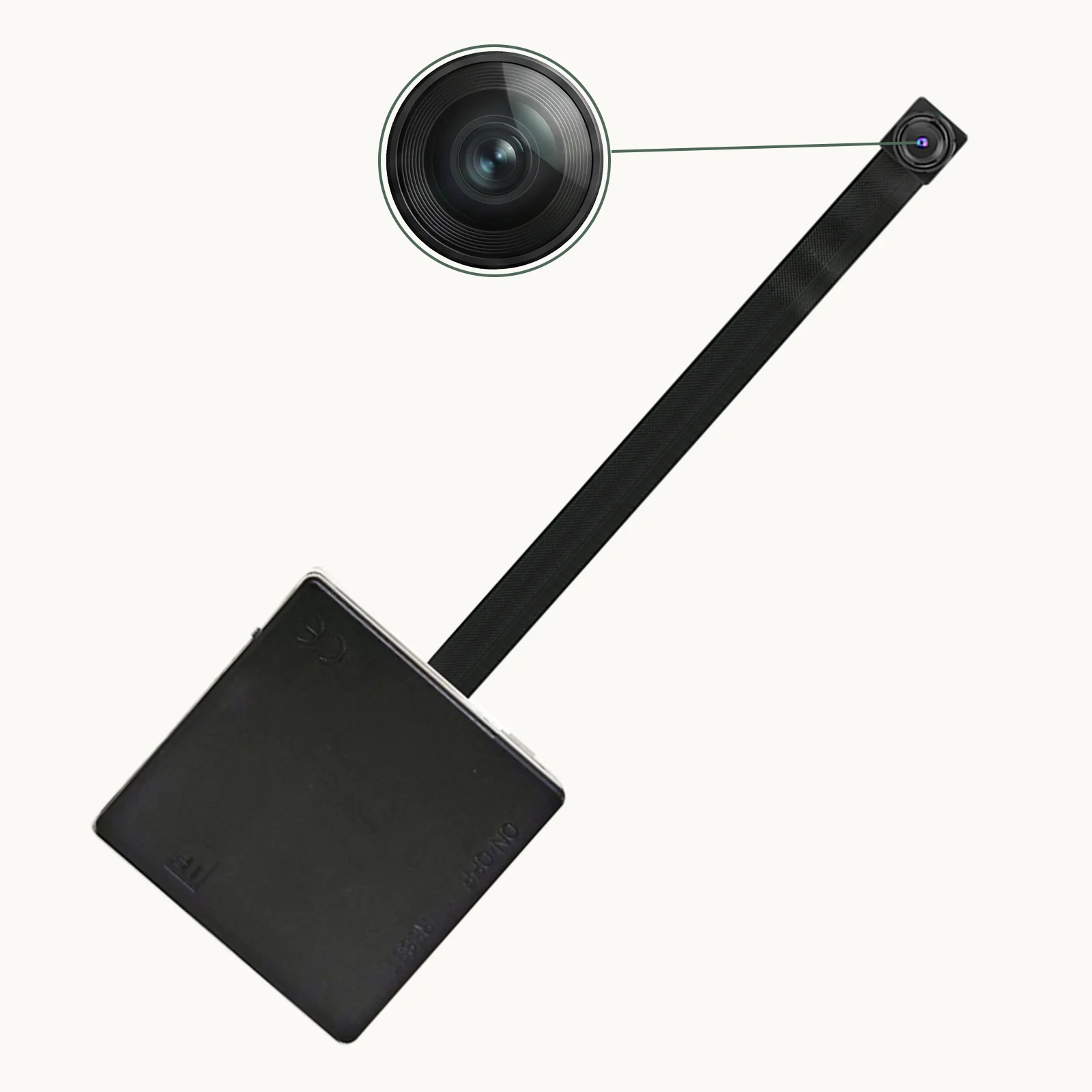
Here is what most people get wrong: the “best” spec sheet does not equal the best camera for a given deployment. A camera advertising 4K resolution with a 1/4-inch sensor produces interpolated 4K — the native sensor resolution is closer to 1080P, and the upscaling adds latency and battery drain without adding genuine detail. For B2B distributors, a camera that honestly delivers 1080P with a proper 1/2.9-inch sensor and real 8 Mbps bitrate will produce better client outcomes than one that claims 4K with interpolation artefacts and 3 Mbps compressed output.
Conclusión clave: Context defines “best” — match deployment to form factor, not spec sheet.
How Long Do Wireless Spy Cameras Last? Battery Life Decoded
The question “how long do wireless spy cameras last” has two meanings — and that ambiguity causes costly purchasing errors. It can mean battery runtime per charge or product lifespan (how many years before the battery degrades beyond usability). Let us address both.
Battery runtime per charge depends far more on recording mode than on mAh capacity alone. Here is the real-world data, verified from XXSCAM’s 2026 battery comparison and QZT product testing:
| Modo de grabación | Streaming WiFi | Local microSD Only | Impact on Runtime |
|---|---|---|---|
| Continuous 1080P | 1-2 hours (400 mAh) | 3-5 hours (400 mAh) | WiFi streaming cuts runtime by 50-60% |
| Motion-activated (PIR) | 15-30 days standby | 25-45 days standby | PIR sensitivity determines trigger frequency |
| Mains-powered (socket/USB) | Ilimitado | Ilimitado | No battery constraint; reliability ceiling = storage capacity |
| Power bank (10000 mAh) | 6-8 horas | 12-18 hours | External battery extends continuous recording dramatically |
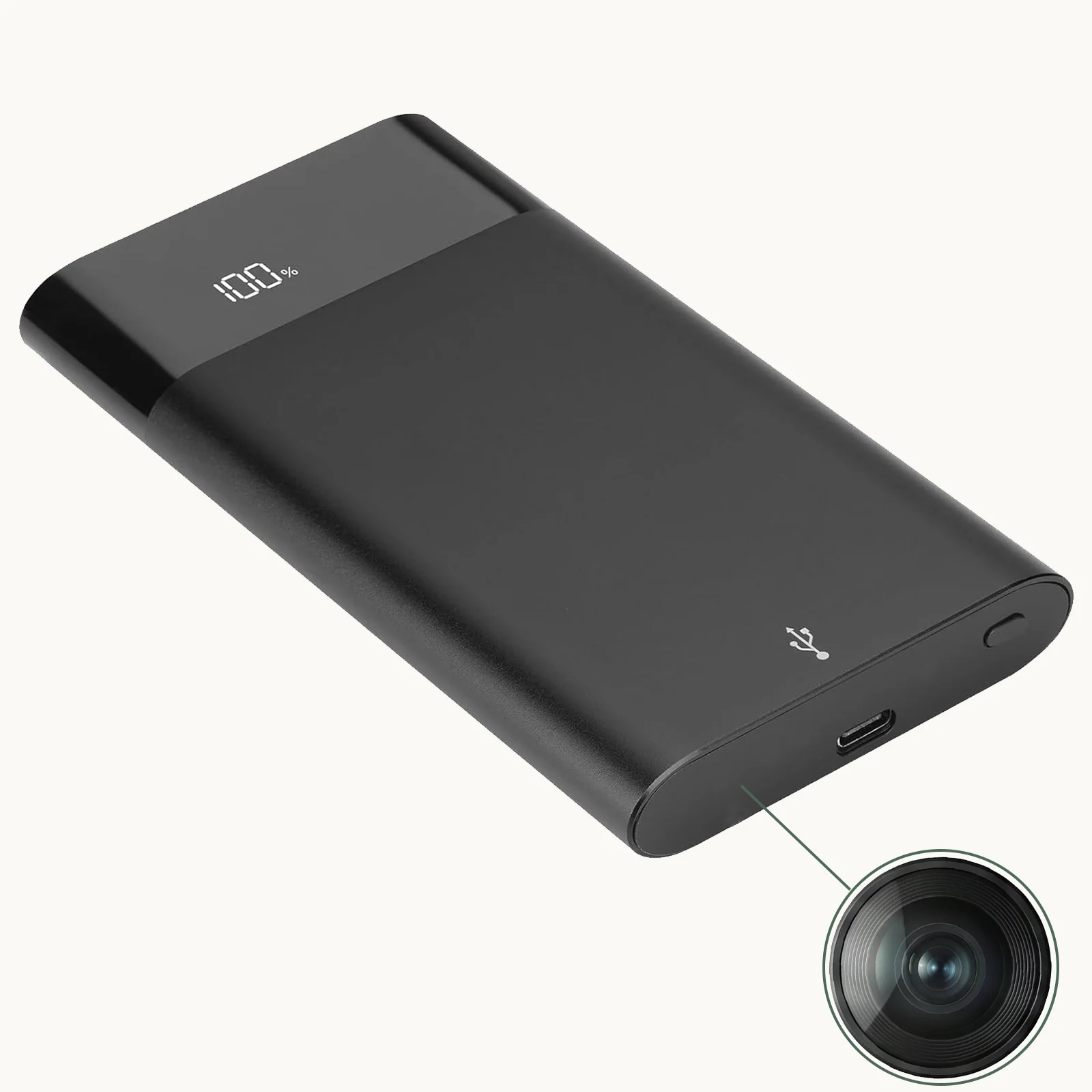
The critical insight for B2B buyers: WiFi streaming drains 2-3× more battery than local recording because the WiFi module draws 200-350 mA continuously during transmission. A 400 mAh battery rated for 5 hours of local playback will realistically deliver 90-120 minutes of uninterrupted WiFi streaming. The H3 Power Bank Spy Camera sidesteps this with a 10000 mAh external battery, achieving 18 hours of continuous 1080P local recording — and the power bank form factor itself justifies having a larger battery in plain sight.
Product lifespan is the question almost no buying guide addresses. Lithium-polymer cells in compact spy cameras typically lose 20% of capacity after 300-400 full charge cycles. If a pen camera is drained and recharged daily, expect noticeable degradation within 10-12 months. For B2B distributors selling to professional users, this means: (a) factor replacement cycles into client conversations, and (b) prioritise models with user-replaceable batteries or mains-powered designs (like the Cámara de enchufe WiFi S3) for applications requiring multi-year reliability without degradation concerns.
Temperature also matters. Lithium cells below 5°C lose 20-30% capacity. A wireless camera deployed in an unheated warehouse in Poland during January will deliver significantly less runtime than the spec sheet promise — this is not a defect; it is physics. Distributors selling into Northern and Eastern European markets must account for this in client guidance.
Conclusión clave: WiFi streaming = 2-3× battery drain; mains power = zero battery anxiety.
How Do I Hide a Wireless Camera? Professional Concealment Framework
The question “how do I hide a wireless camera” gets asked by end users who imagine pinhole lenses inside teddy bears. Professional deployment requires a different framework entirely — one based on environmental blending, not Hollywood props.
There are four principles of professional wireless camera concealment:
1. The Clutter Principle. A camera hidden in a cluttered environment is invisible. One hidden on an empty white wall is obvious. A wireless clock camera on a bedside table with a phone charger, books, and a lamp is effectively invisible; the same clock on a bare shelf in a minimalist office screams “look at me.” The environment does the hiding — not the device.
2. Power Access as the Concealment Anchor. Wireless hides the video cable, but power remains the constraint. Every wireless camera needs power — either battery or mains. Battery-powered units require periodic retrieval for charging, which means they must be accessible. Mains-powered units, like the Cámara de enchufe WiFi S3, draw power from the wall outlet they are plugged into — the power source itself is the disguise. This is the most reliable concealment strategy because it eliminates the retrieval-recharge cycle entirely.
3. Field of View Geometry Before Device Selection. Most amateurs place the camera first and accept whatever view they get. Professionals do the reverse: map the target area, measure the required field of view (typically 90-120° for room coverage, 60-90° for focused monitoring), and only then select a device whose lens position and FOV match the requirement. A camera glasses wearer seated at 2 metres from a subject with a 90° lens captures a different frame than one seated at 4 metres — calculate FOV coverage before you choose hardware.
| Concealment Strategy | Ideal para | Tipo de dispositivo | Deployment Risk |
|---|---|---|---|
| Mains-powered disguise | POS, fixed indoor | Cámara de enchufe/cargador | Near-zero if plugged in normally |
| Environmental blending | Home/office general | Clock, air freshener, tissue box | Low if environment is cluttered |
| Personal carry (wearable) | Mobile evidence, meetings | Glasses, pen, car key | Medium (user behaviour is the variable) |
| DIY integration | Custom OEM, specialised | WiFi module in customer housing | Variable (depends on integration quality) |
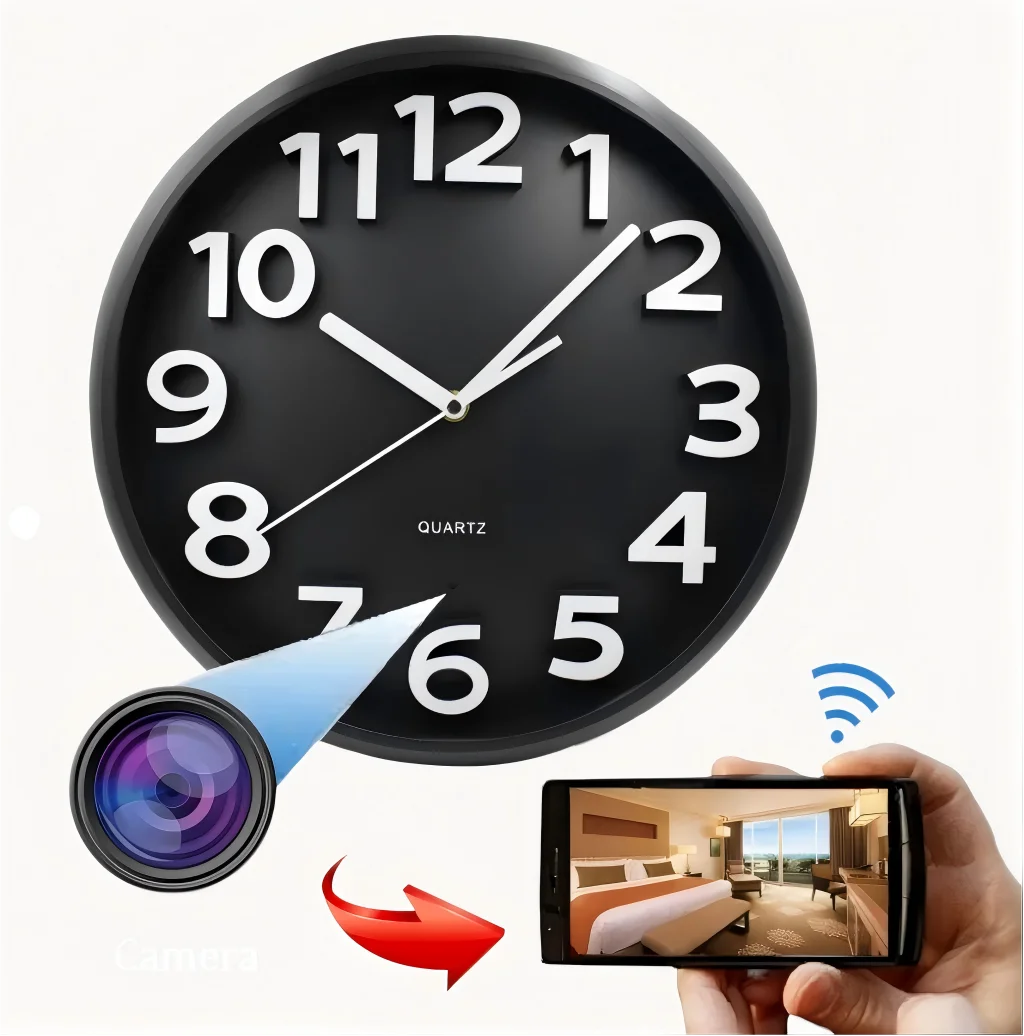
4. Wireless Means Signal, and Signal Can Be Detected. Here is what most concealment guides never mention: a WiFi camera broadcasting on 2.4GHz is detectable by any RF scanner app. If the deployment scenario involves a target who might use detection tools, disable WiFi and rely on local microSD recording. The G3000 Spy Camera Glasses record to microSD with no wireless transmission — making them undetectable by RF scanners. For fixed deployments, the Cámara espía con forma de llave de coche S820 offers motion-activated local recording without WiFi dependency.
Conclusión clave: Power access + environmental clutter = concealment; RF silence = true invisibility.
Do Spy Cameras Require Wi-Fi? The Wireless vs WiFi Distinction
This is the most misunderstood question in the wireless camera market — and misunderstanding it costs B2B buyers real money in customer returns.
No, spy cameras do not require Wi-Fi. Wireless can mean three entirely different things:
| Wireless Mode | Connection Type | Requires Router? | Power Cost | Riesgo de detección |
|---|---|---|---|---|
| WiFi (infrastructure mode) | Camera → Router → Internet → Phone app | Sí | Highest (200-350 mA TX) | High (2.4/5GHz signal) |
| WiFi Direct / Hotspot | Camera creates own WiFi network → Phone connects directly | No | Medium (150-250 mA) | Medium (local signal only) |
| Local-only (no wireless TX) | Camera records to microSD, no transmission | No | Lowest (50-80 mA recording only) | Zero RF signature |

The B2B implications are significant. WiFi infrastructure mode cameras — the most popular category on SpyAssociates — rely on an external router. If the deployment location has no router or the WiFi password is unknown, these cameras become paperweights. WiFi Direct/hotspot mode cameras avoid this dependency but have limited range (typically 5-10 metres) and drain battery faster than local-only recording.
For professional deployment scenarios, the local-only recording mode with periodic manual retrieval is often the most reliable and most covert option. Distributors selling to PI agencies, corporate investigators, and legal professionals should stock at least one model in each wireless category: a WiFi streaming option for remote monitoring use cases, a local-only option for covert deployments, and a mains-powered option for 24/7 fixed positions.
En QZT product ecosystem covers all three modes: the C10 WiFi Module for infrastructure streaming, the W10 WiFi Spy Pen Camera for WiFi Direct hotspot mode, and the Cámara power bank H3 for local-only recording with massive storage endurance.
Conclusión clave: Wireless ≠ WiFi; local-only = zero network dependency + zero RF detection.
2.4GHz vs 5GHz: Choosing the Right Frequency Band for Wireless Spy Cameras
This is the conversation no C-end review site has — and it is one of the highest-impact decisions for B2B buyers configuring wireless camera deployments.
Most wireless spy cameras in the sub-£100 wholesale range use 2.4GHz WiFi exclusively. This is fine for many applications, but it is not fine for all. Here is the technical breakdown from Mammoth Security’s 2026 wireless frequency analysis, applied to covert camera contexts:
| Factor | 2.4GHz Band | 5GHz Band | 900 MHz Band (rare in spy cams) |
|---|---|---|---|
| Range (open air) | 50-100m | 25-50m | 150-300m |
| Wall penetration | Good (brick: -8dB loss) | Poor (brick: -15dB loss) | Excellent (brick: -4dB loss) |
| Data throughput | 30-50 Mbps (enough for 1080P) | 100-200 Mbps (4K viable) | 1-10 Mbps (720P max) |
| Congestion risk (urban EU) | High (every router, baby monitor, microwave) | Bajo-Medio | Bajo |
| Power consumption | Más bajo | Higher (faster symbol rate) | El más bajo |
| Available in spy cameras? | Estándar | Rare (only premium modules) | Very rare |
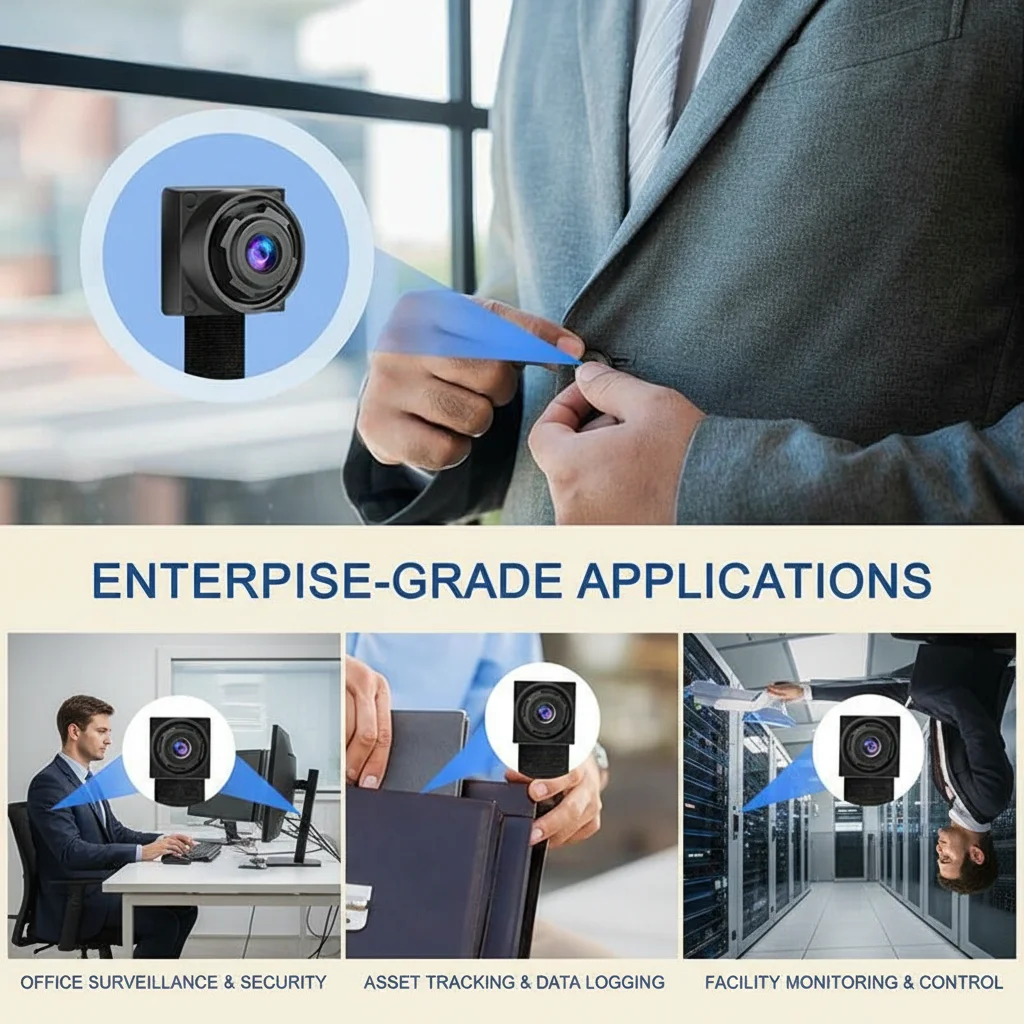
But here is the thing: dual-band (2.4GHz + 5GHz) WiFi modules are becoming available in covert camera modules — and this changes the game for B2B buyers. A dual-band camera can default to 2.4GHz for range and wall penetration, then fall back to 5GHz in congested environments (apartment buildings, office towers in central London or Berlin where 2.4GHz channels are saturated). For wholesale distributors, dual-band capability is a genuine product differentiator — it is a feature your competitor’s catalogue does not have, and it solves a real deployment problem.
The 900 MHz band is worth mentioning because it penetrates walls far better than either 2.4GHz or 5GHz. It is not common in spy cameras due to the larger antenna size required, but for B2B applications where range matters more than resolution (warehouse monitoring, outdoor perimeter), 900 MHz cameras exist in the professional security market. If your client’s requirement is “cover a large area through multiple walls and I do not need 4K,” 900 MHz is technically superior — and most competitors will never mention it because their catalogues do not carry it.
Conclusión clave: 2.4GHz for range + walls; 5GHz for speed + clean air; dual-band = future-proof.
Motion-Activated vs Continuous Recording: Battery Strategy for Wireless Deployment
The recording mode you choose affects battery life more than any other single variable — and most buyers choose wrong because they do not understand the trade-off.
Motion-activated recording uses a PIR (passive infrared) sensor that detects thermal movement and wakes the camera from a low-power sleep state. In sleep mode, the camera draws 50-200 μA (microamps). When triggered, it boots up, starts recording, writes to storage, and returns to sleep — a cycle that takes 2-5 seconds and consumes roughly 100-200 mAh per trigger event depending on recording duration.
Continuous recording eliminates the boot latency but consumes power relentlessly — 200-400 mA continuously, draining a 400 mAh battery in 1-2 hours.
Here is the real-world comparison for a typical 400 mAh spy camera:
| Modo | Standby Draw | Active Draw | Runtime (400 mAh) | Ideal para |
|---|---|---|---|---|
| Continuous 1080P | N / A | 200-350 mA | 1-2 horas | Time-critical evidence where missing footage = failed mission |
| Motion-activated (low traffic) | 50-200 μA | 200-350 mA (per trigger) | 15-30 days standby | Property monitoring, after-hours security |
| Motion-activated (high traffic) | 50-200 μA | 200-350 mA (per trigger) | 3-7 días | Retail, busy offices (200+ triggers/day) |
| Grabación programada | 50-200 μA idle | 200-350 mA during windows | Variable | Known activity windows (e.g. 9am-6pm office hours) |
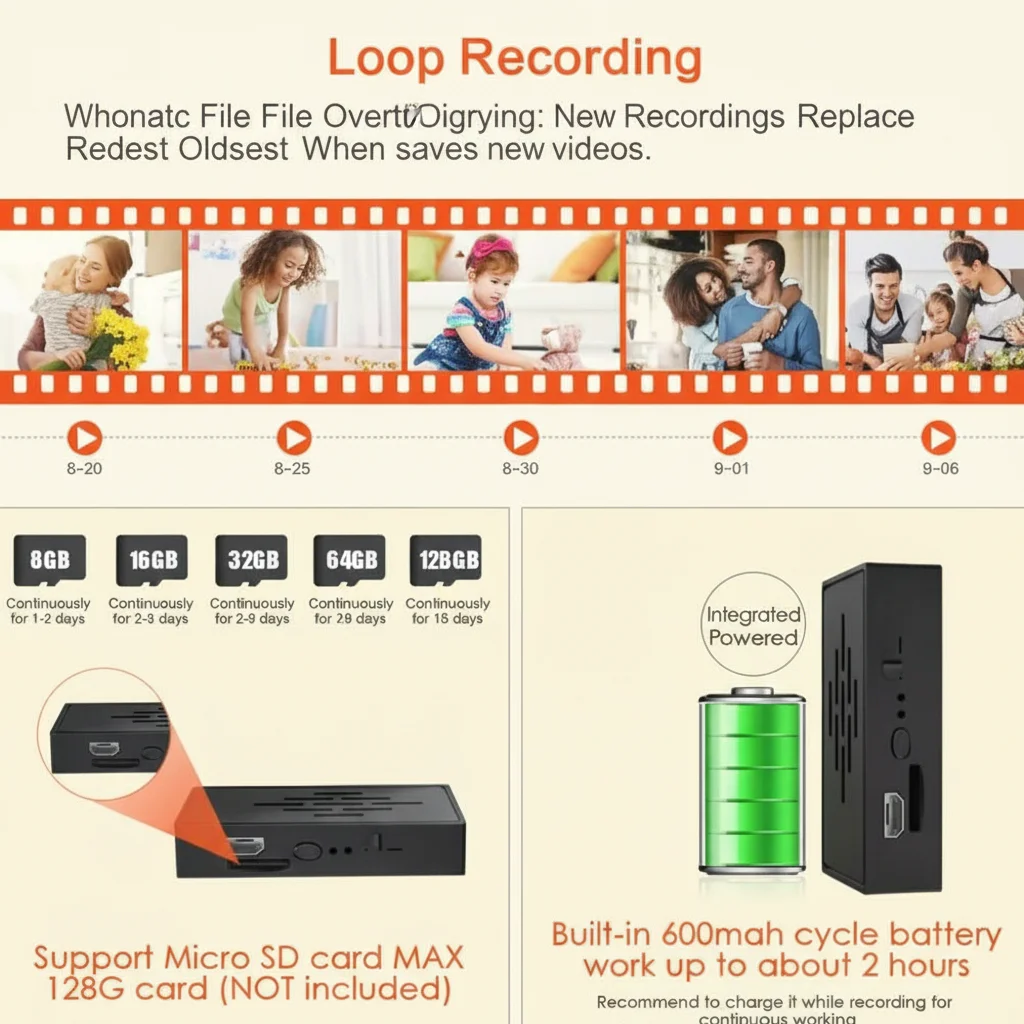
The B2B purchasing implication is significant. If your client says “I need it to record for a week,” you must immediately ask: “In what environment? How many motion events per day?” A motion-activated camera deployed in a quiet holiday home will easily achieve 30 days; the same camera in a busy retail stockroom with 300 daily triggers will be dead in 72 hours. The spec sheet “30-day standby” figure is not a lie — it is a best-case scenario that your client’s reality may not match.
For the most demanding B2B applications — 24/7 monitoring of cash handling areas, server rooms, pharmaceutical storage — skip battery-powered cameras entirely and go straight to mains-powered devices like the Cámara de enchufe WiFi S3. The reliability ceiling of a battery-powered camera is always lower than that of a wired unit.
Conclusión clave: Motion mode extends standby; continuous drains fast; mains power beats both.
UK/EU Legal Compliance for Wireless Spy Cameras: What Distributors Must Know
This section answers the question no C-end buying guide touches — and it is the one your wholesale clients will ask you first when they call from Manchester or Munich.
The core legal framework is GDPR Article 6(1)(f) — legitimate interest. In both the UK (UK GDPR, enforced by the ICO) and EU (EU GDPR, enforced by national DPAs), covert surveillance using wireless cameras requires a valid lawful basis. Legitimate interest is the most commonly cited, but it must pass a three-part test: (1) is there a legitimate interest? (2) is the processing necessary? (3) do the individual’s rights override the interest?
Here is what UK and EU distributors need to communicate to their end-user clients:
| Legal Requirement | UK (ICO Guidance) | UE (RGPD) | B2B Implication |
|---|---|---|---|
| Base legal | Legitimate interest with DPIA | Legitimate interest with LIA | Include a template DPIA/LIA document in your product package |
| Transparencia | Signage required in public areas | Signage + layered privacy notice | Clients must display CCTV signage; distributors should include template signs |
| Grabación de audio | RIPA 2000 + IPA 2016 (UK) applies | Member state laws vary | Audio recording is separately regulated; flag this in product documentation |
| Data retention | 31-day max without justification | Proportionality principle | Cameras with loop recording automate compliance |
| Subject Access Requests | 1-month response window | 1-month response window | Clients must have footage export capability; ensure cameras support easy extraction |
| Cross-border data | UK adequacy decision post-Brexit | Standard contractual clauses | If camera footage is cloud-stored, check server location |
The practical reality for B2B distributors is this: you are not the data controller — your client is. But under EU product safety and liability law, you have a duty of care to ensure the products you distribute can be used lawfully. This means: (a) include a compliance guide with every wholesale order, (b) stock cameras that support privacy-by-design features (loop recording, time-limited retention, easy footage export for SAR compliance), and (c) be prepared to answer the GDPR questions your clients will ask — because the ones who ask are the ones who will become long-term repeat buyers.
According to ICO guidance on domestic CCTV (updated 2026), covert monitoring without consent is only lawful when there is a specific suspicion of criminal activity, the monitoring is time-limited, and less intrusive methods have been exhausted. Distributors selling wireless spy cameras to UK clients must make this conditional framework clear in their product documentation.
Conclusión clave: GDPR compliance is a distributor differentiator — provide the documentation your competitors skip.
Certifications That Matter: CE/RED, RoHS, UKCA for Wireless Spy Cameras
This is the fastest way to filter legitimate suppliers from resellers with no manufacturing capability: ask for the actual test reports, not just the logos on the product page.
Wireless spy cameras sold in the EU and UK require specific certifications that differ from wired cameras or non-wireless audio recorders. The critical distinction is RED (Directiva de Equipos de Radio 2014/53/EU) — any product with a WiFi transmitter must have RED certification from an EU-accredited notified body. A CE EMC report alone is insufficient for wireless products; the penalty for non-compliance is market withdrawal and potential fines.
| Proceso de dar un título | Applies To | Testing Scope | B2B Verification |
|---|---|---|---|
| CE/RED | All wireless products in EU | EMC + radio spectrum + health/safety | Must be from an EU notified body; self-declaration is invalid for WiFi products |
| UKCA | All wireless products in UK (post-Brexit) | Equivalent to CE/RED | UK-specific mark; CE marked products may need UKCA for UK market after transition |
| RoHS | All electronic products in EU/UK | Hazardous substance limits (lead, mercury, cadmium, etc.) | XRF testing report; logo alone is insufficient |
| FCC | US market (relevant for global distributors) | Radio frequency emissions | FCC ID number must be verifiable in FCC database |
| WEEE | EU waste electronics directive | Producer responsibility for recycling | Registration number required for EU importers |
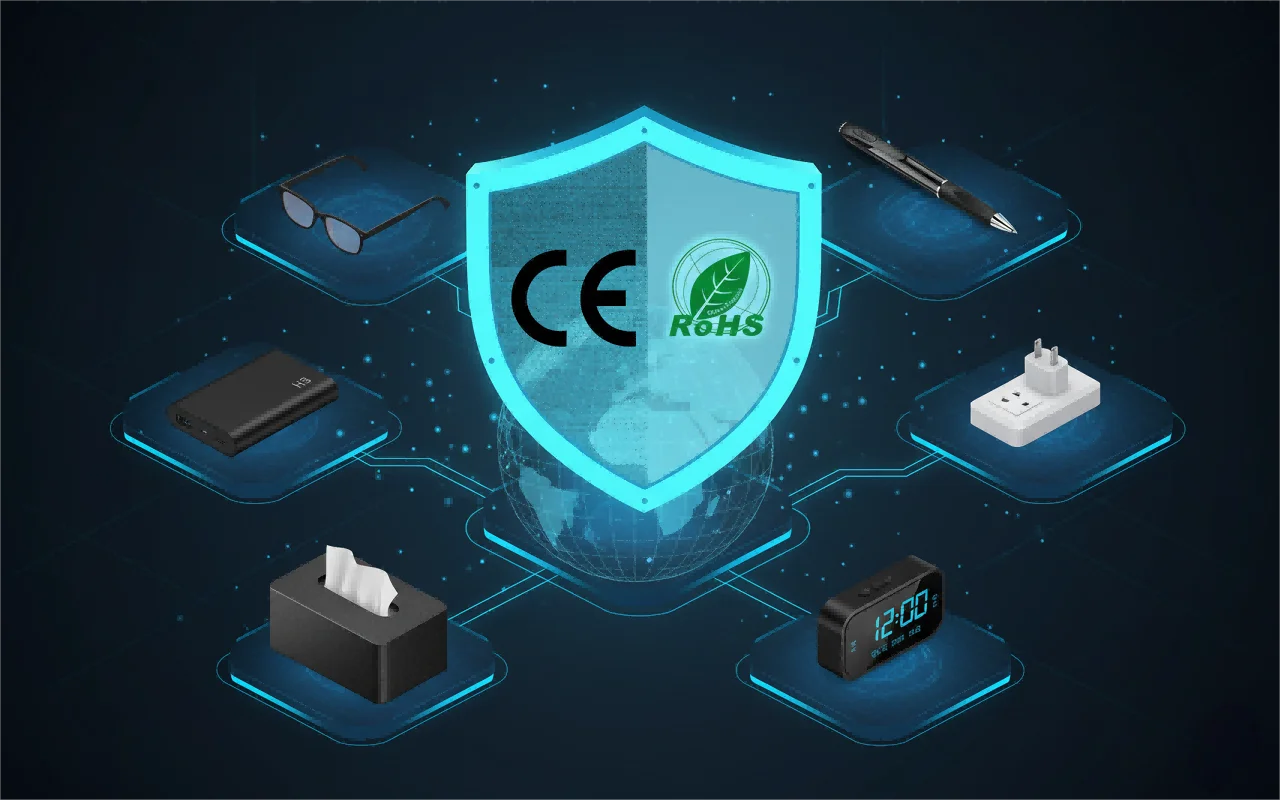
The B2B verification protocol is simple: ask for the accredited lab test report, not the certificate. A legitimate supplier can produce a PDF from an EU-notified body (TUV, SGS, Intertek, Bureau Veritas) showing the product model number, test date, and pass/fail for all applicable directives. A trader who only shows a logo on their product page and says “trust me” is not a manufacturer — they are a reseller, and their supply chain has a gap in compliance documentation.
For UK-based distributors, the UKCA transition creates a specific risk: products CE marked under EU RED may not automatically qualify for UKCA marking. Check if your supplier has dual certification or a specific UKCA declaration. The Cámara de enchufe WiFi A85 from QZT, for example, carries both CE and RoHS certificates with full test reports available for distributor download — a critical differentiator when your wholesale client in London asks “can you prove this is compliant?” and you need the answer in 60 seconds.
Conclusión clave: RED test report = wireless legitimacy; logo-only = supply chain risk.
B2B Supplier Verification: How to Choose a Wireless Spy Camera Wholesale Partner
By this point in the guide, you have the technical knowledge to evaluate wireless spy cameras at the component level, the deployment knowledge to match devices to use cases, and the compliance knowledge to verify certifications. The final step is choosing a supplier who will not let you down.
Here is the seven-point supplier verification checklist for wireless spy camera wholesale:
| Verification Point | What to Ask | Señal de alerta | Green Flag |
|---|---|---|---|
| 1. Certification documentation | “Send me the RED test report from the notified body” | “Our factory has CE, trust us” | PDF from TUV/SGS/Intertek with matching model number |
| 2. Sample evaluation | “Ship one unit of each model I am considering” | Refuses samples or charges full retail | Provides samples at cost; includes test footage |
| 3. WiFi module disclosure | “Which WiFi chipset does this model use?” | Cannot answer or says “standard WiFi module” | Names specific chip (Realtek RTL8188, Espressif ESP32, etc.) |
| 4. Battery specification | “What is the cell chemistry and cycle life rating?” | “Long battery life” with no data | Specifies mAh, chemistry (Li-Po/Li-ion), cycle life, degradation curve |
| 5. OEM/ODM capability | “Can you customise the housing, firmware, and packaging?” | “We only sell as-is” | Shows past customisation projects with photos |
| 6. MOQ transparency | “What are your MOQ tiers and per-unit pricing at each tier?” | Vague pricing, refuses written quote | Clear tiered pricing: 10/50/100/500 units |
| 7. After-sales support | “What is your defective unit replacement policy?” | “No returns after shipment” | Written warranty terms; replacement within 7-14 days |
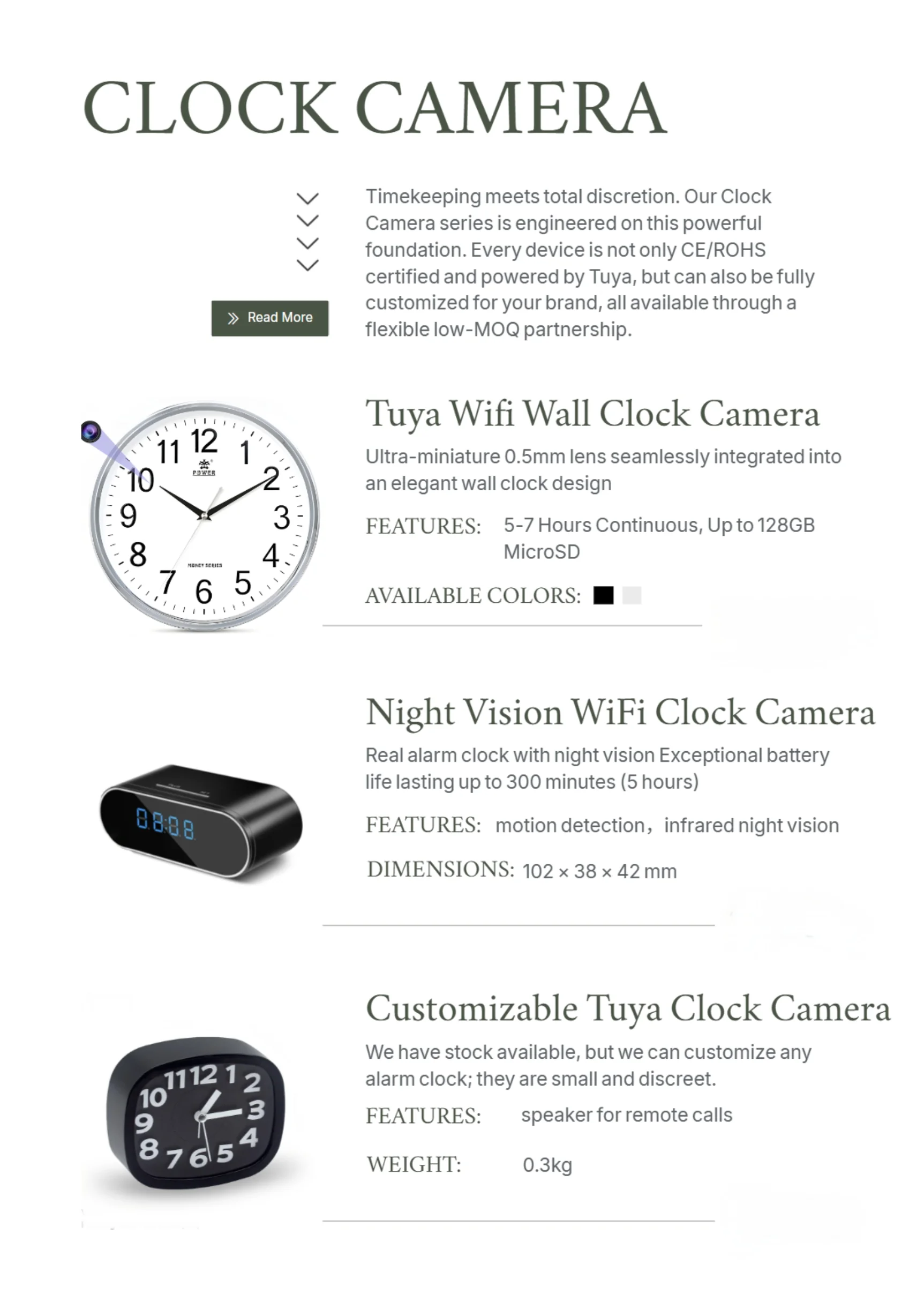
One under-discussed aspect of wireless camera sourcing is firmware support. A WiFi camera is a network-connected device — it needs firmware updates to patch security vulnerabilities. When you buy from a supplier that provides no firmware update channel, you are selling a device that becomes a security liability. Ask: “What is your firmware update process? How are security patches distributed?” A legitimate manufacturer maintains a firmware repository and notifies distributors of critical updates.
En QZT wholesale programme ticks all seven boxes: RED-certified WiFi modules, disclosed chipset specifications (Realtek/Espressif), OEM/ODM capability with documented past projects, tiered MOQ from 10 units, and a written warranty policy. For distributors building a wireless spy camera product line, the supplier choice matters more than any individual product spec — because a bad supplier means bad products, and bad products mean client returns that destroy your margin.
Conclusión clave: Supplier verification checklist = your margin protection; skip it at your peril.
Preguntas frecuentes
Can I use a wireless spy camera without the internet at all?
Yes. Most wireless spy cameras support a WiFi Direct or hotspot mode where the camera creates its own local WiFi network. You connect your phone directly to the camera’s network to view the live feed — no internet connection, no router, and the footage never leaves the local network. Additionally, many models — including the Cámara power bank H3 y G3000 Spy Camera Glasses — support local-only recording to microSD with zero wireless transmission of any kind, making them completely offline and undetectable by RF scanners.
How do I know if a wireless spy camera is broadcasting on 2.4GHz or 5GHz?
Check the product specifications for the WiFi standard: 802.11b/g/n = 2.4GHz only; 802.11a/n/ac = 5GHz; 802.11ax (WiFi 6) = dual-band. If the spec sheet does not specify the WiFi standard, ask the supplier for the WiFi module chipset model. Chipsets like Realtek RTL8188 are 2.4GHz-only; chipsets like RTL8822 are dual-band. If the supplier cannot tell you the chipset, you are dealing with a reseller, not a manufacturer.
What is the maximum range of a wireless spy camera in a typical UK home?
With a 2.4GHz camera in a standard UK brick-construction home, expect 15-25 metres effective range through one or two internal walls. Through three or more walls — or through a concrete floor — range drops to 5-10 metres or fails entirely. 5GHz cameras have roughly half the range through walls due to greater attenuation. The stated “50-100 metre open air” range on spec sheets is measured in a field with no obstacles and is not relevant to indoor deployment.
Is it legal to sell wireless spy cameras in the EU and UK?
Yes — with the correct certifications. Any wireless spy camera sold in the EU must carry CE/RED certification from an EU-accredited notified body. In the UK, UKCA marking is increasingly required. The products themselves are legal to sell; what matters is how end users deploy them. As a distributor, your obligation is to ensure the products are certified and to provide clear compliance guidance to your buyers about lawful use under GDPR, ICO guidance, and national surveillance laws. Selling an uncertified wireless camera is a compliance violation that risks customs seizure and market withdrawal.
What is better for a small business: one wireless spy camera with WiFi or multiple local-only cameras?
For most small businesses — a corner shop, a small office, a single-location retail unit — one or two mains-powered WiFi cameras in fixed positions (like the Cámara de enchufe WiFi S3) providing live remote access is the practical answer. The ability to check the feed from a phone without retrieving SD cards justifies the WiFi power cost. However, if the business has concerns about network security, IT policies restricting unknown WiFi devices, or a need for complete operational discretion, multiple local-only cameras with scheduled manual retrieval is more reliable and more secure. The right answer depends on the client’s IT environment and monitoring priorities.
Ready to Source Wireless Spy Cameras for Your Business?
Choosing a wireless spy camera supplier is a supply chain decision, not a shopping decision. The difference between a camera that works for six months and one that fails in six weeks is usually not the spec sheet — it is whether the supplier had genuine manufacturing capability, disclosed their components, maintained firmware update channels, and provided accredited certification documents.
If you are building a product line for the UK or EU security market, contact QZT Security today. We provide RED-certified WiFi modules with documented chipset specifications, OEM/ODM customisation with transparent MOQ tiers, accredited test reports for every wireless product, and a firmware update programme that keeps your inventory compliant.
Contáctenos hoy to request a wholesale catalogue, certification documentation, or sample unit evaluation.

 English
  Italiano
  Deutsch
  Français
  Español
  Polski