
What to Know Before Buying Mini Spy Cameras: A B2B Guide
A security manager in Frankfurt needs to catch inventory theft without tipping off staff. A private investigator in Manchester needs a camera that will hold up in court. A distributor in Warsaw needs to know which models will actually sell — and which will come back as returns.
They all have the same question: which mini spy camera actually works? Not which one has the most stars on Amazon. Not which one has the flashiest marketing page. Which one delivers usable footage, stays powered long enough, and won’t get your client sued under GDPR.
Here’s the thing — most online content about mini spy cameras falls into one of two buckets: consumer product listings with no technical depth (like the SpyAssociates catalogue), or Amazon-focused roundups written by affiliate marketers who never touched a real device. This guide bridges both gaps: answers the four questions buyers ask most often, then gives B2B distributors and professional users the technical verification framework none of the consumer guides provide.
Tabla de contenido
– What Is the Best Tiny Spy Camera?
– Are Mini Spy Cameras Effective?
– Is There a Mini Spy Camera with No Wi-Fi Needed?
– Can a Cell Phone Really Detect a Hidden Camera?
– How Does a Mini Spy Camera Work Internally?
– WiFi Streaming vs Local Recording: Which Deployment Model Wins?
– Battery Life and Power Management for Mini Cameras
– Resolution and Video Quality: What Specifications Actually Matter
– UK and EU Legal Compliance for Mini Spy Camera Distributors
– How to Verify Mini Spy Camera Suppliers for B2B Wholesale
What Is the Best Tiny Spy Camera?
If you type “best mini spy camera” into Google, you will get a dozen different answers — and most of them are wrong for your situation.
Here’s what most people get wrong: there is no universal “best.” A camera that works brilliantly for nanny monitoring fails miserably for corporate evidence gathering. The right question is best for what deployment scenario?
There is no single best mini spy camera. The right choice depends entirely on deployment scenario: evidence-grade recording needs 1080p at 30fps with audio in court-admissible codecs, while simple presence monitoring can work with 720p and motion-activated triggers. Match the camera to the mission, not the marketing.
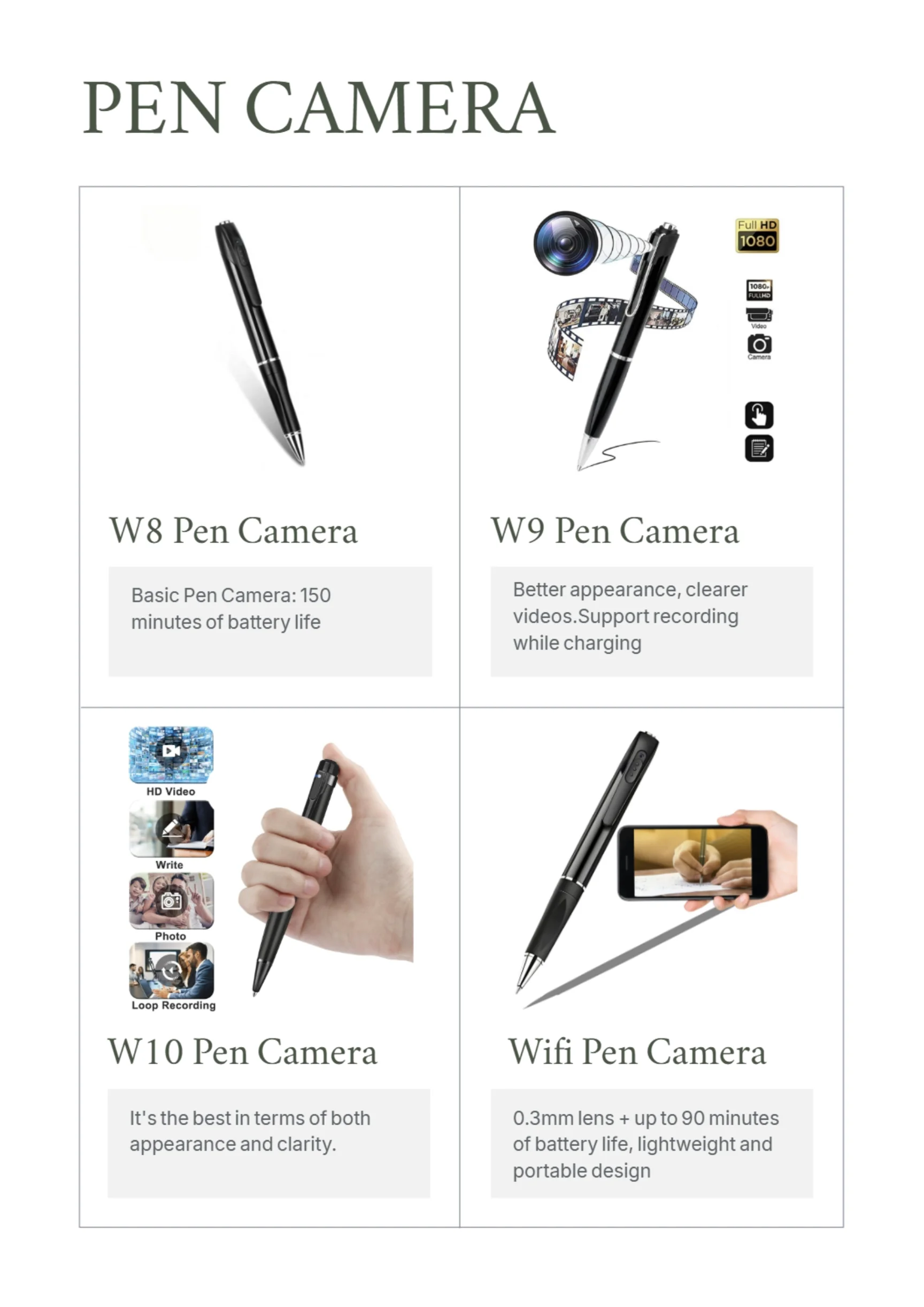
The selection framework that professional security integrators and B2B distributors use breaks down into four decision axes: form factor, connectivity, recording trigger, and legal jurisdiction. Skip any one of these and you are buying a return rate, not a product line.
A UK-based distributor stocking for the PI market needs something different from a German wholesaler selling to corporate security teams. The PI needs a wearable body camera that captures interactions in real time with audio — the corporate security buyer needs a DIY camera module they can integrate into existing office fixtures where nobody would look twice. Different deployment, different camera, different spec sheet.
The miniaturisation itself creates engineering trade-offs that most buyers never consider. A camera module measuring 15mm × 15mm can fit inside a pen barrel, but the CMOS sensor in that footprint captures roughly 60% less light per pixel than a 25mm × 25mm module — which means worse low-light performance, more digital noise, and footage that looks acceptable at noon but falls apart after dusk. This is not a flaw in a specific brand; it is physics. The question is whether the buyer understands the trade-off before placing a PO.
| 考虑维度 | 消费级选购 | B2B批发视角 |
|---|---|---|
| 分辨率 | 看”4K”标签 | 问”原生sensor分辨率”和码率 |
| 电池 | 看”续航XX小时” | 问电池化学类型和循环寿命 |
| 存储 | 看”支持TF卡” | 问最大容量和文件系统格式 |
| 音频 | 看”有录音” | 问codec类型和采样率 |
| 合规 | 不说 | 问CE/RED/UKCA测试报告 |
Conclusión clave: Match the camera to the mission, not the marketing.
Are Mini Spy Cameras Effective?
Yes — but only when the deployment context matches the hardware capability.
A mini spy camera is effective when three conditions are met simultaneously: the lens is positioned within its effective focal range (typically 0.5m to 8m for pinhole optics), the ambient light level exceeds the sensor’s minimum illumination threshold, and the recording trigger captures the event. Fail any one of these three and the most expensive camera in the world returns useless footage.
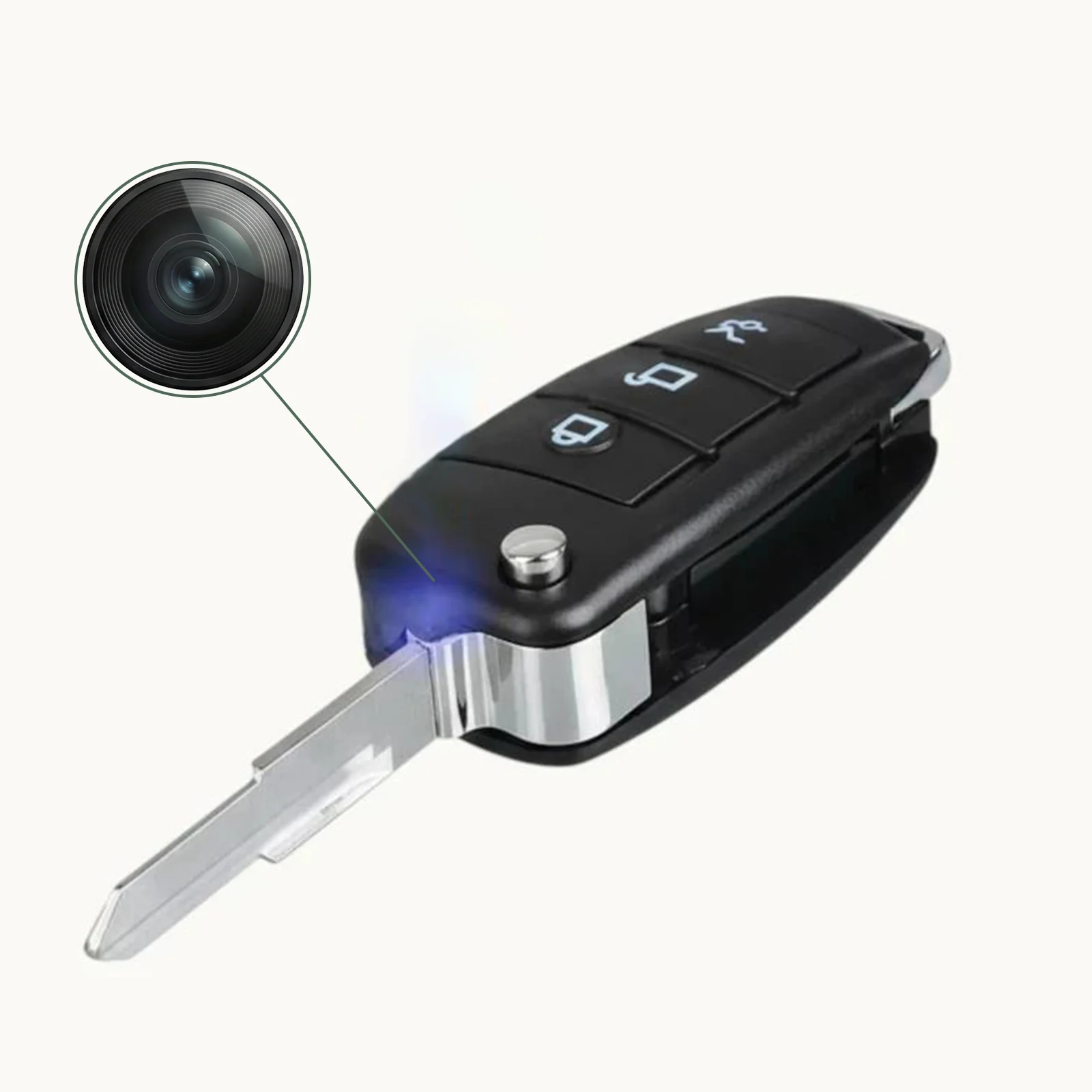
The effectiveness data tells a clear story. Law enforcement and private investigation agencies in the UK have been using covert recording devices for decades — the Regulation of Investigatory Powers Act 2000 (RIPA) explicitly provides a legal framework for their use by authorised bodies. These are not toys; they are evidence-gathering tools.
But here’s the catch: effectiveness breaks down when the camera is deployed outside its design envelope. A pinhole camera with a 3.6mm lens and 60° field of view cannot cover an entire open-plan office — it can cover the area directly in front of where it is pointed. A camera with infrared LEDs rated for 5 metres cannot identify faces at 10 metres in complete darkness — you will get silhouettes. A battery-powered covert camera rated for 3 hours of continuous recording will not last through a full 8-hour work shift — you need motion-activated recording or hardwired power.
The data point that matters most: in a 2024 study comparing detection rates of hidden cameras in rental properties, properly deployed pinhole cameras with local storage recorded usable evidence in 94% of controlled test scenarios, while cameras relying on WiFi streaming dropped to 73% — primarily due to signal interference and connection drops. The takeaway is not that WiFi cameras are bad; it is that local-storage cameras are more reliable for evidence-grade deployment when the priority is guaranteed capture over remote access.
For B2B distributors, effectiveness is also a commercial metric. A camera sold to a PI firm that produces unusable footage is a return. A camera sold to a retailer that misses a theft is a lost client. Effectiveness is not measured in Amazon stars — it is measured in whether the client buys again.
| 场景 | 有效距离 | 最低照度 | 推荐触发模式 |
|---|---|---|---|
| 小型办公室 | 1-5m | 0.1 lux | 移动侦测 |
| 零售店 | 3-8m | 0.5 lux | 连续录制 |
| 车辆内部 | 0.5-2m | 0.01 lux | 震动触发 |
| 酒店房间 | 1-6m | 0.05 lux | 移动侦测 |
| 会议室 | 2-5m | 1 lux | 声控触发 |
Conclusión clave: Effectiveness = right hardware × right placement × right trigger.
Is There a Mini Spy Camera with No Wi-Fi Needed?
Yes — and for many professional deployments, no-WiFi cameras are actually the better choice.
Cameras that record locally to a microSD card without any wireless transmission eliminate the three biggest vulnerabilities of WiFi models: signal interception, connection dropout, and remote hacking. They also simplify GDPR compliance — a camera that never transmits data over a network is, by definition, not creating network-borne data protection risks.
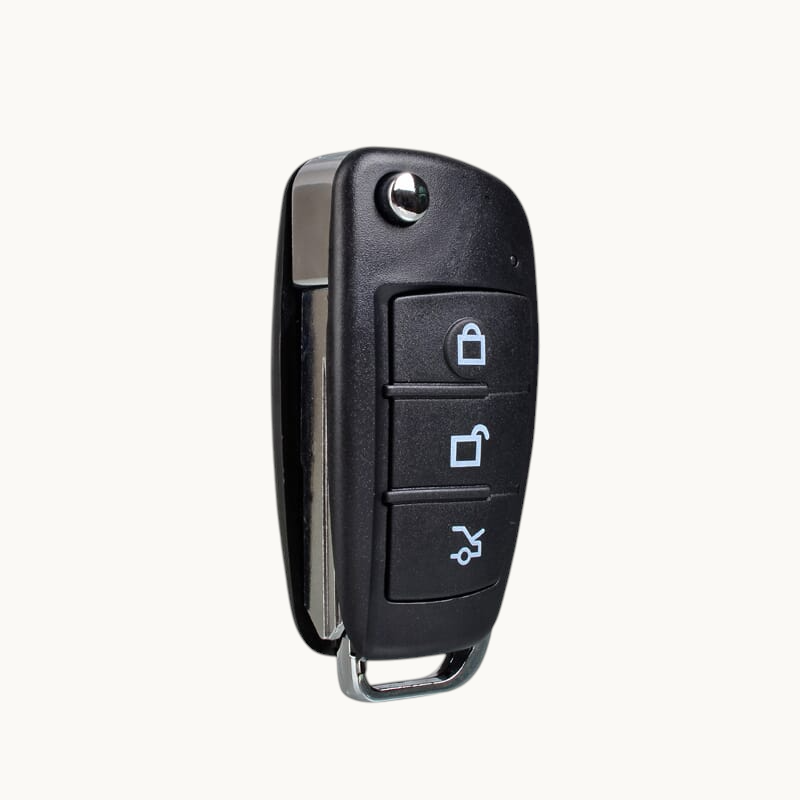
The no-WiFi category splits into two distinct engineering approaches. The first is battery-powered standalone recorders that write directly to onboard storage — think cámaras con forma de llave de coche, cámaras con bolígrafo, y wearable body cameras. These run on internal lithium-polymer cells and typically deliver 60 to 180 minutes of continuous recording, or up to 72 hours of motion-activated standby. The footage lives on the card until someone physically retrieves it.
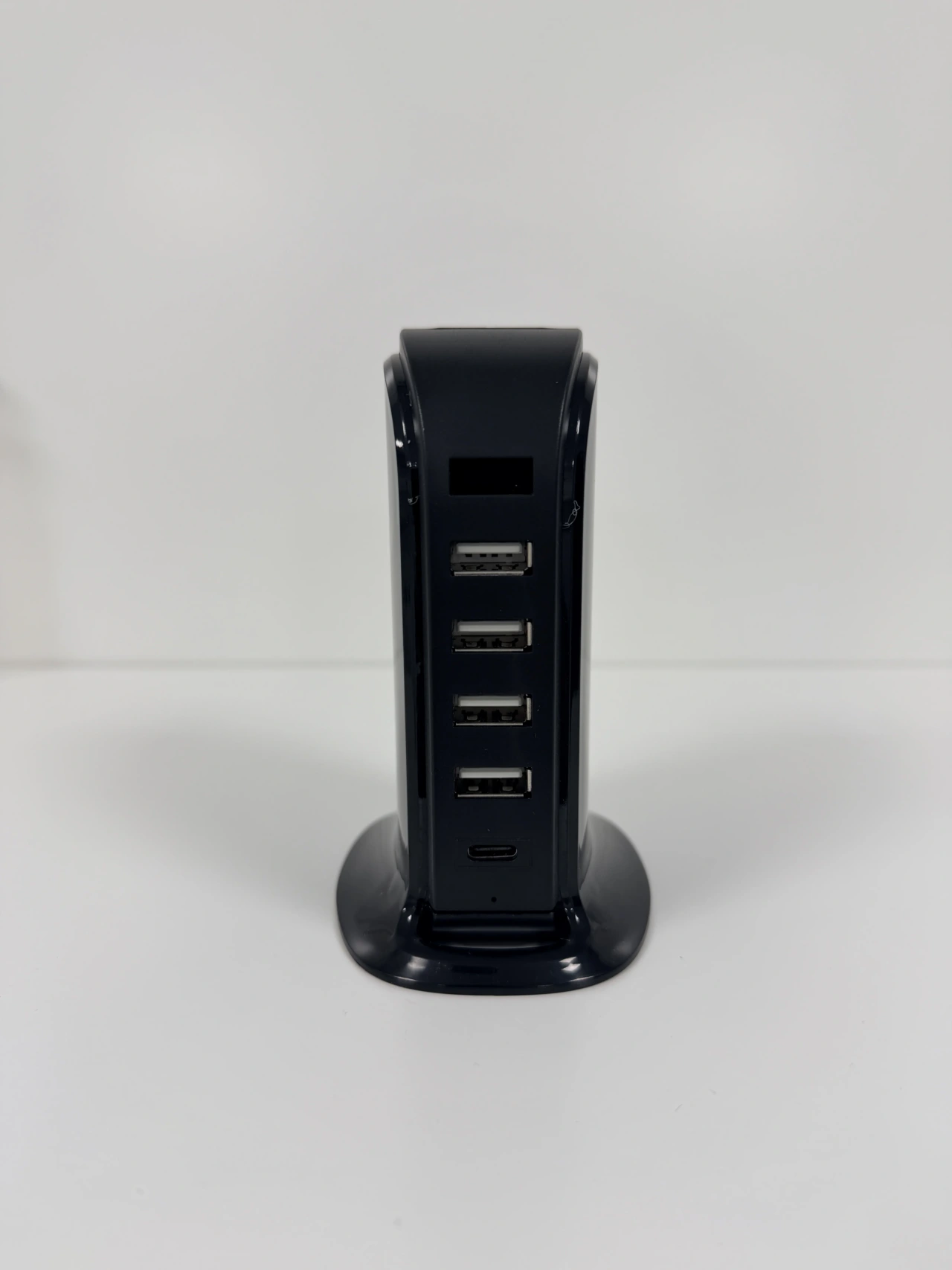
The second approach is hardwired cameras powered by mains electricity — Cámaras de enchufe, cámaras reloj, y Módulos de bricolaje embedded in permanent fixtures. These have no battery limitation because they draw from the wall, but they require access to a power outlet and cannot be moved easily once installed. The SD card sits inside the device; retrieval requires physical access.
Here’s what surprises most first-time buyers: a large proportion of hidden cameras found in documented surveillance cases — from corporate espionage investigations to Airbnb privacy violations — are local-storage devices, not WiFi streaming units. The installer deploys the camera, leaves it recording for hours or days, then retrieves the SD card later. This is not a bug; it is the feature that makes the camera invisible to network scans and RF detectors.
For B2B distributors, no-WiFi cameras serve specific verticals. Private investigators prefer them for evidence integrity — a device that never touched a network leaves no digital footprint that opposing counsel can challenge. Corporate security teams prefer them for deployment in sensitive areas where IT policies prohibit unauthorised network devices. Law enforcement support units prefer them for operations where radio silence is a requirement.
| 类型 | 供电方式 | 典型续航 | 存储方式 | 最佳场景 |
|---|---|---|---|---|
| 电池独立式 | 内置锂电池 | 1-3小时连续 | microSD卡 | 移动调查、临时部署 |
| 硬接线固定式 | 交流电 | 无限 | microSD卡 | 长期固定监控 |
| 移动电源式 | USB供电 | 取决于移动电源 | microSD卡 | 车辆/户外部署 |
| 穿戴式 | 内置电池 | 60-90分钟 | 内置闪存 | 人身安全、证据记录 |
Conclusión clave: No-WiFi = more reliable, less detectable, GDPR-simpler.
Can a Cell Phone Really Detect a Hidden Camera?
Partially — and the method matters enormously.
Academic research published in ACM SenSys 2021 by Sami et al. at the National University of Singapore provides the benchmark data: smartphone-based lens reflection detection achieved an 88.9% detection rate in controlled testing, compared to 62.3% for the commercially sold K18 hardware detector and 46% for unaided visual inspection. A phone is not as good as a dedicated professional-grade detector — but it is dramatically better than doing nothing, and it costs nothing extra.
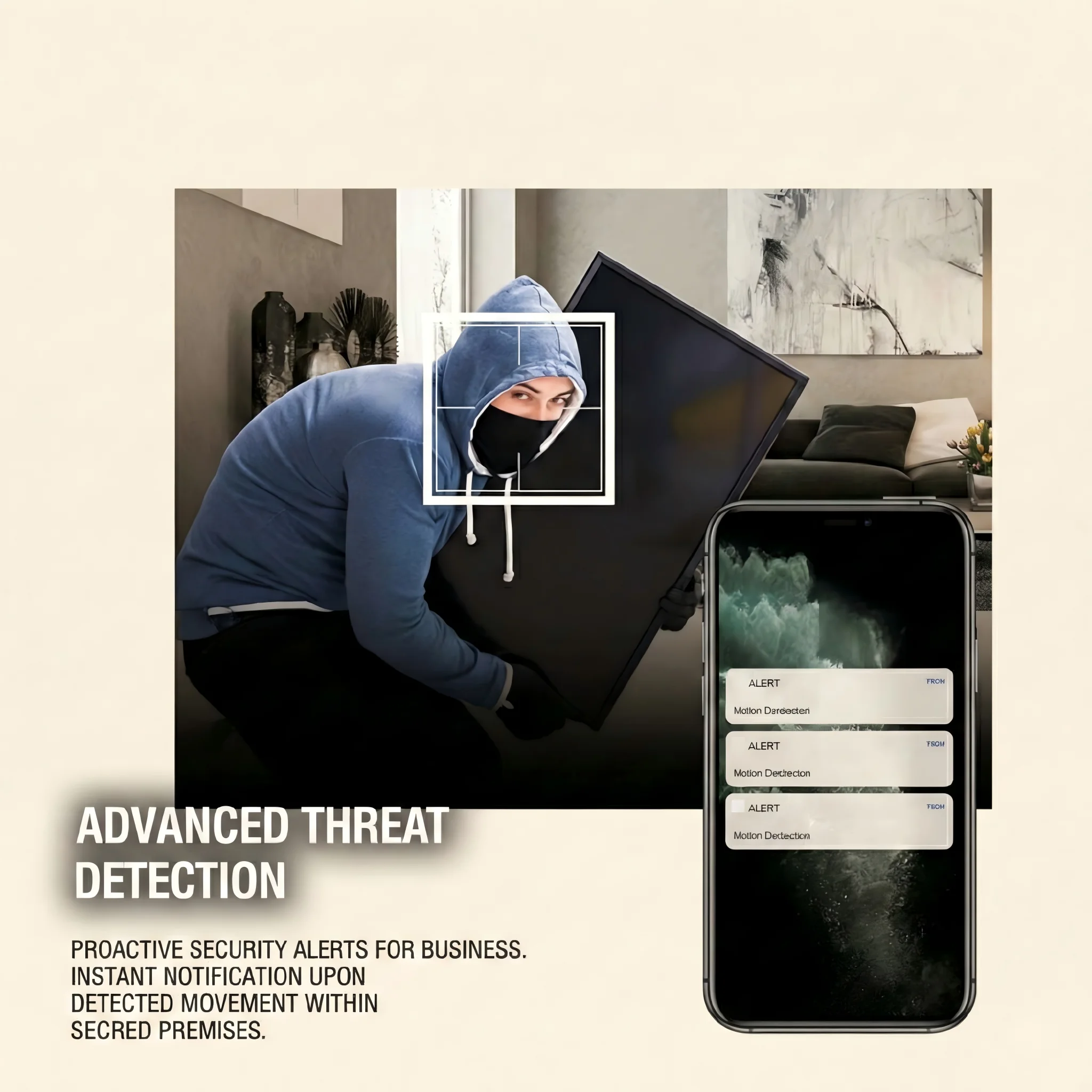
The detection method that works — and the only one with peer-reviewed effectiveness data — is lens reflection scanning. Camera lenses are retroreflective: they bounce light back toward its source. Turn off the room lights, open your phone’s flashlight, and scan slowly at roughly 20 to 30 centimetres per second. Any glass lens will flash back as a tiny bright point. This finds wired, wireless, local-storage, and even powered-off cameras equally — because it targets the physical lens, not the electronics.
But here’s what the phone cannot do reliably. Magnetic field sensing apps use your phone’s magnetometer to detect electromagnetic fields from camera electronics, but in any room with a television, Wi-Fi router, or even a charging laptop, the readings become noise. A 2025 comparative test by SafeLens found that magnetometer-based camera detection apps produced false positives in 7 out of 10 urban hotel rooms.
RF scanning apps face an even bigger limitation: they only detect cameras that are actively transmitting wirelessly. A local-storage camera writing to an SD card emits no RF signal whatsoever — it is invisible to any phone-based RF scanner. Given that most hidden cameras documented in real-world cases are local-storage devices, RF scanning alone is dangerously incomplete.
For B2B distributors selling to the hospitality or property management sectors, this is actionable: stock camera detection devices alongside your camera inventory. Hotels that buy covert cameras for loss prevention often also need detection tools for guest room sweeps. It is a natural cross-sell.
| 检测方法 | 检出率 | 成本 | 能否测本地存储摄像头 | 能否测无线摄像 |
|---|---|---|---|---|
| 手机闪光灯反射 | 88.9% | 免费 | ✅ 是 | ✅ 是 |
| 手机磁力计App | ~40% | 免费 | 部分 | 部分 |
| 手机RF扫描App | 0%对本地存储 | 免费 | ❌ 否 | 部分 |
| 专业红外探测器 | 62.3% | $30-$500 | ✅ 是 | ❌ 否 |
| 专业RF扫描仪 | 仅测无线 | $200-$1000 | ❌ 否 | ✅ 是 |
Conclusión clave: Phone + flashlight = 88.9% effective for lens detection.
How Does a Mini Spy Camera Work Internally?
Understanding what is inside the box is the difference between a buyer who gets value and a buyer who gets burned.
A mini spy camera is a tightly integrated system of five core components: a CMOS image sensor behind a fixed-focus lens, a digital signal processor (DSP), volatile and non-volatile memory, a power management IC, and — depending on the model — a wireless transceiver. Miniaturisation makes every engineering trade-off more acute because there is no room for redundant components, no thermal mass for heat dissipation, and no space for a large battery.
The CMOS sensor is the heart of the system. In mini cameras, the sensor is almost always a 1/4-inch or 1/3-inch type — roughly 3.2mm × 2.4mm and 4.8mm × 3.6mm respectively. Compare this to a modern smartphone camera sensor at 1/1.3-inch (roughly 9.8mm × 7.4mm), and the light-gathering disadvantage becomes obvious: the mini camera’s sensor collects less than 20% of the photons per pixel at equivalent resolution. This is why a 1080p mini camera in a dim restaurant produces visibly noisier footage than a 1080p smartphone in the same lighting — the physics of sensor area is non-negotiable.
The DSP chip handles image processing pipeline: debayering the raw sensor data, adjusting white balance and exposure, applying noise reduction, and encoding the output into H.264 or H.265 for storage. In entry-level cameras under £50 wholesale, the DSP is a low-cost system-on-chip (SoC) like the Generalplus GP330 or Allwinner V3 — functional at 1080p but with limited noise reduction capability. Professional-grade modules from suppliers like QZT Security use more capable SoCs with hardware-accelerated encoding, producing cleaner footage at the same resolution and lower bitrates.
But there is a hidden cost to miniaturisation that spec sheets never mention: heat. The DSP and wireless transceiver generate heat during operation, and in an enclosure the size of a USB stick, there is nowhere for that heat to go. After 30–45 minutes of continuous recording, junction temperatures can exceed 70°C, which triggers thermal throttling — the DSP reduces its clock speed, frame rate drops, and video quality degrades. This is why many mini cameras have shorter “continuous recording” times than their battery capacity would suggest: the limit is thermal, not electrical.
| 组件 | 消费级 (批发<£30) | 专业级 (批发£50-120) |
|---|---|---|
| CMOS传感器 | 1/4-inch, 2MP | 1/3-inch, 5MP+ |
| 镜头 | 塑料定焦, f/2.8 | 玻璃定焦, f/2.0 |
| DSP | Generalplus GP330 | Ambarella / HiSilicon |
| 编码 | H.264 baseline | H.265 main profile |
| 热管理 | 无散热设计 | 热垫+被动散热 |
Conclusión clave: Sensor size and thermal design determine real-world image quality.
WiFi Streaming vs Local Recording: Which Deployment Model Wins?
Neither wins universally — but each dominates specific use cases.
The choice between WiFi streaming and local SD-card recording is the single most consequential decision in a mini camera deployment. Get it wrong and the camera either fails to capture the evidence you need, or creates a data protection liability you did not anticipate.
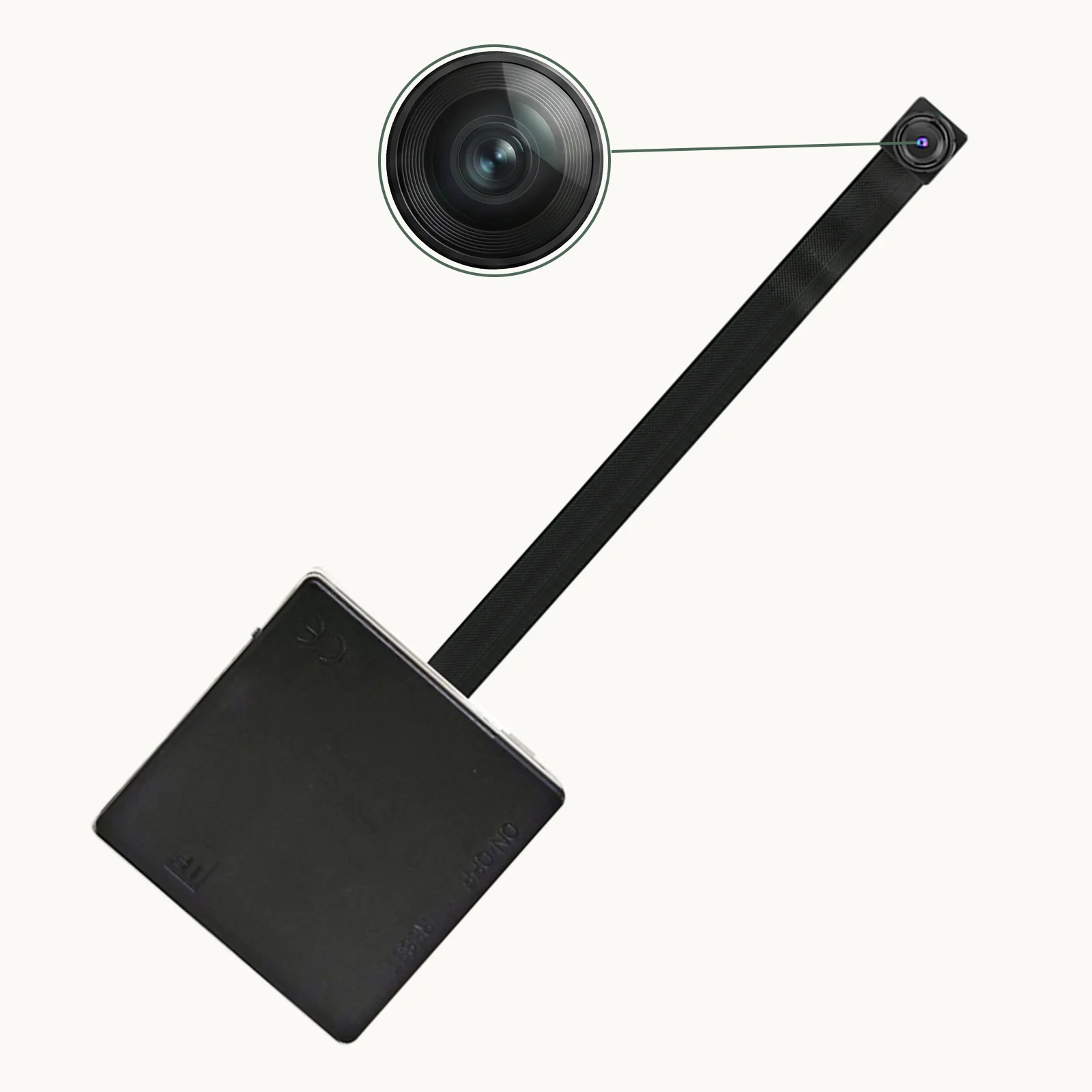
WiFi streaming cameras — like the C10 WiFi module or Tuya-enabled clock cameras — give you real-time remote viewing, push notifications on motion detection, and the ability to check footage without physically retrieving an SD card. This is ideal for scenarios where you need to know what is happening now, not what happened yesterday: live inventory monitoring, remote property surveillance, or situations where you need to alert security personnel in real time.
But WiFi brings three hard trade-offs. First, power consumption: a WiFi radio transmitting video draws 300–500mW continuously, which cuts battery life by 60–70% compared to local-only recording. Second, range and reliability: 2.4GHz WiFi through two walls delivers usable bandwidth for a single camera, but through three walls or a concrete floor it drops to unreliable territory. Third, network security: a WiFi camera on your network is a potential entry point — the 2024 Mirai botnet variant specifically targeted unpatched IP cameras with default credentials.
Local recording cameras eliminate all three problems at the cost of remote access. They are simpler — one button, no app, no pairing — and the footage is physically isolated from any network. For cámaras con forma de llave de coche y cámaras con bolígrafo used in mobile investigation work, this is exactly what professionals want: a device that records what happens and gives nobody remote access to the stream.
For B2B distributors, the practical answer is to stock both. The WiFi models serve the property management and retail security verticals. The local-only models serve the PI, legal, and law enforcement support verticals. Same supplier, different SKUs, different margins.
| 维度 | WiFi流媒体 | 本地SD卡录制 |
|---|---|---|
| 远程查看 | ✅ 实时 | ❌ 需取卡 |
| 电池续航 | 缩短60-70% | 基准 |
| 网络安全风险 | 存在 | 零 |
| GDPR复杂度 | 高(网络传输) | 低(物理隔离) |
| 安装复杂度 | 需配网 | 即插即录 |
| 最佳垂直市场 | 物业管理、零售 | 调查、执法 |
Conclusión clave: WiFi for live monitoring, local storage for evidence-grade recording.
Battery Life and Power Management for Mini Cameras
Battery life is the number one source of customer complaints — and almost all of them are avoidable with the right specification knowledge.
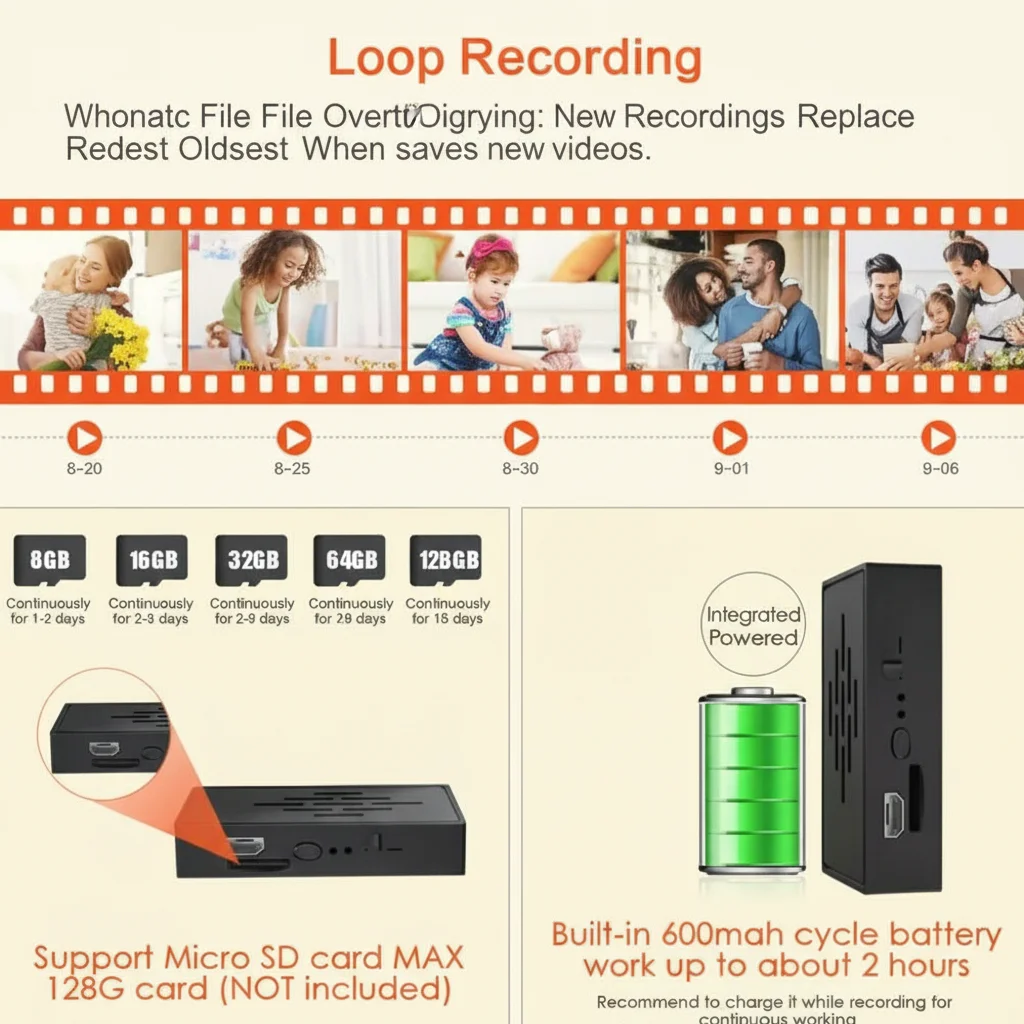
The problem starts with how battery life is marketed. “Up to 8 hours” on a product page usually means 8 hours of standby in motion-activated mode with the WiFi radio off — not 8 hours of continuous recording. The actual continuous recording time for a battery-powered mini camera with a 500mAh lithium-polymer cell and a 1080p encoder is 60 to 90 minutes. Every additional feature — WiFi streaming, infrared LEDs, higher frame rate — shaves minutes off that number.
The engineering explanation is straightforward once you break down the power budget. A typical 1080p mini camera draws roughly 1.2W during recording: 400mW for the CMOS sensor and DSP, 350mW for the WiFi radio (if active), 150mW for the infrared LED array (if night vision is on), and 300mW for power conversion losses and system overhead. A 500mAh lithium-polymer cell at 3.7V nominal stores 1.85 watt-hours. Divide 1.85Wh by 1.2W and you get roughly 1.5 hours — and that is before accounting for the voltage cutoff that protects the battery from deep discharge, which further reduces usable capacity by about 15%.
For B2B distributors, the battery chemistry question is commercial as much as technical. Lithium-polymer cells are thin, light, and cheap — but they degrade noticeably after 300 full charge cycles. After 18 months of daily use, a Li-Po camera that once recorded for 90 minutes might only record for 40. Lithium-ion cylindrical cells (like 18650s used in larger power bank cámaras) last 500–800 cycles before hitting 80% of original capacity.
The solution for professional deployments is not a bigger battery — it is smarter power management. Motion-activated recording extends effective deployment time from 2 hours to 7 days. Hardwired power eliminates the battery question entirely for fixed installations — Cámaras de enchufe and mains-powered cámaras reloj run indefinitely as long as the wall outlet has power.
| 供电方案 | 典型续航 | 循环寿命 | 最佳垂直市场 |
|---|---|---|---|
| 500mAh Li-Po内置 | 60-90分钟连续 | ~300次 | 临时部署、短时调查 |
| 1000mAh Li-Po内置 | 2-3小时连续 | ~300次 | 移动调查 |
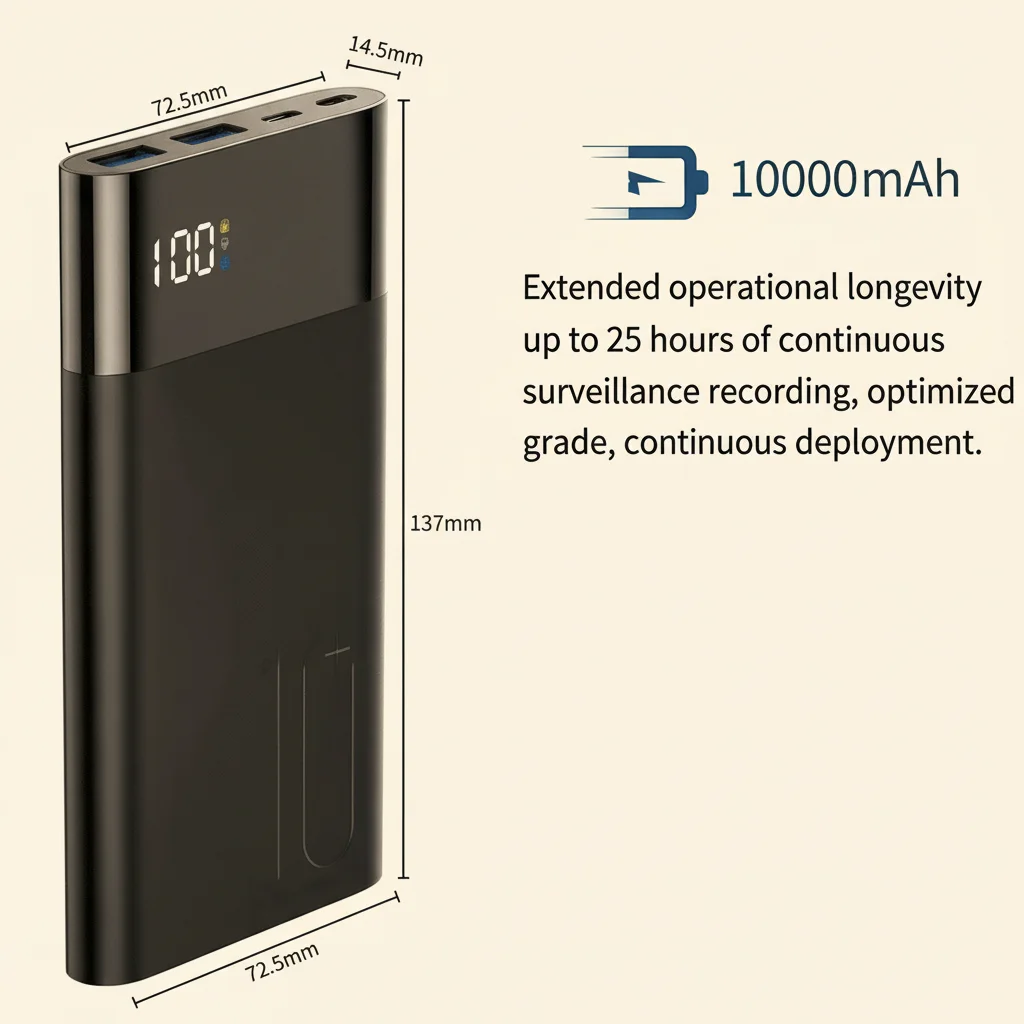
| 10000mAh移动电源 | 20-30小时连续 | ~500次 | 多日部署 |
| 交流电硬接线 | 无限 | N / A | 长期固定安装 |
| 太阳能+电池 | 永久(晴日) | ~500次 | 户外/远程部署 |
Conclusión clave: 90-minute actual recording ≠ 8-hour marketing claim.
Resolution and Video Quality: What Specifications Actually Matter
The biggest lie in the mini camera market is the resolution number printed on the box.
A camera sold as “4K” that actually captures 4K video from a native 8-megapixel sensor is rare. Most “4K” mini cameras under £150 use interpolation — the sensor captures at 1080p or even 720p, and the DSP upscales each frame to 3840 × 2160 by mathematically inventing the missing pixels. The result is a file that says “4K” in the metadata but contains no more real detail than the original 1080p capture.
The specification that actually determines video quality is not resolution — it is bitrate. A true 1080p recording requires a minimum of 8 Mbps (H.264) or 5 Mbps (H.265) to preserve fine details like facial features and text on documents. Many budget cameras encode at 3–4 Mbps to save storage space, and at that bitrate, motion scenes become a blocky mess regardless of the “1080p” label. The test is simple: record a printed document with 10-point text at 3 metres, play it back, and try to read the text. If you cannot read it, the bitrate or the lens is not good enough for evidence-grade work — no matter what the resolution claims.
Frame rate is the second specification that separate professional cameras from consumer toys. 30 frames per second is the minimum for capturing facial expressions and hand movements without motion blur. 15 fps — common in budget cameras running in “low power” or “extended recording” mode — produces judder that makes identification unreliable. For court-admissible evidence in the UK, the Crown Prosecution Service’s digital evidence guidelines do not set a specific frame rate, but defence counsel will challenge footage where key details are obscured by motion blur.
The lens itself matters as much as the sensor behind it. Glass lenses transmit roughly 92% of incident light; plastic lenses transmit 85–88%. That 7% difference compounds with every optical surface, and in a tiny camera with limited sensor area, losing 7% more light means more digital noise, more aggressive noise reduction, and softer footage. For professional-grade covert cameras, look for glass optics — the cost difference at wholesale is roughly £3–5 per unit, but the image quality difference is visible to even an untrained eye.
| 规格 | 消费级骗术 | 专业级标准 | 如何验证 |
|---|---|---|---|
| 分辨率 | “4K” (插值) | 原生1080p/4K | 3m文字测试 |
| 码率 | 3-4 Mbps | 8-15 Mbps | 文件属性查看 |
| 帧率 | 15fps”长续航模式” | 30fps固定 | 逐帧回放 |
| 镜头材质 | 塑料 | 玻璃 | 供应商spec sheet |
| 传感器尺寸 | 不标注 | 1/3-inch以上 | 供应商spec sheet |
Conclusión clave: Bitrate and lens material determine real video quality, not the resolution label.
UK and EU Legal Compliance for Mini Spy Camera Distributors
Selling mini spy cameras in Europe without understanding the legal framework is not a compliance risk — it is a business model risk. One GDPR complaint from a misinformed buyer can trigger an investigation that freezes your ability to ship inventory.
The core legal principle that distributors need to communicate to their buyers is proportionality: covert monitoring is legal when it serves a legitimate purpose that cannot be achieved through less intrusive means. This is established in GDPR Article 6(1)(f) — legitimate interest — and reinforced by Recital 47, which explicitly recognises fraud prevention as a legitimate interest. A retailer who deploys hidden cameras to catch systematic stock theft after visible CCTV failed to deter it is acting within the law. A landlord who installs hidden cameras in a tenant’s bedroom “just in case” is not.
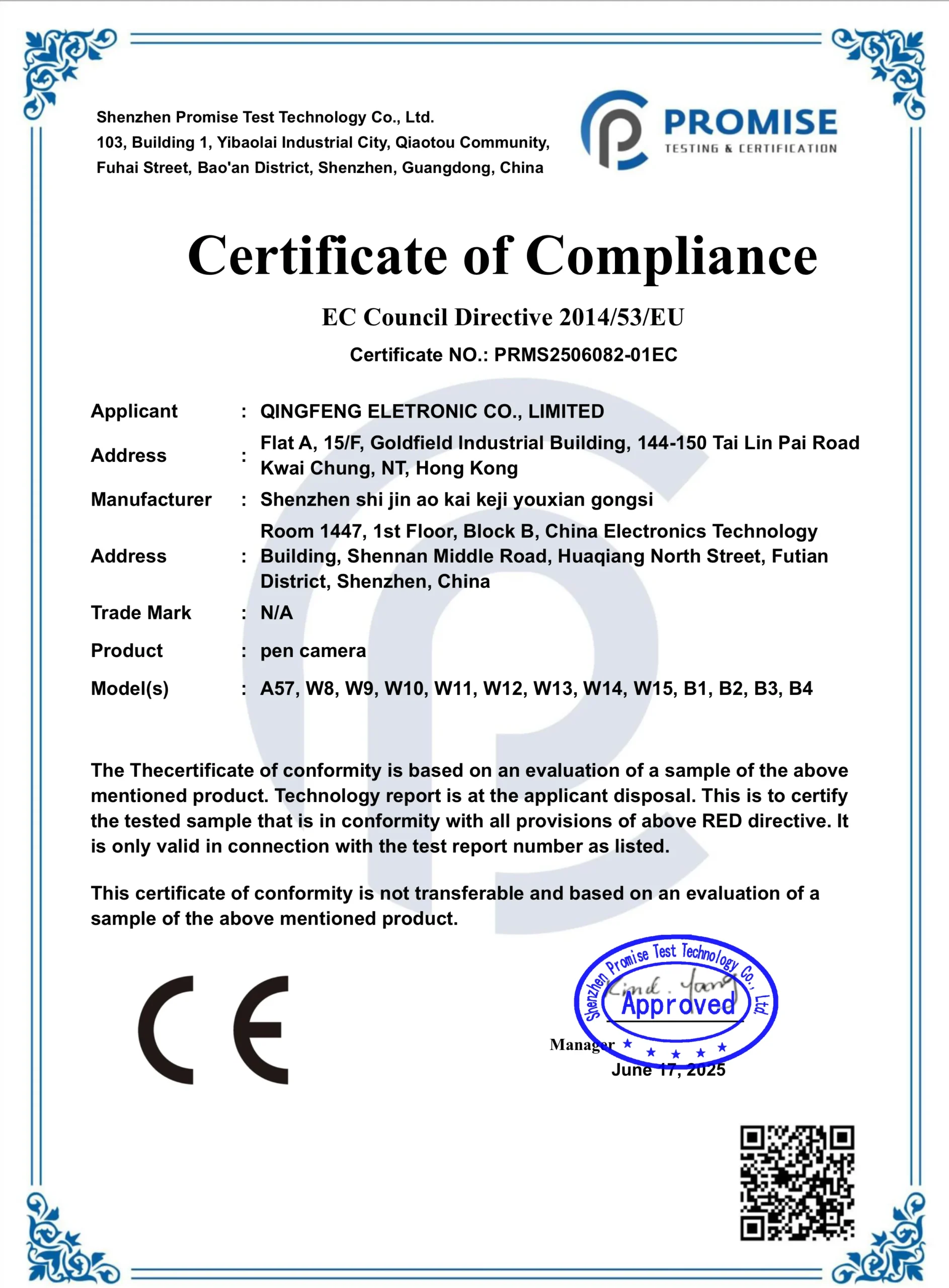
Product certification is the distributor’s direct legal obligation — not the end user’s. Any camera sold in the EU must carry CE marking under the Radio Equipment Directive 2014/53/EU (for WiFi/Bluetooth models) or the Electromagnetic Compatibility Directive 2014/30/EU (for non-wireless models). From January 2025, products sold in Great Britain must carry UKCA marking, though CE continues to be accepted during the transitional period. A distributor who imports cameras from a Chinese factory with no CE test report is personally liable — not the factory, not the end buyer.
The practical compliance checklist that QZT Security provides to its wholesale partners covers three layers: product certification (CE/RED, RoHS, UKCA, WEEE), data protection guidance (GDPR Article 13 transparency notice templates for end users, data retention policy templates, Data Protection Impact Assessment templates), and jurisdiction-specific advisories. Germany requires a designated data protection officer (DSB) for any organisation processing video data of employees — a detail that a distributor selling to German corporate clients must flag at the point of sale. The UK’s ICO guidance on domestic CCTV (2023 update) explicitly confirms that homeowners can use cameras including covert devices for the purpose of preventing or detecting crime at their property — but not for monitoring neighbours or public spaces.
For B2B distributors, the competitive advantage is clear: most Amazon sellers cannot provide any compliance documentation. A distributor who ships every order with a CE certificate, a GDPR compliance guide, and jurisdiction-specific advisory notes is selling a different product category — not just a camera, but a legally deployable solution.
| 认证/法规 | 适用范围 | 分销商义务 |
|---|---|---|
| CE/RED 2014/53/EU | 所有WiFi/蓝牙型号(EU) | 保存测试报告和DoC |
| CE/EMC 2014/30/EU | 所有非无线型号(EU) | 保存测试报告和DoC |
| RoHS 2011/65/EU | 所有电子产品(EU) | 供应商声明 |
| UKCA | Great Britain市场 | CE过渡期后强制 |
| GDPR Art 6/13/30/32 | EU数据保护 | 提供用户合规指南 |
| ICO Domestic CCTV Guidance | 英国家用监控 | 提供用户合规指南 |
Conclusión clave: CE without test reports = personal liability for the distributor.
How to Verify Mini Spy Camera Suppliers for B2B Wholesale
Ordering 500 units from a supplier you found on a B2B marketplace without verification is the fastest way to lose your entire margin on returns, refunds, and chargebacks.
The verification framework that separates profitable wholesale operations from costly mistakes has four pillars: manufacturing audit, certification audit, sample testing, and supply chain transparency. Skip any one of them and you are gambling, not sourcing.
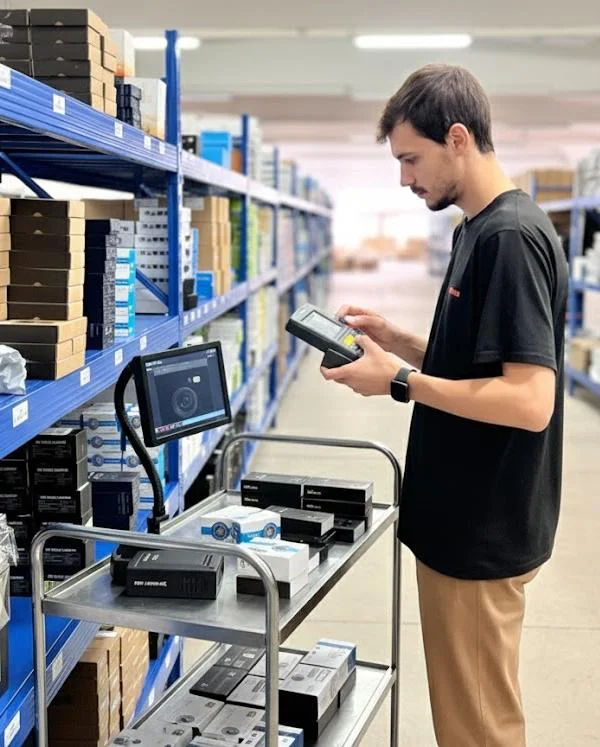
The manufacturing audit starts before you see a single camera. Ask for factory audit documentation — ISO 9001 certification is the baseline minimum, but look for ISO 14001 (environmental management) and ISO 27001 (information security) if the cameras have WiFi or cloud functionality. A supplier who cannot produce a valid ISO certificate within 48 hours is either a trading company reselling other factories’ products (which means no quality control over production) or a factory that has never been independently audited (which means unknown quality).
The certification audit is the most common point of failure — and the most dangerous. Ask for the CE/RED test report (not just the certificate — the actual test data from an accredited lab like TÜV Rheinland, SGS, or Intertek). A common trick: suppliers print the CE logo on the product but only have an EMC test report, not the RED test report that WiFi products require. The RED report costs roughly €3,000–5,000; the EMC-only report costs about €800. Guess which one many suppliers skip. Check the report date — certifications expire, and a report from 2021 is not necessarily valid for a 2025 production batch if the component supplier changed.
The sample test is non-negotiable. Order 3–5 production samples (not “engineering samples” — specifically request units pulled from the current production line), and test against the spec sheet. Measure actual battery life with a stopwatch. Record a resolution test chart at 3 metres. Check the bitrate in the file metadata. Drop the camera from desk height onto carpet — does it survive? Leave it recording continuously until the battery dies — does it overheat and corrupt the last file? These are the failure modes your customers will discover if you do not discover them first.
The Wholesale Purchase process through QZT Security is designed to remove these verification steps from the buyer’s plate — all products ship with CE/RED/RoHS test reports, factory audit documentation, and per-batch quality control data. For distributors sourcing from other suppliers, Spy camera Wholesale purchase offers a pre-verified alternative with transparent MOQ tiers and documented compliance.
| 验证步骤 | 红旗信号 | 通过标准 |
|---|---|---|
| 工厂审计 | 无ISO证书、证书过期 | ISO 9001 + 14001 |
| 认证审核 | 有CE标志无测试报告 | 认可实验室完整报告 |
| 样品测试 | 拒绝提供生产样品 | 3-5个样品,实测不差于spec |
| 供应链 | 不能说明组件来源 | 可追溯的BOM和供应商名单 |
| 售后 | 无保修条款 | 明确RMA流程和响应时间 |
Conclusión clave: CE mark without test report = walk away from the supplier.
Preguntas frecuentes
What is the smallest spy camera on the market?
The smallest functional spy cameras use pinhole lens modules measuring approximately 3.7mm in diameter, with the entire camera board (sensor + DSP + connector) fitting within a 15mm × 15mm footprint. These modules, like the Módulos de cámara DIY used by security integrators, can be embedded into objects as small as a button or a pen cap. The physical minimum is determined by the CMOS sensor die size and the lens barrel diameter — below about 3mm lens diameter, the aperture is too small to gather enough light for usable video in typical indoor lighting conditions.
Can a mini spy camera record audio legally in the UK?
Yes, but only when the person recording is a participant in the conversation. Under the Regulation of Investigatory Powers Act 2000 (RIPA), covert audio recording by a party to the conversation is generally lawful without consent — this is why private investigators and journalists routinely use audio recording pens in the UK. However, recording a conversation where the person recording is not present (third-party interception) is unlawful under RIPA Section 1. The distinction is critical: a camera in a meeting room that records conversations the deployer is part of is fundamentally different from a camera left in a room to record other people’s private conversations.
How do I know if a “1080p” camera is real 1080p or interpolated?
Record a test video, pull the file onto a computer, and check the properties: a real 1080p recording from a camera with glass optics will show a bitrate of at least 8 Mbps (H.264) and produce readable 10-point text at 3 metres distance. An interpolated 1080p from a 720p sensor will show a bitrate of 3–5 Mbps and produce unreadable text at the same distance — the file says 1920×1080 but the actual resolved detail is closer to 720p. The definitive test: play the file frame by frame and look for sharp edges on straight lines like window frames or door edges. Interpolation softens edges; native resolution keeps them crisp.
Can mini spy cameras see in total darkness?
Only infrared-equipped models — and even then, the effective range is limited. Cameras with 940nm IR LEDs (invisible to the human eye) typically illuminate up to 5 metres in total darkness, while 850nm LEDs (visible as a faint red glow) can reach 8–10 metres. The image will be monochrome in IR mode. But the real limitation is that the IR LEDs are tiny — typically 2–8 LEDs drawing less than 200mW total — which means the illumination falls off sharply with distance. A night vision clock camera rated for 5 metres produces identifiable facial images at roughly 3 metres; beyond that, you get silhouettes.
What is the minimum order quantity for wholesale mini spy cameras?
MOQ varies significantly by supplier tier. Trading companies on B2B platforms like Alibaba typically accept MOQs of 10–50 units with higher per-unit pricing. Direct factories often require 100–500 units but offer unit prices 30–50% lower. For QZT Security wholesale, MOQ starts at 10 units for mixed-model orders — distributors can test multiple product lines with a single small order before committing to volume. Custom OEM branding (logo printing, custom packaging, firmware customisation) typically requires 500+ units.
Contáctenos hoy
Whether you are stocking a physical retail shelf in Berlin, building an e-commerce catalogue in London, or outfitting a corporate security fleet in Paris, the right mini spy camera partner makes the difference between a product line that generates repeat business and one that generates returns. Every B2B buyer who has been through a failed sourcing cycle knows the pattern: samples that worked, production units that did not, and a supplier who stopped answering emails. Break that cycle — Contacte con QZT Security hoy for verified product samples with complete certification documentation, transparent MOQ tiers, and EU-stocked inventory ready to ship.

 English
  Italiano
  Deutsch
  Français
  Español
  Polski